A family does not change because a therapist explains the problem. It changes because the family practices something different together.
That is the quiet truth most therapists know. Insight rarely shifts a household. Action does. Activities give a family a script for trying a new pattern, again and again, until the new way starts to feel normal.
Below are seventeen activities used in family therapy sessions and at home. Each one targets one of four goals: better communication, deeper trust, freer emotional expression, or sharper problem-solving.
You will see what each activity does, how to run it, and which type of family it best suits.
A note before we start: some of these activities are safe to try at home. Others should only happen with a trained therapist in the room. The end of this guide explains the difference clearly.
What are Family Therapy Activities & Why They Work?
Family therapy is one of the main types of child therapy. It treats the family as the unit, not just the child or the parent. A struggling kid is rarely the only piece of the puzzle.
The pattern around them, who reacts how, who shuts down, who explodes, often matters as much as what the child is doing.
Activities work because they give that pattern a structure to break. A family stuck in a fight loop cannot just decide to stop fighting. They need a different action. An activity hands them that action.
Most family therapy activities target one of four goals:
- Communication: How family members listen and speak to each other.
- Trust and connection: How safe each member feels with the others.
- Emotional expression: How feelings get named and shared.
- Problem-solving: How the family tackles real issues together.
These four goals group the activities below so you can find what fits your family right now.
17 Family Therapy Activities
Each activity below serves a different goal, age, and family style, so pay attention to the one that best suits your needs as you read.
Communication Builders
These activities slow conversations down and make sure every voice in the family gets heard.
1. The Feelings Circle
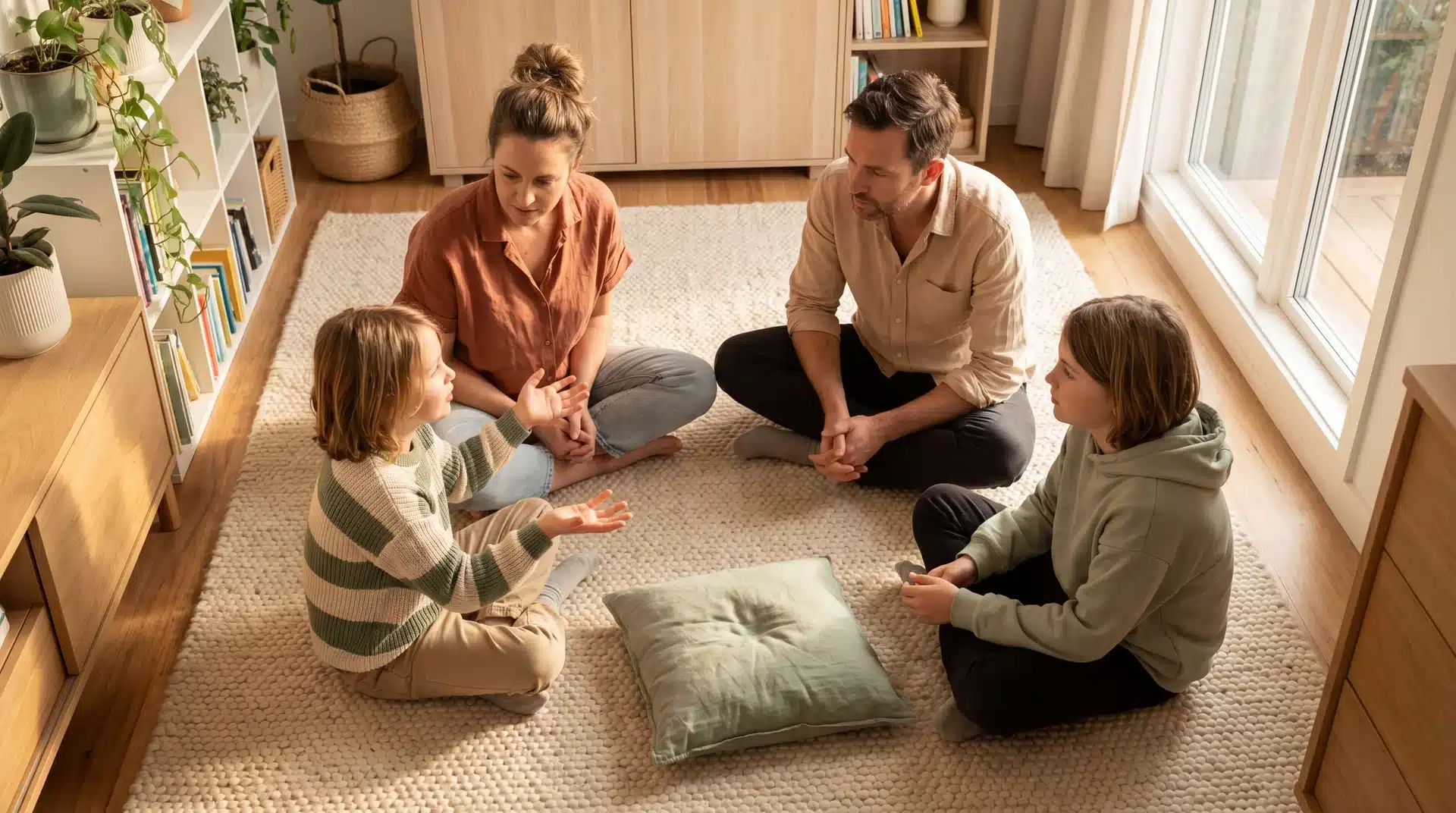
The family sits in a circle. Each person takes a turn finishing the sentence “I feel ___ when ___ because ___.” No one interrupts. No one defends. Each person listens.
- Best for: Families that fight a lot or where members shut down
- What you need: Nothing
- Time: 15 to 20 minutes
- Why it works: The I-feel structure breaks the blame loop. It is hard to argue with someone’s feelings.
2. Pass the Message

The classic telephone game. One person whispers a sentence to the next, who whispers it on, all the way around. Compare the final version to the original.
- Best for: Families with frequent misunderstandings
- What you need: At least four people
- Time: 10 minutes
- Why it works: It shows in real time how messages get distorted, which makes future arguments less personal.
3. Active Listening Pairs
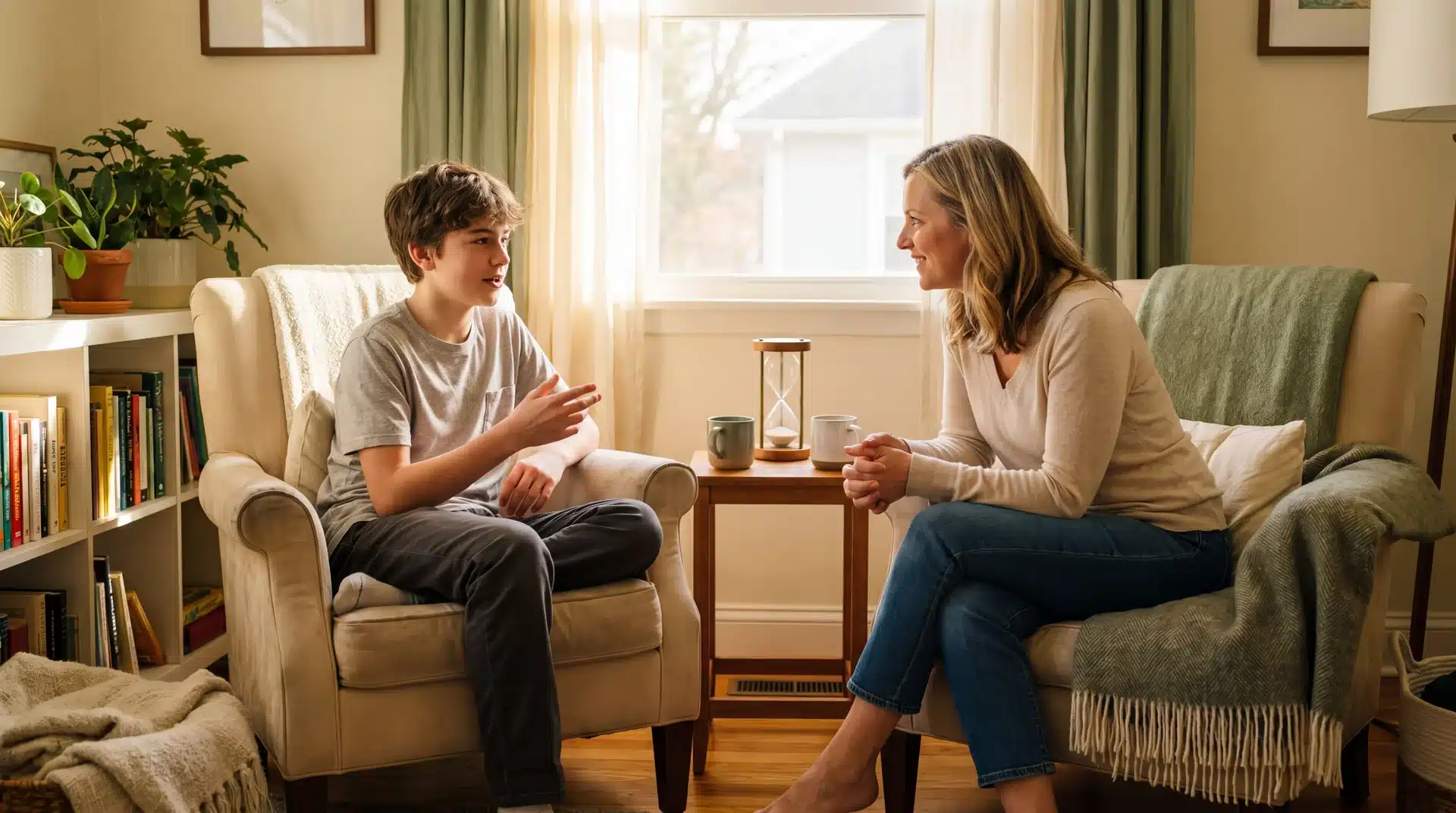
Two family members sit facing each other. One speaks for two minutes about something on their mind. The other listens, then reflects on what they heard before responding. Then they switch.
- Best for: Parent and teen conflict, or partners who interrupt each other
- What you need: A quiet space and a timer
- Time: 15 minutes
- Why it works: Most fights happen because no one feels heard. Forced reflection slows everything down.
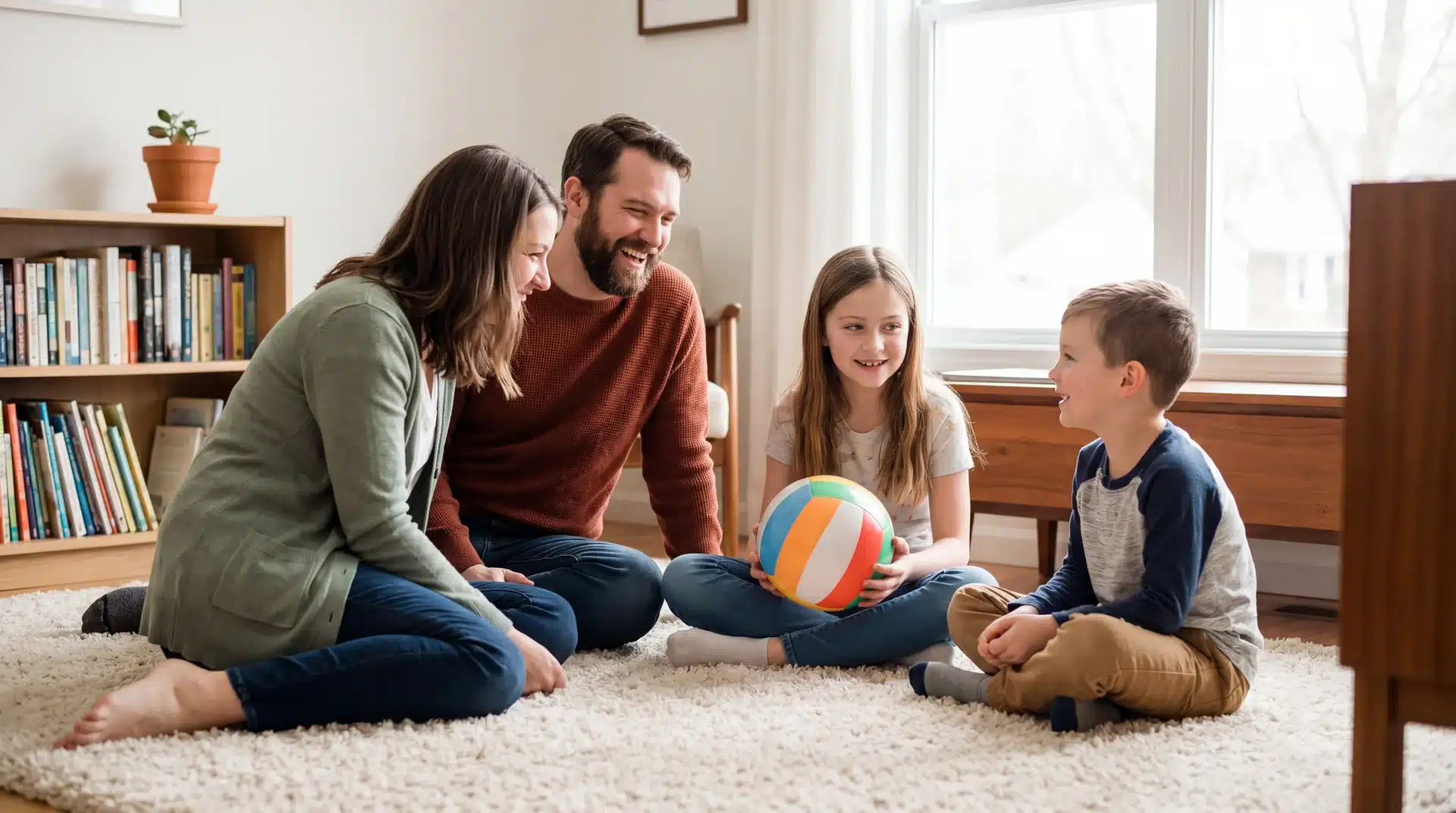
4. Emotion Beach Ball
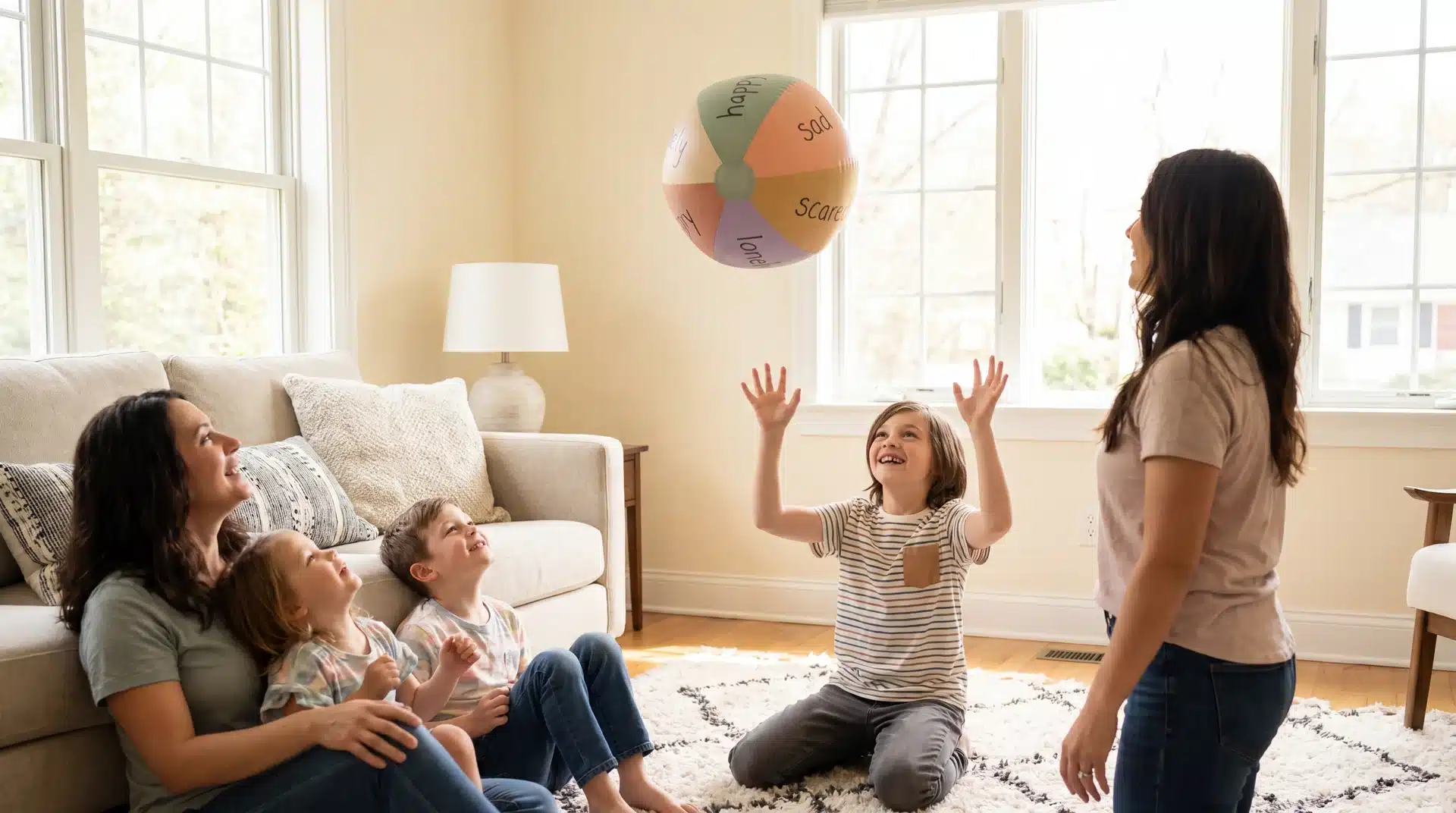
Write different emotions on a beach ball with a permanent marker (happy, sad, scared, angry, surprised, lonely, proud, frustrated). Toss the ball. Whoever catches it shares a recent moment when they felt the emotion their right thumb landed on.
- Best for: Kids and teens who freeze in talk-only sessions
- What you need: One beach ball and a marker
- Time: 20 minutes
- Why it works: The play element lowers pressure and makes feelings easier to share.
Trust and Connection
These activities rebuild the quiet kind of safety families lose when conflict has been around too long.
5. Mirroring

Two family members face each other. One leads with slow movements (a hand wave, a head turn, a smile). The other mirrors as closely as possible. Switch leaders after a minute.
- Best for: Emotionally distant parent and child pairs, or sibling tension
- What you need: Open space
- Time: 5 to 10 minutes
- Why it works: The silent attention rebuilds connection without words, which is often easier than a tough conversation.
6. Trust Fall (Modified)

Stand close behind a family member. Have them fall backward (just a small lean) into your hands. Build up slowly to a fuller fall as comfort grows.
- Best for: Families rebuilding trust after a hard period
- What you need: Open floor space, no obstacles
- Time: 10 minutes
- Safety note: Never with very young children, and never as a surprise
- Why it works: Physical trust builds emotional trust faster than discussion does.
7. The Gratitude Circle
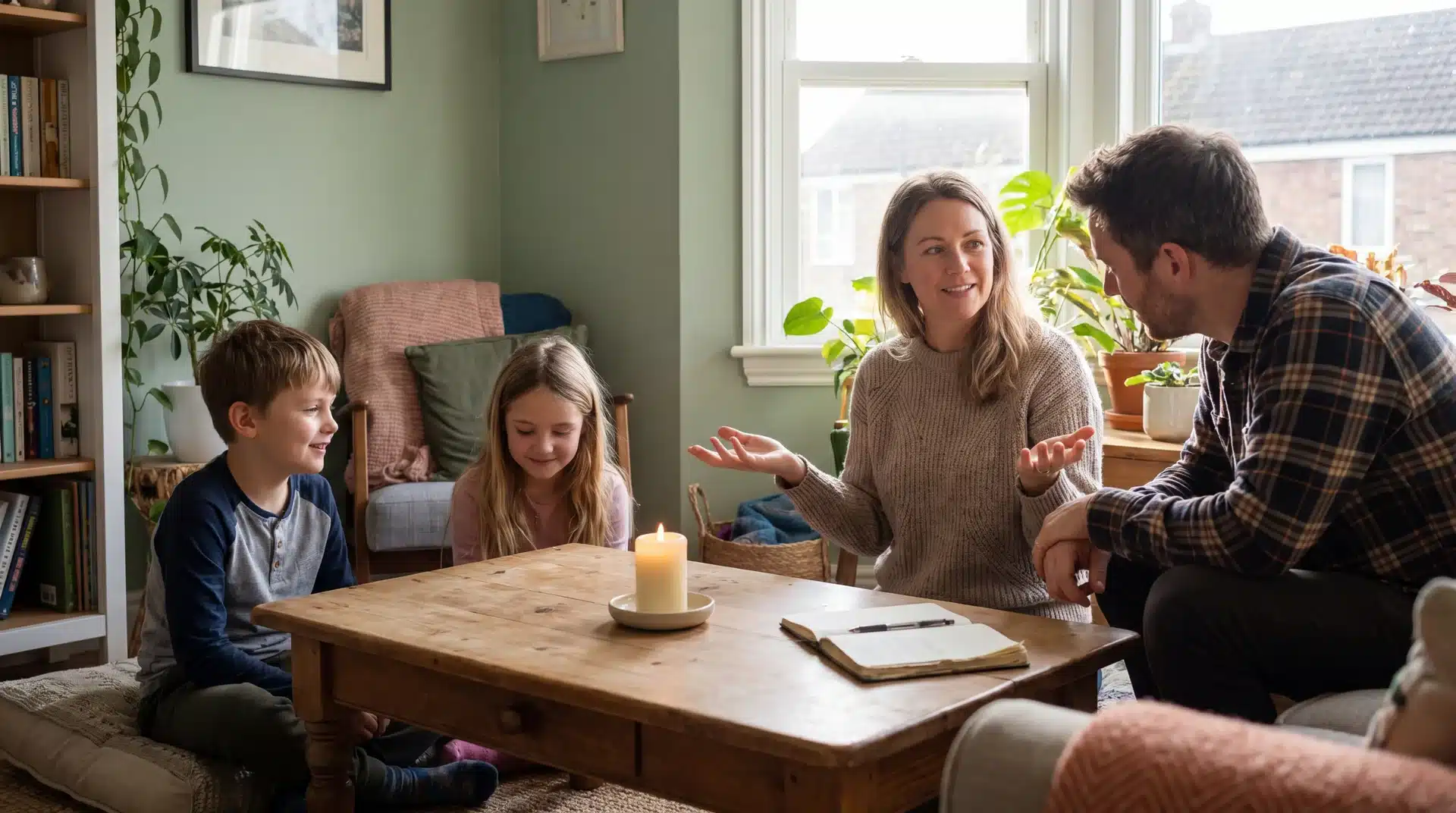
Each family member says one specific thing they appreciate about each other at the table. The phrase must start with “I appreciate that you…” and name a specific action, not a general trait.
- Best for: Families stuck in a critical or sarcastic pattern
- What you need: Nothing
- Time: 15 minutes
- Why it works: Specificity beats vague praise. “I appreciate that you helped me with homework last Tuesday.” “You’re great” does not.
8. Colored Candy Questions
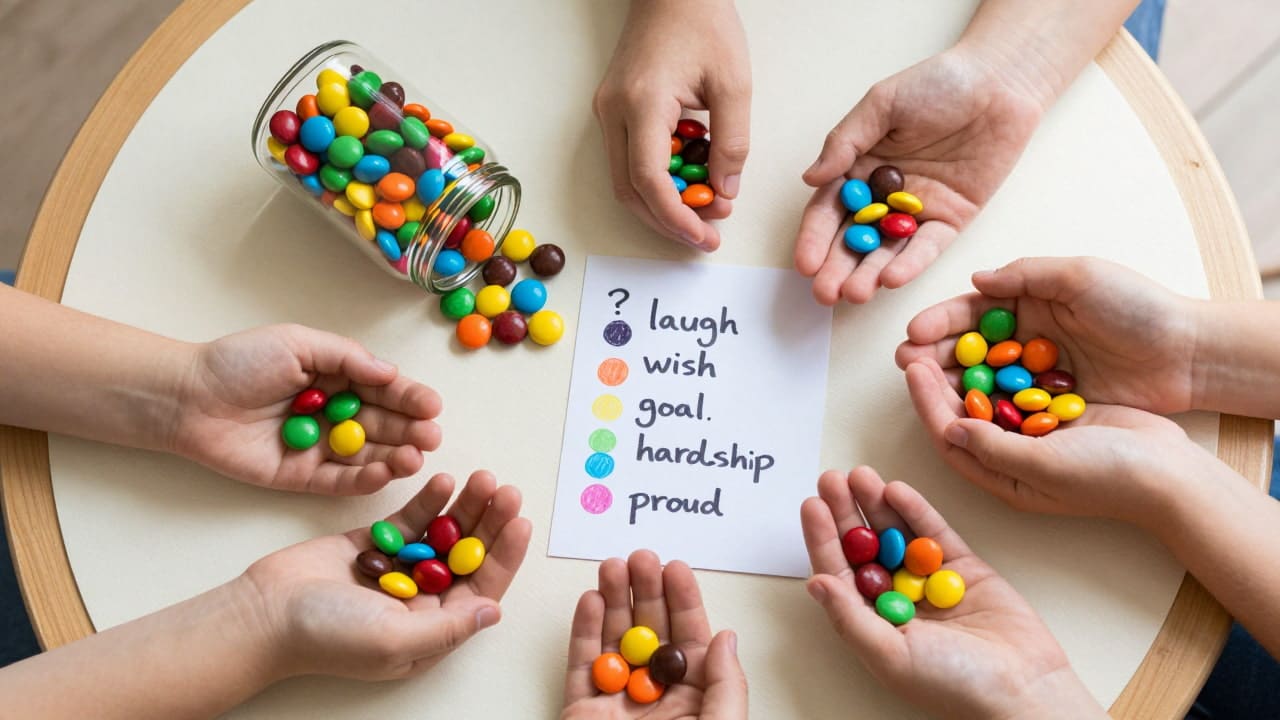
Use a bag of multicolored candies (M&M’s, Skittles, etc.). Assign each color a question. Each person grabs a small handful and answers as many questions as they have candies of that color.
| Candy color | Sample question |
|---|---|
| Red | What made you laugh this week? |
| Yellow | What is one thing you wish your family knew about you? |
| Green | What are you proud of right now? |
| Blue | What is something hard you are dealing with? |
| Orange | What is a goal you have for next month? |
- Best for: Ice-breaker in early sessions, especially with kids and tweens
- What you need: Colored candies and a list of questions
- Time: 15 to 25 minutes
- Why it works: Structure makes sharing easier, and the candy is a small reward.
Emotional Expression and Insight
These activities help family members put feelings into shapes, colors, or stories when words fall short.
9. The Family Drawing

Give each family member a piece of paper and a pencil. Everyone draws “the family” doing something together. No talking while drawing. After fifteen minutes, take turns sharing what you drew and why.
- Best for: Surfacing how each family member sees their place in the family
- What you need: Paper, pencils, colored markers
- Time: 30 minutes
- Why it works: A child who always draws herself far from the others is telling you something words cannot.
10. Silent Group Drawing
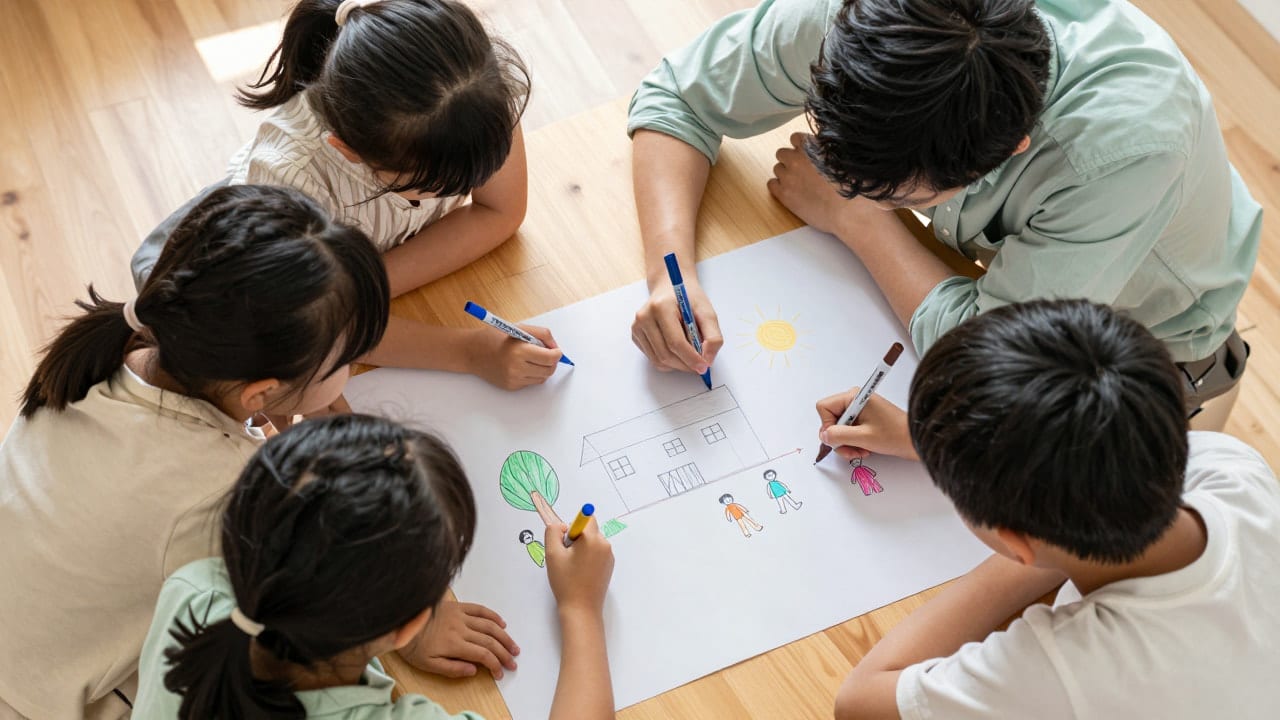
The family adds to one shared drawing without speaking. Each person takes a turn adding a small element until everyone agrees the picture feels finished.
- Best for: Practicing non-verbal cooperation, especially when verbal arguments dominate
- What you need: A large piece of paper, markers
- Time: 20 minutes
- Why it works: Without words, family members notice each other’s pacing, energy, and choices.
11. Genogram (Family Tree)
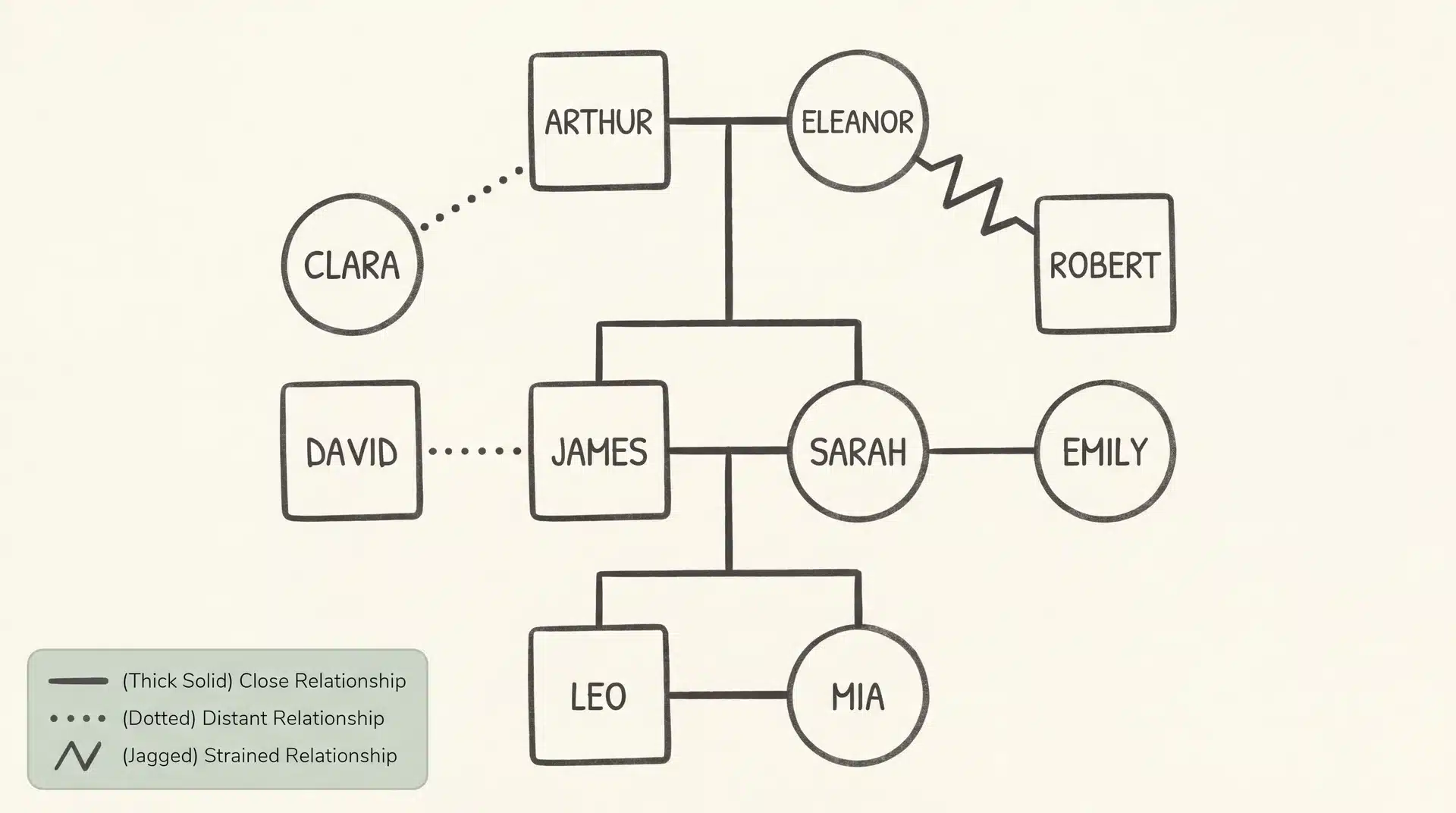
A therapist guides the family in mapping relationships across three or more generations, including conflicts, deaths, divorces, and patterns. Specific symbols mark close, distant, or strained relationships.
- Best for: Understanding inherited patterns of conflict, addiction, or anxiety
- What you need: Large paper, pens, and a trained therapist
- Time: 60 to 90 minutes across one or two sessions
- Why it works: Seeing patterns laid out visually often shifts how the current generation interprets their own struggles.
- Therapist only: The symbols, prompts, and follow-up questions need clinical training to handle safely.
12. Boat-Storm-Lighthouse Drawing
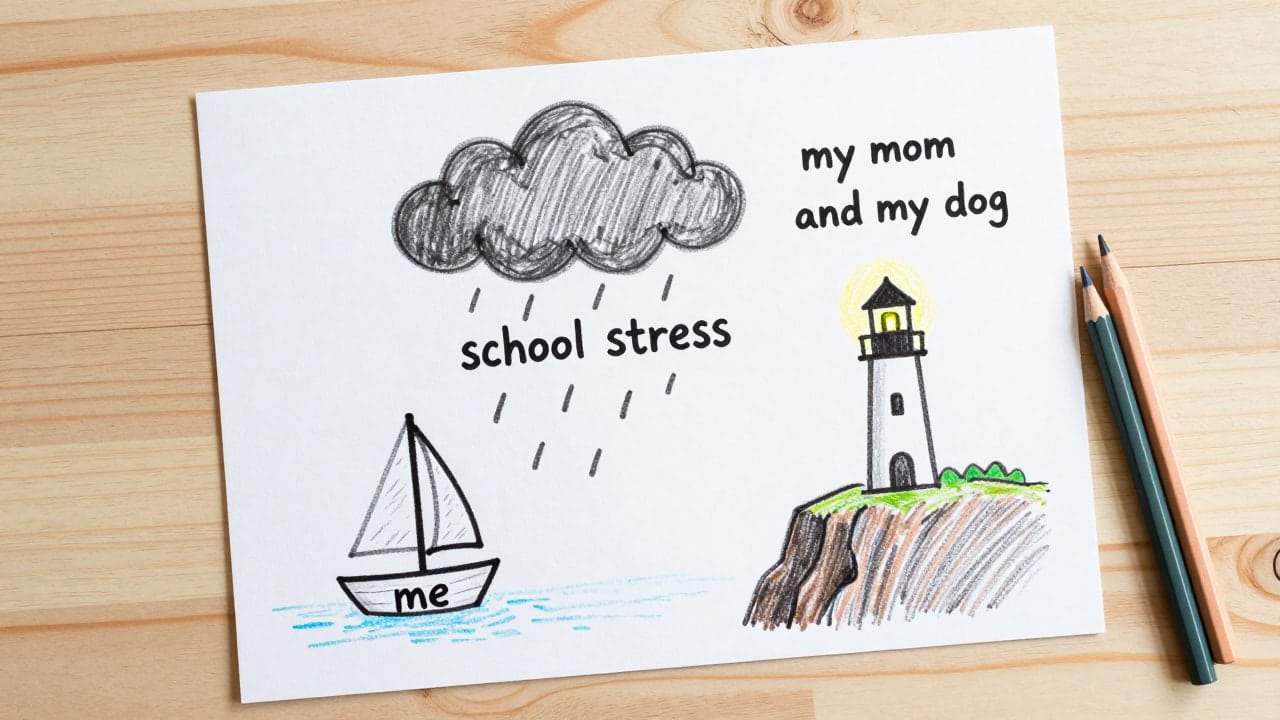
Each family member draws three things: a boat that represents them, a storm that represents their current challenge, and a lighthouse that represents what helps them stay steady.
- Best for: Assessment in early sessions or self-reflection at home
- What you need: Paper, colored pencils
- Time: 30 minutes
- Why it works: Kids and teens who cannot describe their stress can usually draw it.
Perspective and Empathy
These activities help each family member step into someone else’s shoes, even just for a few minutes.
13. Role Reversal

Family members swap roles for ten minutes. The parent plays with the child. The child plays the parent. Act out a recent, typical situation, such as the morning routine or a homework conflict.
- Best for: Parent and teen conflict, sibling rivalry
- What you need: The willingness to feel a little silly
- Time: 15 to 25 minutes
- Why it works: Stepping into another person’s role often lands harder than any explanation could.
14. The Miracle Question
Ask each family member: “If you woke up tomorrow and the problem was completely gone, what would be different? How would you know?”
- Best for: Families stuck only talking about what is wrong
- What you need: Nothing
- Time: 20 minutes
- Why it works: It shifts the focus from problem to solution, which often surfaces values everyone already shares.
15. Storytelling Round-Robin

The family co-creates a story, one sentence at a time, going around the circle. Each person adds the next sentence, building on what came before.
- Best for: Lighter sessions, younger kids, breaking tension after a hard topic
- What you need: Nothing
- Time: 15 minutes
- Why it works: Creativity together rebuilds connection, especially after conflict.
Problem-Solving and Goal-Setting
These activities move the family from talking about problems to taking action.
16. The Family Goal Board
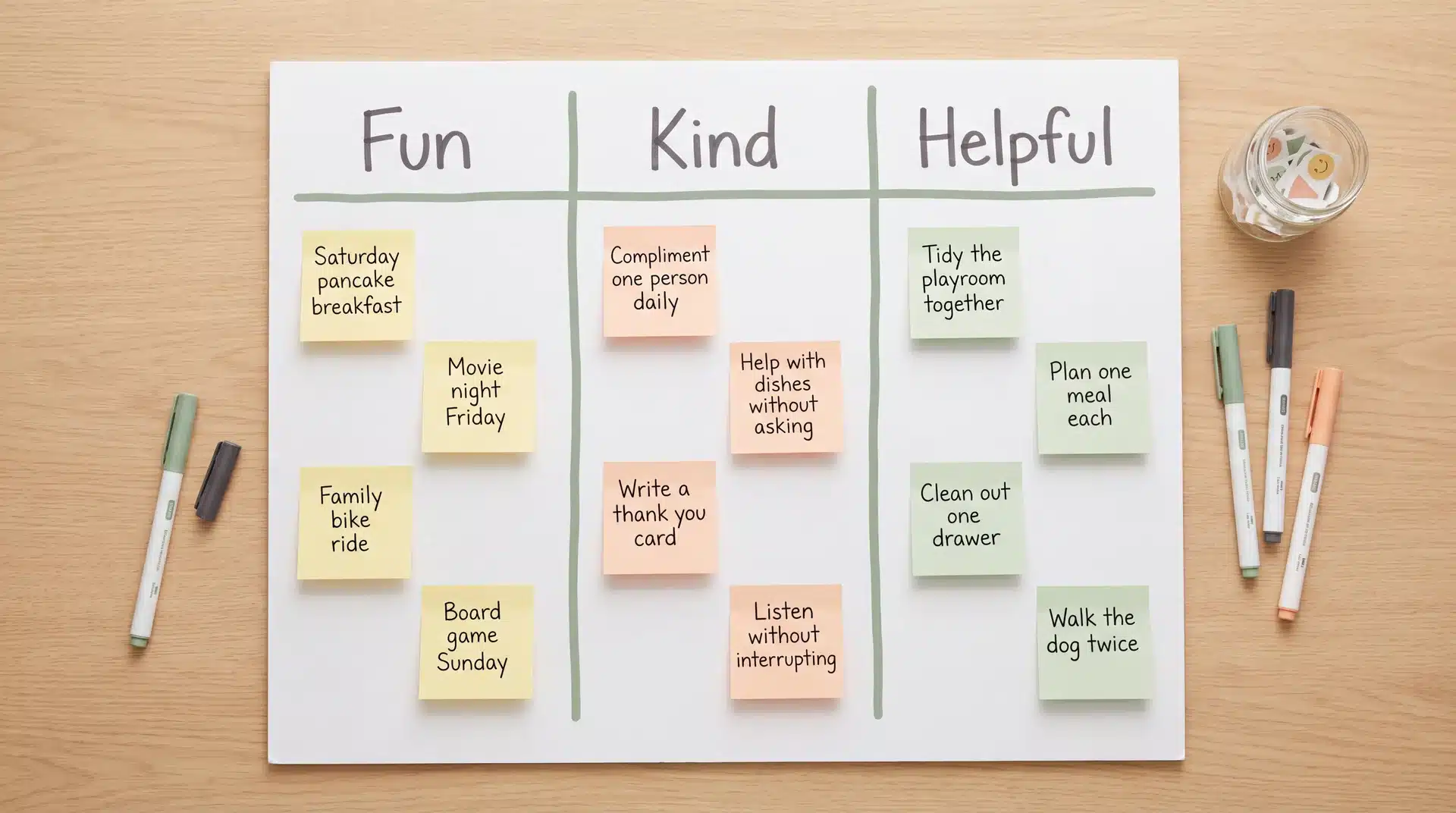
Together, the family agrees on three shared goals for the next month (something fun, something kind, something helpful). Map who does what, when, and how the family will check in.
- Best for: Families ready to move from talking to doing
- What you need: A poster board, markers, sticky notes
- Time: 45 minutes
- Why it works: Goals chosen together and tracked visibly stick better than goals decided by one person.
17. Lily Pad Problem-Solving
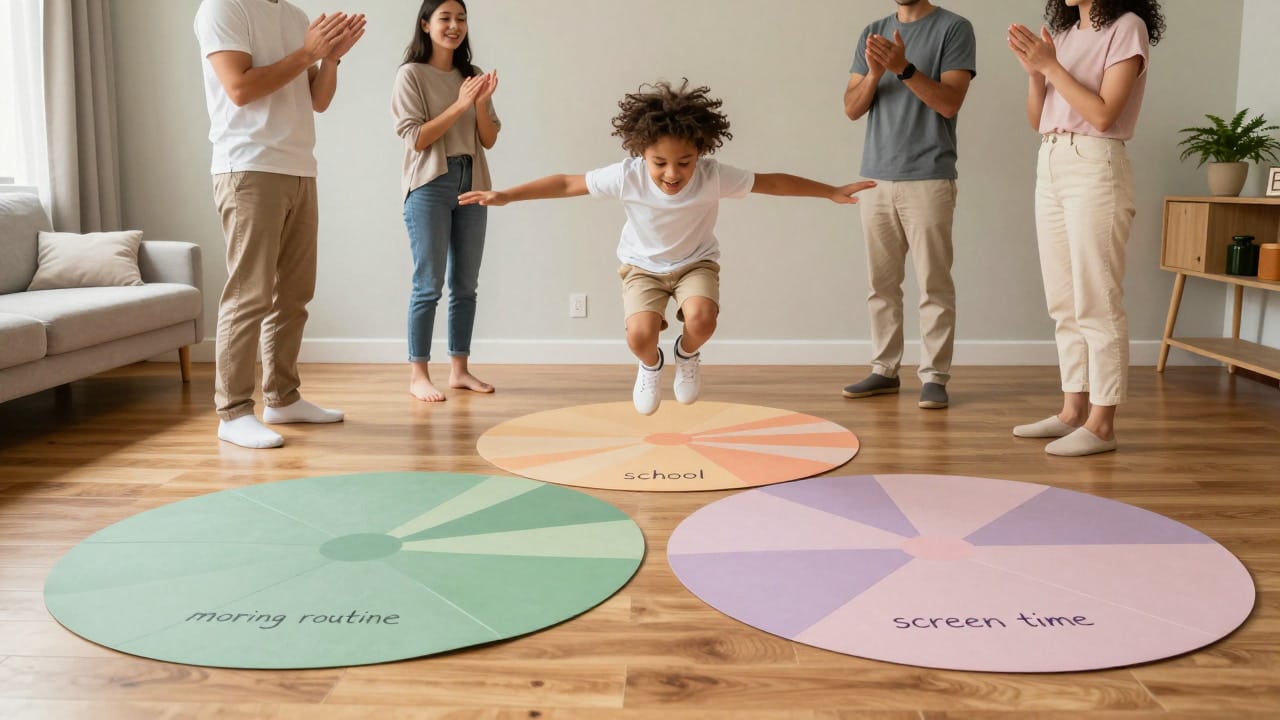
Place paper lily pads (cut-out circles or sheets) on the floor, each labeled with a current family issue.
The family physically jumps from one to another, talking about possible solutions for each. Move on when the family agrees on a small next step.
- Best for: Active families with younger kids who cannot sit still
- What you need: Paper, scissors, marker
- Time: 30 minutes
- Why it works: Movement keeps energy up and stops kids from tuning out.
How to Pick the Right Activity for Your Family?
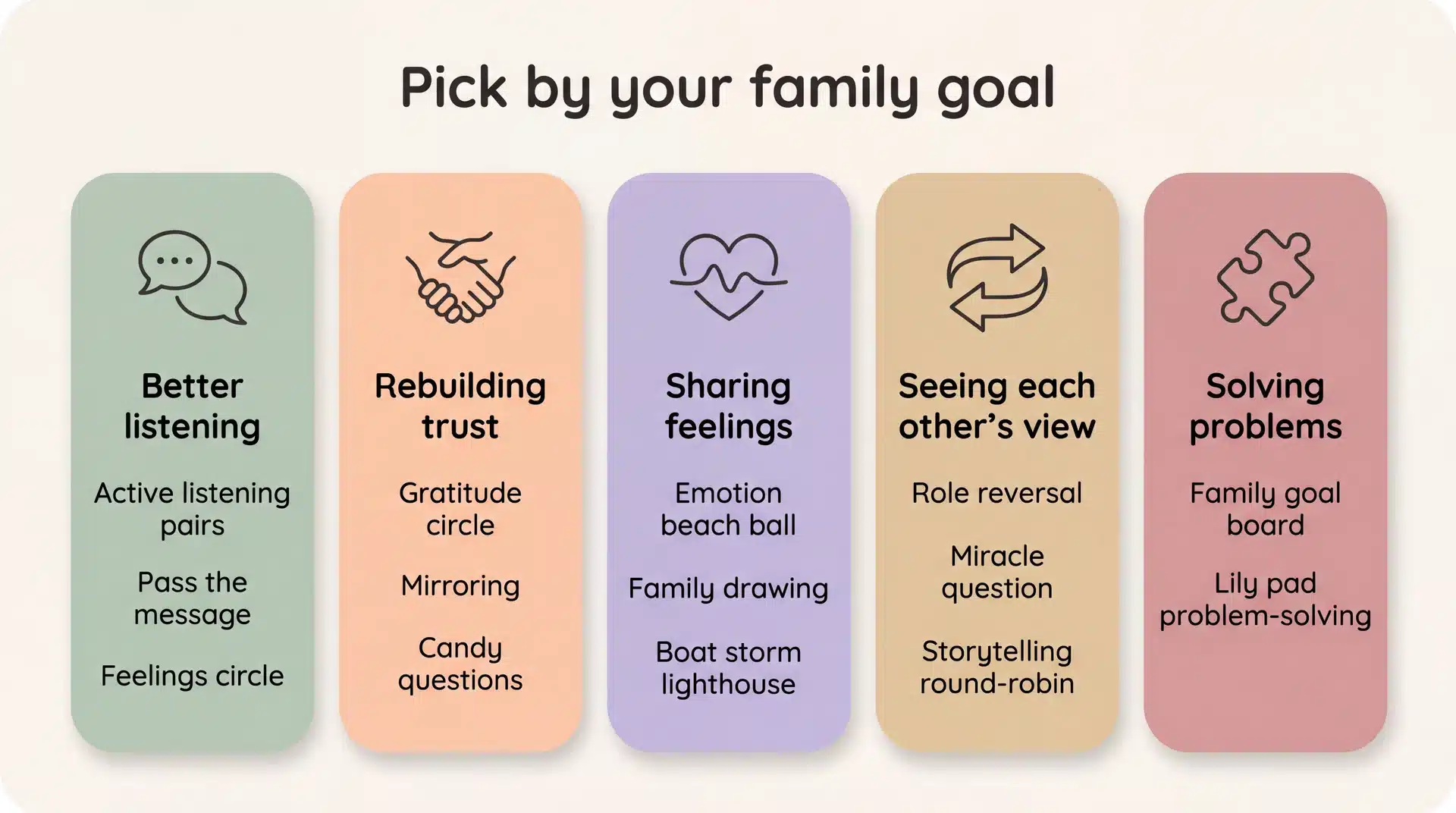
The list above can feel overwhelming. Here is the simple way to choose.
Start with your goal: What does your family need most right now? Better listening? Less fighting? More fun together?
| Family Goal | Best Activities to Start With |
|---|---|
| Better listening | Active listening pairs, Pass the message, The Feelings Circle |
| Rebuilding trust | The Gratitude Circle, Mirroring, Colored Candy Questions |
| Sharing more feelings | Emotion Beach Ball, Family Drawing, Boat-Storm-Lighthouse |
| Seeing each other’s view | Role Reversal, The Miracle Question, Storytelling Round-Robin |
| Solving real problems | Family Goal Board, Lily Pad Problem-Solving |
Match to your child’s age.
- Ages 4 to 7: drawing, beach balls, candy questions, simple storytelling
- Ages 8 to 12: all drawing activities, role reversal, family goal board, lily pads
- Teens 13+: active listening, the miracle question, gratitude circle, role reversal
Start light, then go deeper: Run an icebreaker activity first. Save the heavier ones for later, when the family feels safer.
Tips to Make Activities Actually Land
The activity matters less than how you run it. A few rules of thumb.
1. Keep it light: Family therapy activities should not feel like a school assignment. If your kid rolls their eyes within 2 minutes, switch to something more playful.
2. Debrief afterward: Ask three short questions when the activity ends:
- What did you notice?
- What was hard?
- What would you change next time?
3. Do not expect change in one session: Real shifts come from repeating the activities that resonate. The first time often feels awkward. The fourth time starts to feel normal.
4. Praise effort, not outcome:“I noticed you waited for your sister to finish” matters more than “That went well.”
5. Avoid forcing it: If a family member refuses to take part, do not push. Let them watch. Many quiet family members come around once they see that the activity feels safe.
Conclusion
A family does not heal through one big talk. It heals through small repeated actions that prove a new way is possible.
You do not need a therapist to start. You need fifteen quiet minutes, one activity from this list, and the willingness to feel a little awkward the first time.
The first attempt will probably feel clumsy. Someone might roll their eyes. Someone else might not say much. That is normal, and it does not mean the activity failed.
The real shift starts on the second or third try, when the family stops thinking about the rules and starts noticing each other again.
That said, some patterns at home need more than weekly activities.
If your child is struggling in ways that affect school, friendships, or mood for weeks, it’s a sign that your child may need behavioral therapy, which can help you decide whether professional support is the right next step.
Activities at home and therapy with a trained professional often work best together.