The right incentive for a second grader is completely wrong for a tenth grader.
That is the part most PBIS lists miss.
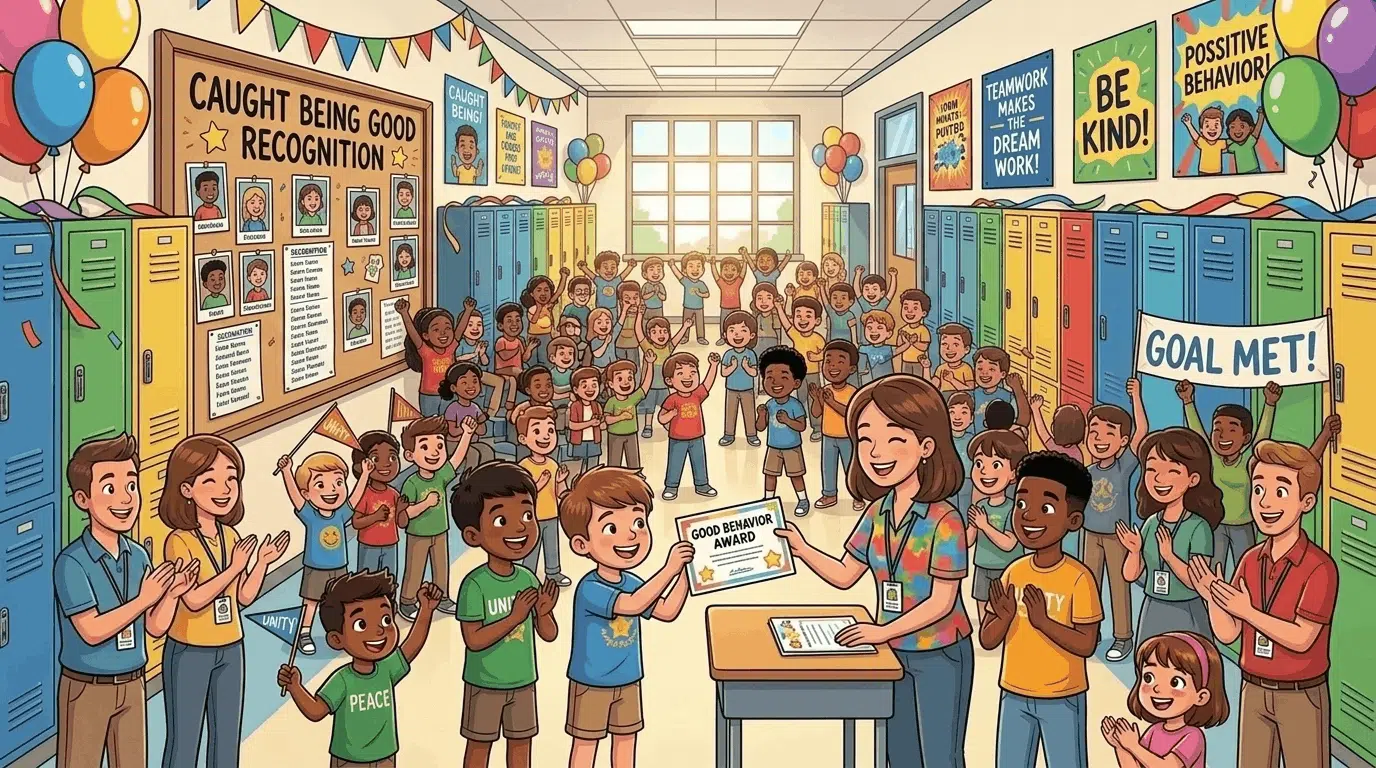
Positive Behavioral Interventions and Supports is a school-wide framework that reinforces desired behavior through consistent, positive recognition rather than punishment-focused discipline.
Students notice what gets celebrated. When recognition is clear and consistent, positive behavior becomes a habit rather than an effort.
This list has multiple incentive ideas organized by grade level and type, so teachers can find what fits their students without having to read through ideas that do not apply.
What Makes a PBIS Incentive Work?
Before the list: incentive type matters as much as the incentive itself.
- Tangible rewards: Physical items, such as stickers or prizes, that students keep and use; ideal for younger students who need immediate recognition.
- Privilege rewards: Special experiences or freedoms, such as a homework pass or seat choice, are best for older students who value autonomy.
- Recognition rewards: Public or private acknowledgments, like intercom shoutouts or notes home, that cost nothing and work for all age groups.
The most common mistake in PBIS programs: using the same incentives across all grade levels. A sticker chart that motivates a first grader will feel patronizing to a seventh grader.
The fix is matching incentives to where students actually are, not where the policy assumes they are.
PBIS Incentives for Elementary Students (KG– 5th Grade)
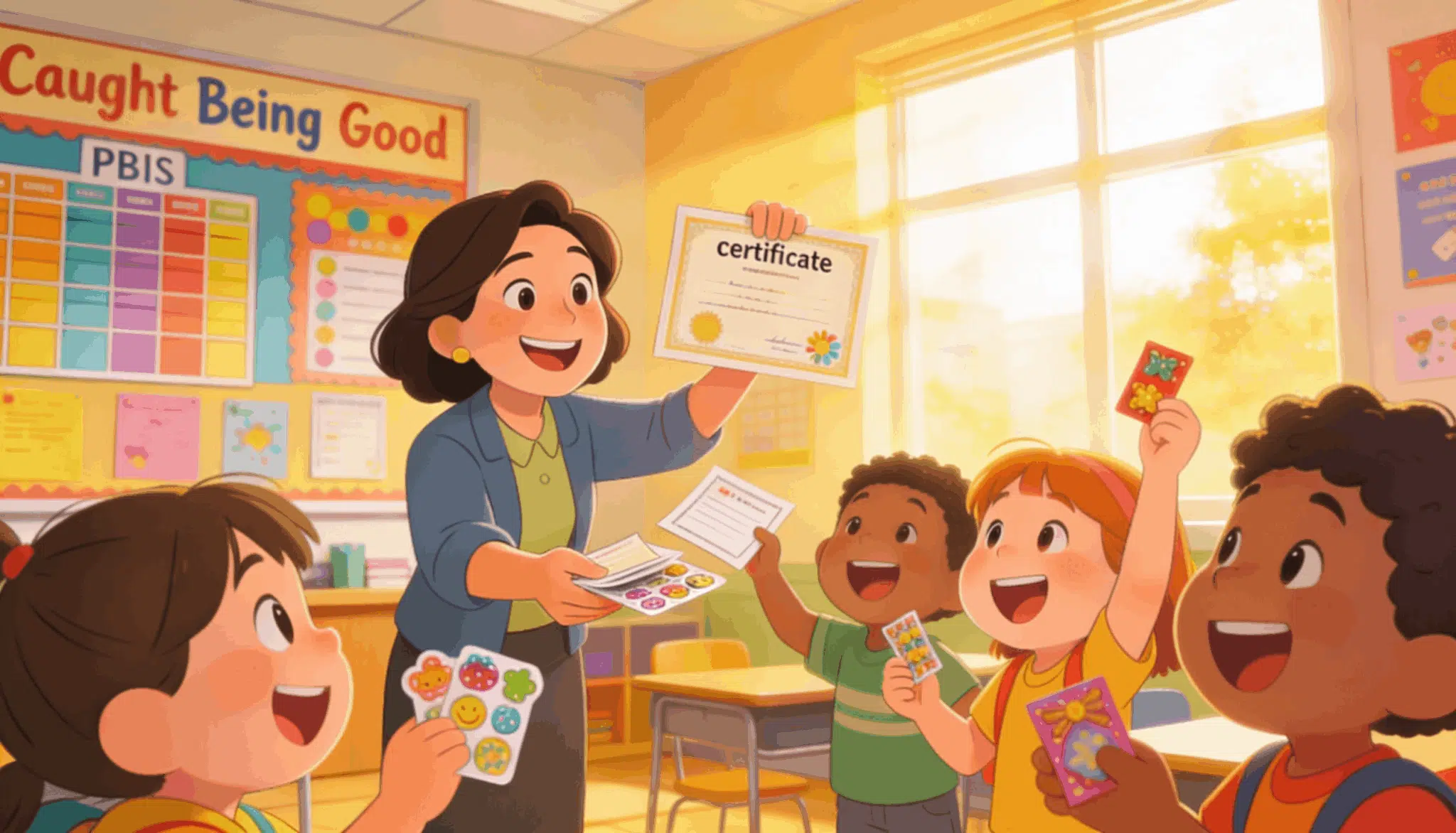
Elementary students respond to rewards that are quick and concrete. Small wins with immediate recognition land better than large, delayed rewards at this age.
Tangible Incentives
- Stickers and sticker charts
- Pencils, erasers, themed bookmarks
- Small toys: fidget spinners, mini puzzles, glow-in-the-dark items
- Certificates of achievement (printed, not generic)
- School “bucks” or token currency redeemable at a class store
- Homework pass
- School supplies with a fun theme
- Personalized bookmarks
Privilege Incentives
- Extra recess time (15 minutes is highly valued at this age)
- Sit anywhere in the classroom for the day
- Lunch in the classroom with a friend
- Classroom DJ for the day (choose the music during independent work)
- Show-and-tell time for the winner
- Choose the read-aloud book for the week
- Line leader or door holder for a day
- Extra computer or tablet time
- A guest reader from another class, the office, or a parent
- Read with a stuffed animal at a special reading station
- Work in the hallway or a special classroom spot
- Choose the game for indoor recess
- Be the teacher’s helper for the day
- Take care of the class pet for a day
Recognition Incentives
- Name on the “caught being good” board
- Announcement over the school intercom
- Photo in the classroom or on the school bulletin board
- Positive phone call home
- Certificate at morning assembly
- Student of the Week display
- Principal’s VIP lunch
Pbis Incentives for Middle School Students (6th –8th Grade)
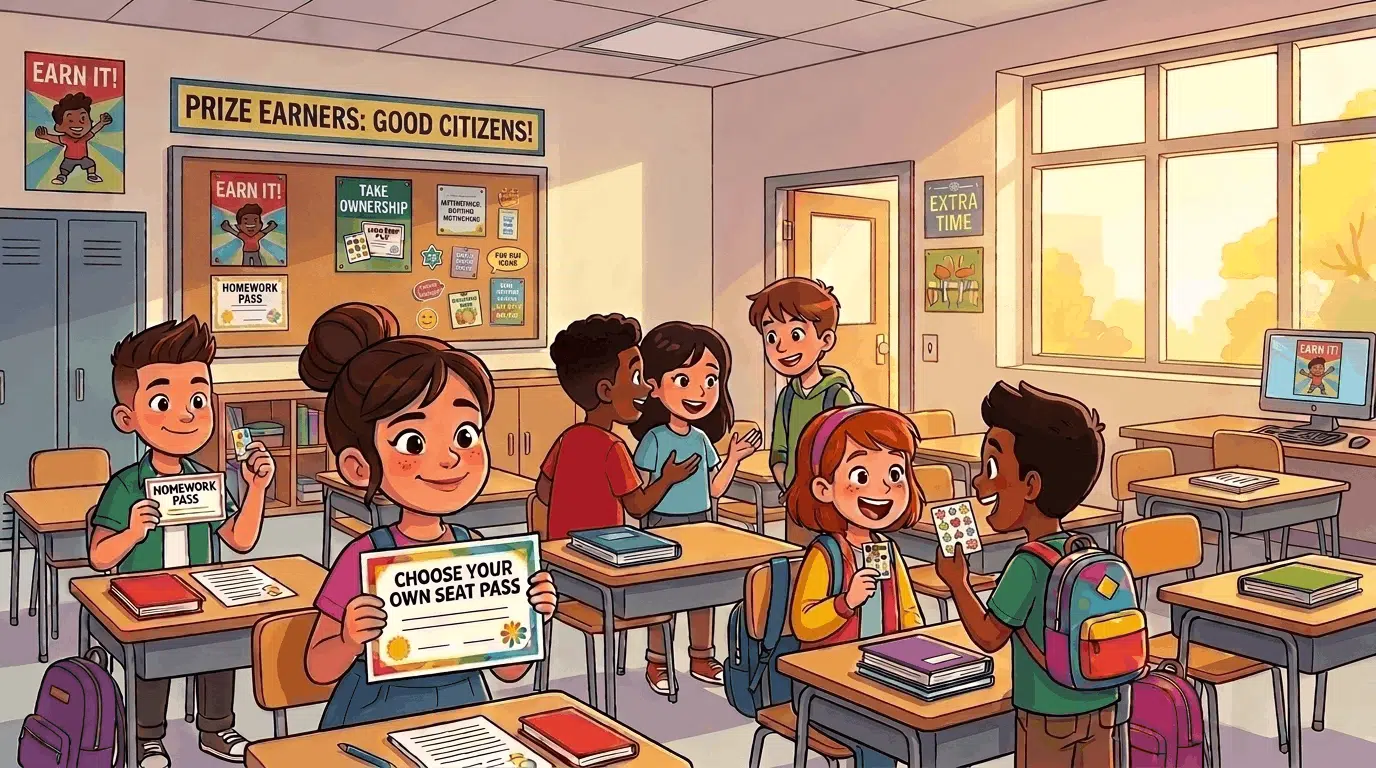
Middle schoolers value social connection and autonomy. Anything that feels less like a school reward and more like a real privilege lands better with this age group.
A sticker chart will not work here. Seat choice and a student vs. staff kickball game will.
Tangible Incentives
- Gift cards (small value, high impact; even $5 matters)
- School merchandise: hoodies, water bottles, hats with the school logo
- Headphones or phone accessories
- Art supplies or sports equipment
- Books of their own choosing
- Snack packs are redeemable at the school store
- Free dress-down day pass
Privilege Incentives
- Choose your own seat for the week
- First out of class at the end of the day
- Free period or open study hall pass
- Homework pass
- Drop the lowest quiz grade
- Lunch with the principal or a favorite teacher
- Entry into a video game tournament
- Choose the next book for English class
- Participate in a student vs. teacher game: kickball, trivia, or relay race
- Extra time in the library or computer lab
- Early lunch or preferred lunch table
- Wear a hat to school for a day
- Pajama day pass
- Attend a school sports game with a friend group
Recognition Incentives
- Announcement over the intercom
- Feature in the school newsletter
- Shoutout on the school’s official social media account
- Certificate at a school assembly
- Student spotlight board outside the main office
- Peer nomination award
PBIS Incentives for High School Students (9th –12th Grade)
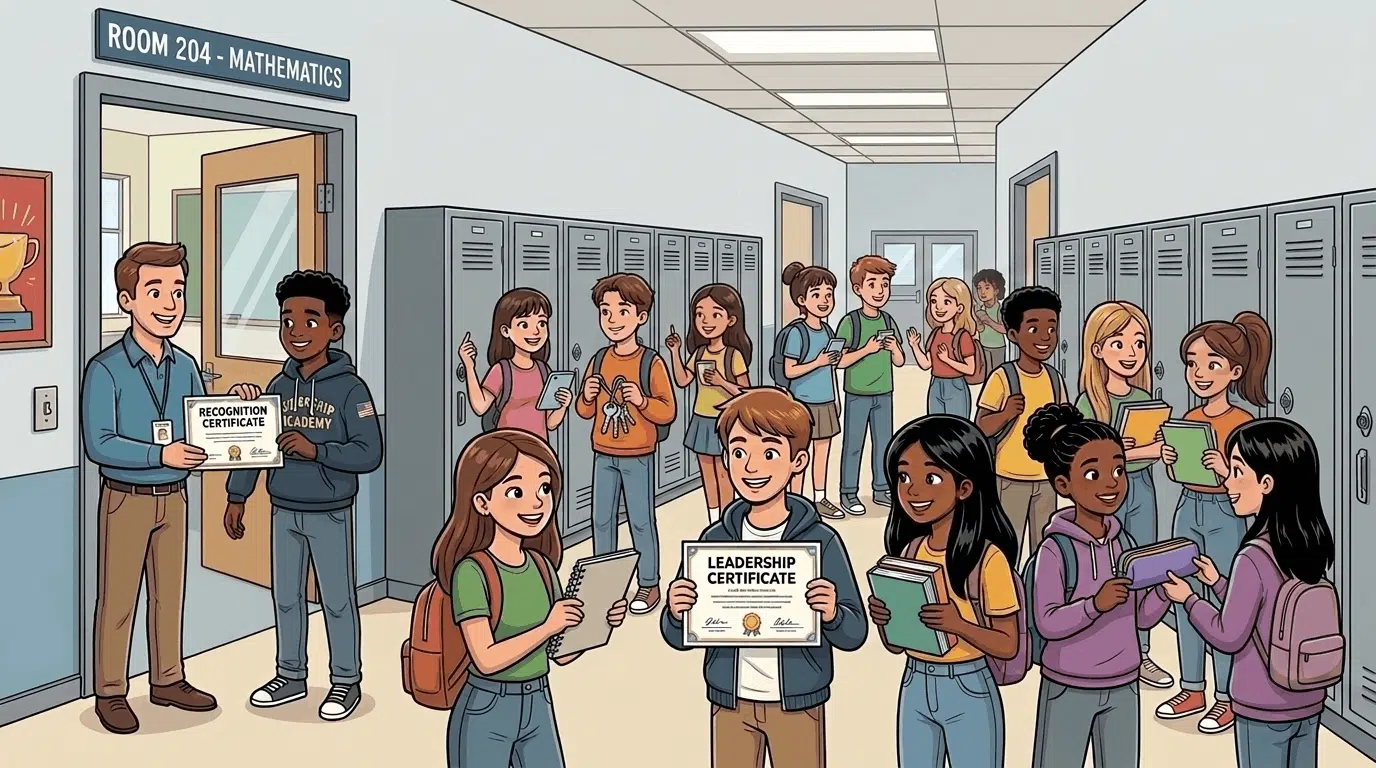
High schoolers are often written off as difficult to motivate with PBIS. The research says the opposite when incentives match what actually matters to older students.
At Mustang High in Oklahoma, staff assumed high schoolers would not respond to a school store or points system.
Students surprised them. As one staff member noted, kids started talking about the praise they received, and the more recognition they got, the more they wanted.
Even stickers and small items became popular in ways nobody expected.
The key to high school is autonomy. Rewards that give students real control over their experience, where they sit, whether a grade gets dropped, and whether they get to leave early, far outperform objects.
Tangible Incentives
- Gift cards to local restaurants or streaming services
- School merchandise
- Reserved parking spot for a week or a month
- Free yearbook or early yearbook signing access
- Tickets to school events: games, dances, performances
- Senior privileges granted ahead of schedule
Privilege Incentives
- Golf cart ride around campus
- Make an announcement or play a song over the intercom
- Free dress day or themed dress pass
- Study hall or open library pass
- Homework extension for one assignment
- Drop the lowest test score for the quarter
- Early dismissal or late arrival (with administrative approval)
- First selection of electives for the following semester
- Off-campus lunch pass (where school policy permits)
- Attend a college campus visit or career day event
- Job shadow with a community partner
- Participate in a student vs. staff competition
Recognition Incentives
- Feature in the school newsletter or on school social media
- Senior spotlight at an assembly or in the graduation program
- Leadership or student ambassador role
- Scholarship application recommendation from the administration
- Certificate of recognition at a school assembly
Classroom-Wide PBIS Incentives
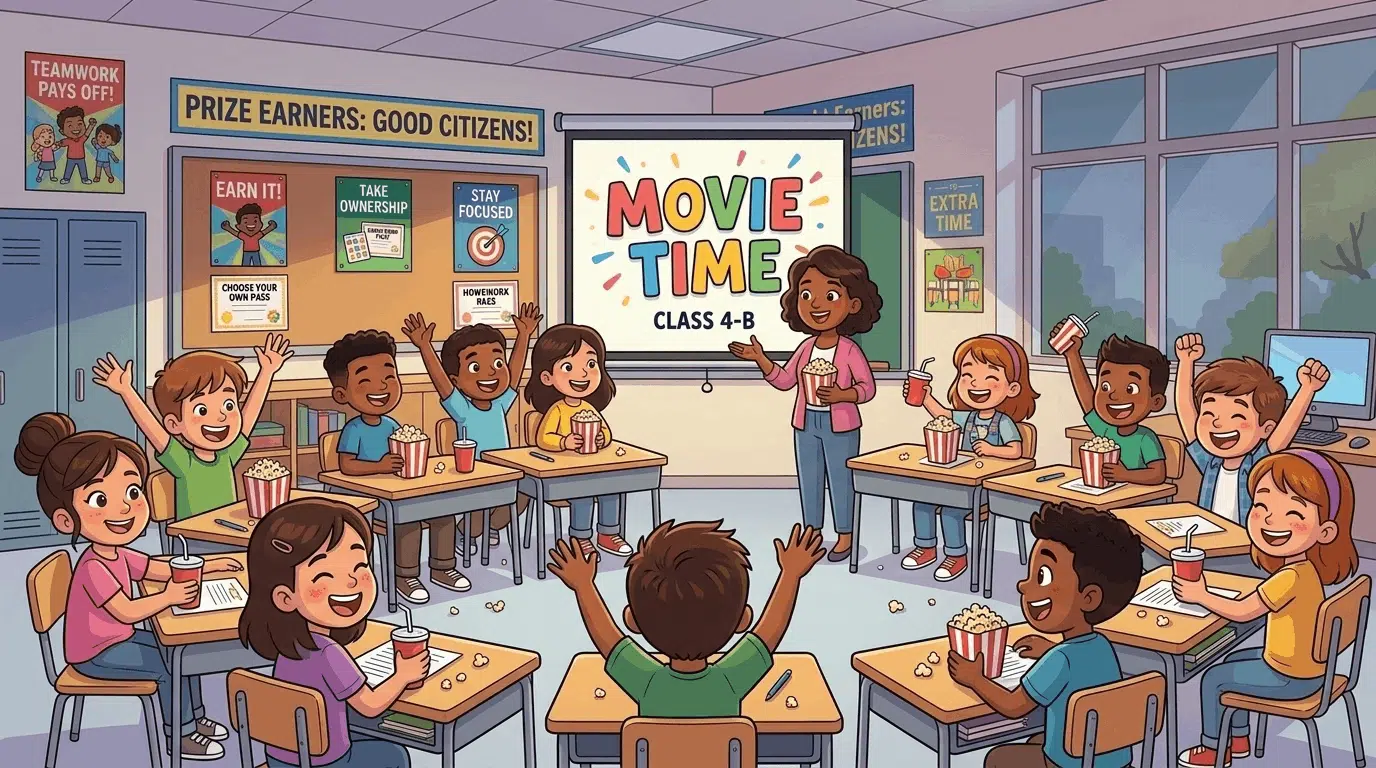
When a whole class earns a reward together, something shifts. Students start holding each other accountable.
The group has a shared goal and a shared celebration.
- Class movie time (30–60 minutes with popcorn if possible)
- Free choice Friday: board games, art, independent reading
- Dance party or karaoke session (10–15 minutes is enough)
- Class pizza or popcorn party
- Water balloon fight or outdoor game day
- Craft station day: bookmarks, origami, simple projects that take 20 minutes
- A guest speaker from the community or a parent with an interesting job
- Cooking or baking activity in the classroom
- Read-aloud from a popular book chosen by the class
- Class vs. class competition: trivia, academic bowl, or relay race
- Extended outdoor time with unstructured play
- Pajama day for the whole class
- Lunch in the classroom with a class-chosen movie
- Bring a stuffed animal or comfort item to school on a day
School-Wide PBIS Incentives
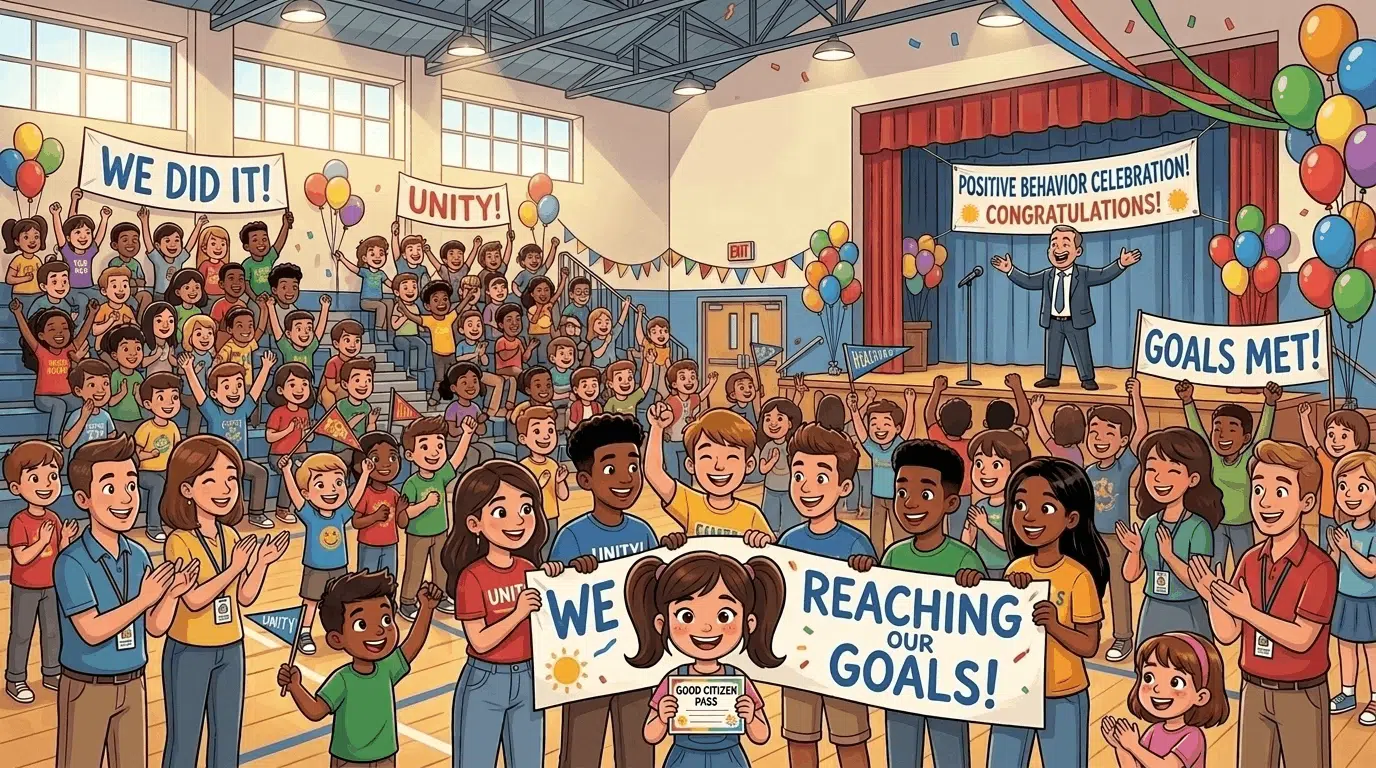
School-wide incentives do something classroom rewards cannot: they create culture. When the entire building works toward the same thing and celebrates together, PBIS moves from a program to a way of being at that school.
- School carnival or fall festival tied to behavior milestones
- Field trip as a grade-level reward
- Pajama day for the whole school
- Spirit week is organized around positive behavior themes
- School-wide dance or talent show
- Pep rally with individual and class recognition built in
- Principal surprise visits: ice cream cart, popcorn machine in the gym, a funny announcement
- School Olympics or field day
- A guest performer, athlete, or local celebrity visits
- Student vs. staff basketball, kickball, or trivia competition
- Movie in the gym or auditorium for all students
- Positive behavior parade or celebration walk through the building
- School store with behavior tokens redeemable for prizes or privileges
How to Build a PBIS Token Economy
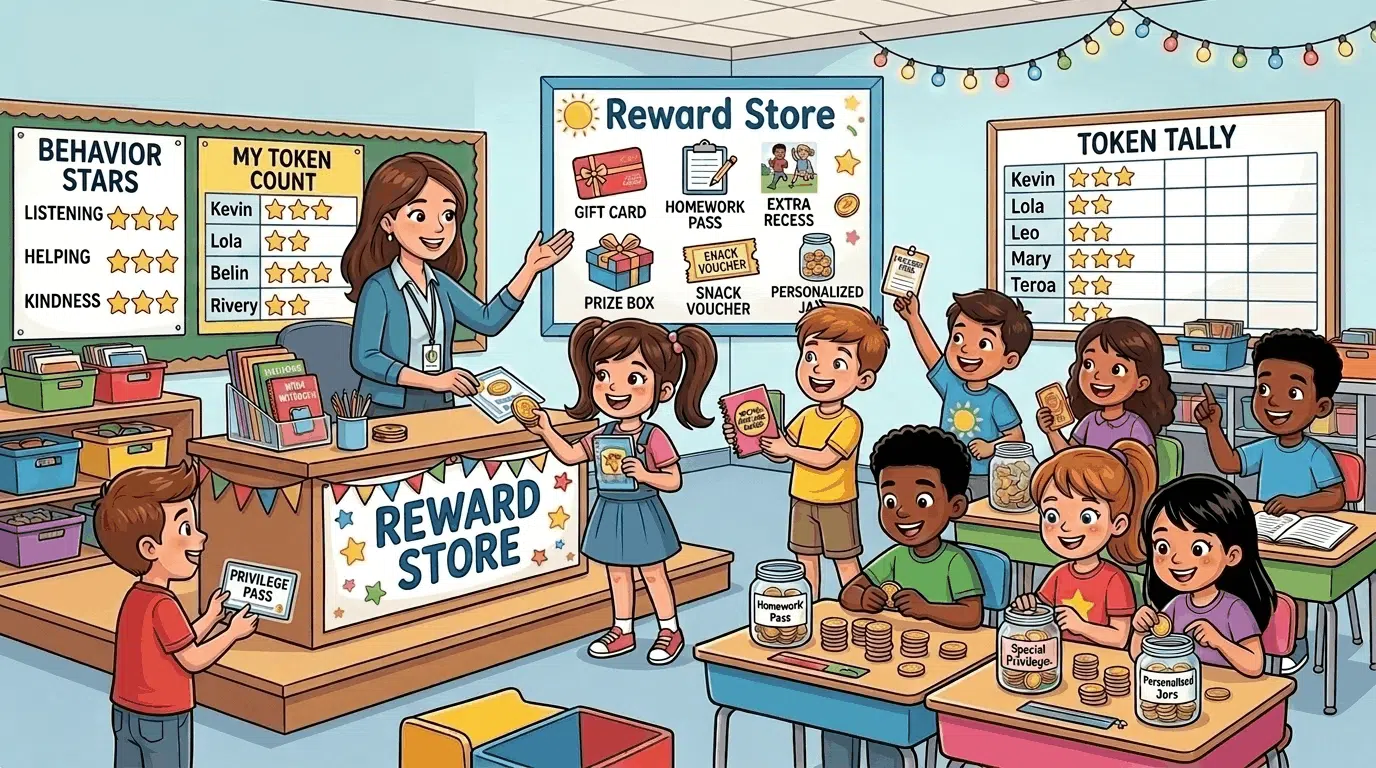
A token economy is the most common structure for delivering PBIS incentives at scale. Students earn currency for specific positive behaviors and redeem it for rewards.
- Choose a Currency: Select physical tokens or digital points via platforms like Class Dojo or PBIS Rewards.Physical tokens offer immediate reinforcement, while digital systems automatically track progress.
- Set Delivery Rules: Ensure consistency by having all adults recognize the same behaviors for the same rewards. Inconsistent reward delivery undermines the system, as students quickly notice discrepancies.
- Set Up the Store: Schools with a store let students choose rewards from a menu, boosting motivation. Raffles offer a chance to win, providing excitement, while stores guarantee reinforcement for earned currency.
- Prevent Counterfeiting: Use school logos, color-code by grade, number physical tickets, or switch to digital tracking systems to ensure authenticity and fairness in the token economy.
- Rotate the Reward Menu: Refresh the store’s reward options quarterly to avoid reward fatigue. Keeping the menu varied maintains student interest and motivation, ensuring the system stays engaging and effective.
Quick Reference Table
Grade Band | Best Tangible | Best Privilege | Best Recognition |
Elementary (K–5) | Stickers, small prizes, certificates | Extra recess, classroom DJ | Bulletin board, intercom shoutout |
Middle (6–8) | Gift cards, school merch | Seat choice, homework pass, student vs. staff | Newsletter, social media feature |
High School (9–12) | Gift cards, parking pass | Drop a grade, free dress, late arrival | Senior spotlight, scholarship recommendation |
Classroom-wide | Popcorn, craft supplies | Pizza party, movie time, game day | Class shoutout at assembly |
School-wide | Donated prizes, event tickets | Field trip, pajama day, carnival | Pep rally recognition, behavior parade |
Bottom Line
PBIS incentives work when they match the students, not just the program.
The right reward for a kindergartner is different from the right reward for a junior in high school. Start with that distinction, and the rest of the system gets easier to build.
The most effective incentives are often the ones that cost nothing: specific praise, genuine recognition, and the privilege of being trusted with a choice.
Well-planned programs that run consistently beat well-funded ones that collapse mid-year.
The values these incentives reinforce at school are the same ones children absorb at home through stories and example.
Moral stories for kidsare one of the most natural ways parents can introduce honesty, kindness, and responsibility before the school day begins, giving teachers something to build on rather than starting from scratch.
In the end, when both home and school align in values and reinforcement, students thrive and become the leaders of tomorrow.