Brown feels earthy. Green feels fresh. Put them together, and most people expect something in between. Something muddy. Something that looks like it belongs on the bottom of a shoe.
They are wrong.
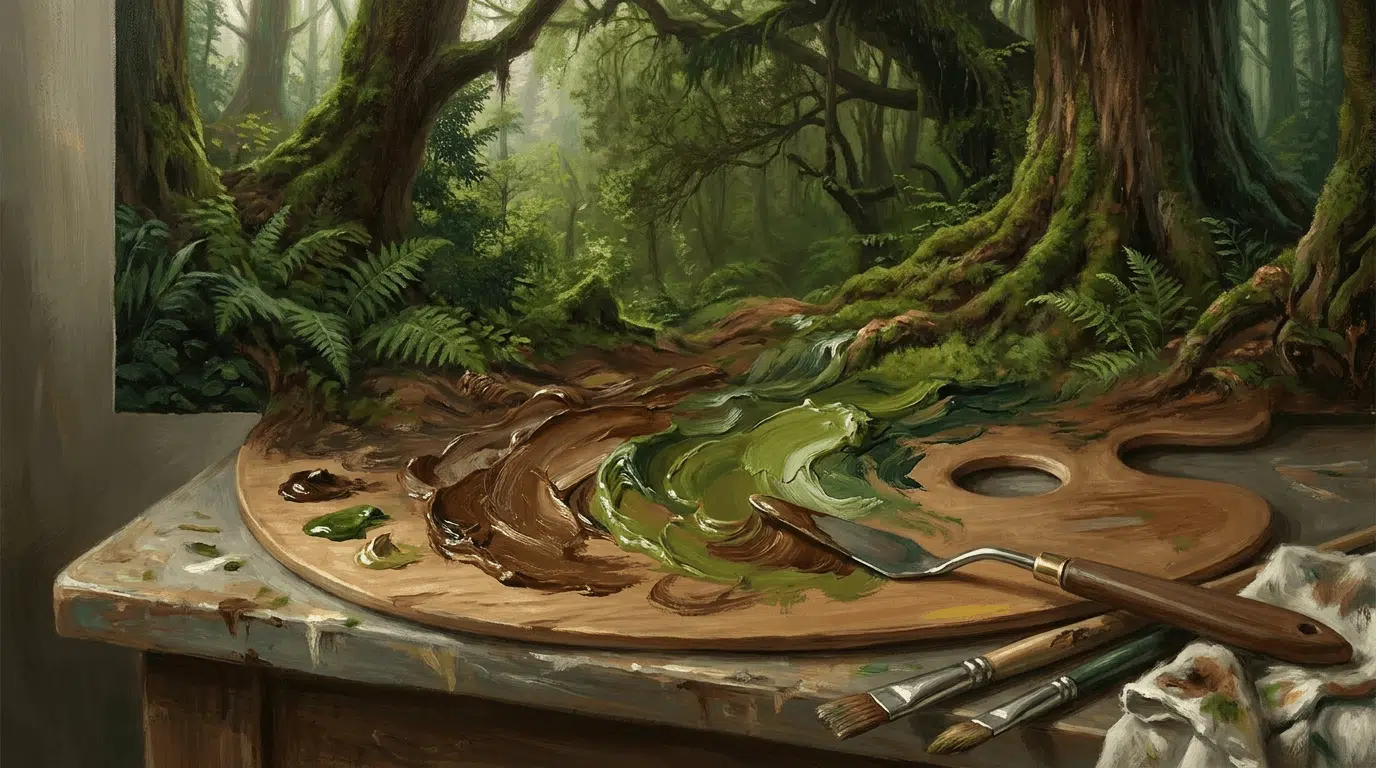
Mix brown and green, and you get forest green. A rich, dark, nature-ready green that looks like it came straight from a tree canopy or a mossy riverbank.
The brown doesn’t really show up the way you expect. It fades into the mix, shaping the depth rather than taking over. That shift is what makes the result more interesting than it first seems.
To understand why this happens, it helps to look at what brown is actually made of.Once you see how brown is built from primary colors, the move toward green starts to feel much more logical.
The Real Answer Behind Brown and Green Mixing
Brown and green make a dark, muted green.
Most people recognize it as forest green, though it can shift toward moss green or olive green depending on the balance of the mix.
The reason it leans green comes down to what’s happening underneath.
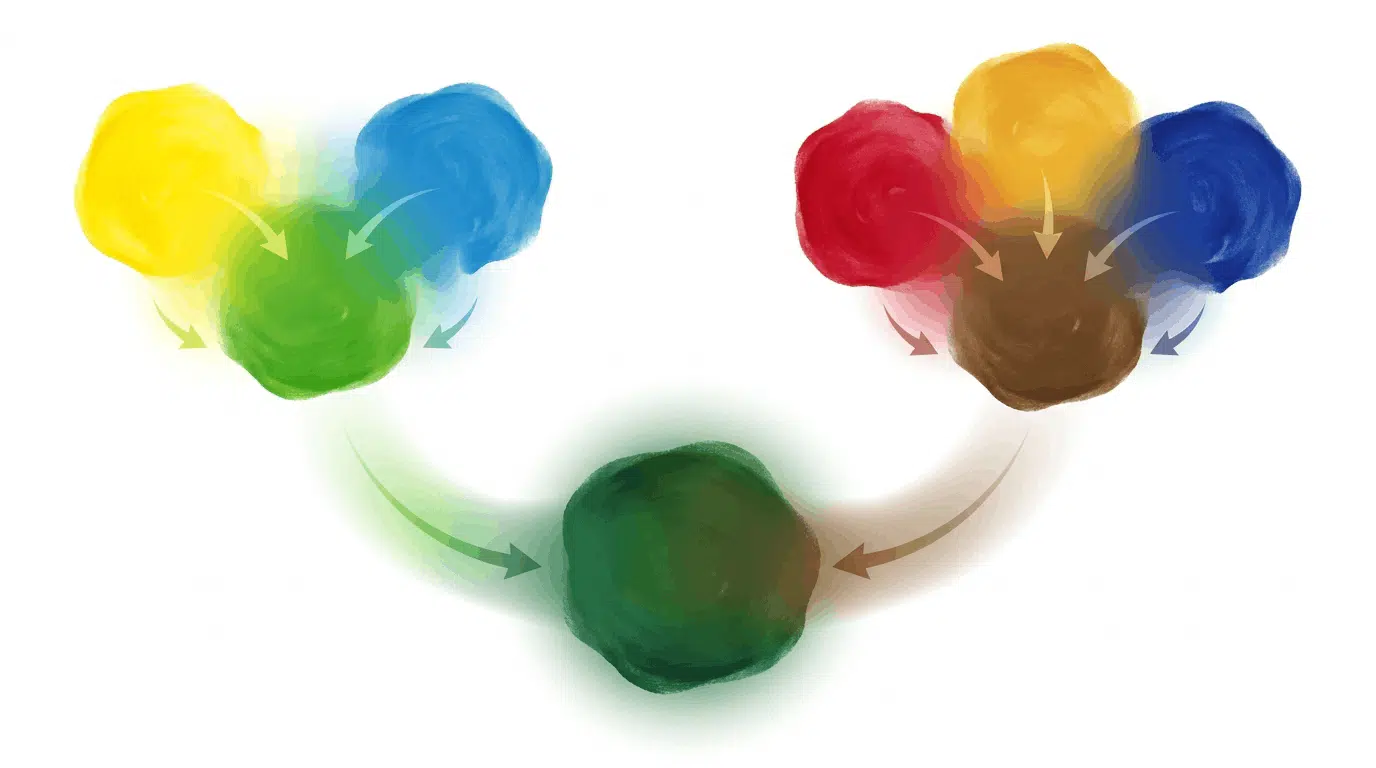
Green is made from yellow and blue. Brown is a blend of red, yellow, and blue. When you combine them, you are effectively mixing yellow and blue twice, with red added once.
That means yellow and blue dominate the mix, while red plays a smaller role. The result is a deeper, more grounded version of green rather than a muddy brown.
A simple way to picture it is as a vote. Yellow and blue vote for green. Red votes for brown. Green has the majority, so that is what you see.
Why Brown Disappears in the Mix?
Most people assume brown is a strong color that will drag the mix toward a neutral, muddy tone.
But brown is actually a weak color in terms of dominance. It is red with its brightness removed.
When you add green, the yellow and blue inside the green reinforce the yellow and blue already inside the brown, and the lonely red gets swallowed up.
The result shows little visible brown. If you showed someone the final color without telling them how you made it, they would almost certainly call it dark green, not brownish anything.
That same logic explains a related question worth knowing: red and green make brown because together they contain all three primary colors in roughly equal amounts.
Swap the red for brown, and suddenly you have far more yellow and blue than red, which is why the result swings green instead.
How Ratios Shape the Final Color
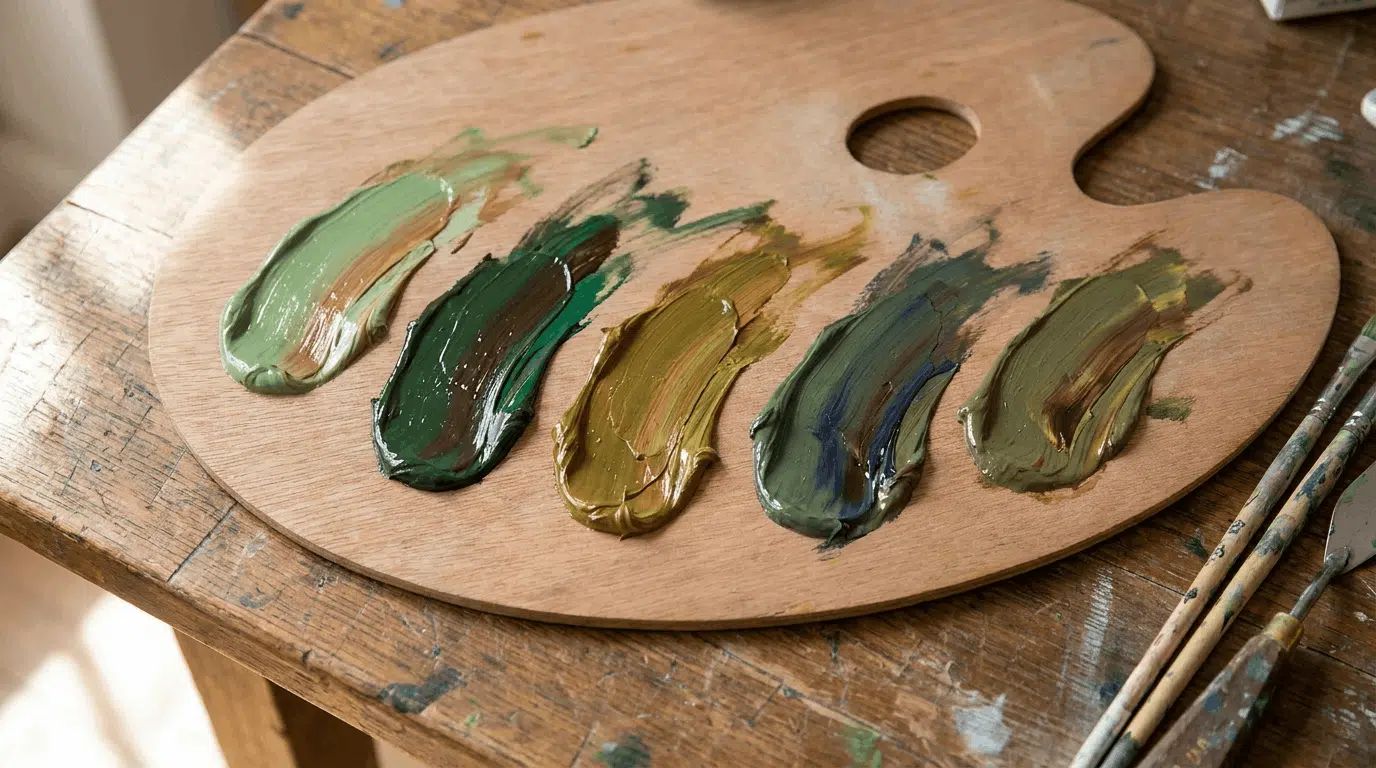
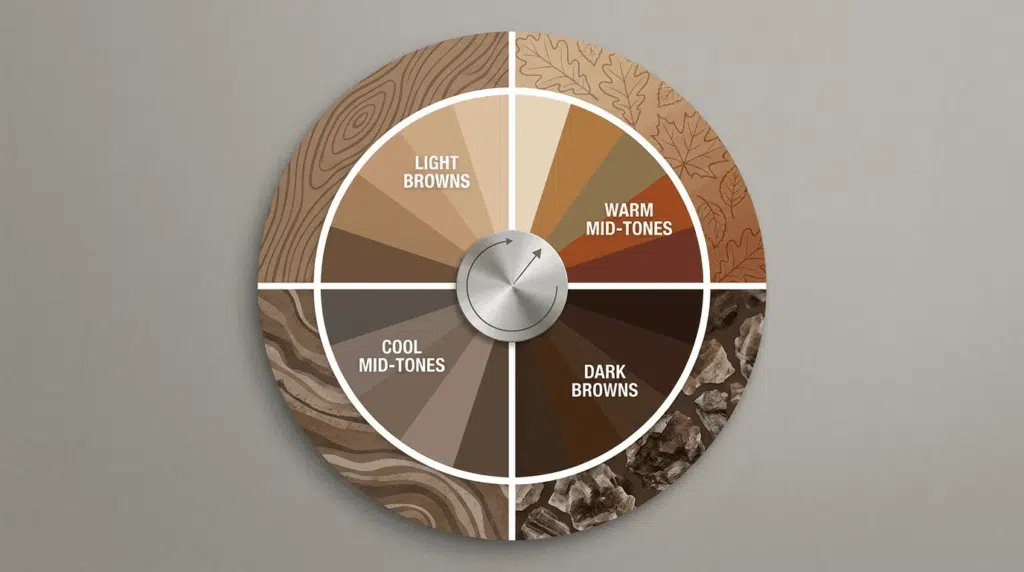
The starting shades matter just as much as the ratio. Different shades of brown and green can yield very different results.
- Light brown, like tan or sand, mixed with bright green creates a lighter, gently muted green. It often leans toward moss green rather than deep forest tones, giving a softer, more subtle look.
- Dark brown, such as espresso or umber, combined with dark green, produces a much deeper result. In some cases, it becomes a shadowy green that is close to black.
- Warm browns like sienna or caramel bring a reddish warmth into the mix. The green takes on an earthy, slightly golden tone, similar to sunlit undergrowth.
- Cool browns, like burnt umber, push the color in the opposite direction. The result feels cooler and more shadowed, sometimes with a faint blue undertone.
- Red-heavy browns, such as auburn, create the most brown-leaning result. The stronger red presence competes with the green, pulling the mix toward olive or a darker brown-green.
In general, brighter greens give cleaner results, while warmer browns make the mix feel more earthy and golden. Understanding the shades of brownmakes it much easier to predict the outcome.
Forest Green vs Olive Green: What’s the Difference?
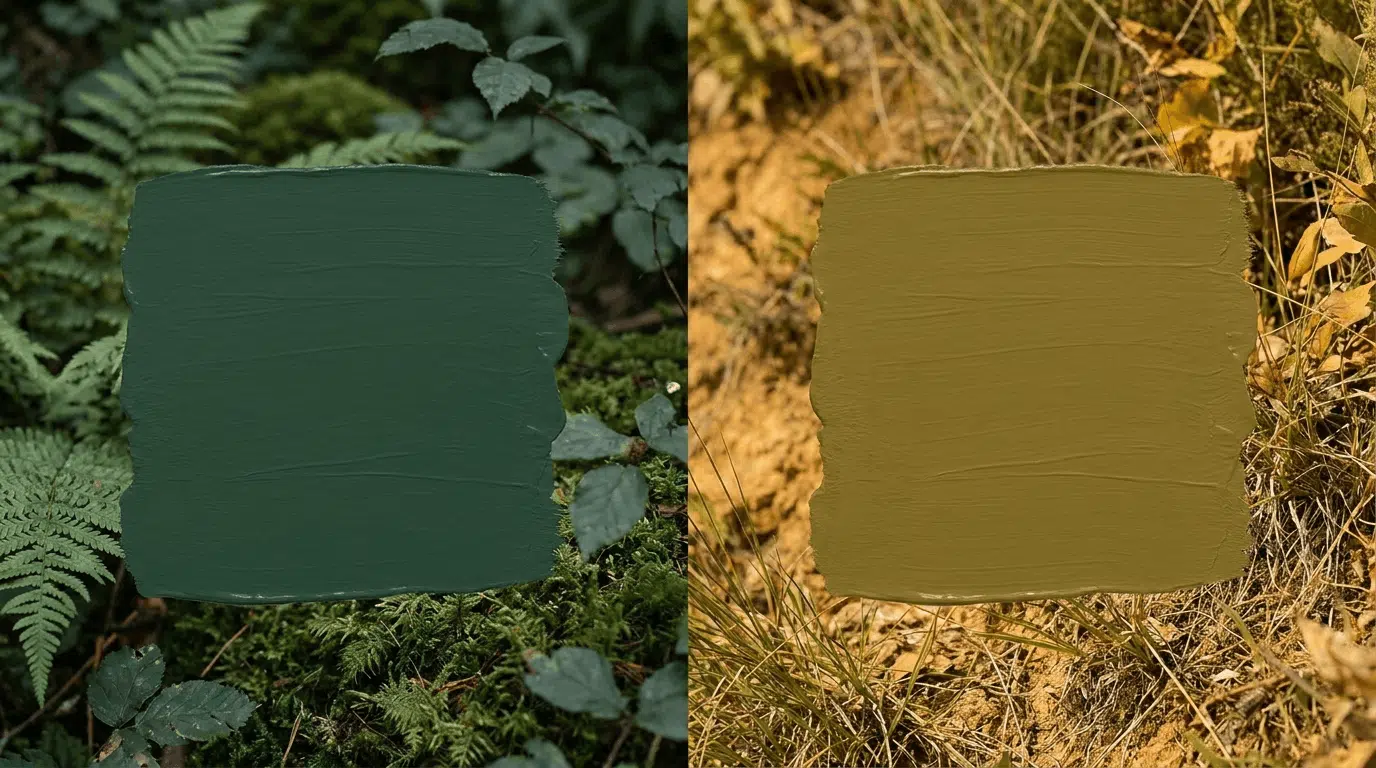
These two results come from the same mix, but they look and feel completely different. It is worth knowing how to aim for one over the other.
Forest green is darker, cooler, and more saturated. It looks like a dense canopy of leaves from a distance, or the surface of still water surrounded by trees.
Olive green is warmer, more yellow-brown, and less saturated. It looks like dried vegetation, summer grass in heat, or the kind of green you see on military uniforms. It sits closer to brown than to forest green.
- To get forest green: start with bright green and add a small to equal amount of brown.
- To get olive green: use more brown than green, especially a warm yellow-brown like caramel or tan.
Using Brown and Green Side by Side in Design
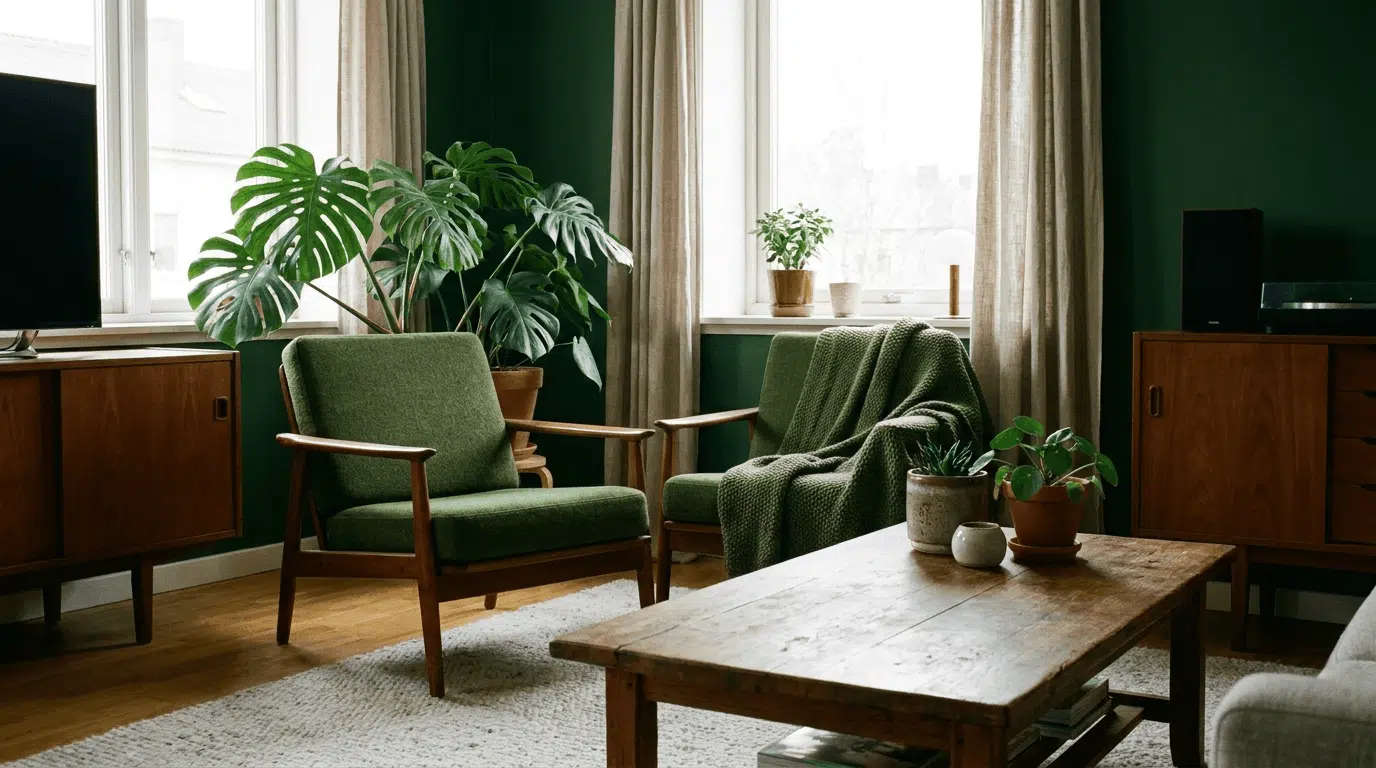
Placing brown and green next to each other without mixing them is often more useful than mixing them at all.
In nature, brown and green appear side by side constantly.
Tree trunks against leaves. Soil against grass. Bark against moss. The contrast between them is what makes natural scenes feel real.
When you paint these elements, keeping the colors separate gives you a cleaner result than mixing them into a single unified tone.
In interior spaces, the same logic applies.
Brown furniture or flooring against forest green walls creates a natural, grounded palette. The warmth of the brown and the depth of the green balance each other without competing.
It is one of the most reliable two-color combinations in design.
Bottom Line
Brown and green make forest green.
The brown does not take over. The green does, because yellow and blue carry more weight in the mix.
The ratio controls the outcome. Equal parts give a balanced forest green. More brown shifts it toward olive. Too much brown, and the color loses its clarity and turns dull.
What makes this mix so useful is how naturally it mirrors the real world. From dense tree canopies to moss, foliage, and shaded ground, these greens show up everywhere.
Once you understand how the balance works, it becomes a reliable way to create natural, grounded greens without guesswork.