Brown is everywhere. Tree trunks, muddy puddles, chocolate bars, puppy fur, and soil.
It is one of the most common colors in the whole world. But here is something funny: if you look at a basic paint set, there might not be a brown in sight.
That is because you do not need one. You can make brown yourself, using colors you already have.
This guide shows you exactly how to do it. You will learn the easiest way to mix brown, some surprising two-color shortcuts, and how to make brown lighter or darker, depending on what you are creating.
The Easiest Way to Make Brown
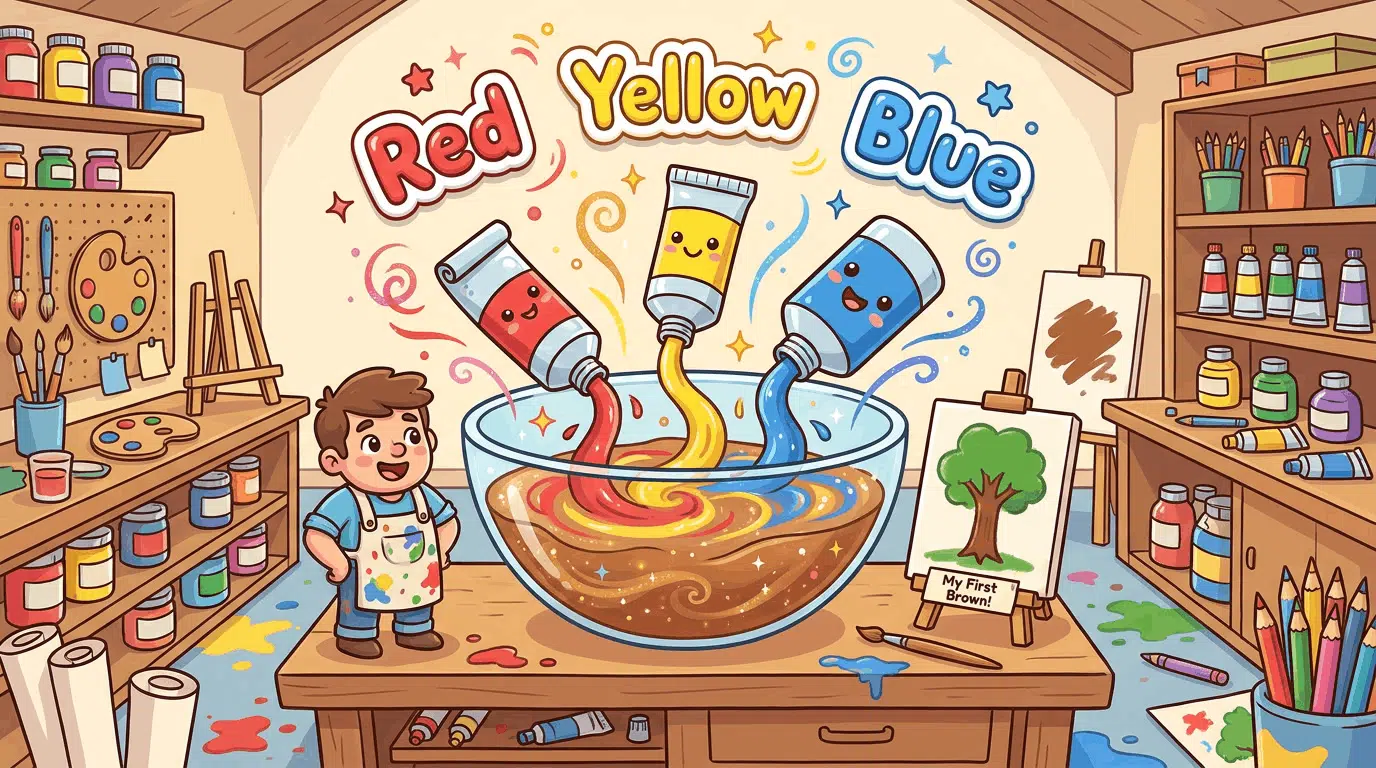
The simplest brown is made from the three primary colors: red, yellow, and blue.
Mix equal amounts of all three together, and you will get a basic medium brown. It works because those three colors cancel each other out when combined, leaving brown.
Here is how to try it:
- Put a small blob of red on your palette
- Add the same amount of yellow
- Add the same amount of blue
- Mix them together slowly
You should see brown appear. If it looks too red, add a little more blue. If it looks too dark, add a touch of yellow. Small adjustments make a big difference, so go slowly.
Tip: Always start with small amounts. It is much easier to add more paint than to fix a mix that has gone wrong.
Two Colors that Make Brown
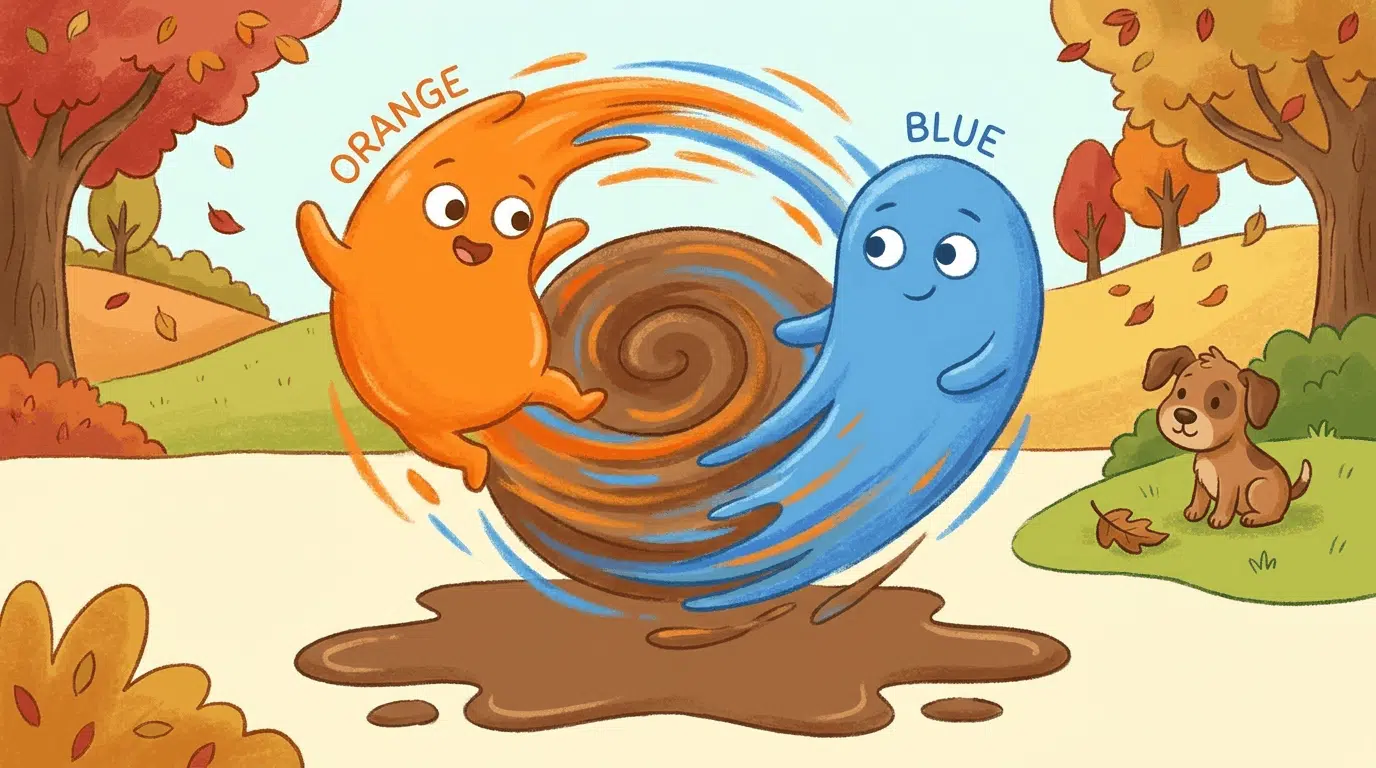
Here is where it gets interesting. You can also make brown using just two colors, and these combinations are some of the most fun to try.
Orange and Blue
It is the fastest and easiest. Orange is already made from red and yellow, so when you add blue, you are secretly using all three primary colors at once. Mix equal parts, and you will get a warm, earthy brown almost immediately.
Red and Green
It works for a similar reason. Green is made from yellow and blue, so mixing it with red again brings in all three primaries. This combination makes a deeper, more natural-looking brown that is great for painting tree bark or soil.
Purple and Yellow
It is the most surprising one. Purple is red plus blue, and adding yellow completes the set. The result is a warm brown, sometimes with a slightly dusty tone depending on how much of each color you use.
Try all three and see which brown you like best. They will all look slightly different, which is part of what makes color mixing so interesting.
Once you’ve practiced mixing brown with these combinations, you might be curious about what happens when you mix brown with other Colors. The results are intriguing and add another layer of complexity to your color palette.
Brown without Using Black
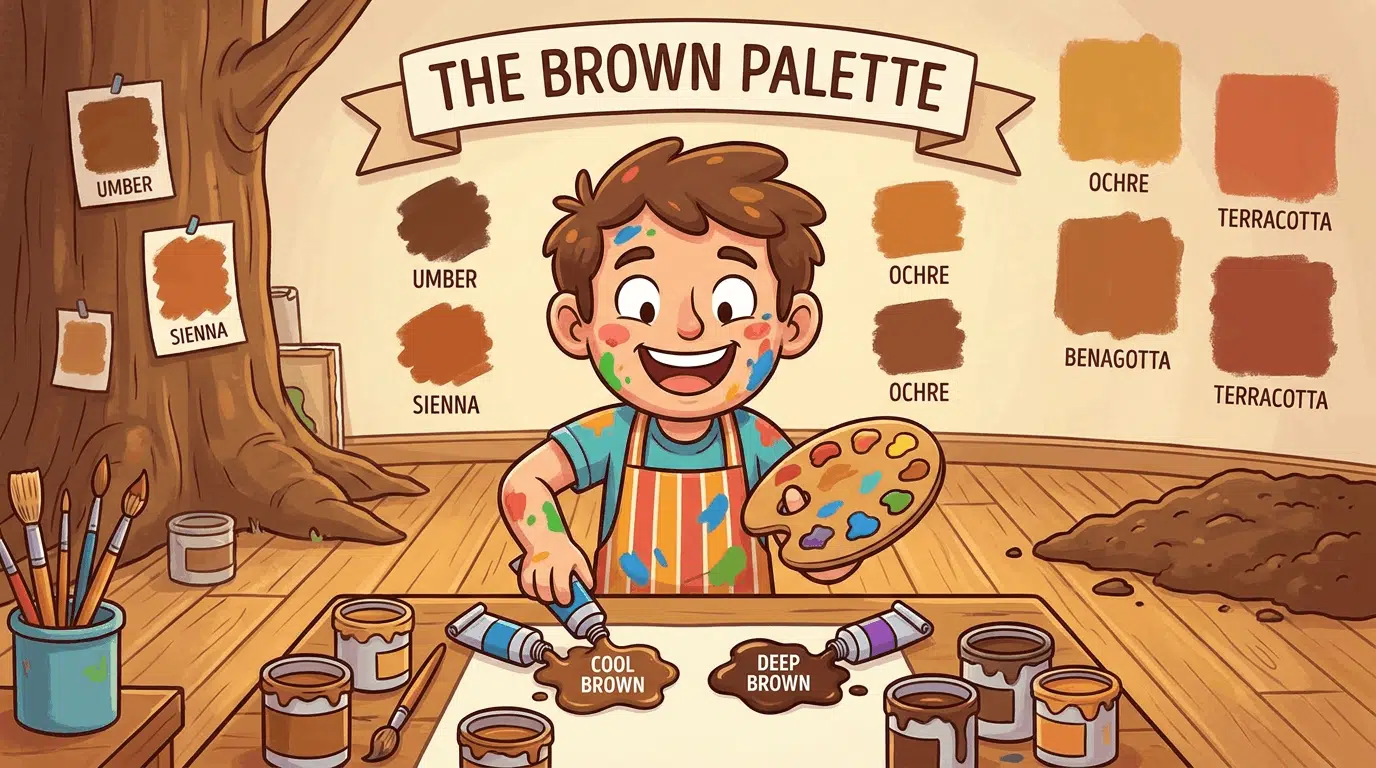
A lot of people reach for black whenever they want to make a color darker. But black can dull colors, making them feel a little flat.
The good news: you do not need black to make a deep, rich brown.
Try adding more blue to your mix instead. More blue shifts the brown toward a cool, shadowy tone without losing the warmth completely.
Adding purple has a similar effect, keeping the color feeling full and alive.
Think of it this way: black is a shortcut that sometimes backfires. Mixing your way to a darker brown takes a little longer, but usually looks better.
Warm Brown vs Cool Brown
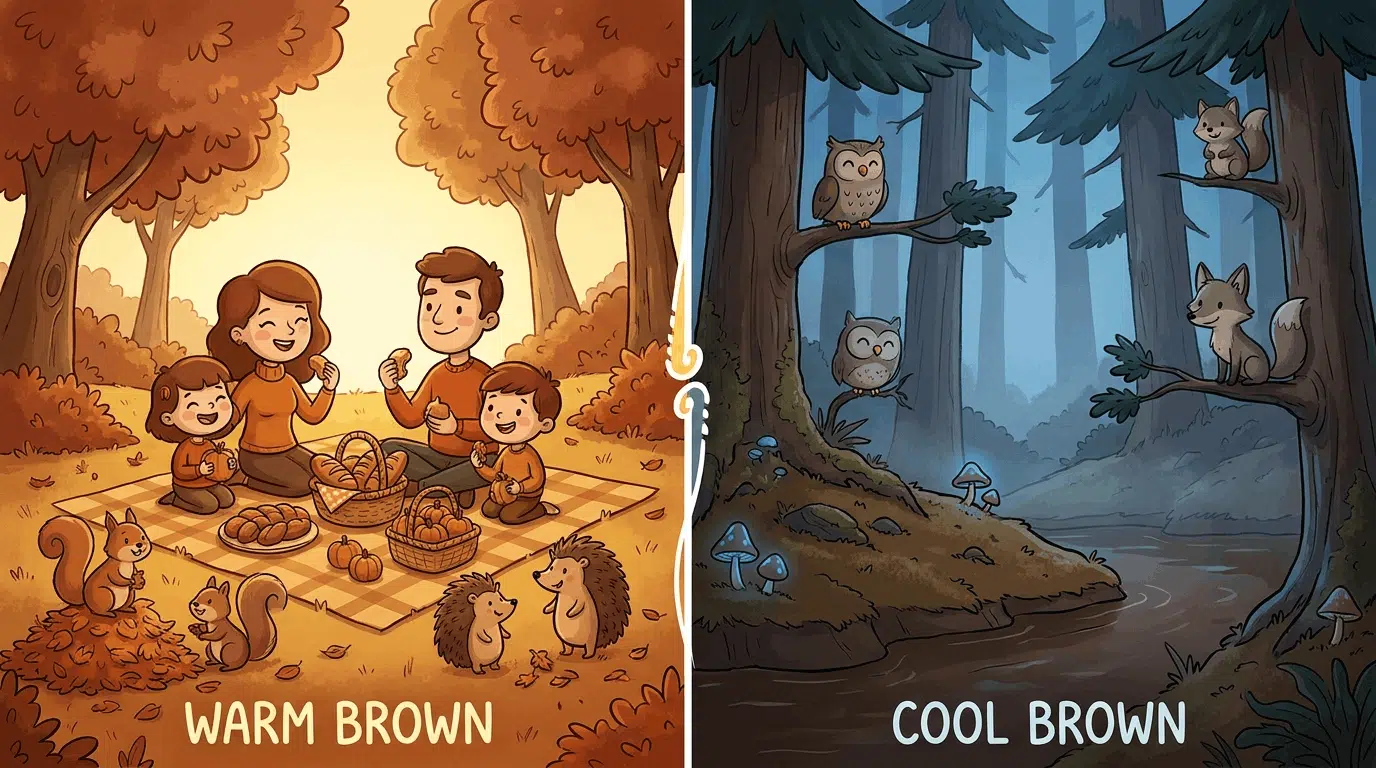
Not all browns look the same. Some feel cozy and sunny. Others feel deep and shadowy. That difference comes down to temperature.
- Warm brown has more red and yellow in it. It looks like cinnamon, autumn leaves, rust, or freshly baked bread. If you want a warm brown, add a little more red or yellow to your mix.
- Cool brown has more blue in it. It looks like wet soil, deep bark, or a shaded patch of earth. If you want a cool brown, add a little more blue.
A simple rule to remember: more red and yellow make a warm, sunny brown. More blue makes a cool, shadowy one.
Knowing the difference matters most when you are painting something specific. Painting a warm wooden floor needs a different brown than painting a dark forest path at dusk.
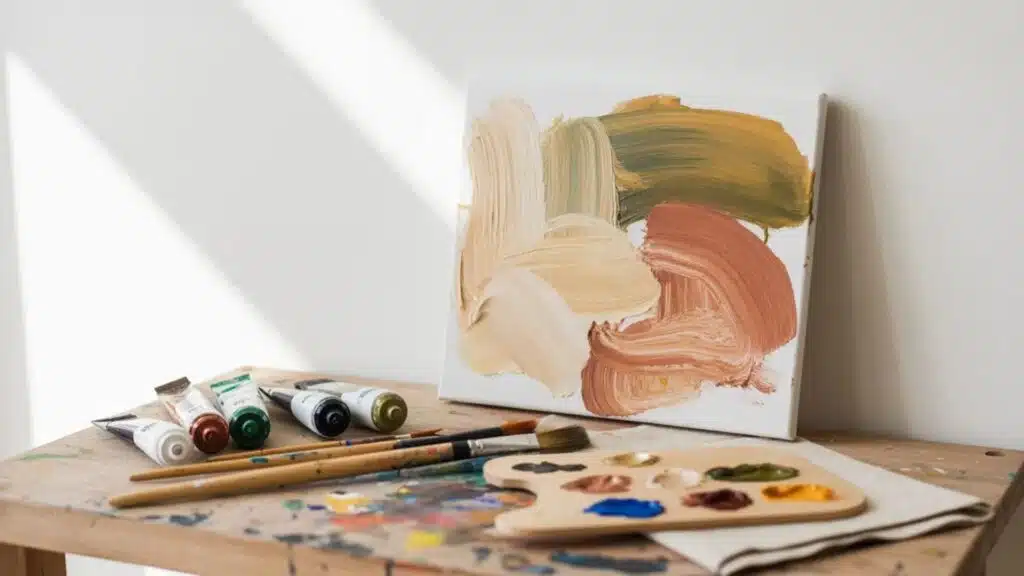
Brown comes in far more shades than most people realize. There’s a full spectrum of browns to choose from. Exploring the various shades of brown can help you find exactly the right tone for any project.
Brown is Everywhere in Real Art
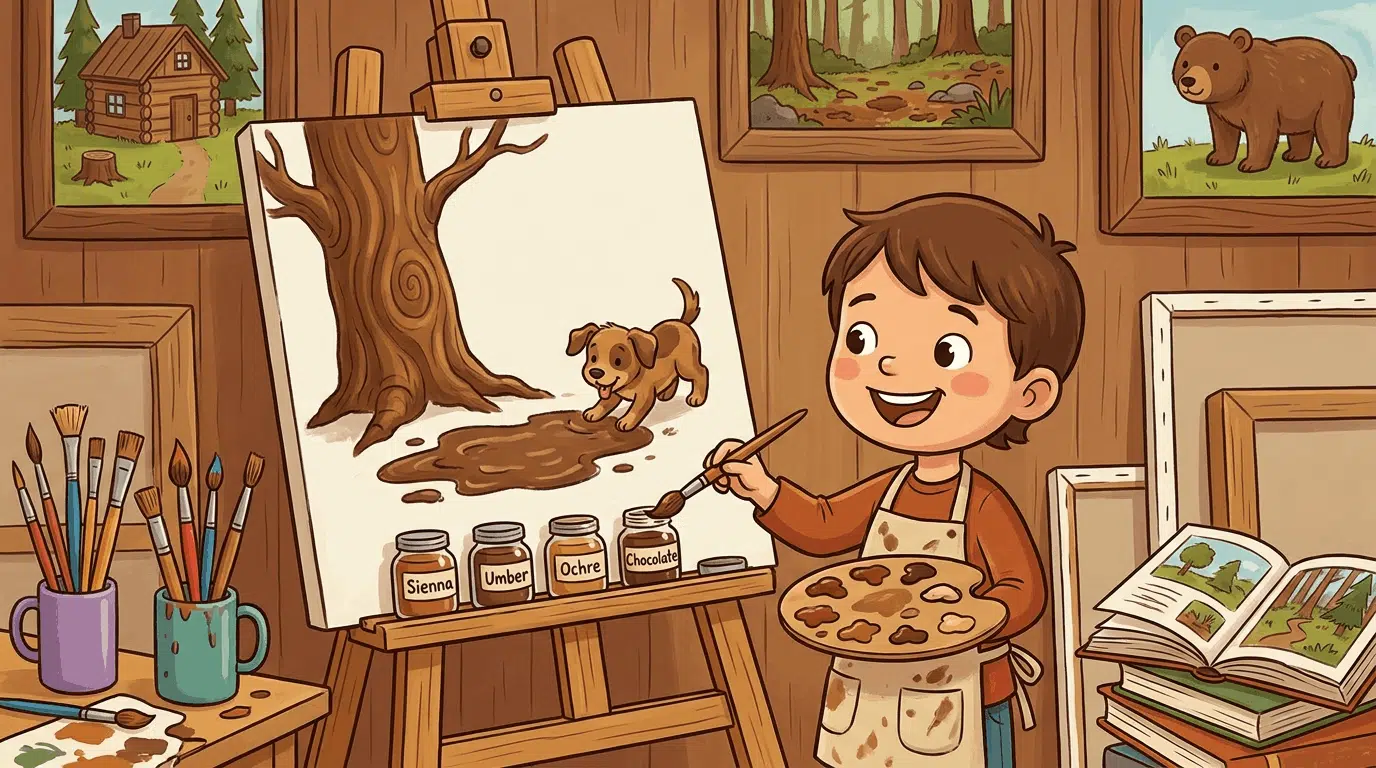
Brown shows up in nature more than almost any other color. Wood, soil, animal fur, hair, bark, and mud. If you are painting the real world, you will use brown constantly.
It also has a feeling to it. Brown signals warmth, stability, and naturalness.
That is why it shows up in cozy spaces, in paintings of the outdoors, and whenever an artist wants something to feel grounded and real.
Brown also works really well alongside other colors. Some color combinations with brown are more surprising than you would expect.
Artists often use brown to add depth and dimension to their work, and its complementary color can open new possibilities in color harmony, creating more dynamic and impactful art.
Quick Mixing Chart
Save this to keep next to your paints.
Want This Brown? | Mix These Colors |
Basic medium brown | Red + yellow + blue in equal parts |
Fast two-color brown | Orange + blue |
Warm reddish brown | More red + yellow + a little blue |
Cool dark brown | More blue + red + a little yellow |
Light brown / tan | Any brown + white |
Dark chocolate brown | Brown + purple, or add more blue |
Earthy natural brown | Red + green |
Keep Experimenting
Brown is one of those colors that seems simple until you start mixing it. Then you realize how many different versions there are and how small changes in your mix can shift the whole feeling of a painting.
Start with the three primary colors and see what you get. Then try the two-color combinations.
Then experiment with making it lighter, darker, warmer, and cooler. Keep track of what you mixed each time so you can repeat the ones you like.
The more you practice, the faster it becomes second nature. And once you can mix brown confidently, the rest of the color mixing starts to feel a lot easier, too.
Frequently Asked Questions
What colors make brown with food coloring?
The same rules apply. Mix red, yellow, and blue food coloring in equal amounts. Start with very small drops and adjust from there until you reach the shade you want.
What colors make brown skin tones?
Start with a light brown base by mixing brown and white, then add tiny amounts of red or yellow to warm it up. Every skin tone is a little different, so keep adjusting until it looks right.