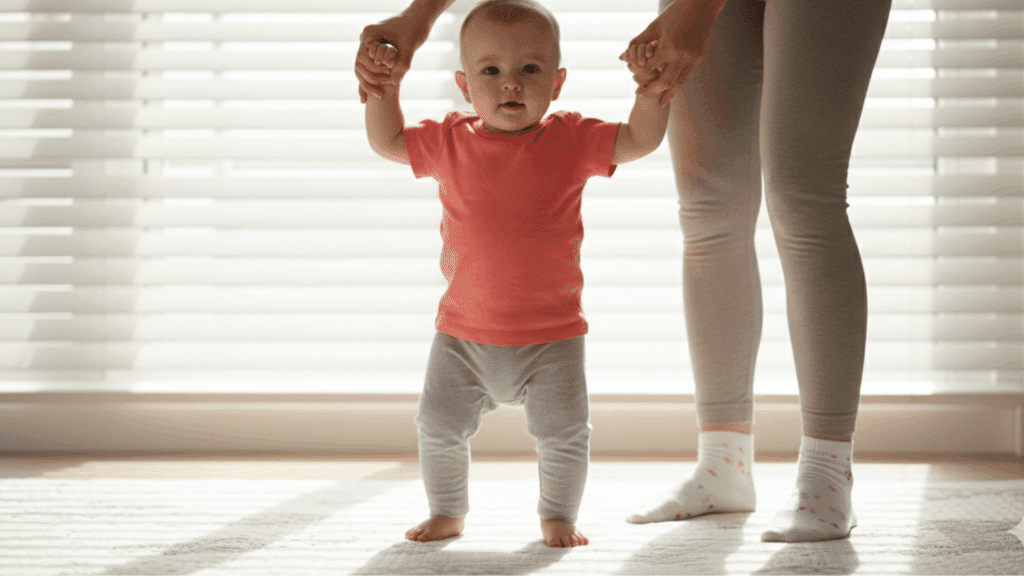
Is your baby about to walk? You’re watching every wiggle, every attempt to stand. You’re wondering if today’s the day.
Most babies take their first steps between 9 and 18 months old.
But here’s the truth every parent needs to hear: your baby’s timeline is their own. Some walk at 9 months. Others take until 15 or 16 months. Both are completely normal.
You don’t need to worry. You just need to watch for the right signs.
This guide shows you exactly what those signs are. You’ll learn the stages before walking, red flags that need attention, and simple ways to help your baby succeed.
Those first steps are coming. Let’s make sure you’re ready.
At What Age Do Babies Walk on Average?
Most babies take their first steps around 12 months old. But the normal range is much wider than you think.
According to the CDC and American Academy of Pediatrics, babies can start walking between 9 and 18 months, anytime. Both timelines are completely healthy.
Research shows that 90% of babies walk independently by 15 months. Your baby’s exact timing depends on muscle strength, balance, and personality. Cautious babies often wait longer. Bold babies try earlier.
Here’s an important difference: First steps and confident walking aren’t the same thing.
First steps mean your baby takes 2-3 wobbly steps before sitting down. Confident walking means they can cross a room without falling.
The gap between these milestones is usually 4-6 weeks. Late walkers often become confident faster than early walkers.
Your pediatrician will check for walking at the 18-month visit. This gives your baby plenty of time to develop naturally.
Signs a Baby Is Ready to Walk Soon
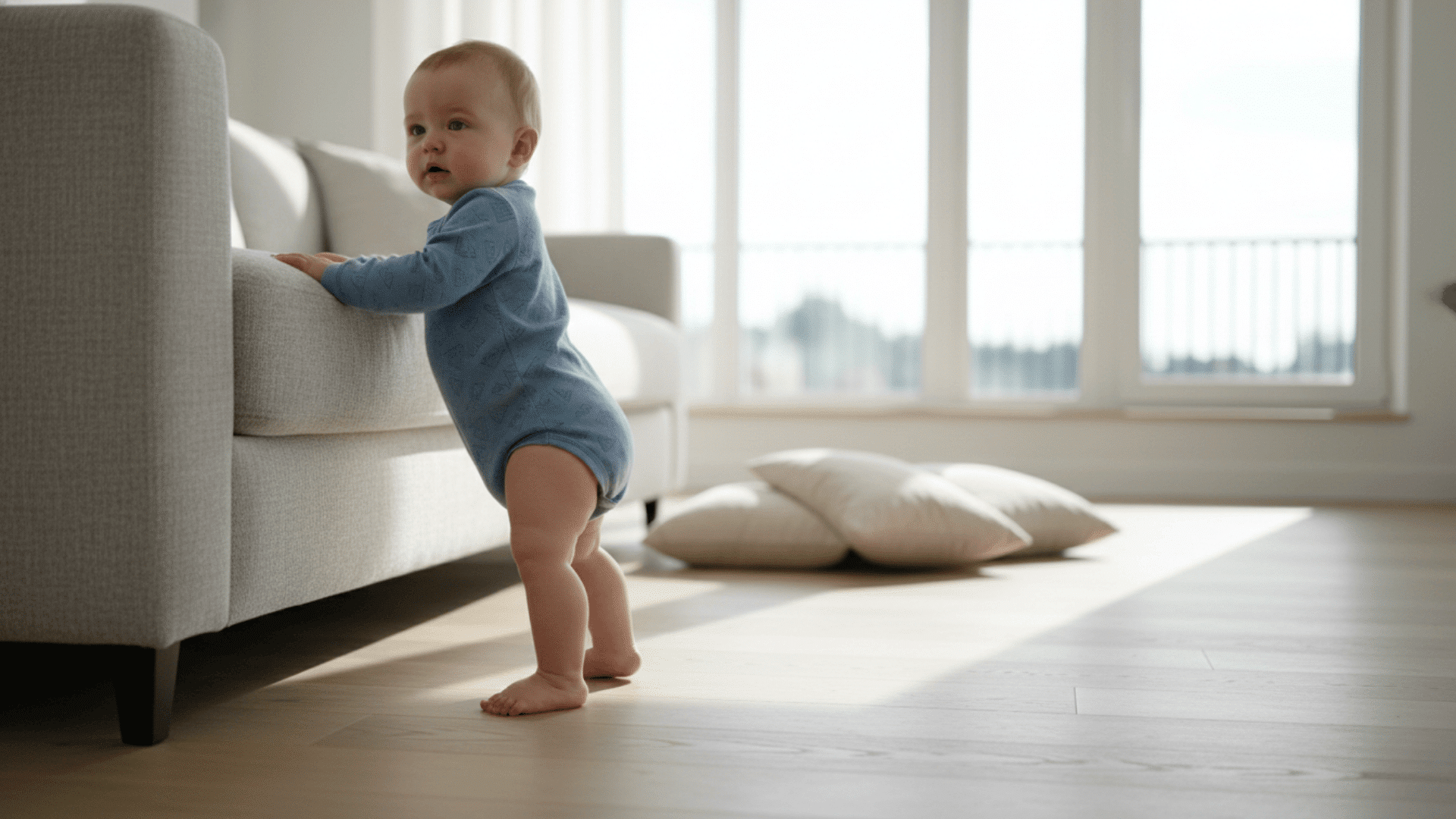
Your baby will show clear signs before taking their first steps.
1. Physical Signs That Show Walking Is Near
Pulling to stand is the first sign. Your baby grabs furniture and pulls themselves up around 7-10 months.
Cruising comes next. Your baby side-steps along furniture while holding on. According to Milestones & Motherhood pediatric physical therapy research, this develops within 4-6 weeks of pulling to stand.
Squatting and standing back up shows leg strength. Your baby bends down for a toy, then stands up with control.
2. Balance and Coordination Signs
Standing without support means your baby lets go for a few seconds. This starts between 10 and 16 months.
Controlled lowering is different from falling. Your baby bends their knees on purpose. Lovevery, a child development expert, recognizes this as a key motor control milestone.
3. Behavioral Signs Parents Notice
Reaching for your hands signals that they want to practice walking.
Letting go of furniture happens when toys grab their attention. Your baby releases one surface to reach another. The gap gets bigger over time.
Increased desire to move shows through frustration when sitting. Some babies get fussy or sleep poorly from concentrating hard.
4. How Long After These Signs Babies Usually Walk
Cautious babies cruise for 2-3 months before independent steps.
Bold babies walk within days of standing alone.
Lovevery developmental research shows babies typically walk 2 to 2.5 months after standing without support. Your baby might be faster or slower.
If your baby shows these signs by 12-14 months but hasn’t walked by 15-16 months, talk to your pediatrician.
How to Encourage Walking Safely and Naturally?
Help your baby learn to walk without forcing the process.
1. Give Plenty of Floor Time and Freedom to Move
Floor time builds the strength your baby needs for walking. PedsTeam pediatric physical therapists recommend giving babies lots of time to move freely on firm, flat surfaces.
Avoid keeping your baby in swings, bouncers, or car seats for long periods. These limit movement and delay motor skills.
2. Simple Play Activities That Support Walking
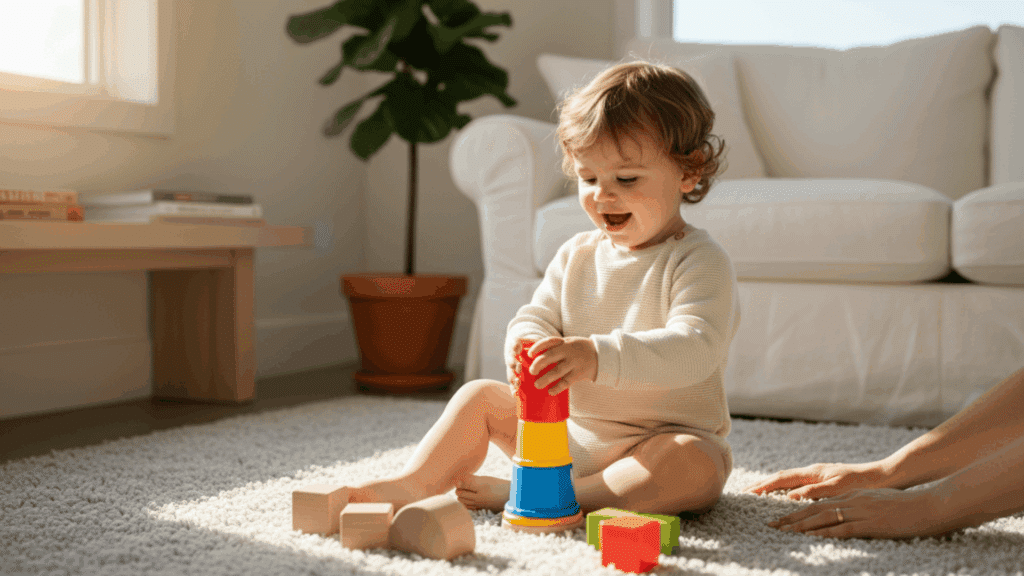
Set up furniture close together for cruising practice. Place toys slightly out of reach while your baby stands to encourage steps.
Let your baby squat to pick up toys from the floor. This builds leg strength and balance. Hold your baby’s hands at shoulder height for walking practice, not above their head.
Go barefoot indoors. This helps your baby feel the floor and develop natural balance.
3. Push Toys vs Baby Walkers
Baby walkers are dangerous. The American Academy of Pediatrics calls for a complete ban on them.
Between 1990 and 2014, over 230,000 children were treated in emergency rooms for walker injuries. Baby walkers delay walking development and are banned in Canada.
Push toys are safer. They have four stable points and let your baby move at their own pace. Choose sturdy ones with a wide base.
4. What Not to Do When Encouraging Walking
Avoid forcing your baby to take steps before they’re ready. Let them build strength and confidence naturally.
Comparing your baby to others only creates stress. Walking at 9 months or 16 months is equally normal. Never use baby walkers. They cause injuries and actually delay development.
Limit time in swings and bouncers. Your baby needs floor time to build the muscles required for walking.
When practicing walking together, hold your baby’s hands at shoulder level. Holding them overhead prevents natural balance development.
Baby Walking Developmental Timeline and What Comes Next?
When babies take their first independent steps, they walk with a wide stance and arms held high for balance. Their steps are short and wobbly. Many sit down and crawl instead because it’s still faster.
About 6 months after the first steps, walking becomes smoother. Nemours KidsHealth reports that babies develop a mature gait with hands at their sides and feet closer together. By 15-18 months, most walk confidently and start running.
Walking backward typically appears between 12-18 months. Babies also begin carrying toys while walking and pulling objects behind them.
Stair climbing develops in stages. Most babies crawl up stairs at 9-12 months. By 18-24 months, they walk up stairs holding a hand or railing. Going up is easier than coming down. Most children manage stairs independently by age 3-4.
By age 2, toddlers typically run, kick balls, and climb furniture. Jumping emerges around 18-24 months.
Shoes, Barefoot Walking, and Safe Surfaces
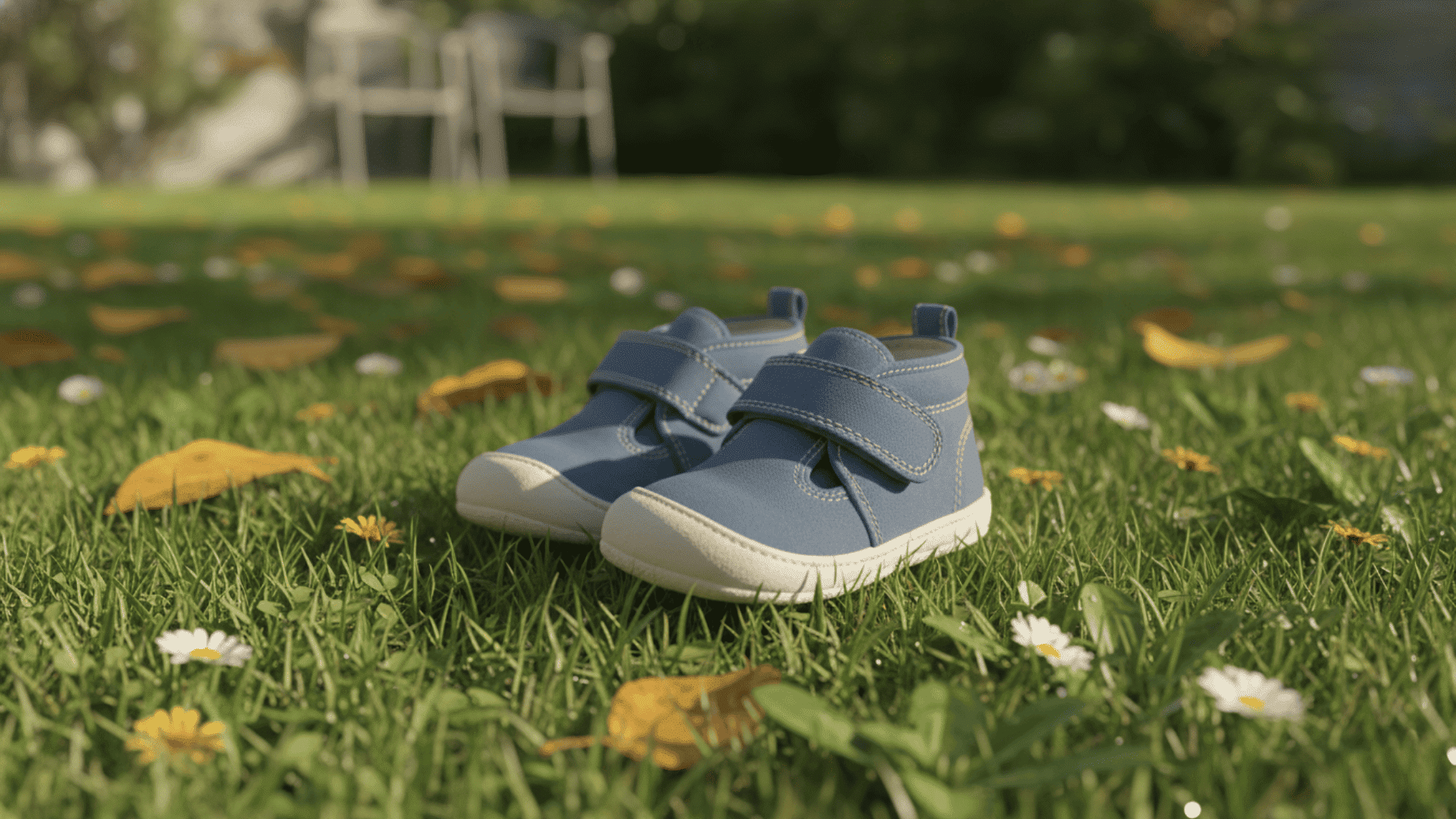
Barefoot walking is the best way for babies to learn. Shoes become necessary only when walking outside or on unsafe surfaces. Here’s what you need to know about footwear and safety.
- The American Academy of Pediatrics recommends barefoot walking indoors to develop foot muscles, arch strength, and balance
- Shoes are needed only when walking outside, on uneven surfaces, or in public places
- Choose lightweight, flexible shoes with rubber soles and a wide toe box that bends at the ball of the foot
- Check shoe fit every 4-6 weeks and leave a finger-width of space between the longest toe and the shoe end
- Use non-slip socks indoors if the floors are slippery
- Clear floors of toys and cords, secure furniture to walls, and use baby gates at stairs
- Stay within arm’s reach when your baby practices walking on new surfaces
Following these guidelines helps your baby develop strong, healthy feet while staying safe during the learning process.
When to Worry About Late Walking?
Most healthcare providers use 18 months as the key benchmark for walking. If your baby isn’t walking by this age, talk to your pediatrician. However, some babies simply develop at their own pace and walk closer to 18 months without any problems.
Watch for specific red flags that need medical attention. Contact your doctor if your baby shows asymmetrical movement, using one side of their body more than the other.
Any regression in skills your baby has already learned requires immediate evaluation. Persistent toe walking after age 2, very stiff or floppy muscle tone, or not sitting independently by 9 months are also concerns.
Developmental pediatricians emphasize that the quality of movement matters more than timing. If your baby is progressively meeting other milestones like pulling to stand and cruising, late walking is usually not worrisome.
Conclusion
Every baby walks on their own timeline. Whether your baby takes first steps at 9 months or 16 months, both are completely normal. What matters most is steady progress through development stages.
Focus on readiness signs rather than comparing your baby to others. Watch for pulling to stand, cruising, and standing without support. These show your baby is building the strength needed for walking.
Create a safe environment with plenty of floor time. Avoid baby walkers and let your baby walk barefoot indoors. Celebrate each small step along the way.
If you have concerns about your baby’s development, talk to your pediatrician. They can assess progress and provide guidance. Trust your instincts as a parent.
Have questions about your baby’s walking development?
Share your experiences in the comments below or consult your pediatrician for personalized advice.
Frequently Asked Questions
Why Do Some Babies Walk Earlier or Later Than Others?
Walking timing depends on muscle strength, balance, coordination, and temperament. Genetics also plays a role. Cautious babies often wait longer while bold babies try earlier.
What If My Baby Stands but Won’t Walk?
This is normal. Your baby is building confidence and balance. Some babies stand for weeks or months before taking independent steps. Give them time and encouragement.