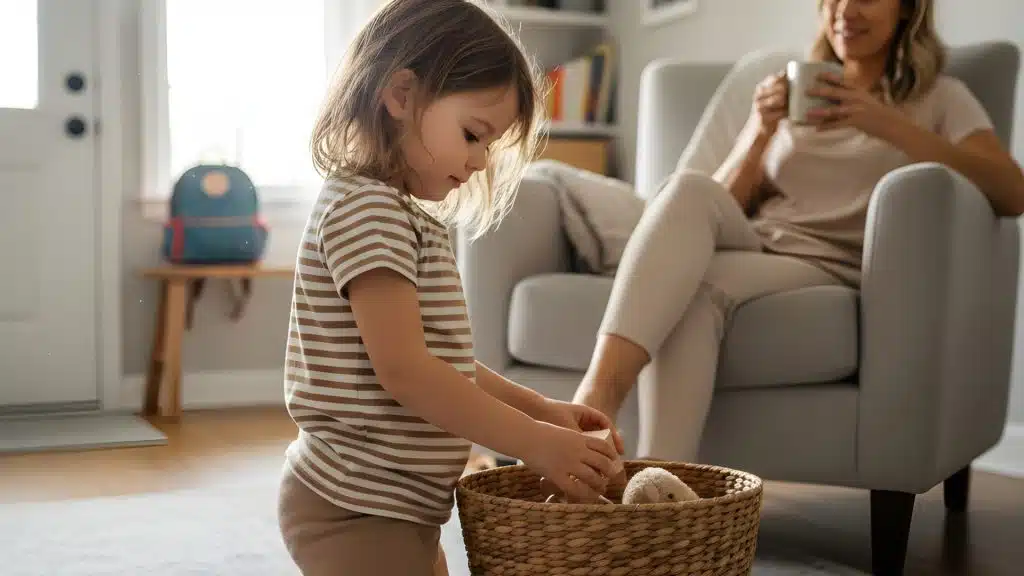
Have you ever wondered when children should start taking ownership of their daily tasks?
Children who learn to manage age-appropriate expectations gain skills that reach far beyond completing household chores.
The process feels most effective when it happens naturally through everyday moments instead of forced lessons.
Parents often question how much to expect at different ages and how to balance support with allowing room for mistakes.
Responsibility develops best when children experience clear boundaries paired with chances to practice independently.
This skill shapes how kids approach school, relationships, and personal choices as they mature into capable young adults.
What Does Responsibility Mean for Children?
Responsibility for children looks different from what it does for adults. It starts with small actions like putting toys away or carrying their own backpack.
Over time, these simple habits grow into managing homework, caring for belongings, and contributing to family life.
The core of responsibility involves comprehending what needs to be done and following through without constant reminders.
When children practice managing tasks and choices, they build confidence in their own abilities.
Rather than focusing on perfection, the goal is to help children see how their actions matter.
Accountability paired with support creates an environment where kids feel capable instead of overwhelmed.
Responsibility develops through repeated practice in situations where children can succeed and occasionally stumble without harsh judgment.
Why Responsibility Matters Early?
Early responsibility supports emotional growth and everyday independence.
- Builds confidence through independence: Handling age-appropriate responsibilities shows children they can manage things on their own
- Supports routine awareness: Regular tasks help kids understand how daily life flows and where they fit in
- Encourages respect for shared spaces: Contributing to household order teaches children to value common areas
- Connects effort with outcomes: Experiencing how actions lead to results helps kids understand cause and effect
- Linked to self-regulation later: Early practice managing responsibilities develops skills needed for emotional control and decision-making as they grow
Age-Appropriate Ways to Teach Responsibility
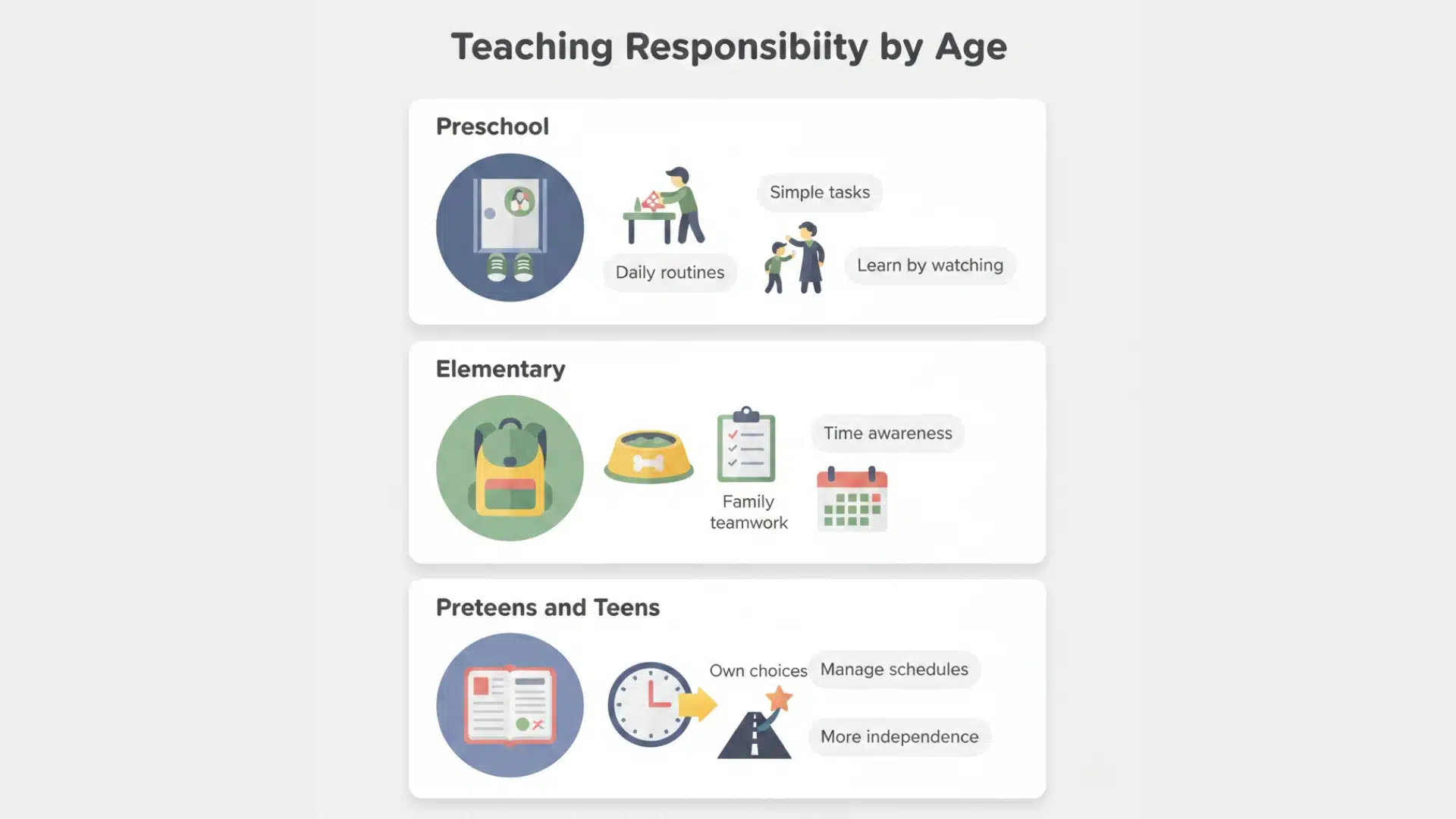
Responsibility works best when expectations align with a child’s stage of growth.
Preschool and Early Years
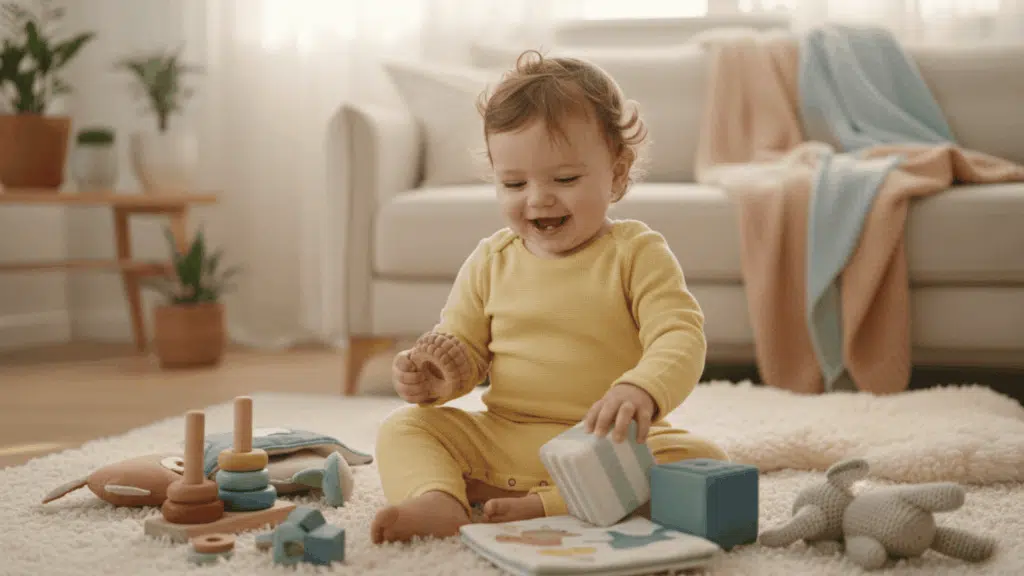
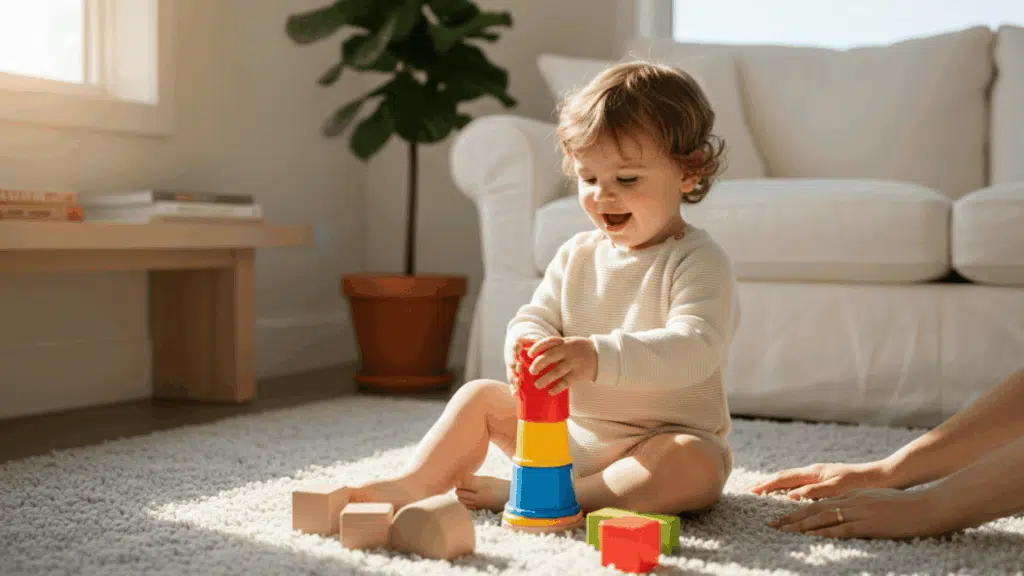
- Simple, repeatable tasks: Activities like putting shoes by the door or setting out napkins work because they’re concrete and consistent
- Routine over perfection: The goal at this age is building the habit, not getting every detail right
- Learning through modeling: Toddlers and preschoolers pick up behaviors by watching adults handle daily tasks
Elementary Age
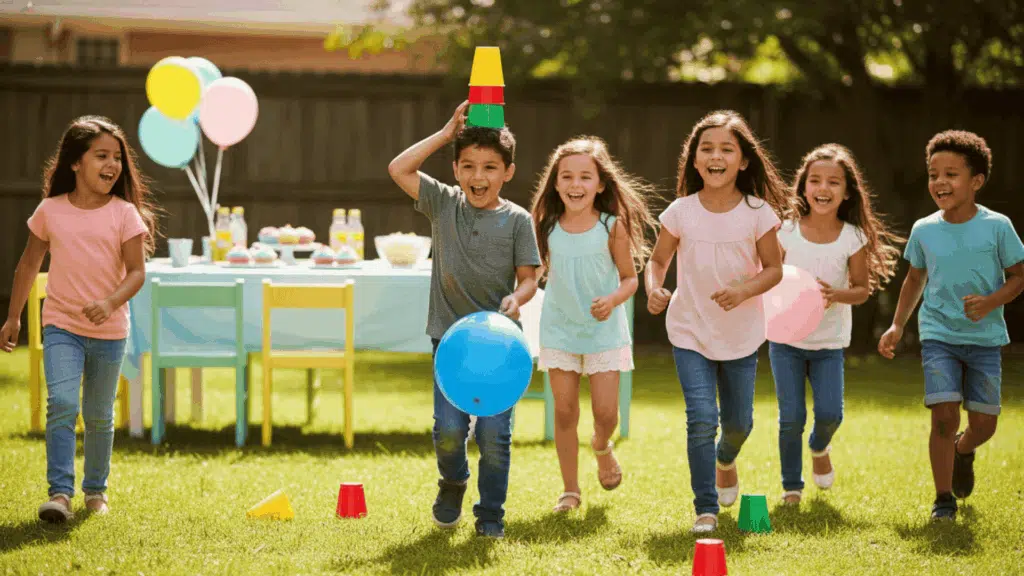
- Assigned responsibilities: Specific jobs like feeding pets or organizing school materials give children clear ownership
- Time awareness: Kids this age can begin connecting deadlines with planning, like preparing for the next school day
- Shared household roles: Contributing to family tasks teaches cooperation and interdependence
Preteens and Teens
- Schedule management: Balancing homework, activities, and personal time requires planning skills they’ll use for years
- Accountability for choices: Teenagers benefit from experiencing how decisions play out in real situations
- Increased independence: Handling responsibilities with less supervision builds confidence for life beyond home
Daily Habits that Build Responsibility to Kids
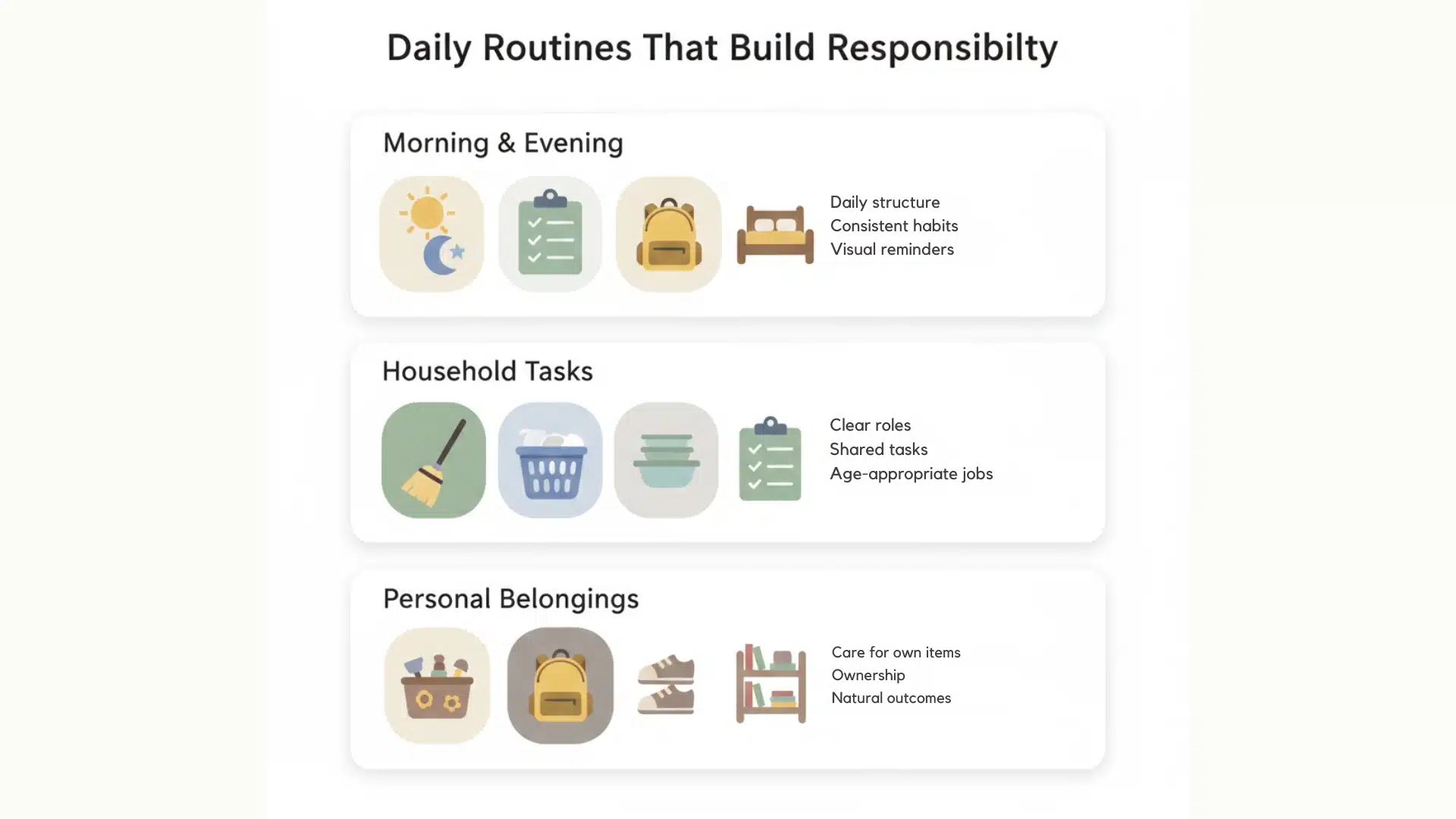
Everyday routines create natural learning moments for responsibility.
Morning and Evening Routines
Bookend routines offer structure that makes responsibility feel automatic rather than forced.
Consistency builds habits that stick even when motivation dips. Visual reminders like checklists or picture charts support follow-through without nagging.
Household Tasks
Assigned jobs work better when everyone knows what’s expected. Clear expectations reduce confusion about who does what and when.
Tasks should match ability so children feel challenged but not defeated by what they’re asked to handle.
Personal Belongings
Taking care of their own items teaches children about ownership and consequences. Care and storage responsibility means kids learn that their things last longer with attention.
This personal accountability often motivates children more than shared tasks because the results directly affect them.
Orchestrated the remaining sections while safeguarding against repetition and transitions.
Using Natural Consequences Effectively
Natural consequences connect actions to outcomes in ways lectures cannot match.
When a child forgets their lunch and experiences hunger until snack time, the lesson registers differently than a reminder would.
This approach requires parents to step back and allow safe, manageable situations to unfold.
The key is staying calm and supportive rather than using consequences as punishment.
A child who leaves their bike in the rain and finds it rusty learns about care through direct experience.
Reflection matters more than criticism in these moments. Asking “what happened when you left your bike outside?” invites thinking rather than defensiveness.
This method respects children’s ability to learn from real life while keeping guidance gentle and constructive.
The approach shifts as children grow, but some common patterns can undermine even the best intentions.
Common Mistakes That Slow Progress
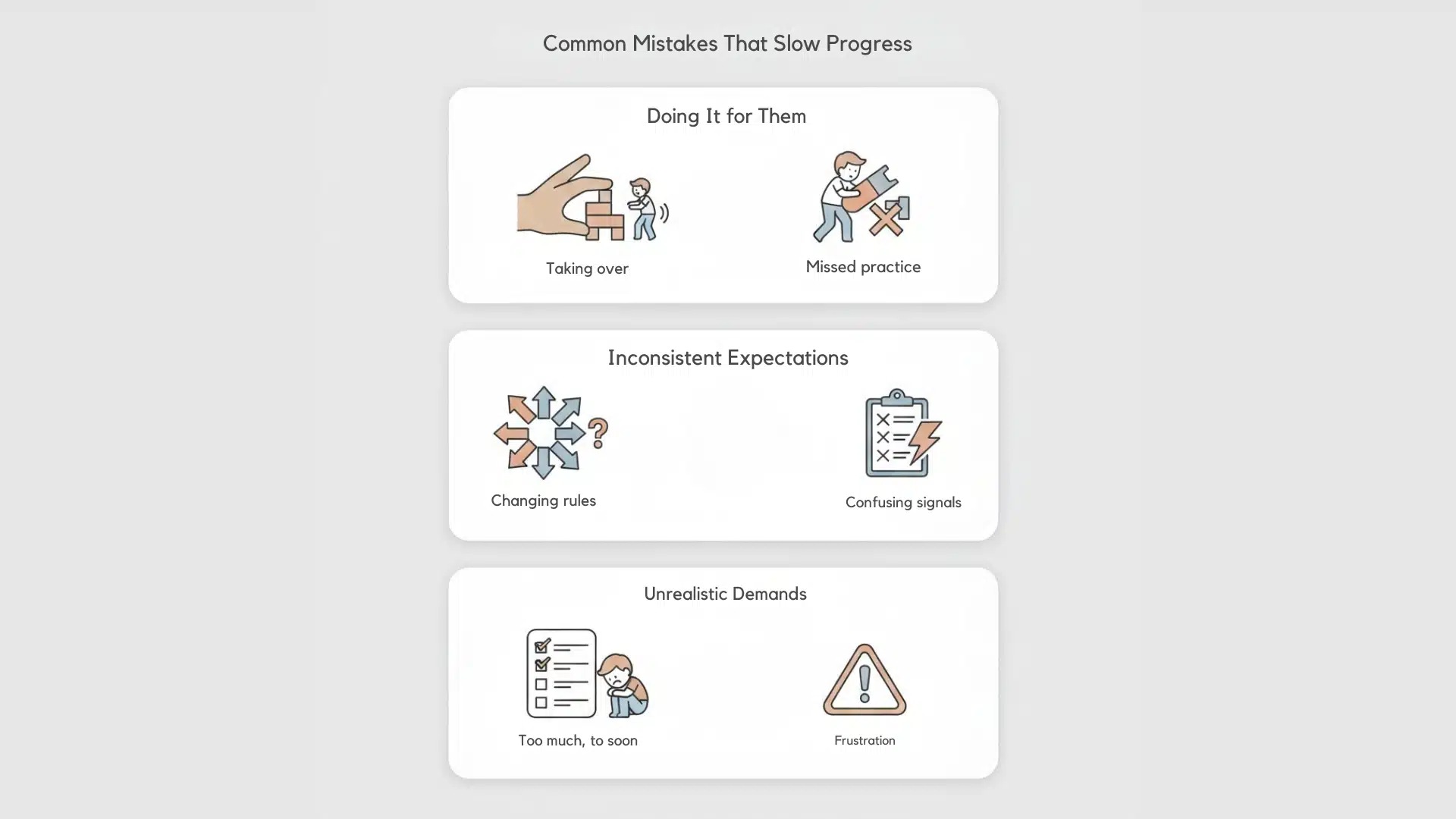
Some well-meaning habits can hinder the development of responsibility.
Doing Tasks for the Child
Jumping in to complete tasks might feel helpful in the moment, but it sends the wrong message about capability.
When adults take over, children miss chances to practice and prove to themselves they can handle things. This pattern reduces confidence and skill growth over time.
Inconsistent Expectations
Changing rules or requirements from day to day makes it hard for children to know what’s actually expected.
Kids struggle to build habits when the standards keep shifting based on parental mood or schedule. This creates confusion that undermines their ability to develop reliable patterns.
Unrealistic Demands
Asking children to handle responsibilities beyond their developmental stage sets everyone up for frustration.
Tasks that feel impossible discourage children from trying at all. This mismatch between expectation and ability leads to avoidance rather than growth.
How to Track Responsibility Growth?
Tracking progress helps both parents and children see patterns without turning responsibility into a performance metric.
Charts and regular check-ins create awareness about what’s working and where support is still needed.
The focus should stay on reflection rather than perfection.
Looking at progress over weeks instead of days shows real growth that daily evaluation might miss.
Simple tools like calendars marked with completed tasks or brief conversations about what felt easier this week keep the process visible.
When tracking emphasizes patterns instead of isolated successes or failures, children learn that growth happens gradually through consistent effort rather than overnight transformation.
Conclusion
Teaching kids responsibility shapes their confidence and ability to handle life independently.
The process happens through consistent practice rather than perfection and requires patience as children build skills at their own pace.
Parents who match expectations to developmental stages help their kids feel capable instead of overwhelmed by what they face each day.
Mistakes become learning opportunities when guidance stays calm and supportive rather than critical.
Everyday moments create the strongest foundation for accountability, from morning routines to managing personal belongings.
Children who experience natural outcomes paired with encouragement develop self-trust that carries into adolescence and beyond.
The investment in building these habits early creates young people who take ownership of their choices and contribute meaningfully to their families and communities.