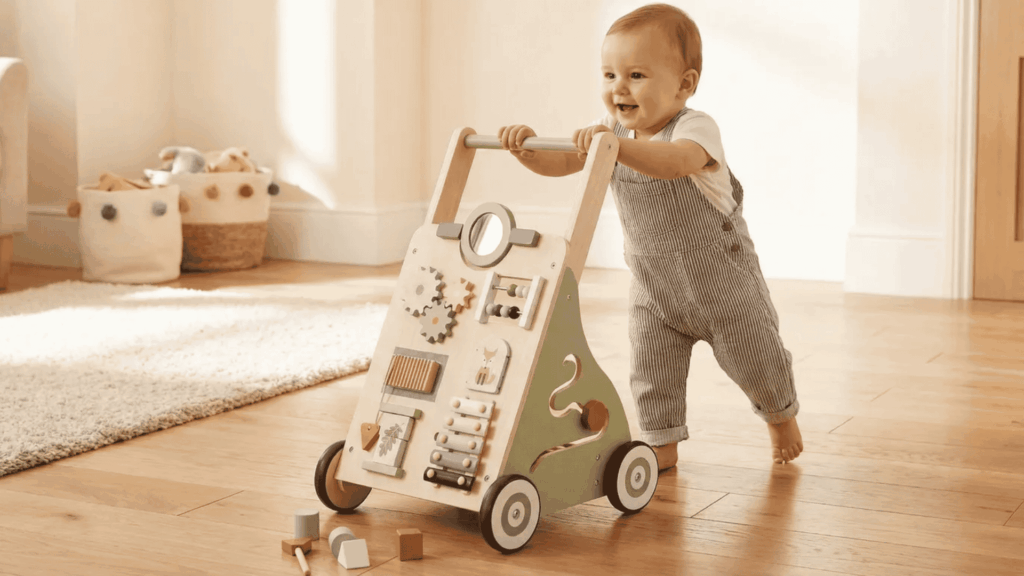
Your baby just pulled themselves up for the first time.
Your heart skipped a beat. Those tiny legs wobbled but stayed strong. Now they’re ready to take their first steps.
A good push walker makes this moment safer and more fun. But picking the wrong one could slow their progress or cause frustration.
We tested dozens of top push walkers to find the best. We checked stability, safety features, and how babies actually use them. Real parents shared their honest experiences with each model.
This guide shows you the best options for your budget and needs. You’ll see which walkers help babies learn faster. We explain what features matter most.
Let’s find the perfect walker to celebrate this incredible milestone.
Quick Comparison Table: Top 5 Best Baby Push Walkers
| Walker | Our Rating | Best For | Age Range | Material | Key Features | Adjustable Speed |
|---|---|---|---|---|---|---|
| VTech Sit-to-Stand Learning Walker | 4.5/5 | Budget-friendly with features | 9 months to 3 years | Plastic | Removable activity panel, piano keys, phone toy, shape sorter | Yes |
| Radio Flyer Classic Walker Wagon | 4.8/5 | Traditional wooden style | 1 to 4 years | Wood & Plastic | Large storage space, foam-filled wheels, and resistance control | Yes |
| KUB Baby & Toddler Push Walker | 4.6/5 | Maximum stability | 6 to 18 months | Plastic | Wide wheelbase, ball chute, magnetic shapes, brake button | Yes |
| Tiny Land Wooden Baby Walker | 4.2/5 | Montessori learning | 10 months to 3 years | Natural wood | Activity center, mirror, gears, adjustable resistance | Yes |
| Fisher-Price Learn with Me, Zebra Walker | 4.3/5 | Best value option | 6 months plus | Plastic | Light-up buttons, music, compact design, and easy assembly | No |
Quick Feature Highlights
- Interactive Features: VTech and KUB offer the most activities for busy hands.
- Durability: Radio Flyer and Tiny Land use quality wood construction.
- Stability: KUB has the widest base for early walkers.
- Portability: Fisher-Price is the lightest and easiest to move.
- Storage: The Radio Flyer wagon holds the most toys.
Now, let’s look at each walker in detail to help you pick the perfect match for your baby
Top 5 Best Baby Push Walkers: Detailed Reviews
We tested each walker with real babies to see how they perform.
Our reviews focus on what matters most to parents. You’ll learn about stability, features, and durability. We also share honest feedback from hundreds of parent testers.
Each walker has strengths and weaknesses. Read on to find which one fits your baby’s needs.
1. VTech Sit-to-Stand Learning Walker
Our Rating: 4.5/5
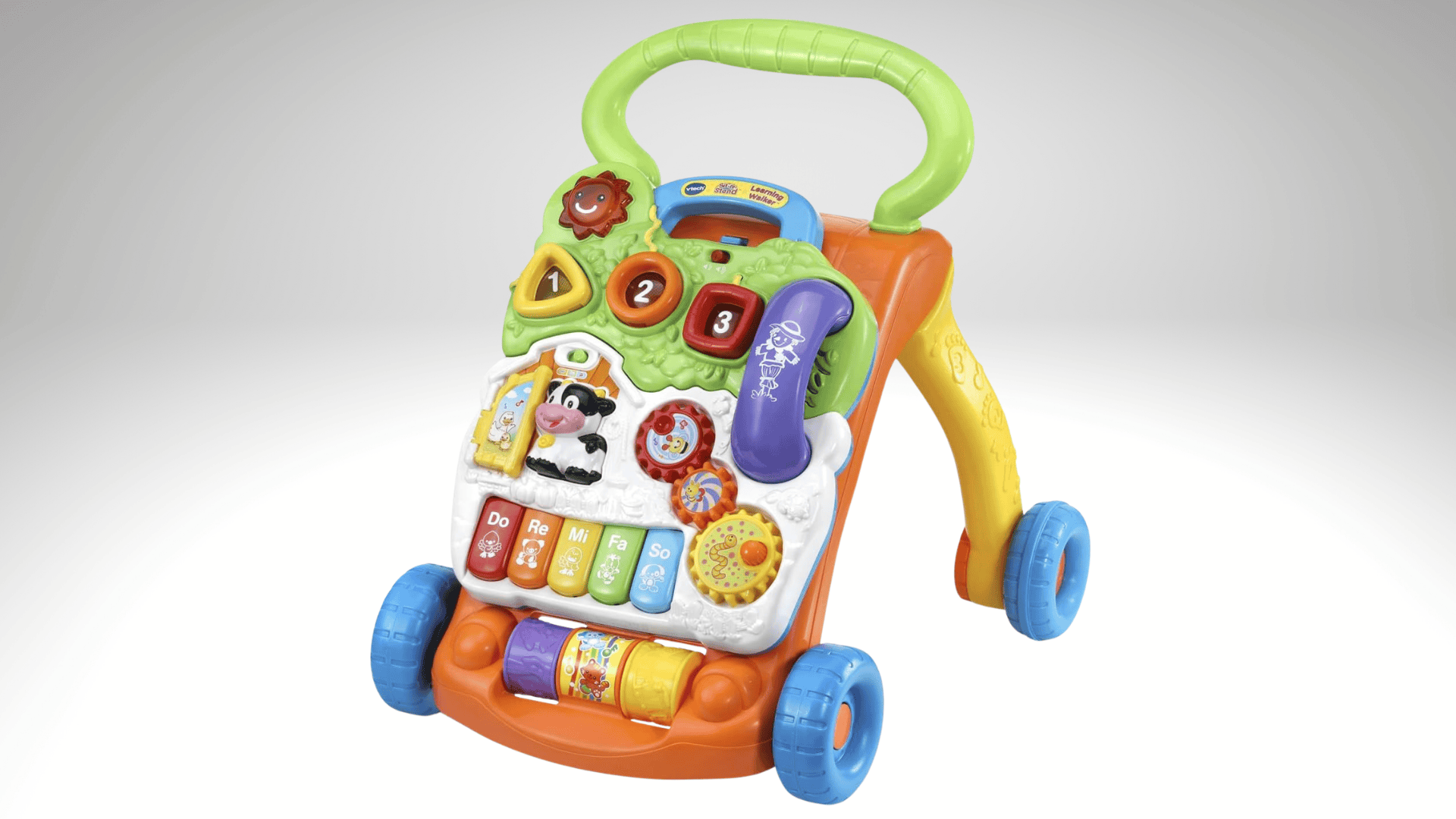
The VTech walker is America’s bestselling push walker for good reason. This two-in-one toy works as both a floor activity center and a standing walker.
The front panel detaches completely. Babies can play sitting down before they’re ready to walk. Once they start pulling up, snap the panel back on.
What Makes It Special?
Five piano keys teach musical notes. Three light-up shape sorters help with colors and matching. The toy phone is always the favorite feature.
Over seventy songs and phrases teach letters, numbers, and animals. Two modes switch between music and learning content.
The adjustable speed control lets you slow down the wheels. This helps on hardwood floors where it tends to move fast.
Pros and Cons
| Pros | Cons |
|---|---|
| Detachable panel for extended use | Moves very fast on hardwood |
| Batteries included in box | No wheel lock feature |
| Easy five-minute assembly | Songs become repetitive |
| Tons of activities for the cost | All plastic construction |
| Wide stable base | Can slide when baby pulls up |
This walker works best for budget-conscious families who want maximum features. Babies who love lights and sounds stay entertained for hours. Households with multiple children get extra value from the detachable panel.
2. Radio Flyer Classic Walker Wagon
Our Rating: 4.8/5
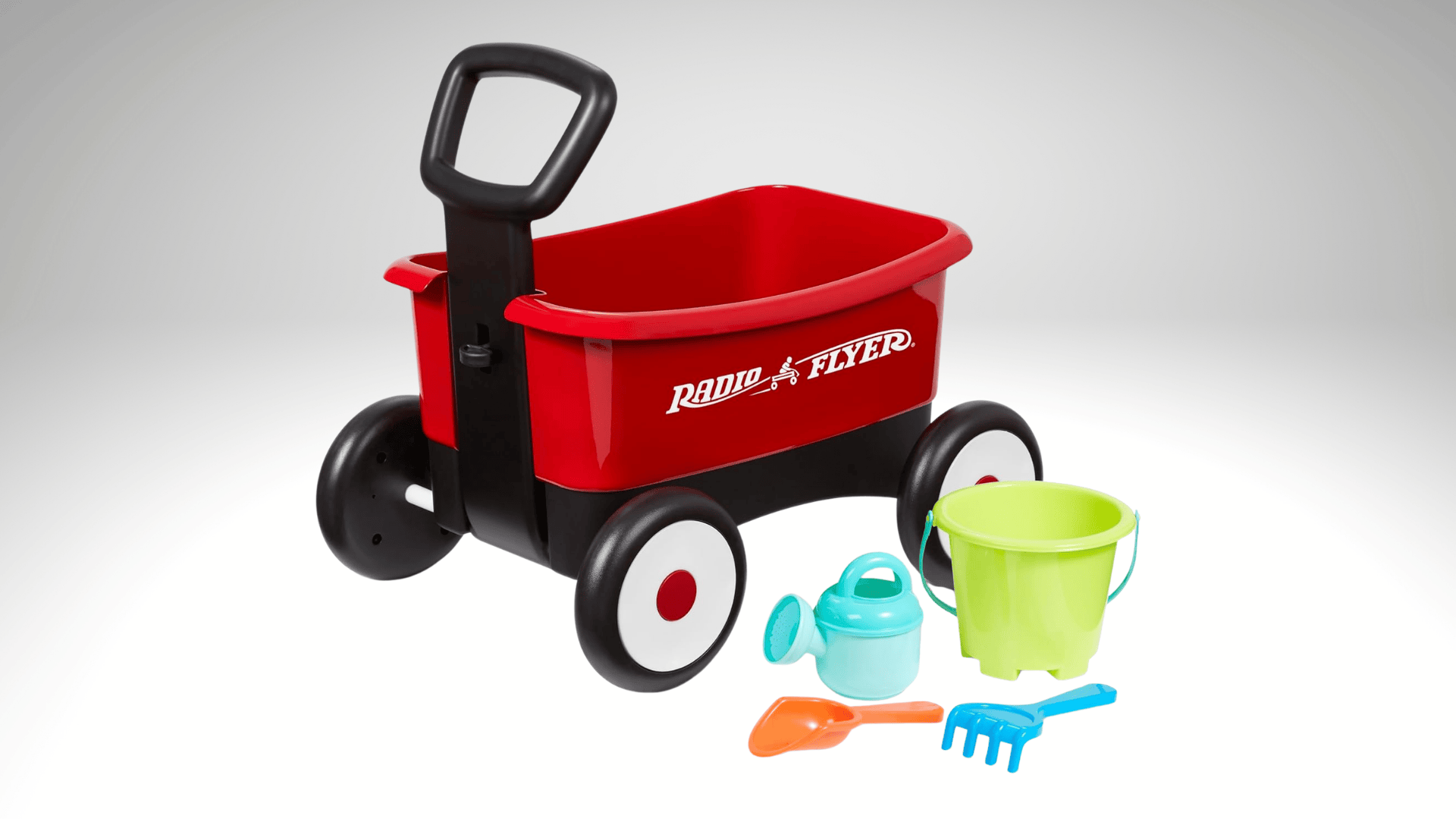
The Radio Flyer Classic Walker Wagon brings nostalgia and quality together. This wooden wagon has served families for over a century.
Built with real wood and sturdy construction, this walker lasts through multiple children. The timeless red design looks beautiful in any home.
Parents love that it doubles as a toy storage box. Kids can load up their favorite stuffed animals and toys for the ride.
What Makes It Special?
The resist push feature is the star here. A built-in tensioner slows down the wheels for beginner walkers.
As your child gains confidence, you adjust the tension to let them move faster. This grows with your baby’s skill level.
Removable wooden stake sides give you flexibility. Take them off for easier toy loading or keep them on for maximum storage.
The furniture-friendly bumper protects your walls and baseboards. Foam-filled wheels with grip tread work on all floor types.
This wagon holds up to thirty-five pounds of cargo. Your toddler will use it long after they master walking.
Pros and Cons
| Pros | Cons |
|---|---|
| Durable wood construction | Complex assembly process |
| Large storage capacity | Tensioner makes clicking sound |
| Adjustable resistance control | Side panels don’t lock in place |
| Non-scratch bumper included | Heavier than plastic walkers |
| Lasts through multiple kids | No interactive toys or sounds |
This walker suits parents who prioritize quality and longevity over electronic features. Families who prefer quiet, screen-free play appreciate the classic design. If you plan to have more children, this investment pays off as it gets passed down through siblings.
3. KUB Baby & Toddler Push Walker
Our Rating: 4.6/5
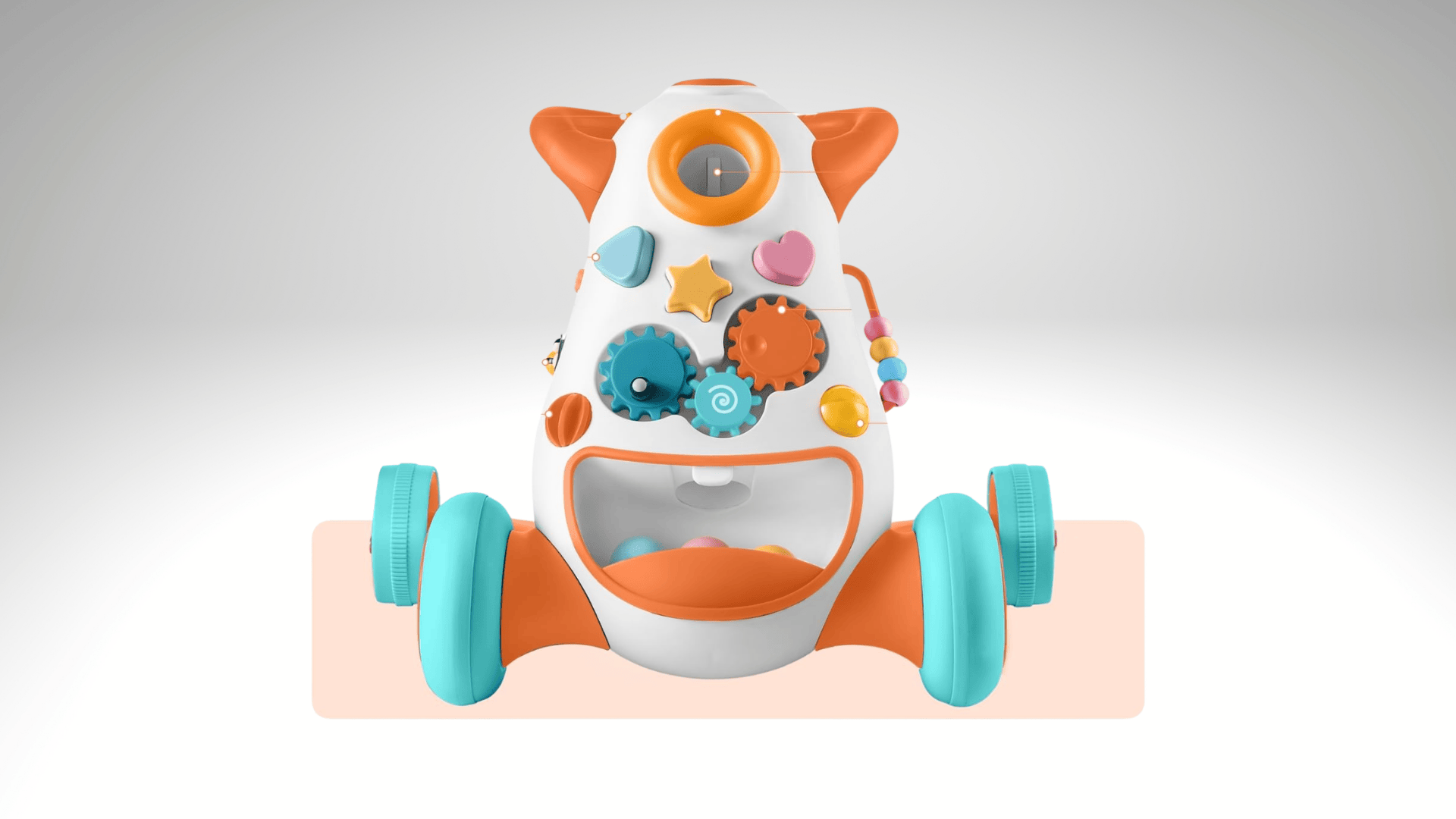
The KUB walker stands out for its exceptional stability. The unique triangular design prevents tipping better than standard walkers.
Wider rear wheels create a stable base for early walkers. Non-slip strips on each wheel provide extra grip on smooth floors.
The interactive playboard keeps babies engaged between walking sessions. Every activity encourages hand-eye coordination and fine motor skills.
What Makes It Special?
The ball chute game is the highlight feature. Babies drop balls through the goal and watch them roll down.
Magnetic shapes, rotating gears, and sliding beads offer varied play. Musical sounds keep excitement going with two volume levels.
The brake button lets you lock the rear wheels completely. This slows movement for very new walkers who need maximum support.
A small storage compartment holds a few toys. The rounded corners and smooth edges prioritize safety.
Assembly takes less than six minutes with minimal tools needed.
Pros and Cons
| Pros | Cons |
|---|---|
| Widest wheelbase for stability | Small storage box |
| Brake button for speed control | Balls and shapes get lost easily |
| Triangular anti-tip design | Crevices collect dirt |
| Volume control with off switch | Limited cargo space |
| Quick and easy setup | Must track small parts |
Parents seeking maximum stability for early walkers should choose this option. The wide base and brake feature give extra peace of mind. Babies who enjoy sorting and dropping activities will play with this for hours beyond just walking practice.
4. Tiny Land Wooden Baby Walker
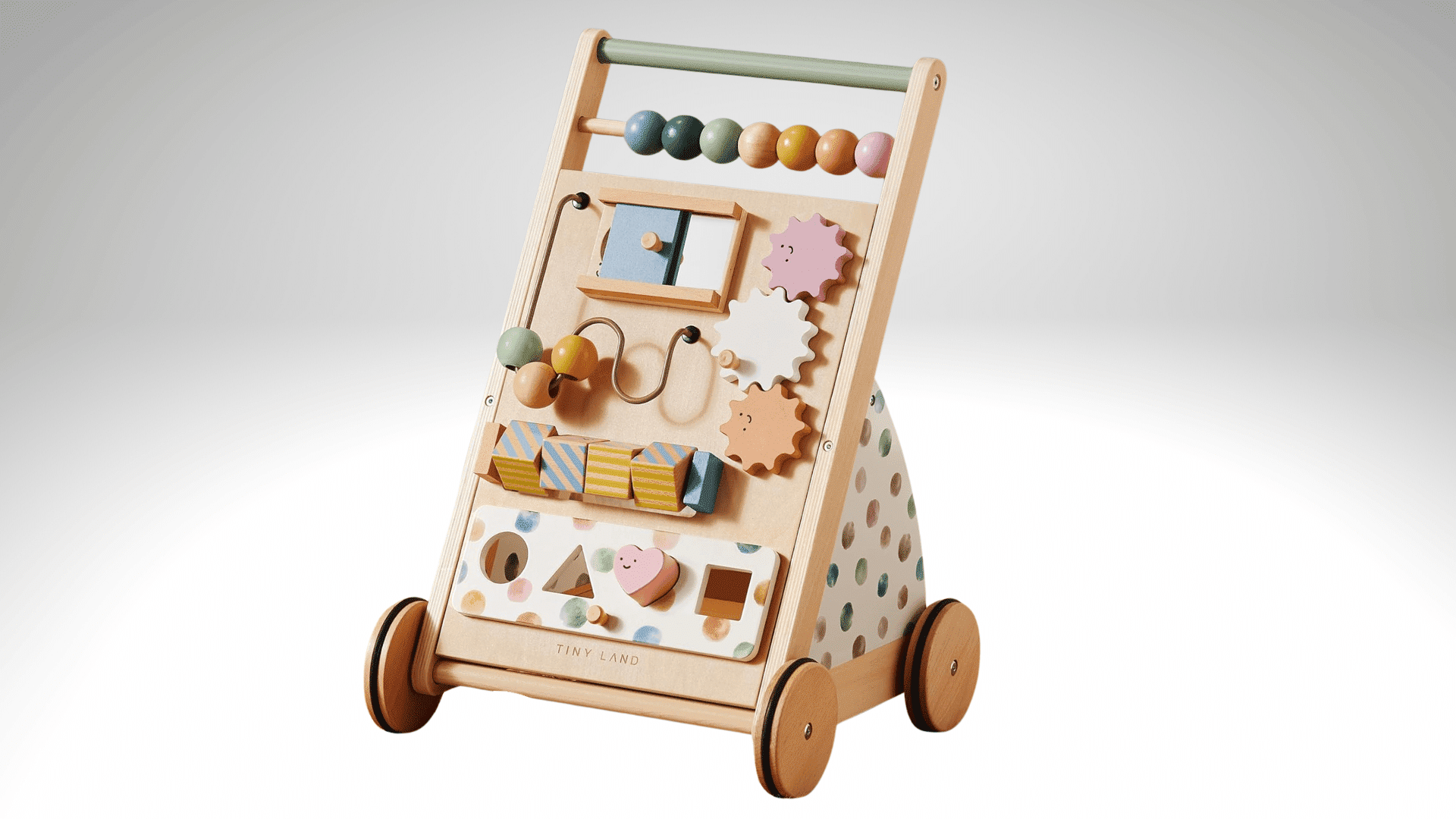
Our Rating: 4.2/5
The Tiny Land walker brings Montessori principles to walking practice. Natural wood construction and muted colors create a calm aesthetic.
This walker focuses on sensory development and independent exploration. Every element encourages learning through hands-on play.
The design philosophy prioritizes sustainability and natural materials. Parents who avoid plastic appreciate the eco-friendly construction.
What Makes It Special?
Built-in activity center features mirrors, gears, and textures. Babies explore cause and effect through simple interactions.
Adjustable speed control works via rear wheel screws. Tighten for beginners, loosen as confidence builds. Silent rubber wheels protect your floors from scratches. The triangular design promotes proper upright posture.
Natural wood with non-toxic finishes ensures safety. No plastic parts means fewer chemicals in your home. The minimalist design blends into modern home decor. This walker doubles as an attractive room accent.
Pros and Cons
| Pros | Cons |
|---|---|
| Natural wood with eco-friendly finish | Higher cost point |
| Promotes proper walking posture | Fewer interactive features |
| Silent rubber wheels | Limited customer reviews |
| Adjustable speed resistance | Smaller than wagon-style walkers |
| Beautiful modern aesthetic | Activities less exciting than electronic toys |
Design-conscious parents who embrace Montessori education will love this walker. Families avoiding plastic toys and seeking natural materials should invest here. The beautiful construction makes this a walker you’ll proudly display rather than hide away.
5. Fisher-Price Learn with Me Zebra Walker
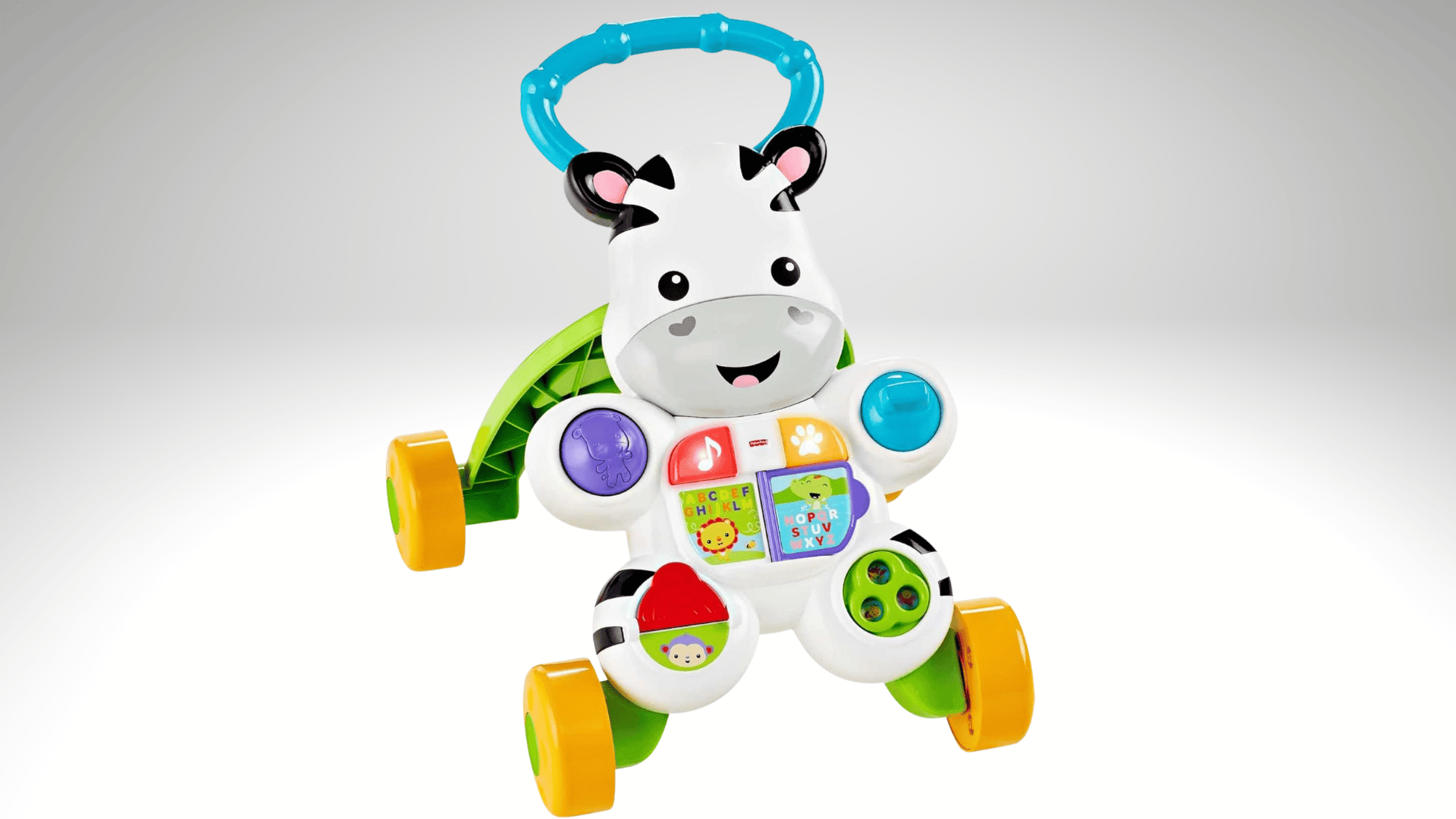
Our Rating: 4.3/5
The Fisher-Price Zebra Walker delivers solid features at an accessible cost. This compact walker fits easily in smaller homes and apartments.
Seven hands-on activities keep sitting babies entertained. The zebra design appeals to animal-loving toddlers.
Lightweight construction makes it easy to move from room to room. Parents appreciate the simple setup process.
What Makes It Special?
Light-up buttons teach letters and numbers through songs. A flip book page plays alphabet or counting tunes.
The spinning ball and clacker roller provide tactile feedback. Every push triggers encouraging phrases and music. Wide four-wheel base offers decent stability for the size. Easy-grasp handle helps babies maintain balance.
Assembly takes under ten minutes with clear instructions. The compact design stores easily when not in use. Educational content includes songs about animals and colors. The cheerful zebra face attracts baby attention immediately.
Pros and Cons
| Pros | Cons |
|---|---|
| Very affordable option | No speed adjustment feature |
| Lightweight and portable | Can slide on hardwood floors |
| Quick assembly process | Thin plastic feels less sturdy |
| Educational songs included | No wheel lock for sitting play |
| Compact storage footprint | Limited to hardwood or carpet use |
Budget-focused families wanting basic features with learning content should pick this walker. Small living spaces benefit from the compact size. Parents seeking a lightweight option that travels easily to grandparents’ houses will appreciate the portability.
Now that you know our top picks, let’s talk about keeping your baby safe while using these walkers.
Safety Considerations for Baby Push Walkers
Push walkers are safer than sit-in walkers when used correctly. Follow these essential guidelines to protect your baby.
The American Academy of Pediatrics warns against sit-in baby walkers but does not ban push-style walkers. Push walkers allow babies to practice walking naturally without being suspended in a seat.
| Important Note: The AAP specifically opposes sit-in walkers with wheels. You can read their full safety guidance at HealthyChildren.org – Baby Walkers: A Dangerous Choice. |
1. Block All Stairs Immediately
Install baby gates at the top and bottom of every staircase. This is your most important safety step. Babies can’t judge drops or edges. They’ll push walkers straight toward stairs.
Close doors to rooms with staircases. Multiple barriers work better than one.
2. Always Supervise Your Baby
Never leave your baby alone with a walker. Not even for a minute. Babies move faster than you expect. They reach dangerous areas in seconds.
Stay within arm’s reach during every play session.
3. Choose the Right Surface
Hardwood and tile floors work best for push walkers. These smooth surfaces allow easy movement while you control the speed. Low-pile carpet provides natural resistance that helps slow down eager babies.
Avoid: Thick carpet, uneven floors, wet surfaces, and outdoor concrete.
Never use walkers on outdoor concrete or rough surfaces. Use the adjustable speed controls on hardwood floors to prevent walkers from moving too fast. Some walkers have brake buttons that lock wheels for extra control.
4. Clear the Walking Area
Remove small rugs that can bunch or slide. Push furniture away from windows. Keep walkers away from pools, fireplaces, and space heaters. Block access to hot surfaces and water hazards.
Don’t let babies push over door thresholds.
5. Inspect Before Each Use
Check that all screws are tight. Test wheels for damage or debris. Look for sharp edges or broken pieces. Verify activity panels attach securely.
Replace damaged walkers immediately.
6. Watch for Warning Signs
Stop using if your baby relies too heavily on the walker. They need independent walking practice too. Remove the walker if your baby toe-walks or shows unusual gait patterns. Consult your pediatrician about any developmental concerns.
Understanding when your baby is ready makes walker use safer and more beneficial.
When Is Your Baby Ready for a Push Walker?
Most babies are ready for push walkers between nine and twelve months. But age alone doesn’t determine readiness. Watch for specific developmental signs instead of relying only on numbers.
Key readiness signs to look for:
- Pulls to stand independently without help and holds position steadily
- Cruises along furniture, moving sideways while holding surfaces
- Shows strong interest in upright movement and walking
- Sits up straight without wobbling, demonstrating good core strength
- Can maintain standing position for several seconds at a time
Premature babies and children with developmental delays may need extra time. Never force a walker on a baby who seems scared or resistant. Babies who fall immediately when pulling up aren’t ready yet.
Starting too early can delay independent walking and create poor movement habits. Some babies develop toe-walking patterns from premature walker use that require physical therapy correction later. Wait until your baby shows multiple readiness signs before introducing a push walker.
Now that you know when to introduce a walker, let’s explore what features to look for when buying one.
Complete Buying Guide
Choosing the right push walker depends on your baby’s needs and your home setup. This guide covers the key factors that matter most.
Wooden vs Plastic: Complete Comparison
| Feature | Wooden Walkers | Plastic Walkers |
|---|---|---|
| Durability | Lasts through multiple children | May break with rough use |
| Stability | Heavier base prevents tipping | Lighter, more prone to tipping |
| Price Range | Higher upfront cost | Budget-friendly options |
| Weight | Heavy, stays in place | Lightweight, easy to move |
| Interactive Features | Minimal, focuses on basics | Lights, sounds, activity panels |
| Noise Level | Silent operation | Can be very loud |
| Batteries Required | No | Yes, typically 2-3 AA |
| Cleaning | Requires careful wiping | Easy wipe-down |
| Portability | Stays in one location | Travels easily |
| Aesthetic | Natural, home-friendly look | Bright, colorful designs |
| Best For | Quality-focused, multi-child families | Budget-conscious, feature-seeking parents |
Essential Features Checklist
Speed Control: Adjustable wheels or brake buttons let you control how fast the walker moves. Critical for hardwood floors where walkers gain momentum quickly.
Stability Design: Look for wide wheelbases of at least twelve inches. Rubber wheels grip better than hard plastic. Center-mounted handles provide better balance than edge handles.
Activity Panel Options: Volume controls or off switches prevent noise fatigue. Removable panels work for babies who aren’t walking yet. Avoid small loose parts that disappear easily.
Size Considerations: Measure doorways if moving between rooms matters. Check your storage space for larger wagon-style models. Verify the walker fits in your car if traveling to other homes.
Practical Details: Read assembly reviews before buying complex models. Check cleaning accessibility for crevices and fabric parts. Confirm age and weight specifications match your baby.
Once you bring your walker home, proper care keeps it safe and functional for months.
Maintenance & Care Tips
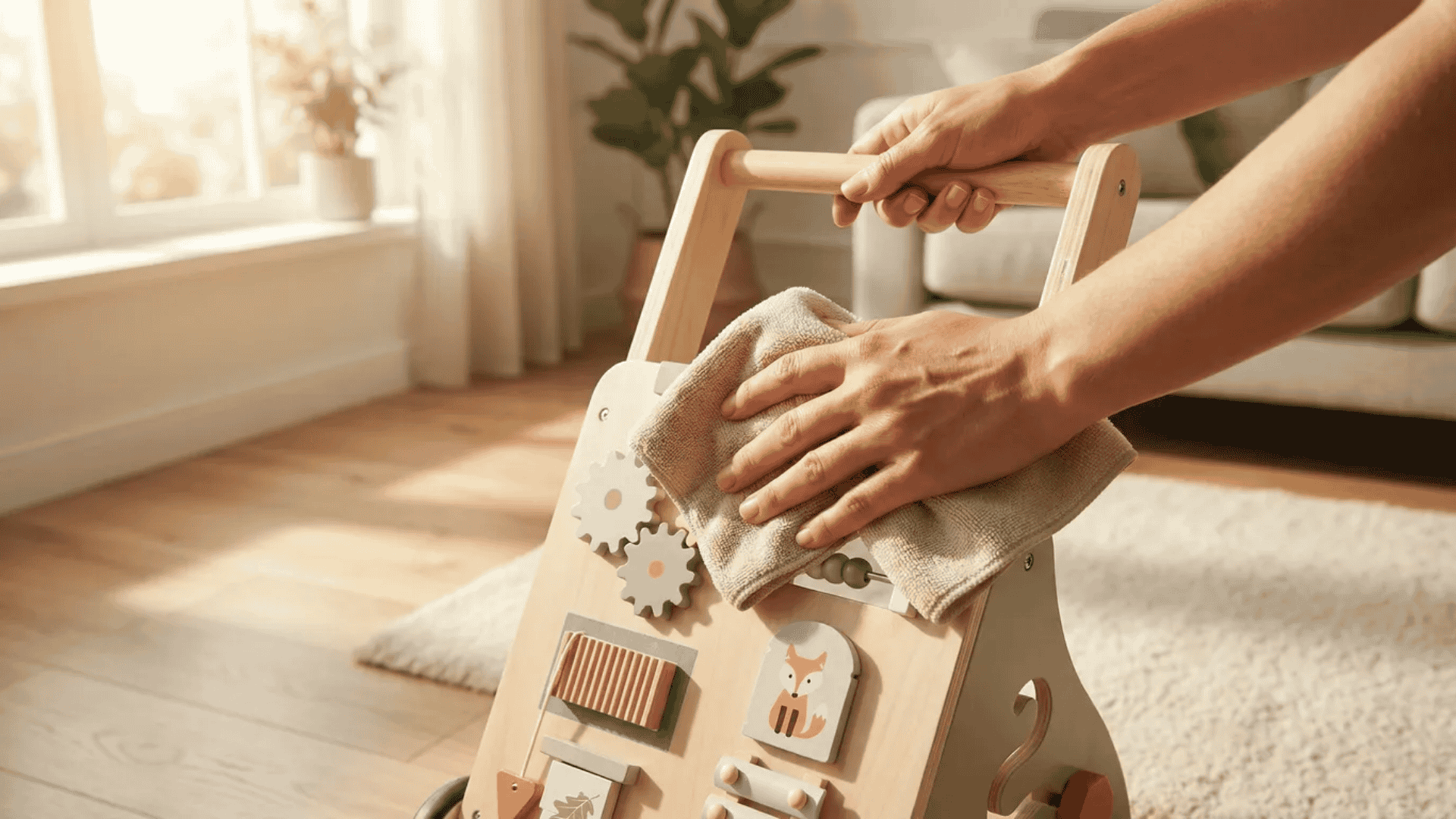
Keep your walker clean and functional with simple regular care. Wipe plastic walkers weekly with mild soap and water. Use a damp cloth on wooden models and dry immediately to prevent damage. Never soak parts or wet electronic components.
Check wheels monthly for hair and debris that blocks smooth rolling. Tighten loose screws during routine inspections. Verify activity panels remain securely attached without cracks or damage.
Machine wash fabric seats per manufacturer instructions. Replace weak batteries promptly to prevent acid leaks. Store walkers in dry areas away from moisture and temperature extremes.
Stop using the walker immediately if you find sharp edges, cracks, or structural problems. Regular maintenance keeps your walker safe and extends its useful life through multiple developmental stages.
Conclusion
Choosing the right baby push walker supports your little one’s first steps safely. The VTech offers unbeatable features for budget-conscious families.
Radio Flyer delivers timeless quality that lasts for years. KUB provides maximum stability for early walkers.
Remember to wait until your baby shows clear readiness signs before starting. Block all stairs, supervise every session, and choose surfaces carefully. Match the walker to your home setup and lifestyle needs.
Your baby will walk independently soon enough. A quality push walker simply makes the learning process safer and more fun. Trust your instincts and watch your baby’s cues closely.
Which walker caught your attention?
Share your thoughts in the comments below. We’d love to hear about your baby’s walking journey and which features matter most to your family.