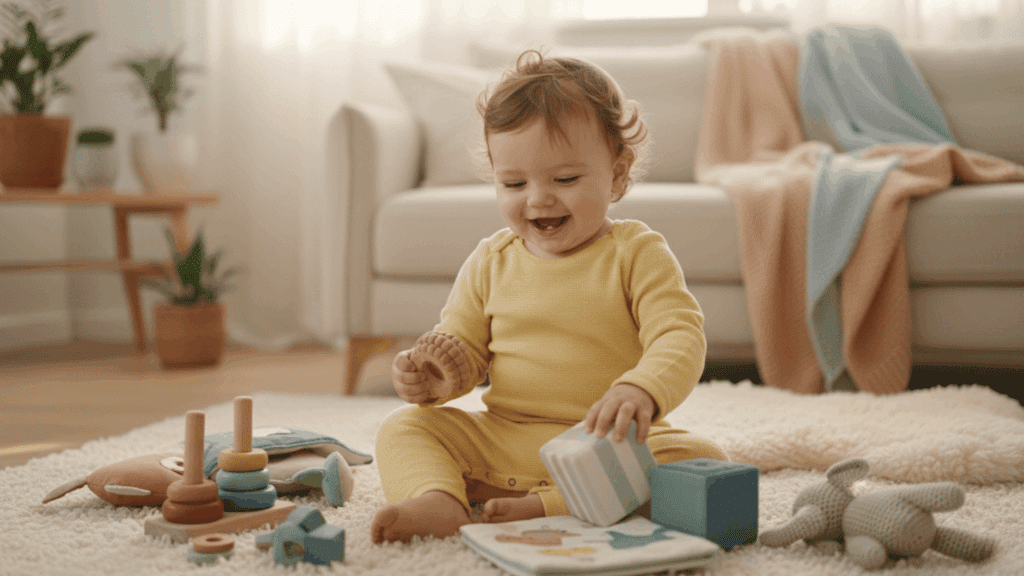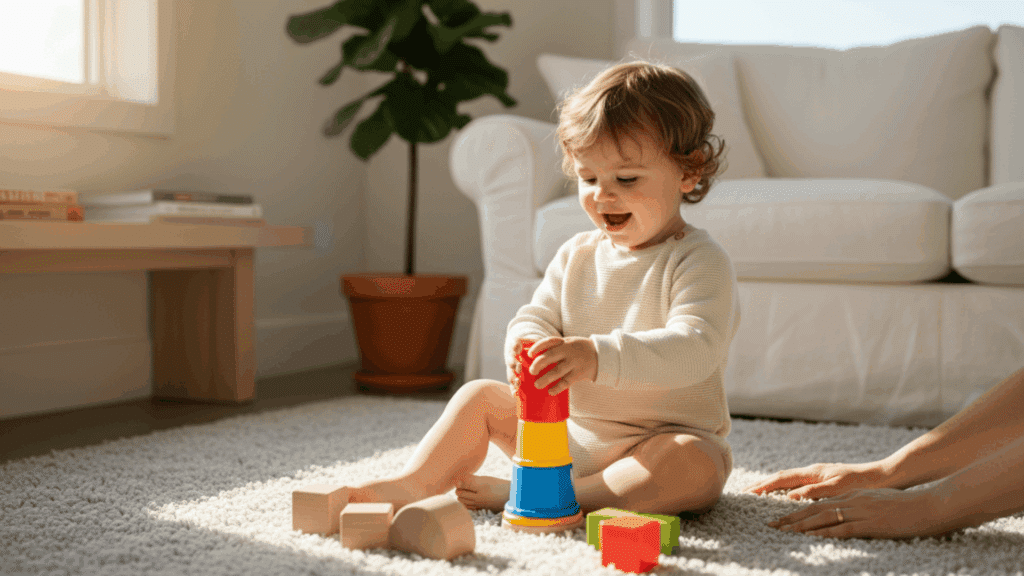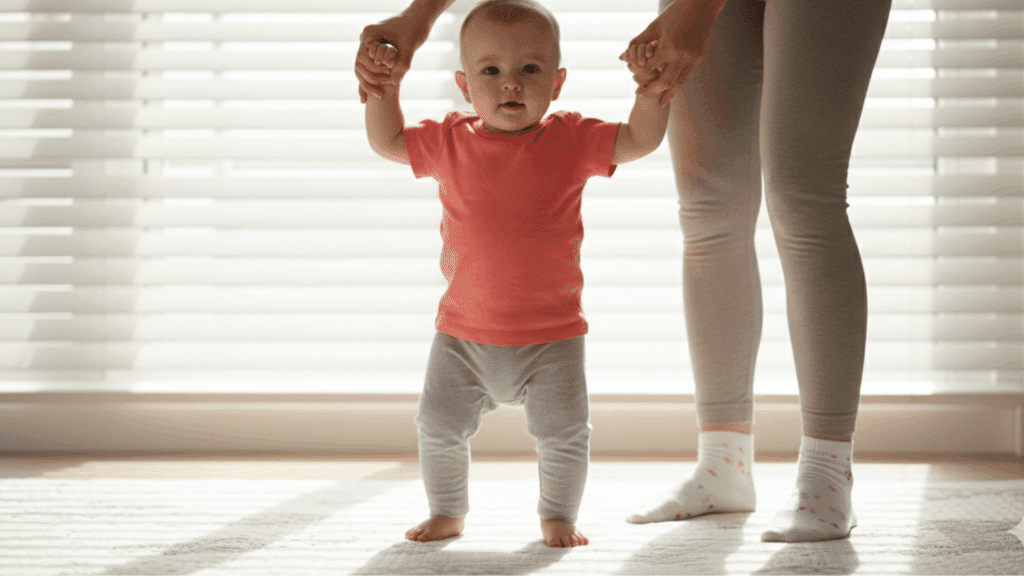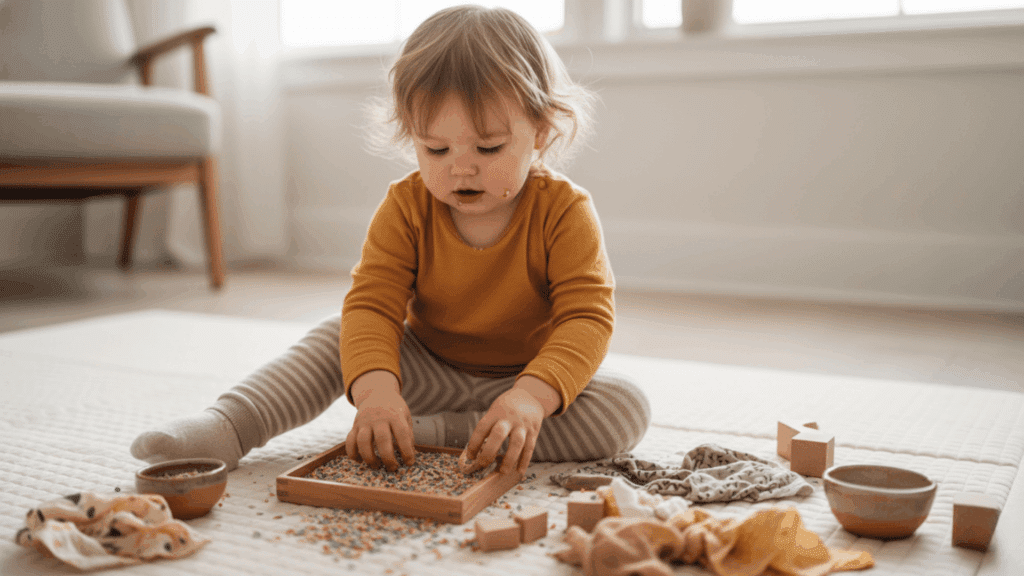
Your toddler touches everything. They squeeze, taste, smell, and listen to the world around them. This is not just curiosity. It is how they learn.
Every time your little one splashes water or squishes playdough, their brain builds connections. These simple moments shape how they think, move, and feel. Sensory play for toddlers turns everyday materials into powerful learning tools.
This guide shares engaging sensory activities that keep toddlers entertained while supporting their development.
No fancy equipment needed. No complicated setup. Just simple activities that help your toddler grow through play.
Let’s get started.
What Is Sensory Play?
Sensory play is how toddlers learn about the world around them. It uses simple activities that wake up their senses. Think of a toddler squishing playdough or splashing in water. These moments are sensory play in action.
Your little one learns through touch, sight, sound, taste, and smell. But there’s more. Sensory play also includes movement and body awareness.
When your toddler jumps on a couch or spins in circles, they’re building important skills that shape how their brain grows.
Sensory play includes any activity that engages one or more of a child’s senses. The five basic senses work together during play:
- Touch (Tactile): Feeling textures like soft, rough, sticky, or smooth
- Sight (Visual): Seeing colors, shapes, and movements
- Sound (Auditory): Hearing noises from musical instruments or water
- Taste (Gustatory): Exploring safe, edible materials
- Smell (Olfactory): Smelling scents like vanilla or cinnamon
Two more senses matter too:
- Balance (Vestibular): Rolling, swinging, or spinning
- Body awareness (Proprioception): Pushing, pulling, or jumping
According to the Cleveland Clinic, our proprioception sense helps us know where body parts are and how much force to use. Our vestibular sense helps us maintain balance during activities.
When your toddler digs in a sandbox, all these senses create learning moments together. Each sensory experience builds brain connections that help with memory, problem-solving, and understanding cause and effect.
Cleveland Clinic notes that when children engage in sensory play, they’re helping their brains develop and learn from their environment.
13 Engaging Sensory Play Ideas for Toddlers
These activities target different senses and skills. Each one takes minimal setup and uses items you likely have at home. Pick activities based on your toddler’s interests and what you want to develop.
1. Rainbow Rice Discovery Bin
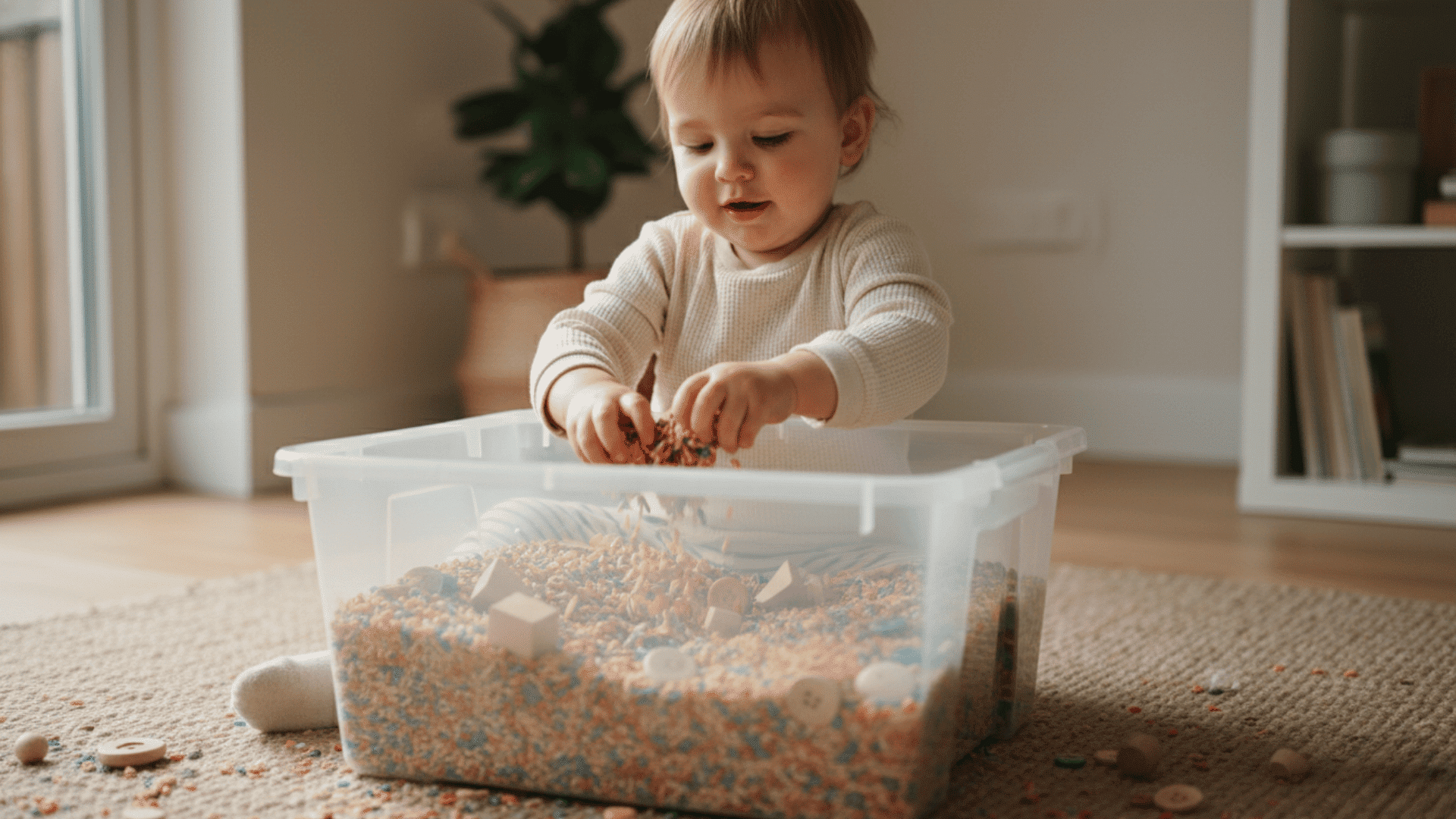
Dye white rice with food coloring and vinegar, then let it dry completely. Hide colored shapes, buttons, or small toys inside. Your toddler digs, scoops, and sorts items by color or texture.
Why this works: The contrast between smooth rice and textured objects teaches comparison skills. Kids learn “same” and “different” through touch before they can say these words.
Parent tip: Use a large under-bed storage container instead of small bins. More space means less spillage and longer play sessions. Keep a handheld vacuum nearby for quick cleanup.
2. Edible Hot Chocolate Cups
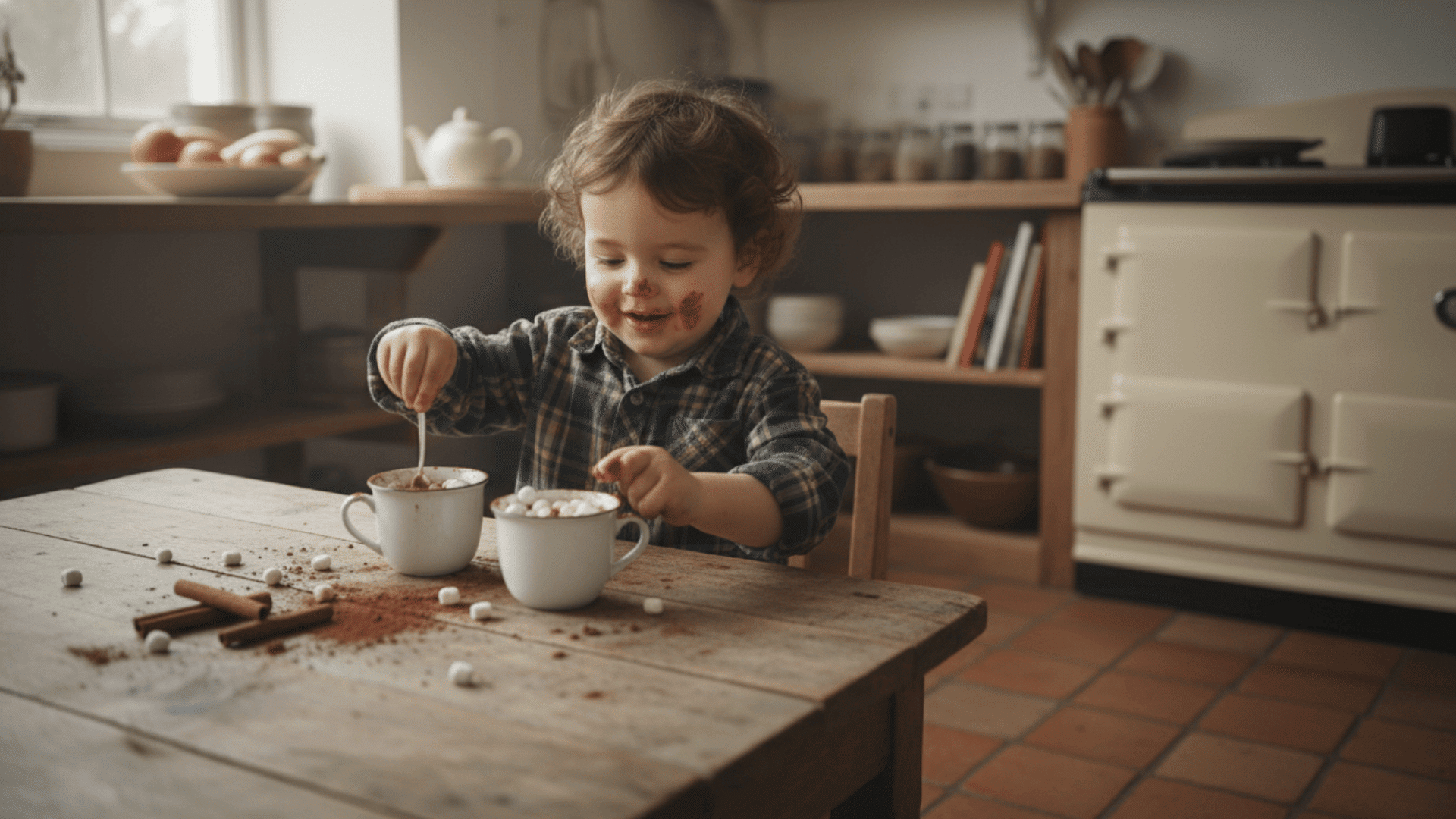
Create a pretend café using safe ingredients like cocoa powder, mini marshmallows, and whipped cream. Give your toddler small cups, spoons, and a tray.
They scoop, pour, stir, and serve hot chocolate to stuffed animals or family members.
Why this works: Role-playing teaches turn-taking and conversation skills. Your toddler practices “serving” and “receiving,” which builds social awareness they’ll use at preschool.
Unique twist: Add cinnamon sticks as stirrers and let them smell the spices. This combines taste, smell, and pretend play in one activity. Real ingredients make the experience more engaging than plastic food.
3. Textured Bubble Wrap Stomp Mats
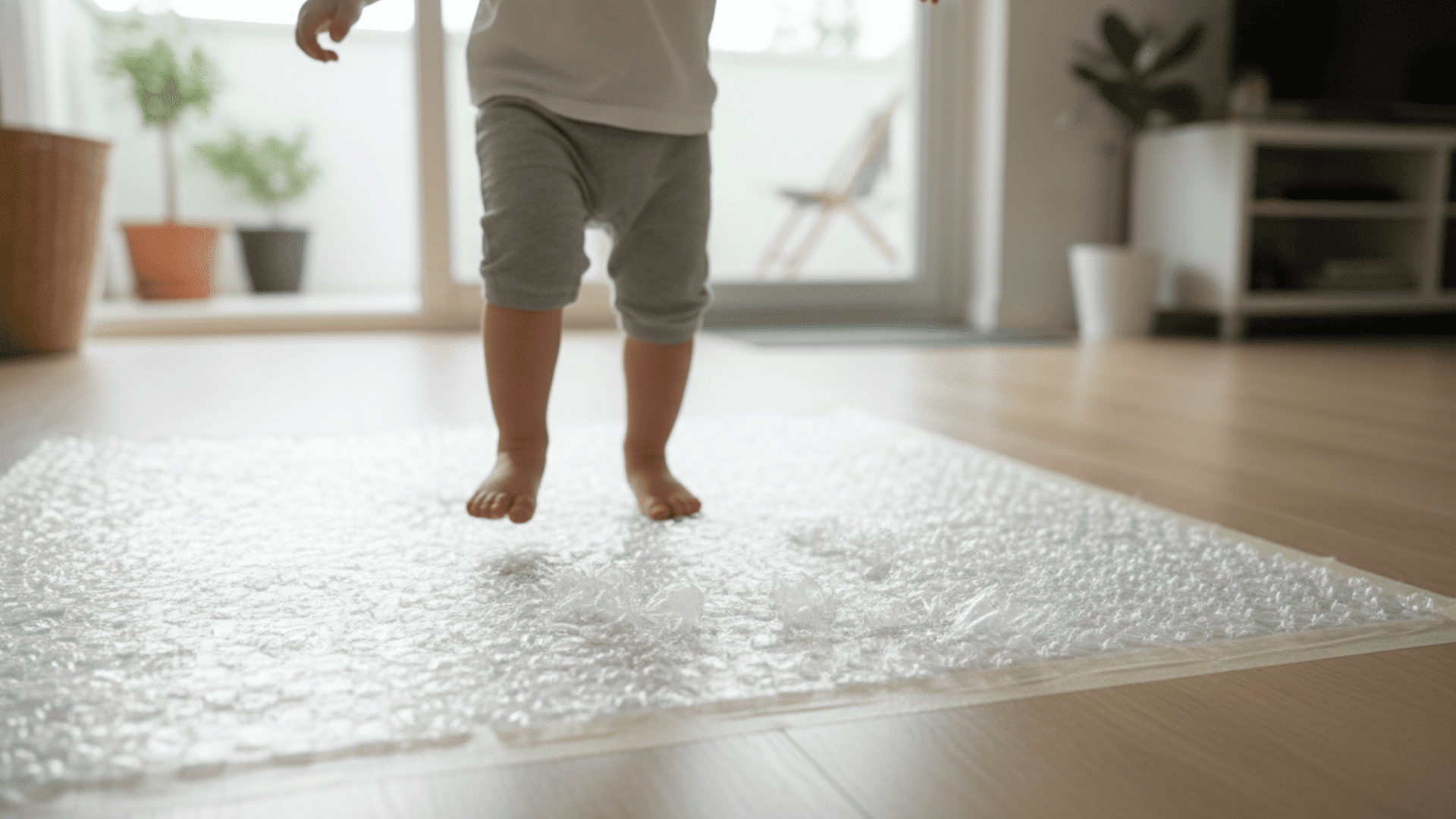
Tape large sheets of bubble wrap to your floor or outdoor patio. Let your toddler stomp, jump, and pop bubbles with their feet. For extra fun, play music and encourage dancing on the wrap.
Why this works: The unpredictable popping sounds keep toddlers engaged longer than regular jumping. Each stomp gives feedback, teaching cause and effect. The resistance under their feet builds ankle and leg strength.
Safety note: Supervise closely and remove any loose pieces immediately. Some toddlers find the popping overwhelming at first; let them watch you demonstrate before joining.
4. Mess-Free Sensory Bags
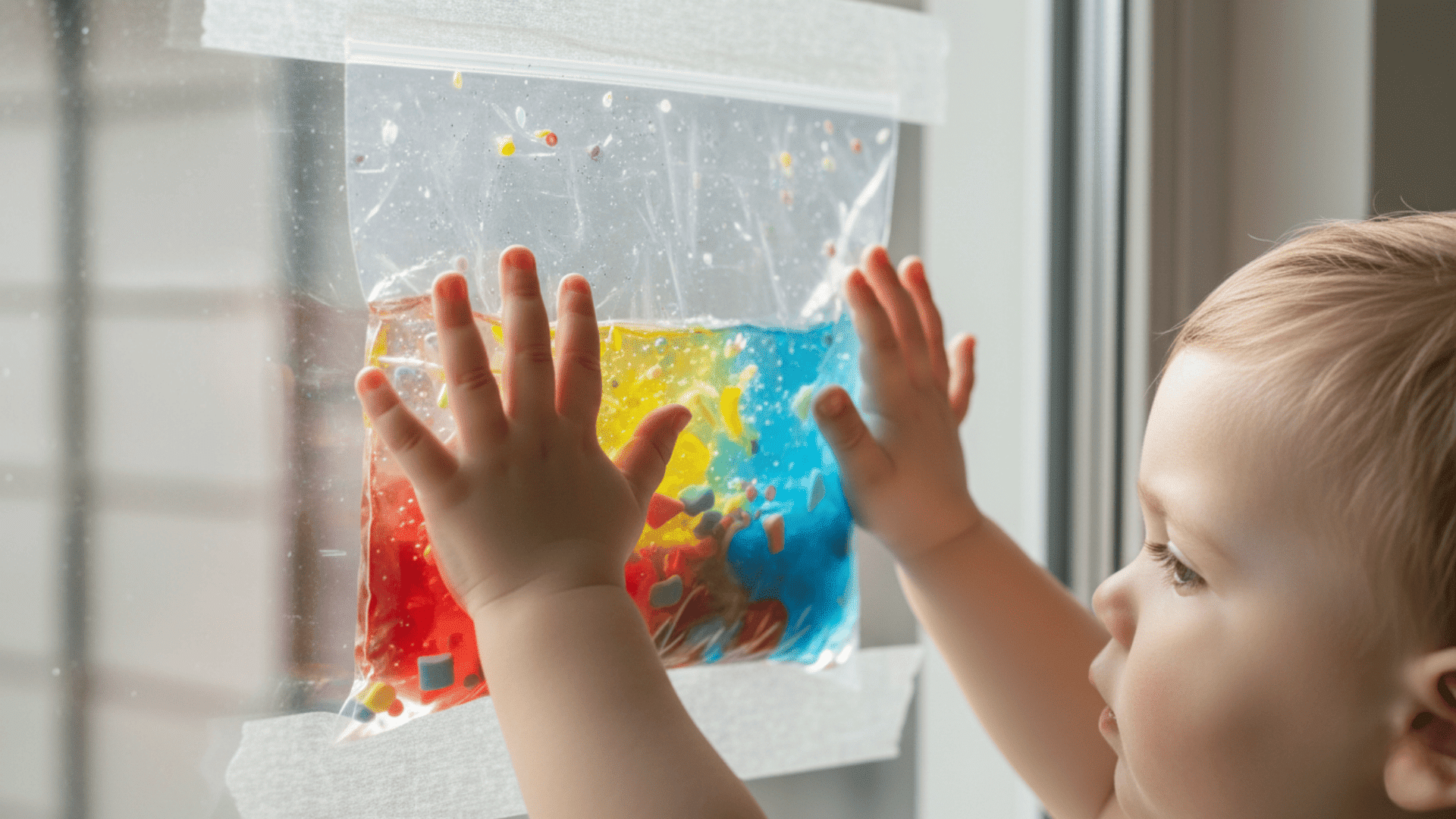
Fill gallon ziplock bags with hair gel, water beads, or paint. Add glitter, buttons, or small toys. Seal the bag, then tape all edges to a window or table. Your toddler squishes and pushes items around without touching the materials directly.
Why this works: Perfect for toddlers who refuse to get messy or for playing during meal prep. The visual tracking as objects move through gel builds eye muscles used for reading later.
Pro tip: Make several bags with different contents. Rotate them weekly to maintain interest. Store flat in a drawer when not in use.
5. Water Pour & Splash Station
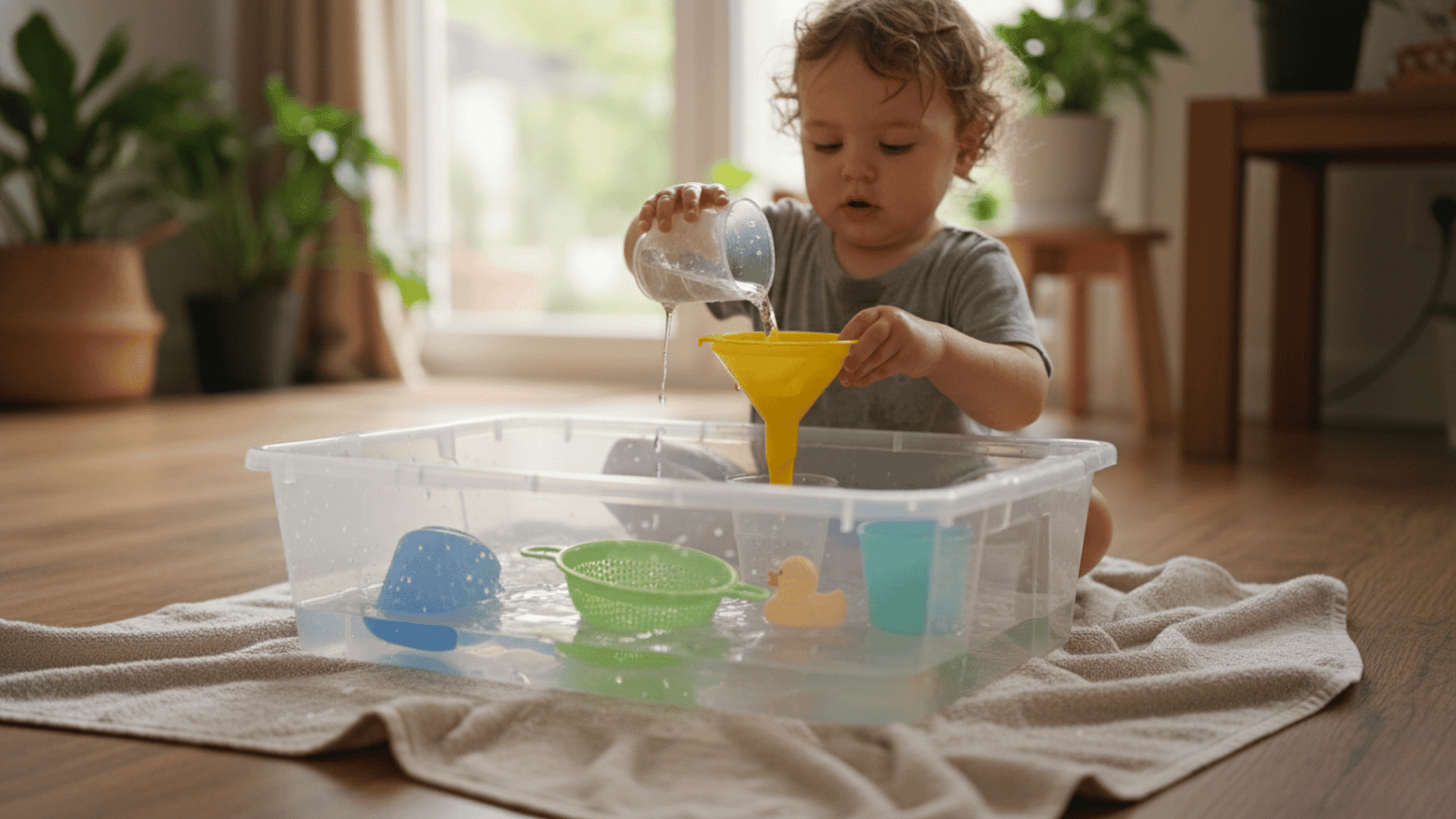
Set up various-sized cups, funnels, measuring spoons, and containers in a shallow bin. Add water and let your toddler pour, transfer, and experiment. Include a turkey baster or medicine dropper for advanced hand control.
Why this works: Pouring teaches volume concepts without formal lessons. Your toddler sees “full,” “empty,” “more,” and “less” in action. The repetitive motion is naturally calming for anxious or overstimulated kids.
Location tip: Set this up in the bathtub, on a towel-covered table, or outside. According to the Cleveland Clinic, water play can be as simple as bath time exploration. No special equipment needed.
6. DIY Sound Shakers
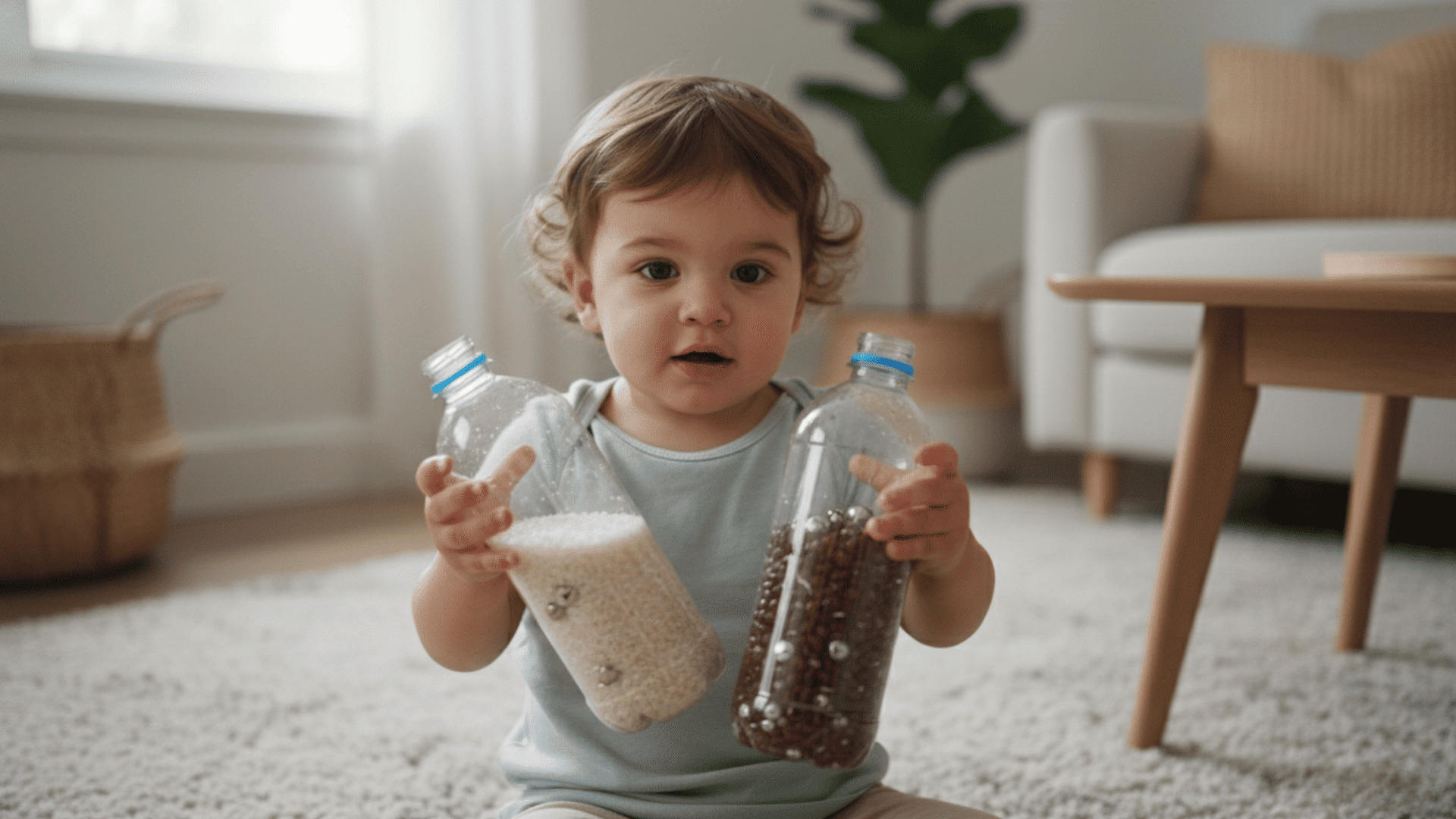
Fill empty plastic bottles with different materials like rice, dried beans, bells, or pasta. Seal lids tightly with glue or tape. Your toddler shakes each bottle to compare sounds. Label bottles with pictures so they can match sounds to contents.
Why this works: Toddlers learn to discriminate between loud and soft, fast and slow rhythms. This auditory skill helps with speech development and listening to instructions later.
Unique angle: Create pairs of matching shakers for a memory game. Your toddler shakes bottles to find which two sound the same. This adds problem-solving to simple sensory play.
7. Frozen Rescue Mission
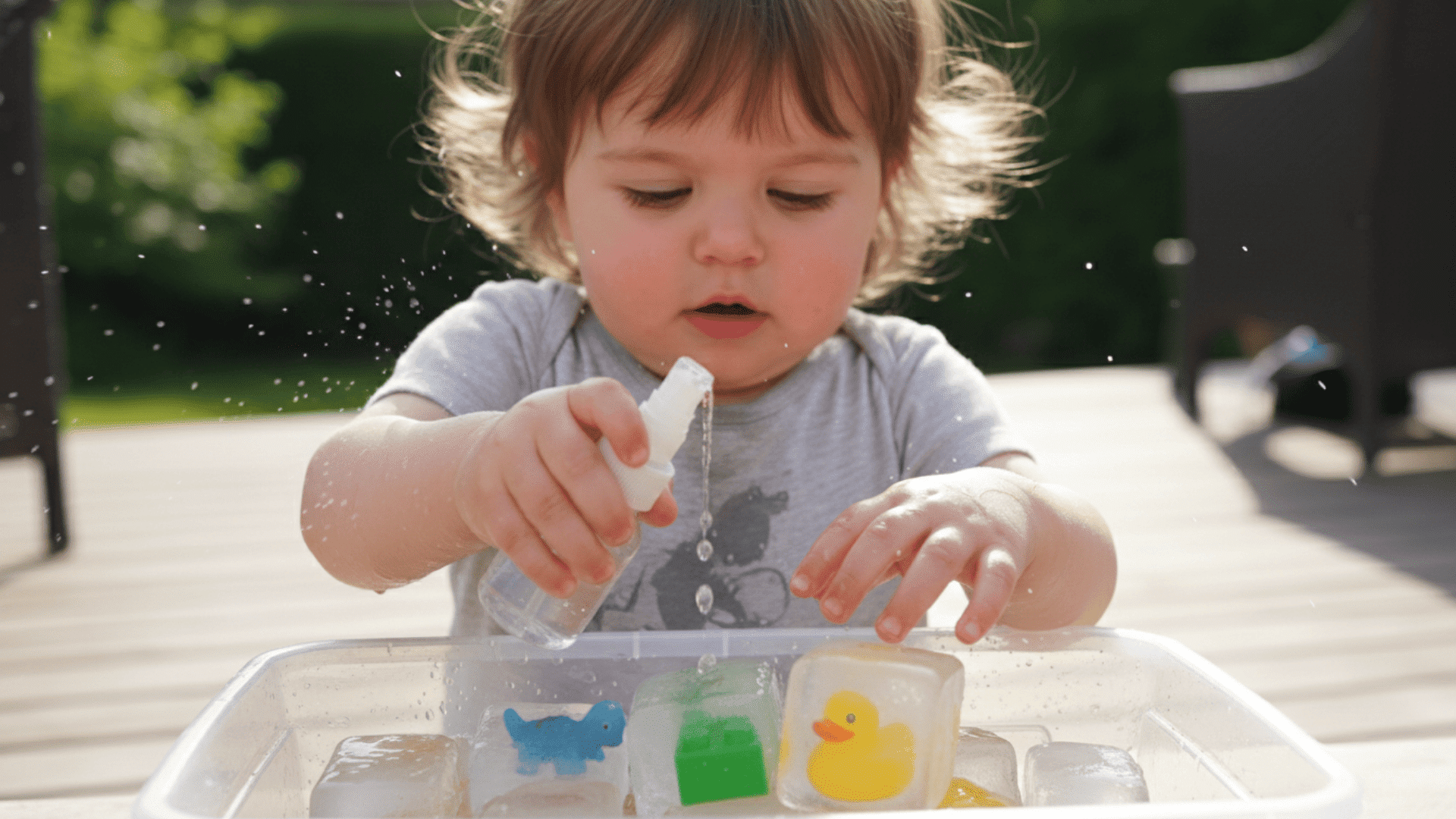
Freeze small toys, plastic animals, or colorful pom poms in ice cube trays or containers. Give your toddler warm water in a spray bottle, droppers, or small cups. They spray or pour water to melt the ice and free the toys inside.
Why this works: Your toddler sees ice transform into water, learning about temperature and states of matter. The urgency of “rescuing” toys keeps them focused longer than regular water play.
Temperature twist: Offer both warm and cold water. Let your toddler discover which melts ice faster. This simple comparison introduces scientific thinking without complicated explanations.
8. Nature Scavenger Sensory Walk

Take a walk outside with a small bag or basket. Challenge your toddler to find something smooth, something rough, something that smells good, and something that makes noise.
Touch tree bark, smell flowers, crunch leaves, and collect interesting rocks.
Why this works: Nature provides endless free sensory materials that change with the seasons. Your toddler builds observation skills and vocabulary while moving their body. Walking burns energy before quiet time or bedtime.
Connection bonus: This activity teaches respect for nature. Show your toddler which things to observe without picking, like flowers still growing. They learn gentle touching and careful handling.
9. Taste-Safe Play Dough Kitchen
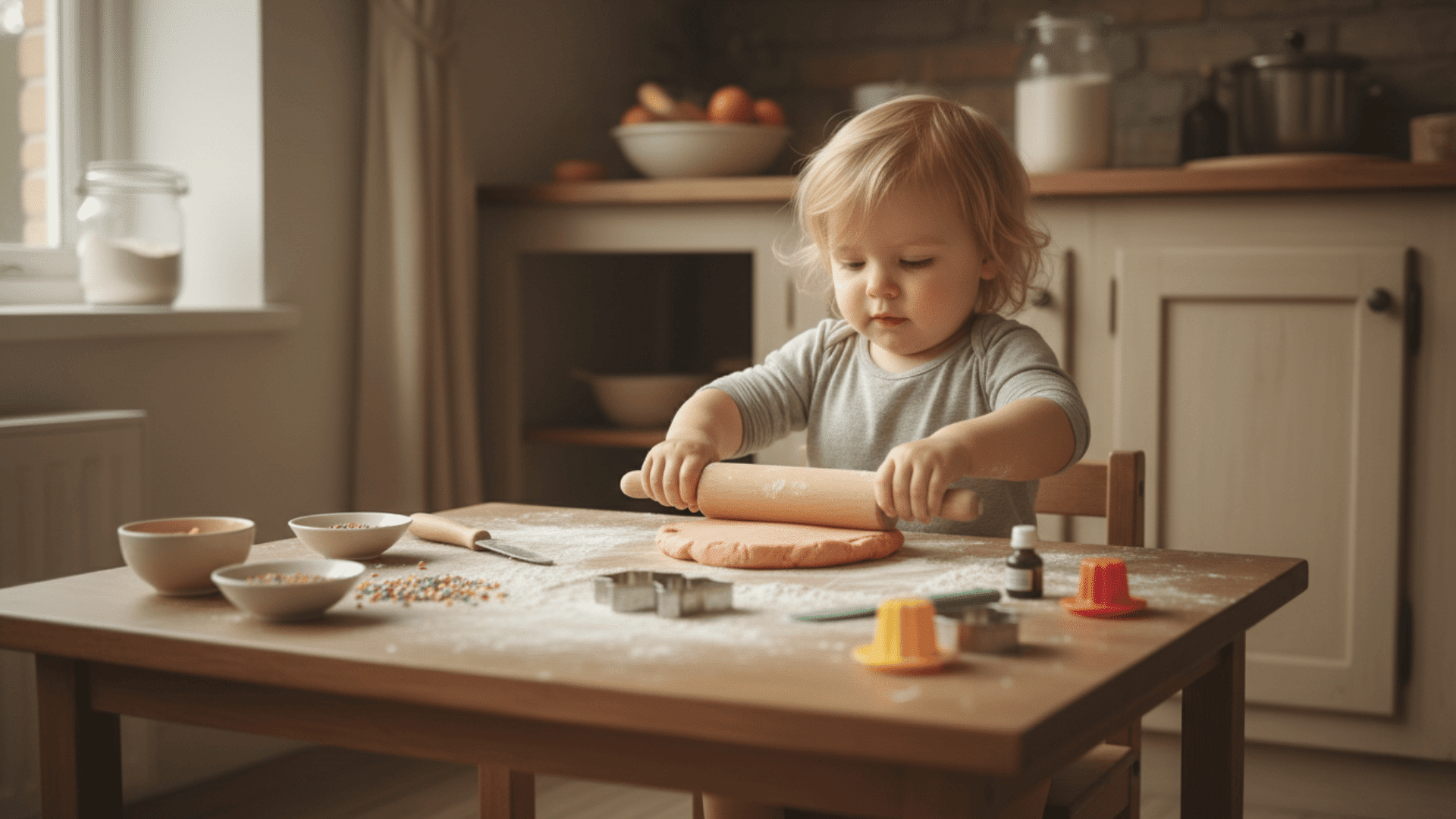
Make edible play dough using flour and water, or try peanut butter mixed with powdered milk and honey. Add food coloring for fun colors. Your toddler rolls, cuts with cookie cutters, and creates pretend food. Tasting is allowed and safe.
Why this works: It eliminates the stress of constantly monitoring mouths. Toddlers who taste everything can explore freely. The kitchen theme encourages pretend play while building hand strength for future scissors and pencil use.
Allergy alert: Skip peanut butter if allergies are present. Use cream cheese, mashed banana, or yogurt mixed with flour instead. Always check ingredients match your family’s dietary needs.
10. DIY Cloud Dough Creations
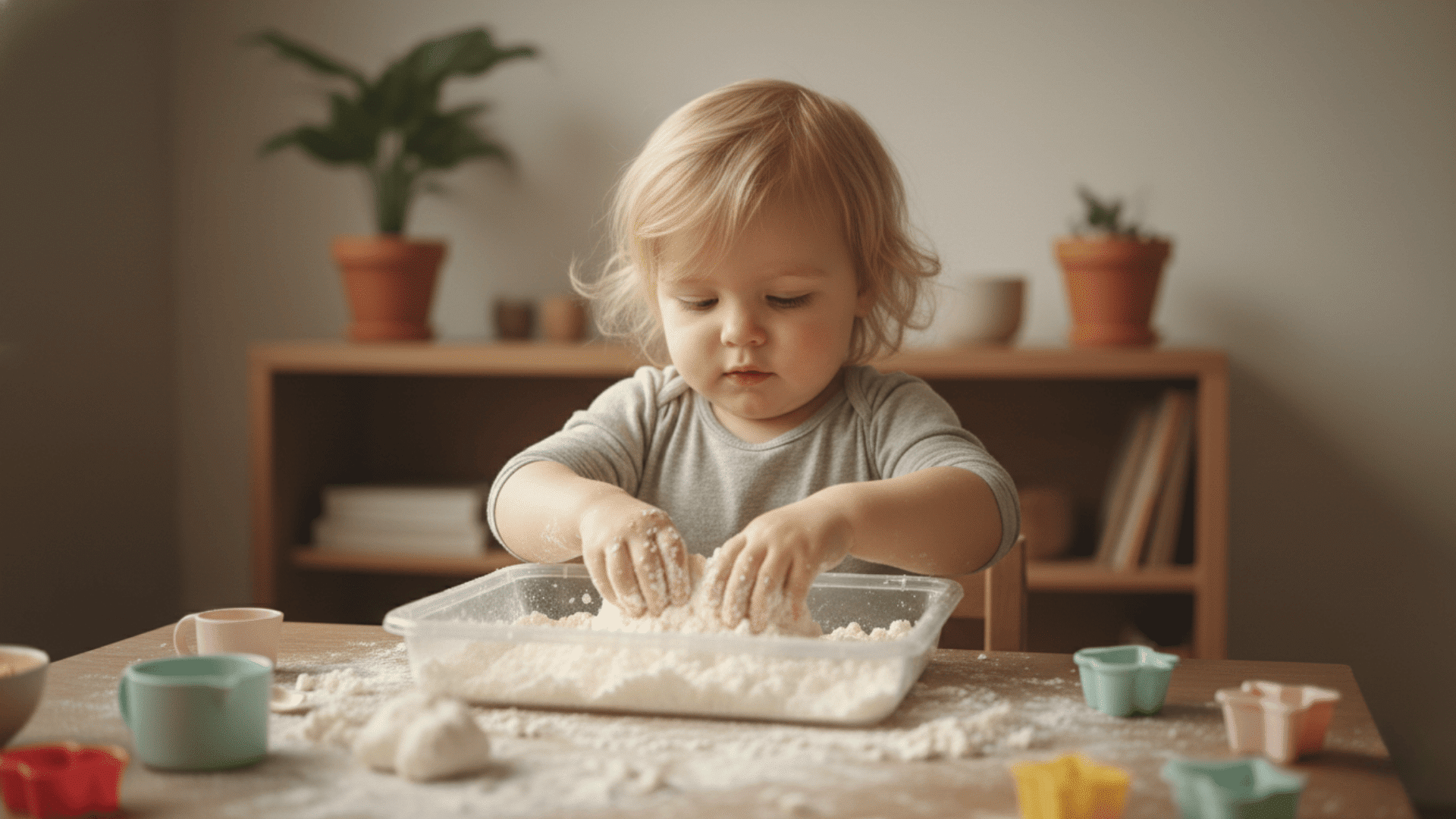
Mix 2 cups of flour with ¼ cup of baby oil or vegetable oil until it feels like sand. The texture stays moldable but crumbly. Your toddler squeezes, packs, and builds with it. Add measuring cups, molds, or small toy vehicles.
Why this works: The silky feel calms anxious toddlers better than regular playdough. It holds shape when packed but falls apart when touched gently. This unpredictability keeps kids experimenting to figure out how it works.
Sensory depth: Cloud dough feels cool to touch and leaves hands soft, not sticky. The temperature difference from room-temperature playdough adds another layer of sensory input. Store in an airtight container for weeks of reuse.
11. Light & Shadow Story Board
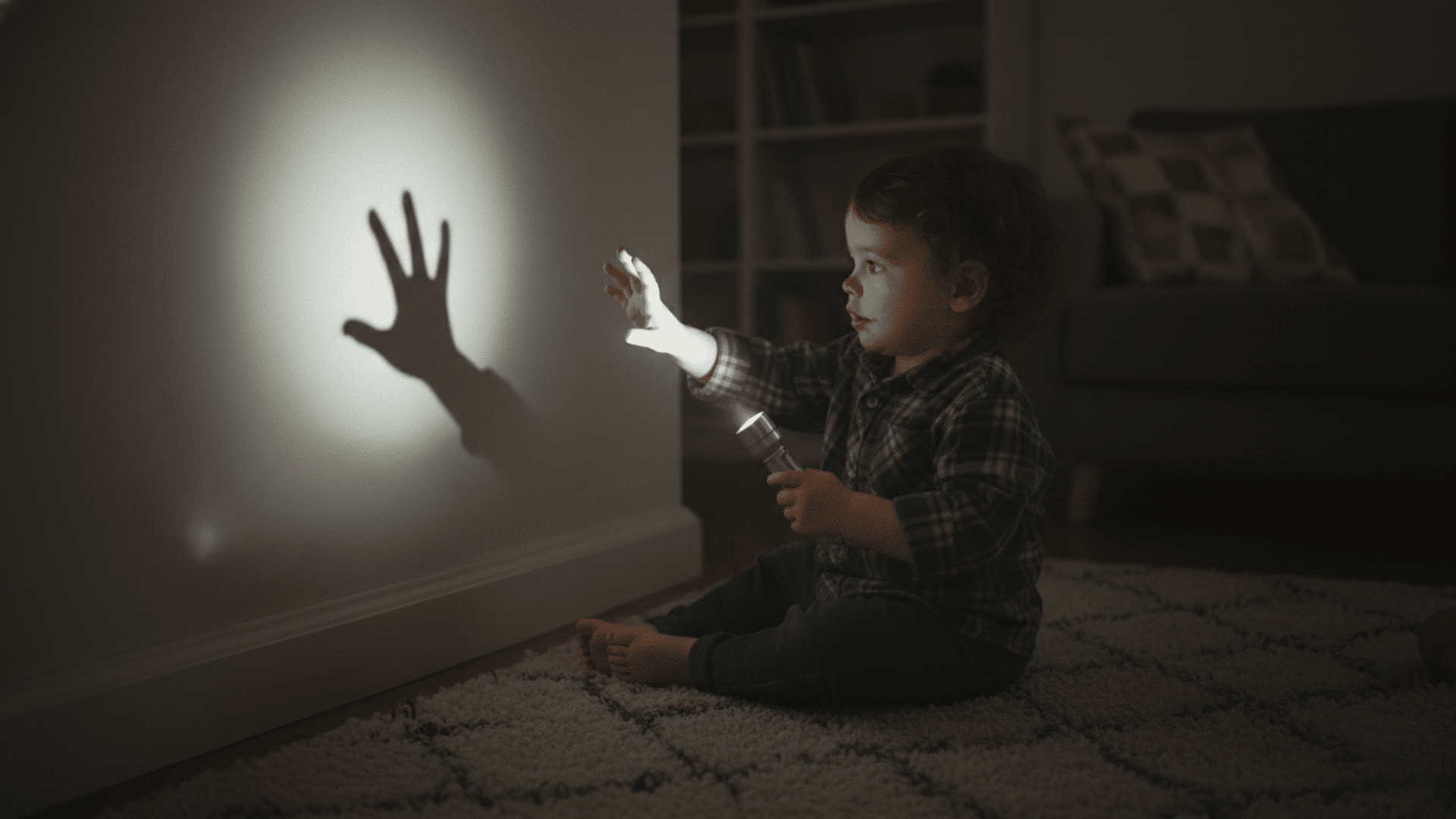
Use a flashlight in a darkened room to create shadows on the wall. Show your toddler how their hands, toys, or cut-out shapes make shadows. Move objects closer and farther to change shadow sizes. Let them control the flashlight and create their own shadow stories.
Why this works: Understanding shadows builds spatial awareness and teaches about light sources. Your toddler learns object permanence in a new way when toys disappear in the darkness but return in the light.
Storytelling boost: Create simple shadow puppets using your hands. Make a dog, bird, or bunny. Your toddler copies your hand positions, building finger dexterity. Add sound effects together to combine auditory and visual learning.
12. Identity Scents Exploration
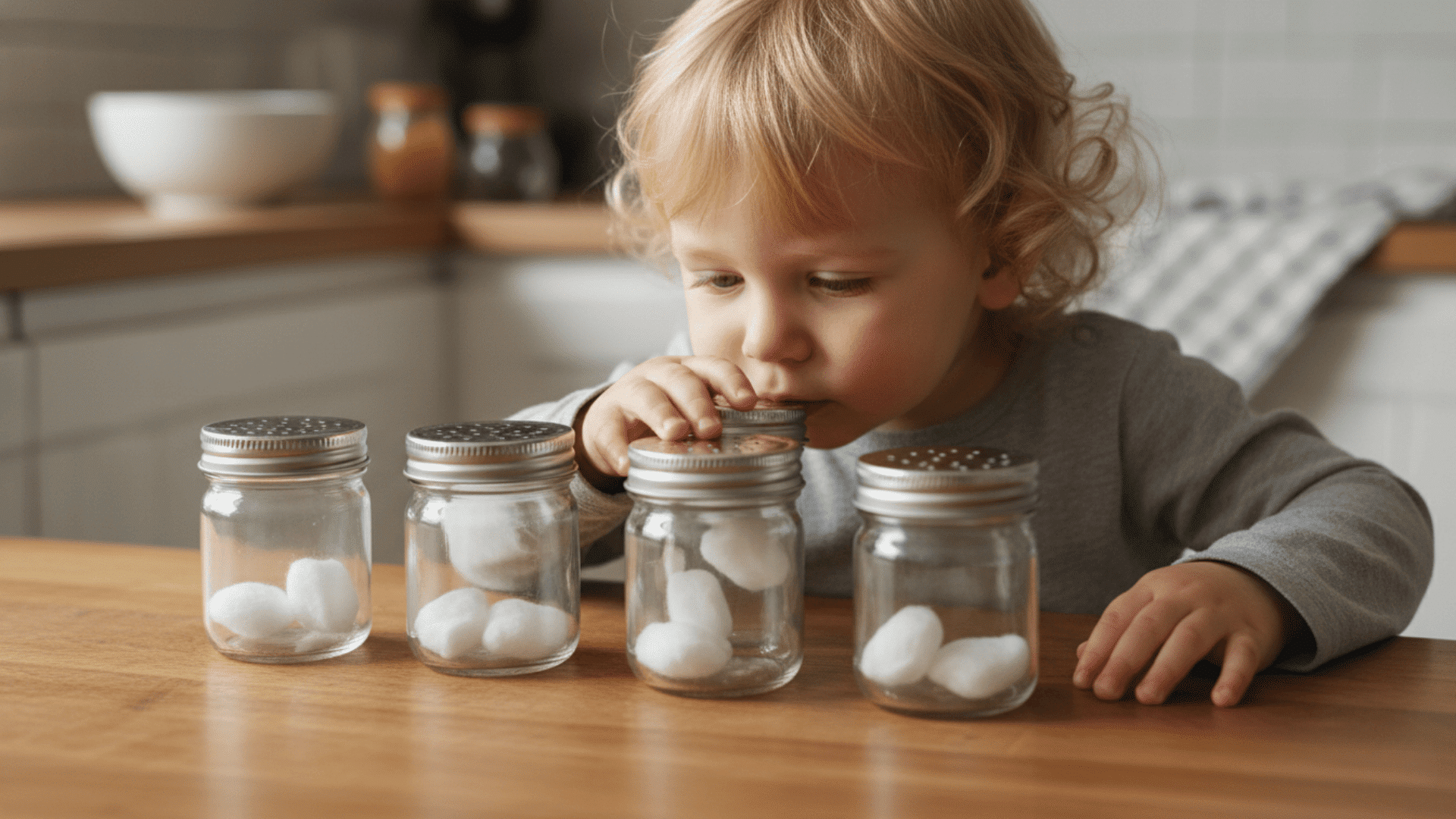
Put cotton balls with different scents in small jars with holes poked in the lids. Try vanilla extract, lemon juice, cinnamon, coffee grounds, or peppermint. Your toddler smells each jar and guesses the scent. Use familiar kitchen smells they already know.
Why this works: Smell connects strongly to memory and emotion. This activity builds vocabulary as your toddler learns words like “sweet,” “strong,” or “yummy.” The guessing game format makes learning feel like play.
Memory connection: Revisit the same scents weekly. Your toddler’s recognition improves each time, building confidence. Pair scents with pictures of the source item for kids learning to connect words with objects.
13. Sensory Obstacle Adventure

Create a simple course using pillows, couch cushions, tunnels made from chairs and blankets, and soft items to climb over. Your toddler crawls under, climbs over, and navigates through different textures and heights. Change the course layout each time for new challenges.
Why this works: Moving through space in different ways strengthens the vestibular system that controls balance. Your toddler learns body awareness by figuring out if they fit through spaces or need to adjust their position.
Indoor energy release: This activity burns energy on rainy days or before naptime. The physical challenge tires muscles while the problem-solving aspect engages their brain. Both lead to better rest later.
Not sure which activity to try first? Use this quick comparison table to find the perfect sensory play for your toddler’s age, your available time, and your mess tolerance.
Quick Reference: Sensory Activity Comparison Table
Here’s your complete comparison table for all 13 activities:
| Activity | Best Age | Setup Time | Mess Level | Primary Skills Developed |
| Rainbow Rice Discovery Bin | 18mo+ | 10 min | Medium | Fine motor, sorting, and color recognition |
| Edible Hot Chocolate Cups | 2+ years | 3 min | Low | Social skills, role play, pretend play |
| Bubble Wrap Stomp Mats | 18mo+ | 2 min | Low | Gross motor, balance, cause-and-effect |
| Mess-Free Sensory Bags | 12mo+ | 5 min | None | Visual tracking, tactile, problem-solving |
| Water Pour & Splash Station | 12mo+ | 2 min | High | Math concepts, hand-eye coordination |
| DIY Sound Shakers | 12mo+ | 5 min | Low | Auditory skills, rhythm, and memory |
| Frozen Rescue Mission | 18mo+ | 5 min* | Medium-High | Problem-solving, science, and fine motor |
| Nature Scavenger Walk | 18mo+ | 1 min | None | Observation, vocabulary, gross motor |
| Taste-Safe Play Dough Kitchen | 18mo+ | 10 min | Medium | Fine motor, creativity, pretend play |
| DIY Cloud Dough Creations | 18mo+ | 3 min | Medium | Fine motor, sensory integration, calming |
| Light & Shadow Story Board | 2+ years | 2 min | None | Spatial awareness, creativity, storytelling |
| Identity Scents Exploration | 2+ years | 5 min | Low | Memory, vocabulary, olfactory development |
| Sensory Obstacle Adventure | 18mo+ | 5 min | Low | Gross motor, balance, body awareness |
Note: *Plus freezing time (2-4 hours)
How Sensory Play Supports Toddler Development?
Sensory play shapes your toddler’s brain, body, and emotions in ways regular play cannot. Every time your toddler touches something new, their brain creates connections between nerve cells called neural pathways.
These pathways work like roads carrying information faster as they strengthen. Research shows that children who engage multiple senses simultaneously develop better memory recall and organized brain structures.
Motor skills develop naturally through sensory activities. Fine motor skills, like pinching rice, prepare fingers for a pencil grip. Pouring water builds wrist rotation for doorknobs.
Gross motor skills grow when toddlers crawl through obstacle courses or stomp bubble wrap, strengthening legs and core muscles.
Beyond physical growth, sensory play calms intense emotions that toddlers cannot express in words yet.
| Repetitive motions like pouring or kneading activate the body’s relaxation system, slowing heart rate and reducing stress. |
Your toddler learns what soothes them. A child who discovers squishing playdough calms them down and gains a lifelong self-soothing tool. They start requesting these activities when upset, showing growing emotional intelligence.
Safety Tips for Sensory Play
Sensory play offers incredible benefits, but safety comes first. These guidelines help you create fun experiences while protecting your toddler from harm.
1. Supervision is Key
Never leave your toddler alone during sensory play. Children under three put everything in their mouths, making choking a real risk. Water play poses drowning danger in just 2 inches of water.
Stay within arm’s reach during high-risk activities. Set up a play area where you can multitask nearby, like the kitchen table. If you must step away, pack up the activity completely first.
2. Non-Toxic Materials
Assume everything will be tasted. Choose materials safe if swallowed. For toddlers under 18 months, occupational therapists recommend taste-safe materials like cooked spaghetti, oats, or rice instead of water beads and shaving cream.
Avoid small parts fitting through a toilet paper roll. Use food-grade dyes only. Skip essential oils as they irritate the skin. Store all materials out of reach between sessions.
3. Mess-Free Options
Seal materials in gallon ziplock bags with hair gel or paint. Tape edges to tables for zero-mess exploration. Use large storage bins with high sides as contained play stations on plastic tablecloths.
Try bathtub sensory play with food coloring or shaving cream. Everything rinses away during regular bath time, requiring no extra cleanup.
Conclusion
Sensory play shapes how your toddler learns, moves, and feels. From building brain connections to managing emotions, these activities create lasting benefits. You do not need expensive materials. Rice, water, and household items work perfectly.
Start small. Pick one activity from this guide today. Watch how your child explores and grows through play.
Supervise closely, choose non-toxic materials, and embrace the mess. The learning is worth every spilled grain of rice.
Which sensory activity will you try first?
Does your toddler prefer water play or texture bins? Share your experience in the comments below. We would love to hear which activities work best for your little one.
Frequently Asked Questions
How Long Should Sensory Play Sessions Last?
Start with 10-15 minutes for younger toddlers. Older toddlers may play for 20-30 minutes. Follow your child’s interest level. Stop when they lose focus or become frustrated.
What If My Toddler Refuses to Participate?
Never force participation. Start with mess-free sensory bags or let them watch you first. Some toddlers need time to warm up. Respect their pace and try again another day.
How Often Should We Do Sensory Play?
Aim for 3-5 times weekly, but even daily 10-minute sessions help. Consistency matters more than duration. Rotate different activities to maintain interest and develop varied skills.