
Have you been thinking about teaching your children at home but feel stuck between excitement and uncertainty?
The pros and cons of homeschooling weigh differently for every household. Some families thrive with the freedom this option provides, while others find the demands overwhelming.
What looks perfect in theory can feel complicated when you’re managing daily life, work responsibilities, and your child’s education all at once.
The decision isn’t just about academics. It touches your finances, your schedule, your relationships, and your entire family routine.
Before you commit to this path, you need a clear picture of what actually happens when you bring education home.
Let’s look at both sides honestly so you can make the choice that fits your real situation.
What Homeschooling Means in Today’s Context
Homeschooling refers to the practice of educating children at home rather than sending them to public or private schools.
All 50 U.S. states legally recognize this option, though specific regulations vary by location.
Families can structure their approach in several ways: some parents design and teach their own lessons, while others use structured online programs or curriculum packages.
Co-ops, where multiple homeschooling families share teaching duties, have also become a popular middle ground.
Over the past few years, more American families have chosen this path for their children’s education.
What was once considered an alternative approach now represents a growing segment of the student population, with diverse families making it work in ways that suit their individual circumstances.
Pros and Cons of Homeschooling at a Glance
Here’s a quick comparison of the main factors families consider.
| Advantages | Challenges |
|---|---|
| Personalized learning pace | Significant time investment |
| Curriculum choice and control | Reduced peer interaction |
| Flexible daily schedule | Financial burden on families |
| One-on-one instruction | Planning and preparation demands |
| Adaptable teaching methods | Limited access to specialized resources |
| Stronger family connections | Questions about parental qualifications |
Advantages of Homeschooling
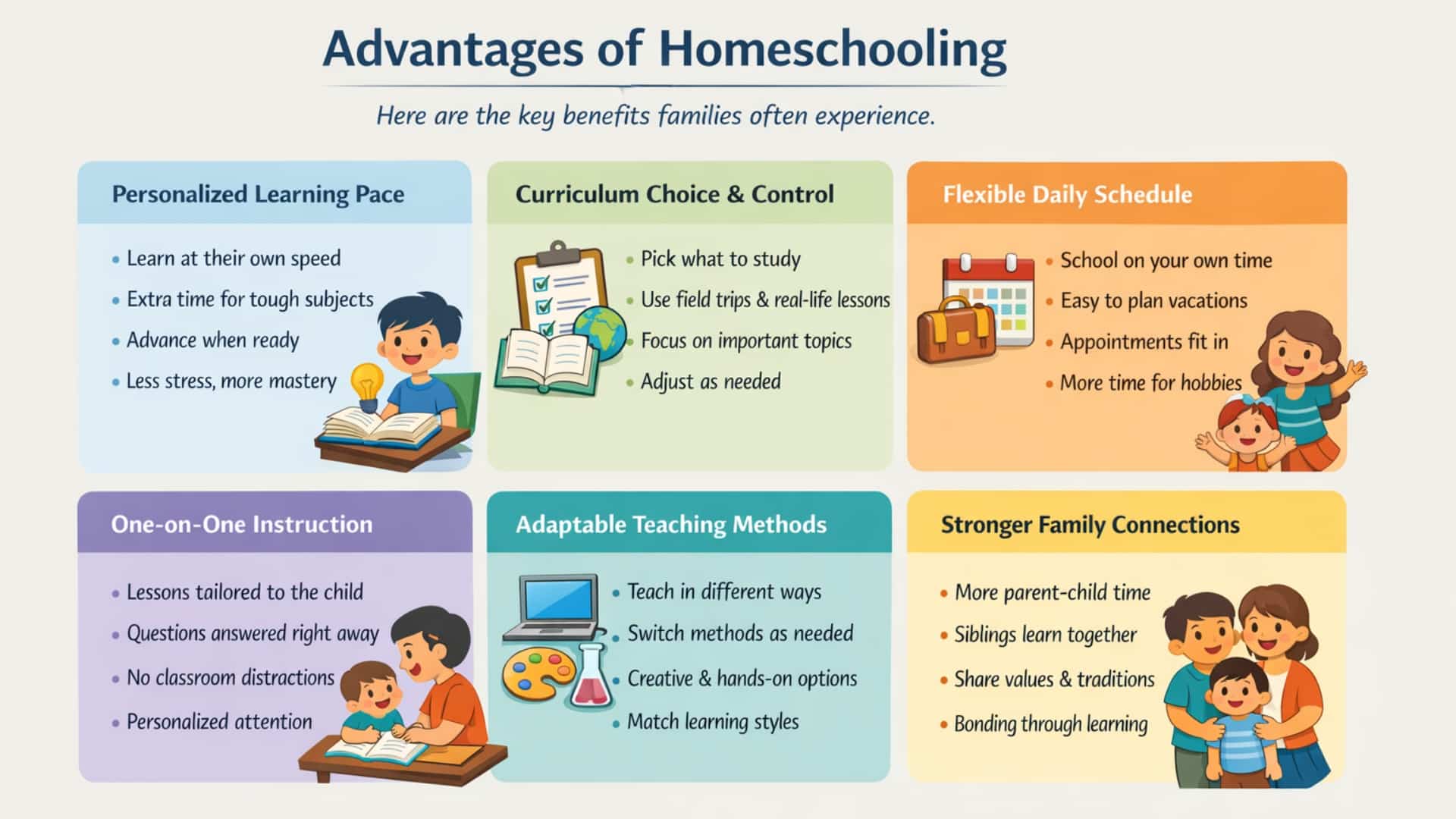
Here are the key benefits families often experience.
1. Personalized Learning Pace
- Children can spend extra time on difficult subjects without feeling rushed
- Advanced learners can move ahead when they’ve mastered the material
- There’s no pressure to keep up with or wait for classmates
- Learning happens at the speed that makes sense for each child
2. Curriculum Choice and Control
- Parents select materials that align with their values and priorities
- Lessons can incorporate real-world experiences and field trips
- Families can emphasize subjects they find most important
- Content can be adjusted based on what’s working or not working
3. Flexible Daily Schedule
- School can happen during morning, afternoon, or evening hours
- Families can take vacations during off-peak times
- Medical appointments and other obligations fit more easily into the day
- Children have time for hobbies, sports, or other interests
4. One-on-One Instruction
- Every lesson can address the specific child’s needs
- Misunderstandings get cleared up immediately
- Parents can answer questions as they arise
- Learning moves forward without classroom distractions
5. Adaptable Teaching Methods
- Visual, auditory, and hands-on learners all get what works for them
- Parents can switch approaches if something isn’t clicking
- Lessons can be as creative or structured as needed
- Different subjects can use different teaching styles
6. Stronger Family Connections
- Parents and children spend more time together daily
- Siblings often learn and play alongside each other
- Family values and traditions become part of everyday education
- Relationships deepen through shared experiences and conversations
Challenges of Homeschooling
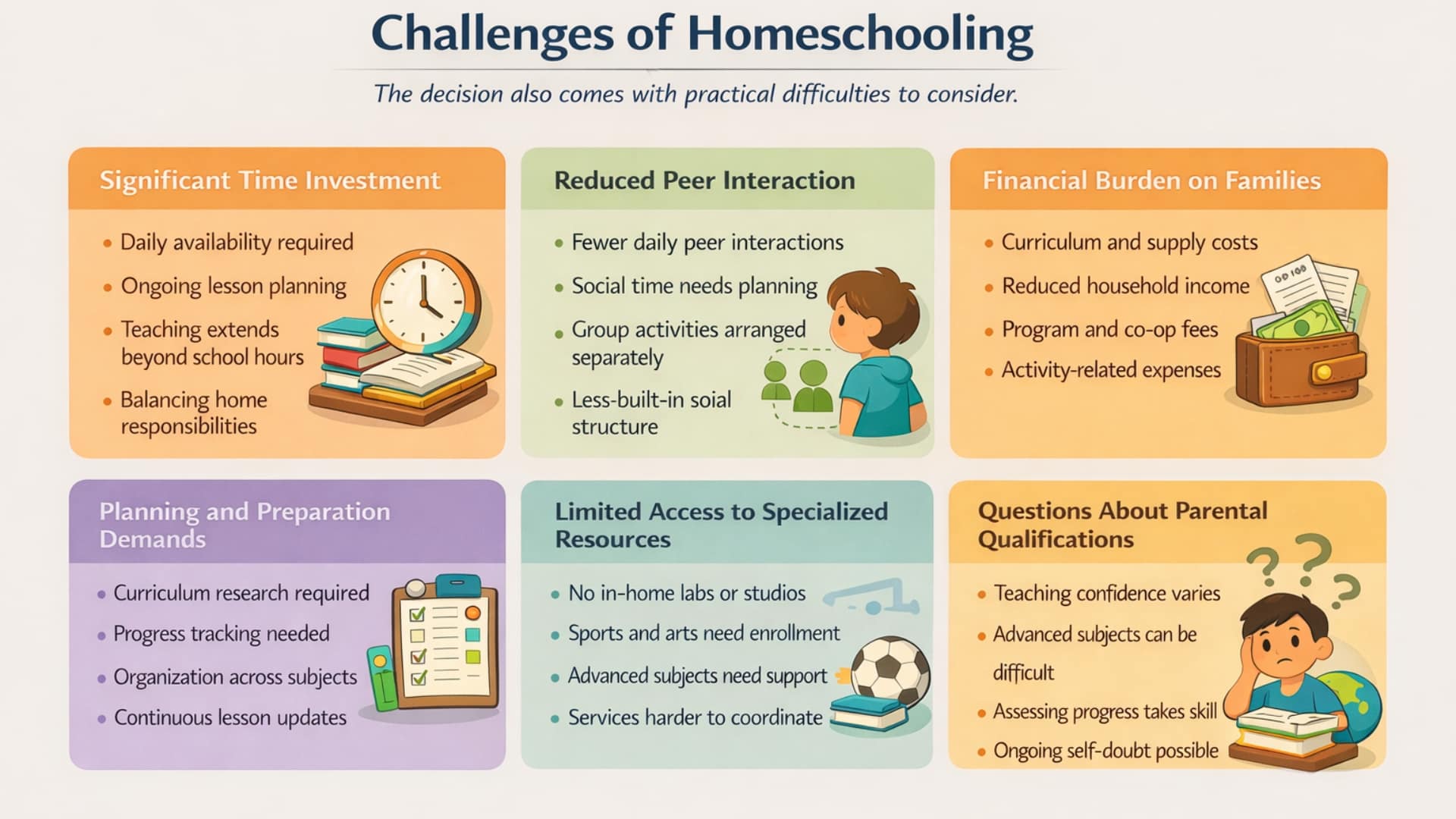
The decision also comes with practical difficulties to consider.
1. Significant Time Investment
- At least one parent typically needs to be available throughout the day
- Lesson planning and preparation require hours each week
- Teaching responsibilities don’t end when school hours finish
- Balancing household duties with education demands becomes complicated
2. Reduced Peer Interaction
- Children have fewer daily opportunities to socialize with age-mates
- Building friendships requires intentional effort outside the home
- Group activities and team experiences need separate arrangements
- Some kids miss the natural social environment that schools provide
3. Financial Burden on Families
- Curriculum materials, books, and supplies add up quickly
- One parent often reduces work hours or leaves their job entirely
- Online programs and co-op memberships come with fees
- Field trips, extracurriculars, and special classes create additional costs
4. Planning and Preparation Demands
- Parents must research and choose appropriate materials for each grade level
- Tracking progress and maintaining records takes consistent effort
- Staying organized across multiple subjects and children requires systems
- Keeping lessons engaging means constantly finding new ideas and resources
5. Limited Access to Specialized Resources
- Science labs, art studios, and music rooms aren’t available at home
- Sports teams, theater programs, and clubs need outside enrollment
- Advanced courses in higher grades may exceed parental expertise
- Special education services and therapies can be harder to arrange
6. Questions About Parental Qualifications
- Not all parents feel confident teaching every subject effectively
- Higher-level math, science, and foreign languages present challenges
- Knowing how to assess progress and identify gaps requires skill
- Self-doubt about doing enough or doing it right creates stress
How to Evaluate If Homeschool Fits Your Family?
Before making this commitment, think honestly about your household’s reality. Consider whether at least one adult can dedicate substantial time to teaching and whether your family’s finances can handle reduced income or increased expenses.
Look at your own confidence level with planning lessons and managing different subjects.
Think about your child’s personality and whether they’d thrive with less peer contact or need more structured social settings.
Research your state’s legal requirements at a basic level so you understand what’s mandatory.
Consider what support systems you have, like local homeschool groups, experienced friends, or online communities.
Reflect on your reasons for considering this path and whether those reasons align with what homeschooling actually offers.
This isn’t about finding the perfect setup, but rather determining if the realities match your family’s needs and capabilities.
Conclusion
The pros and cons of homeschooling create a different equation for each family that considers this option.
What counts as a major benefit for one household might feel like an obstacle for another. Your financial situation, your available time, your child’s learning style, and your own comfort with teaching all matter when making this call.
Neither choice is inherently better or worse.
Traditional schools work well for millions of kids, and home education works well for millions more.
What matters is matching the approach to your actual circumstances rather than an idealized version of what you wish those circumstances were.
Take time to assess your resources, your energy, and your reasons honestly. That reflection will point you toward the right educational path for your family.