Your 10-month-old is in that exciting phase where everything becomes a discovery.
They’re pulling themselves up on furniture, babbling with intention, and suddenly, your couch cushions are more interesting than any toy you bought.
At this age, babies are developing crucial skills almost daily. They’re learning to pick up small objects with their thumb and finger, building core strength for walking, and making cognitive leaps that help them understand cause and effect.
The challenge? Keeping up with their boundless curiosity while supporting healthy development.
This guide brings you practical, engaging activities that match what your baby needs right now.
Whether your little one is an early mover or taking things slow, these ideas work across different developmental stages and turn everyday moments into meaningful play.
15 Engaging Activities to Support Your 10-Month-Old’s Growth
These activities focus on the developmental areas that matter most at 10 months: movement, coordination, problem-solving, and communication. You don’t need expensive toys or elaborate setups. Most use items you already have at home.
Each activity includes simple instructions and explains which skills your baby is building. Mix and match based on your baby’s interests and energy levels. Some days call for active play, others for quiet exploration.
1. Peek-a-Boo with a Twist
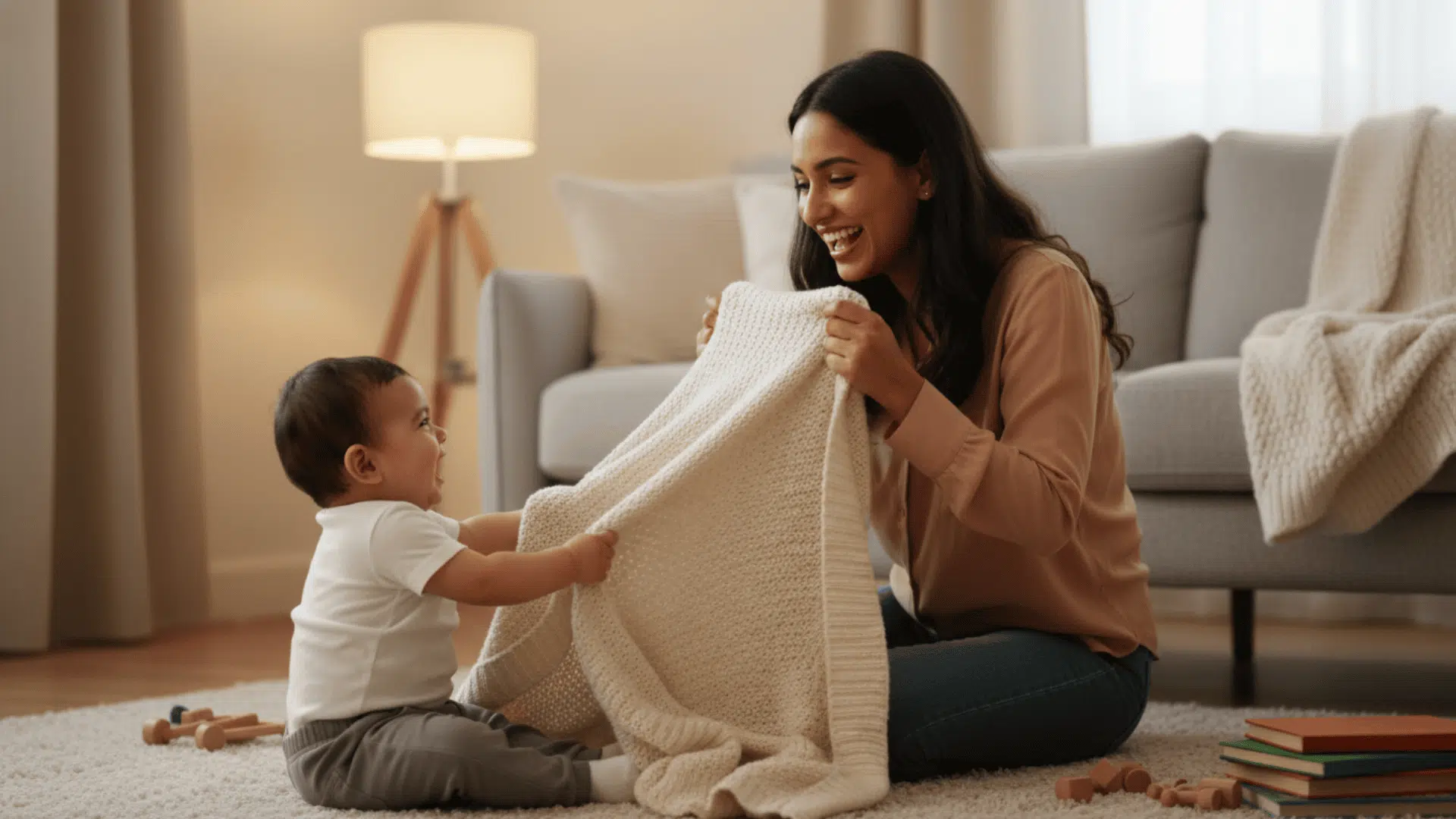
Cover your face with your hands, then reveal yourself with an enthusiastic expression. Next, try hiding behind a blanket or pillow, letting your baby pull it away to find you.
You can also place a lightweight cloth over their head and watch as they learn to remove it themselves. Take turns hiding favorite toys under a cup or blanket and encourage your baby to find them.
Why It Works: This classic game teaches object permanence, the understanding that things exist even when out of sight. At 10 months, babies are solidifying this concept, which is fundamental to cognitive development.
The social interaction also strengthens your bond and helps them learn to read facial expressions.
Parenting Tip: If your baby seems scared when you hide completely, start smaller. Just cover your eyes with your fingers while keeping your smile visible. Build up to a full face covering as they get comfortable with the game.
2. Music and Rhythm Fun
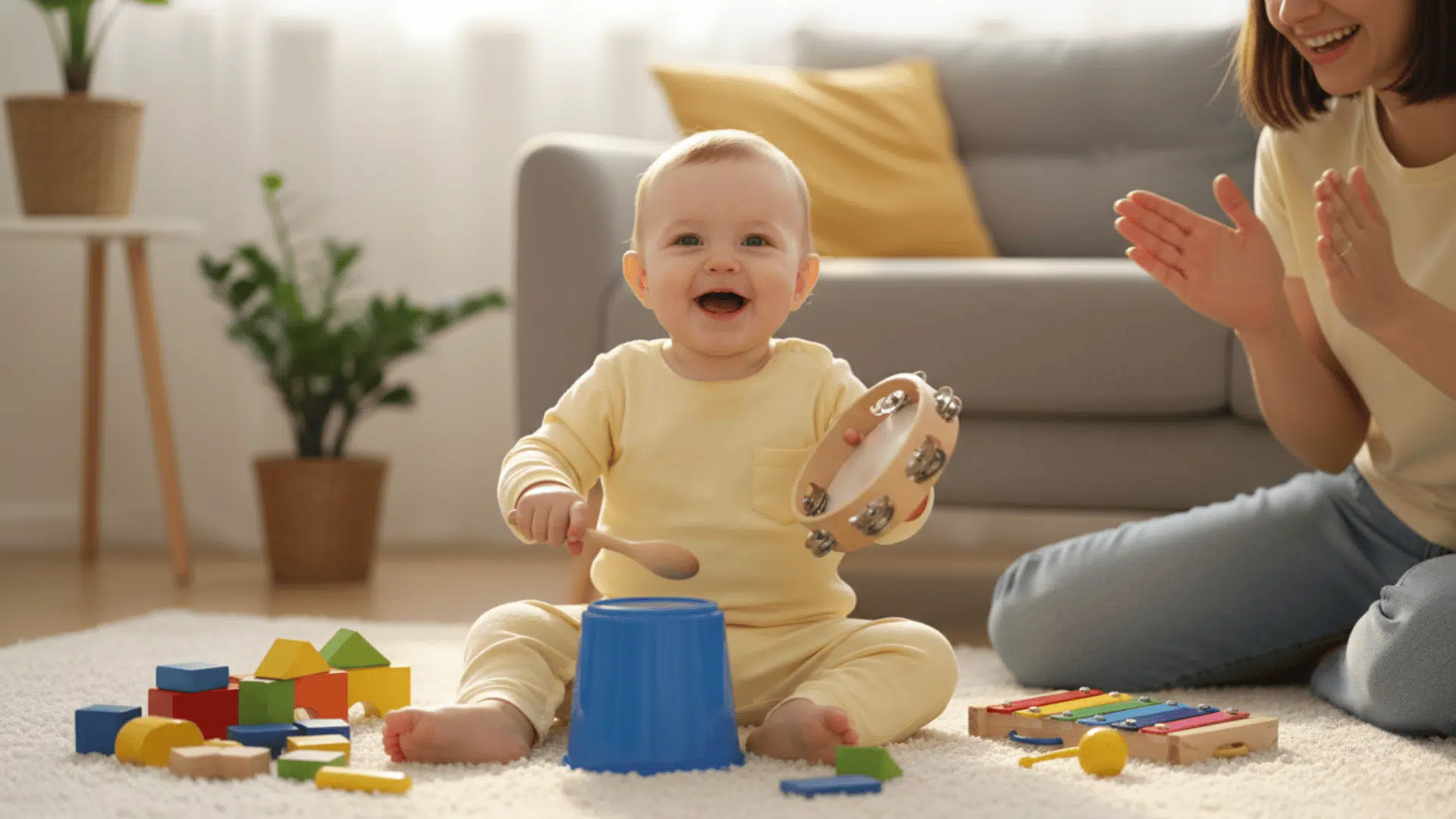
Hand your baby a wooden spoon and a plastic container to create their own drum set. Shake a homemade shaker filled with rice or beans, or let them explore a tambourine.
Play different types of music and move together, clapping to the beat. Simple songs like “Wheels on the Bus” with hand motions keep them engaged while building coordination.
Why It Works: Musical play develops auditory processing and helps babies distinguish between different sounds and rhythms. The physical act of shaking, banging, or clapping builds arm strength and coordination while introducing early concepts of cause and effect.
Parenting Tip: Keep a “music basket” in your living room with safe household items that make noise. Swap items weekly to keep it interesting. Metal measuring spoons, plastic containers with lids, and wooden blocks all create different sounds worth exploring.
3. Sensory Exploration: Texture Play
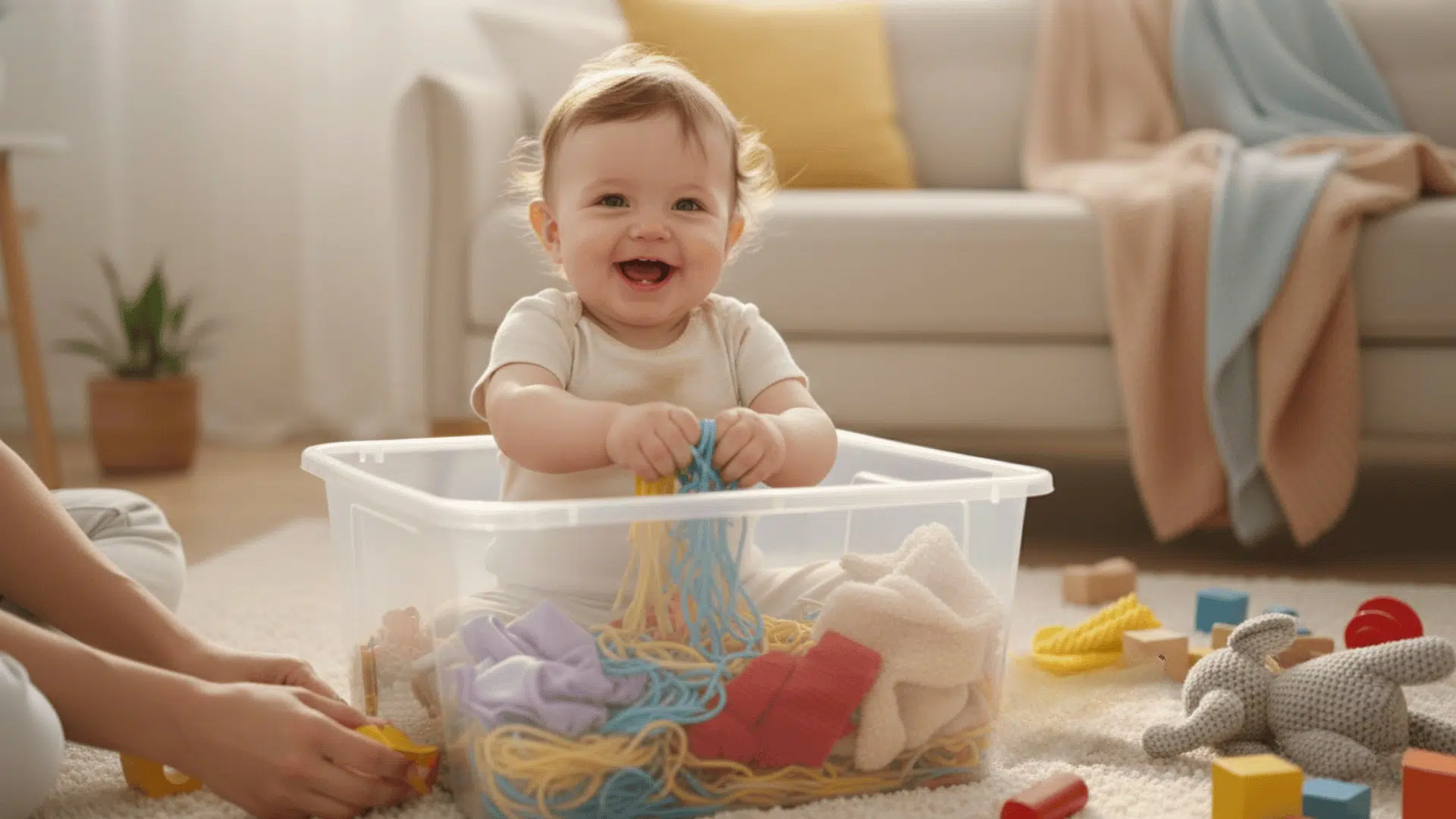
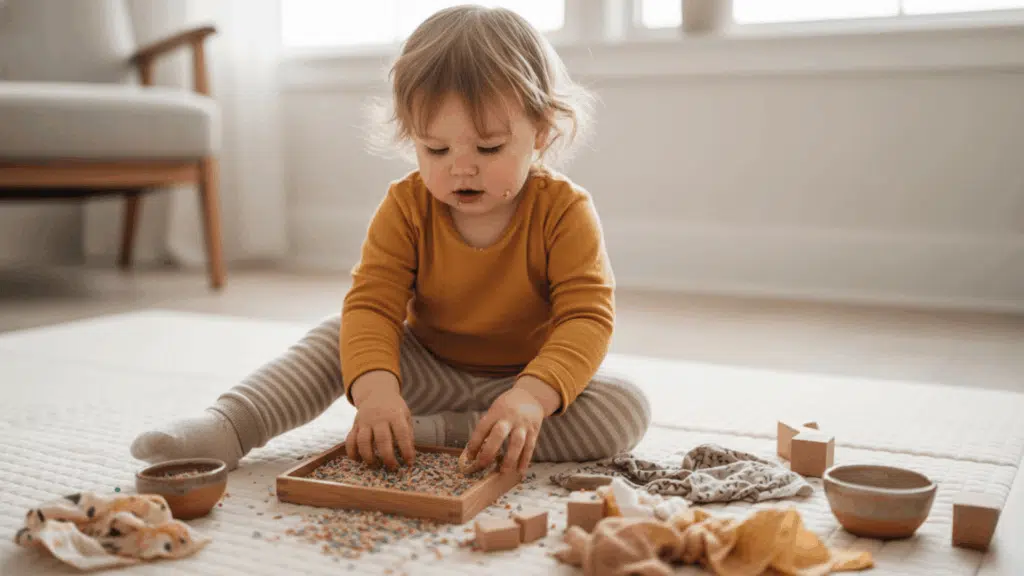
Fill a shallow container with cooked spaghetti, dry oatmeal, or crinkled paper for your baby to explore with their hands. Gather fabric scraps in different textures like silk, corduroy, and fleece for them to feel and compare.
You can also create a simple sensory bin with dry rice and hide small toys inside for them to discover. Always supervise closely to prevent choking hazards.
Why It Works: Tactile experiences help babies understand their world through touch, which is one of their primary learning tools at this age. Different textures stimulate neural pathways in the brain and support sensory processing development that influences everything from eating to emotional regulation.
Parenting Tip: Do messy sensory play in the bathtub for easy cleanup, or spread an old shower curtain under your baby’s high chair. You can hose down the mess outside if the weather permits, making cleanup part of the fun.
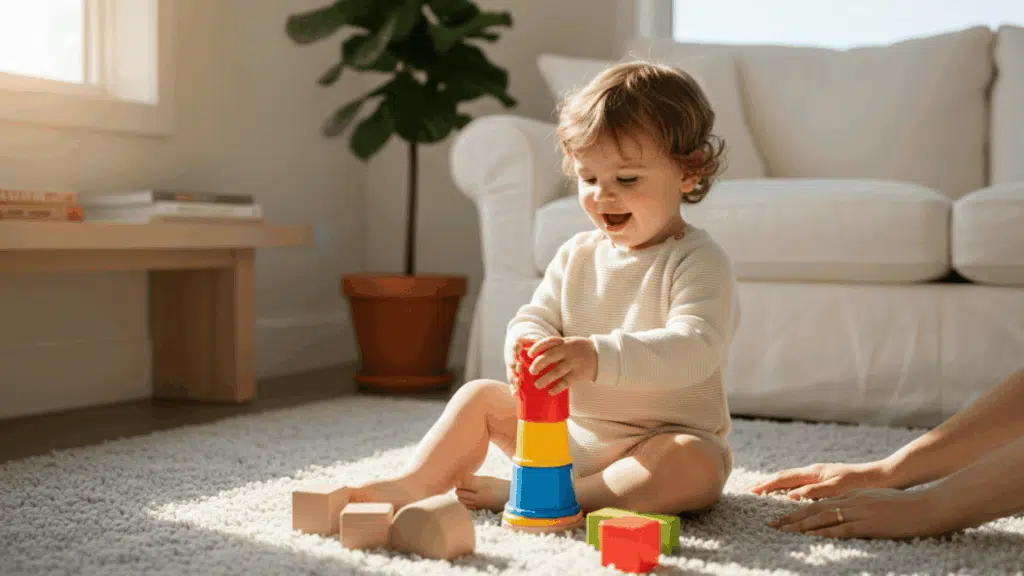
4. Stacking and Nesting Toys
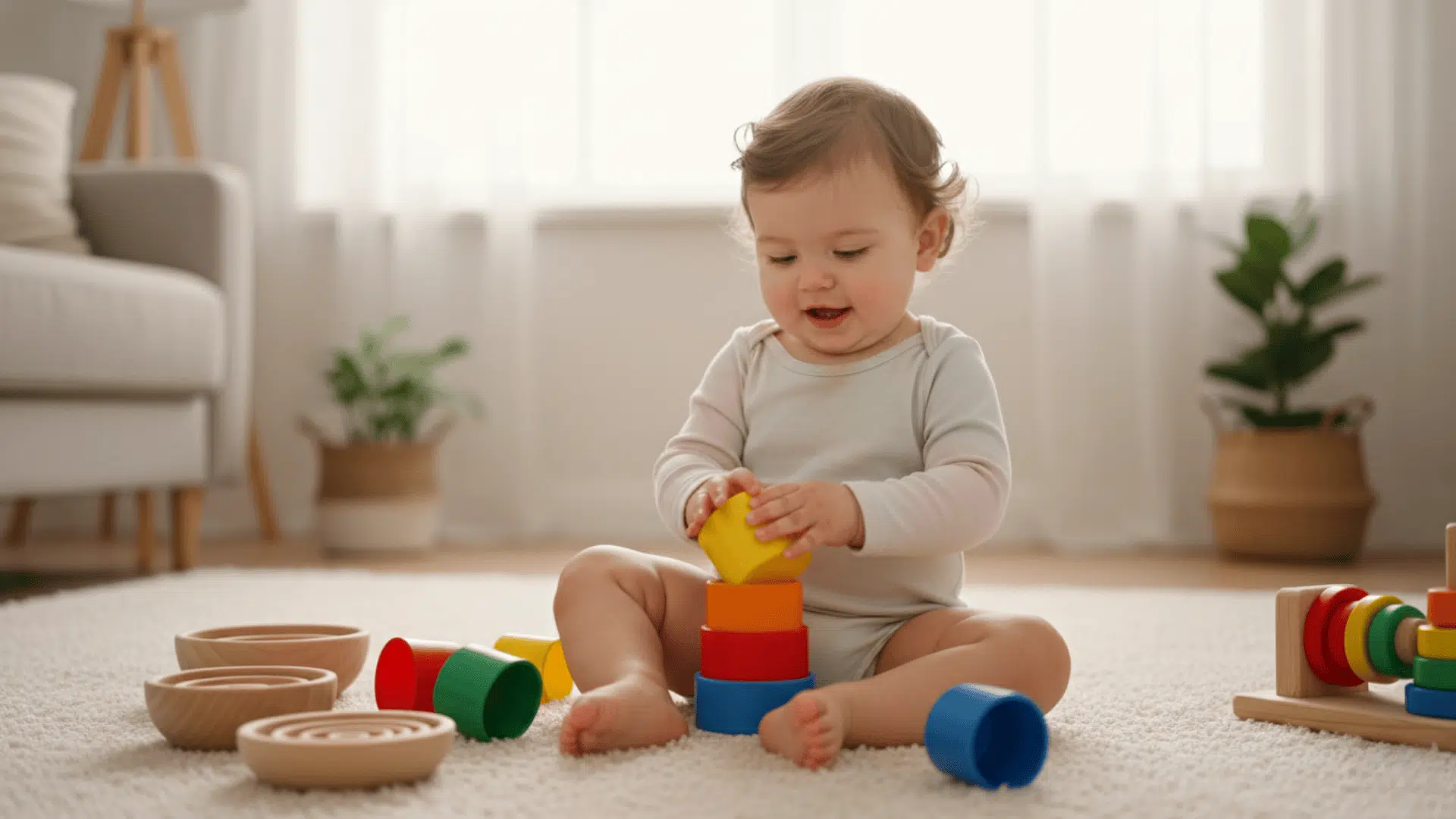
Start with just two or three stacking cups and demonstrate how they fit together. Let your baby knock down your tower, which is just as valuable as building one.
Nesting toys that fit inside each other teach size relationships and spatial awareness. Don’t worry if your baby just bangs them together at first, that’s part of the learning process.
Why It Works: Stacking activities strengthen the small muscles in hands and fingers while developing hand-eye coordination. Babies also learn about size, balance, and gravity as they experiment with what stays up and what falls down.
These early problem-solving experiences build cognitive flexibility.
Parenting Tip: Can’t find your stacking toys? Use plastic food containers from your kitchen. They nest, stack, and if your baby chews on them, they’re food-safe. Plus, opening and closing the lids adds another layer of fine motor practice.
5. Bubble Chasing Fun
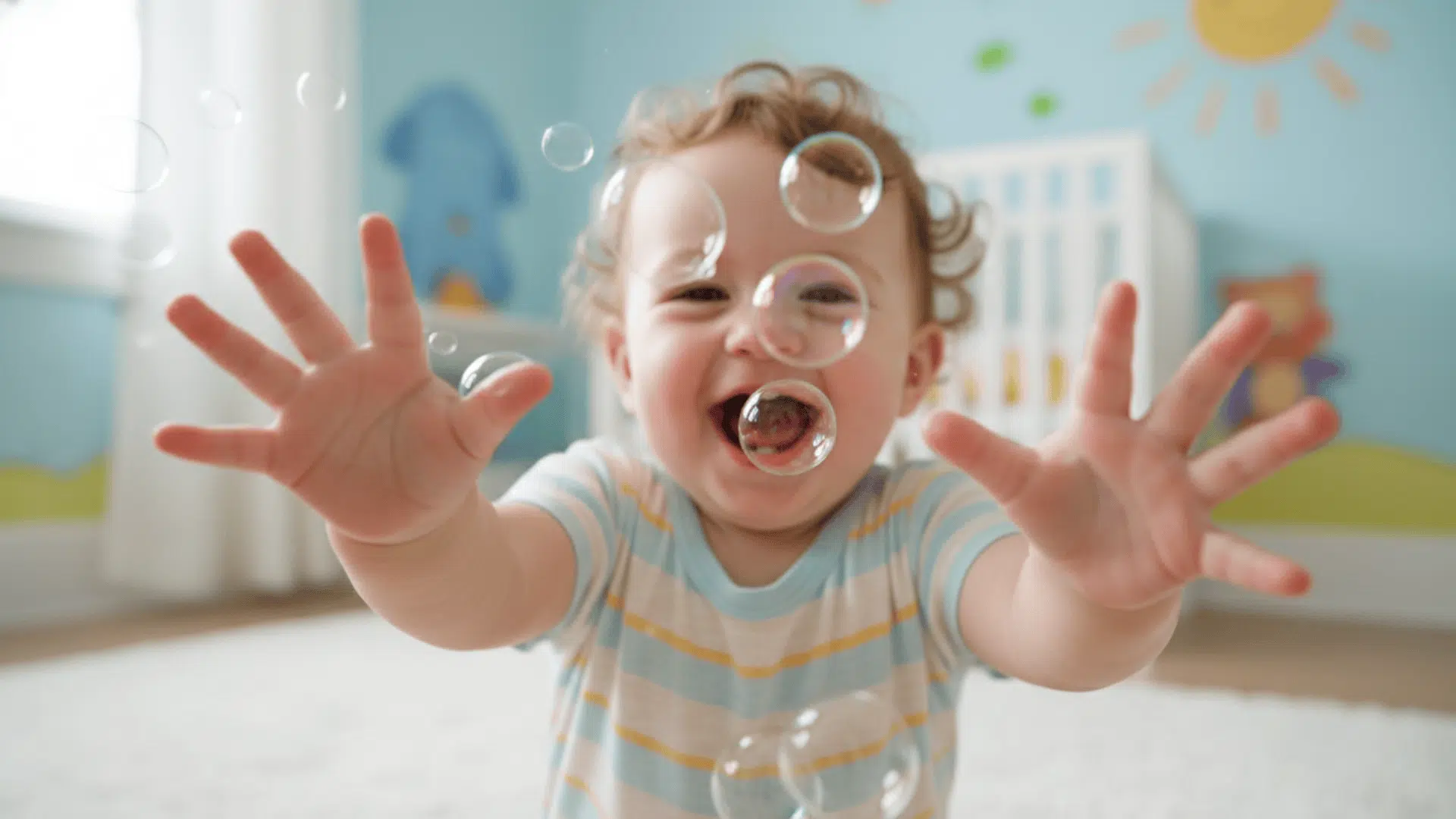
Blow bubbles at your baby’s eye level and watch their delight as they track the floating spheres. Encourage them to reach out and pop the bubbles, which requires coordination between what they see and what their hands do.
For crawlers, blow bubbles across the room so they can chase them. Cruisers can practice standing balance while reaching for bubbles at different heights.
Why It Works: Tracking moving objects sharpens visual development and spatial awareness. The unpredictable movement of bubbles encourages babies to adjust their movements quickly, building motor planning skills.
Plus, the surprise element of bubbles popping keeps them engaged and motivated to keep trying.
Parenting Tip: Keep a small bottle of bubbles in your diaper bag for emergency entertainment during long waits at appointments or restaurants. Bubbles work magic in calming fussy babies and are mess-free unlike snacks or toys.
6. Read and Point Together
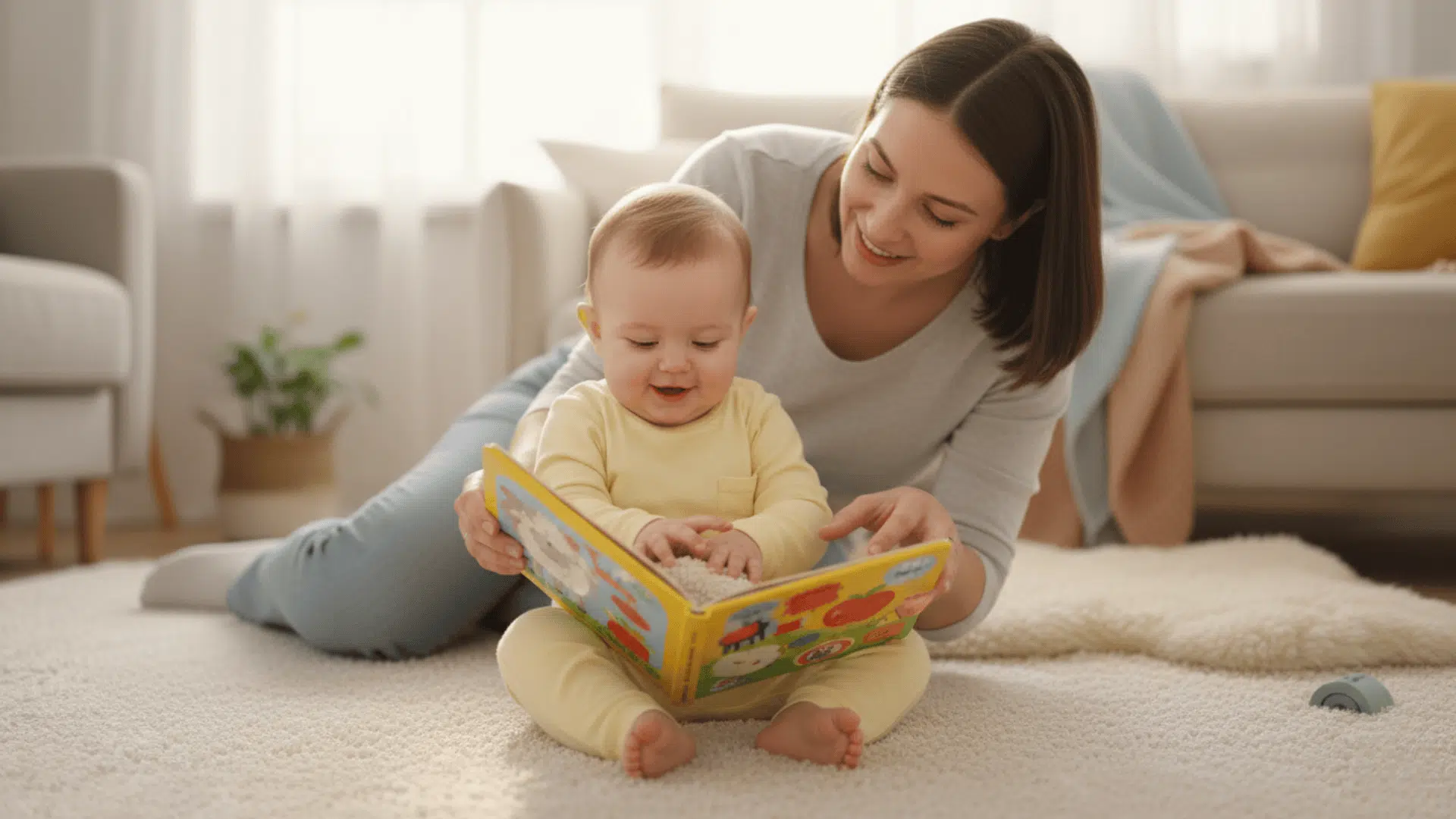
Choose board books with simple, colorful pictures and textures to touch. Point to objects on each page and name them clearly. Let your baby turn the pages themselves, even if they skip ahead or go backward.
Interactive books with flaps, mirrors, or different textures keep little hands busy while you read.
Why It Works: Reading together builds vocabulary even before your baby can speak. They’re absorbing word sounds, learning that pictures represent real objects, and developing the attention span needed for later learning.
The physical act of turning pages also strengthens fine motor skills.
Parenting Tip: Keep board books in every room where you spend time with your baby. Bathroom books for diaper changes, kitchen books for high chair wait times, and car books for rides make reading a natural part of your routine rather than a scheduled activity.
7. Drop and Discover Basket
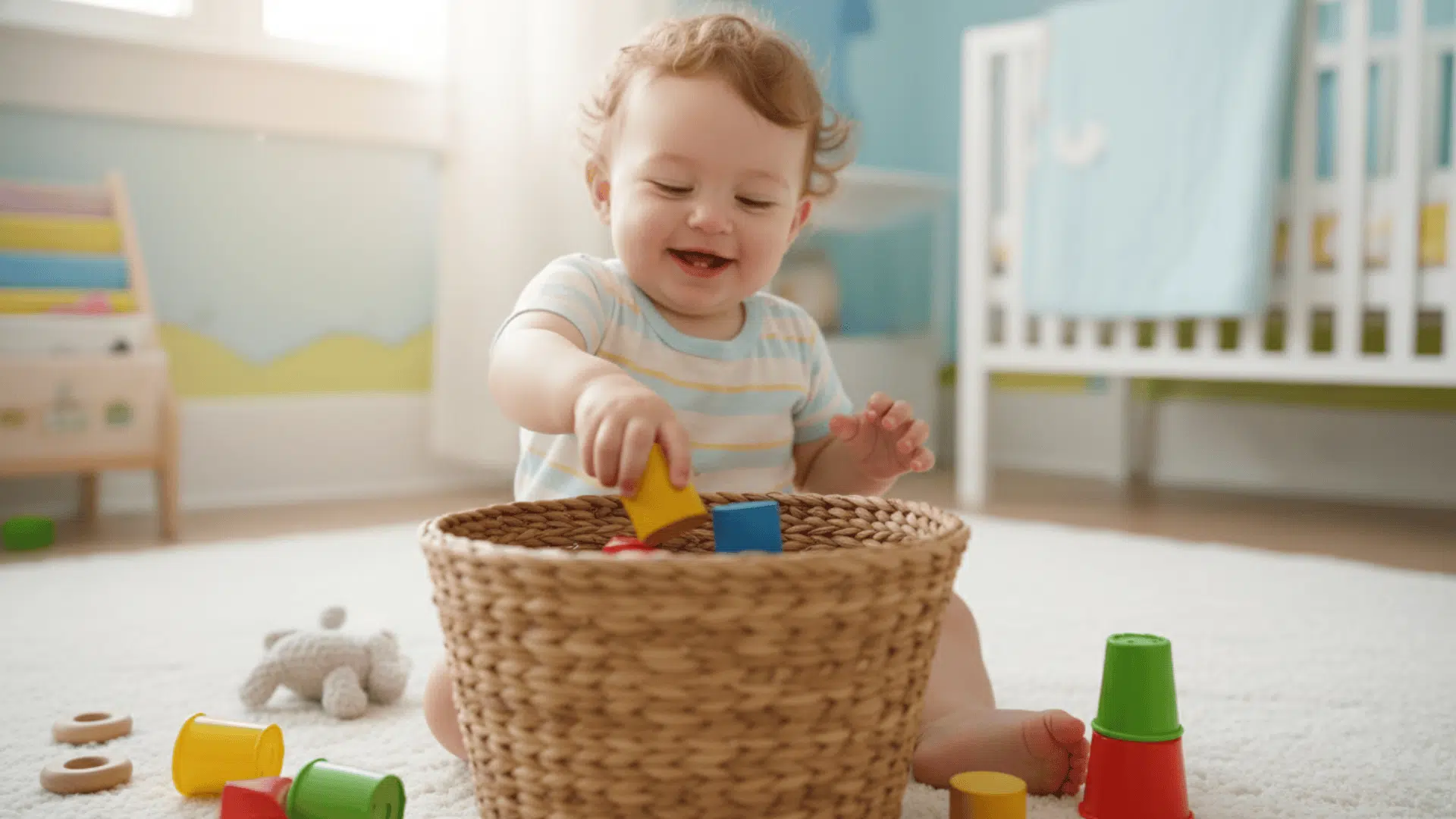
Give your baby a container and several safe objects to drop inside. Start with a wide-mouthed basket or box that makes satisfying sounds when items land. Wooden blocks, plastic cups, and soft balls all work well.
Show them how to dump everything out and start over, which they’ll find endlessly entertaining.
Why It Works: The repetitive action of dropping objects teaches cause and effect while building hand-eye coordination. Your baby learns to open their fingers intentionally to release objects, which is a surprisingly complex motor skill.
Retrieving items from the container also introduces early concepts of in and out.
Parenting Tip: Use a metal mixing bowl as the container for extra sound feedback. The clanging noise when objects drop amplifies the cause-and-effect lesson and keeps babies engaged longer than silent containers.
8. Walking Toys and Push Objects
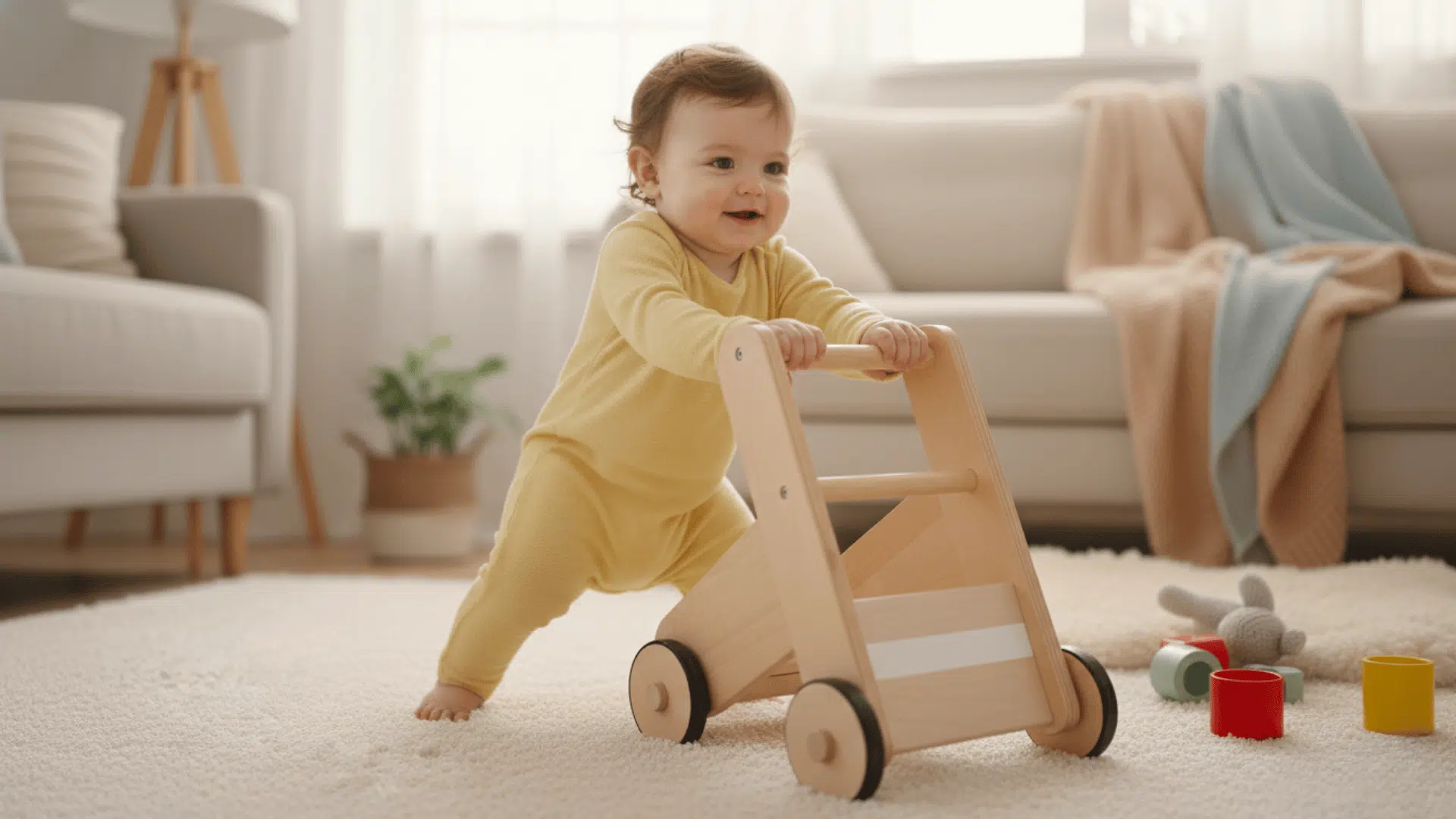
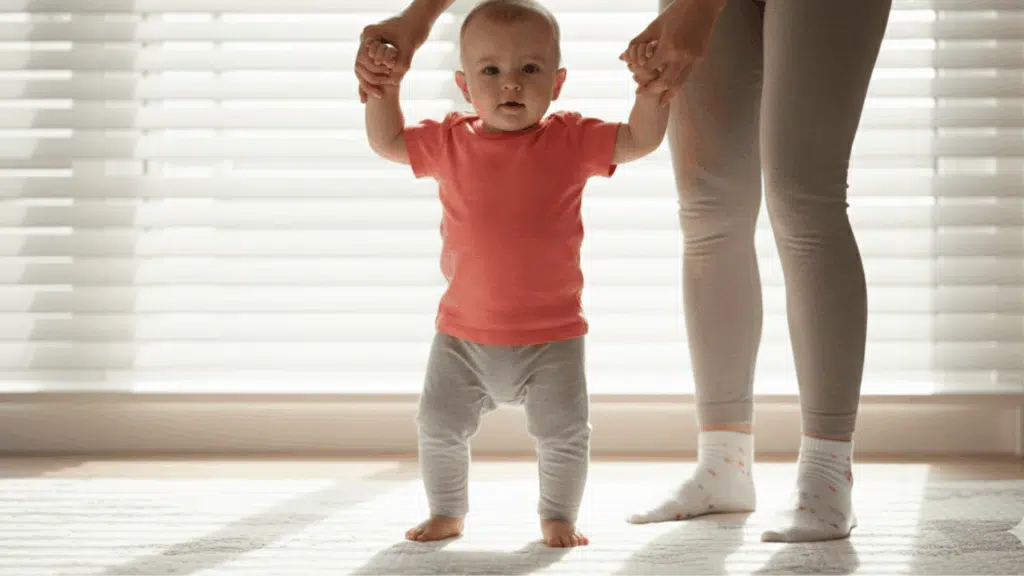
Offer sturdy push toys that your baby can hold while cruising around furniture. A laundry basket weighted with books works just as well as expensive walkers.
Make sure whatever you use has enough weight to stay stable when your baby leans on it. Place the toy near furniture so they can transition from holding the couch to pushing their toy.
Why It Works: Push toys provide the support babies need while building confidence in their standing abilities. The forward motion encourages them to shift weight from foot to foot, which is essential for independent walking.
This also builds core strength and improves balance.
Parenting Tip: Skip the seated walkers that babies sit in. Physical therapists don’t recommend them because they can delay walking. Push-behind toys where babies stand and push are the safer, more developmental choice for encouraging those first steps.
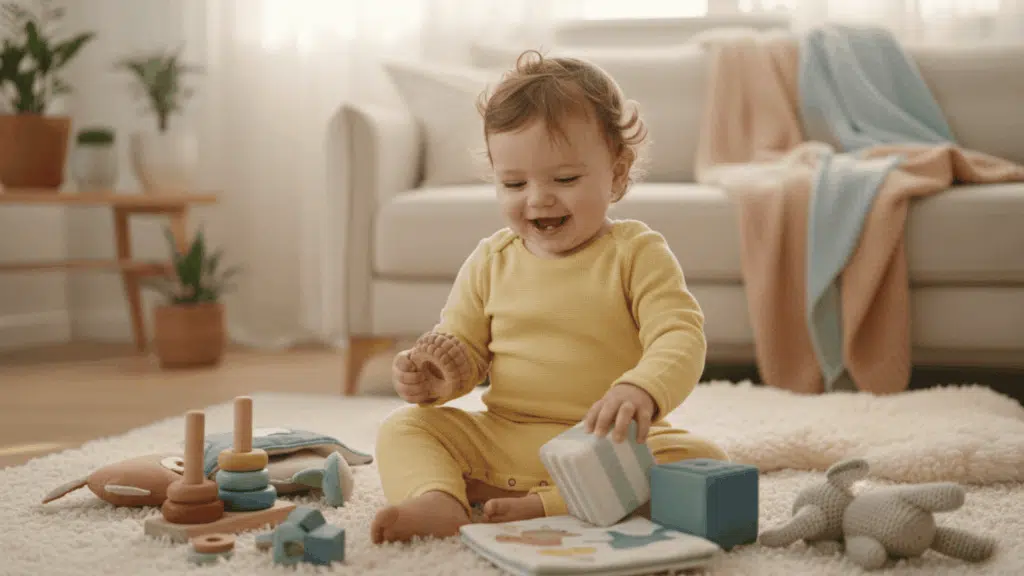
9. Shape Sorters and Simple Puzzles
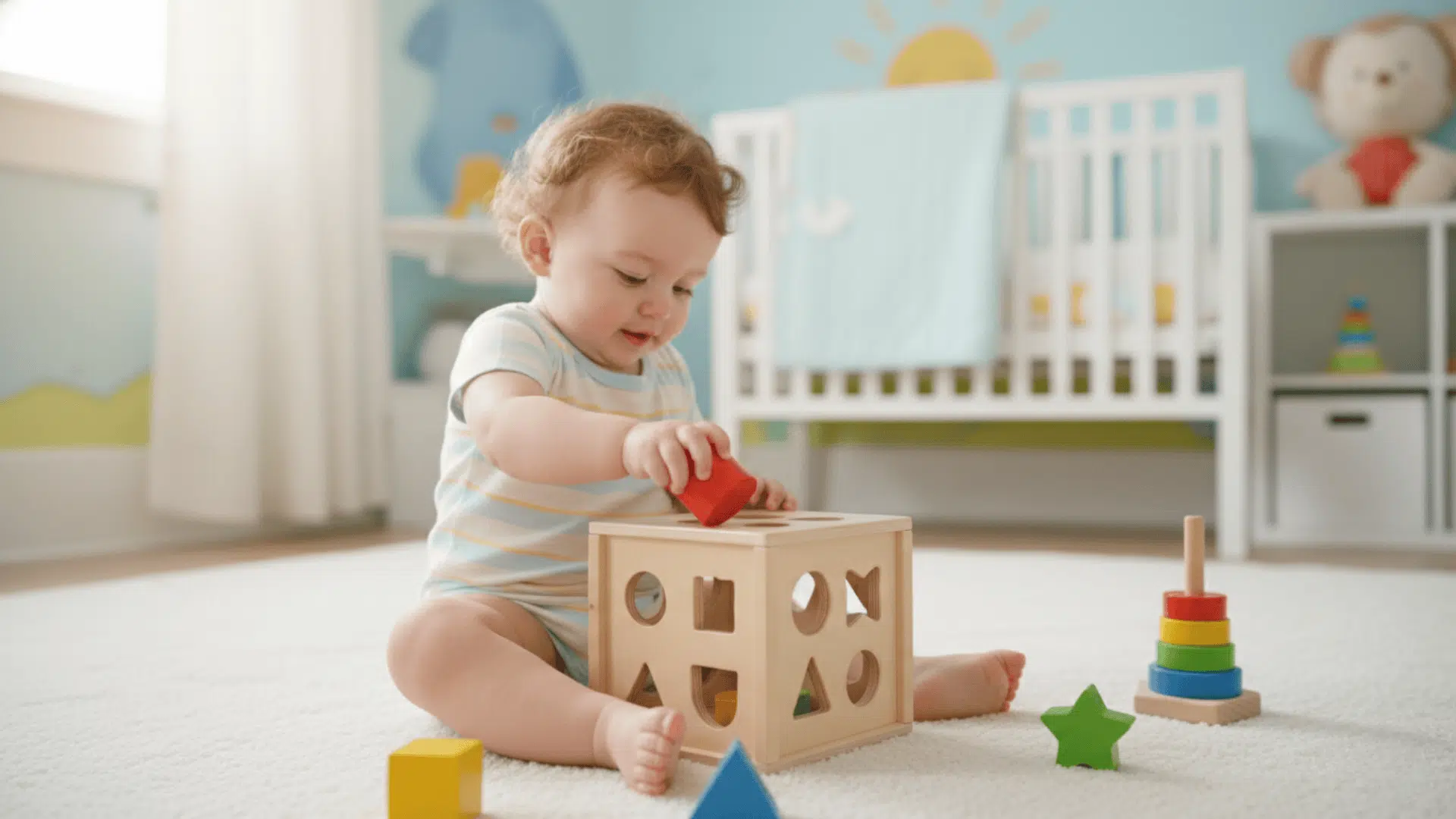
Start with shape sorters that have just two or three large shapes. Don’t expect your baby to match shapes correctly yet. Let them explore how pieces feel, try forcing round pegs into square holes, and figure things out through trial and error.
Demonstrate occasionally, but resist the urge to constantly correct them.
Why It Works: Shape sorters introduce spatial reasoning and problem-solving without pressure. Even unsuccessful attempts build cognitive skills as babies learn about size, shape, and fit.
The hand movements required to manipulate puzzle pieces strengthen grip and coordination.
Parenting Tip: Buy wooden puzzles with knobs on each piece. The knobs make it much easier for 10-month-old fingers to grasp and manipulate pieces. This small design feature means less frustration and more successful independent play.
10. Outdoor Exploration
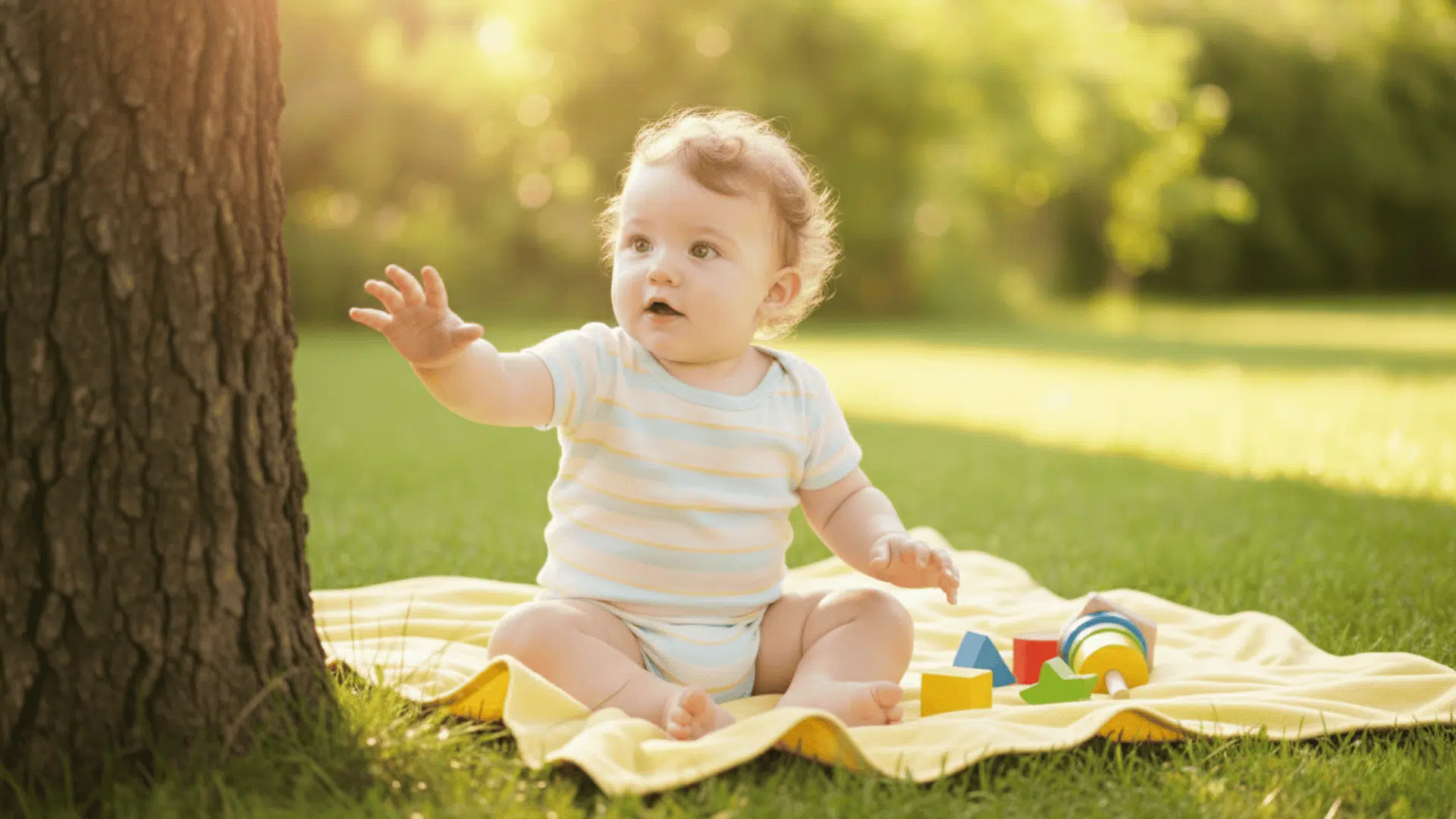
Take your baby outside to feel the grass under their hands and feet. Let them touch tree bark, pick up leaves, and watch clouds move across the sky.
Sit on a blanket and bring a few toys outside, but let natural elements be the main attraction. Name everything they touch and describe textures using simple words like rough, smooth, soft, and prickly.
Why It Works: Outdoor textures and experiences provide sensory input impossible to replicate indoors. The uneven ground challenges balance differently from flat floors. Natural sounds, smells, and sights stimulate cognitive development while building awareness of the wider world.
Parenting Tip: Create an outdoor sensory station with a shallow tub of water, some dirt in a container, and natural items like pinecones and smooth stones. This contained outdoor space lets babies explore nature safely while you supervise closely for choking hazards.
11. Clapping, Waving, and Mimic Games
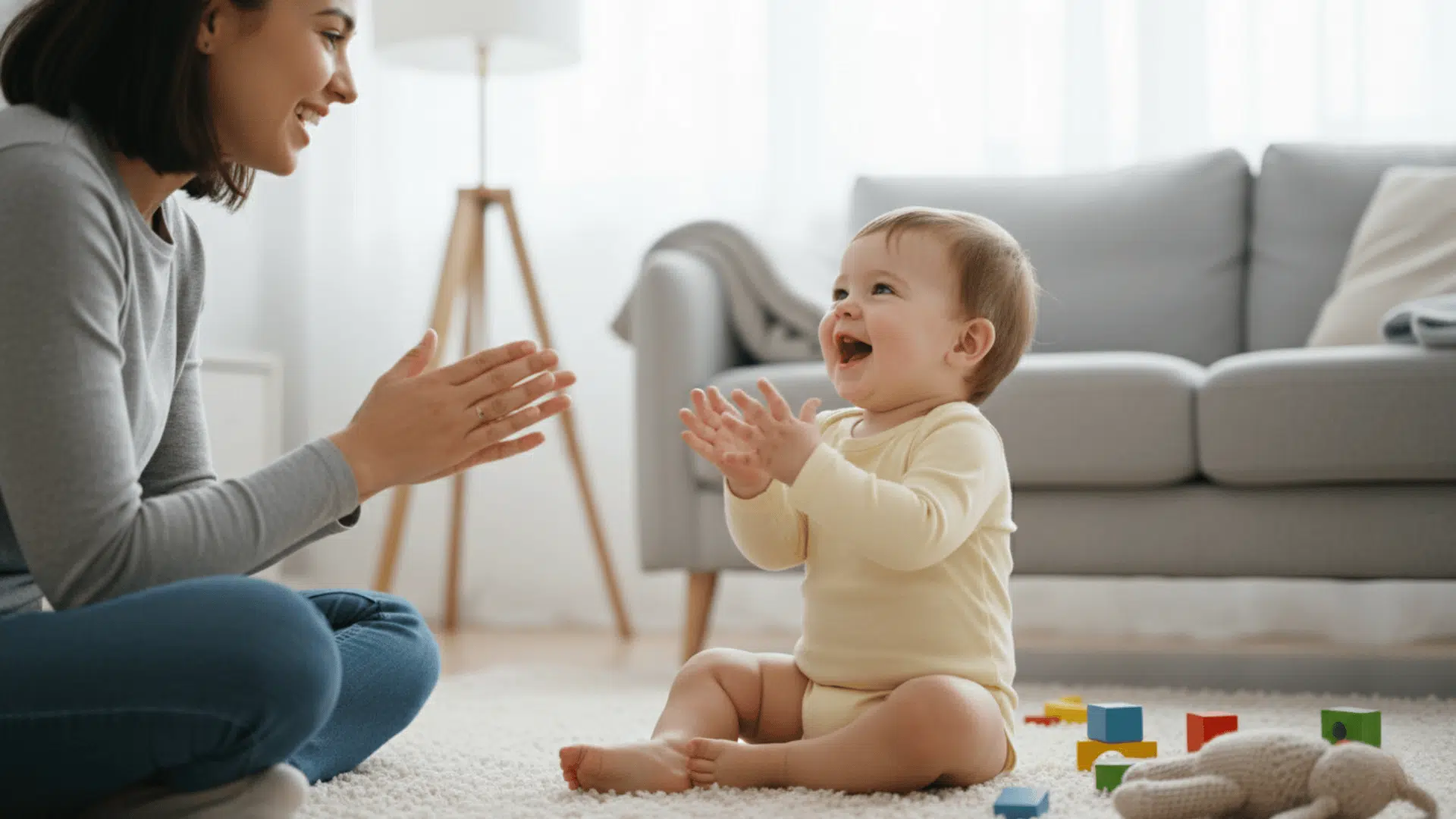
Clap your hands and encourage your baby to copy you. Wave goodbye when someone leaves the room. Play pat-a-cake with the hand motions.
Make silly faces and see if your baby tries to imitate your expressions. These simple gestures teach your baby that their actions can communicate meaning.
Why It Works: Imitation games build the foundation for social interaction and communication. When babies learn to wave or clap on cue, they’re developing the understanding that gestures carry meaning.
This also strengthens the neural pathways involved in voluntary movement control.
Parenting Tip: Celebrate every attempt at imitation, even if it looks nothing like your gesture. Your baby might wave with a closed fist or clap by tapping their belly. Any deliberate movement in response to your prompt deserves enthusiastic praise.
12. Water Play for Texture Exploration
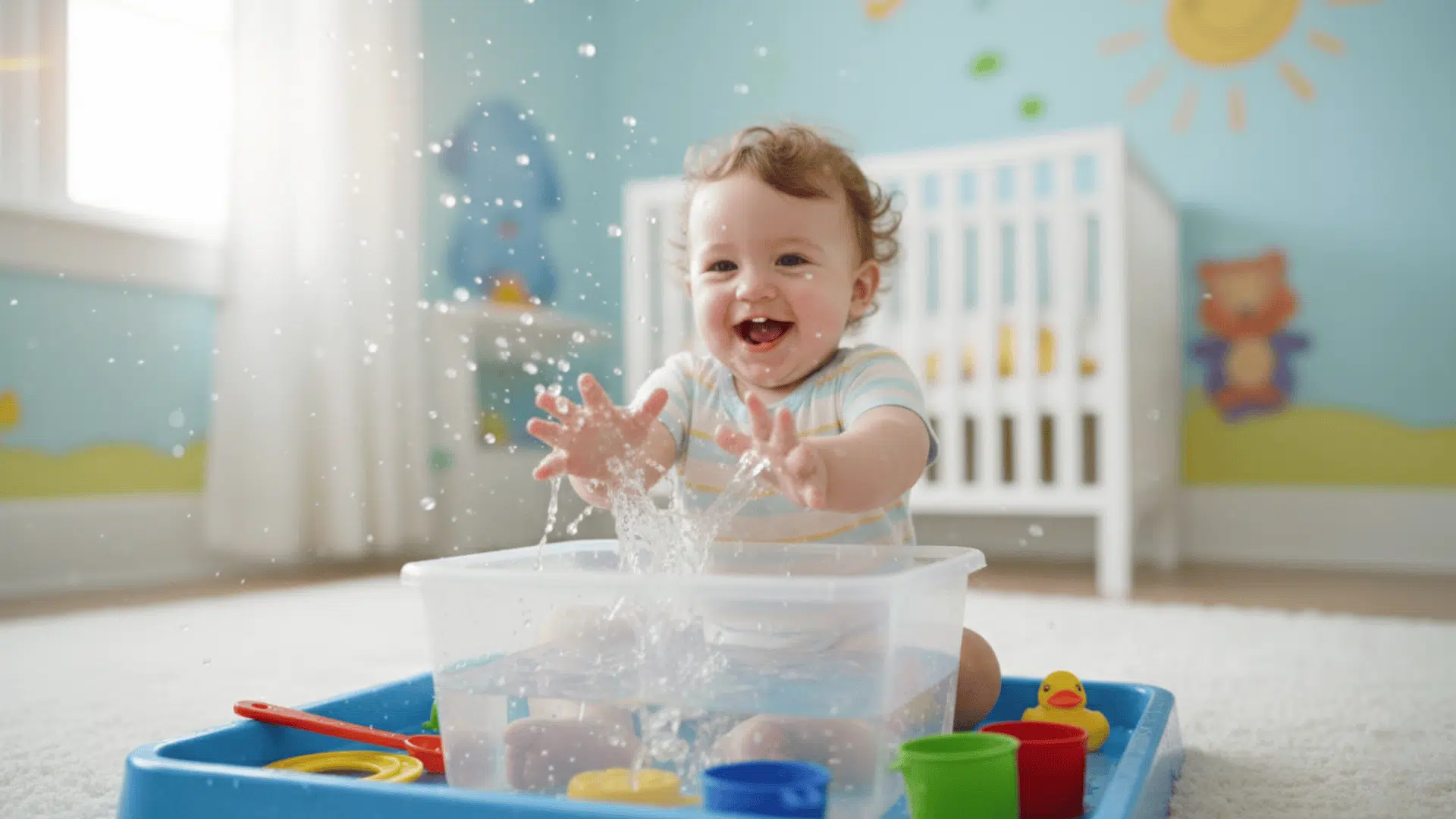
Fill a shallow container with an inch of water and provide plastic cups, measuring spoons, and small containers. Let your baby splash, pour, and scoop.
You can add a few drops of food coloring to make it more visually interesting or freeze small toys in ice cubes for them to discover as the ice melts.
Why It Works: Water play offers unique sensory feedback that fascinates babies. The way water moves, feels cool on skin, and creates splashes teaches physics concepts like volume and flow.
Pouring and scooping build hand strength and coordination essential for future self-feeding skills.
Parenting Tip: Do water play in the bathroom or kitchen where spills don’t matter, or take it outside on warm days. Put your baby in just a diaper to avoid wet clothes, and keep a towel ready. The mess is worth the developmental benefits and the pure joy on their face.
13. Mirror Play
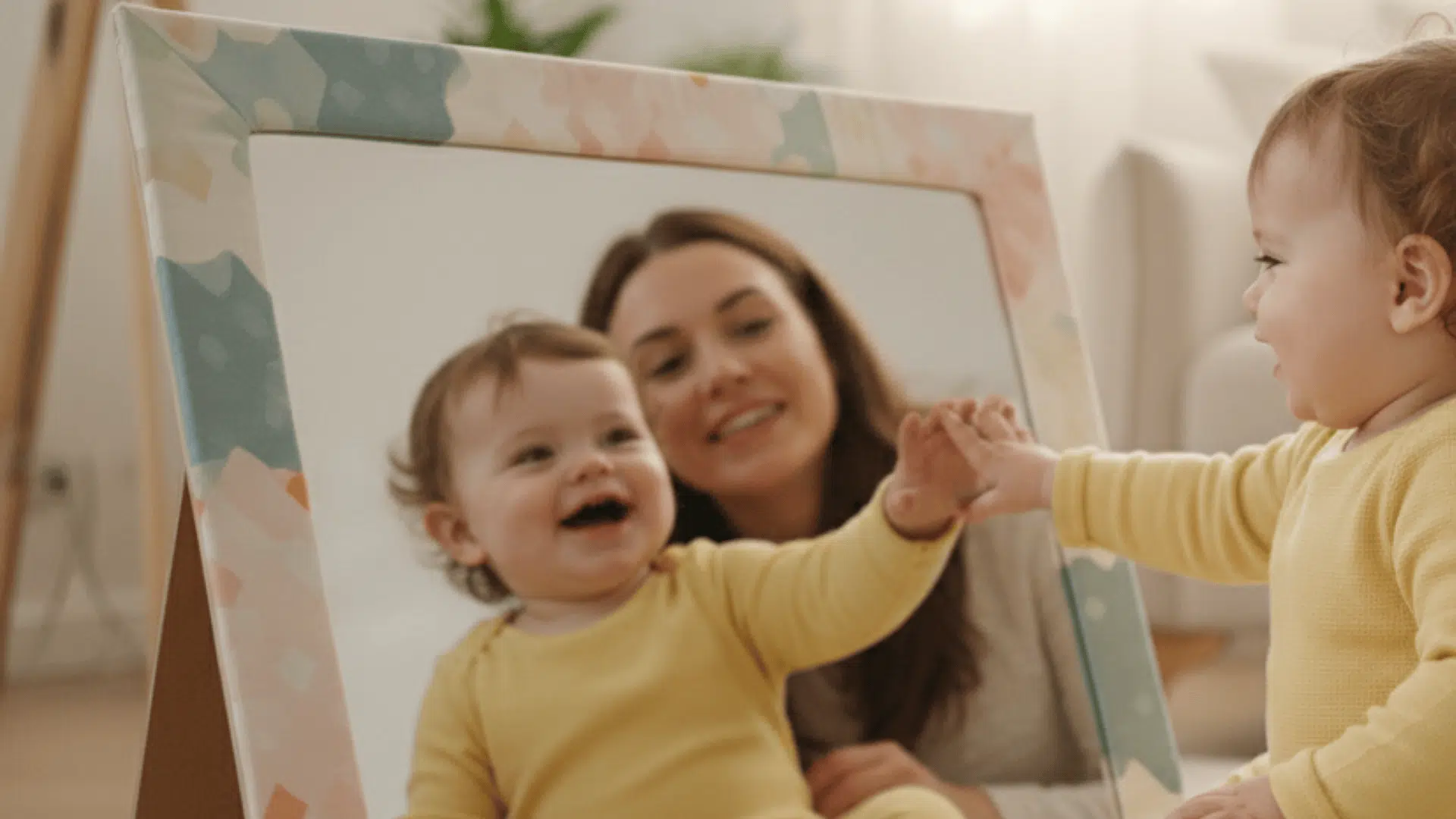
Sit with your baby in front of a mirror at their level. Point to their reflection and say their name. Touch your nose, then their nose, then the nose in the mirror.
Make different facial expressions and watch your baby study the changing faces. Let them reach out and touch the mirror surface to explore this fascinating flat friend who copies everything they do.
Why It Works: Mirror play supports self-awareness development as babies begin recognizing themselves. They’re also learning about facial expressions and emotions by watching faces change.
The visual tracking involved strengthens eye muscles and attention span.
Parenting Tip: Attach a baby-safe mirror horizontally on the wall at floor level in your baby’s play area. This creates an engaging activity station where they can entertain themselves while you’re nearby, but need your hands free for other tasks.
14. Ball Play for Early Movements
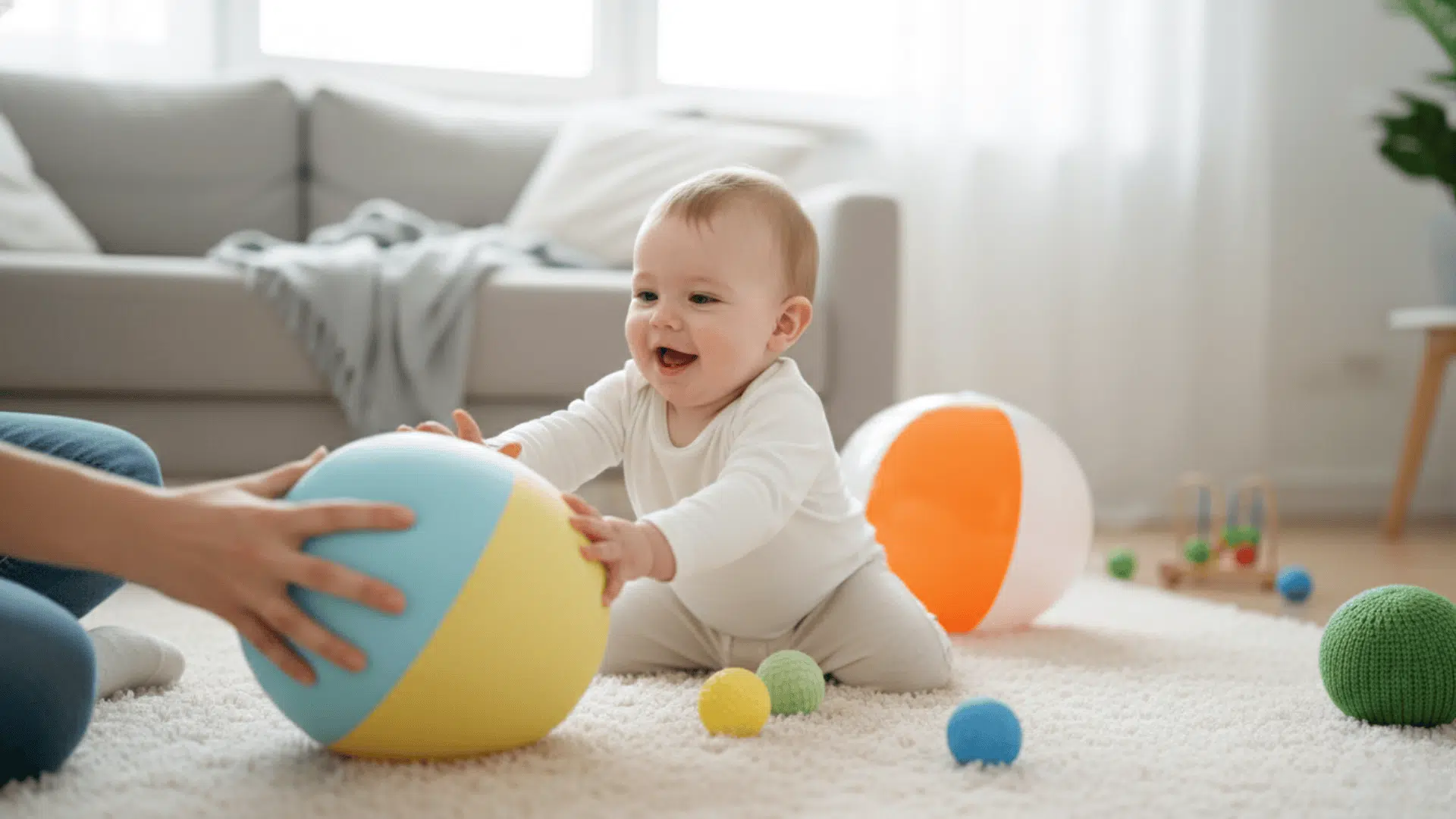
Roll a soft ball toward your sitting baby and encourage them to push it back. For crawlers, roll it across the room so they chase after it.
Help your baby hold a ball with both hands, then gently toss it together. Use different sizes, from small foam balls to larger beach balls, so they can explore how size affects how things move.
Why It Works: Ball play develops gross motor skills, hand-eye coordination, and spatial awareness all at once. Tracking a moving ball strengthens visual skills, while reaching for it builds coordination.
The back-and-forth nature introduces early turn-taking concepts important for social development.
Parenting Tip: Keep balls in a low basket that your baby can access independently. This encourages them to initiate play rather than waiting for you to set up activities. Soft fabric balls and rubber balls with different textures add variety to their exploration.
15. Household Item Play for Exploration
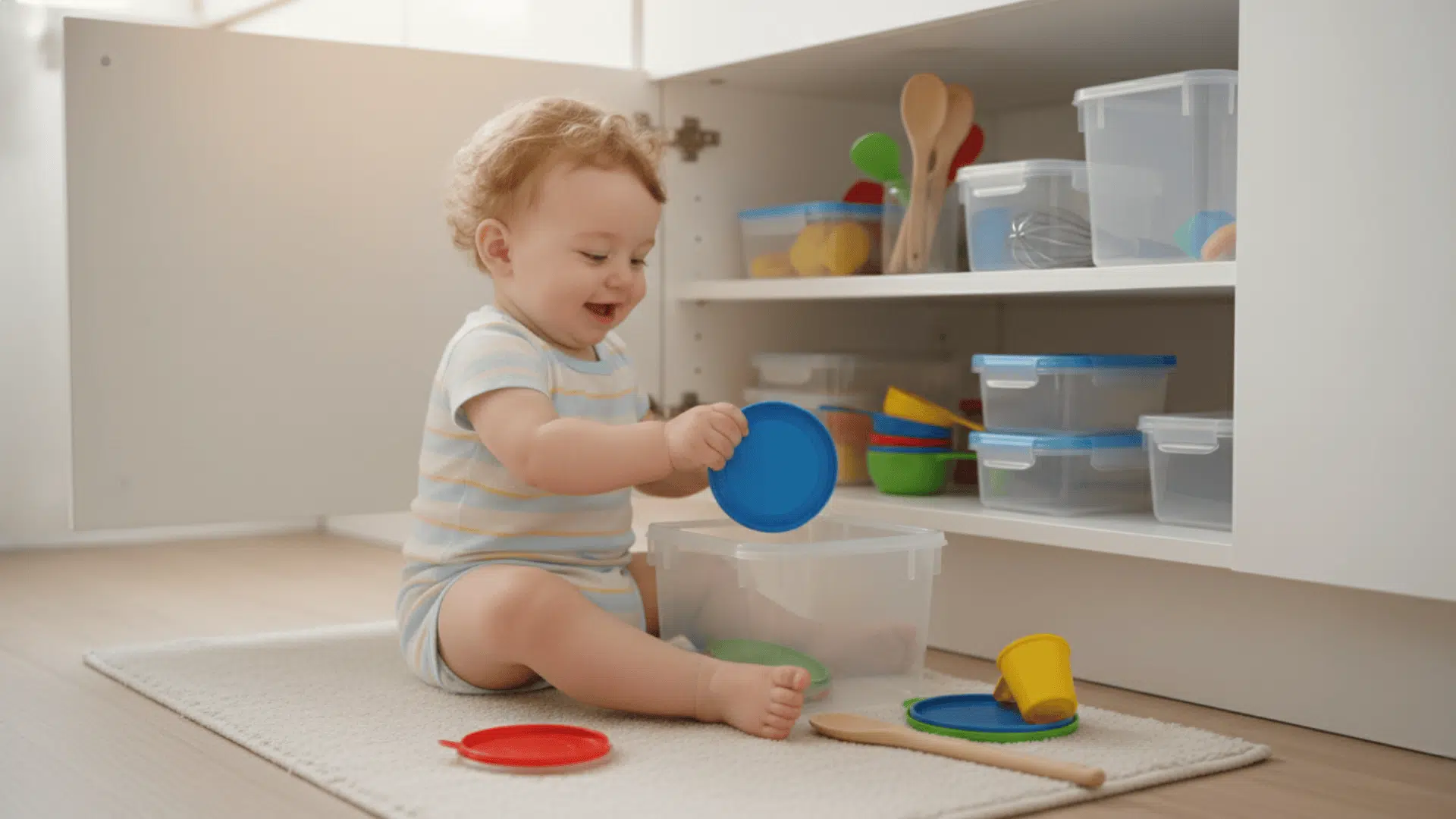
Empty a kitchen cabinet and fill it with safe items your baby can explore. Plastic containers with lids, wooden spoons, measuring cups, and pot lids become fascinating toys.
Let your baby open cabinets, pull items out, bang them together, and figure out how lids fit on containers. This independent exploration time is valuable learning.
Why It Works: Household items provide real-world problem-solving opportunities that plastic toys can’t match. Babies learn how objects relate to one another, cause and effect, and functional relationships.
The novelty of “forbidden” items makes them more engaging than regular toys.
Parenting Tip: Rotate the items in your baby’s cabinet weekly to maintain interest. What seems boring today becomes fascinating next week when they’ve forgotten about it. This rotation system means you need fewer toys while keeping your baby engaged.
Conclusion
These activities cover the essential building blocks your 10-month-old needs: physical strength for mobility, sensory processing for understanding their environment, cognitive skills for problem-solving, and social abilities for communication.
Your baby won’t love every activity, and that’s normal. Some will click immediately while others take time.
Follow their lead and notice what captures their attention longest. Those natural interests tell you where their brain is ready to grow.
Start today by choosing activities that match your baby’s current mood. Watch how they respond, then build from there. Mix physical play with quiet exploration throughout the day for balanced development.
Remember to stay close during play. Your presence turns simple activities into powerful learning experiences.
Supervision keeps them safe while your encouragement shows them that exploring their world is something to celebrate.