Are your students struggling to show empathy and positive behavior toward others? Many teachers search for activities that build social skills while keeping kids engaged and creative.
Kindness crafts offer a hands-on way to make abstract concepts like compassion and gratitude feel real and achievable.
These projects work perfectly for Kindness Week, character education lessons, or daily classroom routines. Students create visual reminders of positive actions while practicing cooperation and self-expression.
The crafts require basic supplies that most classrooms already have on hand. Each activity reinforces important social-emotional learning skills without feeling like a lecture.
Kids remember lessons better when they make something meaningful with their own hands.
30 Easy Kindness Crafts for Kids
Each project uses simple materials and supports social-emotional learning goals.
1. Kindness Chain Links
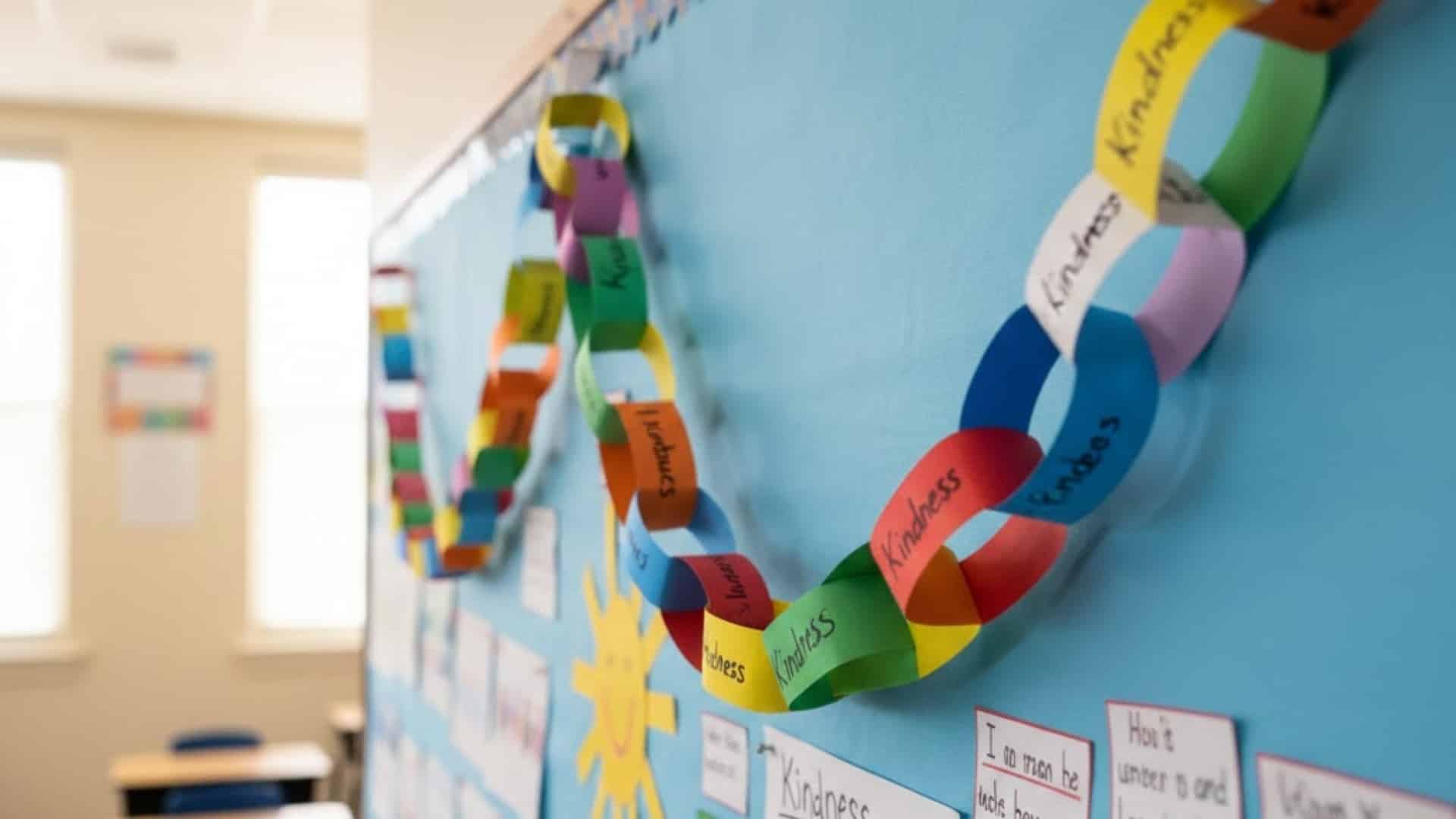
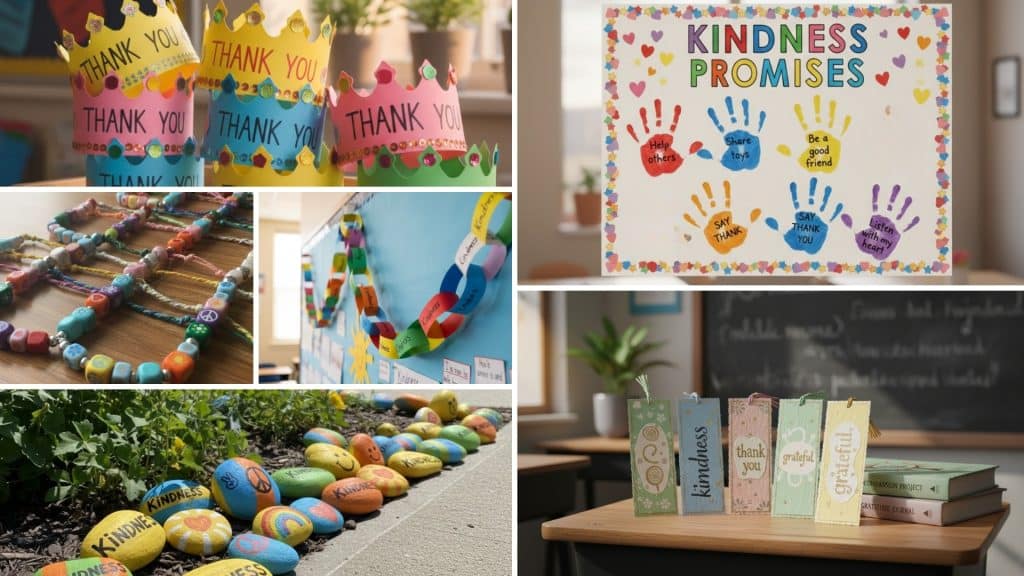
A collaborative craft that visually shows how small acts of kindness add up. The growing chain becomes a powerful classroom reminder that every good deed matters.
Materials Required:
- Construction paper strips
- Markers
- Glue or staples
Simple Steps:
- Write one kind act on each paper strip. Examples include helping a friend, sharing supplies, or saying thank you. Use different colored paper for variety.
- Link strips together by looping one through another. Glue or staple the ends closed. Each new kind act adds another link to the chain.
- Hang the chain across the classroom. Watch it grow longer throughout the week or month. The visual progress motivates students to keep adding kind actions.
2. Kindness Rocks
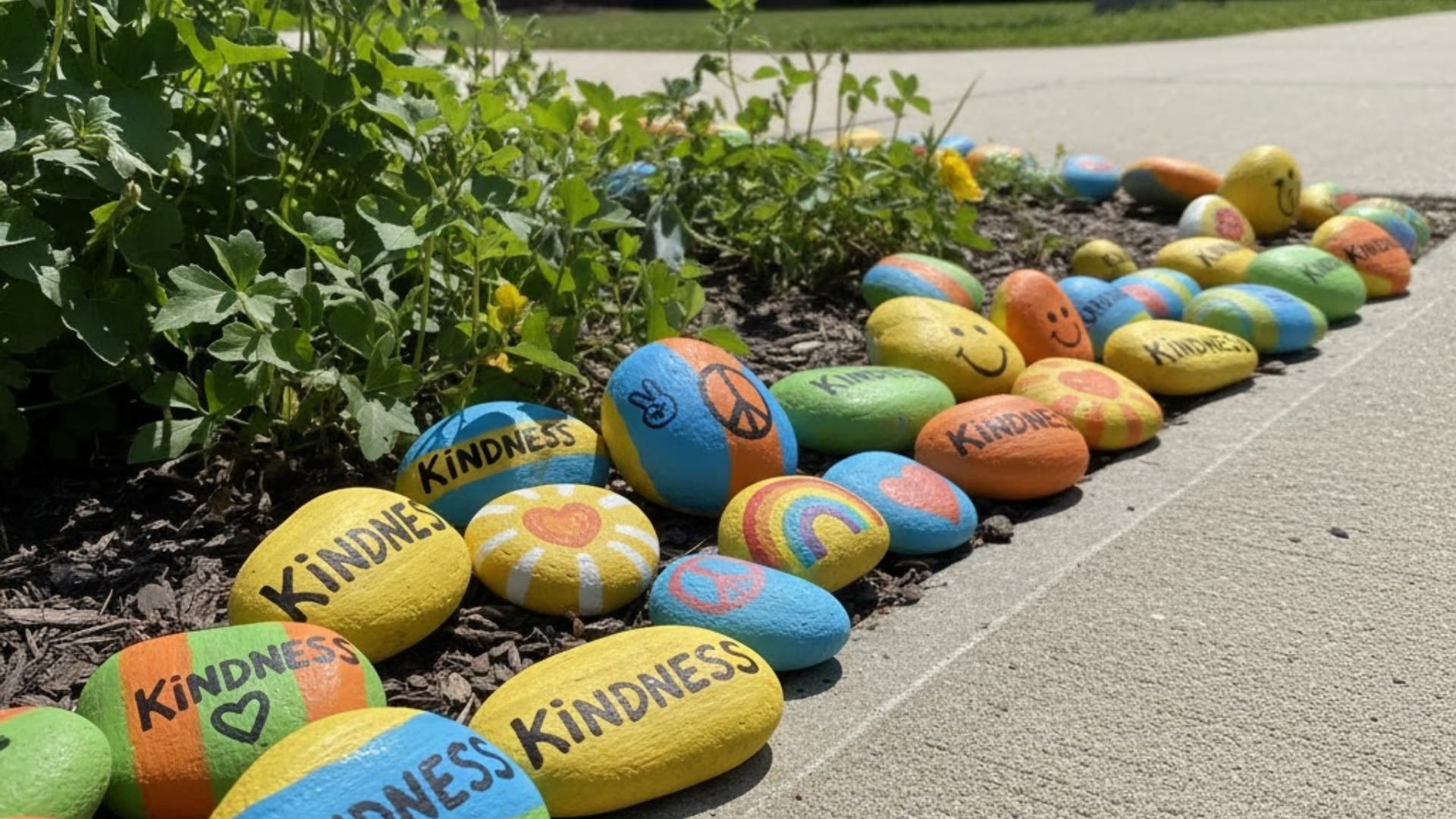
A simple craft that encourages spreading kindness beyond the classroom. Painted rocks can brighten someone’s day in unexpected places.
Materials Required:
- Smooth rocks
- Paint pens or acrylic paint
- Sealer spray (optional)
Simple Steps:
- Wash and dry rocks thoroughly. Choose rocks with smooth, flat surfaces. These work best for painting words and designs.
- Paint positive words or symbols on each rock. Use phrases like “You matter,” “Be kind,” or “Smile.” Add hearts, flowers, or rainbow designs around the words.
- Let the paint dry completely. Spray with sealer if the rocks will go outdoors. Place finished rocks around school grounds, parks, or community spaces for others to find.
3. Kindness Tree Display
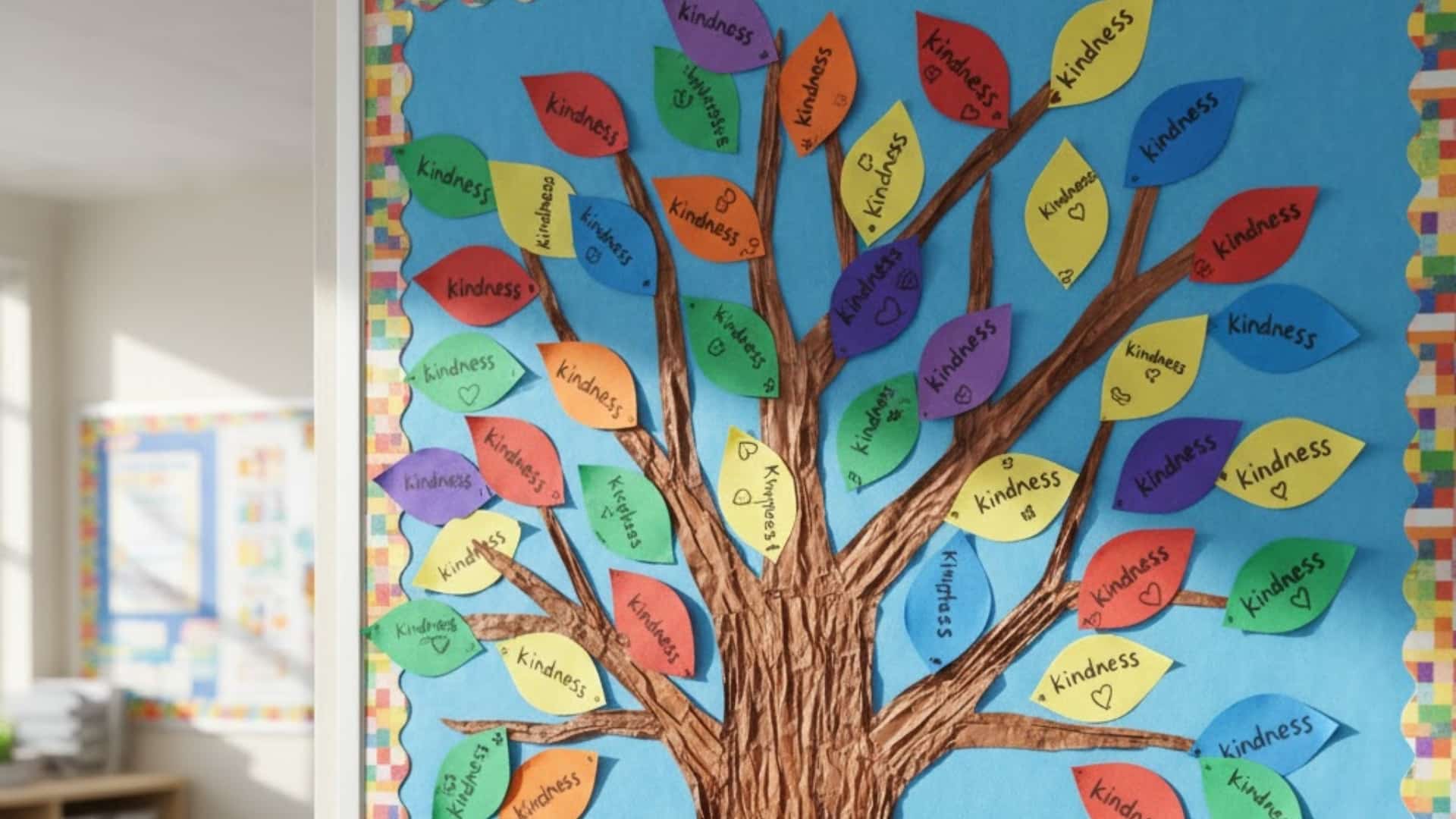
A visual reminder that kindness grows when shared. This bulletin board craft creates a living record of classroom kindness throughout the year.
Materials Required:
- Paper tree trunk and branches
- Paper leaves (cut from colored paper)
- Markers
- Tape or pushpins
Simple Steps:
- Create or print a large tree trunk and branches. Mount it on a bulletin board or wall. Leave plenty of space for adding leaves.
- Cut leaf shapes from construction paper in fall colors. Make enough for each student to add several leaves over time. Keep extras nearby for future use.
- Write kind actions on leaves as they happen. Students can add leaves when they witness or perform acts of kindness. Watch the tree fill with positive actions.
4. Compliment Cards
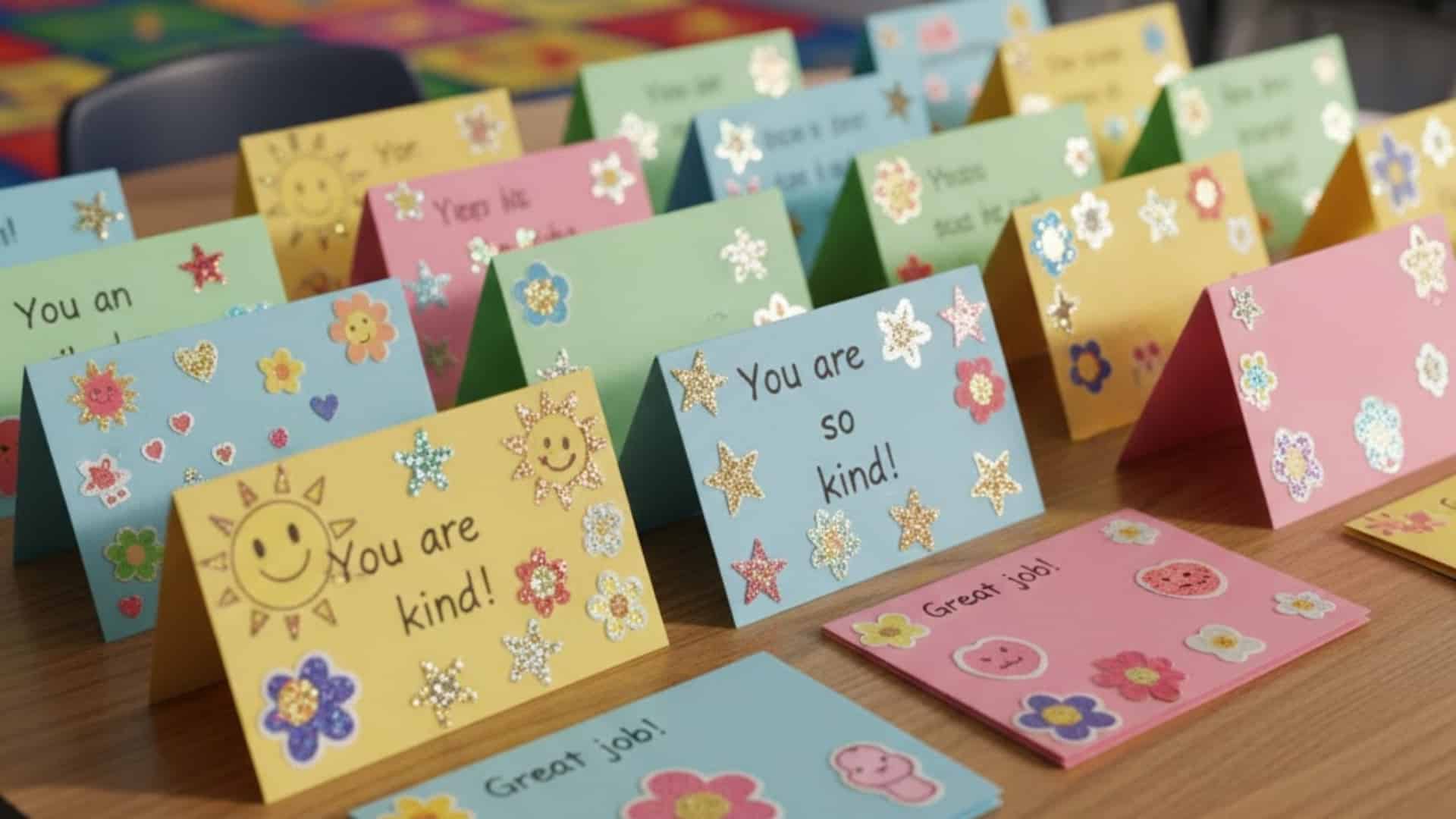
A meaningful craft that helps students practice positive communication. Writing specific compliments builds observation skills and emotional vocabulary.
Materials Required:
- Cardstock
- Markers
- Stickers
- Scissors
Simple Steps:
- Cut cardstock into card-sized rectangles. Fold each piece in half to create a card. Make enough for students to give several compliments.
- Decorate the front of the cards with stickers or drawings. Keep decorations simple, so the focus stays on the written message inside.
- Write genuine compliments for classmates. Be specific about what makes each person special. Exchange cards during circle time or morning meetings.
5. Kindness Quilt Squares
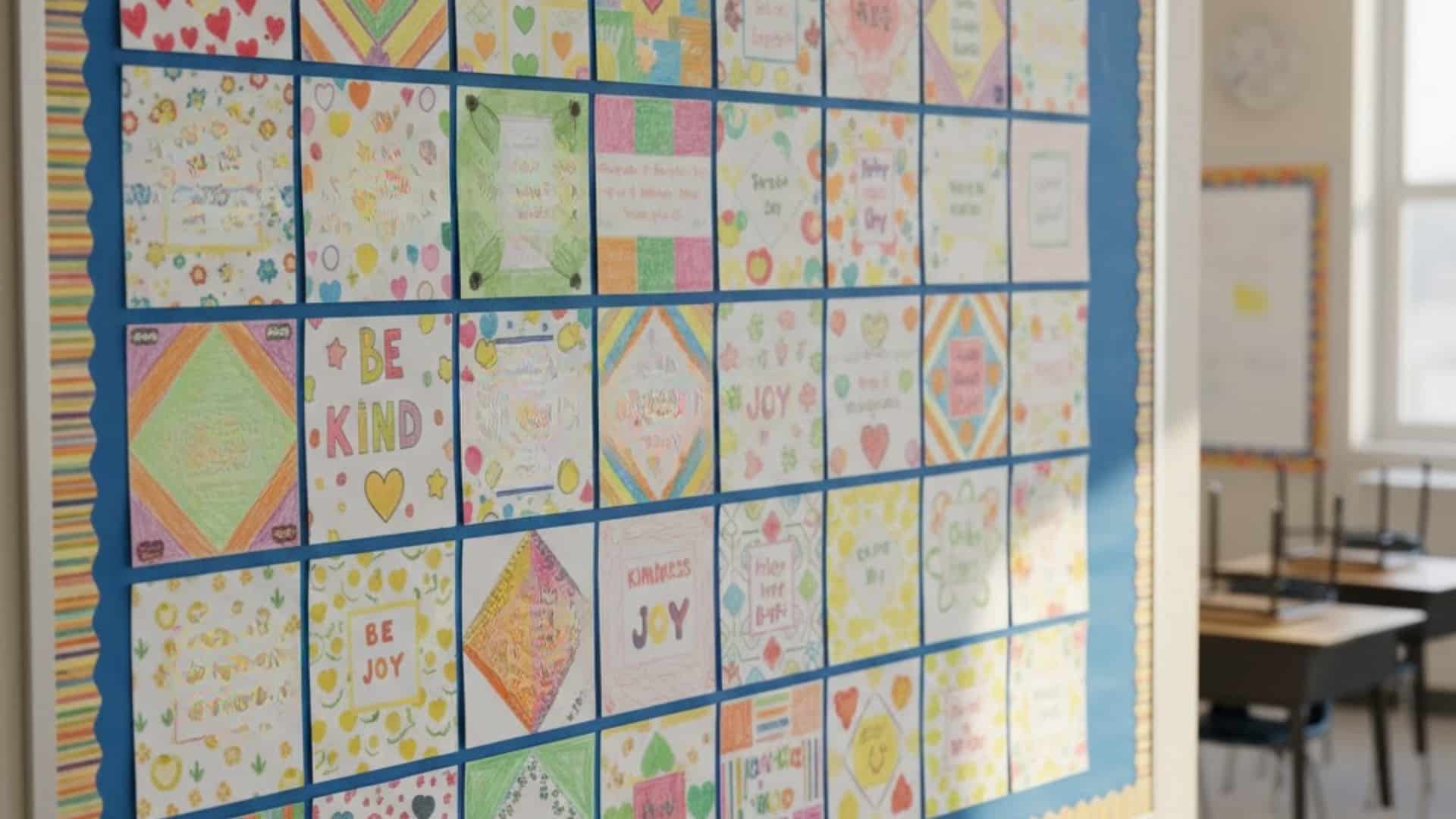
A group project that celebrates classroom unity. Each square represents one student’s contribution to the classroom community.
Materials Required:
- Paper squares (same size)
- Crayons or markers
- Glue
- Large backing paper
Simple Steps:
- Give each student one paper square. All squares should be the same size so they fit together neatly. Six-inch squares work well for classroom displays.
- Decorate squares with kindness messages or drawings. Students can write what kindness means to them or draw helpful actions. Encourage personal expression.
- Assemble squares into a large quilt pattern on backing paper. Glue them in rows with small spaces between. Display the finished quilt prominently in the classroom.
6. Bucket Filling Craft
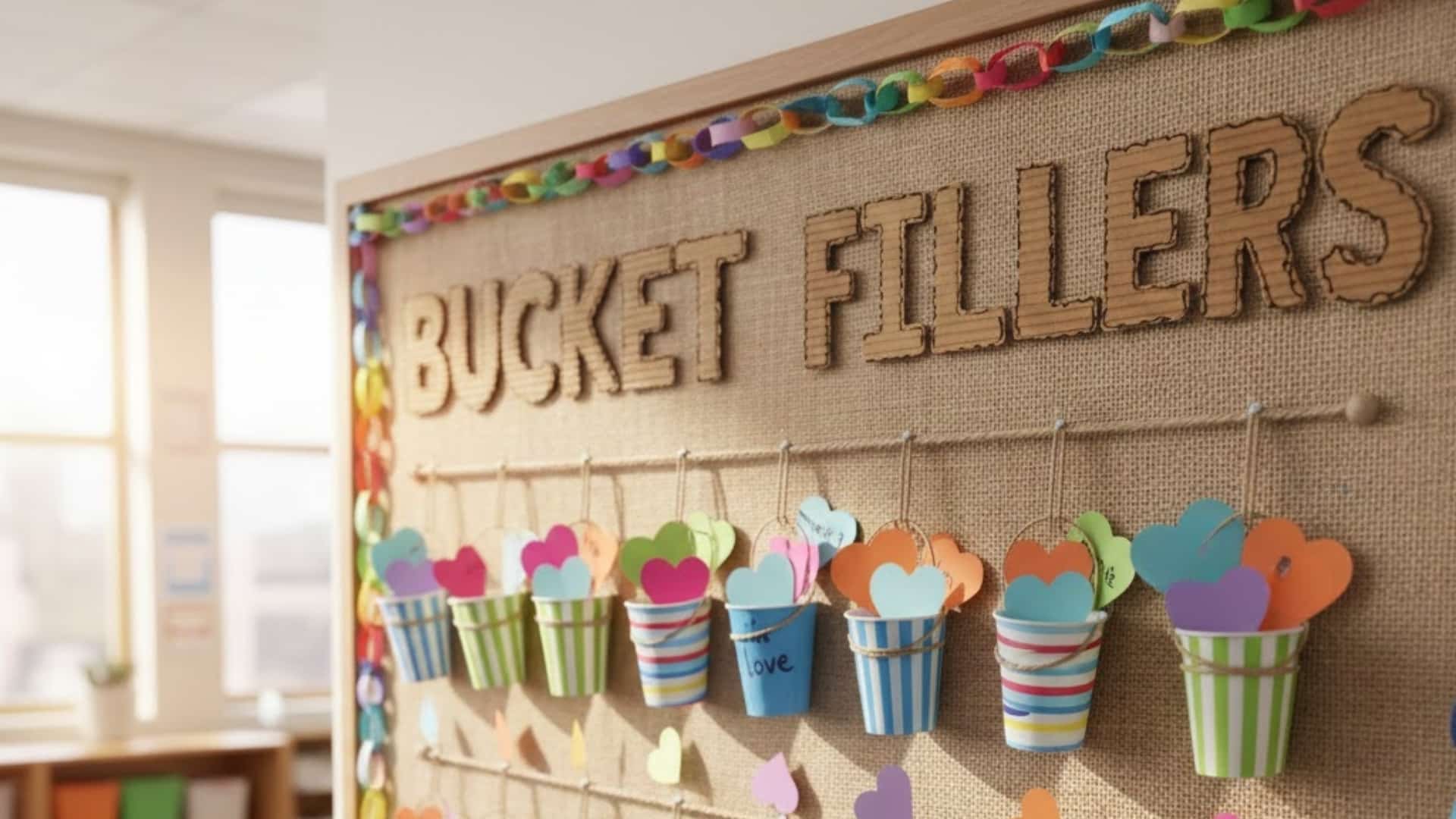
A hands-on way to teach emotional awareness and kindness. Based on the popular bucket-filling concept, this craft makes abstract feelings concrete.
Materials Required:
- Paper buckets (cut from construction paper)
- Paper hearts
- Markers
- Tape or glue
Simple Steps:
- Create paper buckets for each student. Cut bucket shapes from construction paper or use templates. Write student names on their buckets.
- Cut small hearts from colored paper. Make plenty of hearts so students can add them regularly. Keep extras in a central location.
- Write kind acts on hearts as they happen. Add hearts to buckets when students show kindness or have their buckets filled by others. Full buckets show a caring classroom culture.
7. Thank You Flower Cards
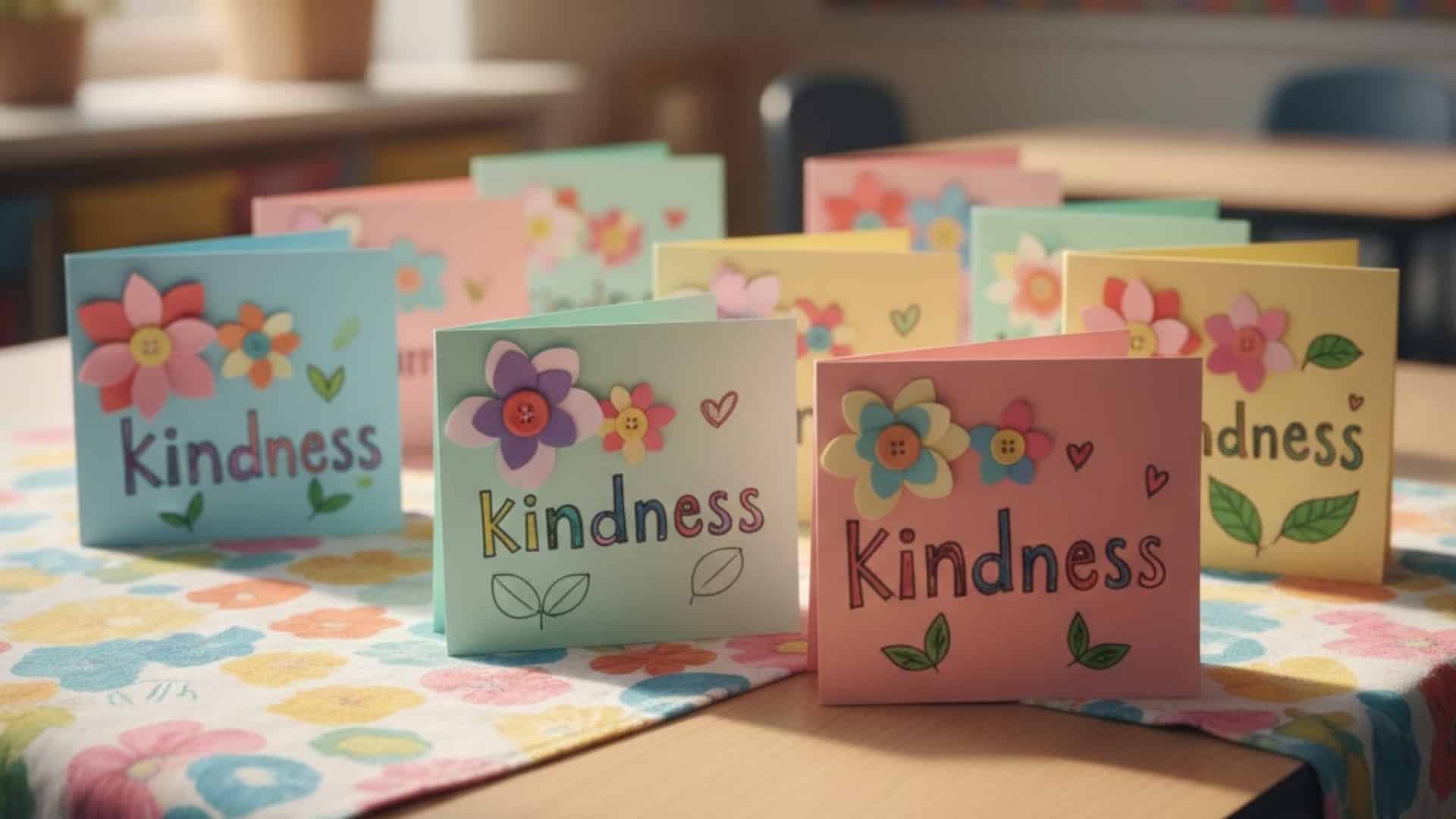
A gratitude-based craft perfect for teachers, staff, or helpers. These cheerful cards teach students to notice and appreciate what others do.
Materials Required:
- Paper
- Scissors
- Glue
- Markers
Simple Steps:
- Cut flower shapes with petals from colored paper. Each petal should be large enough to write on. Five to eight petals per flower works well.
- Write thank-you messages on each petal. Include specific reasons for gratitude. Messages might say “Thank you for helping me with math” or “Thanks for making lunch.”
- Glue petals around a center circle. Add a stem and leaves. Give the completed flower to someone who deserves recognition.
8. Kindness Crowns
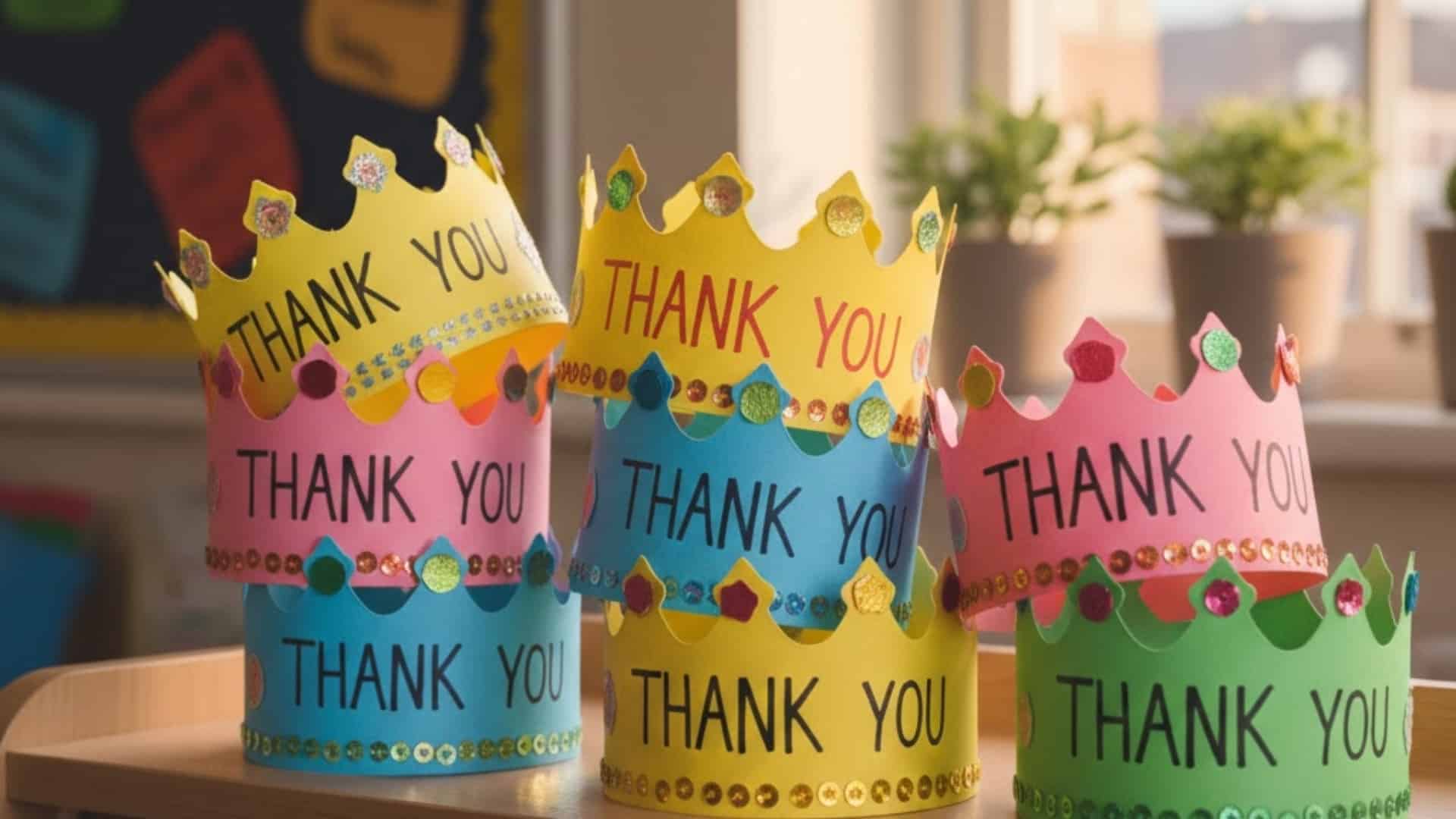
A wearable reminder to choose kindness each day. Students can wear these during character education lessons or special kindness activities.
Materials Required:
- Paper strips
- Crayons or markers
- Tape or staples
- Stickers (optional)
Simple Steps:
- Cut paper strips long enough to fit around a child’s head. Use two strips per crown for strength. Measure to ensure a comfortable fit.
- Write kind behaviors on the crown strip. Include actions like “I listen when others talk” or “I share with friends.” Decorate with drawings or stickers.
- Connect ends to form a circle that fits the student’s head. Tape or staple securely. Wear crowns during kindness-themed activities to reinforce positive choices.
9. Kindness Handprint Poster
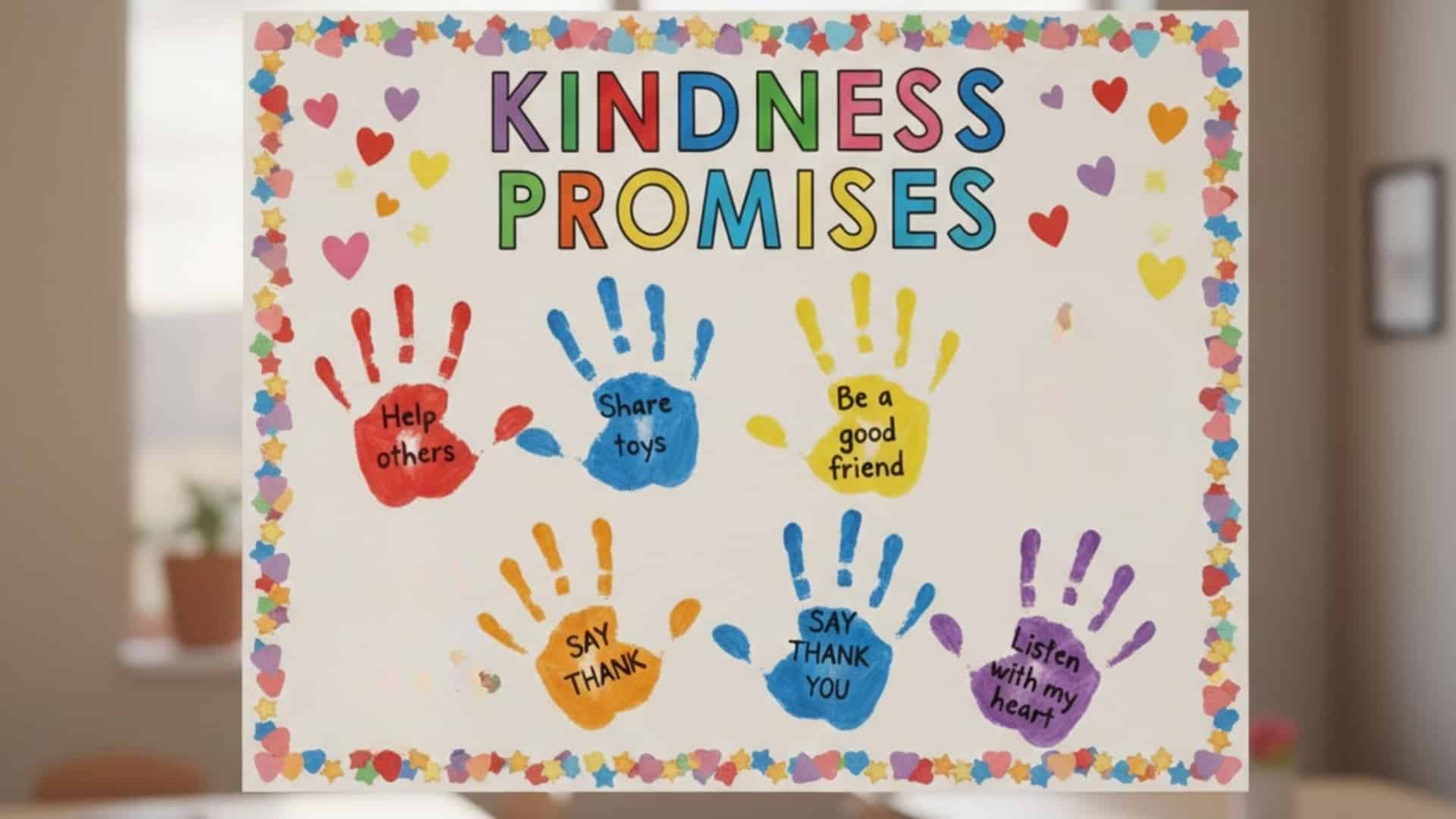
A keepsake craft showing that everyone can help. This collaborative poster celebrates the unique contribution each student makes to classroom kindness.
Materials Required:
- Paint
- Large poster paper
- Wipes for cleanup
Simple Steps:
- Paint each student’s hand with washable paint. Use different colors for each student or let them choose their favorite. Work quickly before the paint dries.
- Press the paint onto the poster paper. Space handprints around the poster, leaving room between them. Each print represents one student’s commitment.
- Write one kind promise near each handprint once the paint dries. Promises might include “I will help when someone falls” or “I will include everyone.” Display the finished poster year-round.
10. Positive Message Bookmarks
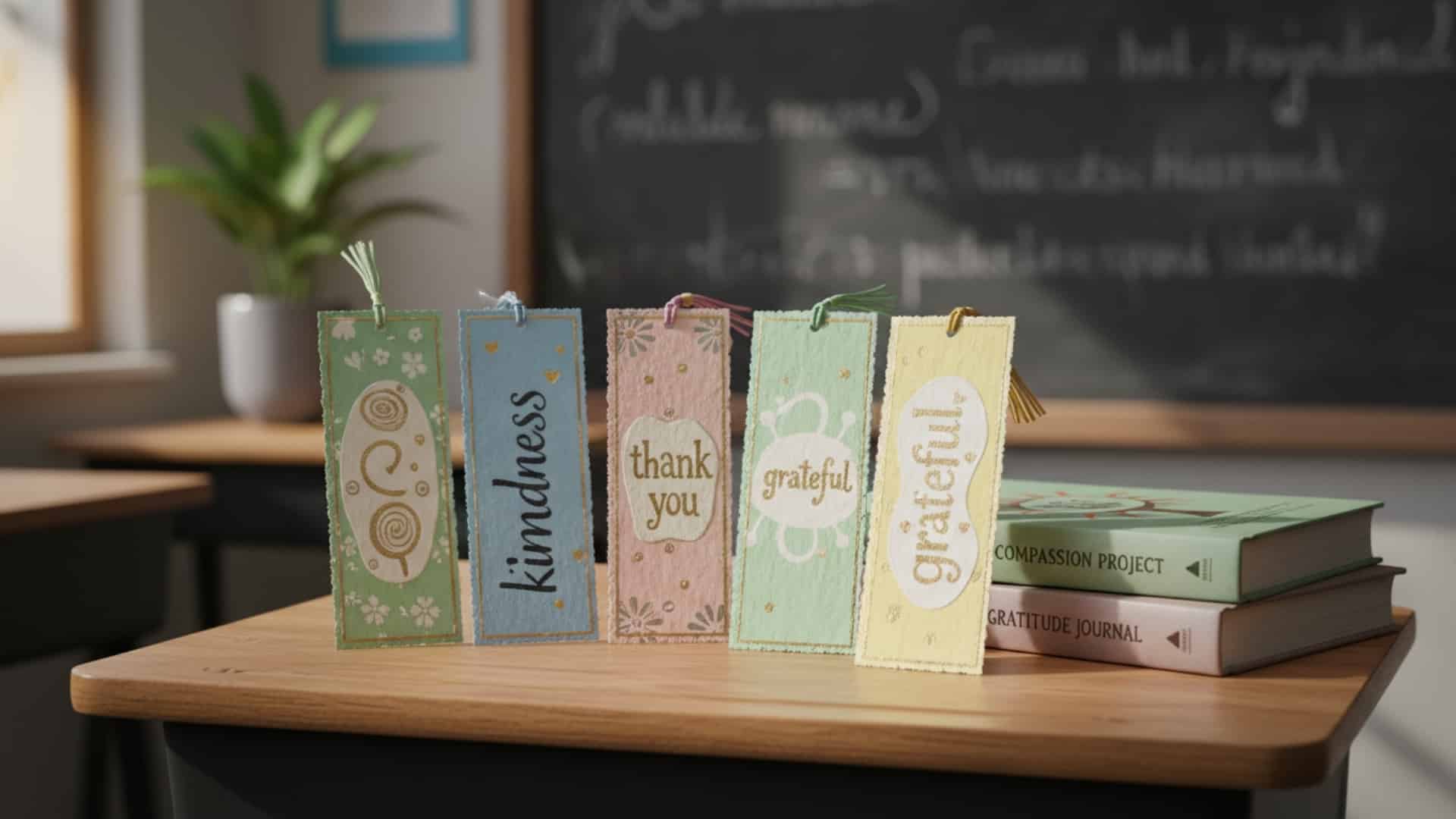
A quiet kindness craft that supports reading time. Students can keep these bookmarks or give them to friends who need encouragement.
Materials Required:
- Cardstock
- Markers
- Ribbon
- Hole punch
- Laminating sheets (optional)
Simple Steps:
- Cut cardstock into bookmark rectangles. Standard size is about two inches wide and six inches tall. Smooth edges carefully.
- Write encouraging messages on each bookmark. Use phrases like “You’re doing great” or “Keep reading.” Add small drawings or borders for decoration.
- Punch a hole at the top and thread ribbon through. Laminate bookmarks for durability if desired. Share bookmarks with classmates or take them home.
11. Kindness Wheels
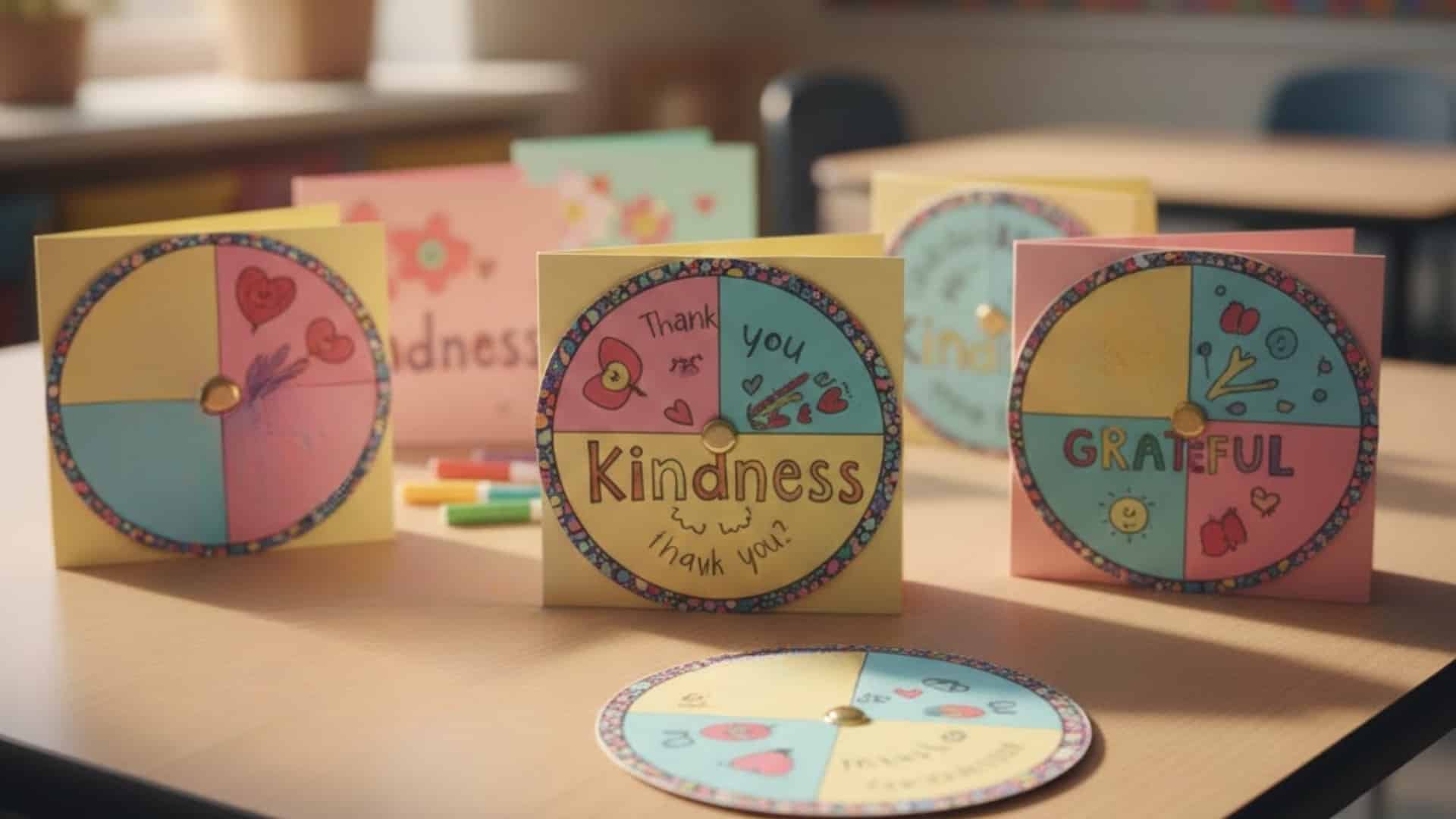
A rotating craft that highlights different kind actions. Students can spin the wheel daily to choose which kind of act to practice.
Materials Required:
- Paper circles (two per wheel)
- Brads
- Markers
- Scissors
Simple Steps:
- Cut two circles from cardstock. One should be slightly smaller than the other. The smaller circle needs a wedge-shaped window cut from it.
- Write different kind acts in sections on the larger circle. Include actions like “Give a compliment,” “Help clean up,” or “Share supplies.” Space them evenly.
- Attach circles with a brad through the center. The smaller circle should rotate over the larger one. Spin daily to reveal a new kindness challenge.
12. Helping Hands Pledge
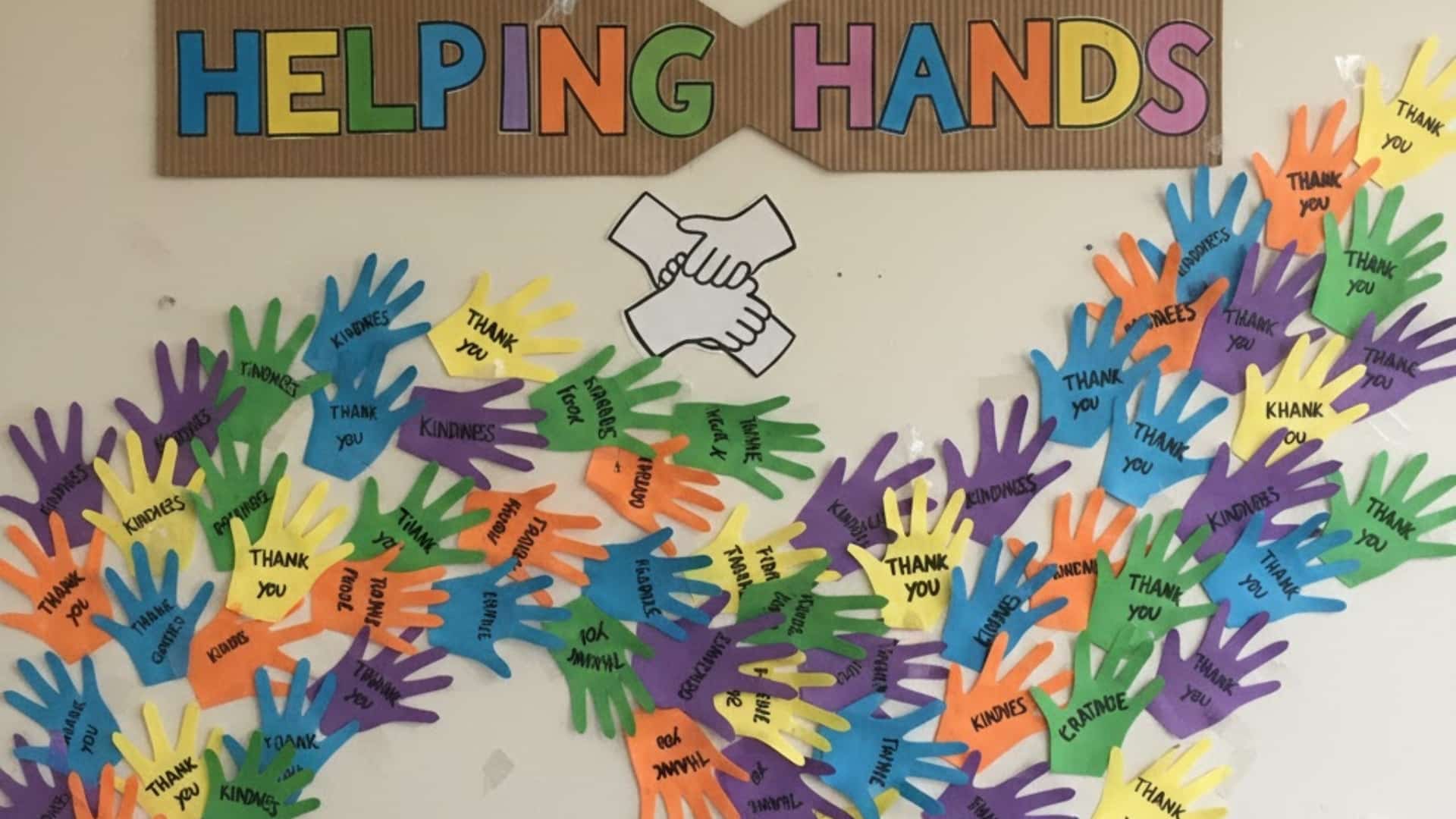
A classroom pledge turned into art. This display shows each student’s personal commitment to being helpful and kind.
Materials Required:
- Paper hand templates
- Markers
- Bulletin board or poster paper
Simple Steps:
- Trace each student’s hand on colored paper. Cut out the hand shapes carefully. Make sure each hand is large enough to write on.
- Write a personal kindness promise on each hand. Students should complete the sentence “I promise to…” with their chosen kind action. Make promises specific and achievable.
- Display all hands together on a wall or board. Arrange them in a circle or pattern. The collective display shows classroom commitment to kindness.
13. Kindness Sun Catchers
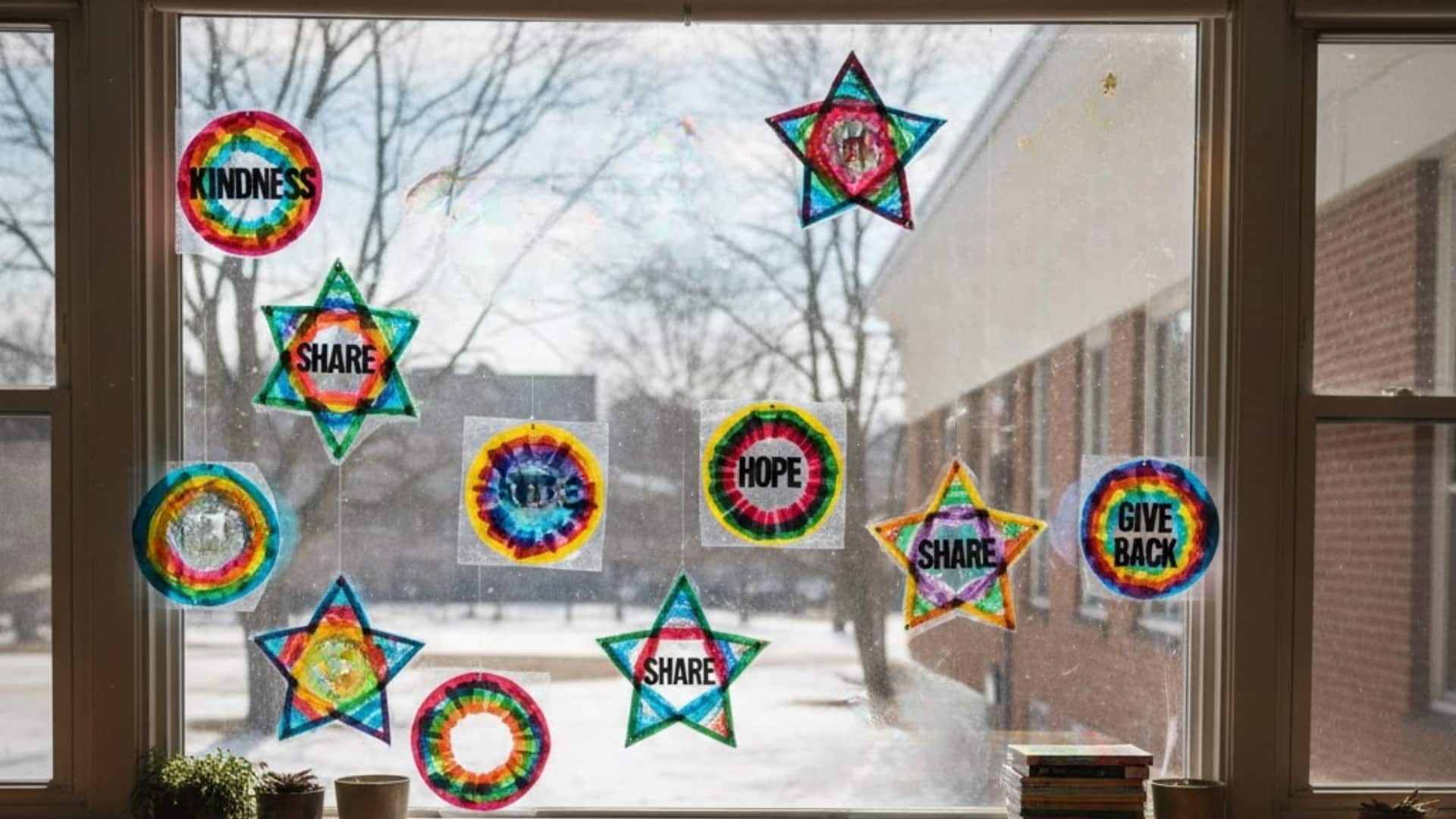
A bright reminder that kindness spreads light. These colorful decorations look beautiful hanging in classroom windows.
Materials Required:
- Tissue paper
- Contact paper
- Scissors
- Markers
Simple Steps:
- Cut two pieces of contact paper the same size. One will be the base, and one will seal the design. Remove the backing from one piece.
- Cut or tear tissue paper into small pieces. Arrange pieces on the sticky contact paper surface. Include words like “Kind,” “Care,” or “Help” written on paper.
- Cover with the second piece of contact paper, sticky side down. Press firmly to seal. Trim edges neatly and hang in windows where sunlight shines through.
14. Encouragement Pennant Banner
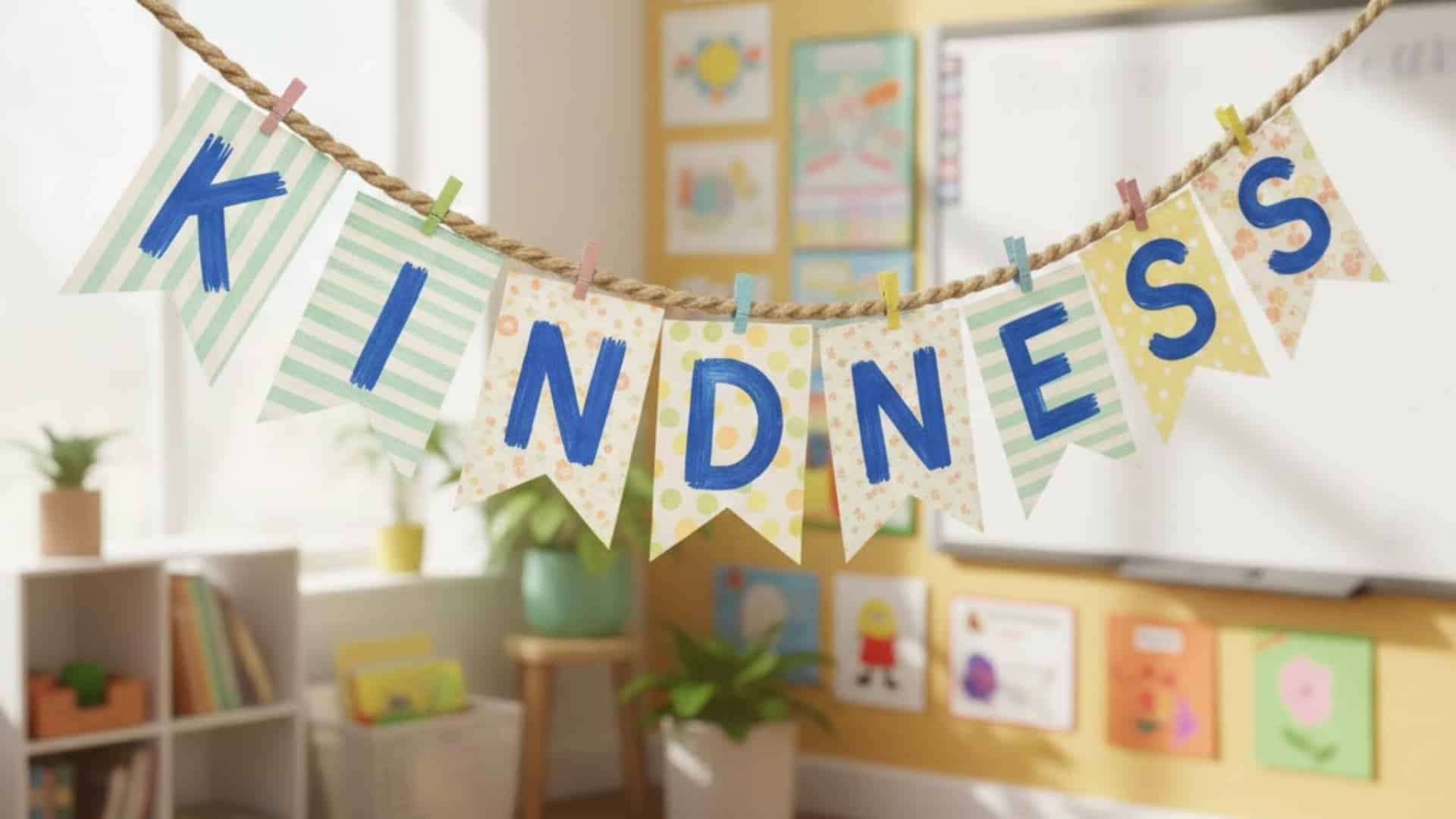
A hallway-friendly kindness display. These cheerful banners spread positive messages beyond the classroom.
Materials Required:
- Paper triangles
- String or yarn
- Markers
- Hole punch
Simple Steps:
- Cut paper into triangle pennant shapes. Make them all the same size for a uniform look. Five to six inches per side works well.
- Write encouraging phrases on each pennant. Use bright colors and clear writing. Messages might include “You can do it,” “Believe in yourself,” or “Keep trying.”
- Punch holes in the top corners of each triangle. Thread the string through the holes to create a banner. Hang in hallways or above classroom doors.
15. Kindness Bracelets
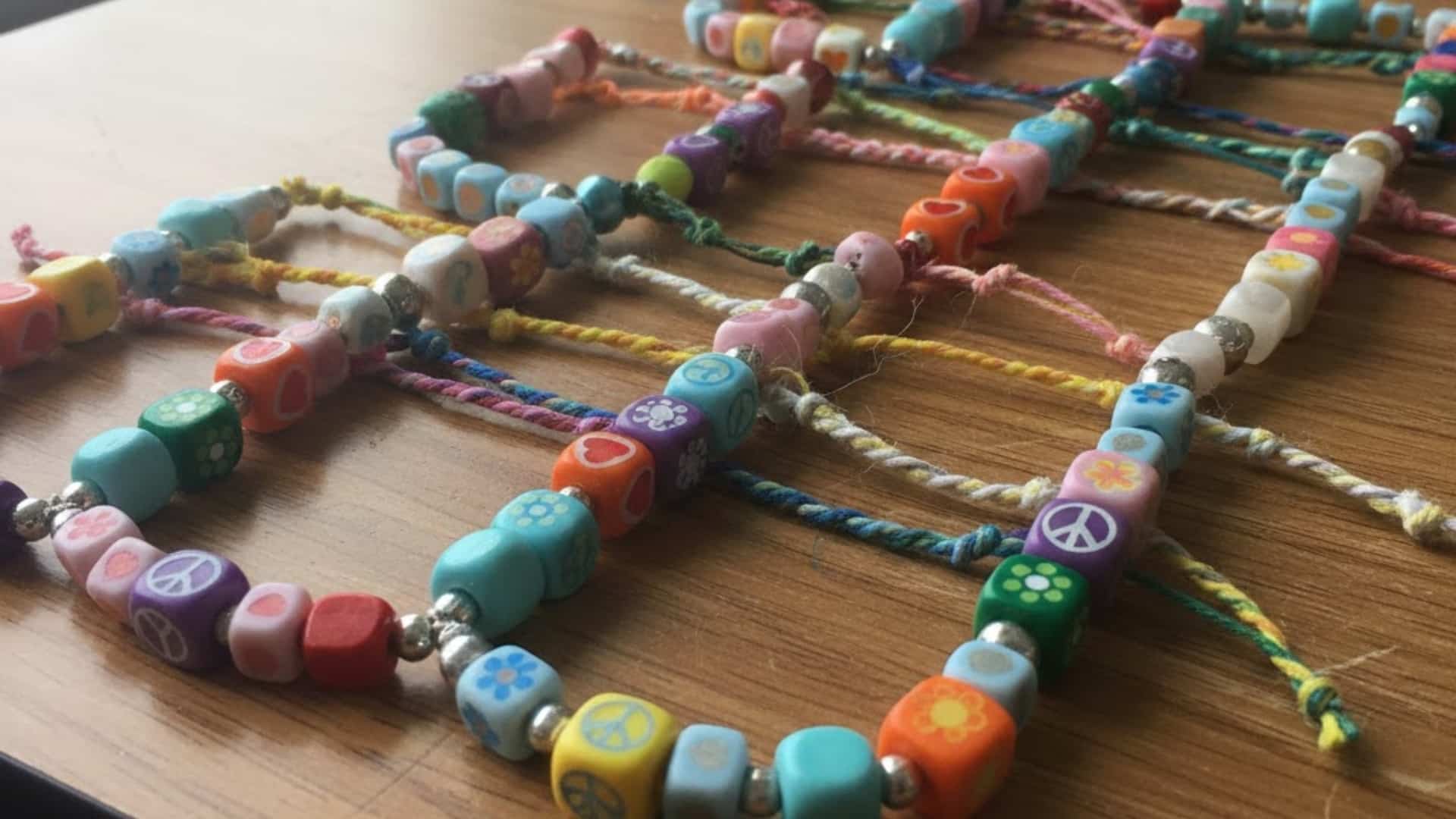
A wearable craft representing thoughtful choices. These simple bracelets serve as tangible reminders to choose kindness throughout the day.
Materials Required:
- Beads
- Elastic string
- Scissors
Simple Steps:
- Cut the elastic string to fit around the wrist with extra for tying. Measure each student’s wrist individually for a comfortable fit. Add about two inches for the knot.
- Assign meaning to different bead colors. For example, red might represent helping, blue could mean sharing, and yellow might stand for kind words. Explain the system to students.
- String beads in patterns that represent kind goals. Tie ends securely with a double knot. Wear bracelets as daily reminders to practice the kind behaviors they represent.
16. Gratitude Jar Labels
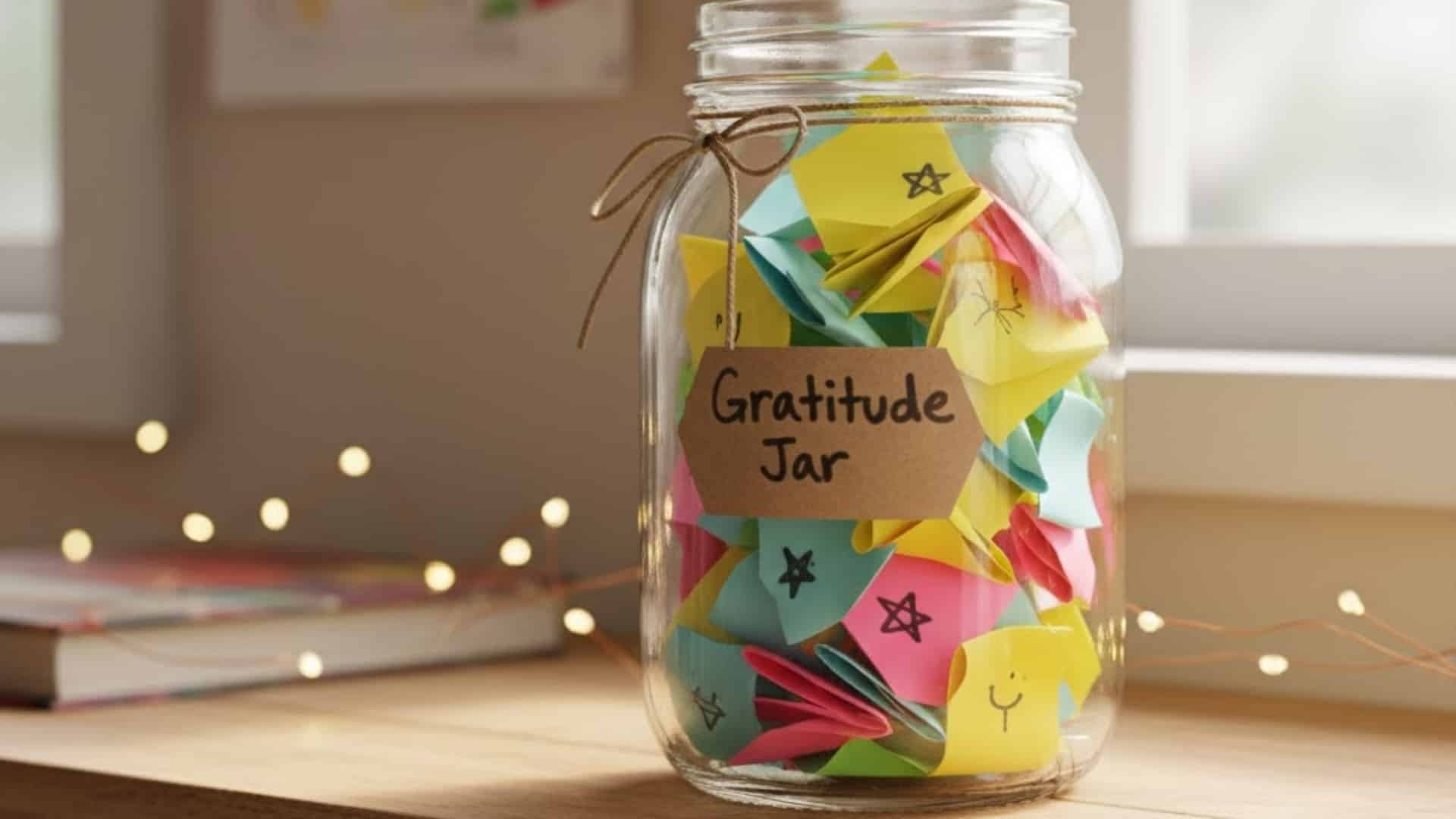
A daily kindness reflection activity. This ongoing craft helps students notice and record positive moments throughout the school year.
Materials Required:
- Jar (one per classroom or per student)
- Paper slips
- Markers
- Decorative materials for a jar
Simple Steps:
- Decorate a jar with kindness themes. Students can paint it, add stickers, or wrap it with decorated paper. Label it “Gratitude Jar” or “Kindness Jar.”
- Cut small paper slips that fit through the jar opening. Keep a stack near the jar with markers. Make adding notes quick and easy during busy days.
- Write daily gratitude or kindness notes on slips. Students can record kind acts they witnessed or things they’re grateful for. Add notes to the jar regularly and read them during reflection time.
17. Kindness Paper Hearts
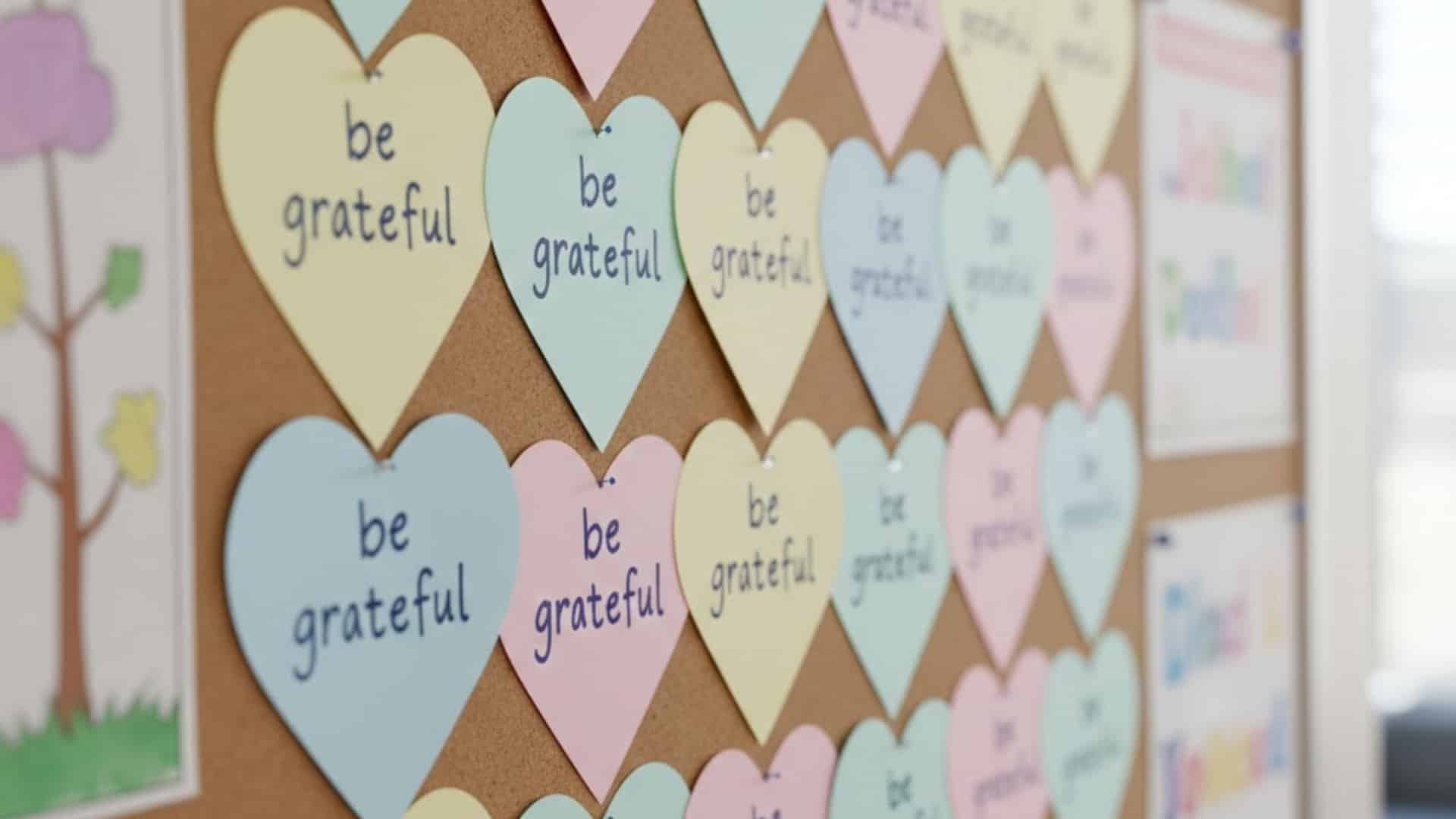
A simple craft tied to empathy lessons. These hearts can be given away or displayed to spread positive feelings.
Materials Required:
- Paper hearts (cut from colored paper)
- Markers
- Decorative supplies
Simple Steps:
- Cut heart shapes from colored paper. Make various sizes for different purposes. Larger hearts work for displays, while smaller ones are perfect for sharing.
- Write kind words or affirmations on each heart. Use phrases like “You are important,” “I care about you,” or “You make me smile.” Keep messages positive and specific.
- Share hearts with classmates or display them around the room. Students can give hearts to someone who needs cheering up or post them on a kindness board.
18. Kindness Door Decor
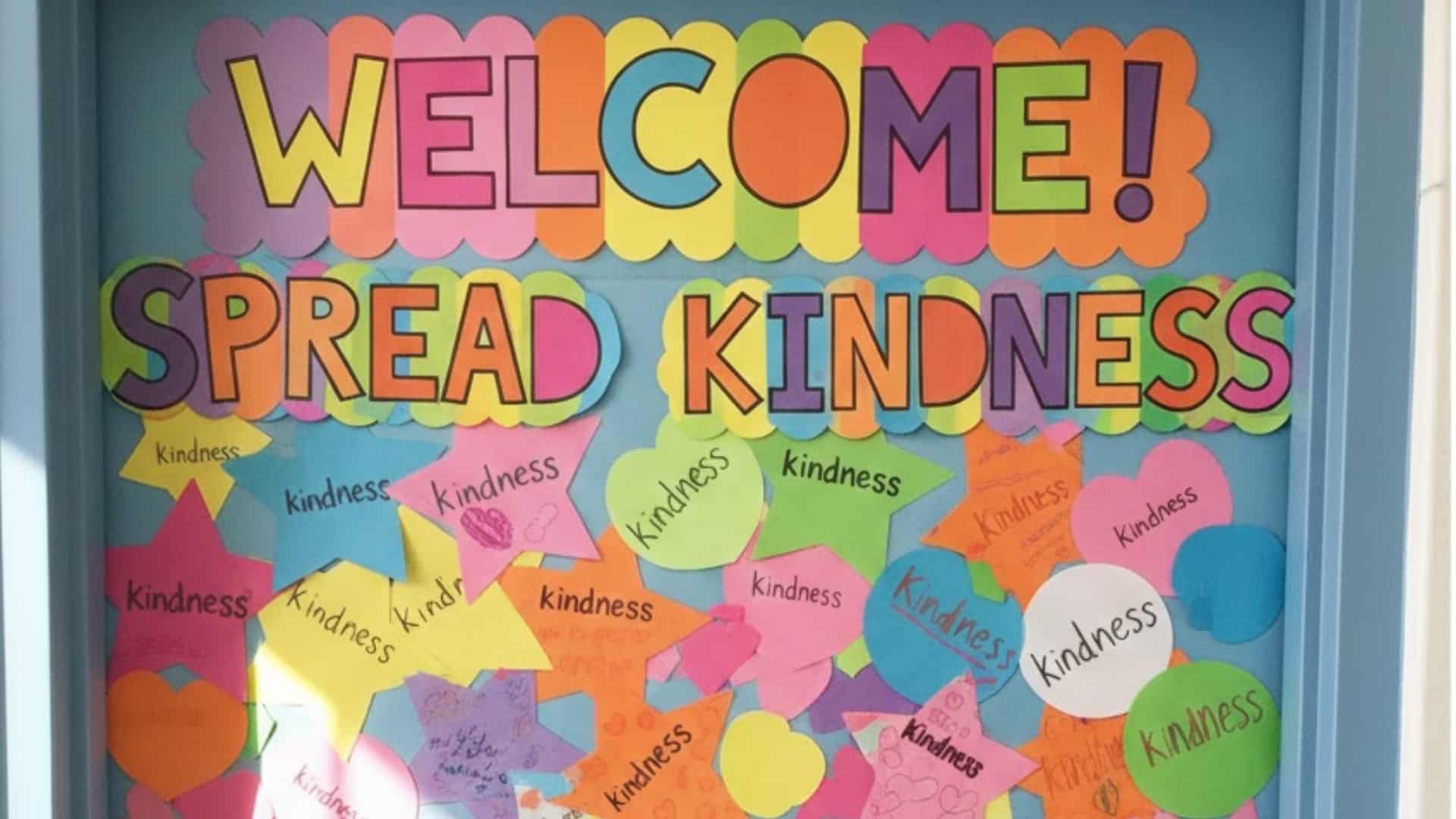
A collaborative way to welcome kindness into the classroom. This ongoing display shows visitors that kindness is a classroom priority.
Materials Required:
- Bulletin board paper
- Markers
- Tape
Simple Steps:
- Cover the classroom door with bulletin board paper. Choose a bright, welcoming color. Leave space for students to add their contributions.
- Add a title like “Our Kindness Door” or “How We Show Kindness” at the top. Make letters large and colorful, so they’re visible from far away.
- Have students add kindness messages throughout the week. They can write what kindness means to them or describe kind acts they’ve done. Update the door regularly with fresh messages.
19. Kindness Coupons
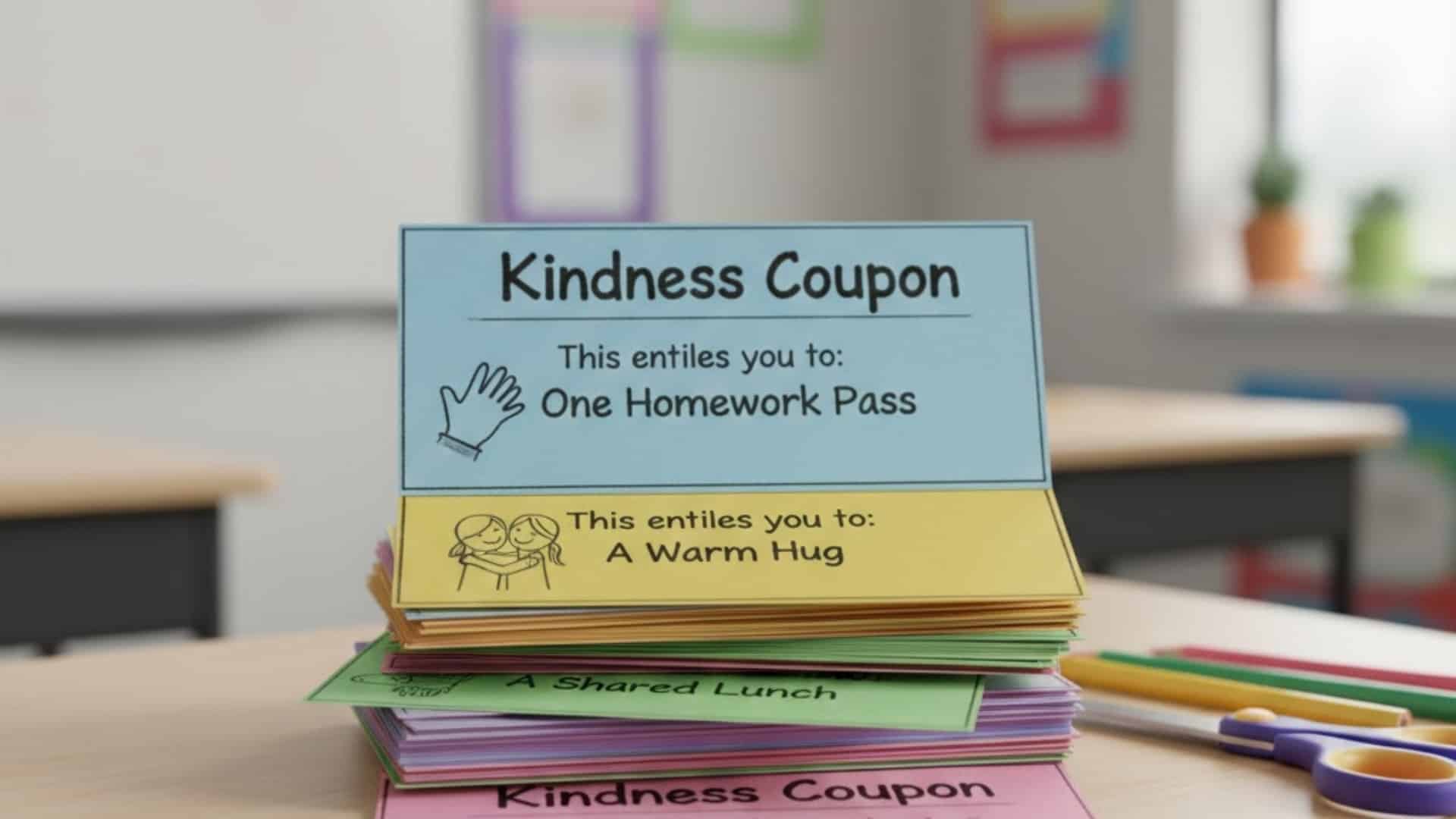
A practical craft focused on helpful actions. Students can redeem these coupons by performing the kind acts written on them.
Materials Required:
- Paper
- Scissors
- Markers
Simple Steps:
- Cut paper into coupon-sized rectangles. Make them uniform so they look official. About three by five inches works well for this activity.
- Write specific acts of kindness on each coupon. Include actions like “Help a friend with homework,” “Clean up without being asked,” or “Hold the door for someone.” Make tasks achievable.
- Distribute coupons to students or keep them in a central location. Students can choose coupons to complete during the week. Mark or collect completed coupons to track kindness.
20. Friendship Flowers
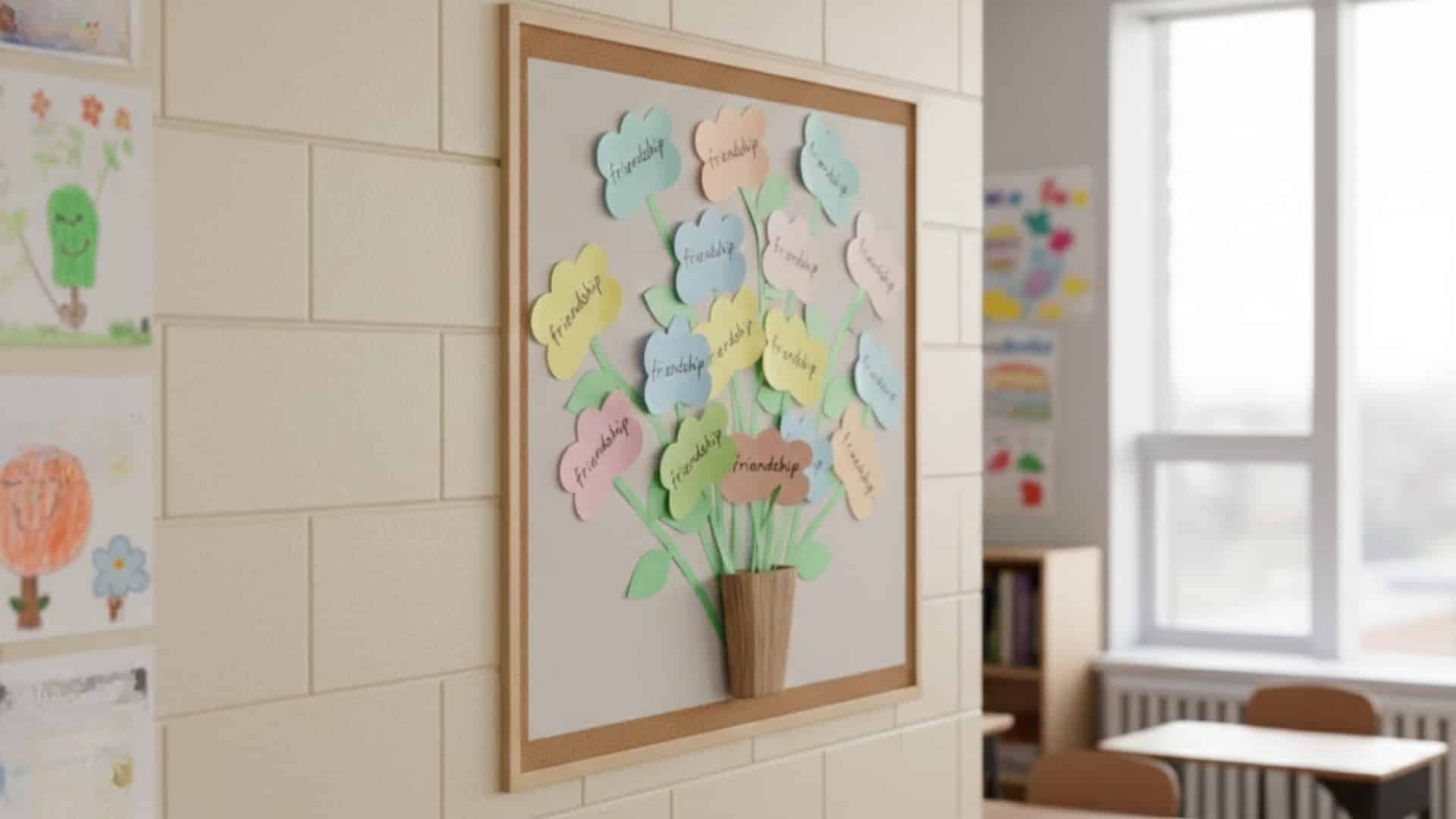
A craft celebrating inclusion and friendship. These flowers highlight the positive qualities that make good friends.
Materials Required:
- Paper flowers (cut from colored paper)
- Glue
- Markers
- Paper stems and leaves
Simple Steps:
- Cut flower shapes with multiple petals from colored paper. Each petal should be large enough to write on. Make flowers in various colors.
- Write friendly traits on each petal. Include qualities like “good listener,” “shares,” “helpful,” or “makes me laugh.” Focus on specific positive behaviors.
- Create a bouquet display on a wall or board. Glue stems and leaves to complete each flower. Arrange the friendship bouquet where everyone can see it.
21. Kindness Story Stones
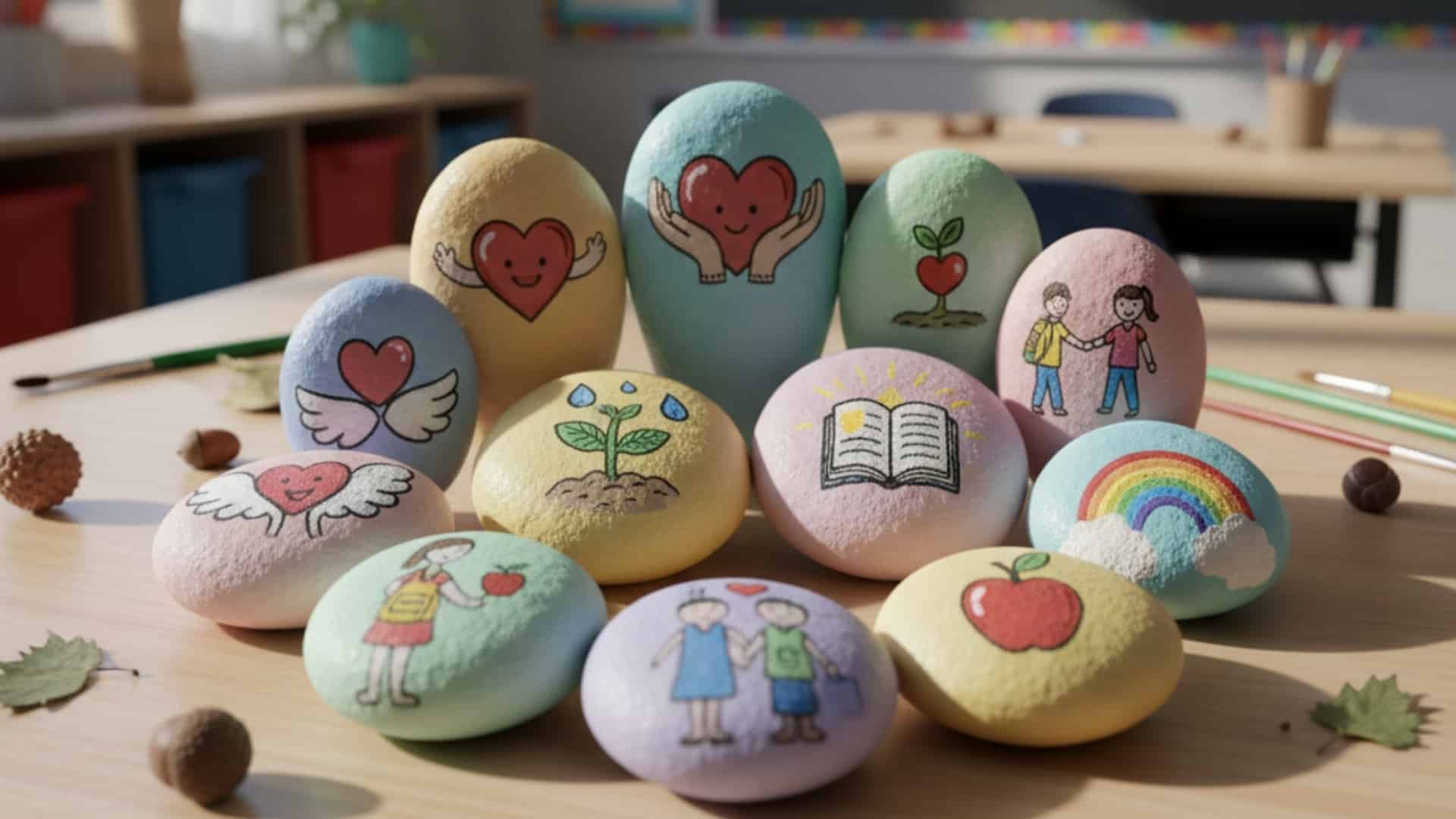
A storytelling craft promoting empathy. These stones help students create narratives about kind actions and helpful behaviors.
Materials Required:
- Stones
- Paint pens or acrylic paint
- Sealer (optional)
Simple Steps:
- Wash and dry smooth stones. Choose stones that are comfortable to hold. Flatter stones work better than round ones for this activity.
- Draw or paint symbols representing kind actions on each stone. Include images like helping hands, hearts, smiles, or sharing symbols. Keep drawings simple and clear.
- Use stones as story prompts during circle time. Students pick a stone and tell a story about that kind action. The stones make abstract concepts more concrete.
22. Compliment Ball
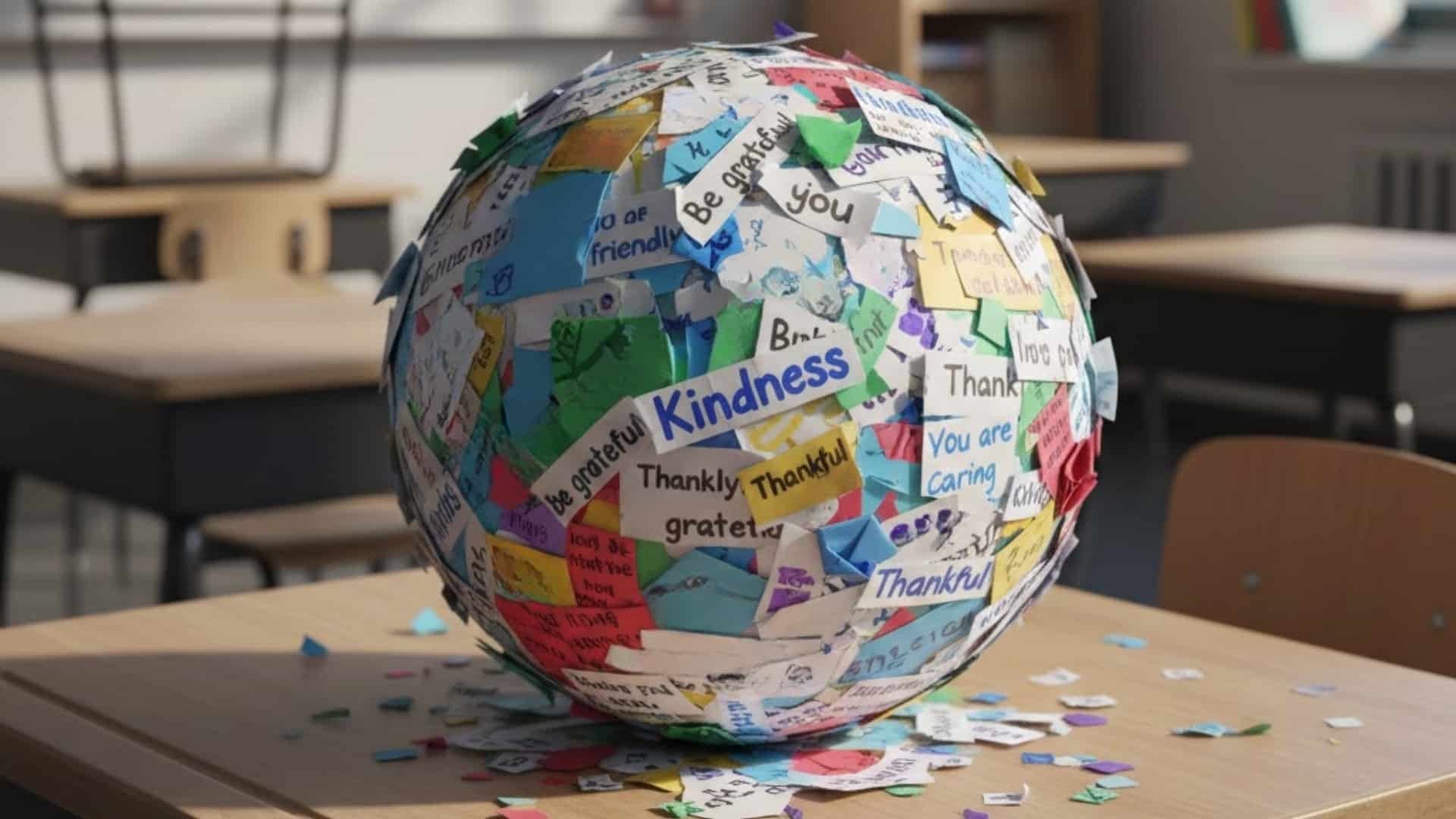
A group-sharing kindness activity. This interactive craft encourages students to give genuine compliments to their peers.
Materials Required:
- Paper
- Tape
- Markers
Simple Steps:
- Create a paper ball by crumpling paper loosely. Cover it with strips of paper taped together. Make the ball large enough to catch easily.
- Write compliment prompts on different sections of the ball. Include phrases like “Something I admire about you is…” or “You are good at…” These prompts guide kind comments.
- Toss the ball during circle time. Whoever catches it reads the prompt where their thumb lands. They give that compliment to another student before tossing the ball again.
23. Kindness Paper People Chain
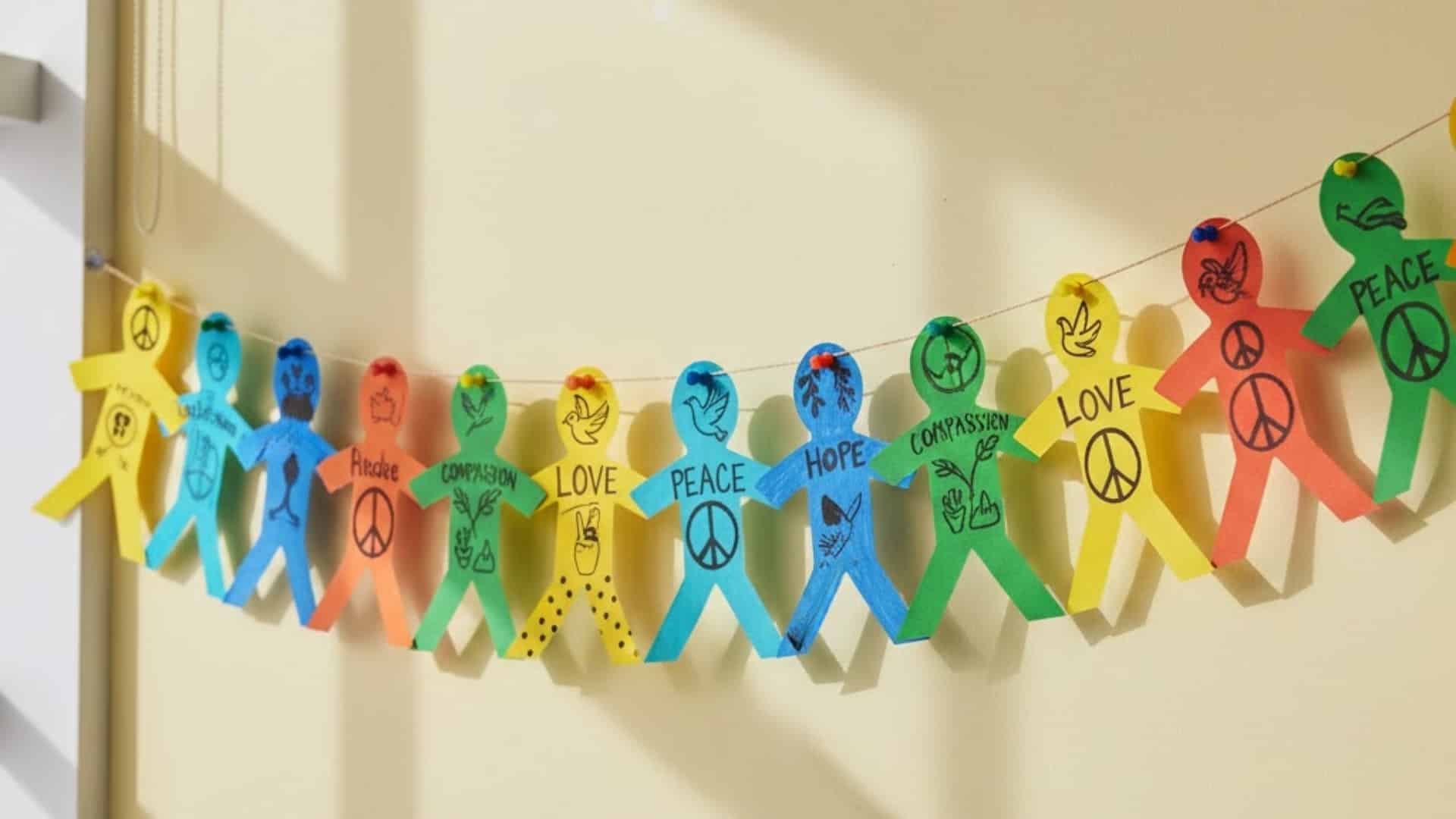
A symbol of classroom unity. This chain shows how everyone is connected through kindness and respect.
Materials Required:
- Paper
- Scissors
- Markers
Simple Steps:
- Fold a long strip of paper accordion-style. Each fold should be the same width. Make folds about three inches wide for good-sized figures.
- Draw a person shape on the top layer with arms extending to the folds. Make sure arms touch both sides so figures stay connected. Cut through all layers carefully.
- Unfold to reveal connected paper people. Decorate each figure with kind traits like “helpful,” “caring,” or “friendly.” Hang the chain across the classroom wall.
24. Gratitude Thank You Notes
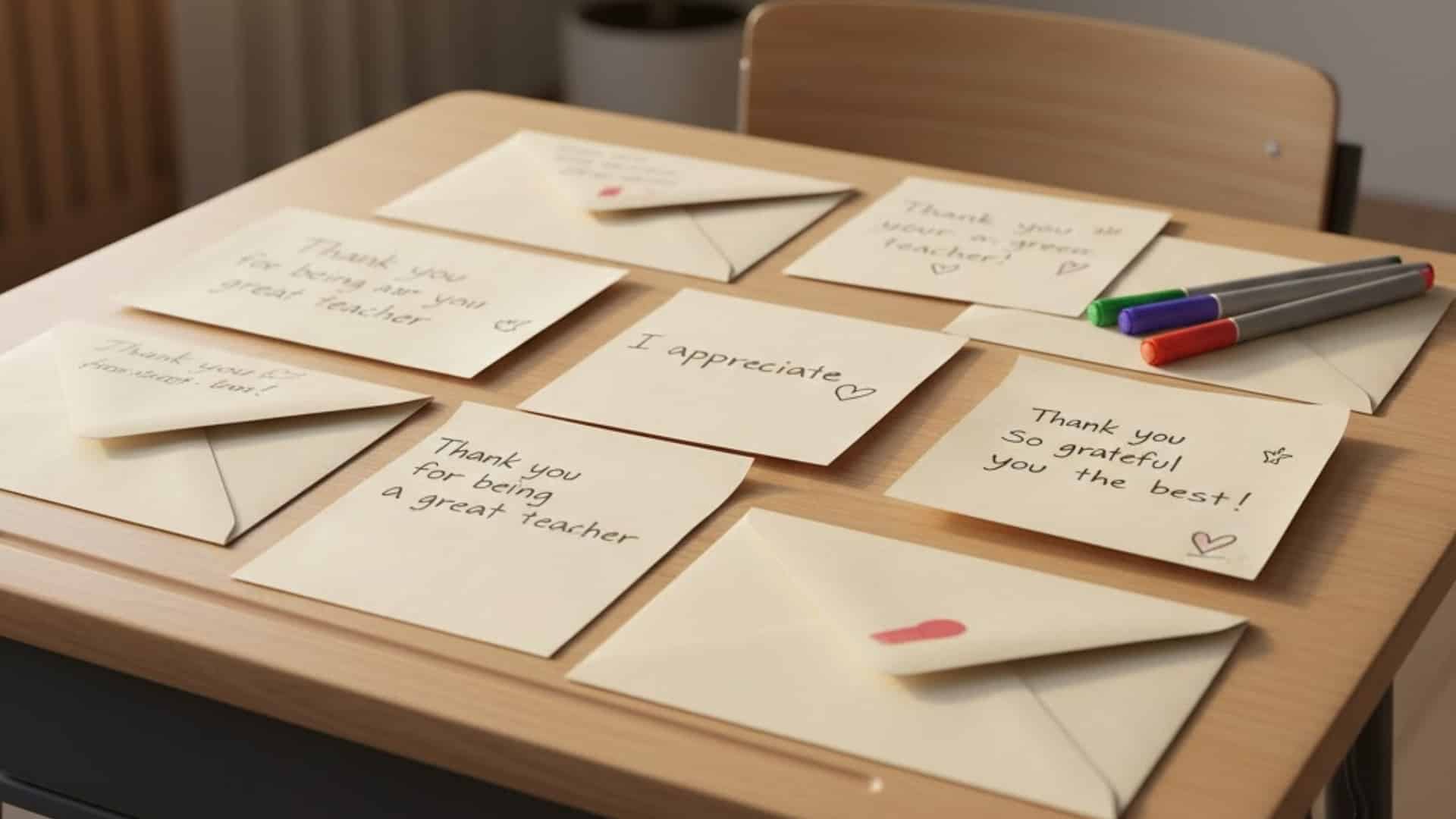
A reflection-based kindness craft. Writing thank-you notes teaches students to notice and appreciate what others do for them.
Materials Required:
- Paper
- Envelopes
- Markers
- Stickers (optional)
Simple Steps:
- Fold paper to create note cards. Provide envelopes for a more official feel. This makes the activity feel special and important.
- Write genuine thank-you messages to staff or classmates. Include specific reasons for gratitude. Explain what the person did and how it helped.
- Deliver notes personally when possible. Handing the note directly teaches courage and social skills. Students can also place notes in staff mailboxes.
25. Kindness Quote Posters
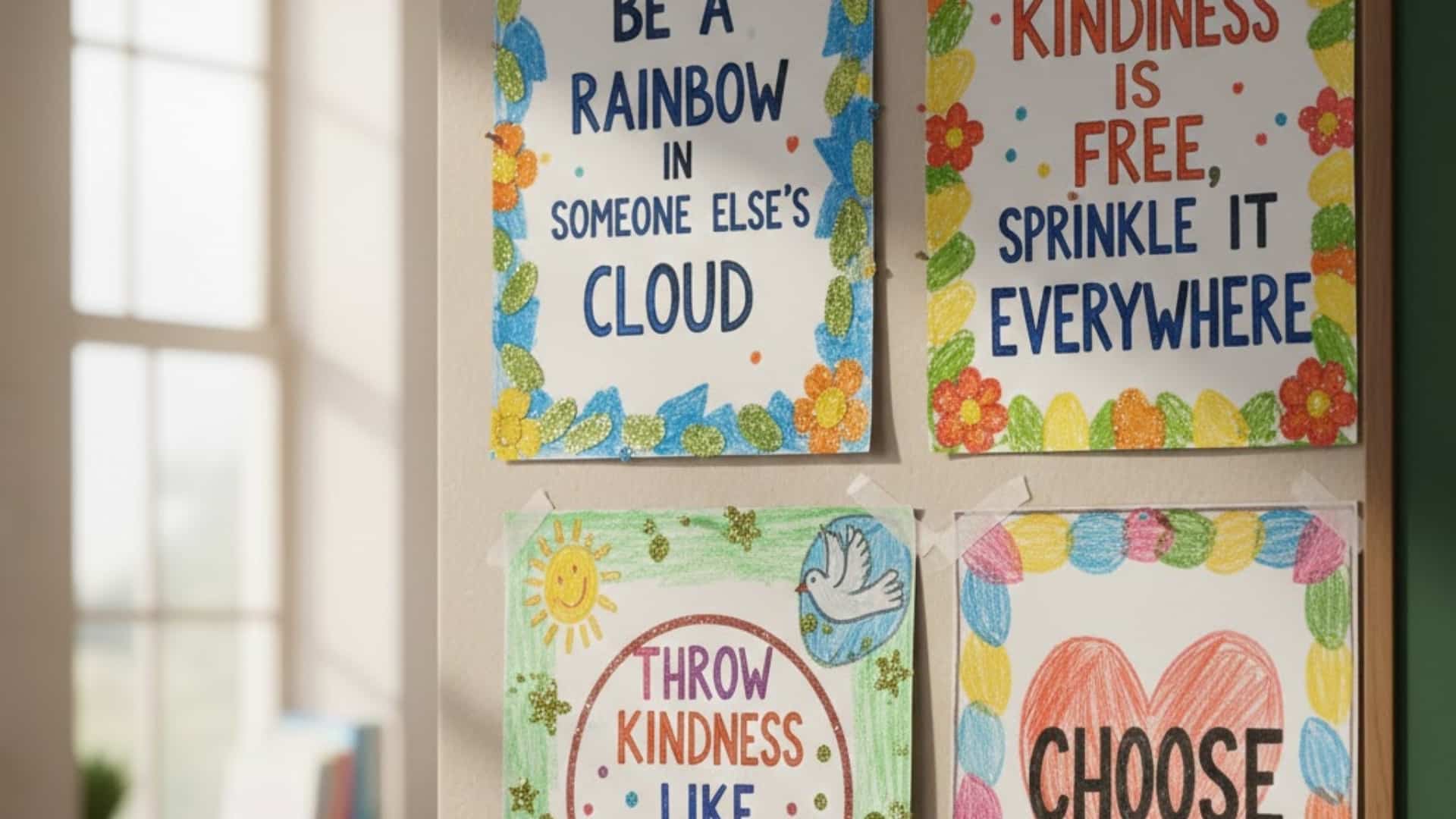
A calm, reflective art activity. Students can personalize famous kindness quotes and make them meaningful through decoration.
Materials Required:
- Paper
- Markers
- Rulers (for borders)
Simple Steps:
- Choose a kindness quote that resonates with students. Use age-appropriate quotes like “Be kind whenever possible” or “Kindness is always fashionable.” Write quotes where everyone can see them.
- Write the quote clearly on poster paper. Use bubble letters or decorative writing. Leave space around the quote for illustrations and borders.
- Decorate the poster with drawings related to the quote’s message. Add borders, colors, and designs that reflect the meaning. Display finished posters around the classroom.
26. Kindness Mailbox
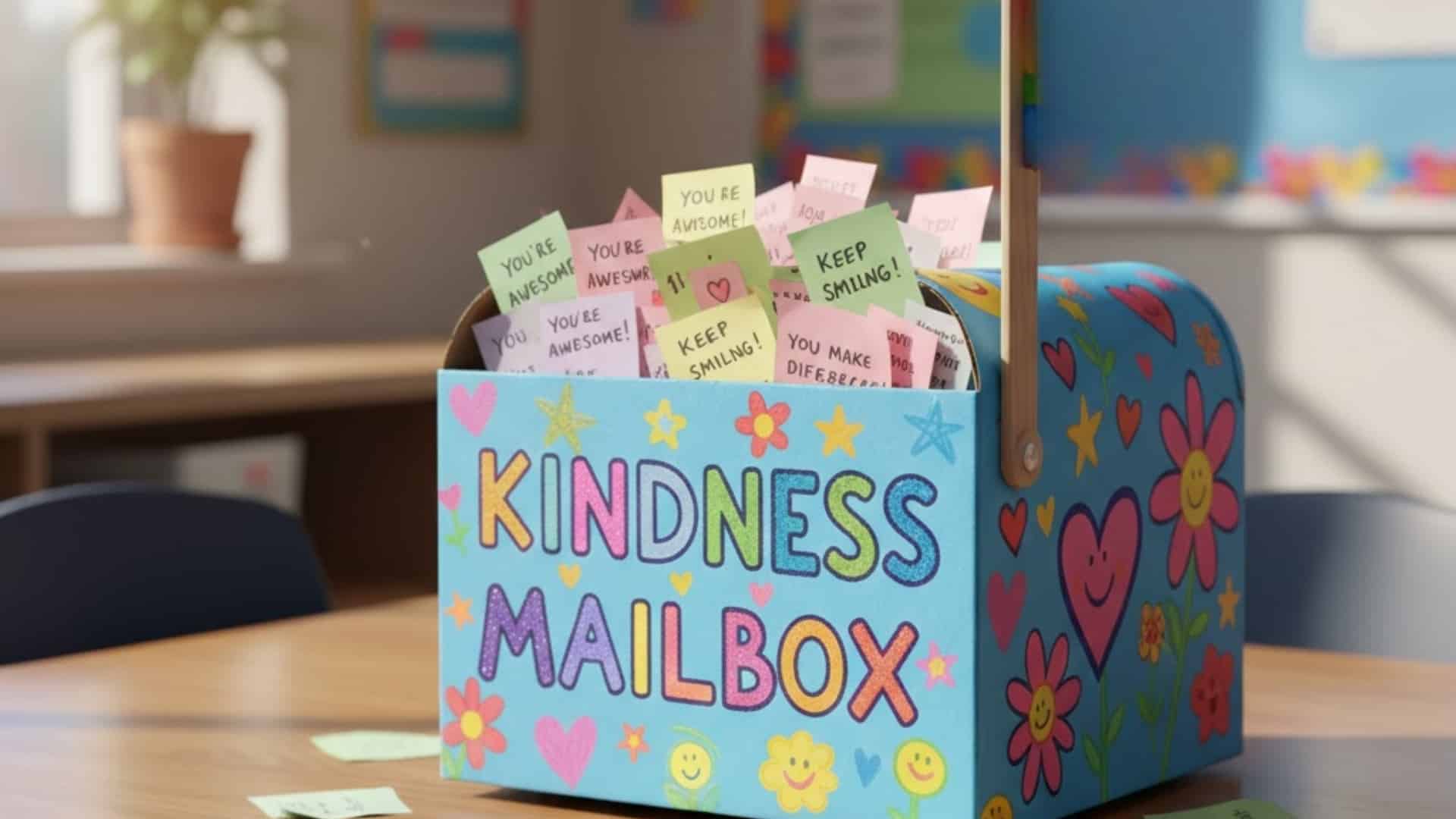
A private way to share encouragement. This craft creates a safe space for students to send positive messages to each other.
Materials Required:
- Box (shoebox size)
- Paper
- Markers
- Decorative materials
Simple Steps:
- Decorate a box to look like a mailbox. Paint it, cover it with paper, or add stickers. Cut a slot in the top for inserting notes.
- Keep blank paper and pencils near the mailbox. Make it easy for students to write and send kindness notes during free time. No special permission needed.
- Collect and distribute notes regularly. Read notes aloud if appropriate or deliver them privately. Monitor content to ensure all messages stay positive and appropriate.
27. Kindness Puzzle Pieces
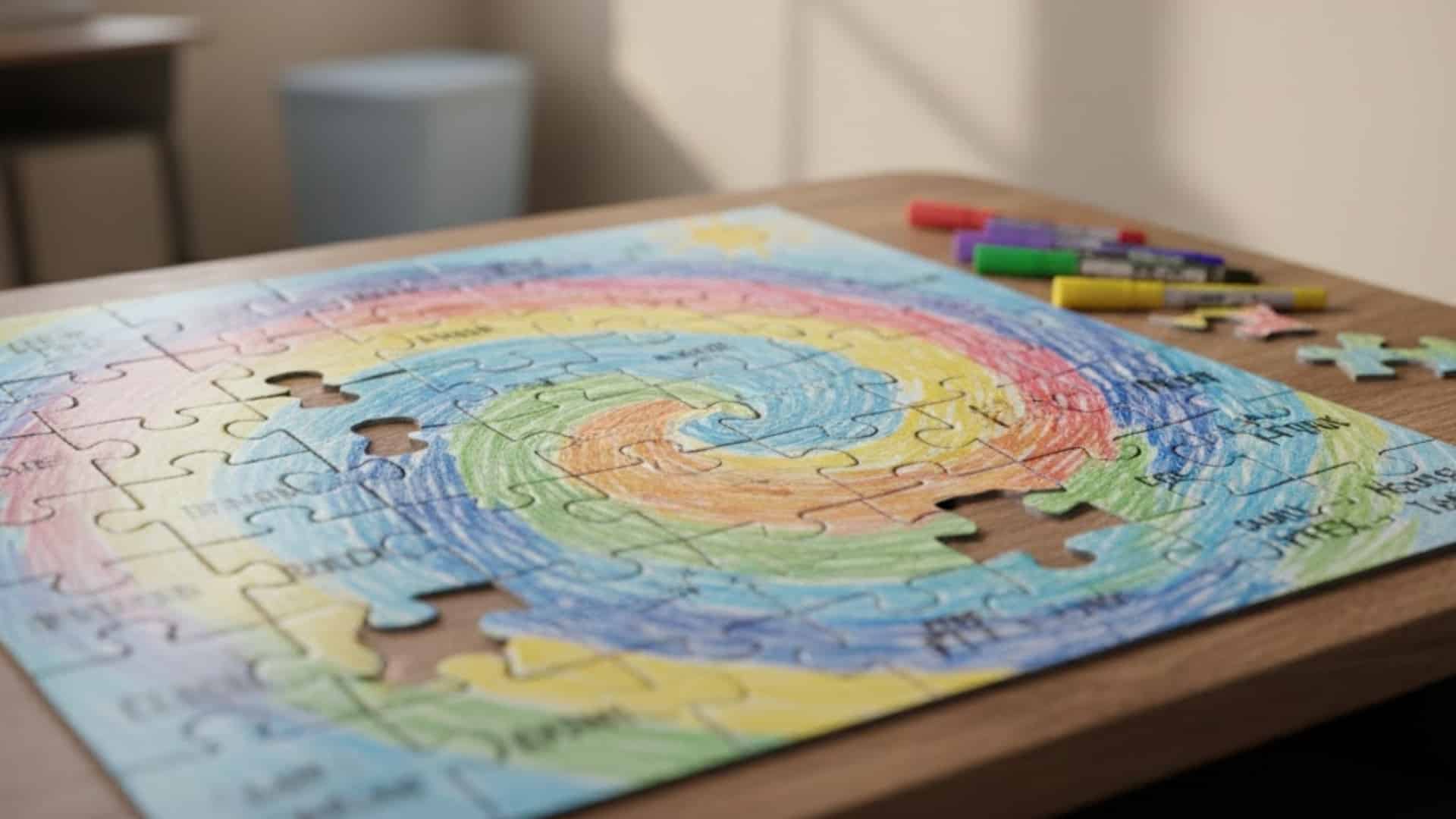
A teamwork-based kindness activity. This craft shows how individual kind acts fit together to create something complete.
Materials Required:
- Puzzle templates (or draw your own)
- Markers
- Cardboard or heavy paper
Simple Steps:
- Create or print a large puzzle template. Each piece should be big enough to write on. Aim for one puzzle piece per student in the class.
- Write different kind actions on each puzzle piece. Make each action unique. Include behaviors like “Listen to others,” “Share materials,” or “Help clean up.”
- Assemble puzzle pieces into one complete image on a board. The finished puzzle shows that all acts of kindness work together. Leave it displayed as a reminder.
28. Empathy Masks
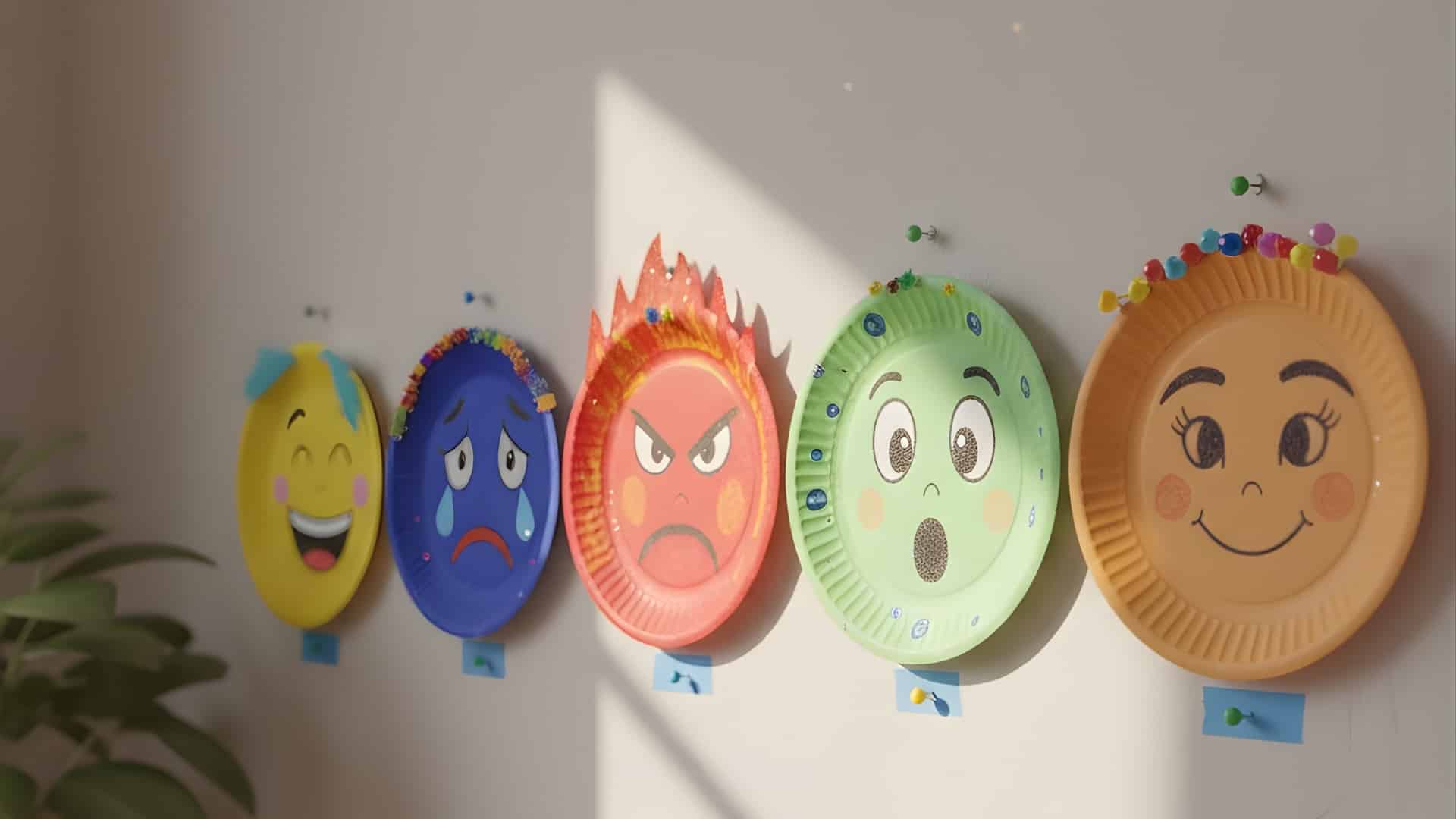
A craft that explores emotions and understanding others. Making and discussing these masks helps students recognize feelings in themselves and their peers.
Materials Required:
- Paper plates
- Markers
- Craft sticks
- String (optional)
Simple Steps:
- Draw different emotions on paper plates. Make each face show a clear feeling, like happy, sad, worried, or frustrated. Use simple, exaggerated expressions.
- Attach a craft stick to the bottom of each plate to create a handle. Students can hold masks in front of their faces. This makes sharing and discussion easier.
- Discuss how kindness helps with different emotions. Talk about what someone might need when feeling each emotion. Practice responding with kindness to different feelings.
29. Kindness Paper Lanterns
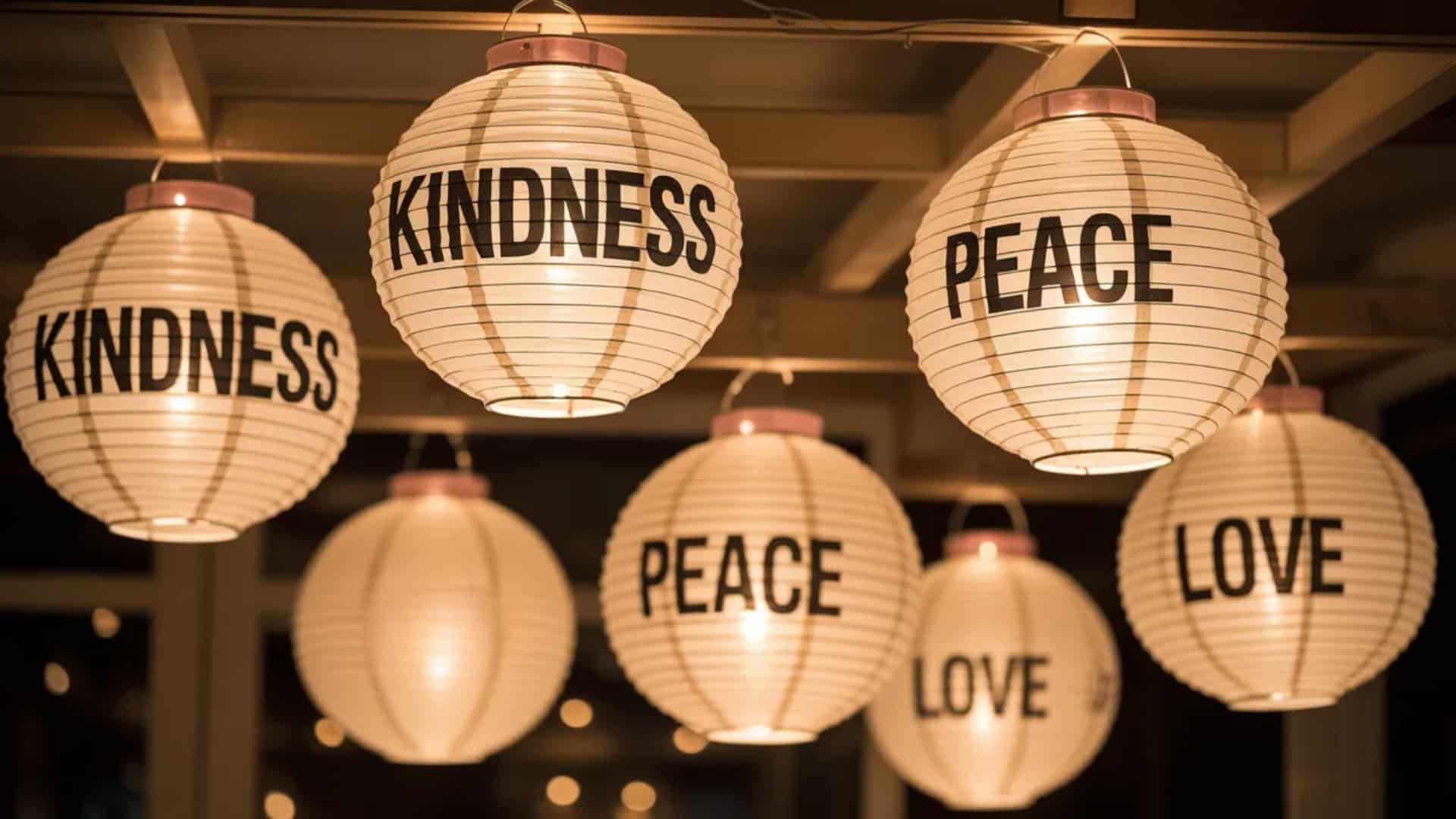
A peaceful classroom display. These lanterns create a calm atmosphere while promoting kind behaviors.
Materials Required:
- Paper
- Glue
- Markers
- String
Simple Steps:
- Cut paper into rectangles about six by nine inches. Score fold lines along the long edges. This creates flaps for gluing the lantern closed.
- Write kindness messages on the paper before forming lanterns. Include phrases like “Spread kindness” or “Choose compassion.” Decorate with patterns or drawings.
- Form paper into cylinders and glue edges together. Add string handles at the top. Hang finished lanterns from the ceiling or near windows.
30. Compliment Mirrors
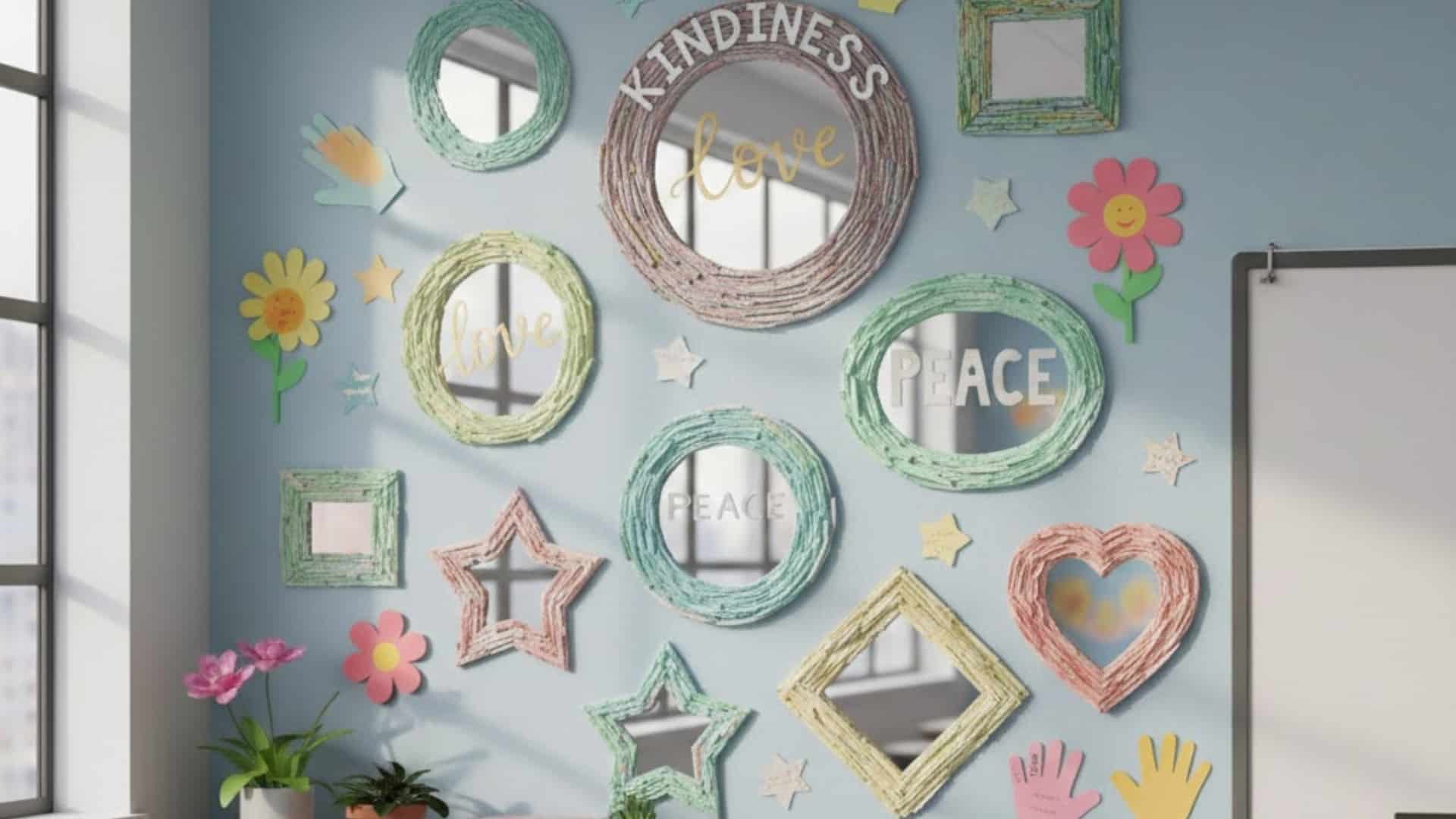
A self-kindness activity. These mirrors remind students to be kind to themselves as well as others.
Materials Required:
- Paper frames
- Markers
- Aluminum foil or reflective paper (optional)
Simple Steps:
- Create paper frames that look like mirror frames. Draw decorative borders or patterns. Make them colorful and eye-catching.
- Write positive affirmations around the frame. Include statements like “I am capable,” “I am kind,” or “I try my best.” Focus on internal qualities.
- Place frames near actual mirrors or add foil in the center for reflection. Students see these affirming messages when they look at themselves. Self-kindness is part of overall kindness.
Conclusion
These 30 kindness crafts transform abstract concepts into concrete activities students can touch, create, and display. From chain links that grow with each kind act to promise posters signed by the whole class, these projects make kindness visible and memorable.
Teachers can select crafts based on available time, materials, and specific social-emotional learning goals. Some projects work best as one-time activities while others become ongoing classroom traditions.
The hands-on nature of these crafts helps children internalize lessons about empathy, gratitude, and positive behavior.
Students remember what they make with their own hands far longer than what they only hear in lectures. Use these kindness crafts throughout the year to reinforce character education and build a caring classroom community where every student feels valued.