Teens often find it hard to put their feelings into words. Stress from school, friends, and family can build up inside.
Art therapy activities for teens offer a safe way to express these emotions without talking. These activities encourage creativity and help teens connect with their inner thoughts.
Spontaneous and unstructured art therapy works best for many teenagers. There are no rules about what to create.
No one judges the final result. This freedom allows teens to explore emotions honestly and openly.
Through painting, drawing, sculpting, and other creative methods, teens can release tension and find clarity. This guide shares spontaneous art therapy activities for teens.
Each one focuses on emotional expression and creative freedom. These activities can help teens manage stress, build confidence, and grow emotionally through hands-on creativity.
Benefits of Art Therapy Activities for Teens
Art therapy offers more than just creative fun. It helps teens work through tough emotions and build mental strength. Here are the key ways art therapy can support teenage mental health and personal growth.
• Encourages Emotional Expression: Teens don’t always have the words to explain how they feel. Art gives them another way to communicate. Through colors, shapes, and textures, they can express anger, sadness, joy, or confusion without speaking.
• Reduces Stress and Anxiety: Creating art has a calming effect on the mind. When teens focus on drawing or painting, they shift attention away from worries. This process lowers stress levels and helps them feel more relaxed.
• Builds Self-Esteem and Confidence: Finishing an art project brings a sense of accomplishment. Teens don’t need to be skilled artists to feel proud of what they create. Each completed piece boosts their confidence and self-worth.
• Develops Healthy Coping Skills: Art therapy teaches teens how to handle difficult emotions in positive ways. Instead of bottling up feelings, they learn to release them through creative outlets. These coping skills stay with them beyond therapy sessions.
• Improves Communication: Some teens struggle to talk about personal issues with parents or therapists. Art opens up conversations in a less threatening way. The artwork itself becomes a bridge to deeper discussions.
• Promotes Mindfulness and Focus: Art-making requires concentration and presence. Teens become fully absorbed in the creative process. This mindful state helps them stay grounded in the present moment instead of worrying about the past or future.
Now that you know why art therapy works, let’s explore specific activities. These spontaneous exercises give teens the freedom to create without pressure. Each activity focuses on self-expression and emotional release.
Spontaneous Art Therapy Activities for Teens
These activities need no special skills or expensive supplies. Teens can do them alone or with friends. The goal is simple: create freely and let emotions flow through art.
Each activity removes pressure and judgment. There’s no right or wrong result. The process matters more than the product.
These exercises work because they bypass the need for words. Teens can express what feels impossible to say out loud. Give these activities a try in any order that feels comfortable.
1. Freeform Doodling
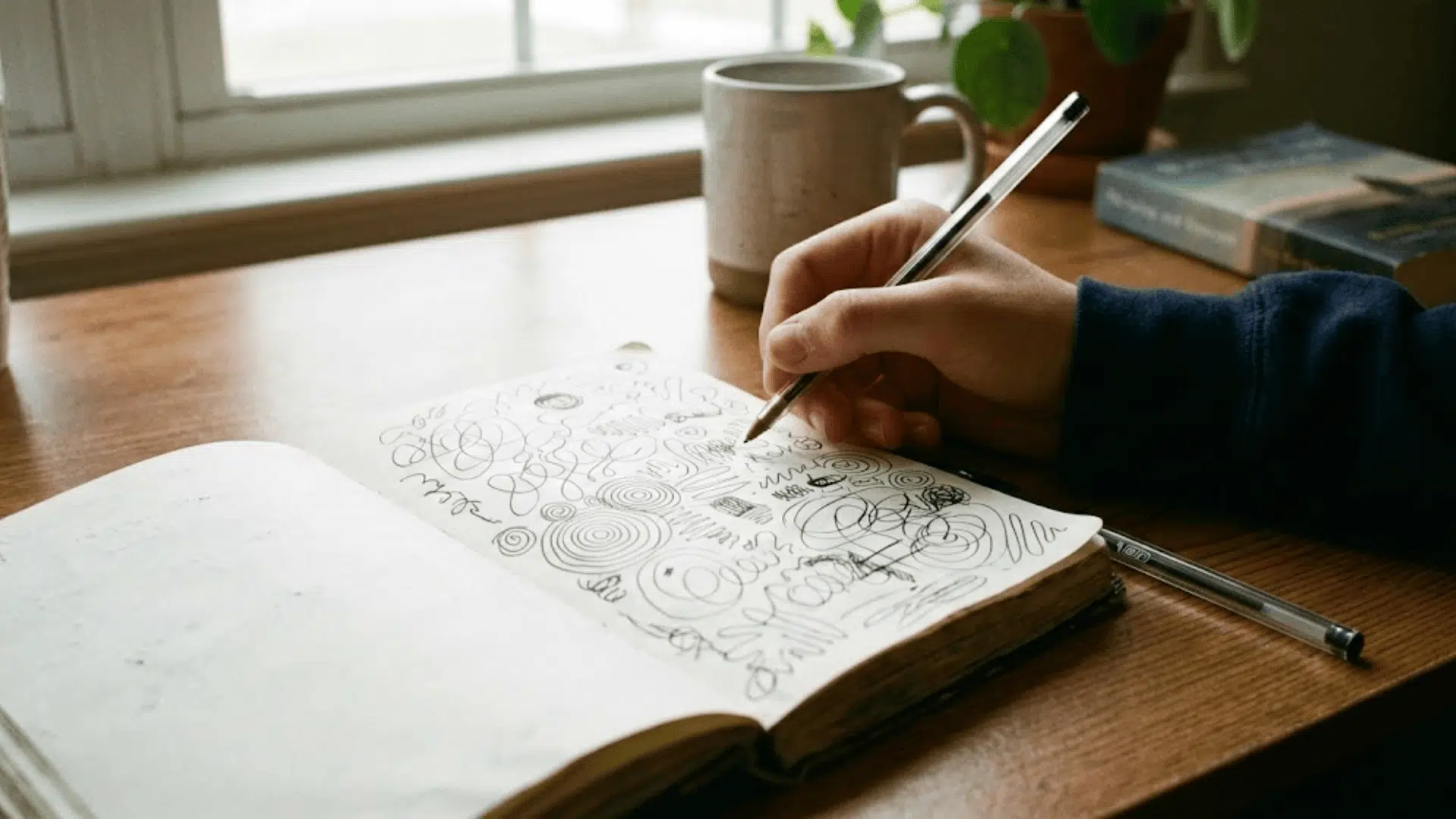
Grab a pen and paper. Let your hand move without thinking. Draw lines, circles, shapes, or patterns that feel right in the moment.
This activity releases tension fast. There’s no wrong way to doodle. Your brain relaxes when you stop trying to make something perfect.
The repetitive motion calms racing thoughts. Many teens find this helps when anxiety spikes. You can doodle during breaks, after school, or before bed.
Keep your doodles private or share them later. The choice is yours. This simple practice creates space for emotions to surface naturally without force.
How it helps: Reduces overthinking and anxiety through repetitive hand movements and marks on paper.
2. Emotion Color Splash
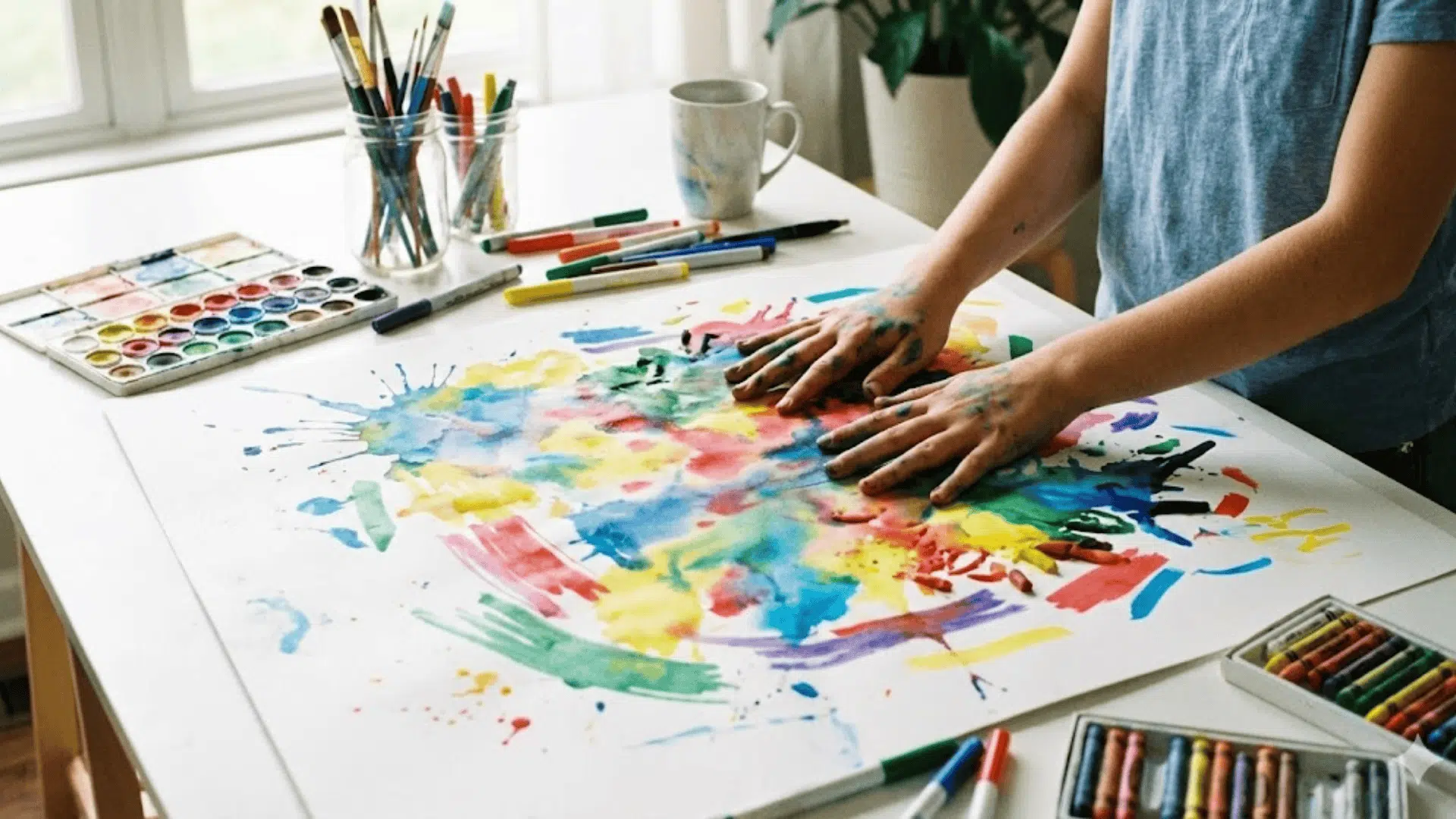
Pick colors that match how you feel right now. Is anger red? Is sadness blue? Splash these colors onto paper however you want.
Watch the colors blend and mix. This visual display helps you see emotions outside your body. It makes feelings less overwhelming.
Use watercolors, markers, or even crayons for this exercise. The physical act of splashing or spreading color releases pent-up energy. You don’t need to name the emotion first.
Sometimes the color you choose reveals feelings you didn’t know were there. This activity works well when you feel too much at once.
How it helps: Externalizes emotions through color, making overwhelming feelings visible and easier to process.
3. Timed Art Challenge
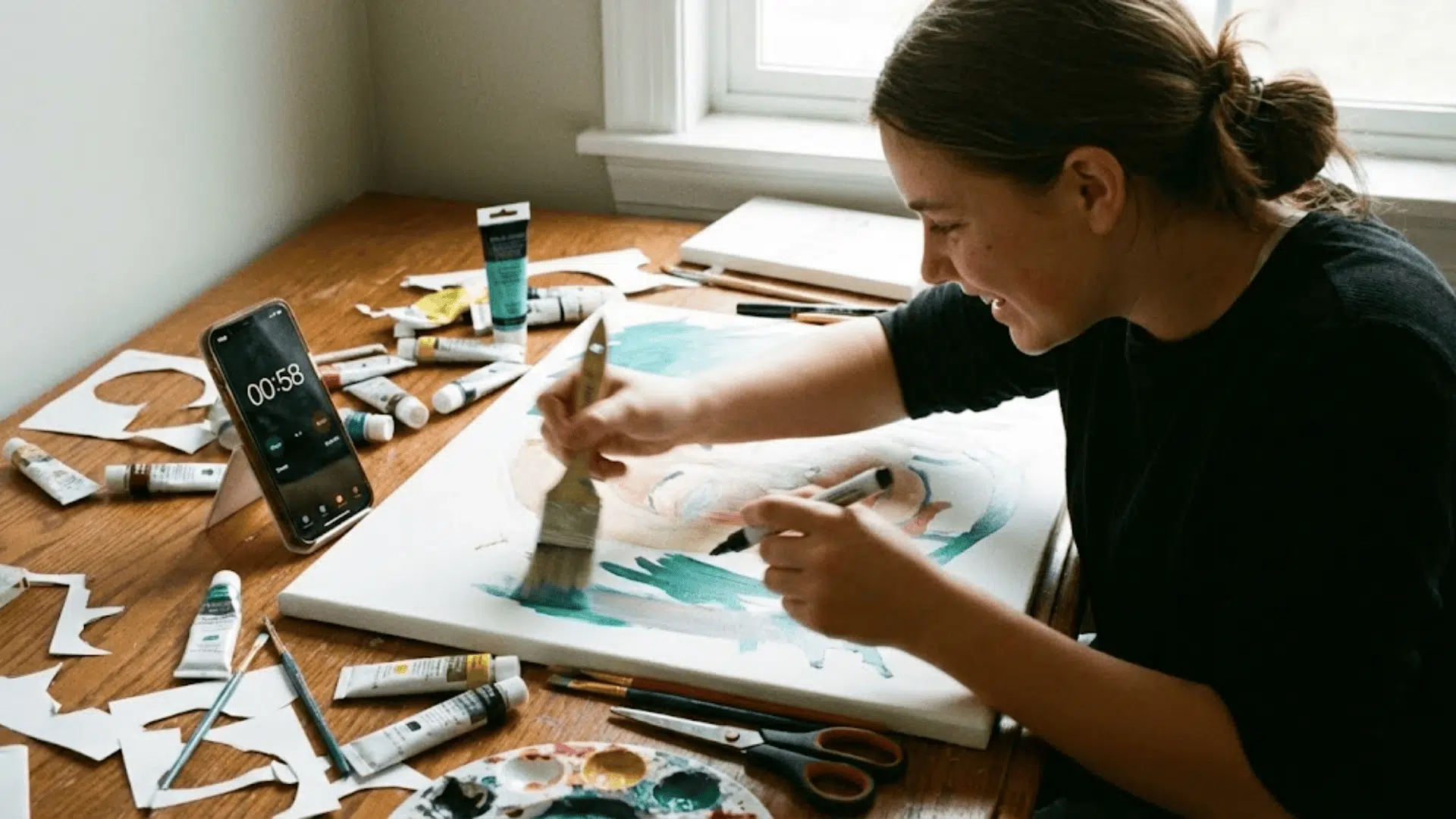
Set a timer for five or ten minutes. Create something before time runs out. Speed removes the chance to overthink.
Your hands work faster than your doubts. Quick creation taps into raw emotion. You’ll surprise yourself with what comes out.
The time limit adds excitement and removes perfectionism. When you race against the clock, self-criticism fades away. Try this with paint, pencils, or collage materials.
The rushed feeling mimics how emotions can flood in suddenly. This helps you practice expressing feelings quickly instead of holding them in until they explode.
How it helps: Eliminates perfectionism and self-doubt by forcing quick, instinctive creative expression.
4. Music-Inspired Art
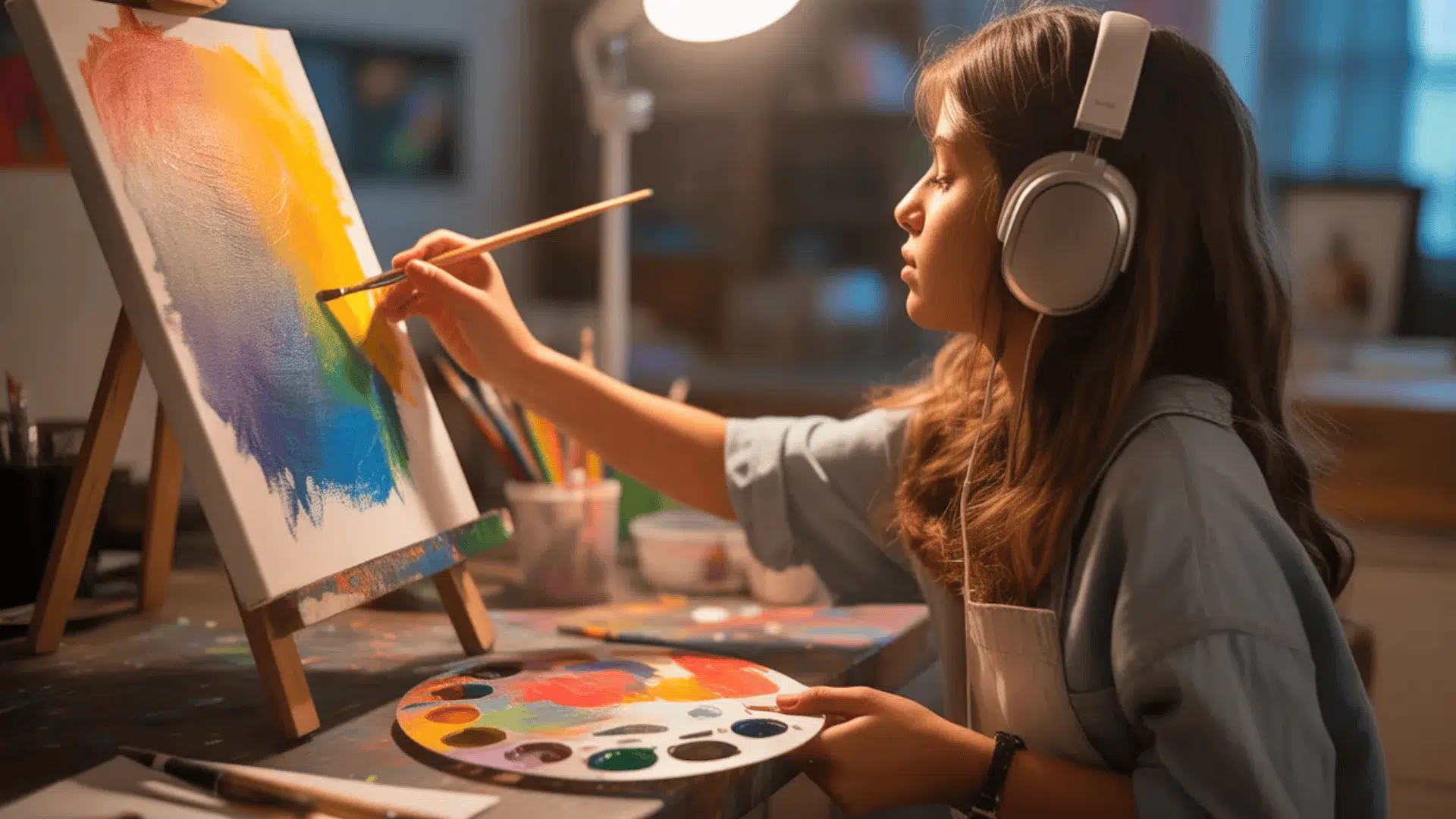
Put on a song that matches your mood. Listen closely to the rhythm, tempo, and lyrics. Then create visual art based on what you hear.
Let the music guide your hand movements. Fast beats might inspire quick strokes. Slow songs might bring out softer colors and gentler lines.
This activity connects two creative outlets at once. Music stirs emotions that can be hard to reach otherwise. The combination helps you express layered feelings that words can’t capture.
Try different music genres to see what emerges. You might paint something totally different with each song. This shows how changeable and complex your emotions really are.
How it helps: Combines auditory and visual expression to access and release deeper emotional layers.
5. Altered Magazine Art
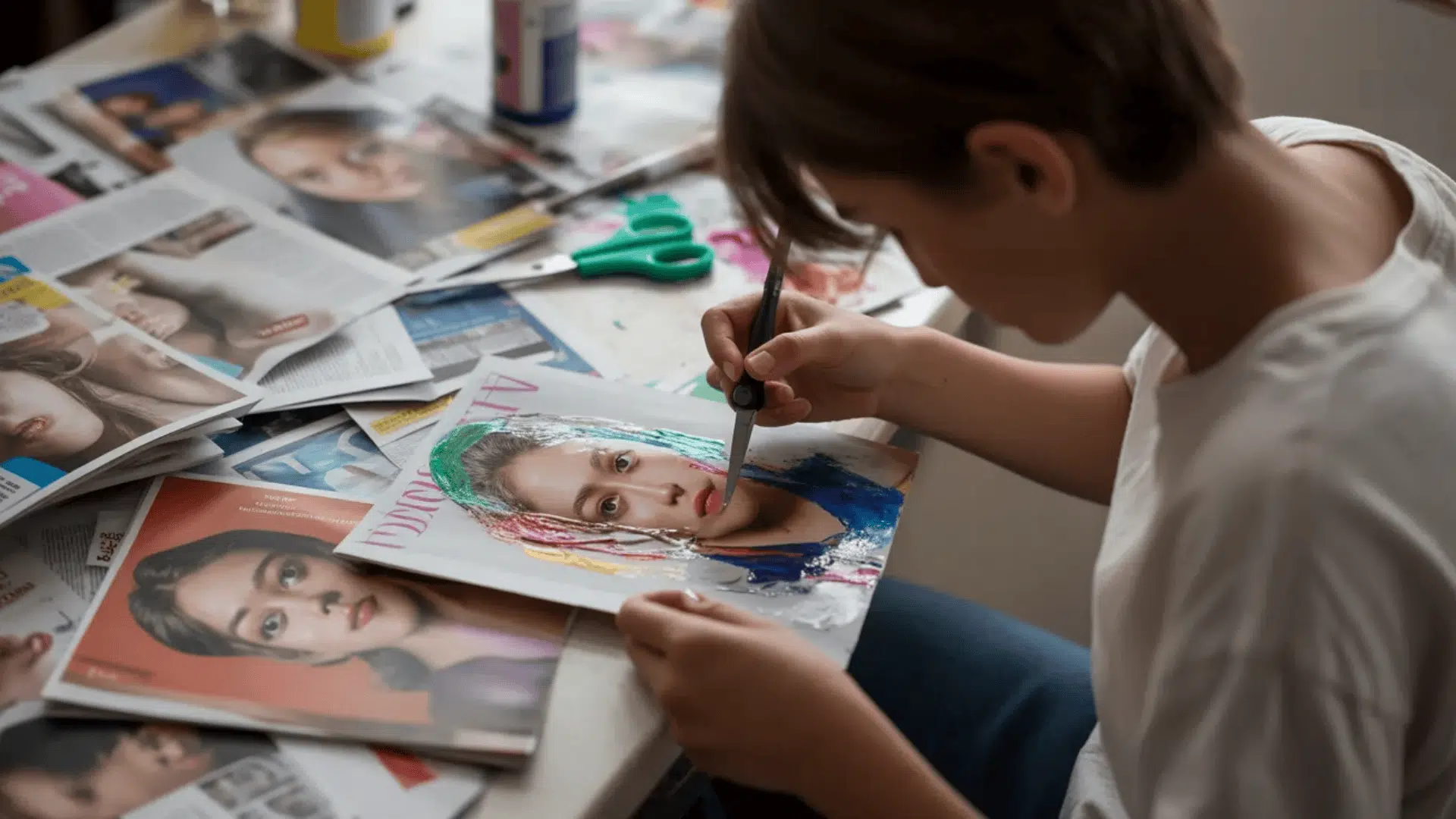
Flip through old magazines and tear out images that catch your eye. Don’t think too much about why you picked them. Then use paint, markers, or pastels to change these images.
Cover faces, add colors, draw over text, or combine multiple pictures. Transform something ordinary into something personal. This activity gives you control over images and messages from the outside world.
Altering existing art feels less intimidating than starting from scratch. You’re working with something already there. This makes it easier to begin when you feel stuck or unsure.
The act of tearing and changing represents taking power back. You’re reshaping the world to fit your perspective instead of accepting it as is.
How it helps: Provides creative control and allows transformation of external imagery into personal emotional expression.
6. Emotion Collage
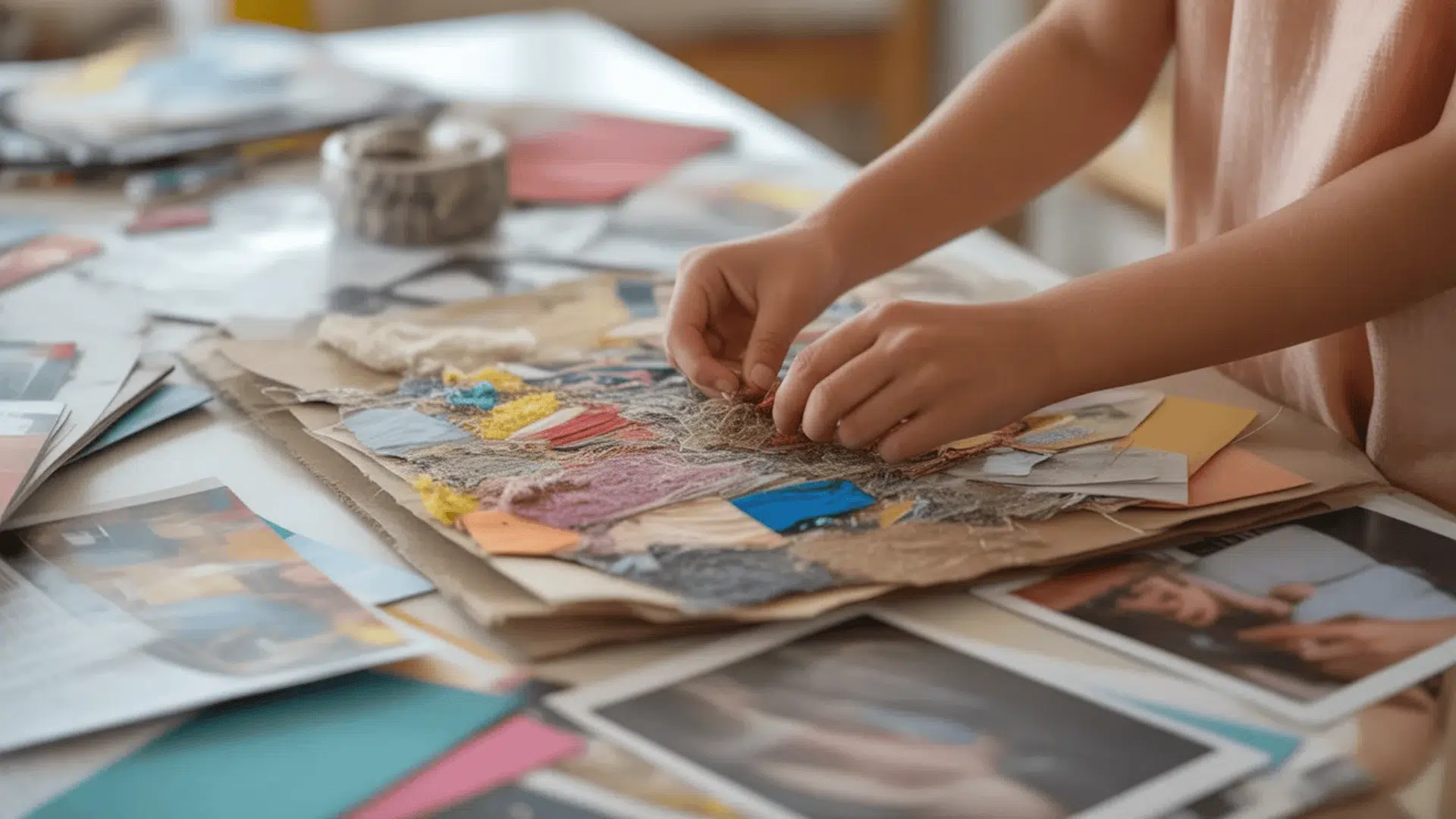
Gather magazines, colored paper, fabric scraps, photos, or any flat materials. Choose pieces that represent specific emotions you’re feeling. Arrange and glue them onto a larger surface.
Different textures add depth to your emotional landscape. Rough materials might show anger or frustration. Soft fabrics could represent comfort or sadness.
You don’t need to explain your choices to anyone. The collage becomes a visual diary of your inner world. Looking back at it later can reveal patterns you didn’t notice before.
This activity works well when emotions feel jumbled. Sorting through materials and making choices brings order to chaos. The finished piece shows that mixed feelings can exist together without canceling each other out.
How it helps: Organizes complex emotions into a tangible visual form that reveals patterns and connections.
7. DIY Mask Making
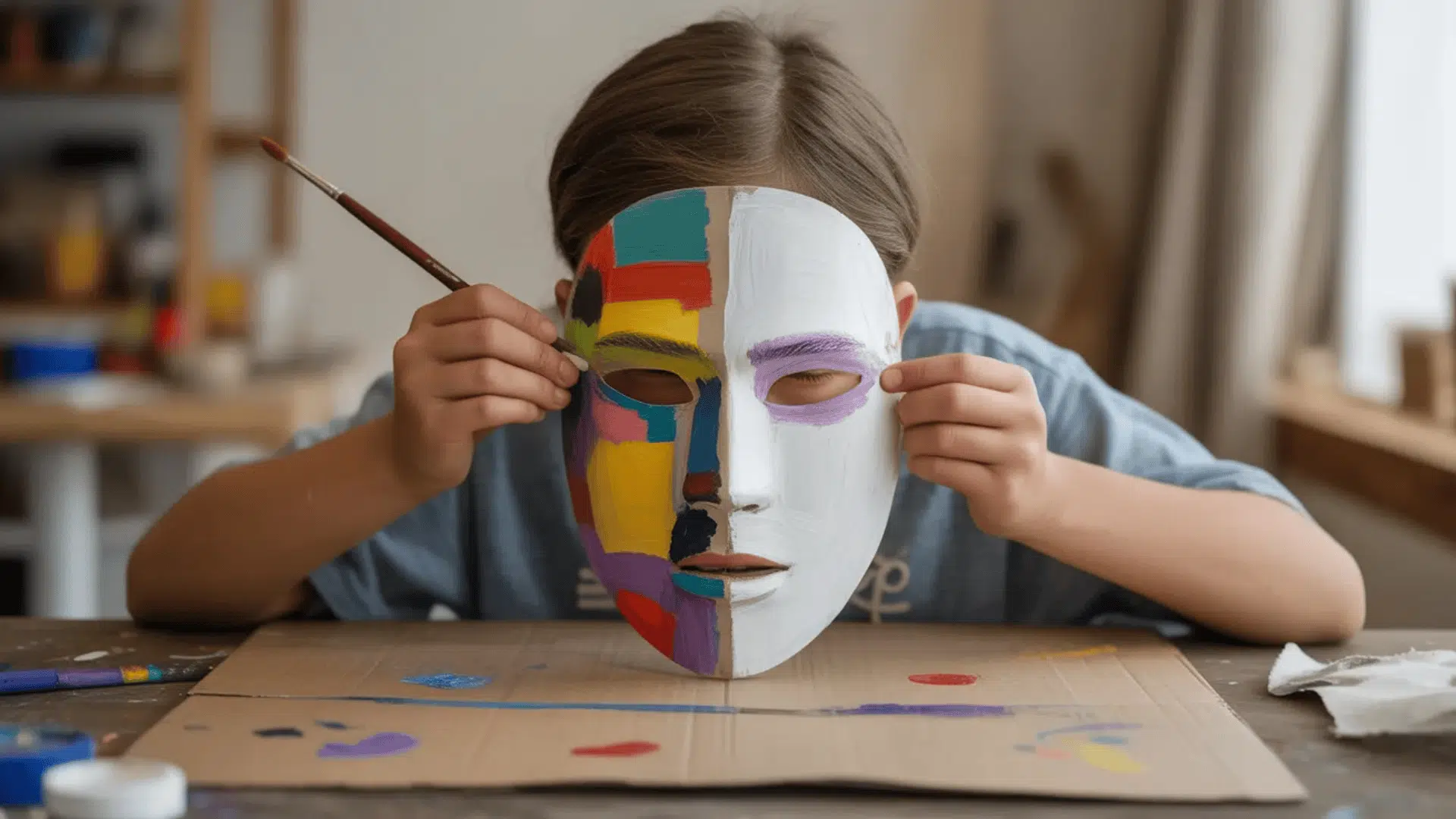
Use cardboard, paper plates, or craft foam to create a mask. Decorate the outside to show how you present yourself to others. Decorate the inside to show how you really feel.
This two-sided approach highlights the gap between inner and outer selves. Most teens feel pressure to act a certain way publicly. The mask makes this split visible and real.
Paint, draw, or glue materials onto both sides. The contrast might surprise you. You might realize you hide more than you thought.
Wear the mask or display it where you can see it. This reminder validates that it’s okay to have private feelings. Not everything needs to be shared with the world all the time.
How it helps: Explores the difference between public personas and private emotions in a safe, visual way.
8. Abstract Mood Painting
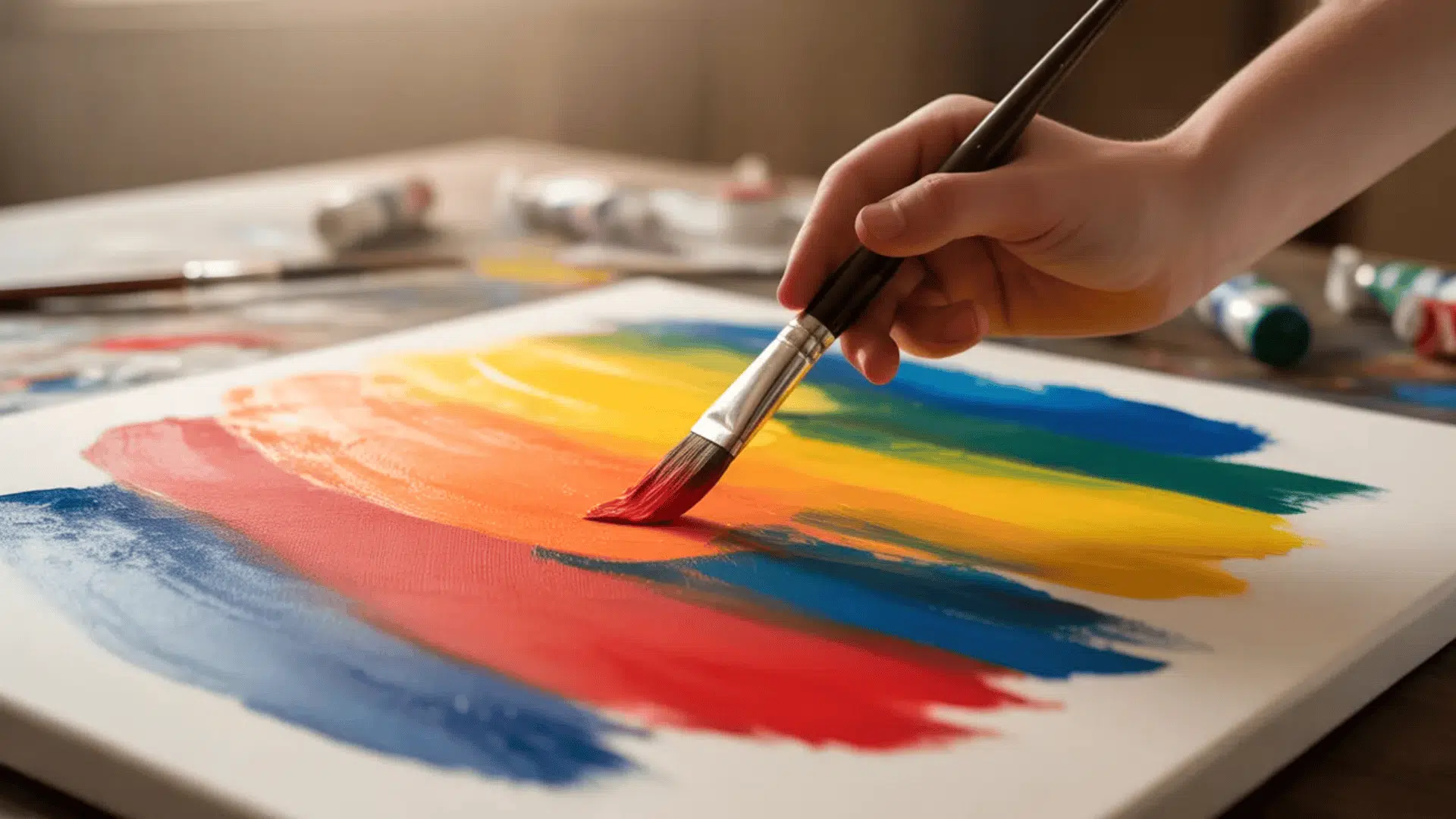
Forget about painting recognizable objects. Focus only on shapes, colors, and movements that match your current mood. Let your brush or fingers move freely across the surface.
Abstract art removes the pressure to make something look “right.” There’s no reference point to compare against. This freedom opens up honest expression without self-judgment.
Use bold strokes for intense feelings. Use gentle washes for subtle emotions. Layer colors to show complexity. Scratch through paint to reveal what’s underneath.
Your painting doesn’t need to make sense to anyone else. It just needs to feel true to you in this moment. Abstract work captures the messy reality of emotions better than realistic images ever could.
How it helps: Removes pressure for accuracy and allows pure emotional expression through color and movement.
9. Clay Emotion Sculpting
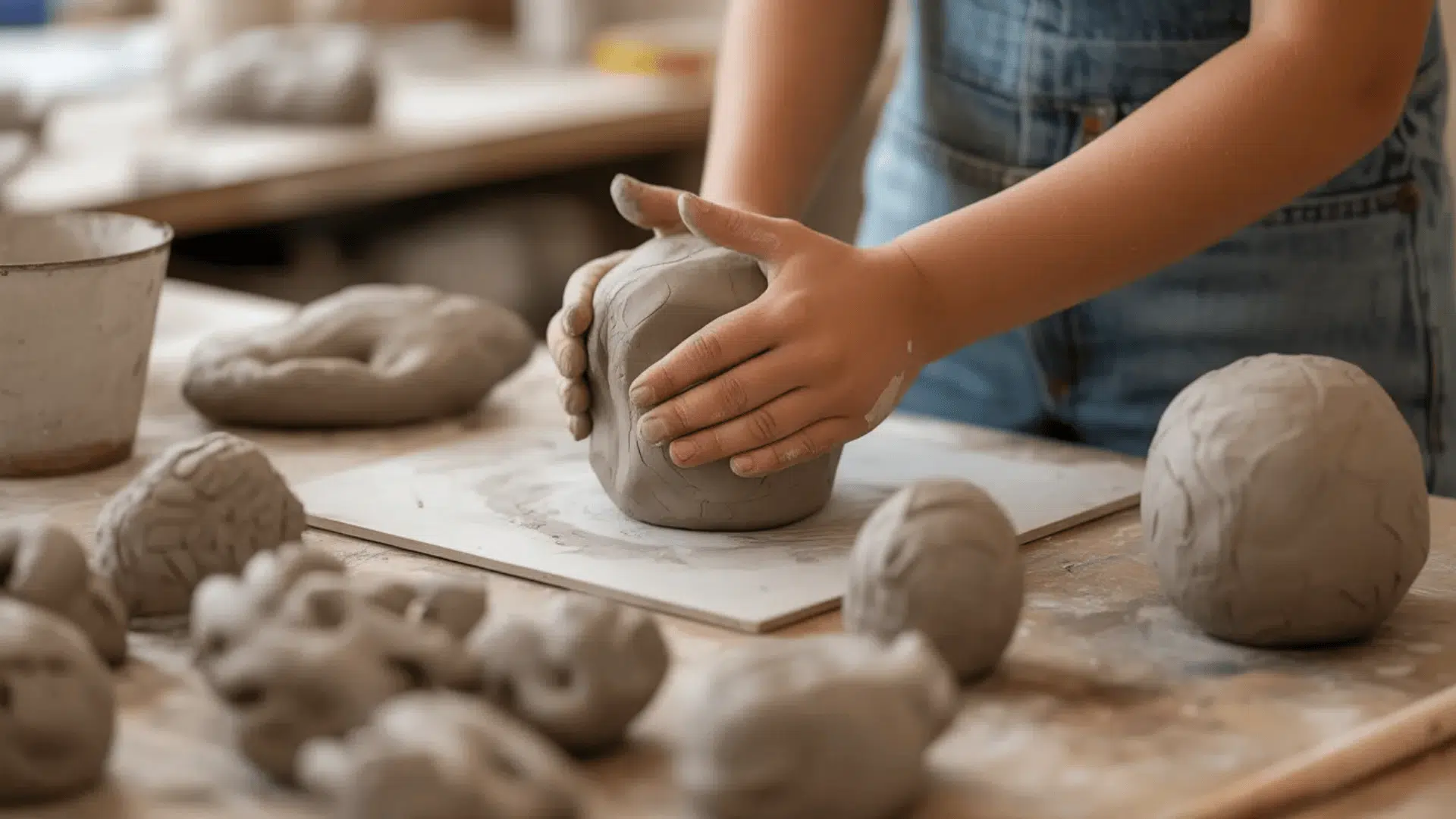
Get your hands on clay, playdough, or even homemade dough. Mold it into shapes that represent what you’re feeling inside. The shape doesn’t need to look like anything specific.
The tactile experience matters most here. Squeezing, rolling, and shaping clay releases physical tension. Your hands do the talking when your voice can’t find the words.
Make angry sculptures by pounding the clay hard. Create sad ones by molding gentle, drooping forms. Build excited pieces that reach upward or spiral outward.
You can destroy and remake your sculpture as many times as needed. This teaches that emotions are temporary and changeable. What feels permanent right now can be reshaped into something new.
How it helps: Engages touch and physical movement to release emotions stored in the body.
10. Collaborative Mural
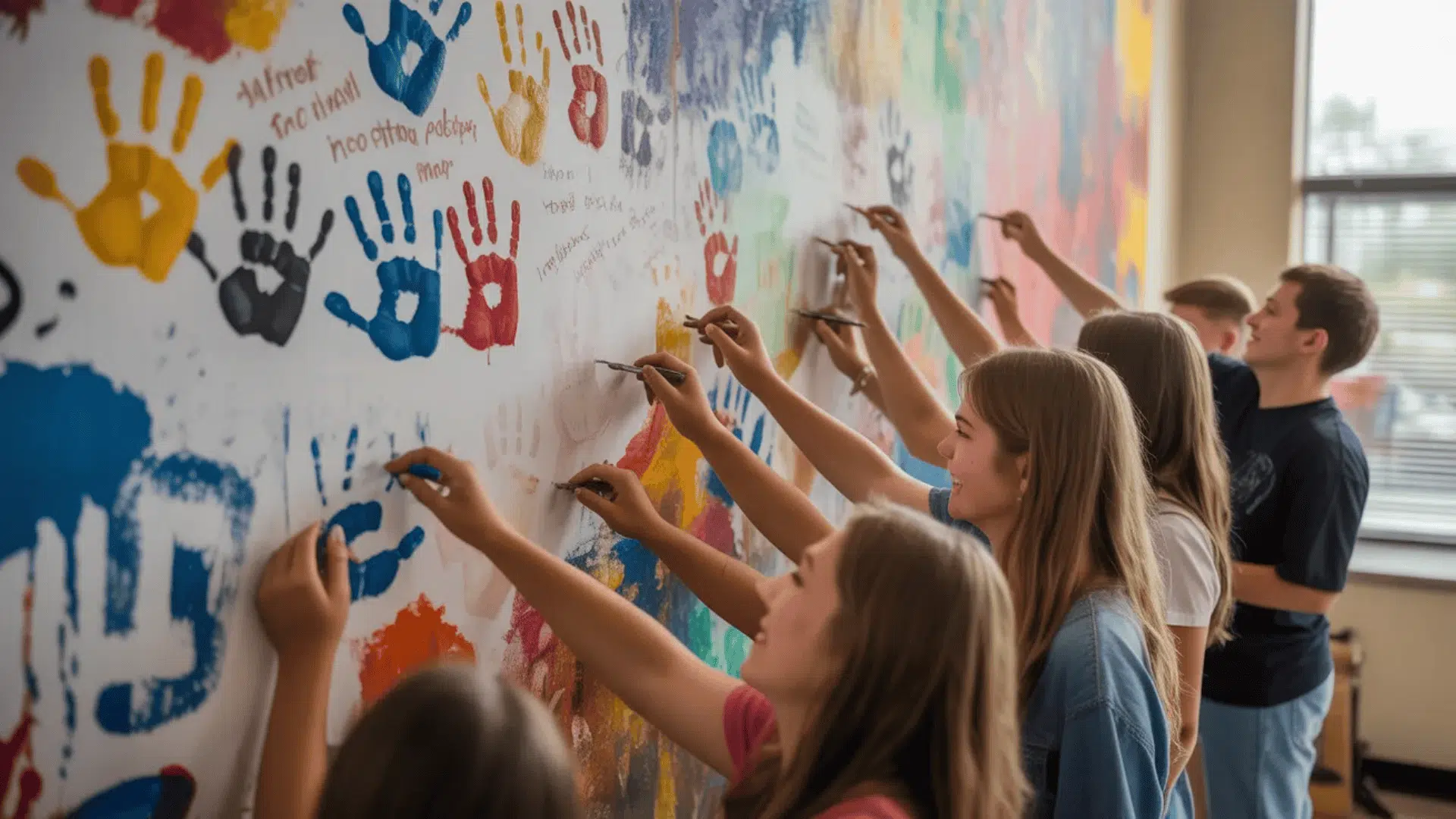
Work with friends, family, or a group to create one large art piece together. Each person adds their own elements without controlling what others contribute. The final mural becomes a shared emotional landscape.
This activity builds connections through creativity. You see how your feelings fit alongside others’ experiences. Individual struggles become part of a larger, collective story.
Choose a theme or let it develop naturally. Paint on a large sheet of paper, cardboard, or even an outdoor wall with permission. Add handprints, words, symbols, or abstract designs.
Collaborative work teaches compromise and acceptance. You learn that different perspectives can coexist beautifully. The mural shows that you’re not alone in your emotional experiences.
How it helps: Builds connection and shows that individual emotions can exist together in shared spaces.
11. Nature Art Assemblage
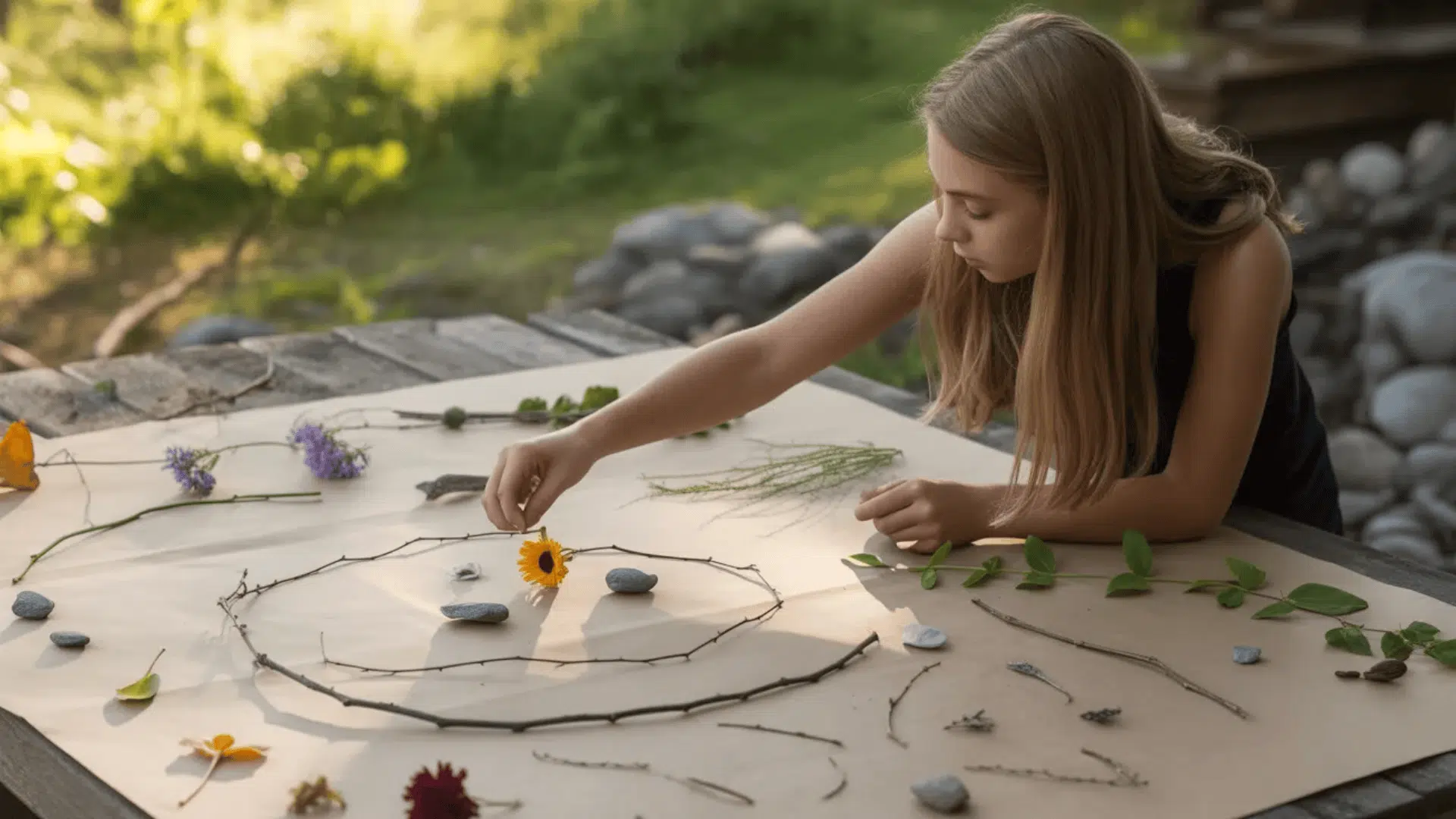
Go outside and collect natural items like leaves, twigs, rocks, flowers, or seeds. Bring them inside or arrange them right there in nature. Create patterns, shapes, or scenes using only what you find.
Nature art grounds you in the present moment. Searching for materials slows your mind down. The textures, smells, and colors of natural objects connect you to something bigger than yourself.
You can glue items onto paper or cardboard to keep your creation. You can also photograph it before leaving it outside for the weather and time to change.
Working with nature reminds you that growth and decay are both natural. Nothing stays the same forever. This perspective helps when emotions feel stuck or unchanging.
How it helps: Grounds emotions in nature and teaches acceptance of natural change and impermanence.
12. Vision or Dream Board
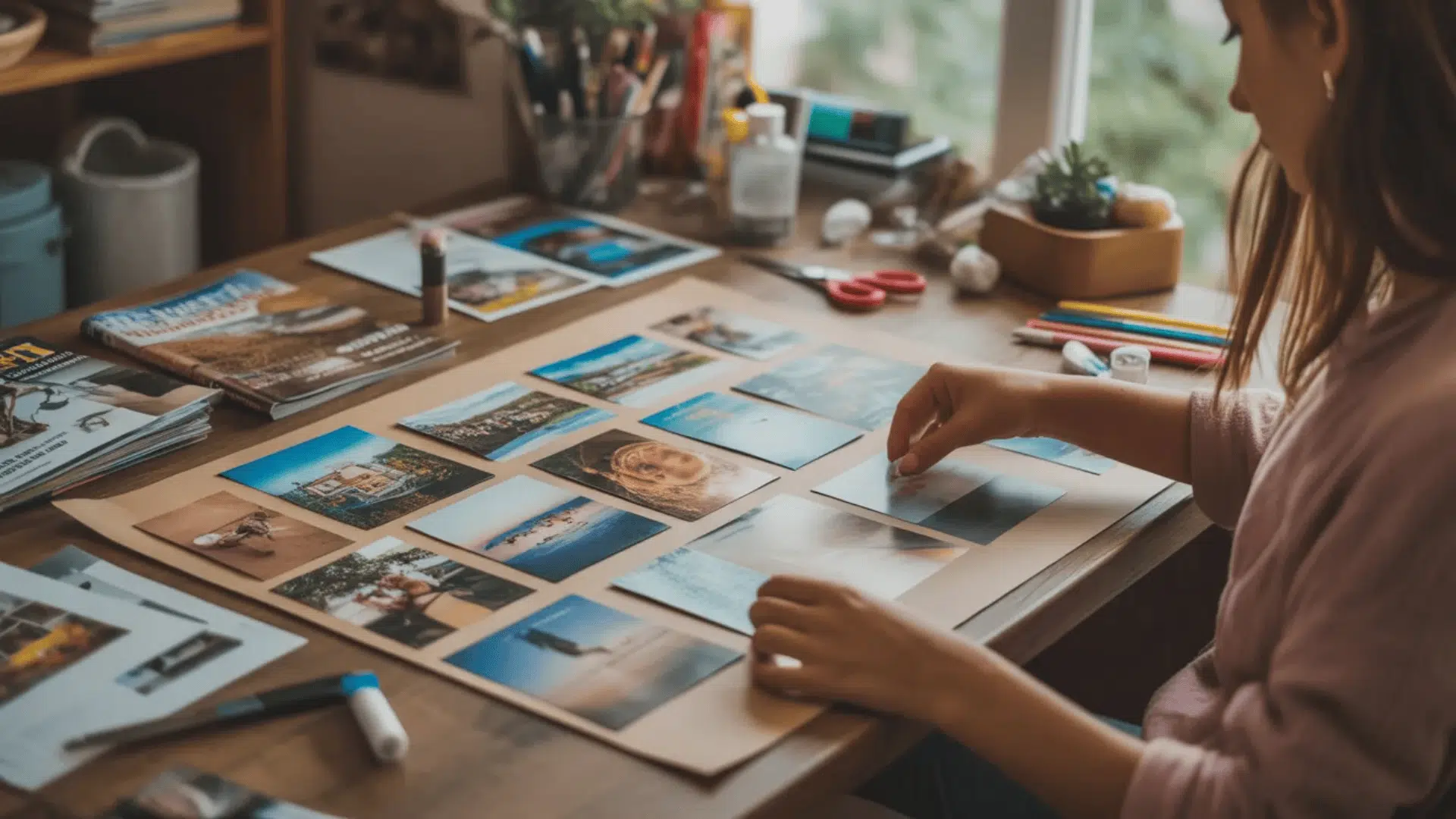
Cut out images, words, and phrases from magazines that represent your hopes and goals. Arrange them on a board or large paper. Create a visual map of your future self.
This activity shifts focus from current struggles to future possibilities. When emotions feel heavy, looking forward brings relief. You remember that today’s feelings won’t last forever.
Include pictures of places you want to visit, things you want to learn, or qualities you want to develop. Add motivational quotes or affirmations that resonate with you.
Display your vision board where you’ll see it daily. It becomes a reminder that you’re moving toward something positive. This hope counterbalances difficult emotions and builds resilience.
How it helps: Shifts focus from present struggles to future possibilities, building hope and forward momentum.
13. Blind Contour Drawing
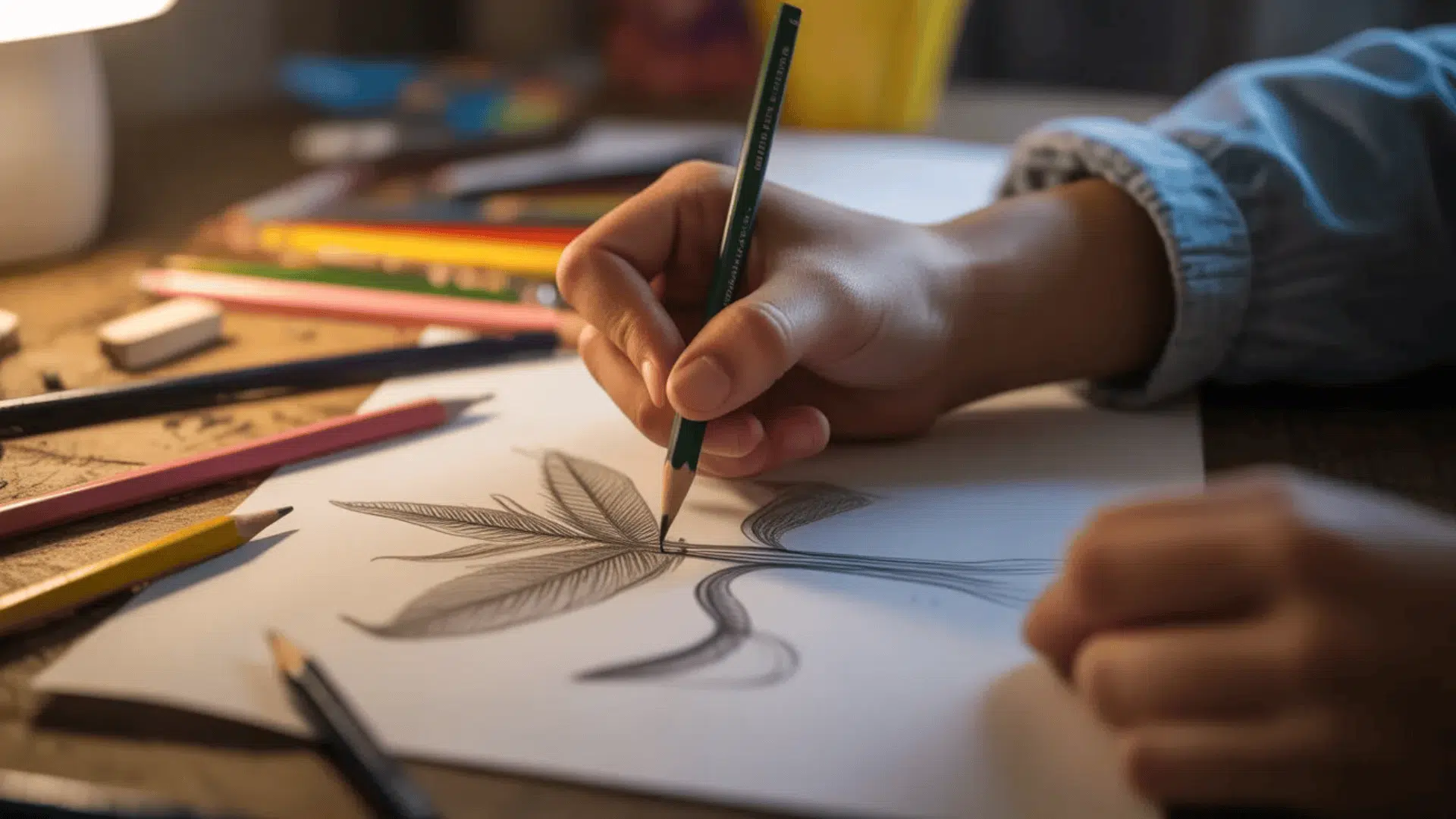
Choose an object to draw. Keep your eyes on the object the whole time. Don’t look at your paper while your hand draws what you see.
The results look funny and distorted. That’s exactly the point. This exercise removes the pressure to create something beautiful or accurate.
Your brain stops judging because it can’t see what’s happening. You focus purely on observation and hand movement. This separation between seeing and creating feels freeing.
Try drawing your hand, a plant, or a face. The wonky lines and strange proportions make you laugh. Humor helps lighten heavy emotions. You learn that imperfection can be interesting and valuable, too.
How it helps: Removes judgment and perfectionism by separating observation from the act of creating.
14. Spontaneous Poetry and Art
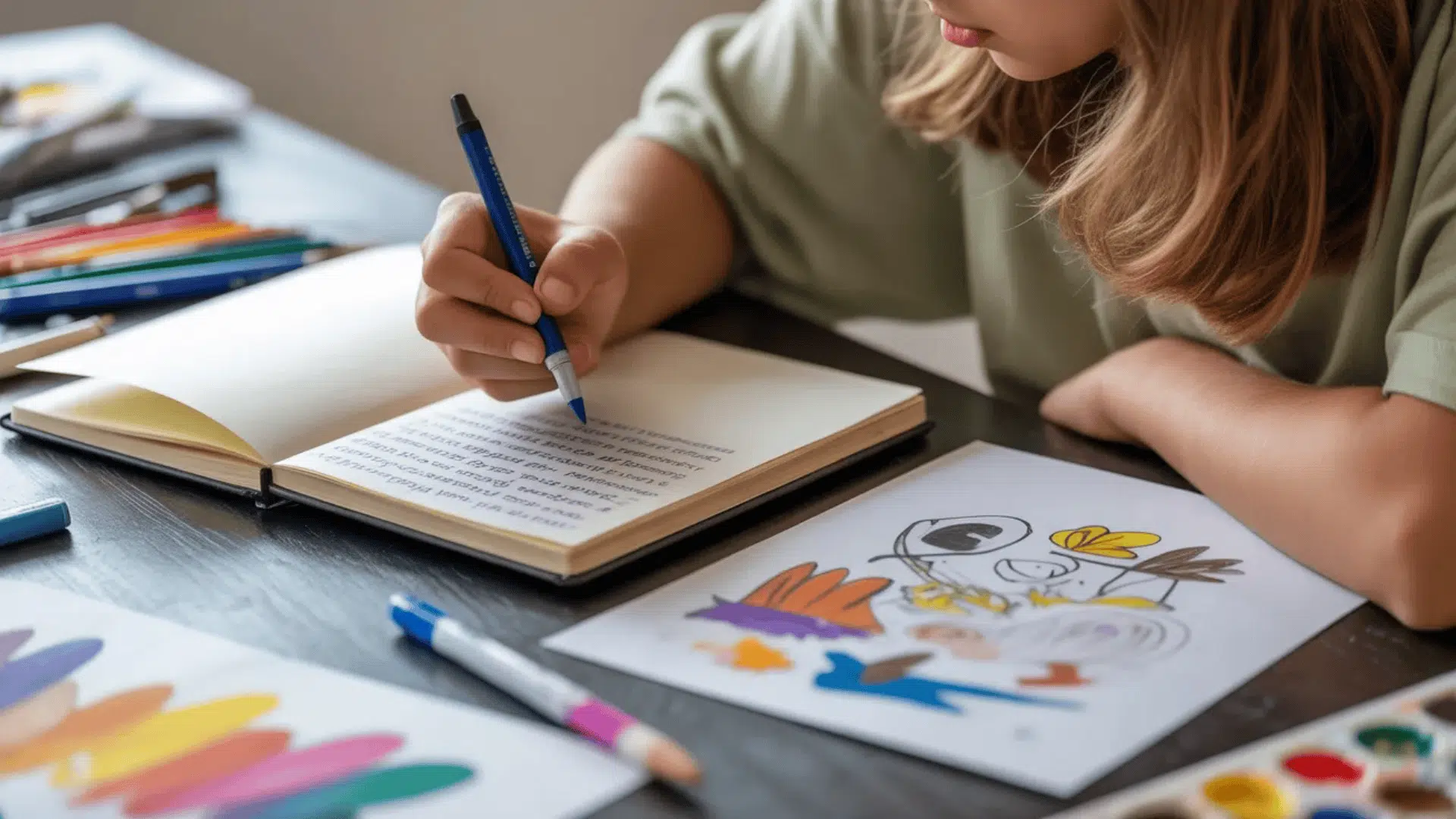
Write a short poem about how you feel. Don’t worry about rhyming or following rules. Just put honest words on paper. Then illustrate your poem with drawings, colors, or symbols.
Combining words and images creates a fuller picture of your emotions. Sometimes words capture what images can’t. Other times, pictures say what words miss completely.
Your poem can be three lines or twenty. It can make perfect sense or sound abstract. The illustration can match the words directly or show something completely different.
This dual expression exercises both sides of your brain. Language and visual art work together to release emotions from multiple angles. The finished piece becomes a snapshot of your inner world at this specific moment.
How it helps: Combines verbal and visual expression to capture emotions from multiple creative angles.
15. Color Emotion Wheel
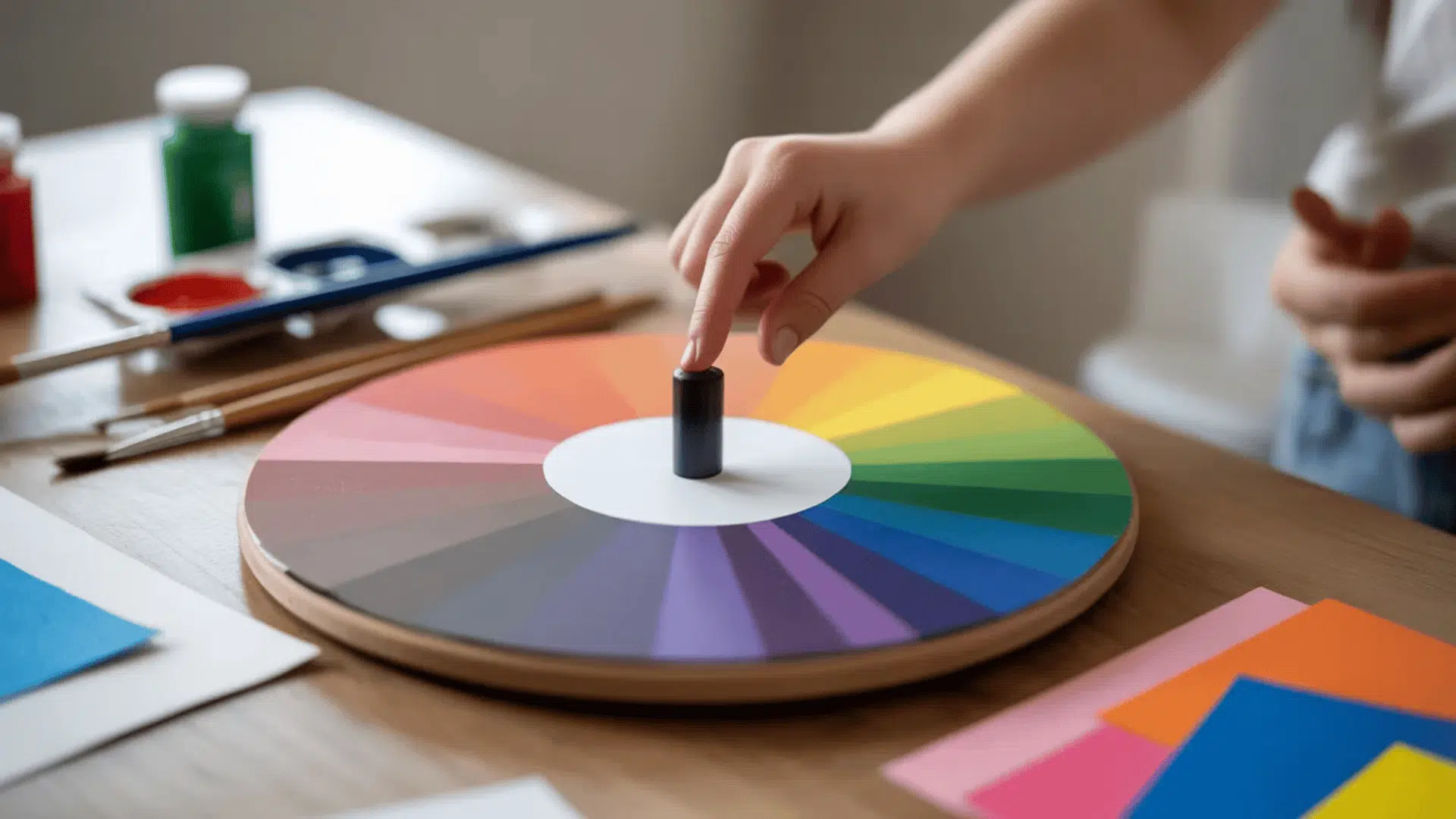
Create a simple spinner with different colors on it. Spin it and use whatever color lands. Create an entire piece using only that color and its shades.
The random selection removes decision fatigue. You don’t waste energy choosing colors. Instead, you work within limitations, which actually boosts creativity.
Paint, draw, or collage using your assigned color. See what emotions emerge when you’re forced to work with one hue. Blue might reveal sadness you were hiding. Yellow might uncover joy buried under stress.
Working with constraints teaches flexibility. Life often hands you situations you didn’t choose. This activity practices making something meaningful from whatever you’re given.
How it helps: Removes choice paralysis and reveals hidden emotions through color exploration and creative constraints.
16. Found Object Sculpture
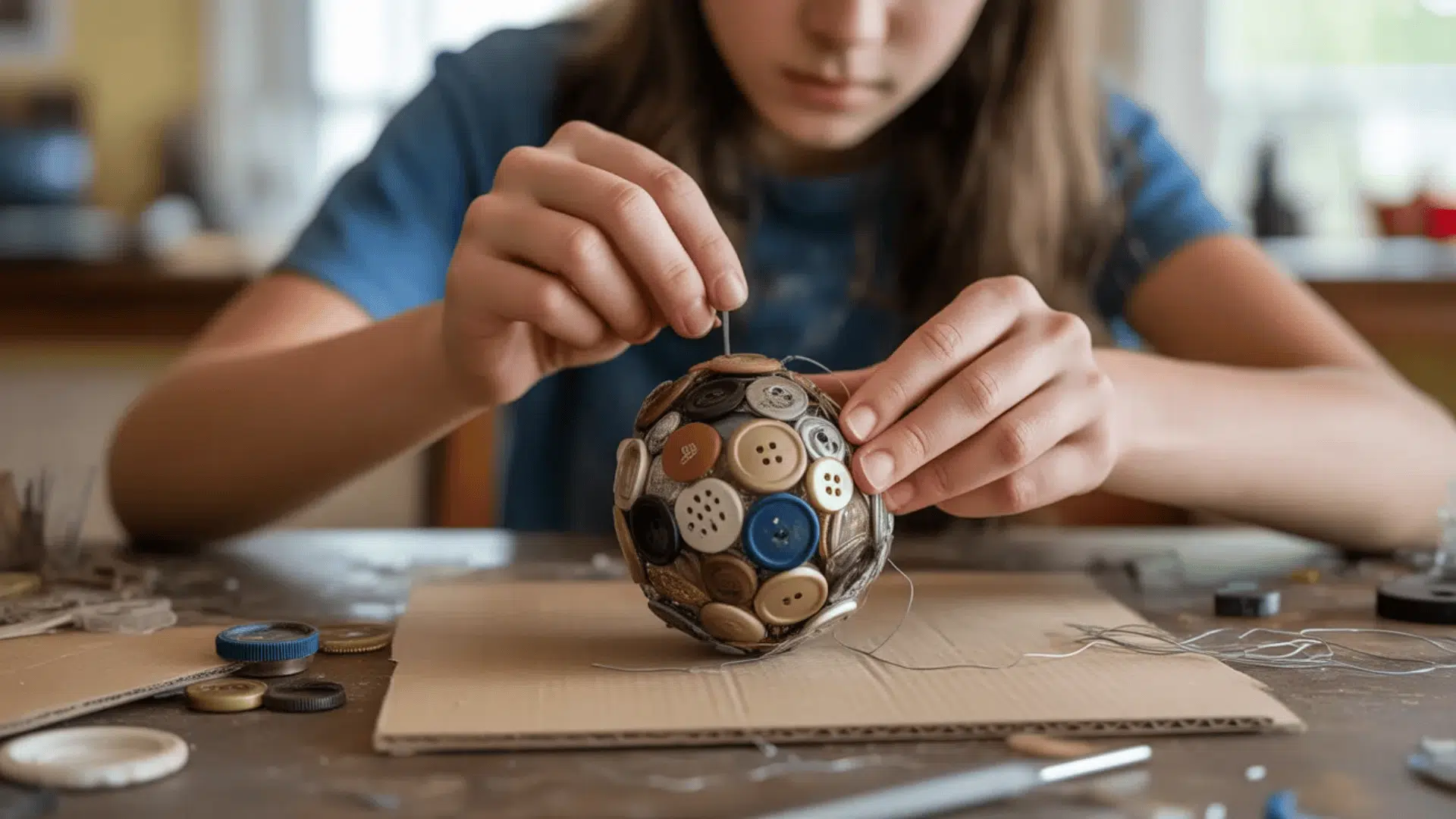
Walk around your house or neighborhood collecting random objects others might call junk. Old buttons, broken toys, bottle caps, wire, cardboard pieces, or anything that catches your eye. Use these items to build a sculpture.
Found objects carry history and stories. Using them in art gives new meaning to forgotten things. This mirrors how you can transform painful experiences into something meaningful.
Glue, tape, or tie items together in ways that express a feeling or idea. The sculpture doesn’t need to represent anything specific. Let the objects guide what emerges.
Creating beauty from trash proves that broken things still have value. This lesson extends beyond art. Your difficult emotions and hard experiences can become sources of strength and wisdom.
How it helps: Transforms discarded materials into meaningful art, teaching that broken pieces can create something valuable.
17. Fantasy World Sketching
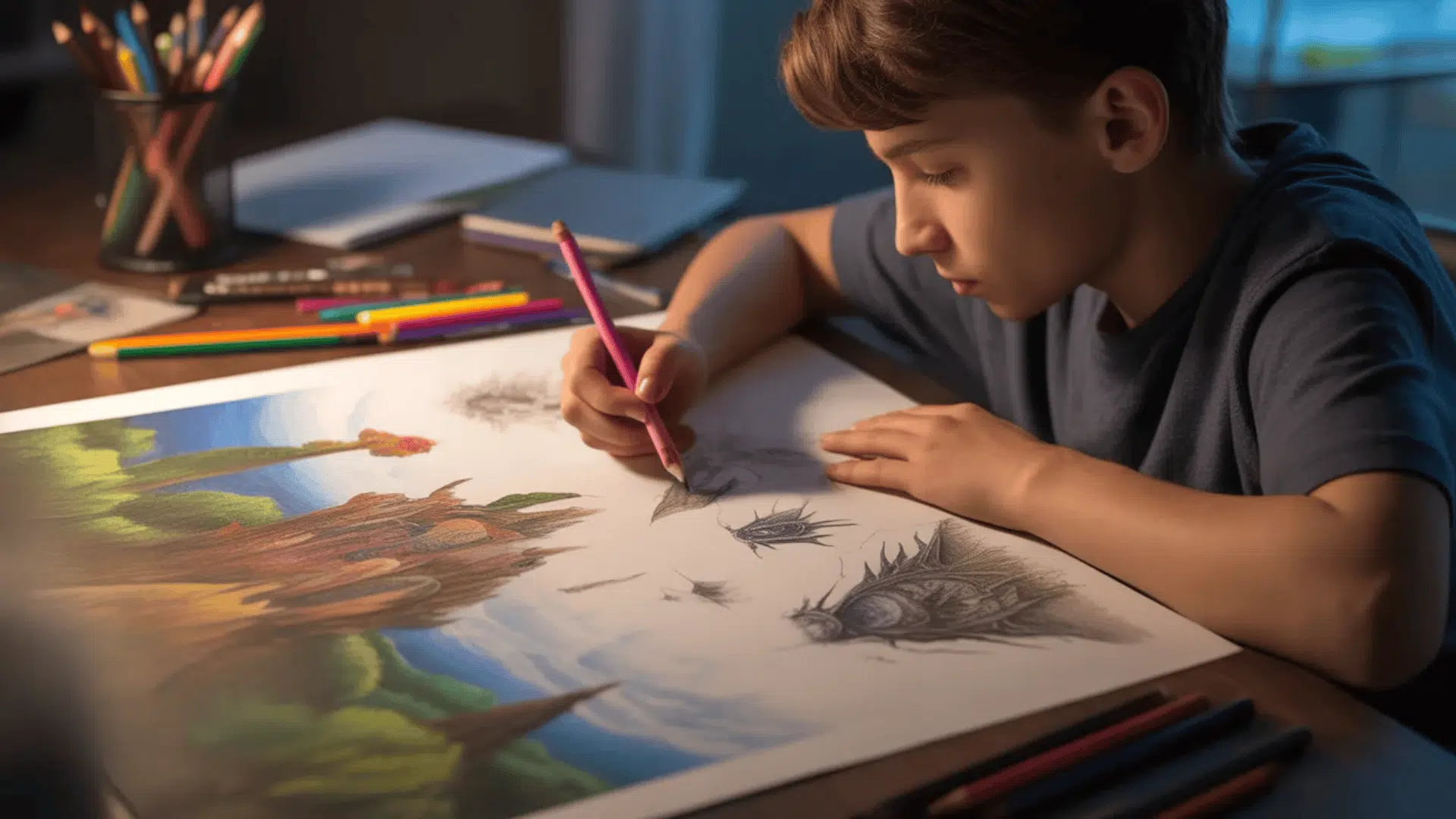
Draw an entire imaginary world with no rules or limits. Include impossible creatures, floating islands, upside-down buildings, or whatever your mind creates. Let imagination run completely wild.
Fantasy worlds offer escape when reality feels too heavy. You get to be in control of everything. The laws of physics, social expectations, and daily stress don’t apply here.
Sketch landscapes, characters, cities, or entire ecosystems. Use colored pencils, markers, or a simple pen and paper. Add details like what people eat, how they travel, or what makes them happy.
Building worlds externally helps organize thoughts internally. When your mind feels chaotic, creating order in an imaginary space brings calm. This practice strengthens your ability to envision positive futures.
How it helps: Provides mental escape and control while strengthening imagination and the ability to envision positive scenarios.
18. Expressive Finger Painting
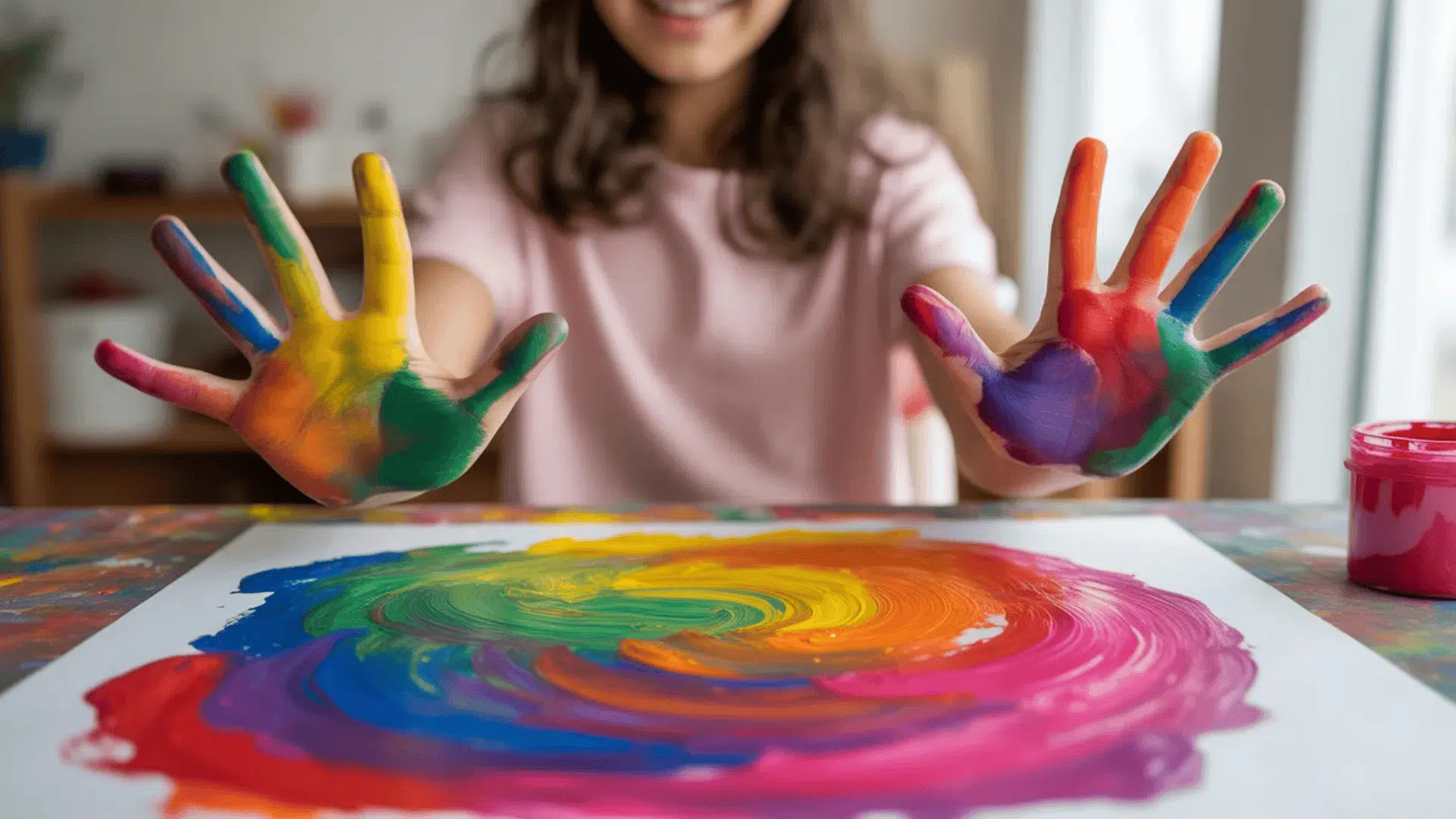
Forget brushes and tools. Use your fingers and hands to spread paint directly on paper. Let the messy, tactile experience take over. Feel the cool paint on your skin as colors mix and blend.
Finger painting brings you back to childhood freedom. Young kids create without self-consciousness or fear. Reconnecting with that mindset unlocks emotions you’ve learned to hide.
Use thick paints like tempera or acrylics. Press hard or glide gently. Make handprints, swirls, or abstract patterns. Get messy without caring about the result.
The physical sensation of paint on skin grounds you in your body. Many emotions live in the body rather than the mind. Direct touch releases them more effectively than thinking ever could.
How it helps: Reconnects with childhood freedom and releases emotions stored in the body through direct tactile experience.
19. Negative Space Art
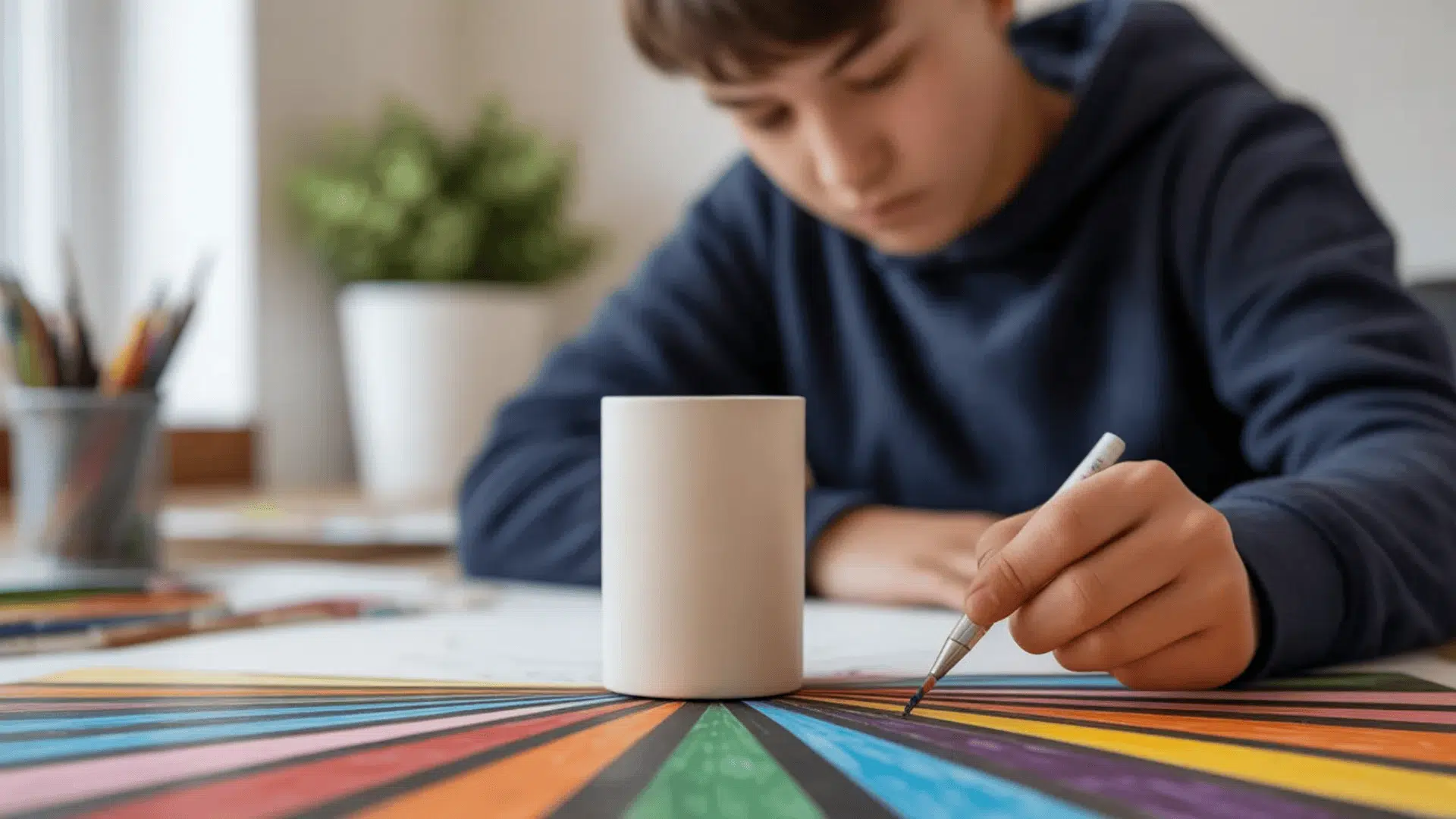
Focus on drawing or painting around objects instead of the objects themselves. Leave the main shapes blank while filling in everything around them. The empty space becomes the actual subject.
This backward approach shifts how you see things. Sometimes what’s missing matters more than what’s present. Negative space art mirrors how emotions work, too -what you avoid reveals just as much as what you face.
Choose simple objects like cups, hands, or plants. Paint the background in bold colors or patterns. Watch how the empty shape stands out even though you never touched it.
This technique teaches that absence has power. The things you don’t say or express still affect you. Making invisible space visible helps you recognize emotions you’ve been ignoring or pushing aside.
How it helps: Reveals the power of absence and helps recognize emotions that exist in the spaces between words.
20. Mindful Mandala Drawing
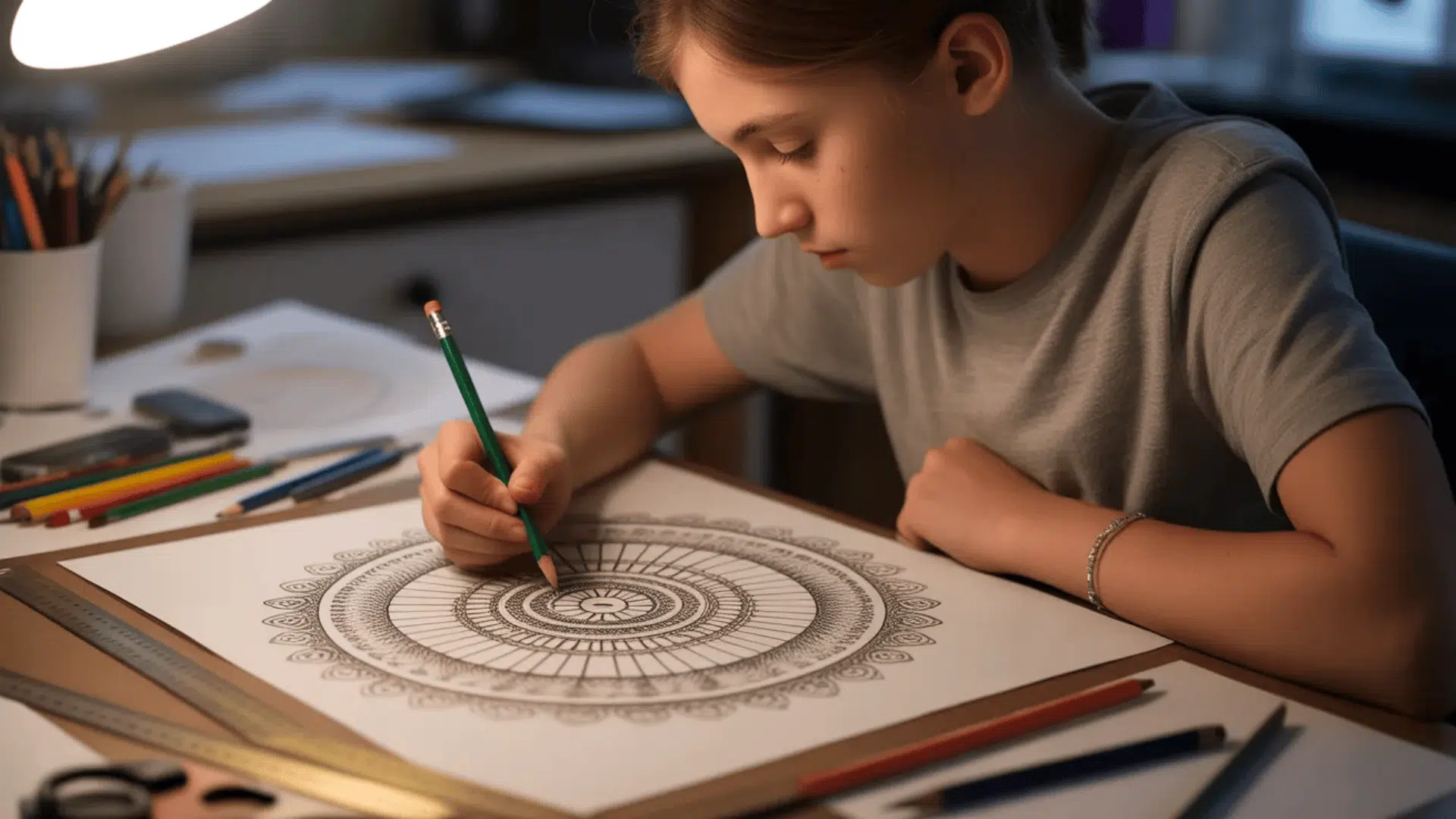
Start with a center point and create circular patterns expanding outward. Use repeated shapes, lines, and designs that radiate from the middle. Keep your movements slow and deliberate.
Mandala creation is meditation in visual form. The repetitive circular motion calms the nervous system. Your breathing slows down as your hand moves in steady rhythms.
Use rulers and compasses for precise patterns or draw freehand for organic shapes. Fill sections with different colors, textures, or designs. The symmetry brings a sense of order and balance.
Focusing on small details quiets racing thoughts. Each line or shape requires attention that pulls you away from worries. When the mandala is complete, you’ve created both art and inner peace.
How it helps: Calms the nervous system through repetitive circular patterns and focused, meditative movement.
21. Visual Journal Pages
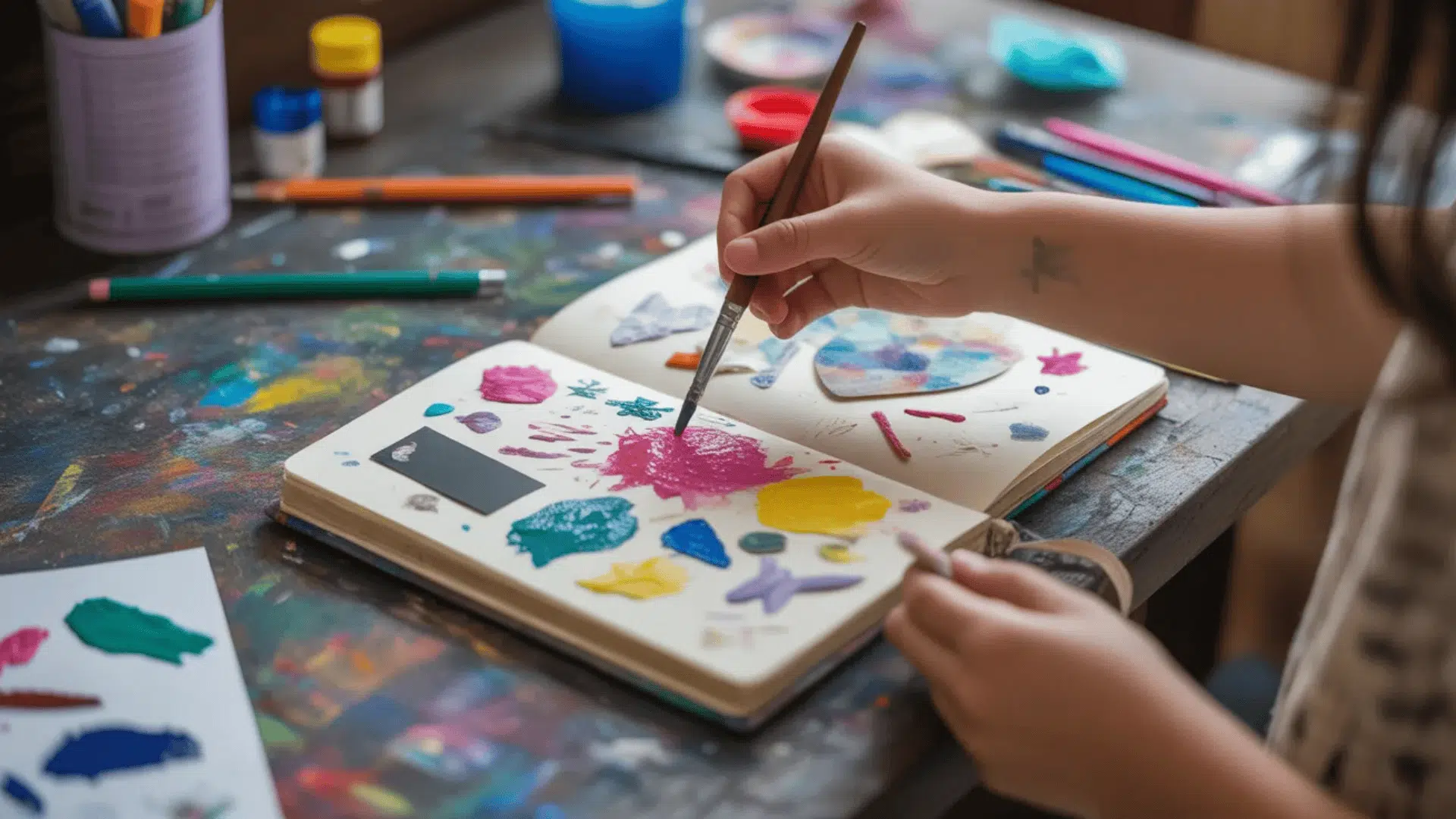
Keep a journal where you express daily thoughts and feelings through images instead of words. Fill pages with colors, doodles, collages, paint splatters, or mixed media. No writing required unless you want to add it.
Visual journaling creates a safe space for daily emotional release. You don’t need to explain yourself to anyone. The pages hold your truth exactly as you express it.
Some days you might fill a whole page with angry red scribbles. Other days, you’ll carefully arrange cut-out images. Both approaches are valid and valuable.
Looking back through your journal reveals emotional patterns over time. You see how feelings shift and change. This perspective reminds you that no emotional state lasts forever, even when it feels permanent.
How it helps: Creates an ongoing safe space for daily emotional release and reveals patterns over time.
Conclusion
Art therapy gives teens a powerful way to express emotions when words fall short. These spontaneous activities remove pressure and judgment. Teens can explore their inner world through colors, shapes, and creative freedom.
Regular practice builds confidence and emotional awareness. Teens learn that feelings are temporary and manageable. They find healthy ways to cope with stress instead of keeping everything inside.
Create a judgment-free space at home or in group settings. Let teens experiment without critiquing their work. The goal is expression, not perfection.
Start with one activity that feels comfortable. See what emotions surface and how creativity brings relief.
If your teen struggles with overwhelming emotions, consider connecting with a licensed art therapist for additional support.