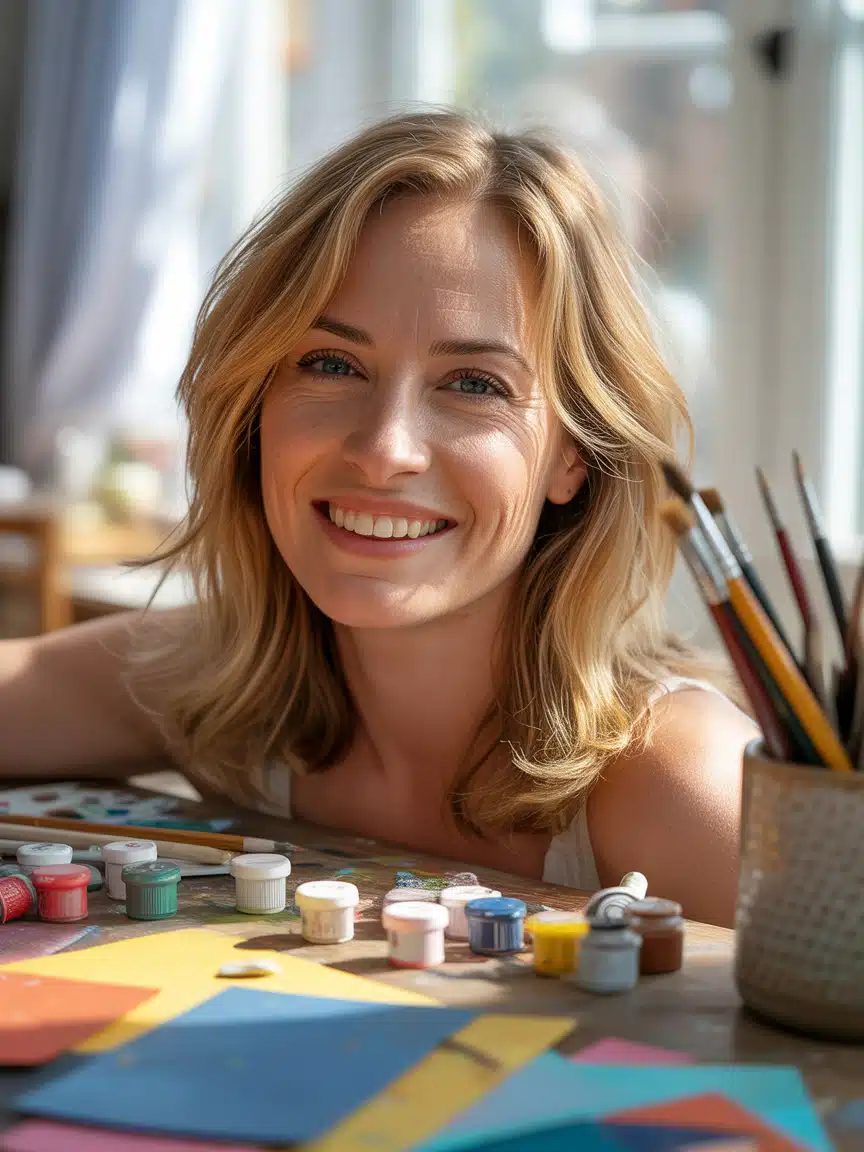
Paint and sip has come a long way from wine bars and studio classes. Over the past few years, it has become a genuinely popular way to spend an evening at home, with good reason.
The format is simple: pick a painting, pour something you enjoy, follow along with a tutorial, and see what comes out.
I have run dozens of these sessions for both kids and adults, and the setup is far more forgiving than most people expect.
This guide covers everything from where to find tutorials to what to put on the table when the brushes come out.
What Paint and Sip at Home Actually Looks Like
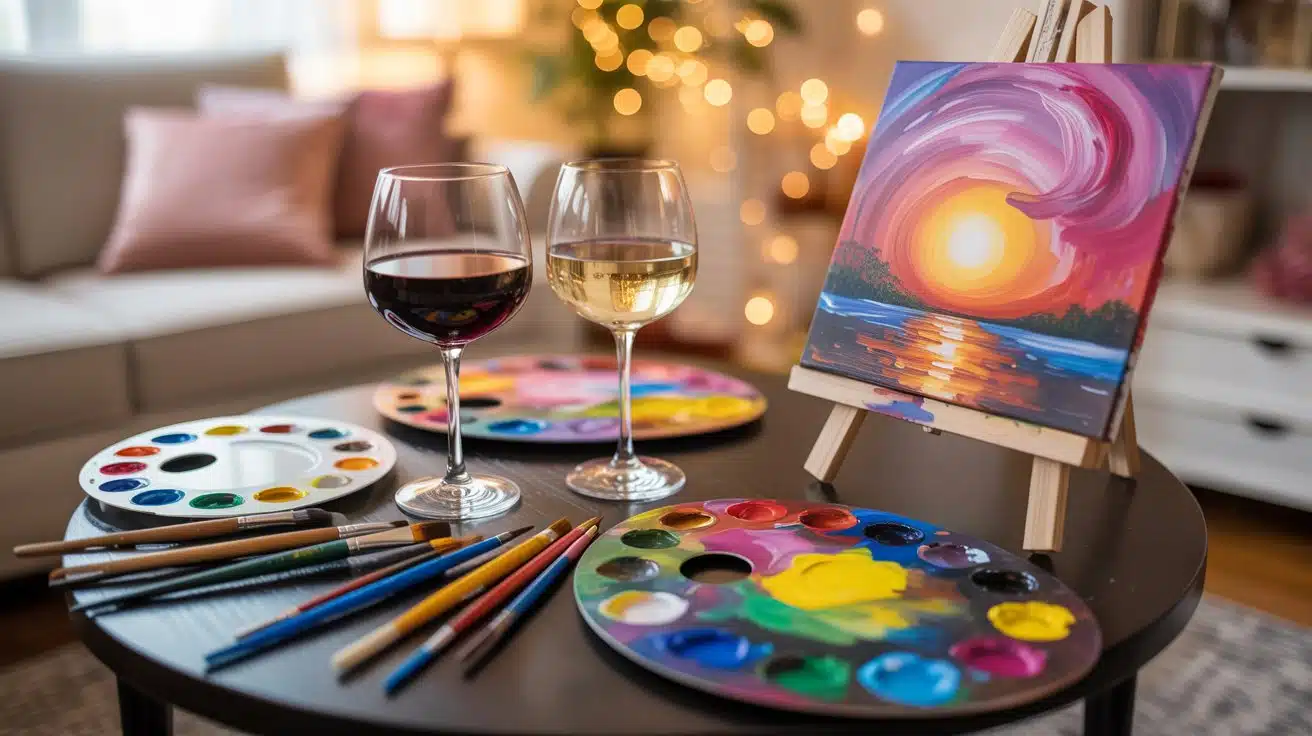
A paint-and-sip session at home is a guided painting experience where someone follows along with a video or tutorial rather than a live instructor.
The “sip” part is whatever is in the glass: wine, mocktails, tea; it does not really matter.
What makes it different from just watching a random painting video is the intentionality.
You set up a proper space, gather the right supplies, choose a painting that matches the mood, and treat it like an event rather than a random Tuesday night activity.
That shift in mindset is what makes it feel like something worth doing again.
The Benefit Most People Overlook
Most people come for the fun and stay because of how it makes them feel afterward.
- Research has shown that making art activates the brain’s reward system and increases dopamine production, a neurotransmitter tied to pleasure and stress reduction.
- There is a real neurological reason why two hours of painting can feel like pressing a reset button on a stressful week.
- Art activates the brain’s visual and motor areas at the same time, pulling attention into one task in a way that lowers anxiety.
- Painting shifts focus into the immediate, which is why so many people describe it as meditative.
- For anyone dealing with social anxiety or isolation, virtual paint and sip sessions offer real accessibility.
- Signing up for an online class and painting alongside strangers through a screen is far less intimidating than walking into a studio.
Where to Find Paint and Sip Tutorials Online
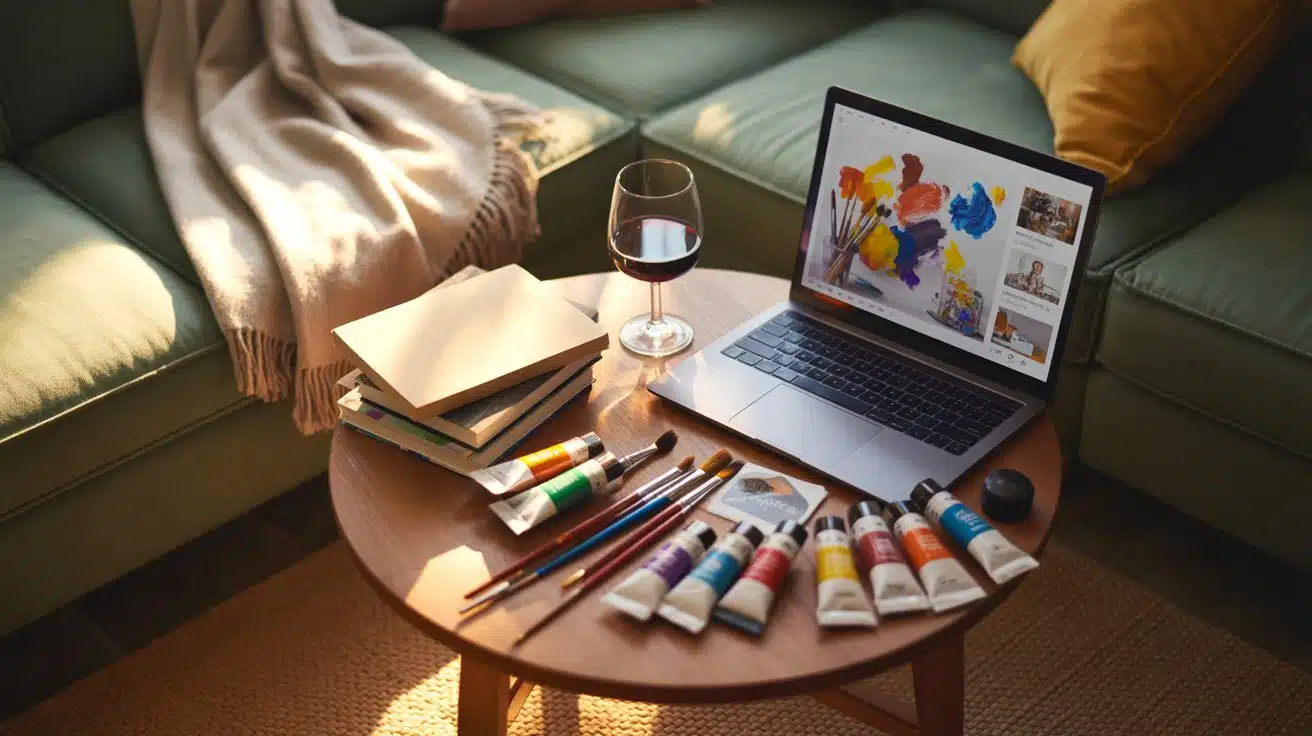
This is the part people spend the most time searching for, so here is a clear breakdown by type.
1. Free YouTube Tutorials
YouTube is the most accessible starting point.
Channels like The Art Sherpa, Painting With a Twist, andMichelle the Painter offer beginner-level acrylic tutorials with full step-by-step walkthroughs, supply lists, and a completed painting shown at the start, so there are no surprises.
These tutorials are designed for people who have never held a brush as adults, and most run between 45 minutes and 2 hours.
The format works well for solo sessions or for groups where someone connects a laptop to a TV. It costs nothing, and the variety is enormous.
The main limitation is that pausing and rewinding disrupts the flow slightly, but that is a small trade-off for free access to thousands of guided projects.
2. Paid On-Demand Platforms
Platforms like PaintNite, Painting to Gogh, andYaymaker sit in the middle tier.
They charge per session, typically $10-$20, and offer pre-recorded classes with professional instructors. Once purchased, sessions can be paused, rewound, and revisited.
PaintNite, for example, offers a 7-day rental window, allowing painting to can multiple evenings rather than in one sitting.
These platforms also sell complete supply kits that ship directly to the door. The kit includes the canvas, acrylic paints, brushes, palette, and a link to the tutorial.
For anyone who does not want to source supplies separately, this is the most convenient option.
3. Subscription Memberships
For people who paint regularly or want to build actual skill over time, monthly memberships make more sense than buying individual sessions.
Some platforms offer 100-plus tutorials, with a new one added each month, for around $7.
This works well for anyone who has finished the beginner YouTube phase and wants structured progression without paying per class.
Membership platforms also tend to have skill-specific content: brush care, color mixing, and painting specific subjects like trees, water, or portraits. That kind of targeted practice is where real improvement happens.
Supplies: What Is Actually Needed vs. What Is Nice to Have
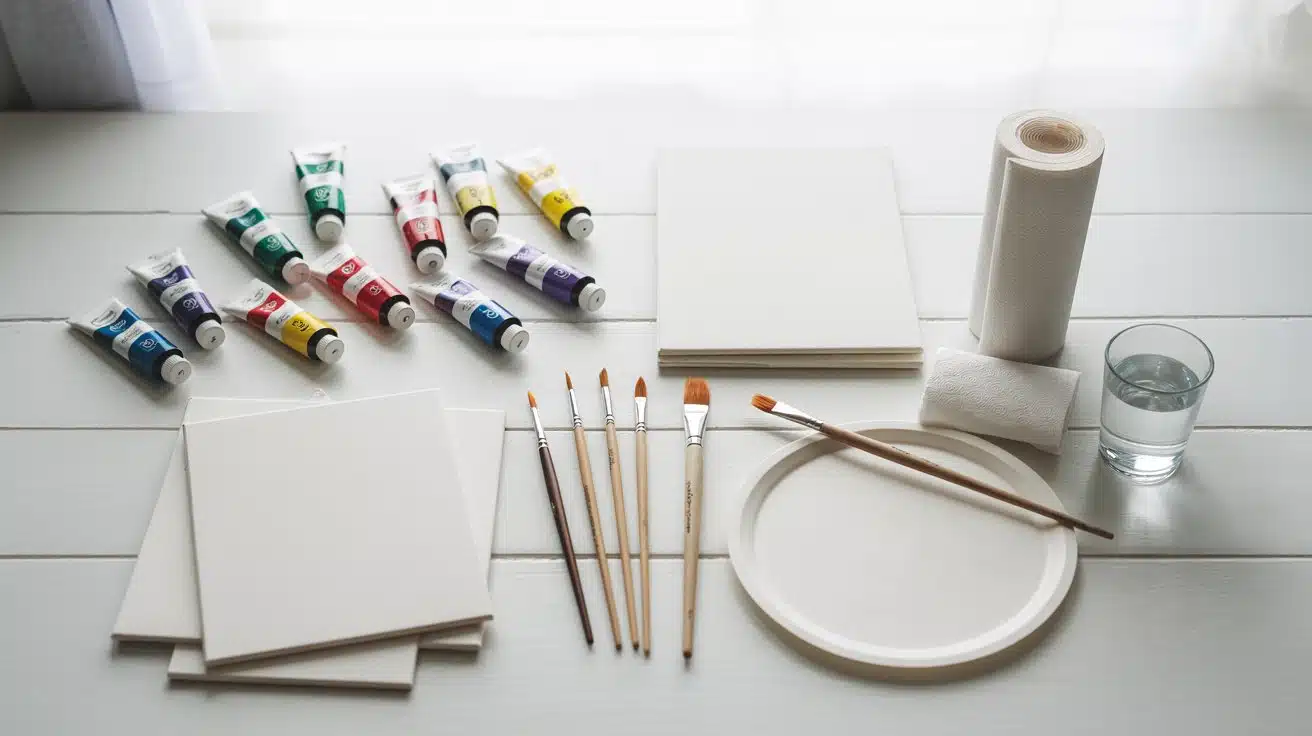
The list is shorter than most people think, and most of it costs very little.
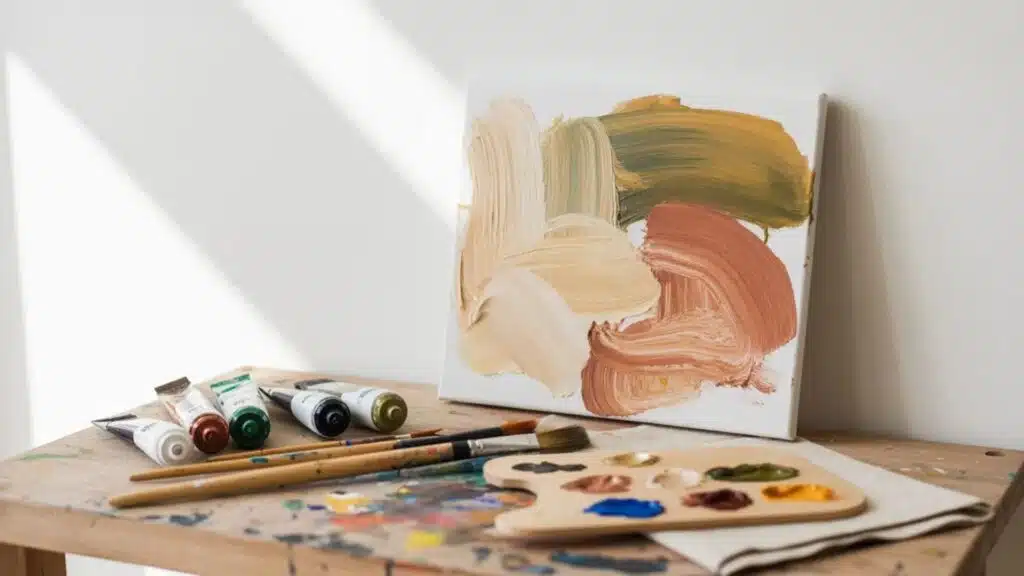
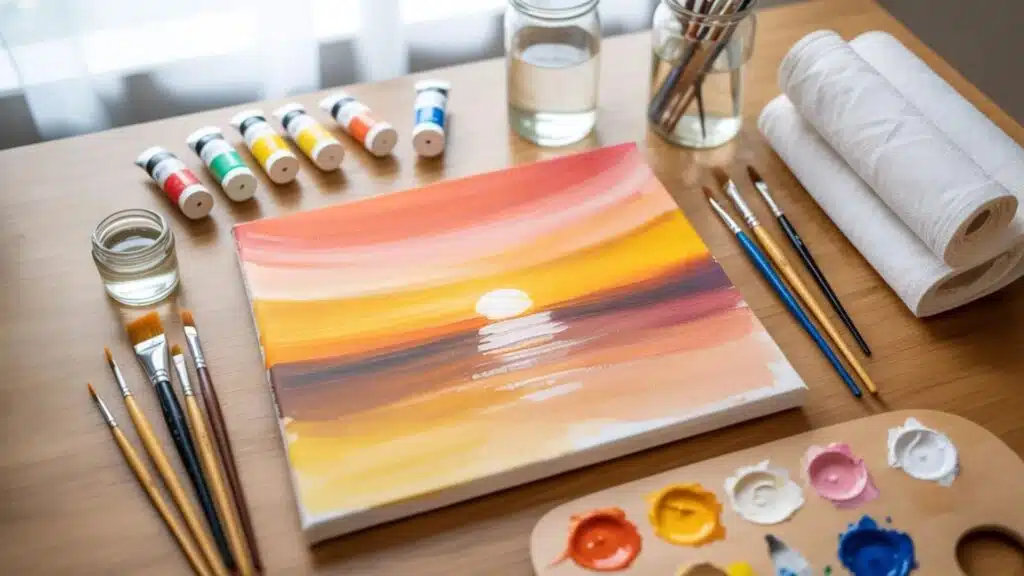
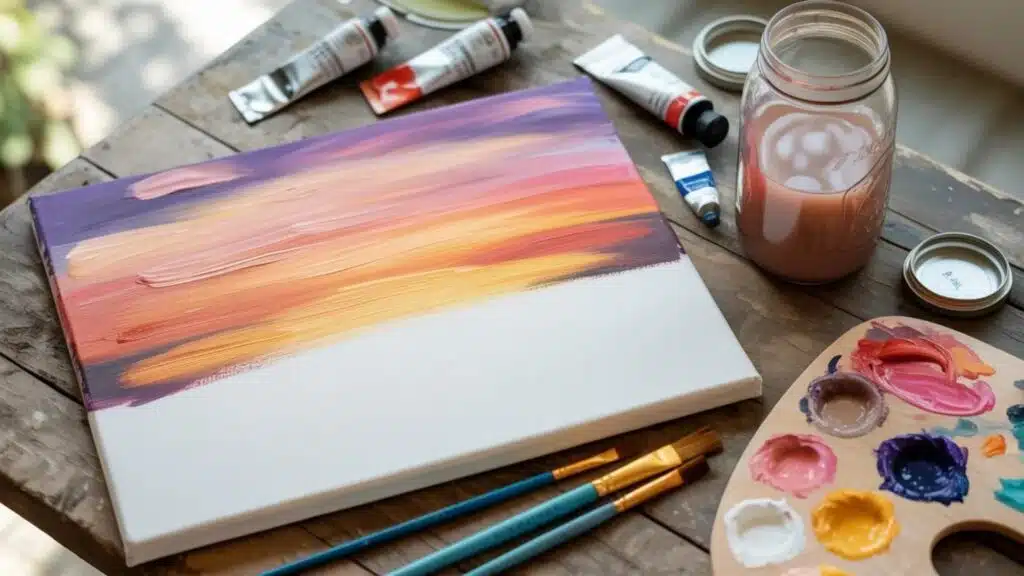
1. The Basics: Acrylic paints are the standard for paint-and-sip because they dry quickly, layer easily, and clean up with water.
A starter set with primary colors plus black and white covers most tutorial palettes. Canvas boards in the 8×10 or 11×14 size range are easier for beginners than stretched canvas, as they sit flat without an easel.
Brushes: three to four per person is enough. One flat brush, one round brush, and one small detail brush handle most beginner techniques.
Palettes can be disposable paper plates, which is a completely legitimate option. Water cups and paper towels belong on every table.
One thing worth knowing early: keeping brushes wet between colors and not letting paint dry on the bristles saves a surprising amount of money over time.
2. The Nice-to-Haves: Aprons or old shirts protect clothing, which matters more than people anticipate in the first session. A small spray bottle keeps the paint palette from drying out mid-session.
Table coverings, whether plastic sheeting or old newspapers, speed cleanup. Easels are not necessary, but they improve posture for sessions longer than an hour.
Setting Up the Space
A good setup takes about 20 minutes and makes a bigger difference than most people expect.
- Natural daylight shows paint colors accurately. At night, a daylight bulb in the 5000K to 6500K range is a solid substitute. Dim warm lighting makes colors look muddy and makes accurate painting genuinely harder.
- Leave enough space between stations so people don’t knock into each other. A U-shaped or semi-circle setup works well for groups because everyone can see each other.
- A separate cleaning station with a water bin, paper towels, and brush soap keeps the main table less chaotic.
- A playlist helps more than most people expect. Smooth jazz or lo-fi for relaxed evenings, upbeat pop for energetic groups.
- A few candles or string lights change the feel of a room without much effort.
- For virtual sessions, kits get mailed out in advance, or participants source supplies from a shared list. Zoom or Google Meet handles the video, with the tutorial played on a separate device or screen-shared.
Choosing What to Paint
Beginners do best with high contrast, simple compositions: sunsets, abstract color fields, silhouette trees, and simple florals.
The reason these works are not just pretty is that they are forgiving. A slightly off-center tree still looks like a tree. A sunset with uneven gradients still reads as a sky.
Couples tend to enjoy split-canvas paintings where each person completes one half of the same image.
It creates a natural conversation piece and takes some of the pressure off anyone who feels self-conscious about painting alongside a more confident artist.
Groups benefit from choosing the same painting, as it provides a shared reference point, but the final results always look completely different from person to person.
That comparison at the end is consistently the most entertaining part of the evening.
The Sip Part: What Actually Works
Wine is the classic choice because it pairs with the slow, social pace of a two-hour paint session. Light whites and rosés tend to work better than heavy reds for longer sessions. That said, the drink matters far less than the setting.
Non-alcoholic options should always be on the table: sparkling water, mocktails, and herbal teas. Craft sodas work surprisingly well as a deliberate choice rather than a fallback.
Snacks should be simple and not require two hands: Charcuterie boards, bruschetta, plain crackers, popcorn. Anything picked up between brushstrokes is fair game.
Avoid anything with heavy dye potential near white canvases.
What to Do With the Paintings Afterward
This does not get talked about enough. The paintings end up in a pile, get photographed once, and then sit in a corner.
A few better options: frame the best one and hang it, gift it with context (painted on someone’s birthday, for a housewarming), or donate a set to a local charity auction.
Local frame shops often offercanvas stretchingat reasonable prices. A decent frame turns a casual paint night result into something worth keeping on the wall.
The Honest Summary
Paint-and-sip at home works because the entry barrier is low and the payoff is real.
Two hours, some acrylic paint, a tutorial pulled up on a laptop, and something to drink get most people to a finished painting they are actually proud of.
The mess is manageable, the setup is simple, and the experience tends to be more memorable than a regular night in.
Pick a tutorial this week, clear a table, and see what happens.