Picking up a brush for the first time feels harder than it should. You buy the supplies, set up your space, and then stare at a blank white canvas doing absolutely nothing. I have been there.
After ten years of crafting and teaching art to people of all ages and skill levels, I know the blank canvas problem is not a talent problem. It is a starting point problem.
Give someone a specific idea, a few basic techniques, and the right supplies, and the intimidation disappears fast.
Here are canvas painting ideas organized by category, so you can find one that fits where you are right now.
What Makes a Canvas Painting “Easy”?
Easy canvas paintings share three things: a limited color palette, simple shapes that don’t demand precision, and compositions that look good even when small mistakes happen.
That’s it. Once you have those three things, almost any subject becomes manageable.
Acrylic paint is the right call here. It dries fast, cleans up with water, costs less than oil paint, and you can paint right over mistakes once the surface dries.
Most beginners who struggle early on are fighting their medium. Switching to beginner-friendly paintremoves one of the biggest frustrations before it even starts.
Supplies You Actually Need
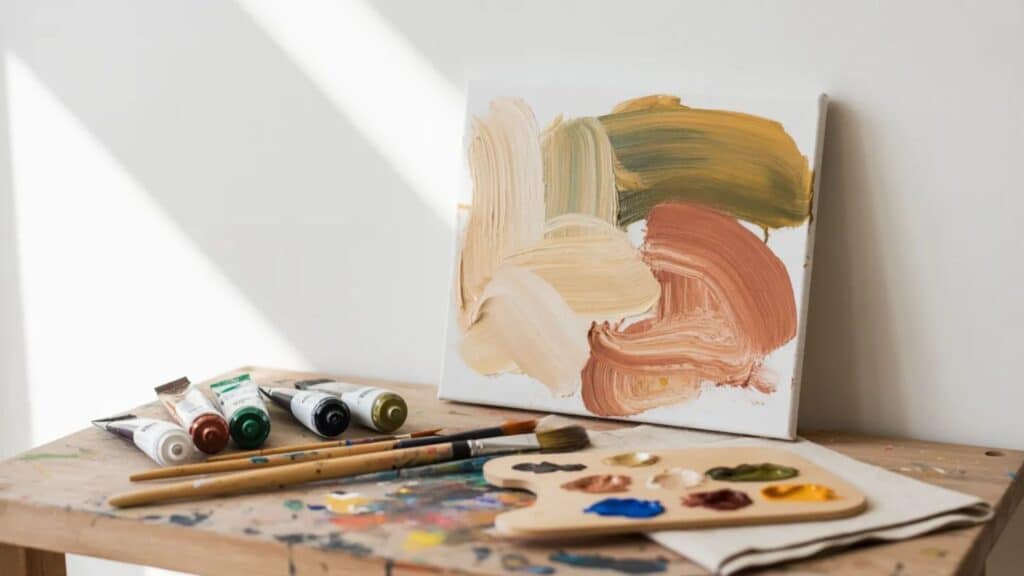
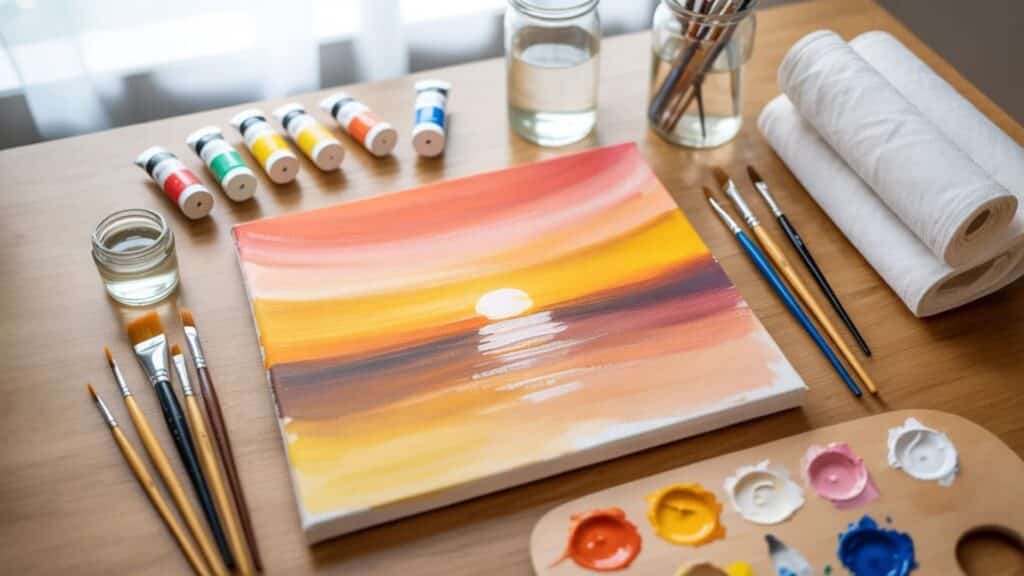
You do not need much to get started, and overbuying at the beginning usually adds clutter. These six things cover every idea in this list.
- Canvas: Start with a pre-stretched cotton canvas no larger than 11×14 inches. Smaller surfaces are less intimidating, cost less if things go sideways, and let you finish a painting in a single session.
- Acrylic paints: A basic starter set works fine. No need for artist-grade until you know what colors you actually reach for.
- Brushes: Three types cover almost everything: a flat brush for broad strokes and backgrounds, a round brush for detail work, and a fan brush for texture like grass, fur, or foliage.
- Plastic palette: For mixing colors. Easy to clean and cheap to replace.
- Paper towels: More useful than you’d think. Wipe brushes between colors constantly.
- Gesso: Most beginners skip this. It’s a primer coat that helps paint stick without soaking into the canvas. Most store-bought canvases come pre-gessoed, so check the label first. If yours isn’t primed, one smooth coat and 20 minutes of drying time is all it takes.
5 Basic Techniques That Cover Almost Every Idea Below
Before picking an idea from the list, spend two minutes getting familiar with these.
1. Blending mixes two wet colors directly on the canvas for smooth transitions. Use a slightly damp brush and work quickly before the acrylics dry.
2. Dabbing means pressing and lifting the brush tip to make leaves, clouds, or flower petals. A sponge or even your fingertip works just as well.
3. Dry brushing uses a nearly dry brush dragged across the canvas to create a rough texture, good for tree bark, grass, and fur.
4. Layering builds depth by painting the background first, letting it dry, then adding midground and foreground details on top. Acrylics dry fast enough to do all three layers in one sitting.
5. Painter’s tape lines let you create clean geometric edges without needing a steady hand. Press the tape down firmly, paint over it, wait for it to dry, then peel slowly.
25 Easy Canvas Painting Ideas
Canvas painting can look intimidating until you realize that most great beginner pieces come down to three things: the right idea, a few tubes of acrylic, and the willingness to put paint on the surface.
1. Sunset Over Water
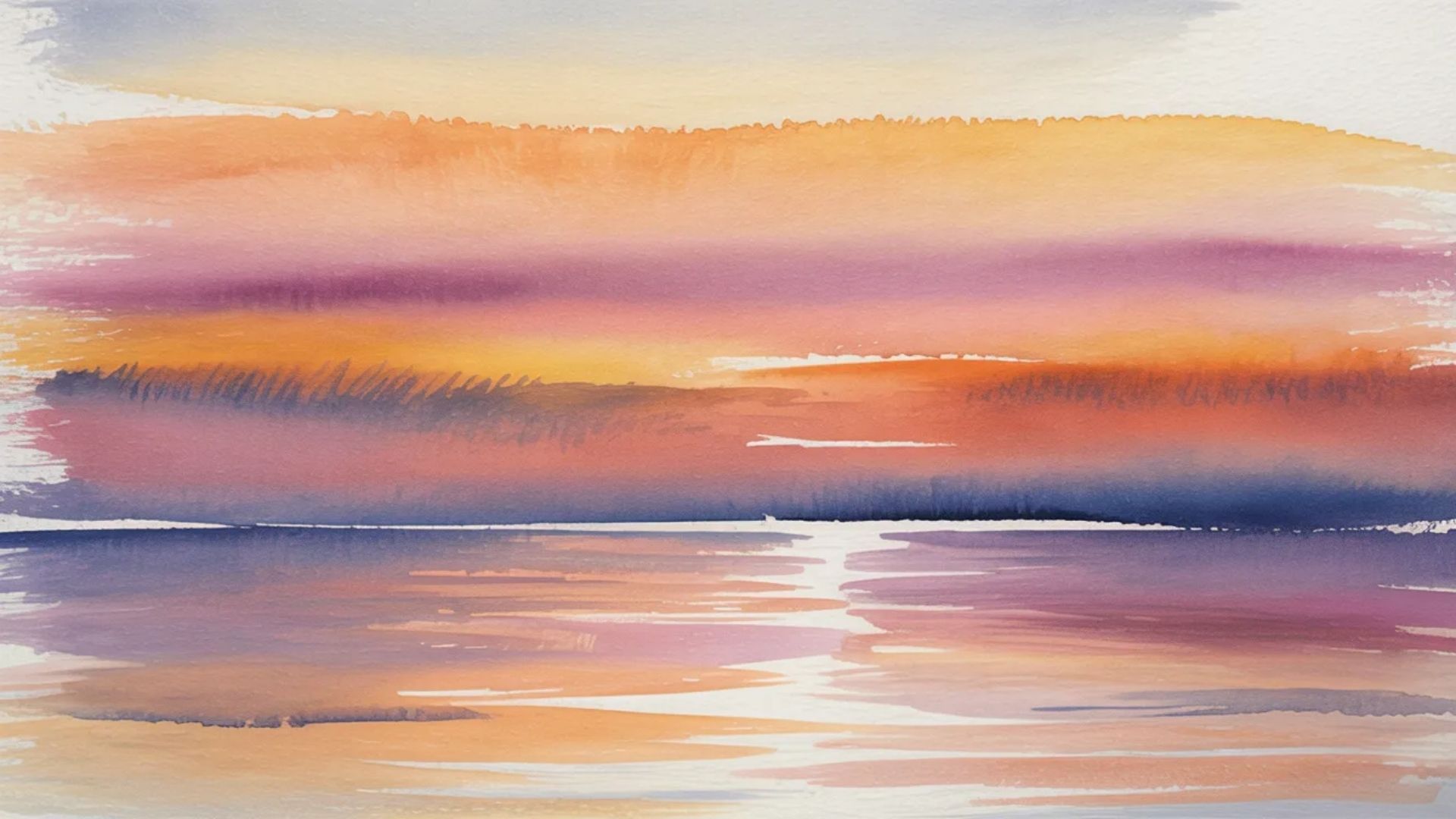
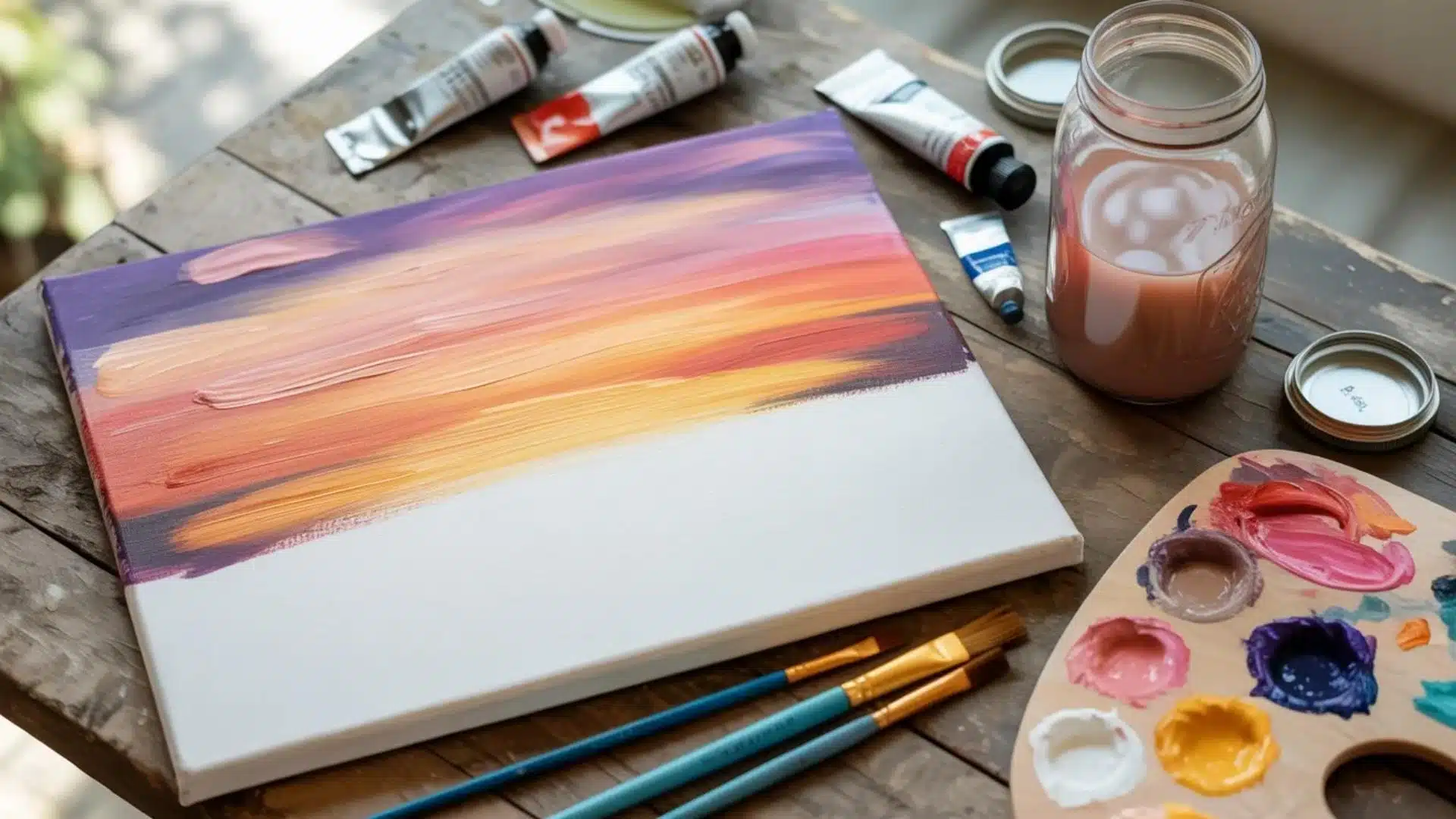
Paint horizontal bands of orange, pink, and purple across the upper two-thirds of the canvas. Blend them while still wet using a damp flat brush. Let dry.
Add a dark flat horizon line and loosely mirror the sky colors below it for water. One of the best first paintings because blending always looks intentional, even when it is messy.
2. Galaxy Painting
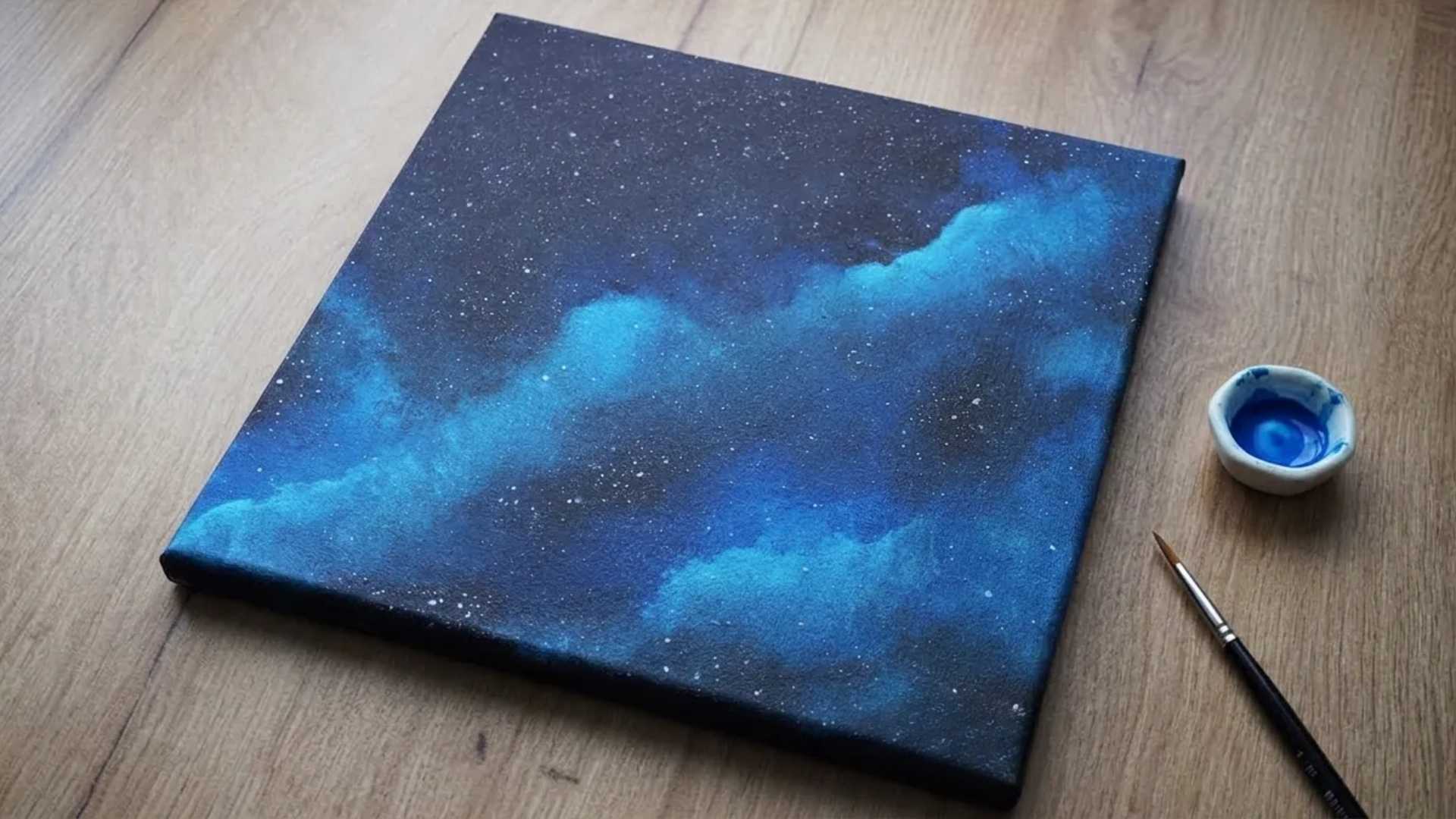
Cover the canvas in dark navy. While dry, use a sponge to dab patches of purple, blue, and white across the surface for nebula clouds.
Load a toothbrush with white paint, hold it over the canvas, and run a thumb across the bristles to flick fine star dots onto the canvas. Add a few larger dots with a brush for planets. The whole thing takes about an hour.
3. Birch Trees
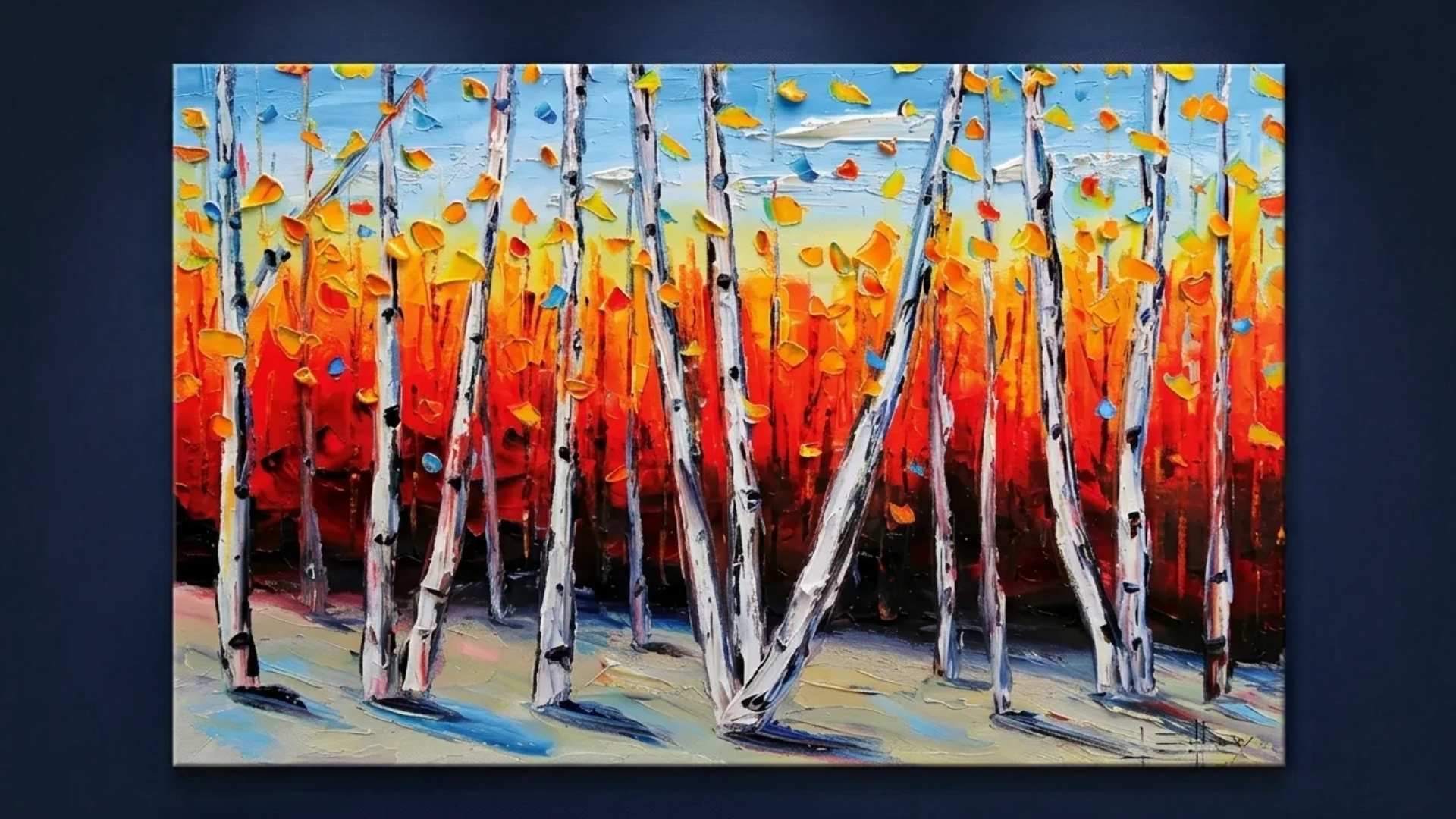
Paint a soft blended sky orange, pink, or pale blue as the background. Let dry. Use a flat brush to pull thin white vertical lines from top to bottom for trunks.
Dab autumn leaf colors (red, orange, yellow) with a sponge or fingers around the top of each trunk. Add short black horizontal dashes along the trunks for bark texture. Looks much harder than it is.
4. Color Block Abstract
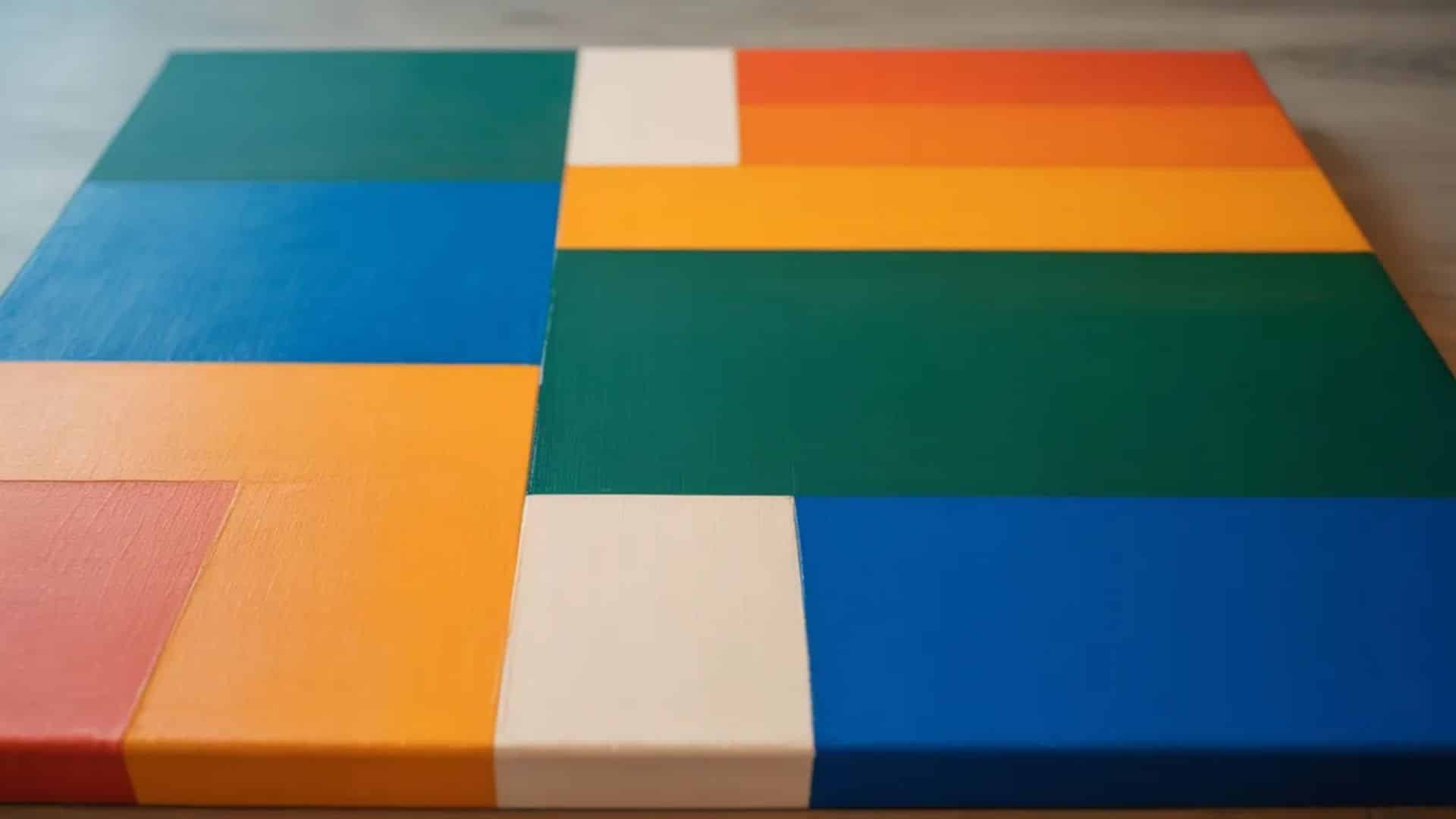
Paint large, flat, solid rectangles next to each other. Three or four colors, slightly varied rectangle sizes. That is the whole painting.
Mark Rothko built a career on exactly this. Keep the edges slightly imperfect; perfectly straight lines look mechanical.
5. Mountain Silhouette
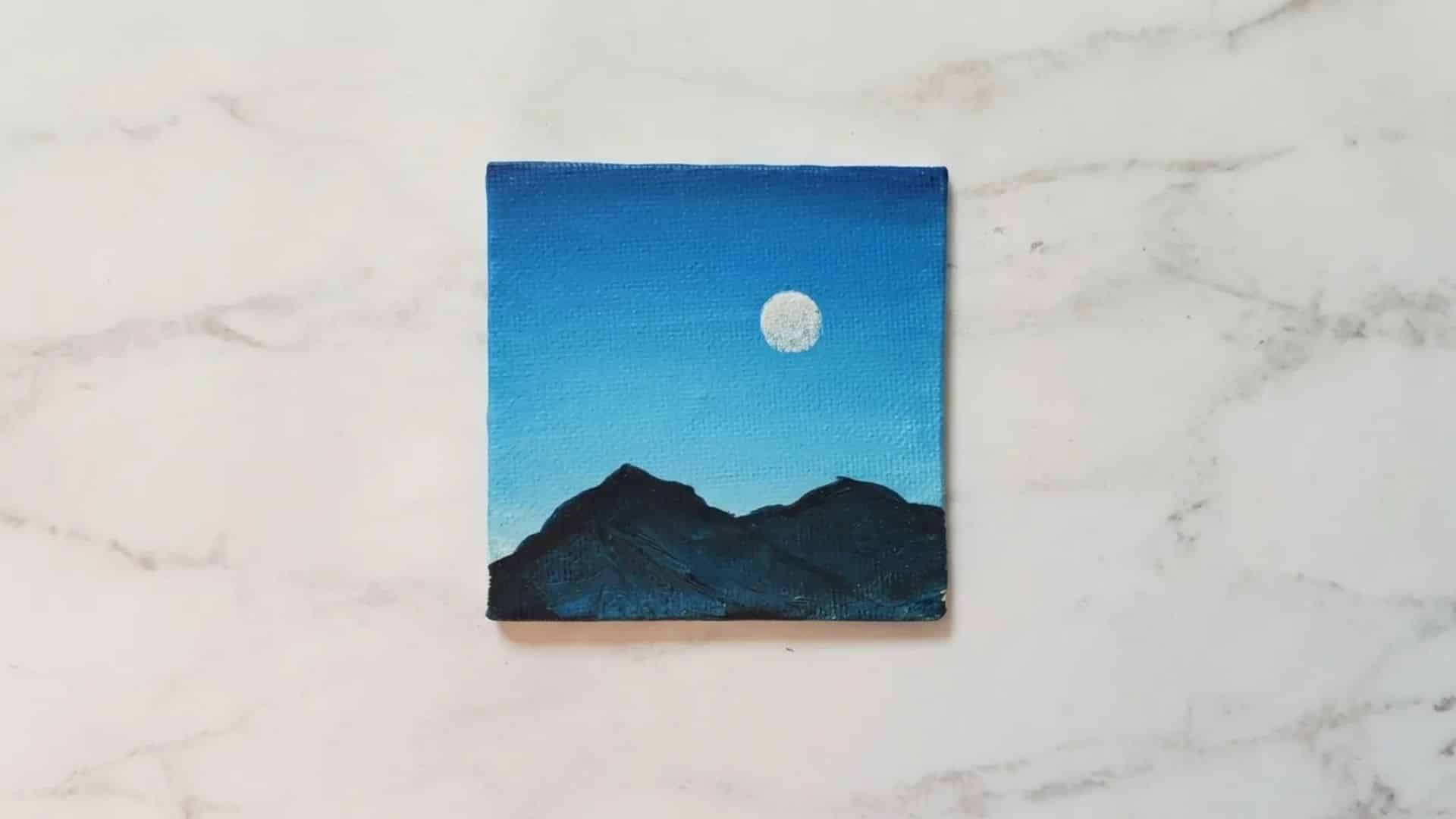
Load a palette knife with a mix of blue and grey paint. Scrape it across the canvas in a triangular mountain shape, pressing the flat of the knife for broad strokes.
Scrape on white for snow peaks. The knife creates a natural texture that a brush cannot. Fast, forgiving, and works at any size.
6. Single Sunflower
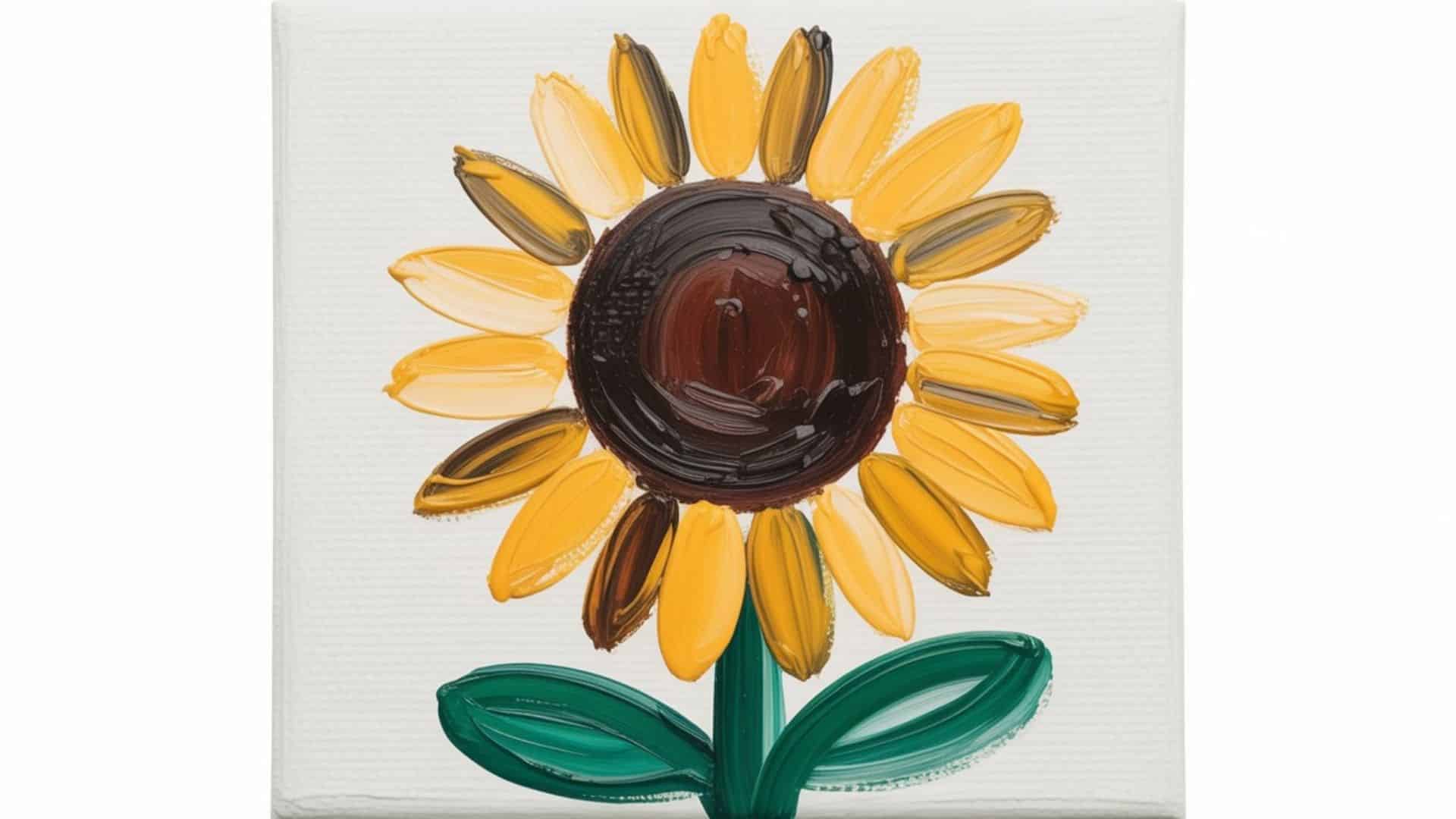
Paint a large dark brown circle in the center of the canvas. Surround it with long yellow petals using a round brush, pulling each stroke outward from the center.
Add a few petals with slightly different angles so they do not look uniform. Add a simple green stem and two leaves below. This one is genuinely hard to mess up.
7. Paint Pour
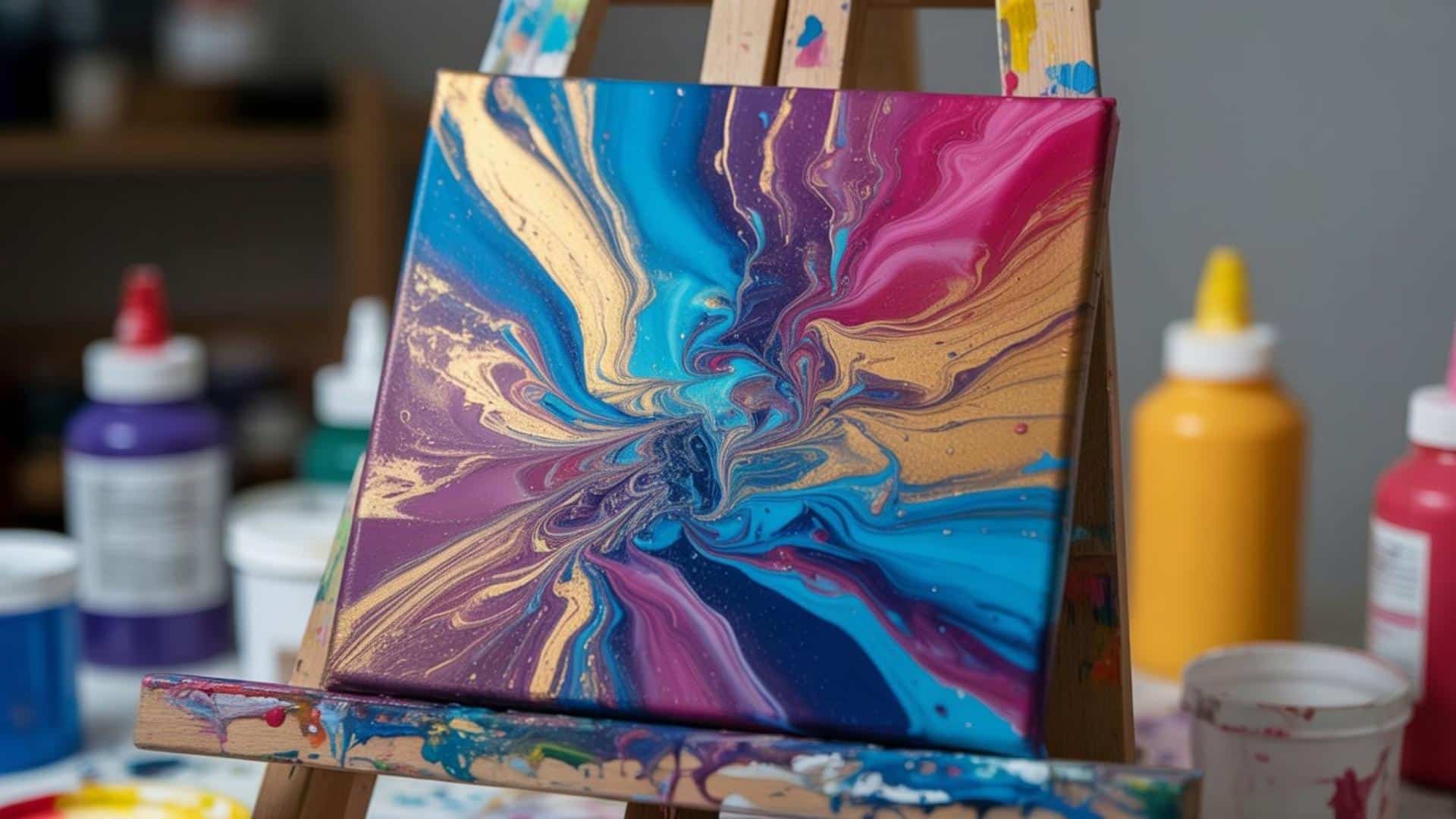
Mix acrylic paint with pouring medium in separate cups, one color per cup, consistency of warm honey. Pour them slowly onto the canvas in streams, overlapping.
Tilt the canvas in different directions to let the colors flow and merge. Every result is different. This is one of those easy canvas painting ideas that requires almost no skill and produces consistently good-looking work.
8. Black Cat Silhouette
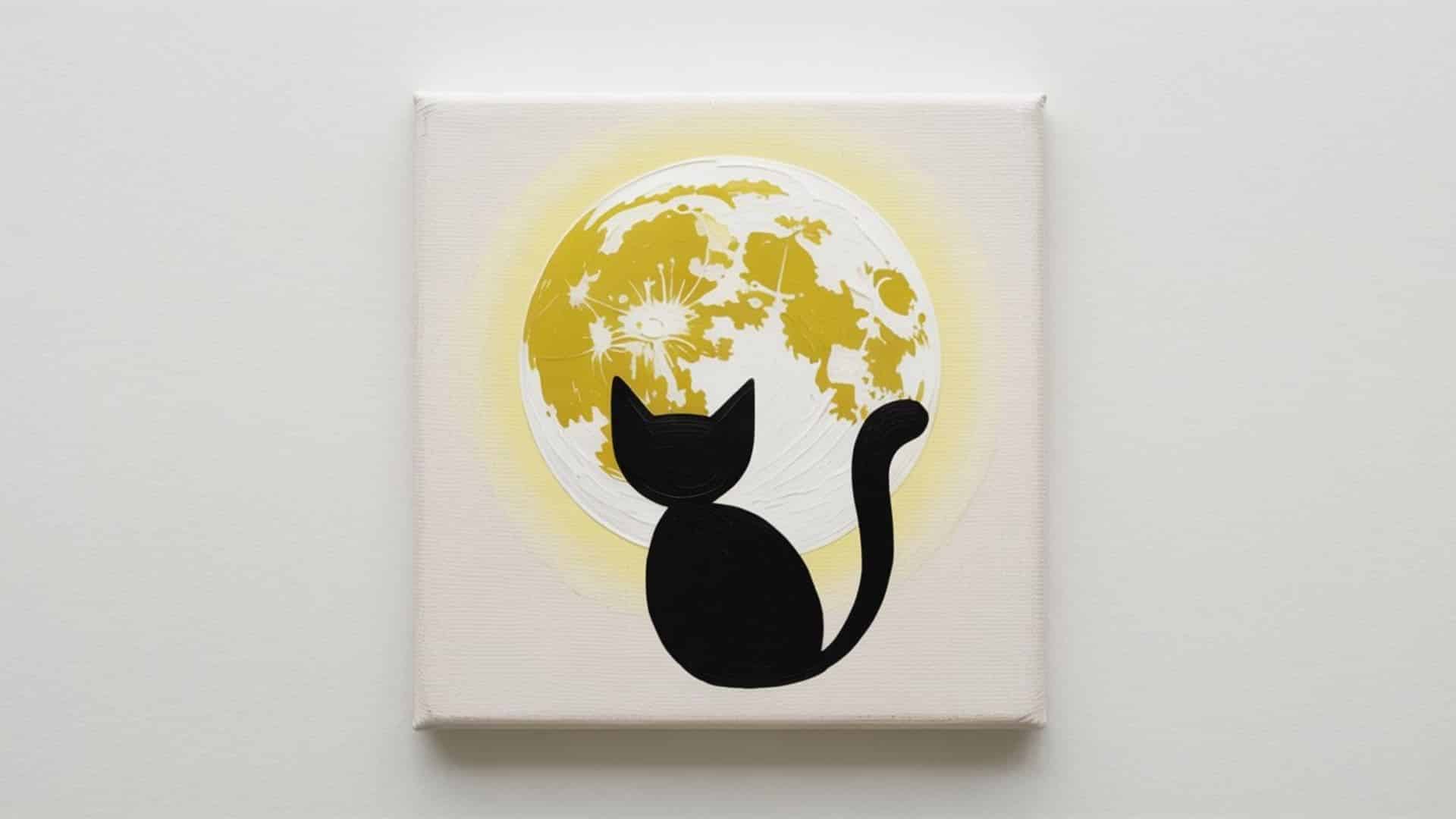
Paint a large, full moon in the upper center of the white base, with soft yellow edges. Let dry. Paint a simple black cat silhouette sitting in front of it: oval body, pointed ears, curved tail.
The silhouette does not need detail. The contrast between black and the glowing moon does all the work.
9. Geometric Tape Painting
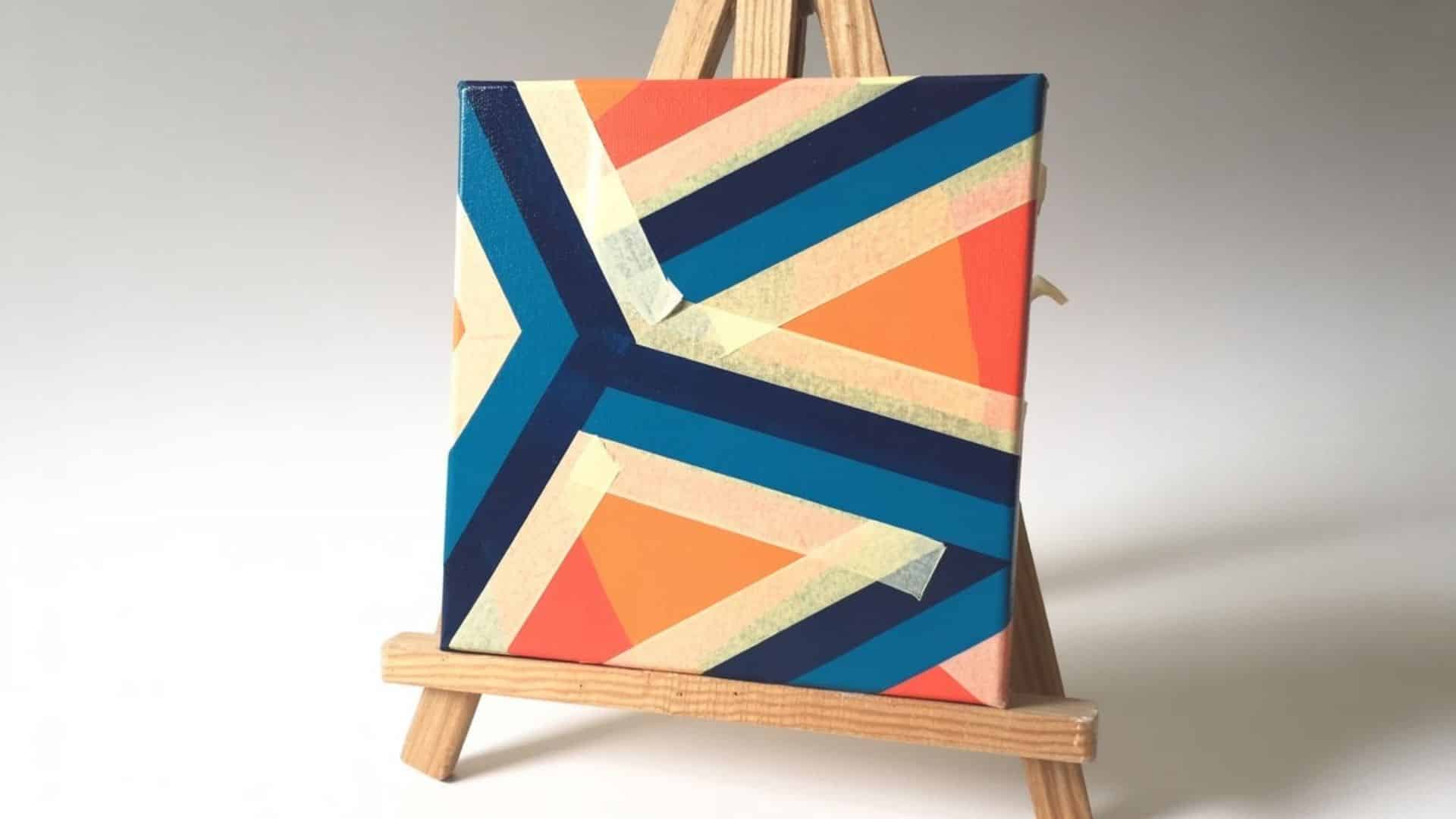
Press painter’s tape across a dry canvas in a pattern of triangles, chevrons, a grid, or diagonal stripes. Paint each section a different color. Let dry completely. Peel the tape slowly.
The crisp edges look precise and intentional without requiring a steady hand. Good for anyone who feels nervous about freehand work.
10. Cherry Blossom Tree
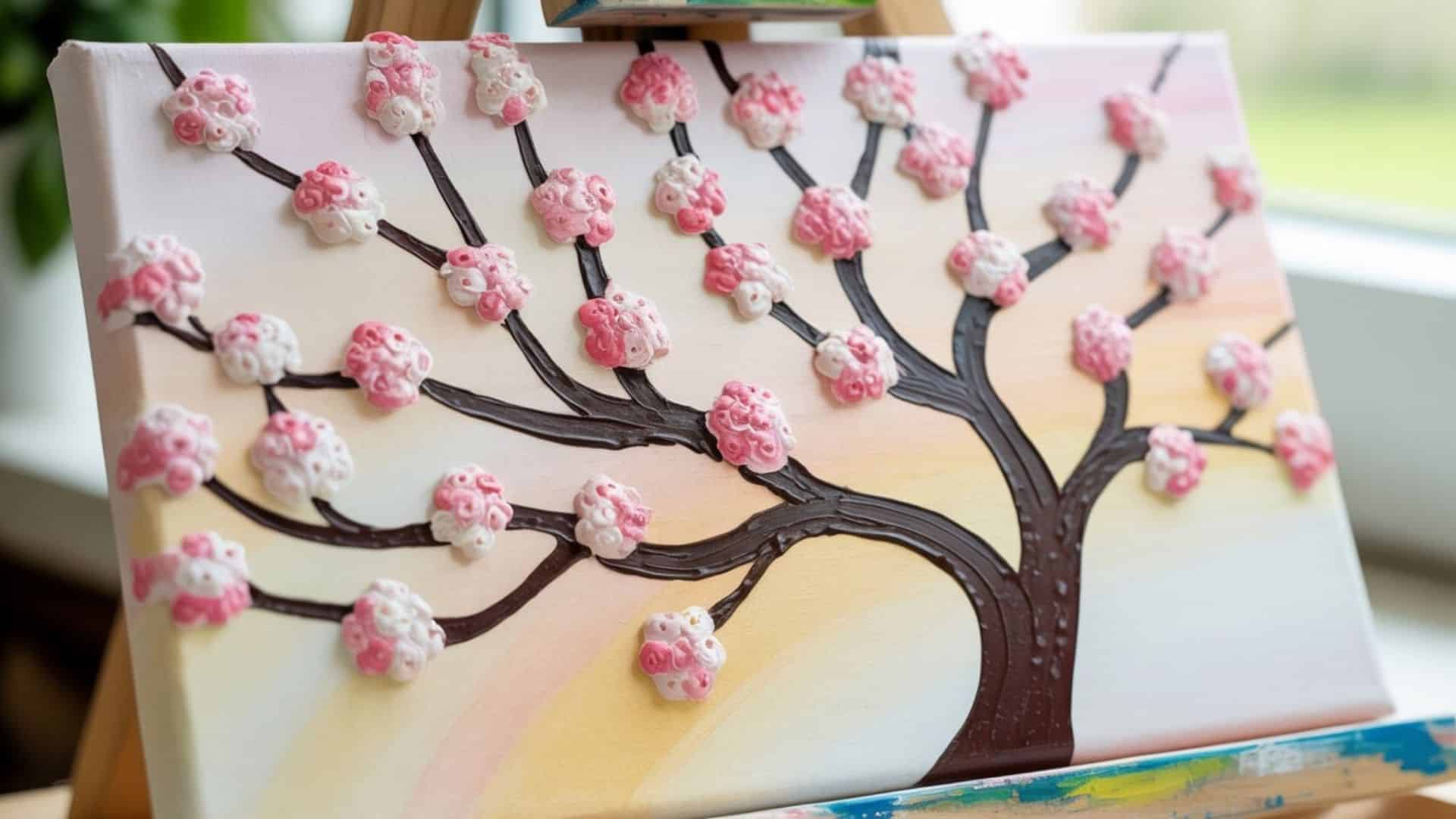
Paint a flat, warm, or neutral background. Let dry. Use a round brush to paint a dark brown trunk and bare branches spreading upward.
Then dab pink and white paint at the branch tips using the brush tip, a finger, or a cotton swab for blossoms. The dabbing technique is what makes this one easy; no petal-by-petal precision is needed.
11. Lavender Field
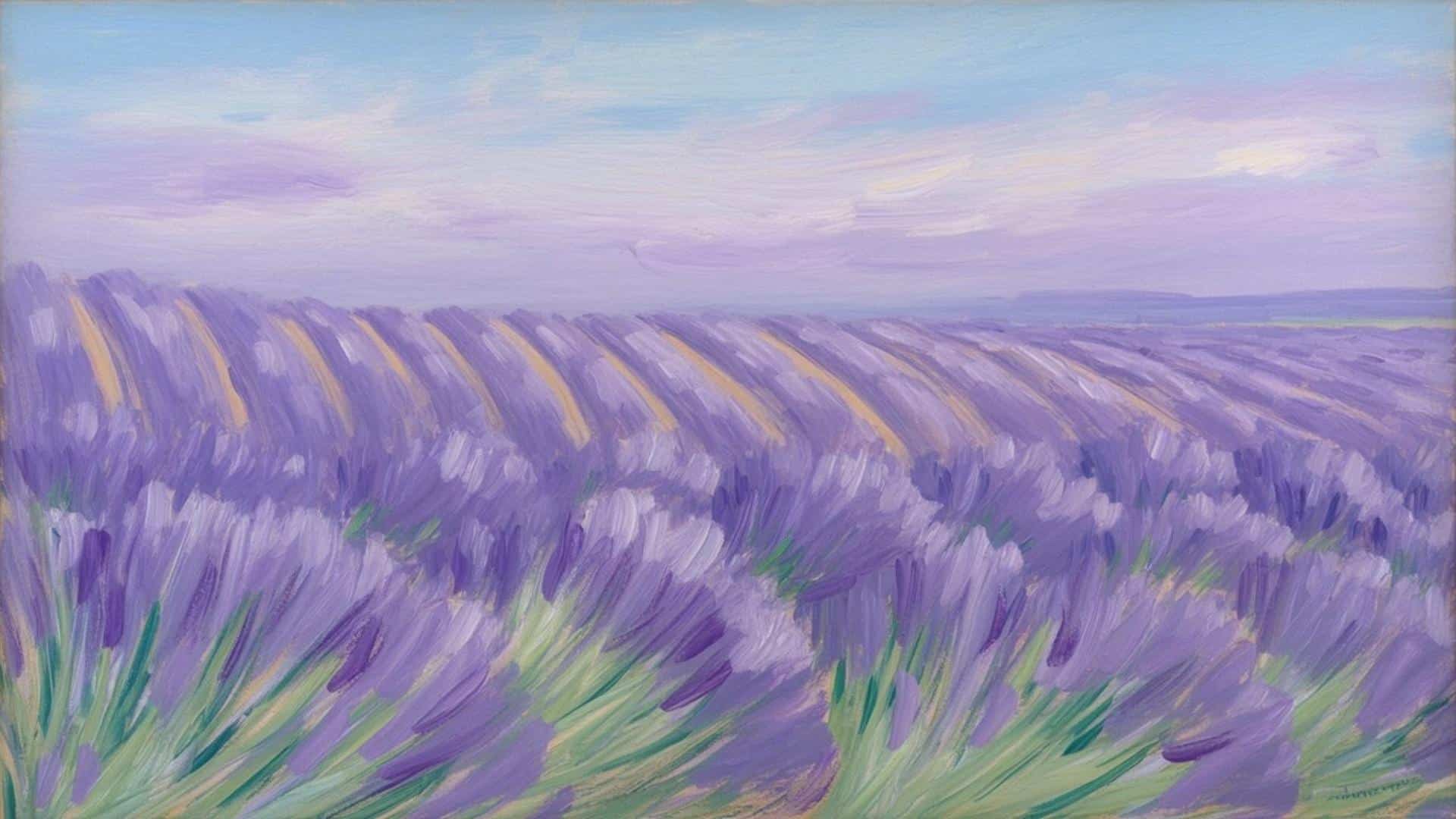
Paint a soft sky in the upper third: light blue or pale lavender blended horizontally. For the field below, load a fan brush with two shades of purple and make short vertical strokes across the lower two-thirds.
Vary the density of thicker strokes in the foreground, lighter and smaller toward the horizon. Add a few green strokes for stems between the purple.
12. Moon Phases
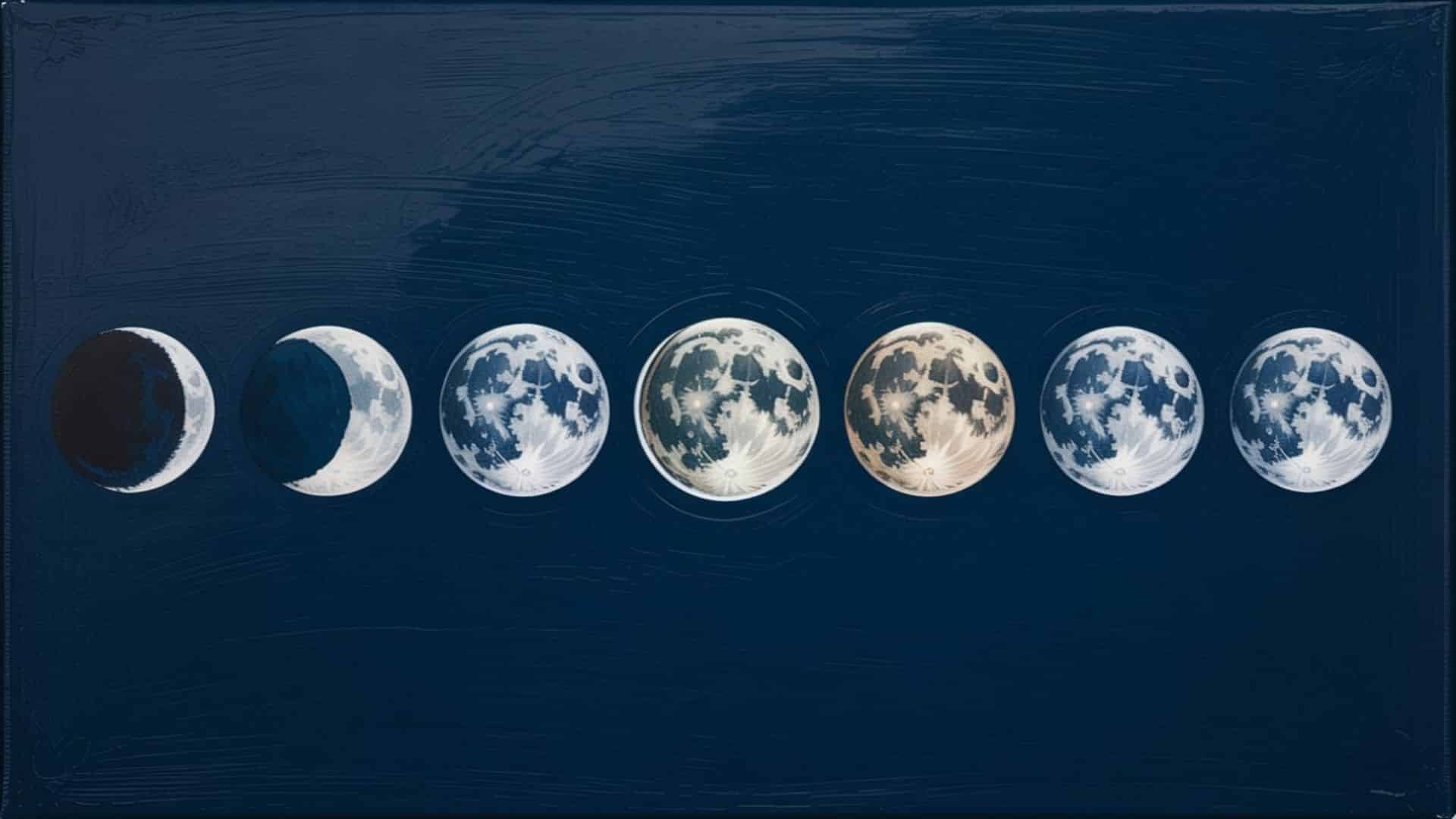
Paint the canvas dark navy or black. Use a round brush and grey-white tones to paint a row of seven circles across the canvas, each showing a different phase of the moon: new moon (all dark), crescent, quarter, gibbous, full, and back again.
Blend the light and shadow sides gently. Looks good as a set or as a single long canvas.
13. Ombre Gradient
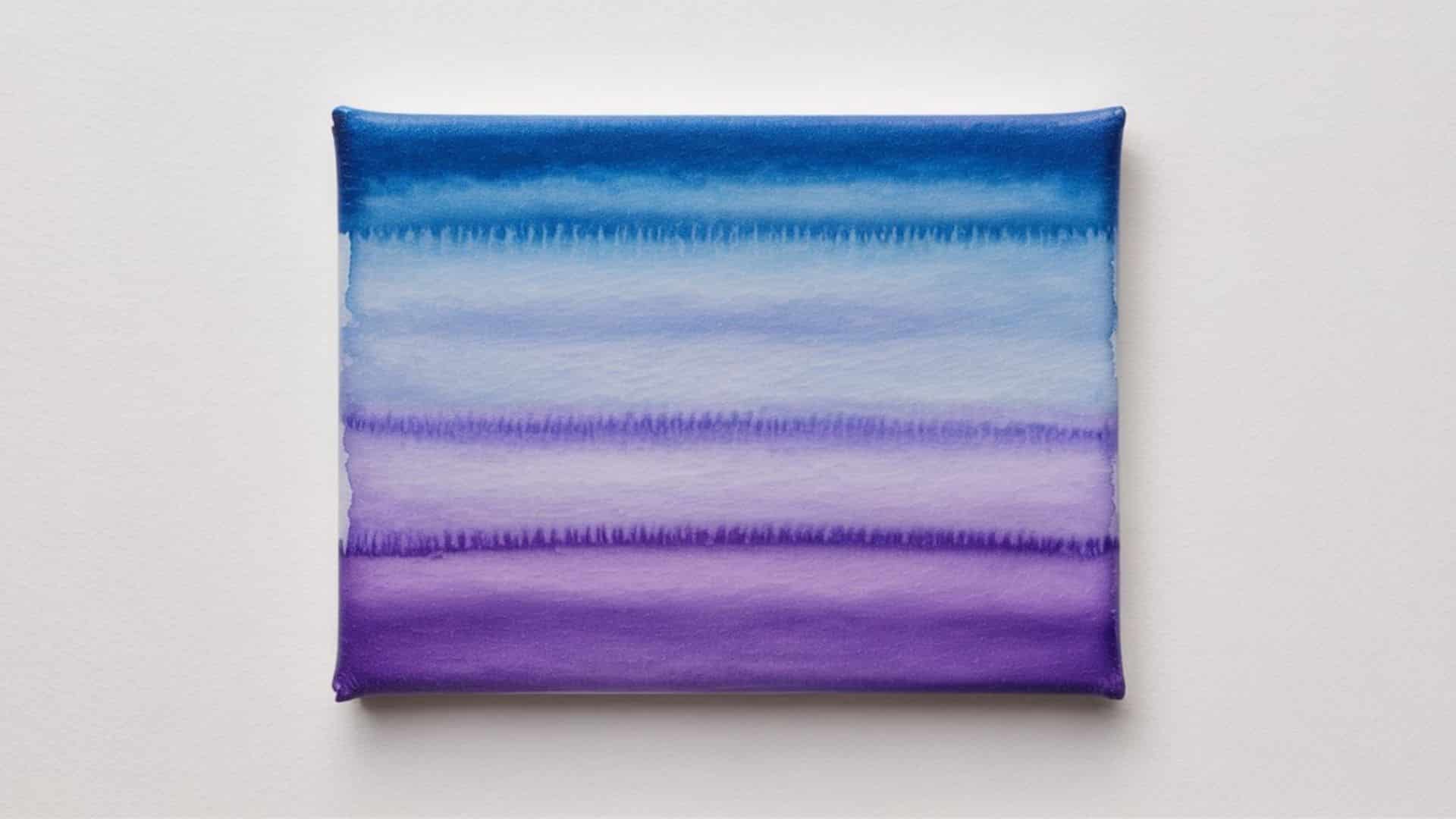
Pick two colors that sit next to each other on the color wheel: blue and purple, orange and red, pink and yellow. Paint one color at the top, the other at the bottom, and blend them in the middle while both are wet.
That is the whole painting. Frame-worthy on its own, or use it as a background for a silhouette added once dry.
14. Birds on a Wire
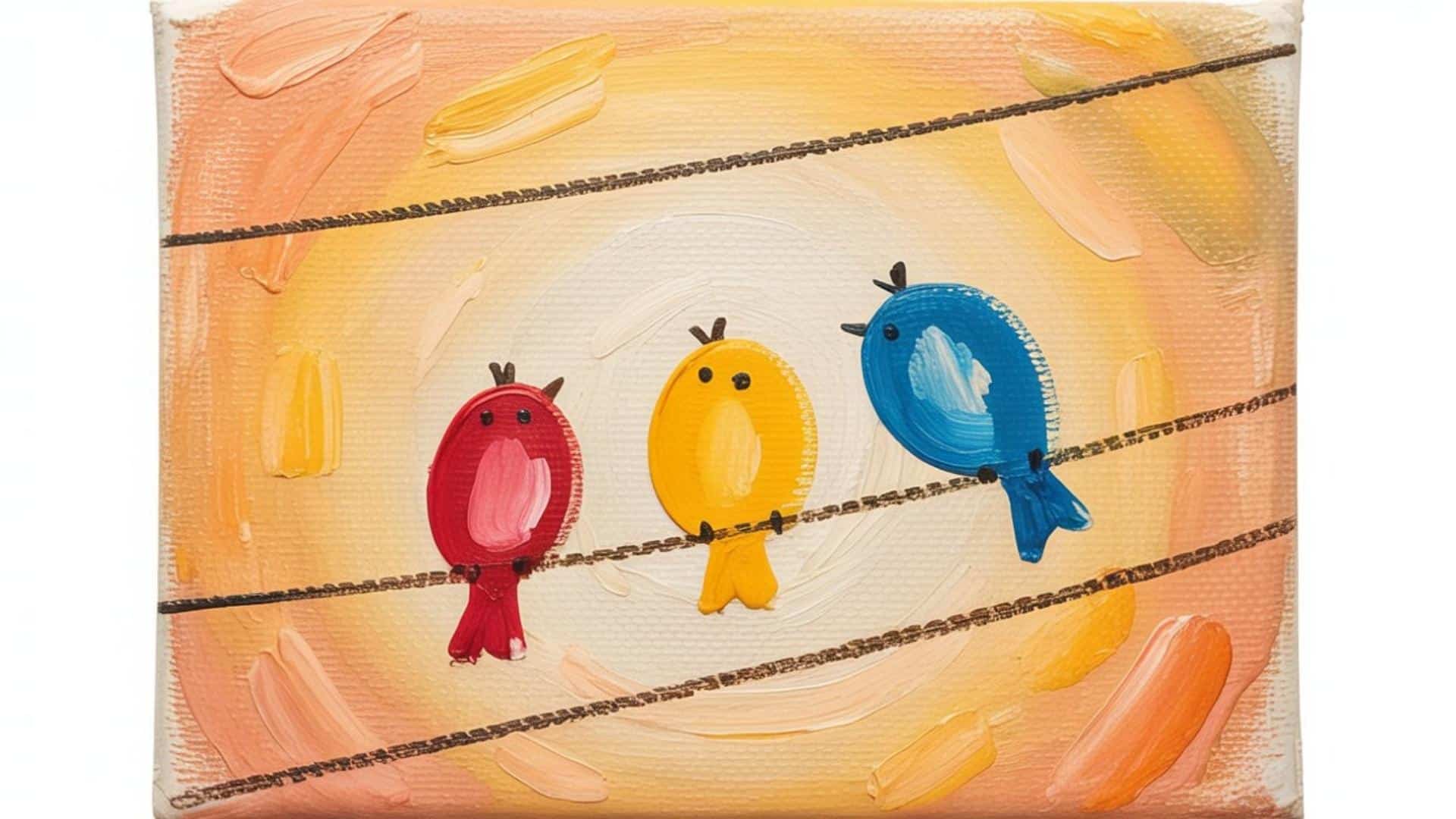
Paint a warm textured background in tan, orange, or peachy tones using rough horizontal brushstrokes. Let dry. Draw two or three diagonal wire lines across the canvas using a thin round brush and dark paint.
Paint small, simplified bird shapes perched on the wires, just oval bodies, small heads, and tiny tails. Color them in solid bright colors. The repetition makes this beginner-friendly.
15. Water Lilies
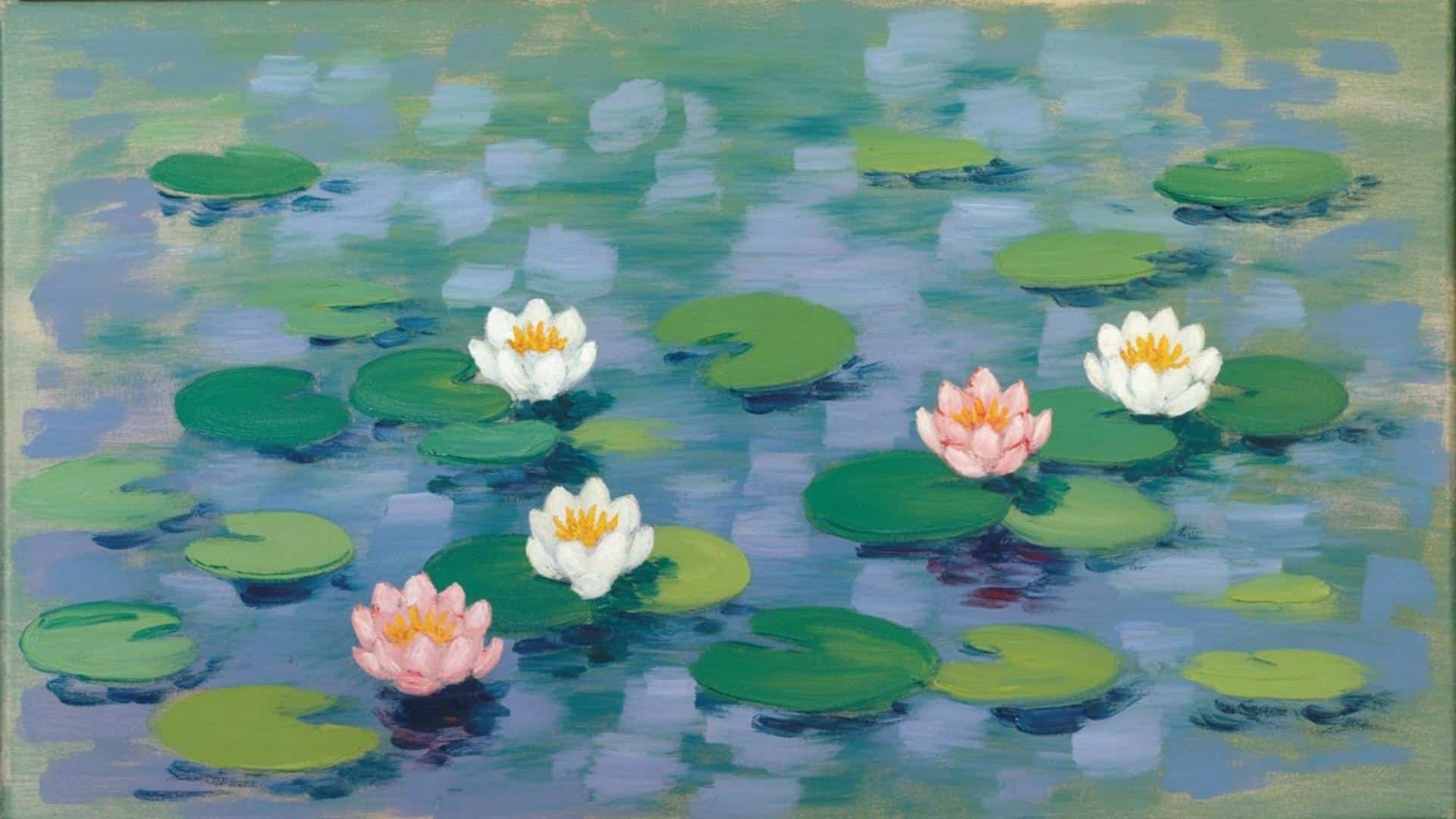
Paint the canvas blue-green for the pond surface. Blend in a few darker and lighter patches for depth. Let dry. Add flat, round lily pads in dark green using a palette knife or flat brush.
Place simple pink or white flower shapes on top of some of the pads, with five rounded petals around a yellow center. Looks calm and finished without requiring realistic detail.
16. Constellation Art
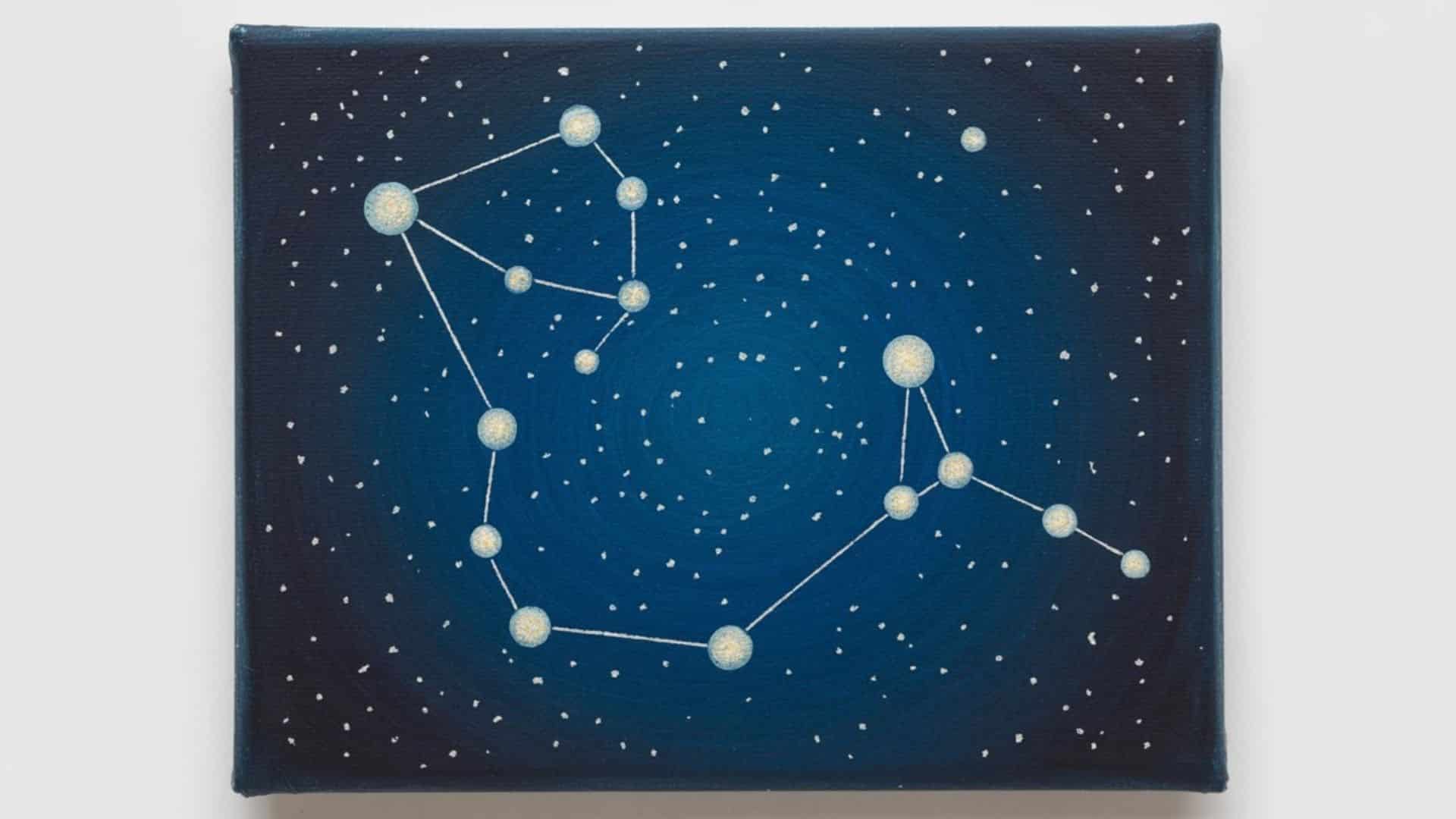
Paint the canvas black or deep navy. Use the tip of a brush handle dipped in white paint to press small dots onto the surface for stars.
Connect certain stars with very thin white lines to form a real constellation, Orion, and the Big Dipper both work well. Add a soft glow behind bright stars by dabbing a tiny circle of diluted white paint around each dot.
17. Tulip Bouquet
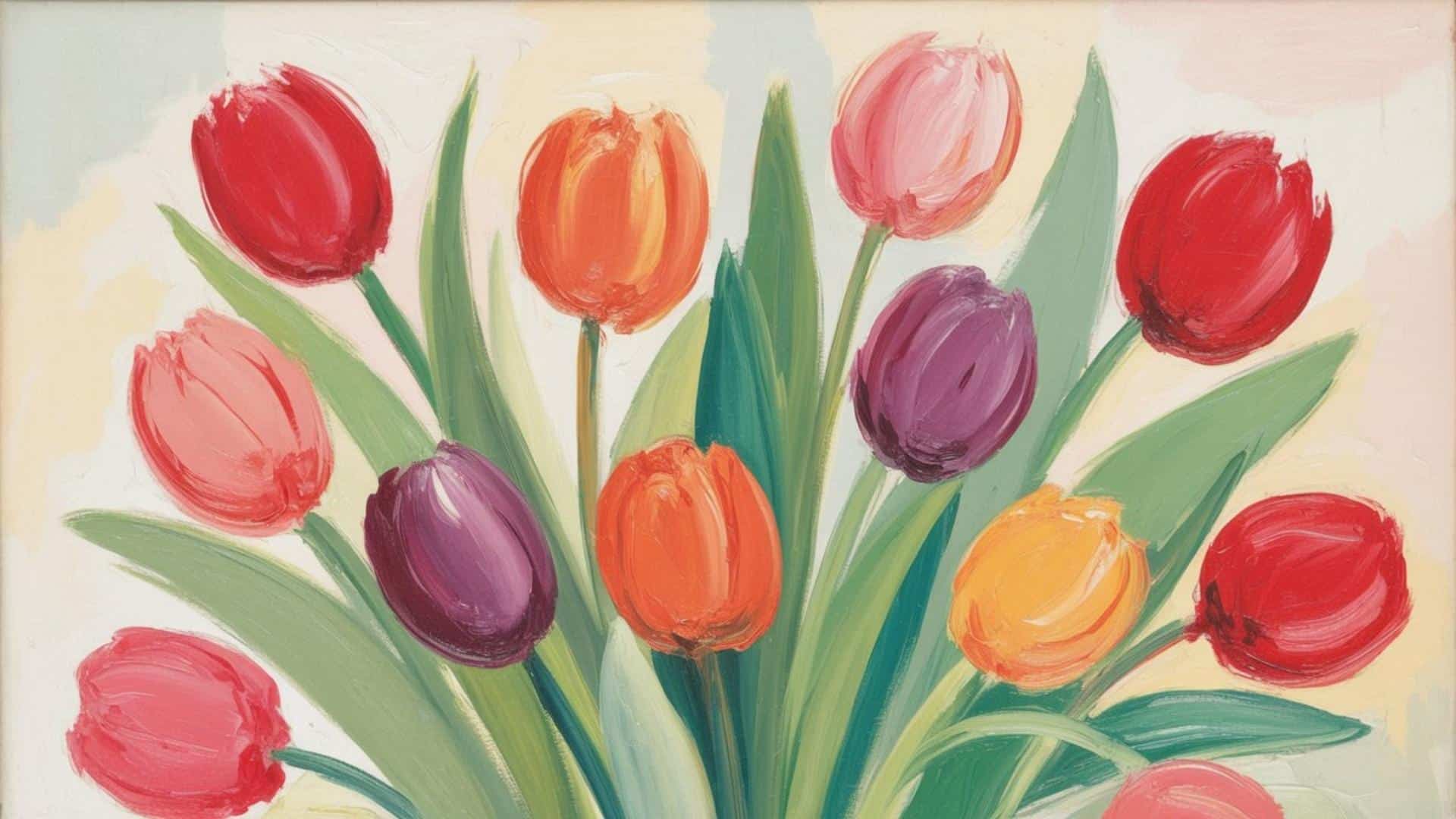
Paint a light or neutral background. For each tulip, use a round brush to paint two or three rounded ovals grouped at the top of the stem no need to paint individual petals.
Vary the colors: red, pink, purple, orange. Add simple green stems and two or three long, narrow leaves. The loose, impressionistic approach is what keeps this easy.
18. Minimalist Line Face
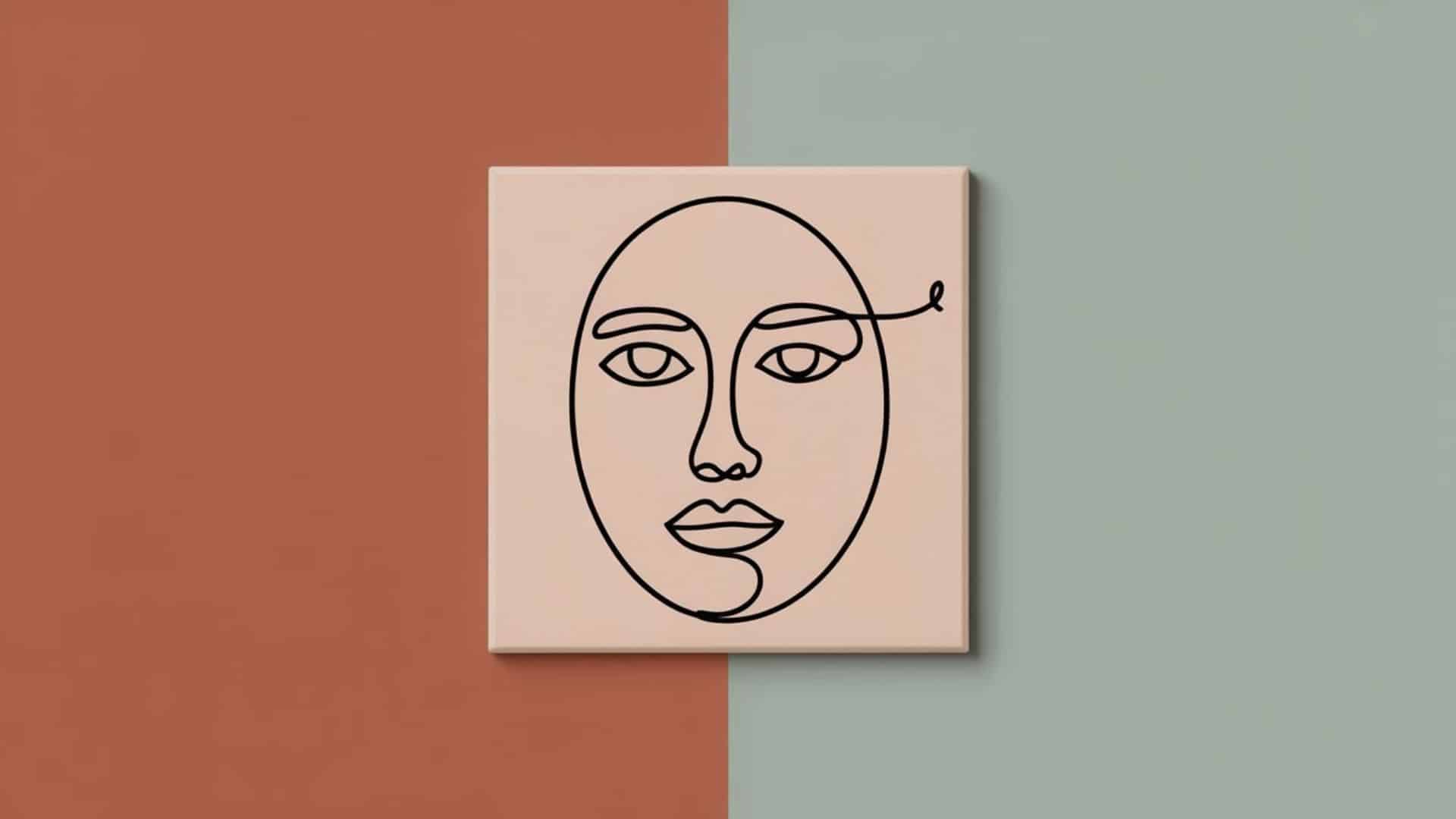
Paint a flat, solid background in any color: terracotta, sage, or dusty blue. Let dry. Using a thin, round brush and black paint, draw a face in one or two continuous, flowing lines: an oval for the face, a curved nose, two almond shapes for eyes, and a simple mouth.
The lines do not need to connect or be perfect. Minimalist line art works because the incompleteness is the point.
19. Autumn Forest
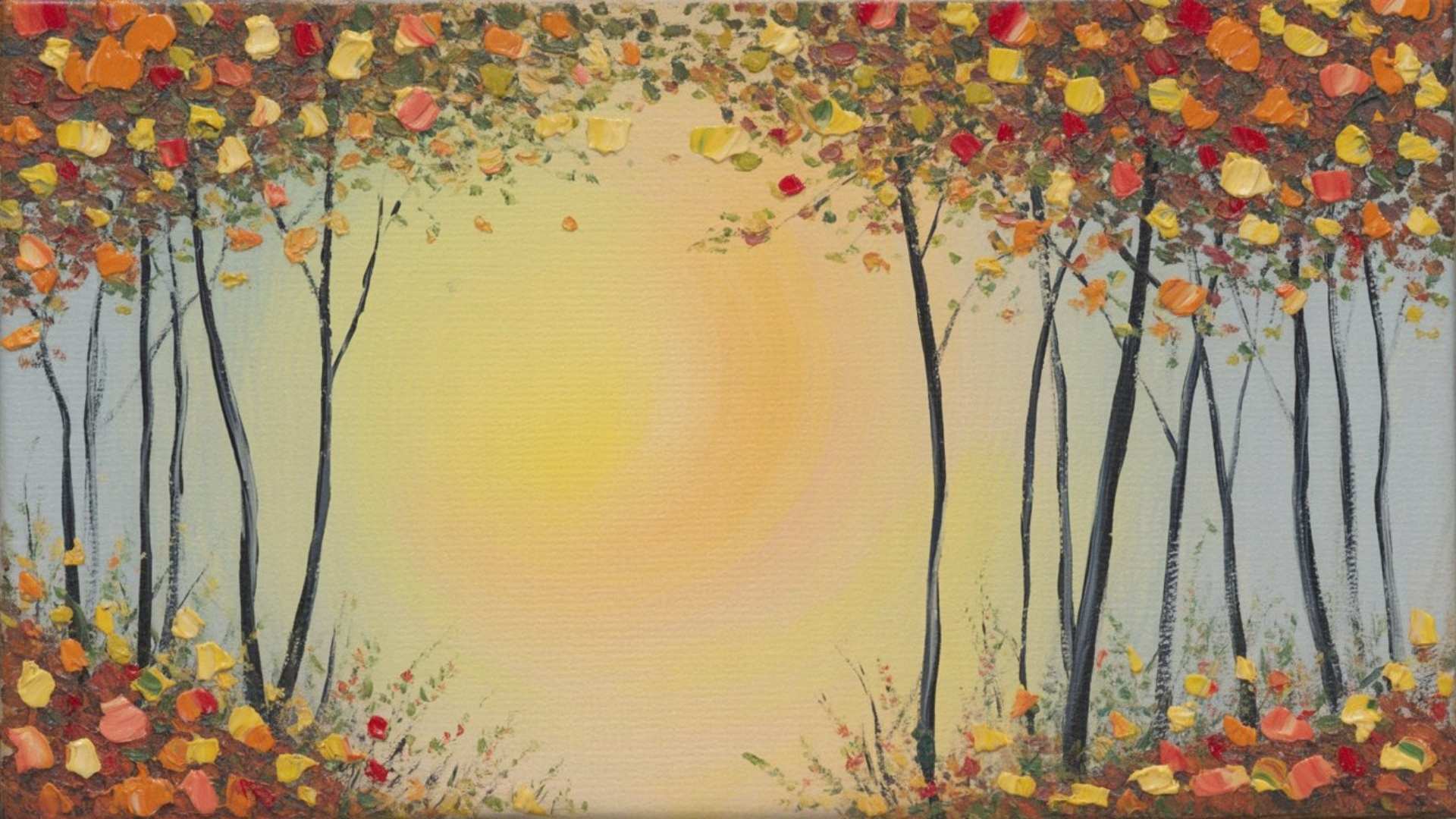
Paint the sky first, a soft yellow-orange blend. Let dry. Use a flat brush to pull thin dark tree trunks from the bottom of the canvas upward.
Then dab red, orange, yellow, and brown paint across the upper portion of each trunk and around the canvas using a sponge or crumpled paper for leaf texture.
Work the foreground trees darker and the background ones lighter for depth.
20. Beach Scene
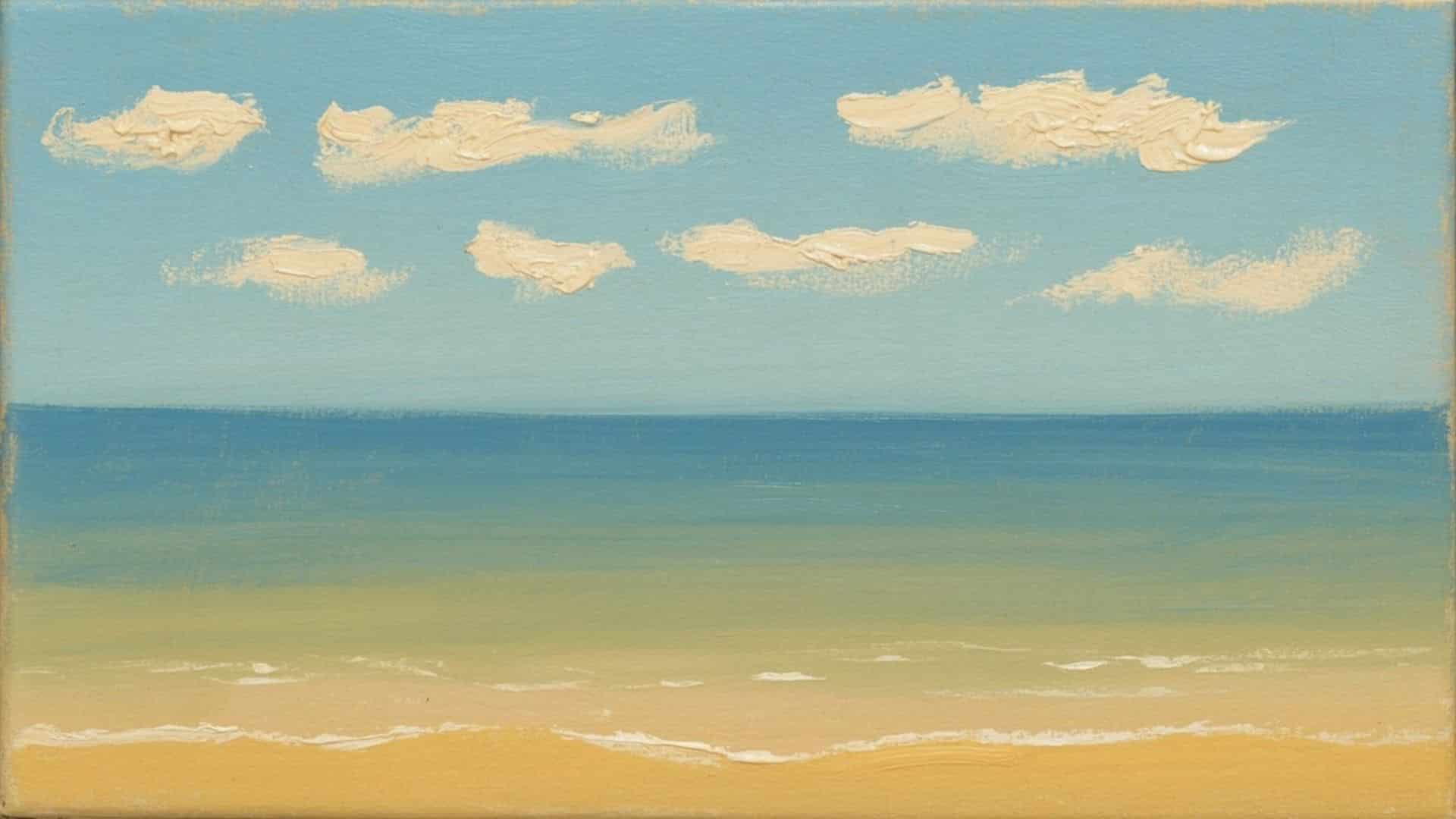
Divide the canvas roughly into thirds: sky, water, sand. Paint the sky in pale blue with loose white cloud shapes dabbed in. Blend the water in slightly deeper blue-green below the horizon.
The sand is the warmest layer at the bottom, a mix of beige and warm yellow. Add a thin white foam line where the water meets the sand. Simple and consistently satisfying as a first landscape.
21. Fruit Still Life
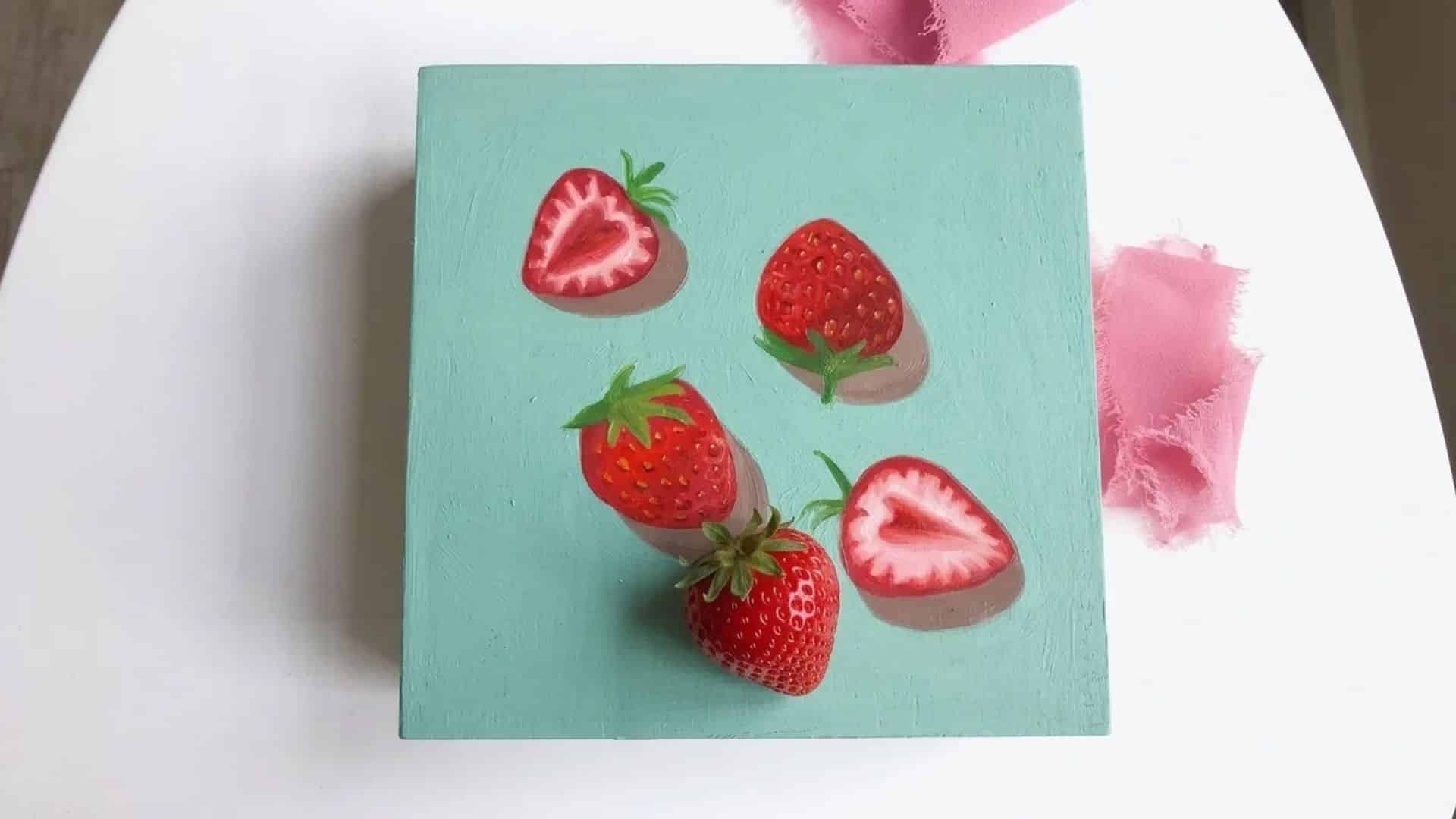
A strawberry is a red triangle with small yellow dots and a green cap. A peach is a soft orange circle with a gentle crease and a short stem.
These take under 30 minutes on a small canvas and look good as affordable wall artwhen displayed in sets of three or four with matching frames.
22. Butterfly
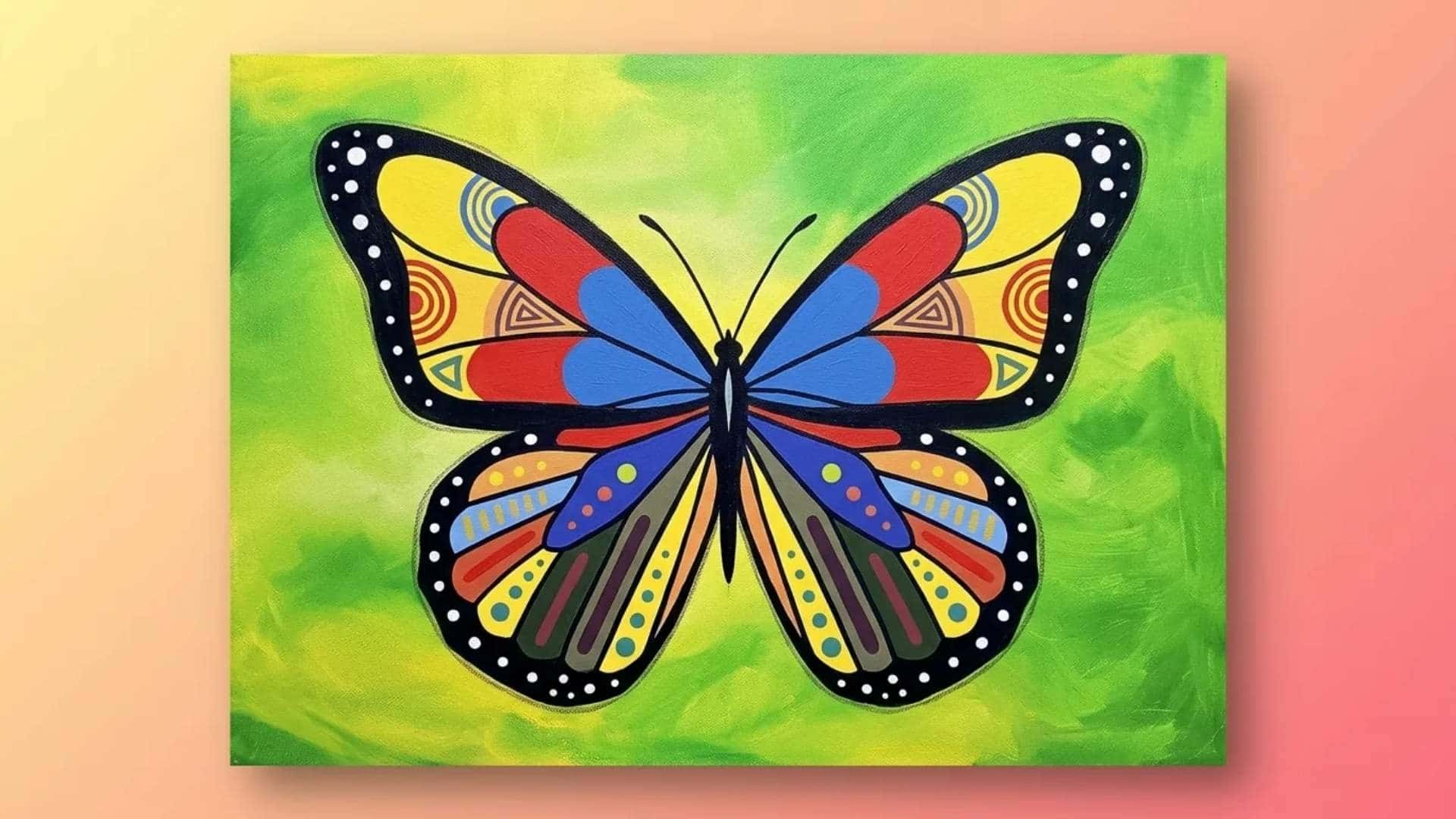
Sketch a symmetrical butterfly outline on the canvas in pencil. The wings are the most important part; keep them simple: two large upper wings, two smaller lower ones.
Fill each section with flat colors and simple patterns, such as dots, stripes, or concentric curves. The symmetry does the visual work. Add a thin body and antennae with a fine brush once the wings are dry.
23. Paint Pour Petri Dish (Mini Canvas)
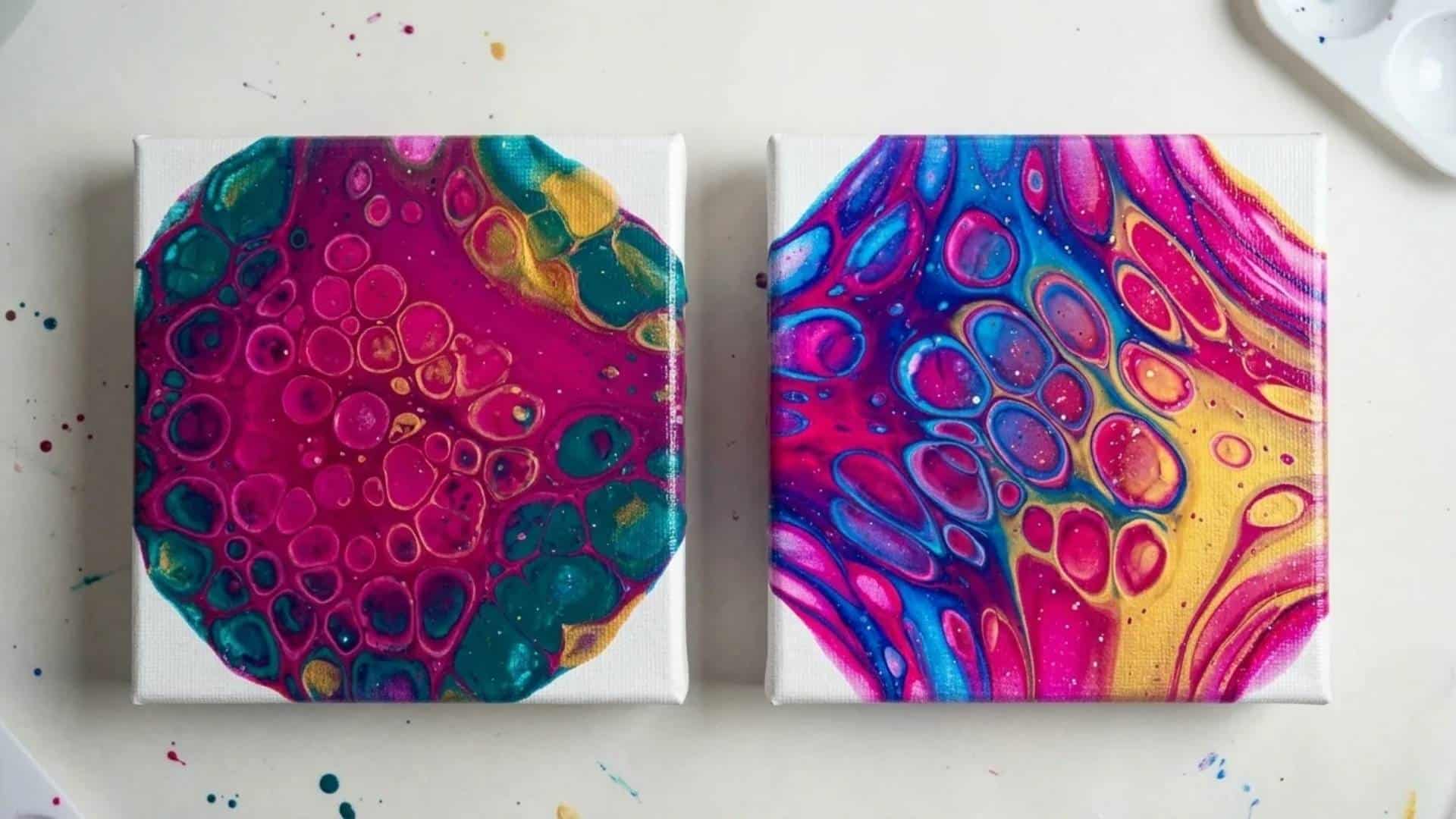
On a small canvas or canvas board, drop circles of acrylic paint mixed with silicone oil and pouring medium. The silicone creates small circular patterns as the colors interact. Tilt gently to spread.
This works best on a 4 “ x4” or 5 “ x7” canvas. Mini canvases cost very little, making this kind of low-stakes experimenting easy to repeat until the technique clicks.
The small format also makes canvas painting a practical gift. A set of four small panels with the same subject and four different color palettes is the kind of thing that takes an afternoon and looks like it took much longer.
This is the thinking behind much DIY canvas art: personal, specific, and made for an actual wall in an actual room.
24. Snowy Birch Trees at Night
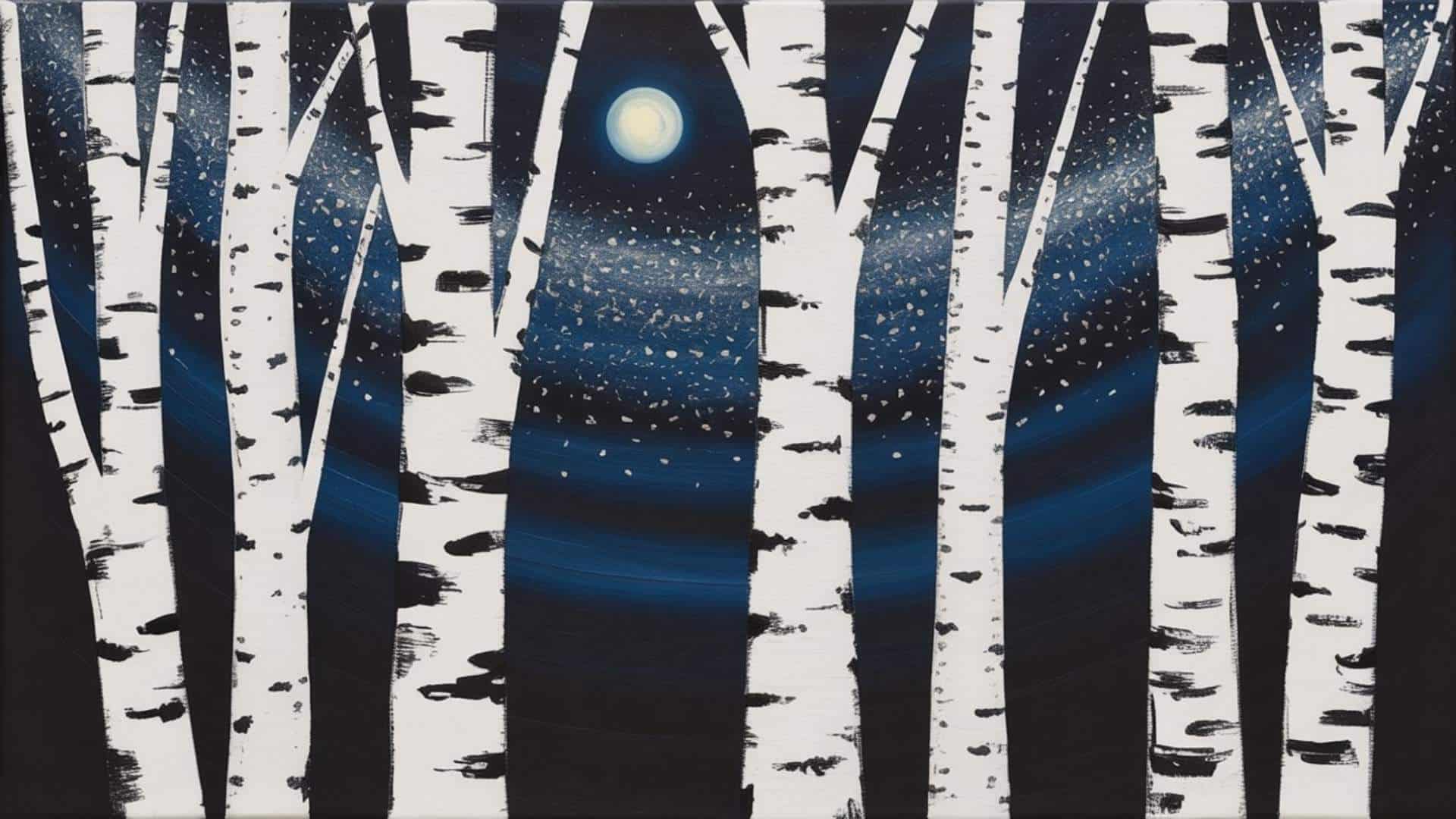
Paint the entire canvas dark navy or black for the night sky. Let dry. Flick white paint from a toothbrush for stars. Add a soft white or pale blue moon.
Then use a palette knife to scrape thin white vertical tree trunks over the dark background. Add short black horizontal marks for bark texture.
The contrast between the white trunks and the dark sky is what makes this one look finished immediately.
25. Abstract Brushstroke Canvas
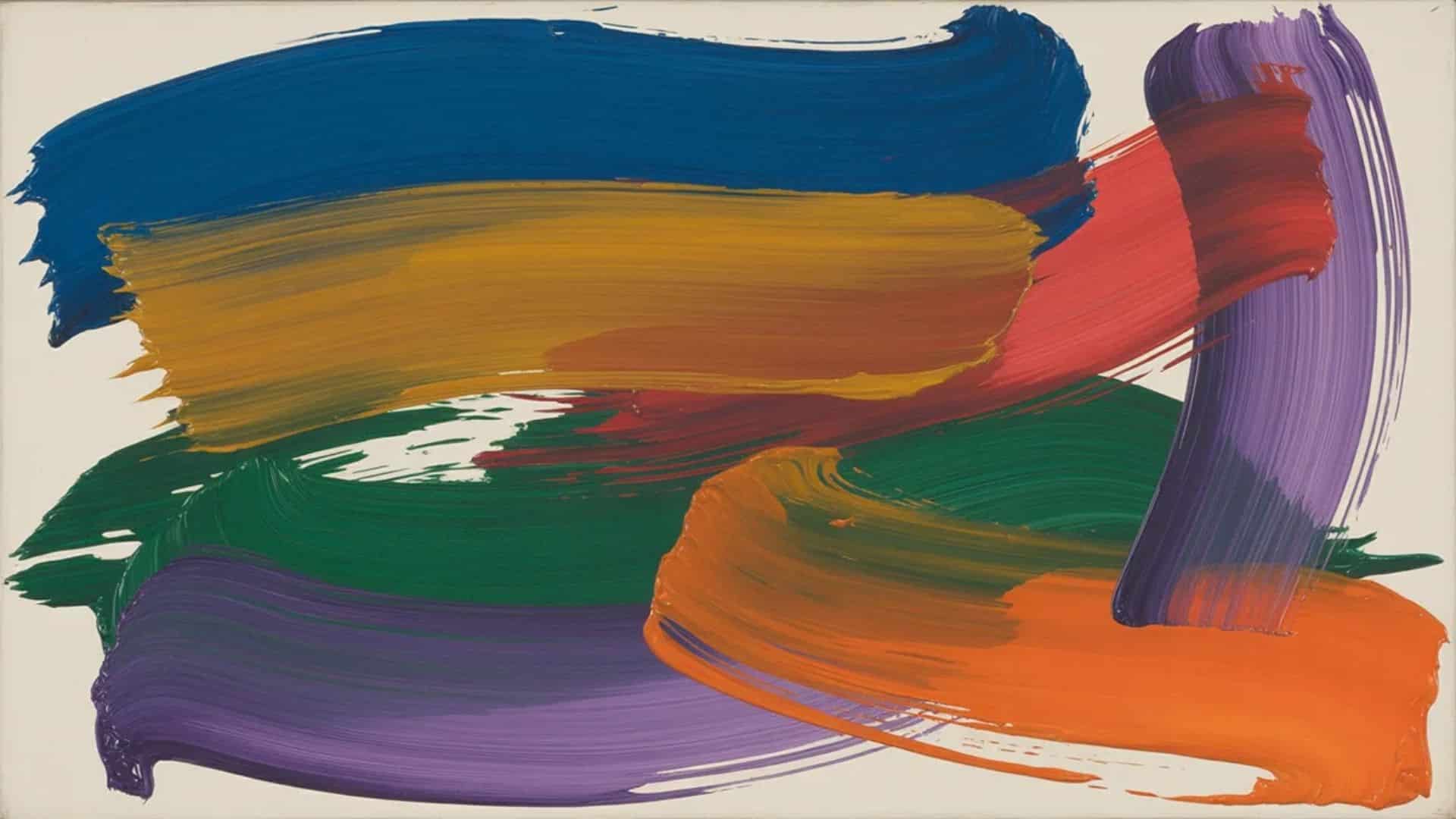
This one requires no plan. Load a wide flat brush with two colors at once, one on each side of the bristles. Drag it across the canvas in long, confident strokes.
Overlap colors, vary direction, leave some canvas showing. Add a second and third layer once the first dries. There is no correct result. The whole point is the texture and movement the brushstrokes create.
Tips That Actually Make a Difference
1. Start with a colored background, not white. A base coat of grey, tan, or any muted color makes the painting feel cohesive from the start and hides any spots you miss.
2. Work back to front, always. Background first, then middle details, then foreground. This creates depth without complicated technique.
3. Step back from the canvas often. Viewing from six inches away hides proportion problems. Walking across the room, or taking a quick phone photo, shows you what’s actually working.
4. Don’t paint too light. Beginners tend to apply thin, washed-out layers out of caution. Rich, saturated color looks more intentional. You can always lighten in the next layer.
5. Let mistakes dry before fixing them. Wet paint on top of wet paint muddies both colors. Wait five minutes, then paint over cleanly.
6. Don’t paint alone on your first attempt if you can help it. The whole session feels different when someone else is fumbling through it alongside you.
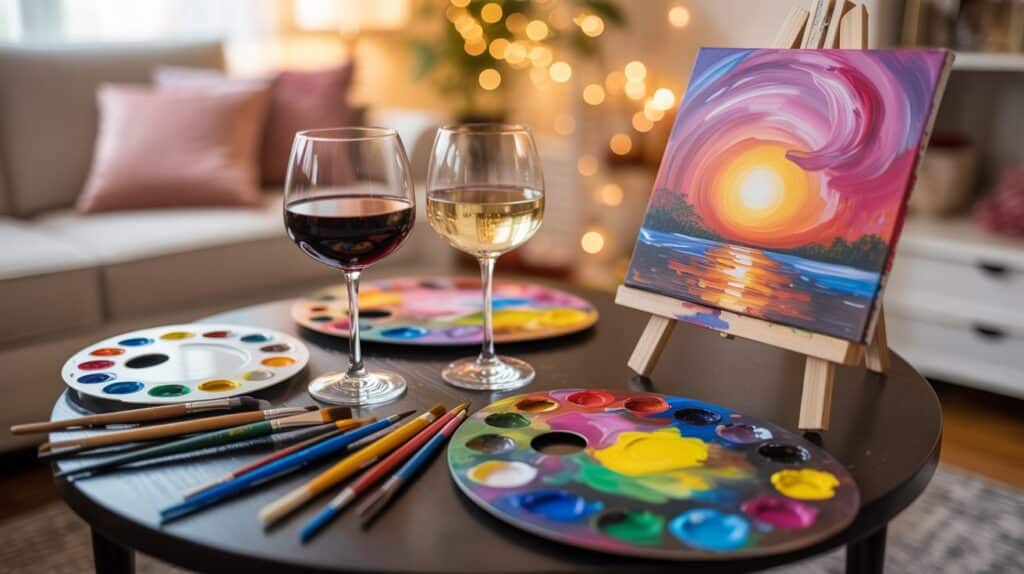
Mess, laughter, and a glass of wine on the table turn what feels like a test into an actual evening. I have seen complete beginners finish paintings they were genuinely proud of just because the social setting removed the self-consciousness of doing it solo.
Common Beginner Mistakes
These come up almost every time someone picks up a brush for the first time. Knowing them ahead of your first session saves a lot of frustration.
- Using too many colors at once: Stick to four or five per painting until you understand how they interact. More colors increase the risk of a muddy, indistinct result.
- Painting on a canvas that’s too large: A big canvas demands a complex composition, and most beginners don’t have that yet. Start small, finish something, then scale up.
- Overworking the painting: Adding brushstrokes after the piece is already done ruins more paintings than bad technique does. Set a stopping point and walk away. Knowing when to stop is a real skill.
Conclusion
A blank canvas stops being a problem the moment you have a direction. These ideas give you exactly that. Some will come out exactly as planned.
Some will not, and both outcomes are fine because every finished painting, even the ones you do not love, teaches you something about color, brush control, or layering paint without muddying it.
I have painted hundreds of things I never displayed, and those sessions still improved my skills.
Pick the idea from this list that feels least scary, pull out your supplies, and start. The first brushstroke is always the hardest one, and it gets easier the moment it is done.
Frequently Asked Questions
What Is the Easiest Thing to Paint on A Canvas?
Abstracts, silhouettes, simple skies, and loose florals are the easiest.
Do You Wet Your Brush First when Painting with Acrylic?
You don’t need to start with a wet brush, but if you want your paint to glide smoothly, then it’s best to have the bristles wet.
What Is the 1/3 Rule in Painting?
The rule of thirds means that the subject isn’t centered; rather, the main focal point can be to one side or at the top or bottom of the image.