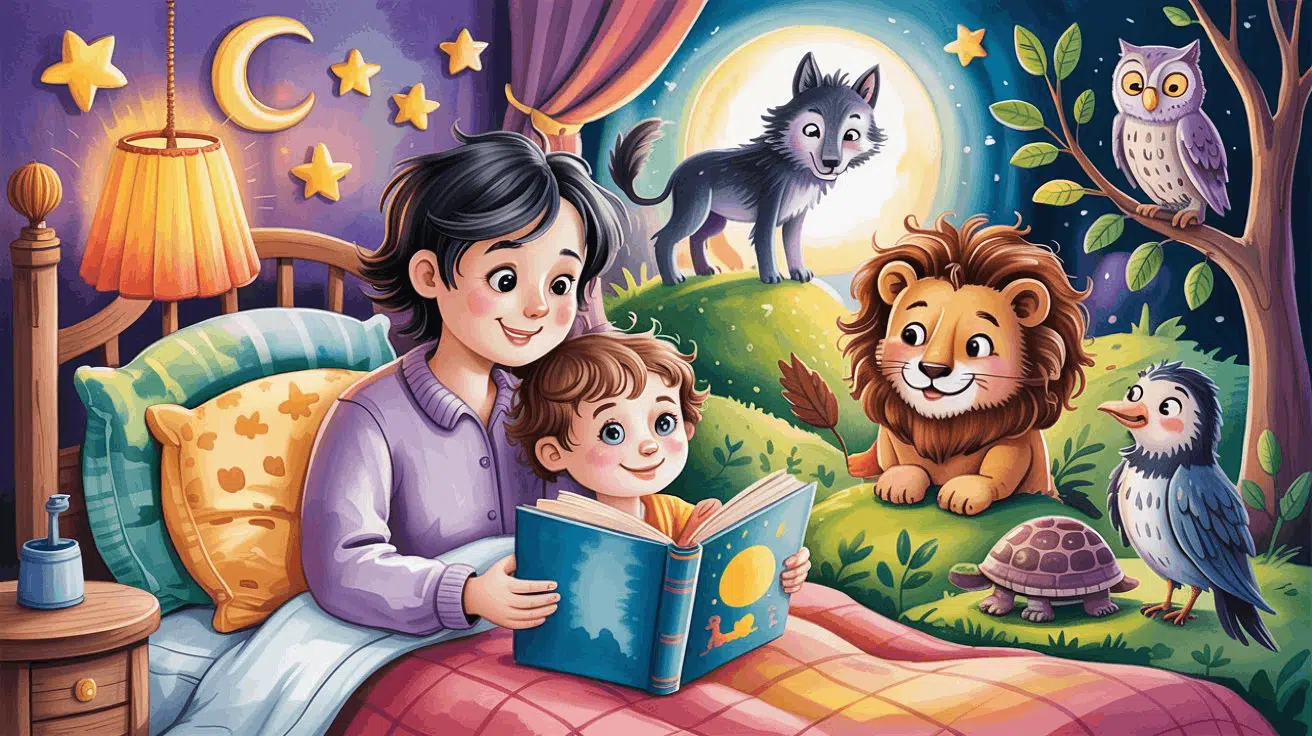
The best life lessons do not come from lectures. They come from stories told at the right moment, in the right voice, at just the right time of day.
Children connect with characters, not rules.
A child who hears a story about a boy who lied understands honesty in a way no direct instruction ever achieves.
The story stays. The rule fades.
This collection of short moral stories for kids is organized by the values they teach, from honesty and kindness to courage and wisdom.
Every story comes with an age range and a discussion starter, so storytime becomes a conversation, not just a reading.
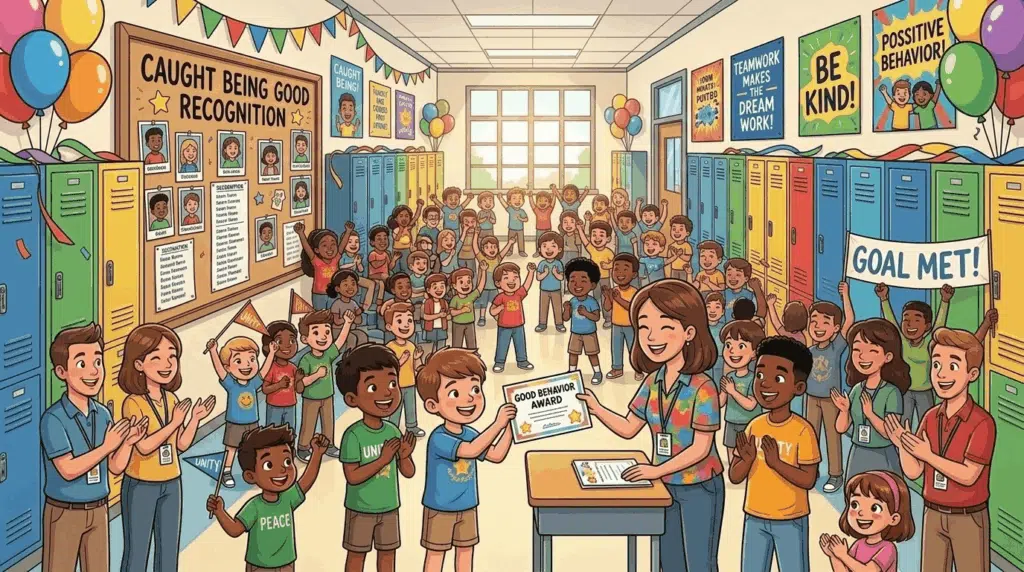
These small lessons at home often show up in how children behave in other environments, including school. Many schools follow frameworks like the PBIS, which focus on positive actions such as kindness, honesty, and effort.
When children hear and reflect on these values through stories, they begin to recognize and practice them naturally in everyday situations.
Why Moral Stories Work Better than Rules
There is a reason certain childhood stories stay with us for decades. They create emotional memory.
A child who heard The Boy Who Cried Wolf at five years old still remembers the lesson at fifteen, not because someone explained it, but because they felt it through the story.
Direct instruction tells a child what to do. A story shows them what happens. That difference is enormous for a developing mind.
Short moral stories work especially well because they fit naturally into a child’s attention span. They deliver a complete arc, a character, a problem, and a consequence, without overstaying their welcome.
The story ends before the child loses interest, and the moral lands in the space that follows.
Stories About Honesty and Telling the Truth
These stories show why telling the truth builds trust that cannot be easily repaired once broken.
1. The Boy Who Cried Wolf
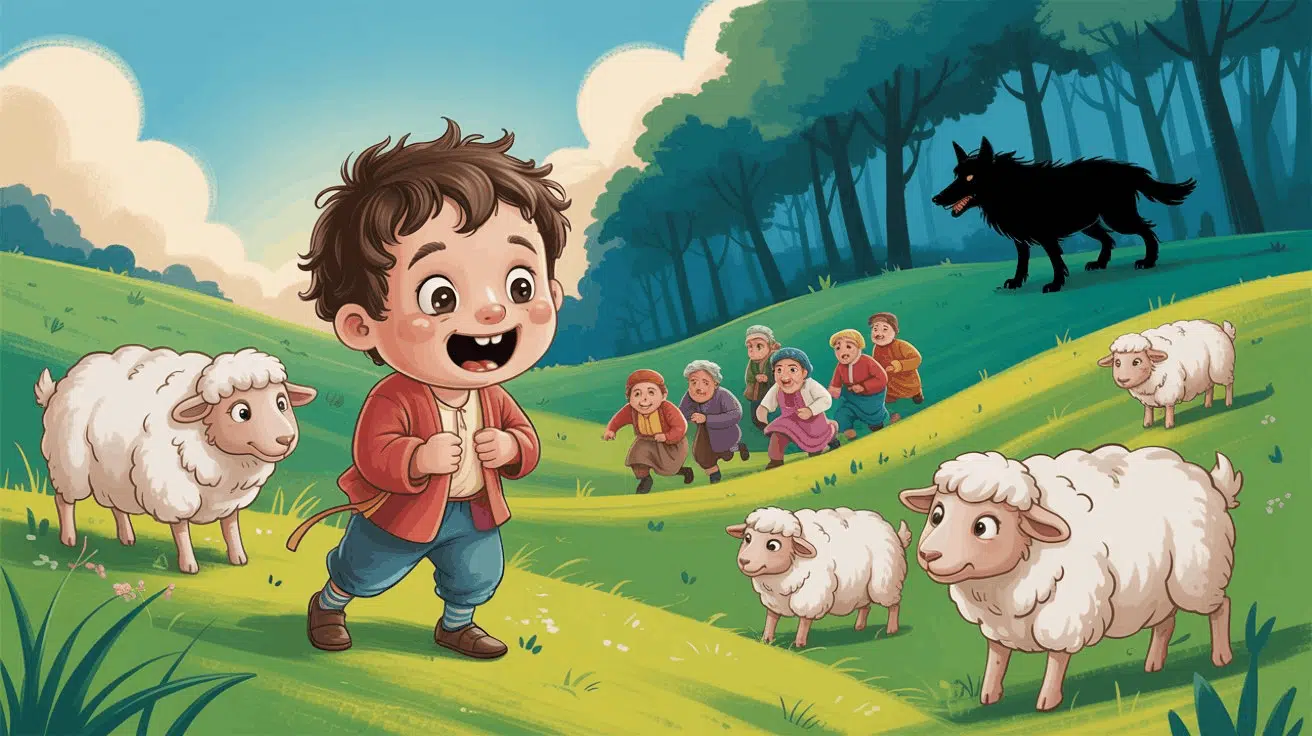
There was a shepherd boy who watched over his village’s sheep on a quiet hill.
One afternoon, bored with the silence, he decided to have some fun. He ran toward the village shouting, “Wolf! Wolf! A wolf is chasing the sheep!”
The villagers came running, grabbing sticks and tools. When they arrived, panting and worried, the boy burst out laughing. There was no wolf. He had made it up.
The villagers were angry but went back to their work. A few days later, the boy did it again. “Wolf! Wolf!” he screamed.
The villagers came running again. Again, there was no wolf. Again, the boy laughed.
Then one afternoon, a real wolf appeared at the edge of the field.
The boy screamed, “Wolf! Wolf! Please help me!” He screamed until his throat hurt. But this time, the villagers stayed put. They had heard it before.
The wolf scattered the sheep and disappeared into the trees. The boy sat alone on the hill, finally understanding what he had done.
Moral: If you lie often enough, people stop believing you even when you tell the truth.
Talk about it: “Has there ever been a time when someone didn’t believe you? How did that feel?”
2. The Honest Woodcutter
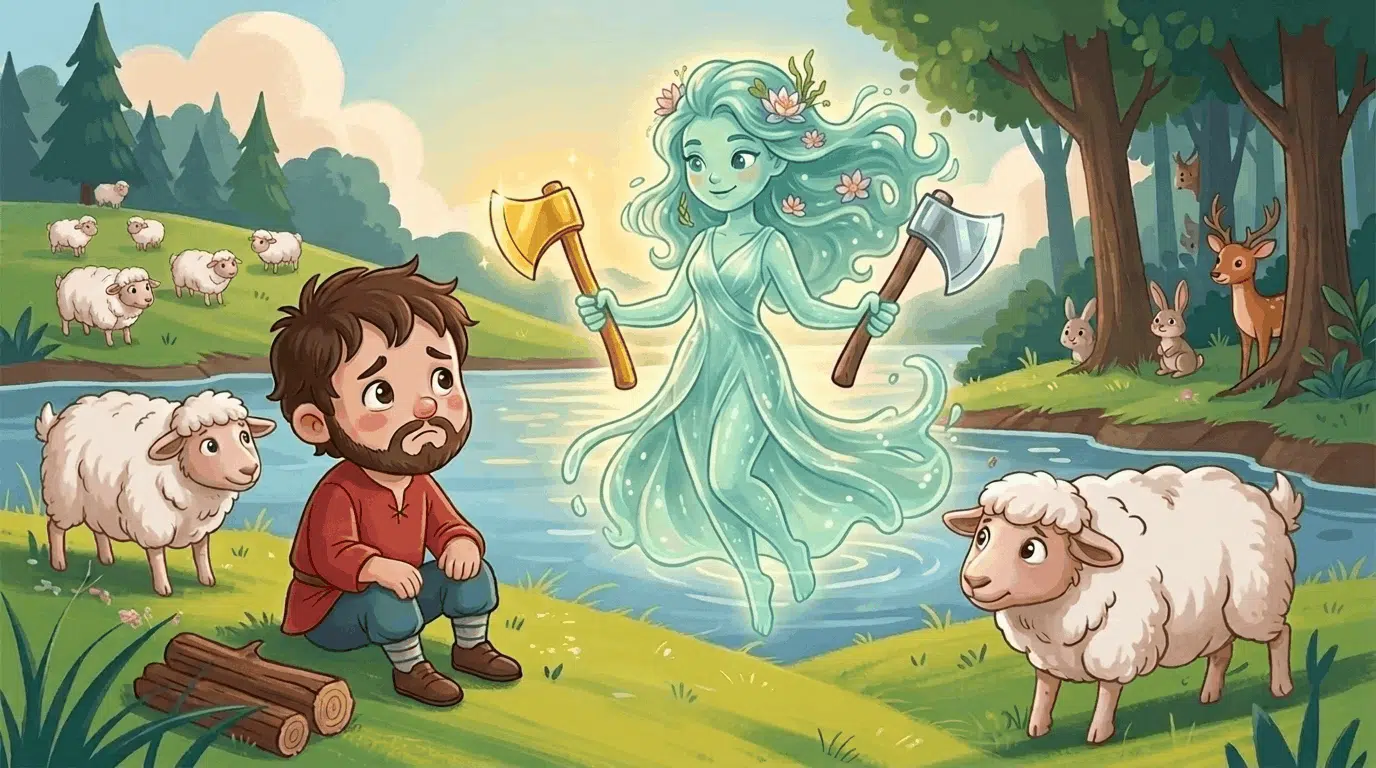
A woodcutter was chopping wood near a river when his axe slipped from his hands and fell into the deep water. He sat at the edge and cried.
That axe was the only tool he owned, and without it he could not work.
A spirit appeared from the river and asked what was wrong. The woodcutter explained what had happened. The spirit disappeared and returned, holding a golden axe.
“Is this your axe?” the spirit asked.
The woodcutter shook his head. “That is not mine.”
The spirit disappeared again and returned with a silver axe. “Is this yours?”
Again, the woodcutter shook his head. “No. That is not mine either.”
The spirit disappeared one final time and returned with the woodcutter’s old, battered iron axe. The woodcutter’s face lit up. “Yes. That is mine.”
The spirit smiled and handed him all three axes. “Your honesty has earned these,” it said, and disappeared back into the water.
Moral: Honesty is rewarded, even when lying would have been easier.
Talk about it: “Have you ever told the truth even when it was hard? What happened after?”
Stories About Kindness and Helping Others
These stories highlight how small acts of care can create powerful and lasting impact.
3. Androcles and the Lion
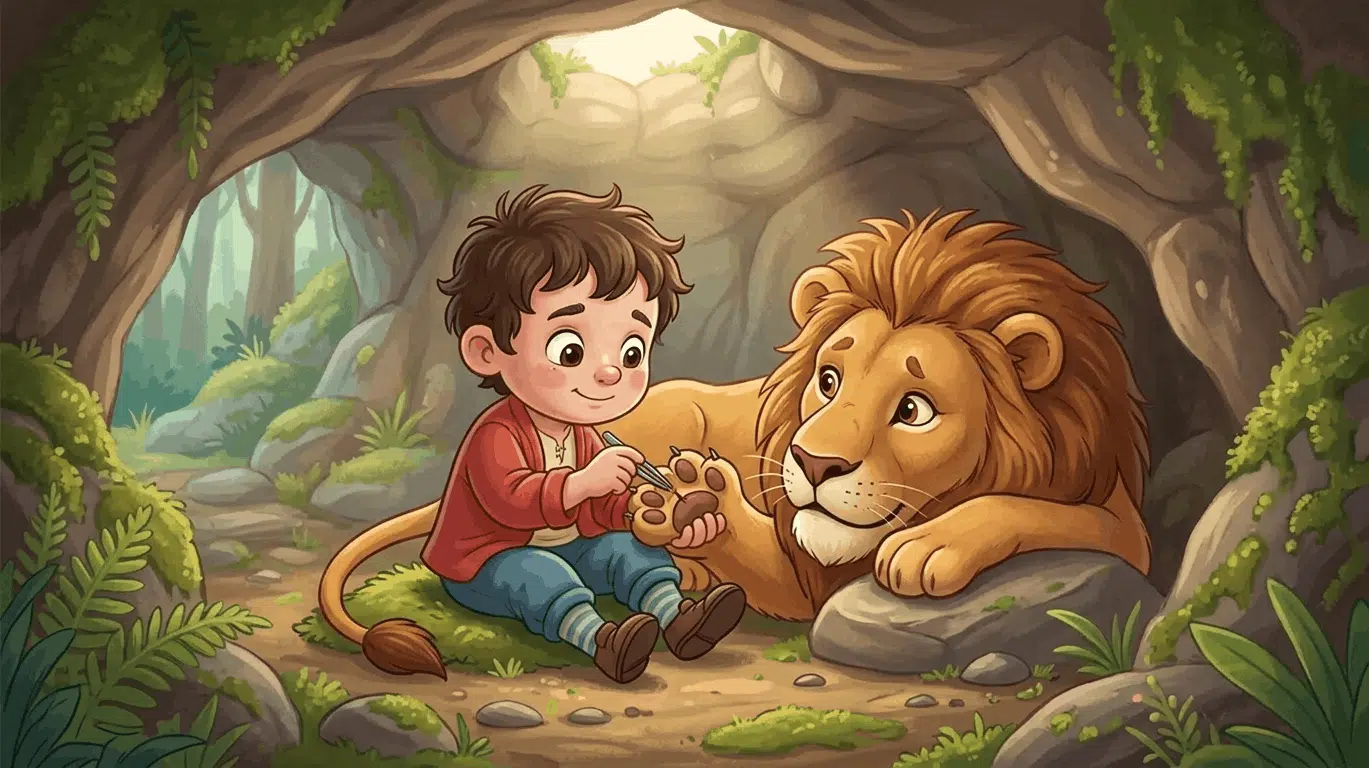
A young slave named Androcles ran away from his cruel master and hid deep in a forest. Exhausted and hungry, he found a cave and crept inside to rest.
A lion appeared at the entrance, limping and roaring in pain. Androcles froze in fear. But the lion did not attack.
Instead, it held out one enormous paw. Androcles looked closely and saw a thick thorn buried deep in the pad.
He was terrified. But he reached out and, as carefully as he could, pulled the thorn free. The lion let out a long breath, licked Androcles on the hand, and curled up beside him.
Years later, Androcles was captured and brought to an arena where a wild lion was released to fight him. The crowd roared.
Androcles closed his eyes.
The lion bounded toward him, then stopped. It sniffed. Then it pressed its great head against the boy’s chest and purred.
It was the same lion.
Moral: A small act of kindness can come back to you in ways you never expected.
Talk about it: “Can you think of a time when being kind to someone made a difference, even if it was a small thing?”
4. The Giving Tree
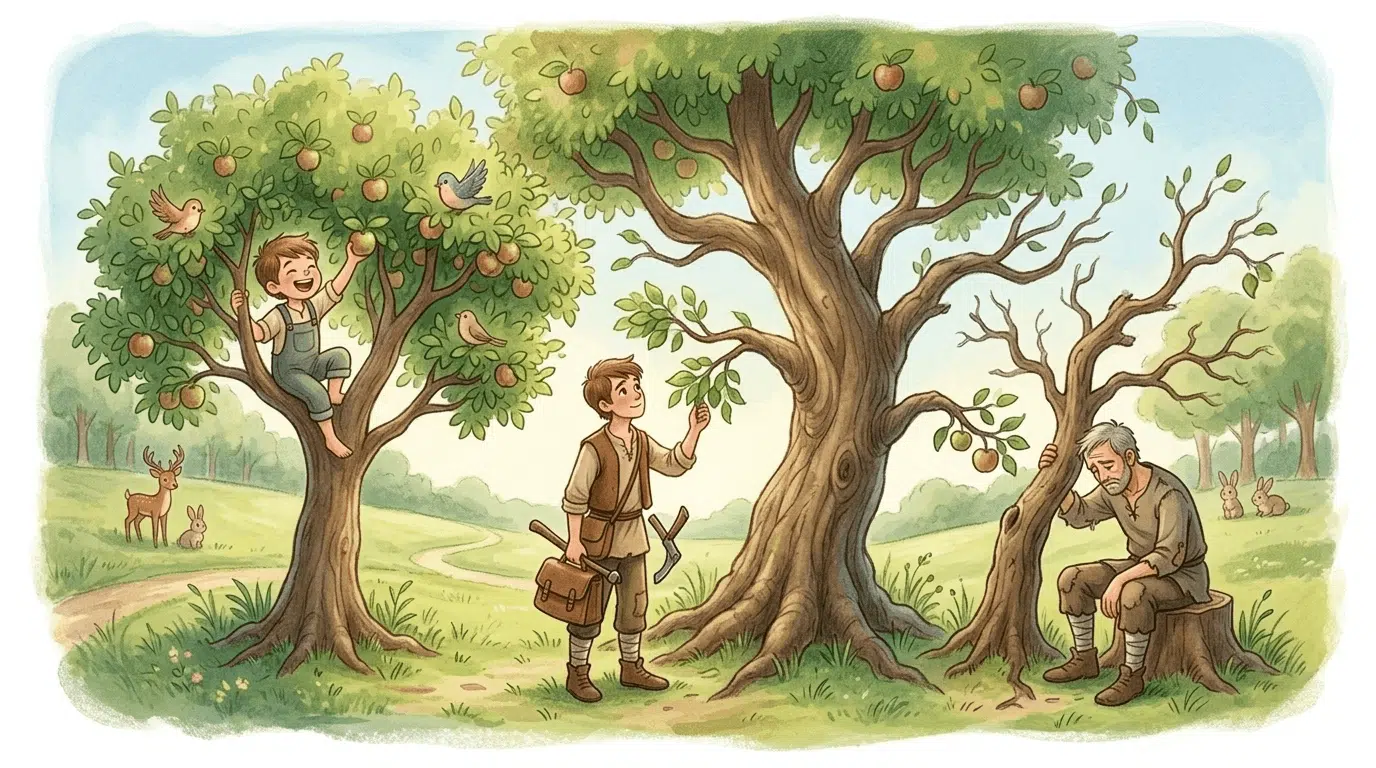
There was a tree that loved a little boy very much.
Every day, the boy would come and climb her branches, eat her apples, and rest in her shade. The tree was happy.
As the boy grew older, he came less often. When he did come, he needed things.
He needed money, so the tree gave him her apples to sell. He needed a house, so the tree gave him her branches to build with. He needed a boat to sail away, so the tree gave him her trunk.
Now the tree was just a stump. She felt she had nothing left to give.
One day, the old man returned. He was tired and did not need much.
“I just need somewhere to sit and rest,” he said.
“A stump is good for sitting,” the tree said.
And the man sat. And the tree was happy.
Moral: True kindness gives without expecting anything in return.
Talk about it: “Who in your life gives a lot without asking for anything back? How do you thank them?”
5. The Proud Rose
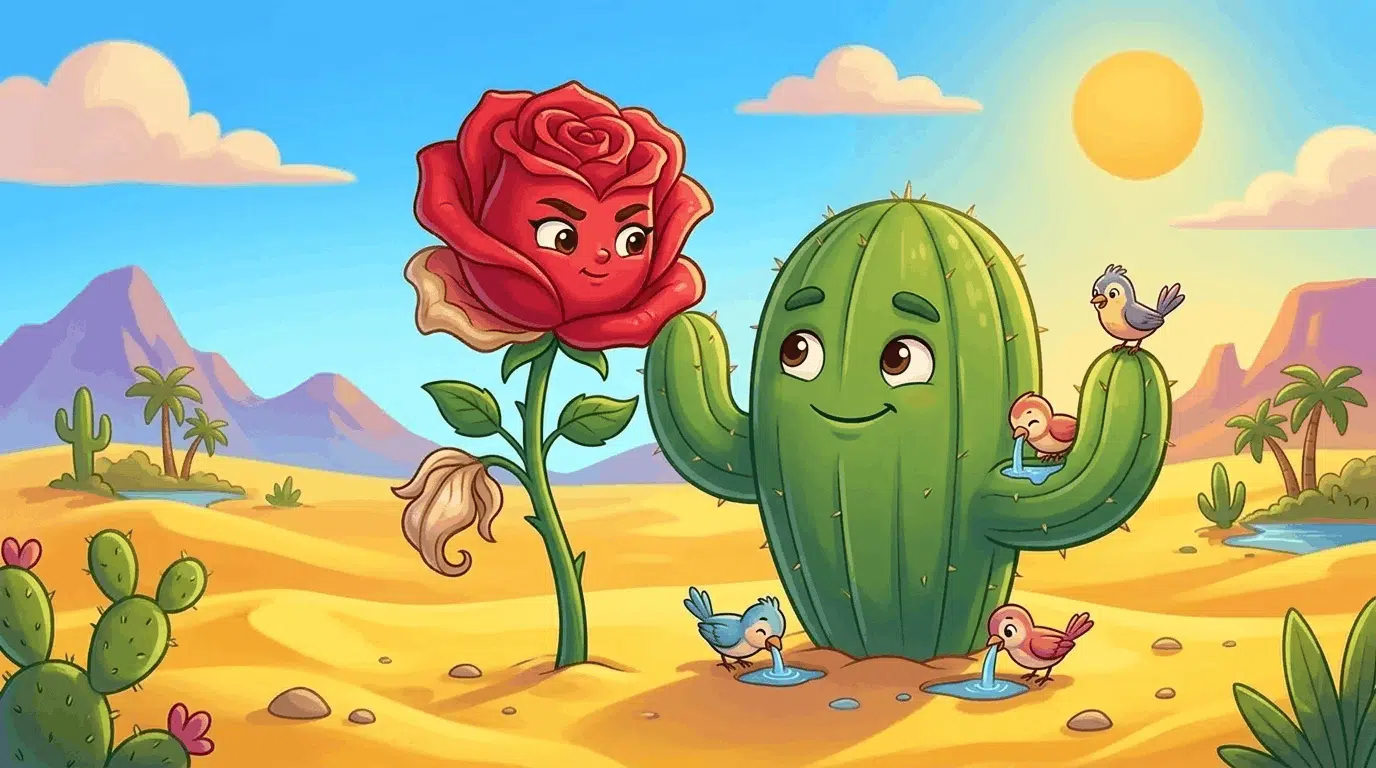
In the middle of a dry desert, a beautiful rose bloomed. Her petals were a deep, perfect red, and she knew it. Every day, she looked at the cactus beside her and laughed.
“Look at you,” she said. “You are ugly and covered in spikes. I am the most beautiful thing in this desert.”
The cactus said nothing.
Weeks passed without rain. The rose began to wilt. Her beautiful petals drooped. She watched as small birds landed on the cactus and drank from the water stored inside it.
Too weak to hold her head up, the rose finally spoke. “I am so thirsty. Could you spare some water?”
The cactus looked at her for a moment. Then it leaned toward her.
“Of course,” it said.
Moral: Never judge others by how they look. Kindness matters more than beauty.
Talk about it: “Have you ever thought something about someone and then found out you were completely wrong?”
Stories About Hard Work and Patience
These stories show how effort, persistence, and smart thinking lead to real results.
6. The Ant and the Grasshopper
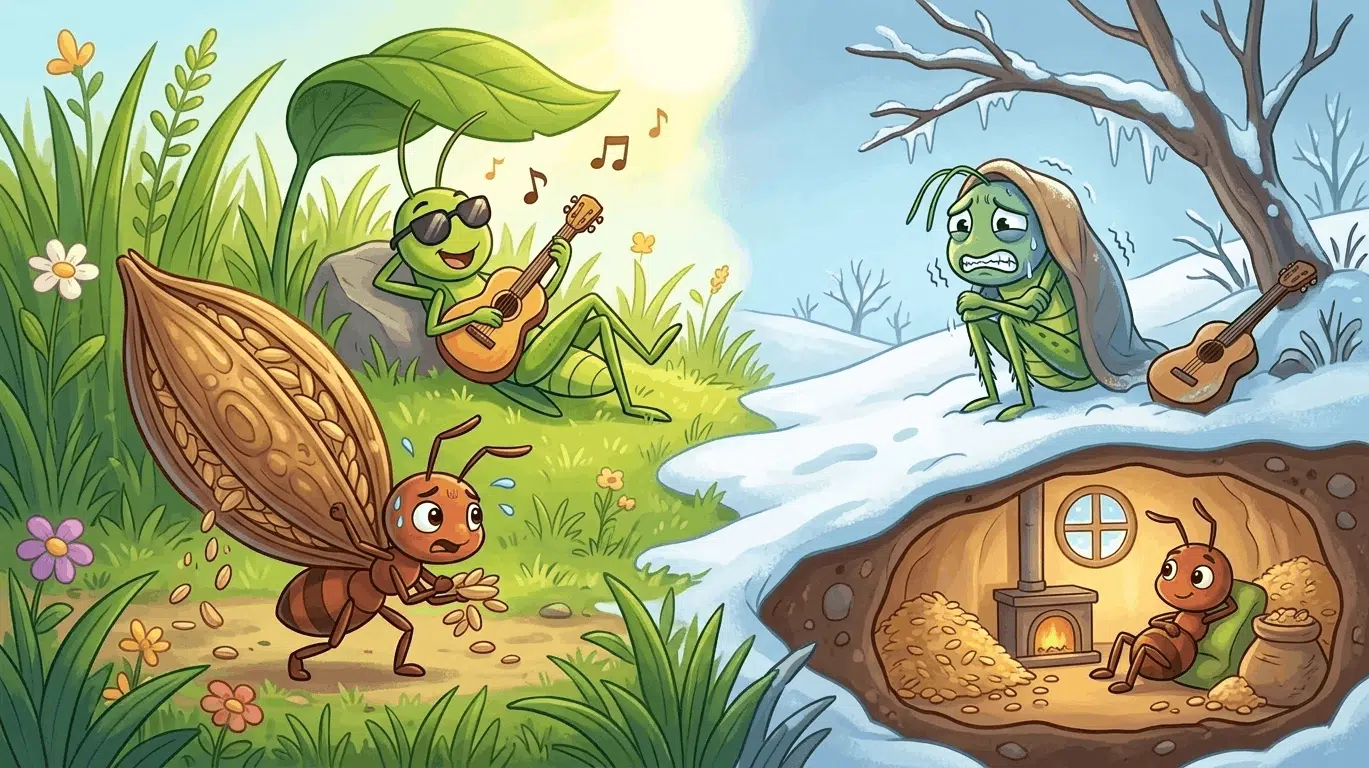
All through the long, warm summer, an ant worked from morning to evening.
He carried grain, gathered seeds, and stored everything carefully in his underground home. His neighbor, the grasshopper, thought this was silly.
“Come and play with me,” the grasshopper called. “The sun is shining. Why do you work so hard?”
“I am preparing for winter,” the ant replied, and went back to work.
The grasshopper laughed and spent the summer singing.
Then winter came. Snow covered the ground. The grasshopper had nothing. He knocked on the ant’s door, shivering.
The ant looked at him for a long moment, then opened the door.
“Come in,” the ant said. “But next summer, you will work alongside me.”
Moral: Hard work today prepares you for the challenges of tomorrow.
Talk about it: “Can you think of something you worked hard for? How did it feel when you were done?”
7. The Thirsty Crow
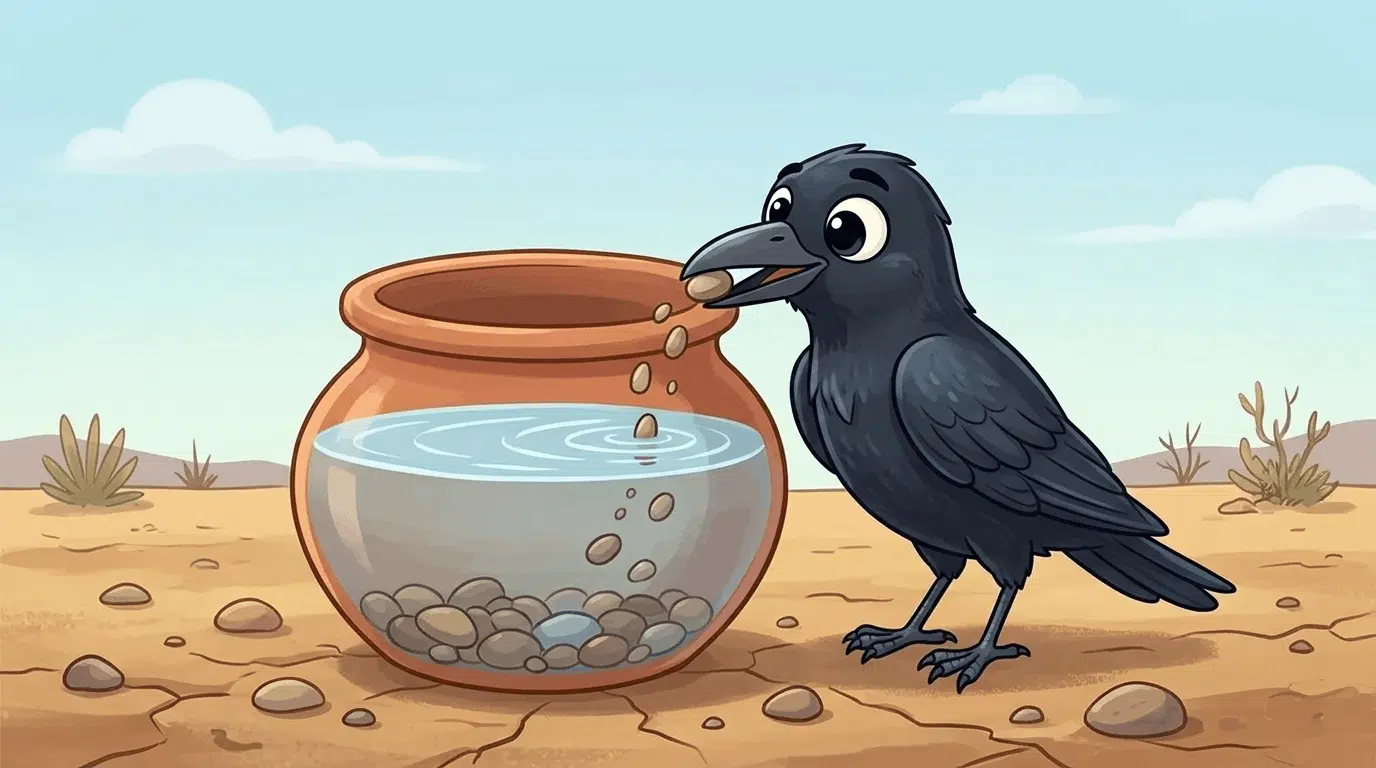
A crow had been flying for a long time and was very thirsty. He spotted a clay pot below and landed beside it, hoping. He peered inside.
There was water at the bottom, but the pot was too deep. His beak could not reach.
He pushed the pot. It was too heavy to tip. He flapped his wings in frustration.
Then he stopped. He looked around. There were pebbles on the ground all around him.
He picked up a pebble and dropped it into the pot. The water rose just a little. He dropped in another. And another. Slowly, one pebble at a time, the water climbed higher and higher.
Finally, the crow dipped his beak in and drank.
He flew away full of water and something else: the satisfaction of having figured it out himself.
Moral: If you think carefully and keep trying, you can solve almost any problem.
Talk about it: “What do you do when something feels too hard to figure out? Has thinking about it differently ever helped?”
8. The Tortoise and the Hare
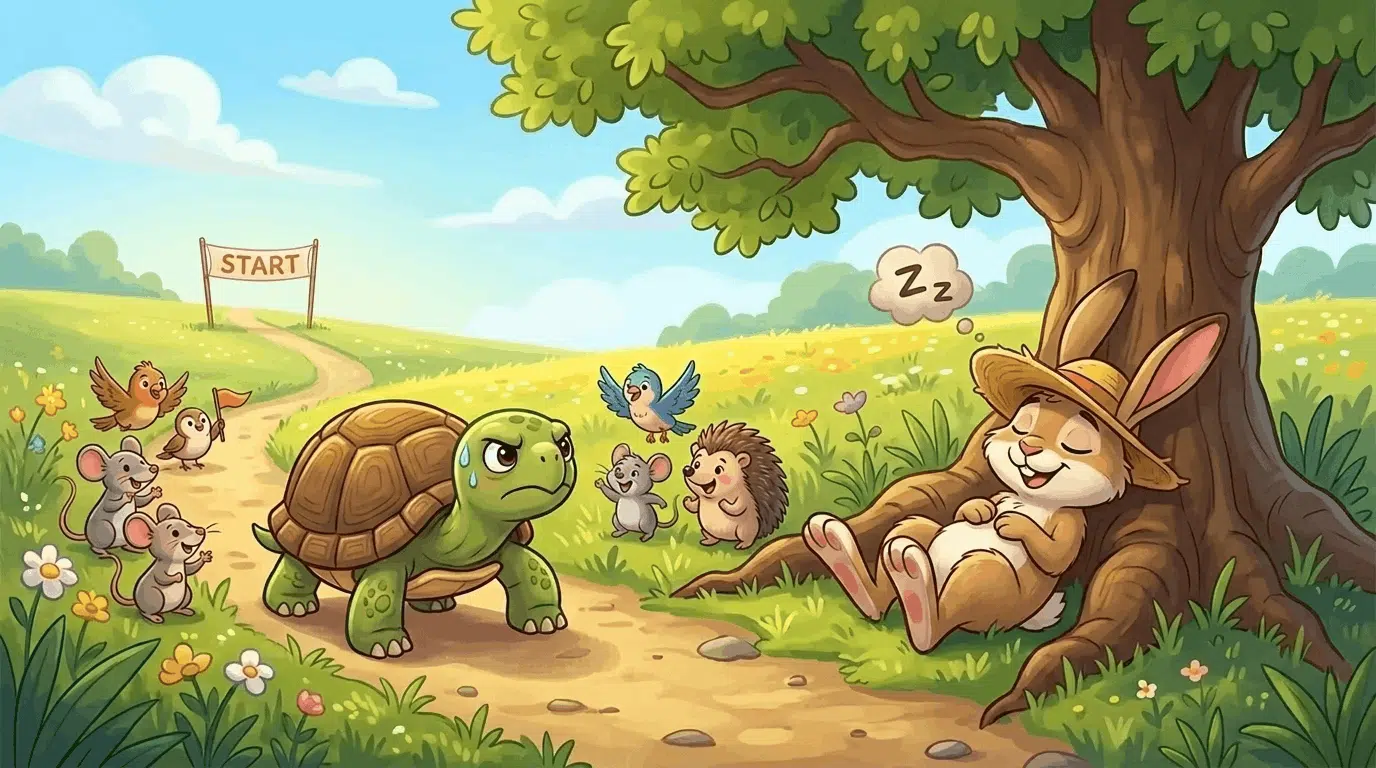
A hare challenged a tortoise to a race because he wanted everyone to know he was the fastest. The tortoise agreed, which made everyone laugh. How could a tortoise race a hare?
The race began. The hare shot ahead immediately. He looked back, and the tortoise was barely a speck behind him. He was so far ahead that he decided to rest under a shady tree.
The tortoise kept walking. One slow step after another. He did not stop. He did not look back. He just kept going.
When the hare woke up, he stretched and looked toward the finish line. Then he saw the tortoise crossing it.
The tortoise had not gone faster. He had just never stopped.
Moral: Slow, steady effort beats speed without focus. Keep going.
Talk about it: “What is something you kept trying at even when it felt slow and hard?”
Stories About Greed and Gratitude
These stories remind children why appreciating what they have matters more than wanting more.
9. The Goose That Laid the Golden Eggs
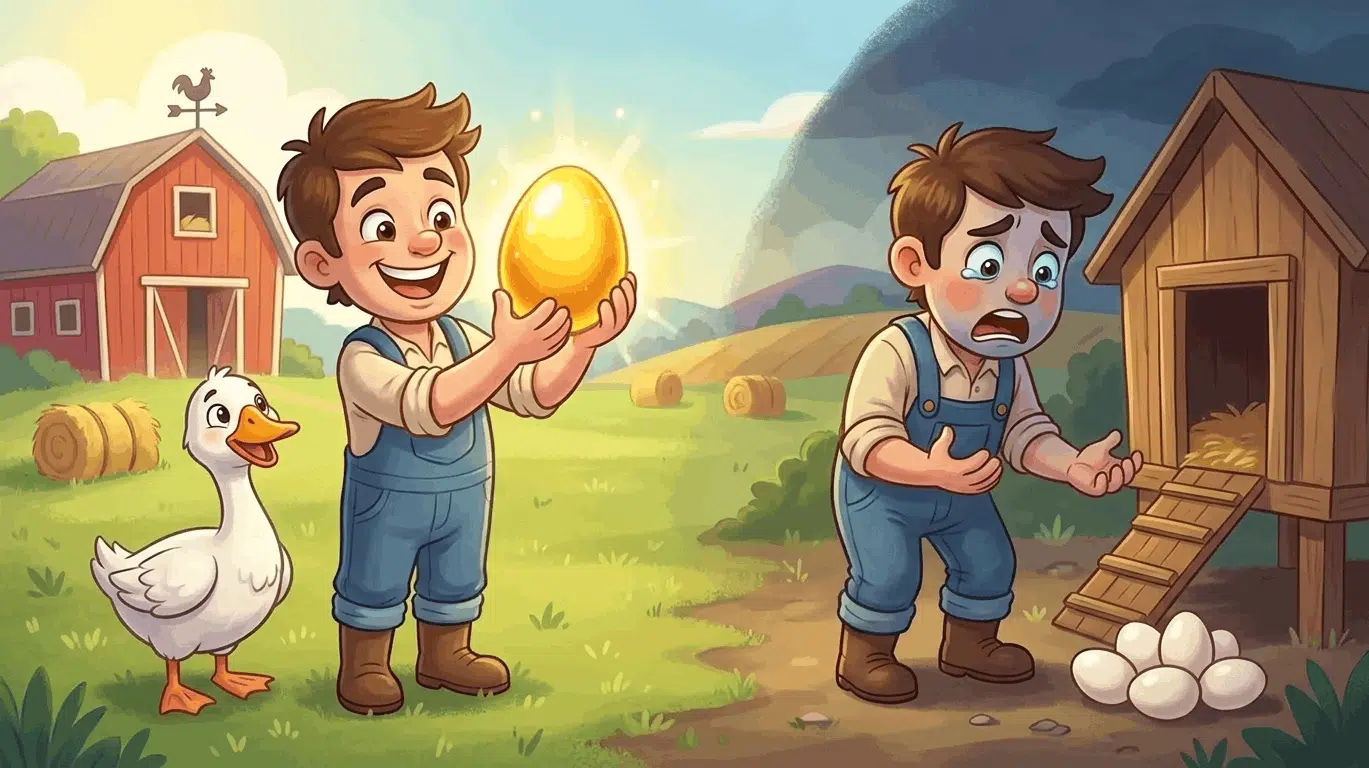
A farmer had a goose unlike any other. Every morning, he went to the nest and found a single golden egg. He sold each egg at the market and, over time, became quite comfortable.
But one morning, he looked at the goose and thought: if there is one golden egg each day, there must be many more inside. Why wait?
He decided to take them all at once. He went to the nest, butchered up the goose, and found nothing inside.
Just a goose. Just a perfectly ordinary goose that could no longer lay anything at all.
The farmer sat down in the empty farmyard with nothing.
Moral: Greed can cost you everything you already have. Be grateful for what comes steadily.
Talk about it: “Is there something you already have that you sometimes forget to appreciate?”
10. The Dog and His Reflection
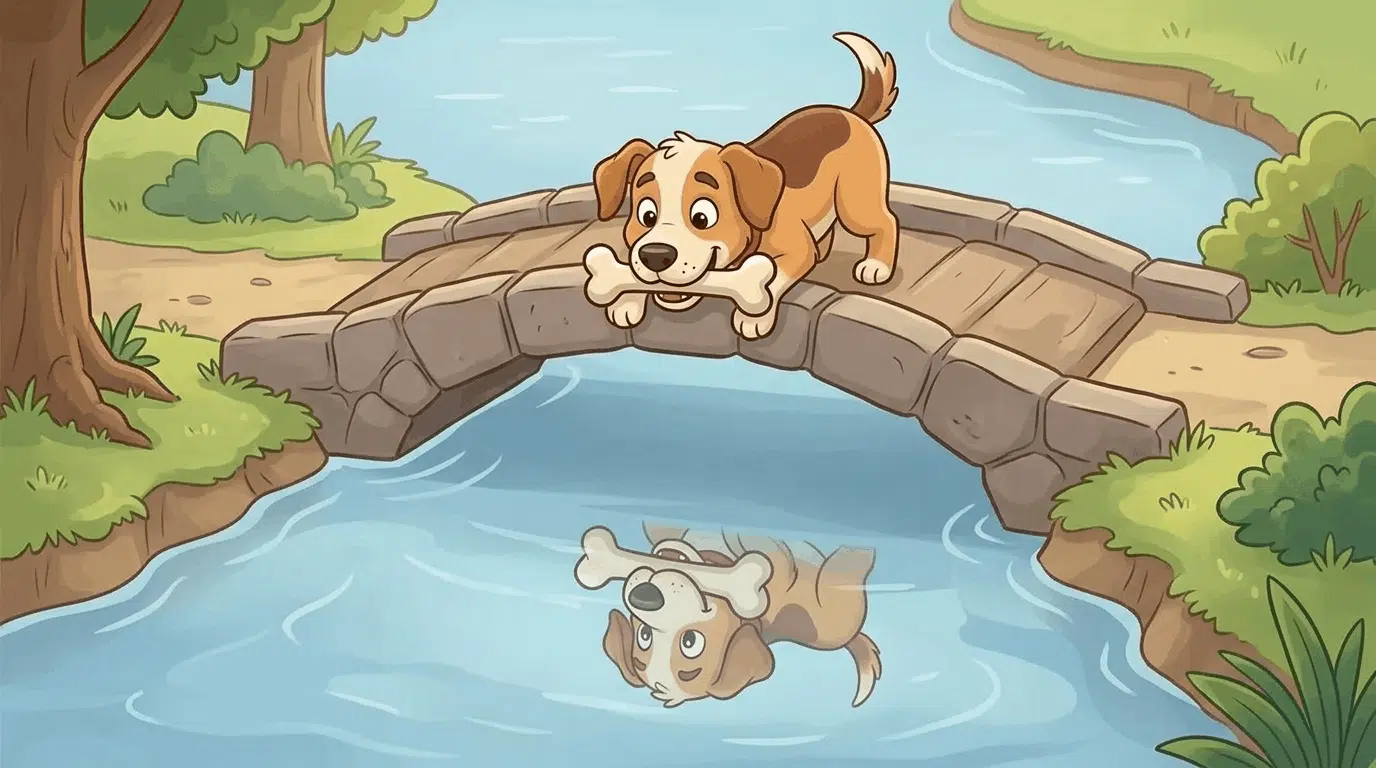
A dog found a large bone and was very pleased with himself. He trotted home through the village with the bone in his mouth, feeling like the luckiest dog alive.
He had to cross a small bridge over a river. He looked down at the water and saw another dog staring back up at him. That dog also had a bone, and it looked bigger.
The dog growled. The dog in the water growled back. The dog barked. He snapped at the reflection to take the bigger bone.
His own bone dropped into the river and sank.
He stood on the bridge with nothing, looking at his own reflection.
Moral: Wanting what others have can cost you what is already yours.
Talk about it: “Have you ever wanted something someone else had and lost track of what you already had?”
Stories About Courage and Self-Belief
These stories help children see the value of confidence, identity, and inner strength.
11. The Ugly Duckling
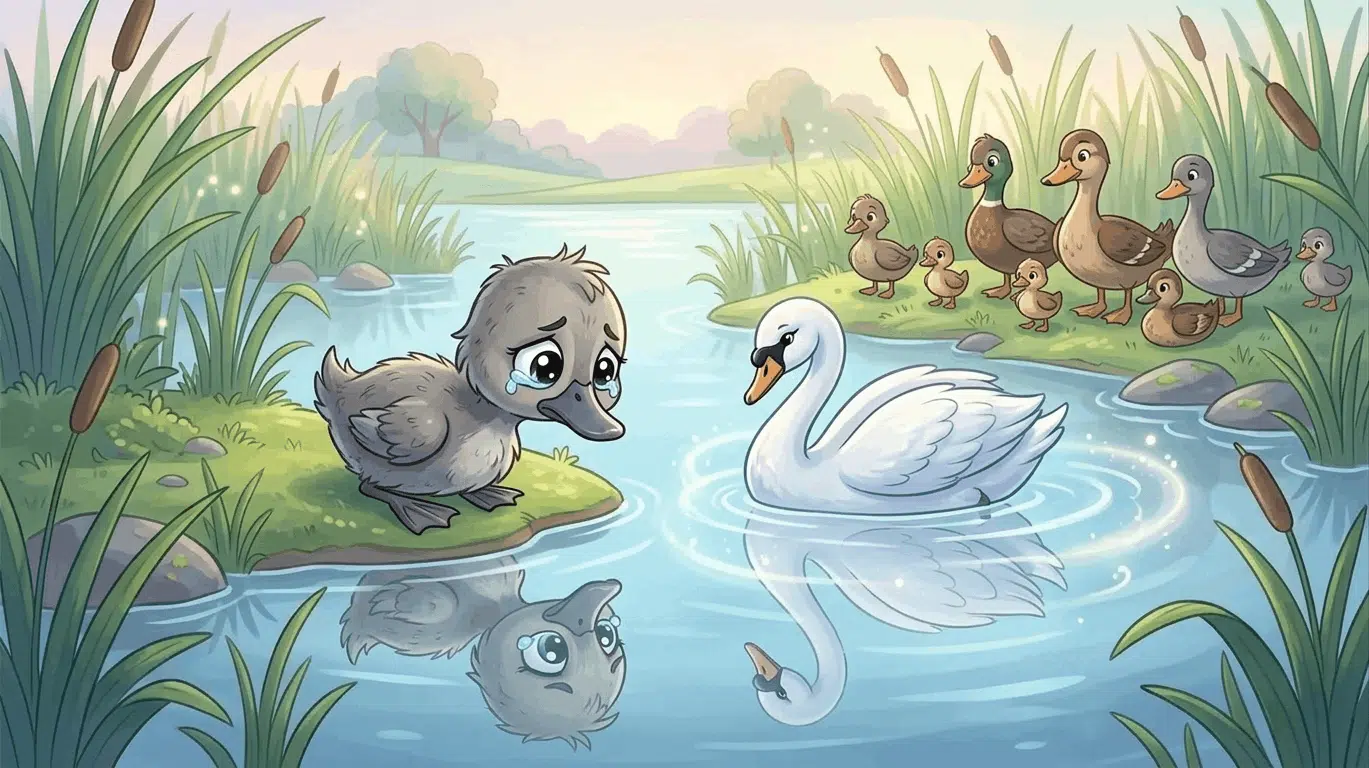
A mother duck hatched a nest of eggs in the reeds by the river.
All the ducklings were round and yellow and cheerful. All except one. That one was large, gray, and awkward, and no matter how he tried, he did not fit in.
The other ducklings pecked at him. The farmyard animals laughed. Even his own family grew impatient.
So he left. He spent a long, cold autumn alone, hiding in the marshes, wondering why he could not be like everyone else.
Winter passed. Spring came. He looked up and saw three beautiful white swans gliding toward him across the lake. He bowed his head, expecting them to chase him away.
Instead, they called to him. He looked at his reflection in the water.
His dull gray feathers were gone. He now had bright white feathers, a long neck, and gentle eyes. He had grown into a beautiful swan, just like his new friends.
From that day on, the little duckling was no longer the “Ugly Duckling.” He had become a brave and graceful swan, ready to face any challenge that came his way.
And he knew that true beauty was inside.
Moral: Being different is not a flaw; it makes you unique.
Talk about it: “Have you ever felt left out because you were different from everyone else? What helped you through it?”
12. The Lion and the Mouse
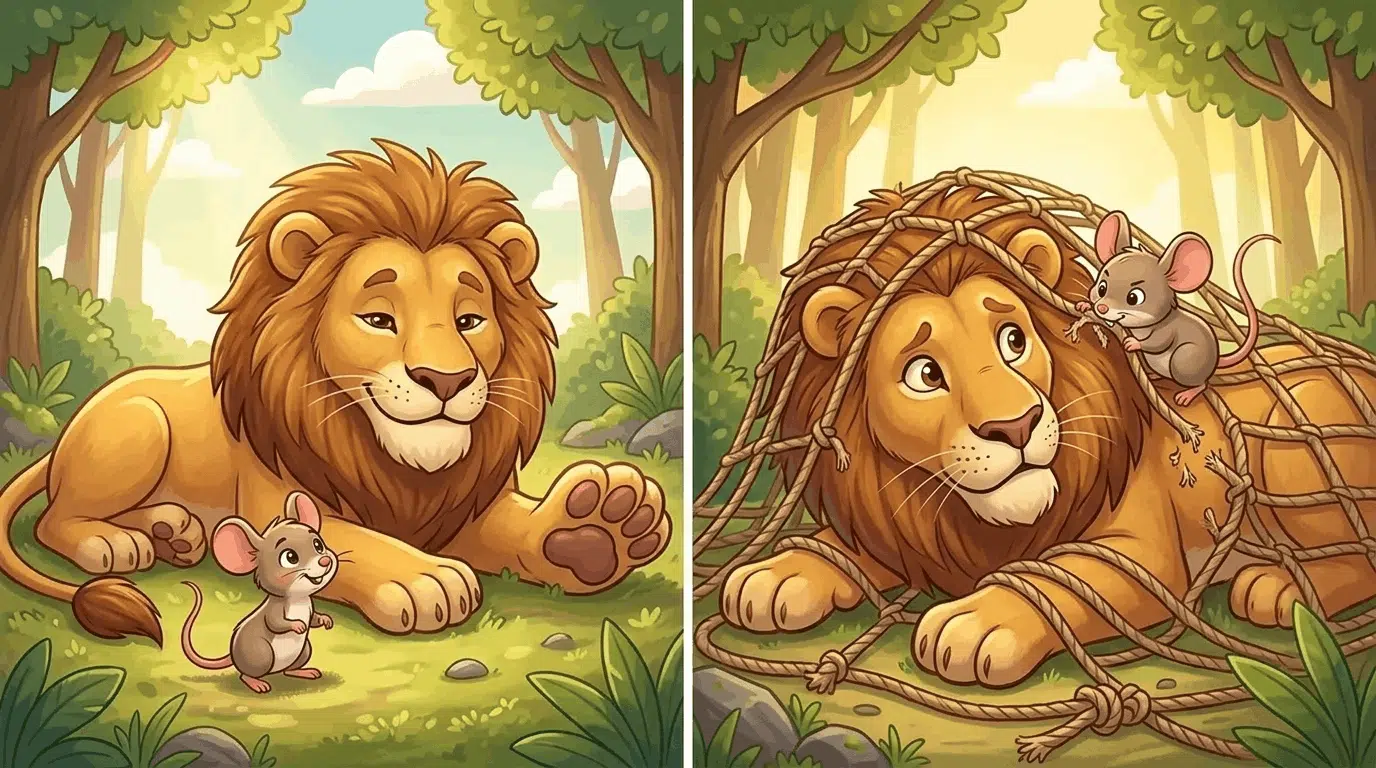
A lion was sleeping in the warm sun when a small mouse ran across his nose by accident. The lion woke up with a roar and grabbed the mouse in one enormous paw.
“Please,” the mouse squeaked. “Let me go. I am too small to be worth eating. And one day, maybe I can help you.”
The lion looked at the tiny creature and laughed. What could something so small ever do for him? But he opened his paw and let the mouse go.
Not long after, the lion walked into a hunter’s net and was trapped. He roared and struggled, but the ropes held fast.
The mouse heard him. He came running and began chewing at the ropes, one by one, until the lion stepped free.
Moral: Even the smallest person can make a big difference. Never underestimate anyone.
Talk about it: “Can you think of a time when someone smaller or younger than you helped in a way you did not expect?”
Stories About Friendship and Teamwork
These stories focus on working together, supporting others, and building strong connections.
13. The Bundle of Sticks
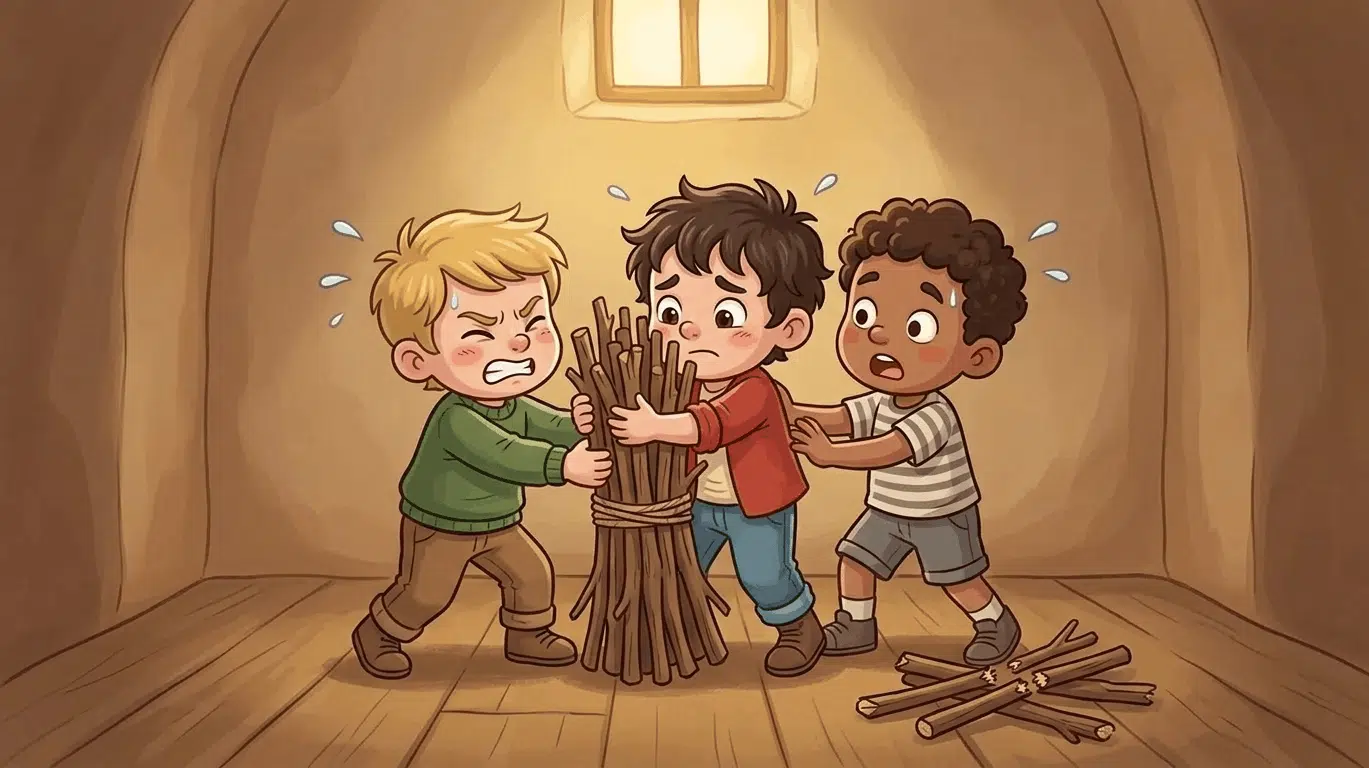
An old farmer had three sons who argued constantly. He worried about what would happen to them after he was gone.
One day, he called all three into the room and placed a bundle of sticks on the table. He asked each son to break the bundle in half. Each one tried with all his strength. None could do it.
Then the farmer untied the bundle and handed each son a single stick. “Now break it,” he said.
Each stick snapped in half with barely any effort.
The farmer looked at his sons. “Together you cannot be broken. Apart, you are easily snapped.”
The three sons looked at each other and said nothing. They did not argue again that day.
Moral: Together, people are much stronger than they are apart.
Talk about it: “Can you think of something your family or class did better by working together than any one person could have done alone?”
14. The Baby Camel and the Desert
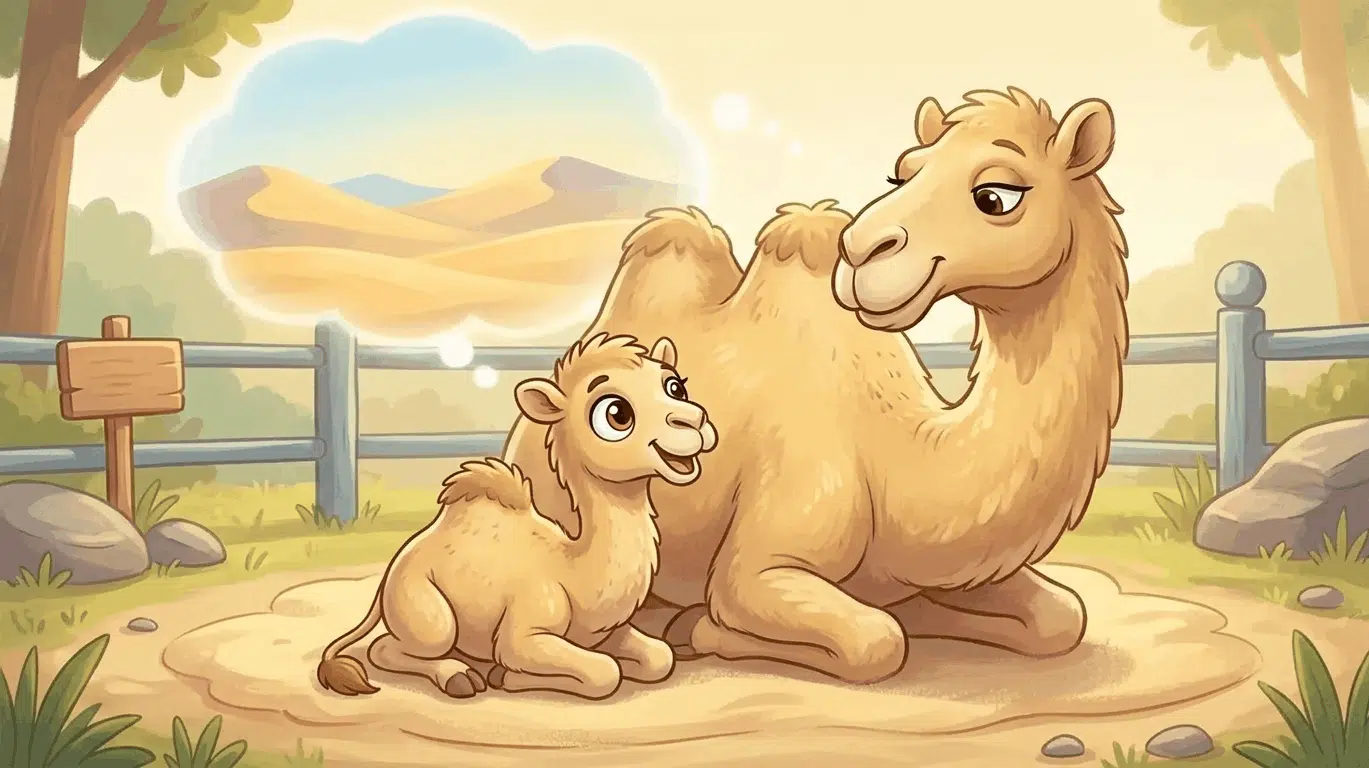
A baby camel was sitting with its mother in a zoo enclosure when it started asking questions.
“Why do we have humps?”
“To store water,” said the mother. “So we can survive long journeys in the desert.”
“Why do we have such wide, rounded feet?”
“To walk comfortably on sand without sinking.”
“Why do we have such long eyelashes?”
“To protect our eyes from sandstorms.”
The baby camel thought for a moment. “So we have everything we need to survive in a desert. Then why are we in a zoo?”
The mother had no answer.
Moral: Your strengths are meant for the right environment. Being in the wrong place makes even your best qualities useless.
Talk about it: “What are you really good at? Where do you feel most like yourself when you use that skill?”
Story About Wisdom and Listening
This final story focuses on quiet thinking, awareness, and learning from observation.
15. The Wise Old Owl
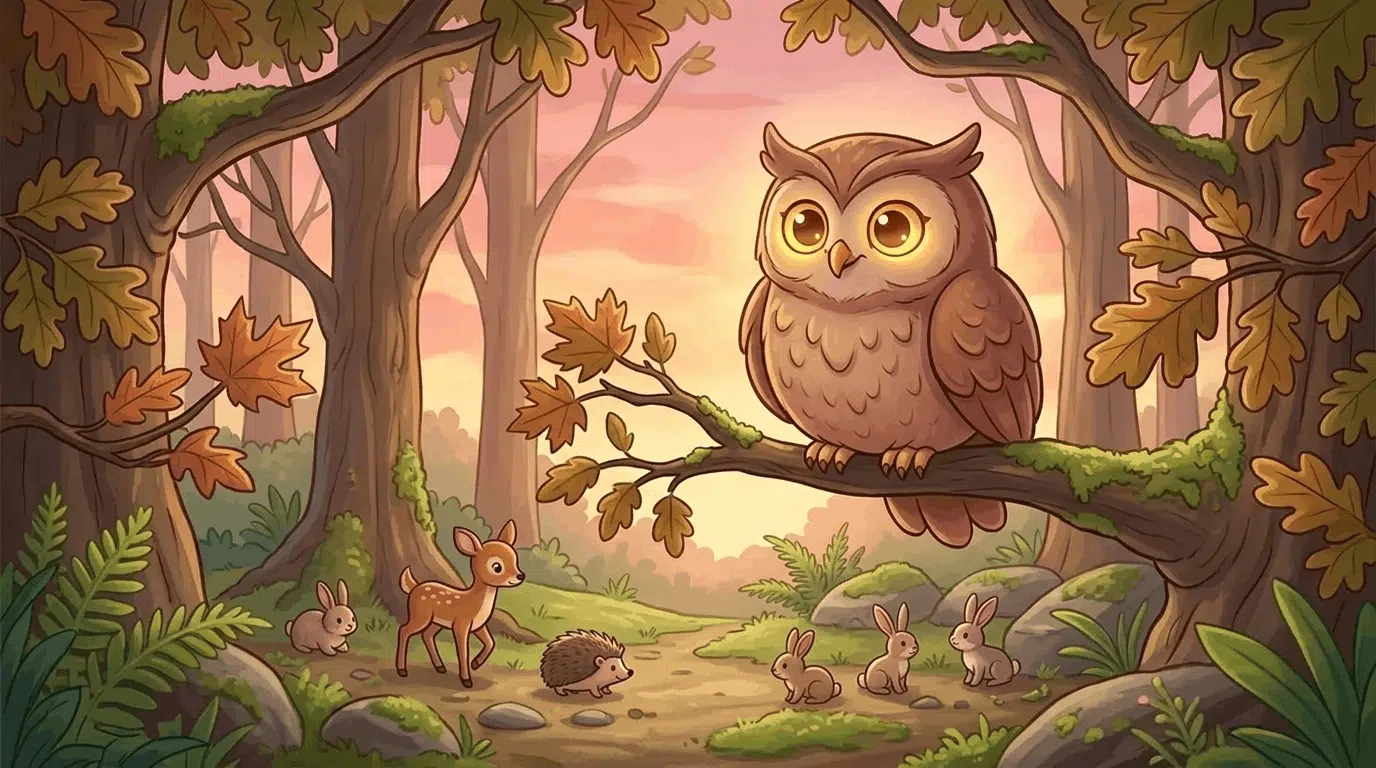
There was an old owl who lived in a great oak tree at the edge of the village. Every day, he watched what happened below.
He saw a boy drop his coin and pick it up without saying a word to anyone.
He saw a woman argue loudly about something that turned out to be her own mistake. He saw a man brag about never failing at anything, then fail quietly the next day, where no one could see.
The owl never commented. He never offered his opinion. He just watched and listened.
Over many years, the owl grew wiser than any other creature in the forest. Not because he had read more or traveled further. But while everyone else was busy talking, he had been paying attention.
Moral: Speak less. Listen more. Wisdom comes from paying attention to the world around you.
Talk about it: “What do you think you could learn today just by listening more carefully and saying a little less?”
How to Make Storytime More Meaningful for Kids
A good story is only as good as the conversation it starts. Here are five ways to get more from every story you read together.
- Use different voices: Even a simple change, such as a low voice for the lion and a high voice for the mouse, keeps children physically engaged. They follow the voice before they follow the words.
- Pause mid-story: Stop before the resolution and ask what they think will happen. Prediction builds attention and critical thinking at the same time.
- Let them find the moral: After the story ends, ask what they thought the lesson was before you say it. Children who find the moral themselves hold onto it longer than children who are told what it is.
- Connect it to today: If your child shared their lunch, mention the Giving Tree before bed. If they stayed calm when something was hard, mention the tortoise. Real connection makes the abstract concrete.
- Read it again: Children absorb more from a second and third reading than from the first. The first time, they follow the plot. The second time, they start to feel the meaning.
Wrapping It Up
Stories are one of the oldest and most reliable tools for teaching children how to live well.
They have worked across cultures and centuries because they reach children in the way children actually think: through feeling, not instruction.
These stories cover the values that matter most at home, at school, and everywhere in between.
Start with one tonight. Ask one question afterward. That is enough.