Figuring out how many newborn clothes to buy can feel overwhelming. You want enough outfits to handle spit-up and diaper blowouts. But you don’t want drawers stuffed with clothes your baby outgrows before wearing them once.
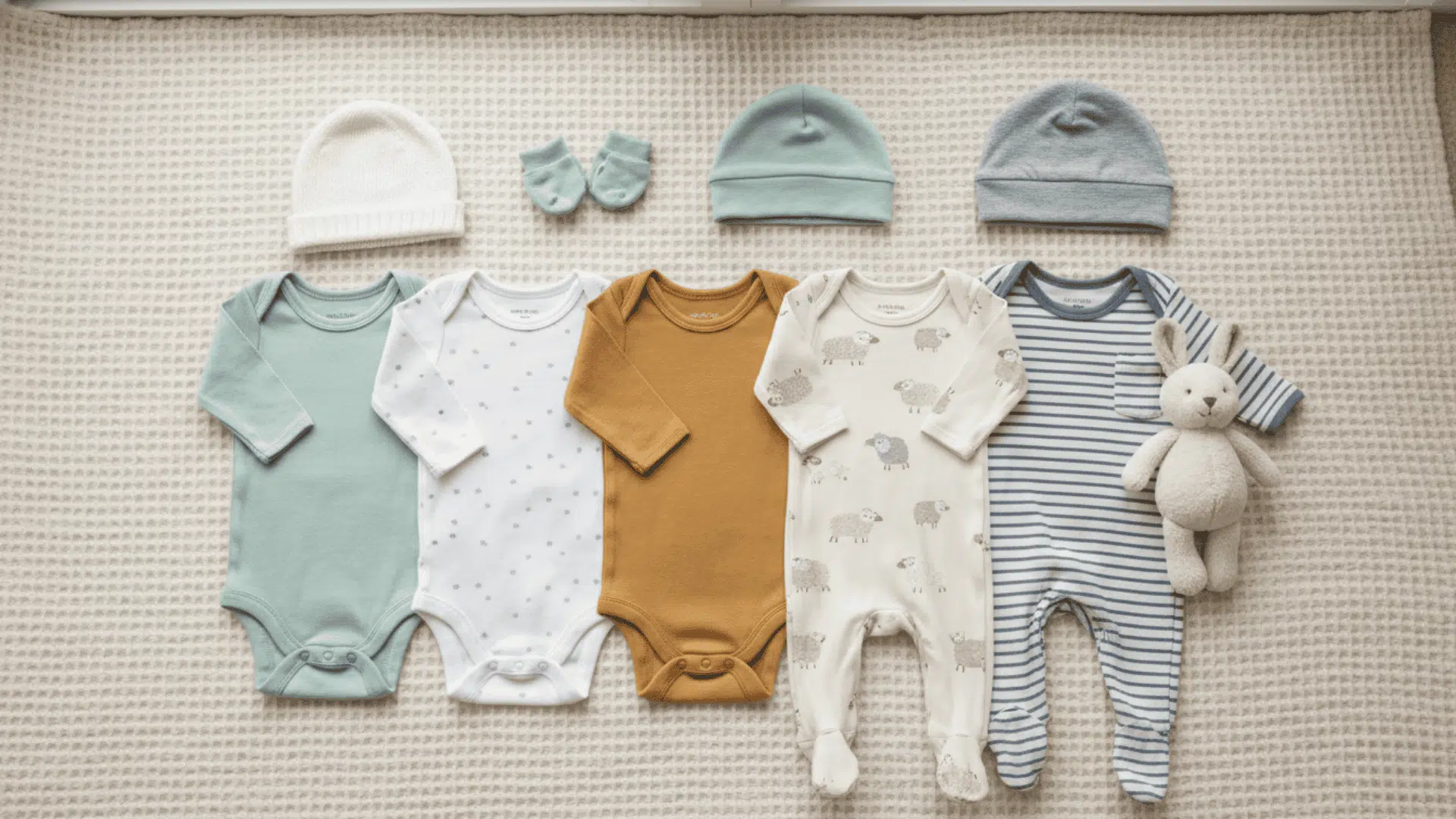
Here’s the real answer: most parents need 7-10 bodysuits, 4-5 sleepers, and 3-5 pairs of pants per size.
This covers 2-3 outfit changes daily without turning laundry into a full-time job.
The tricky part? Babies grow fast. Some skip newborn sizes completely. Others live for 0-3 months, longer than expected.
This guide breaks down exactly what you need from newborn through 12 months. You’ll learn which items deserve your money, what to skip entirely, and how your laundry schedule changes everything.
No more guessing. No more panic buying at 2 AM.
Understanding Baby Clothing Sizes
Clothing sizes don’t match ages. They match weight.
Newborn: Up to 8 lbs, 21 inches. Most babies wear this for 2-4 weeks. Larger babies skip it entirely.
0-3 months: 8-12 lbs, up to 23 inches. Your safest pre-birth purchase. Lasts 6-8 weeks for most babies.
The reality: Your 2-month-old might wear 6-month sizes. Your friend’s baby might still fit newborn. Both are normal. Brands fit differently, too – Carter’s runs small, H&M runs large.
When to Size Up (Watch These Signs)
Red marks on thighs after 30 minutes of wear. Diaper snaps barely close or pop open. Footies squish toes. Sleeves hit mid-forearm instead of wrists.
Growth timeline most babies follow:
- Newborn: 2-4 weeks
- 0-3M: 6-8 weeks
- 3-6M: 8-10 weeks
- 6M+: 2-3 months per size
Keep one outfit in the next size, washed and ready. Babies jump sizes overnight between weeks 4 and 12.
Essential Clothing Checklist (What Actually Gets Worn)
Stop buying cute outfits. Start building a functional wardrobe based on what babies actually wear daily.
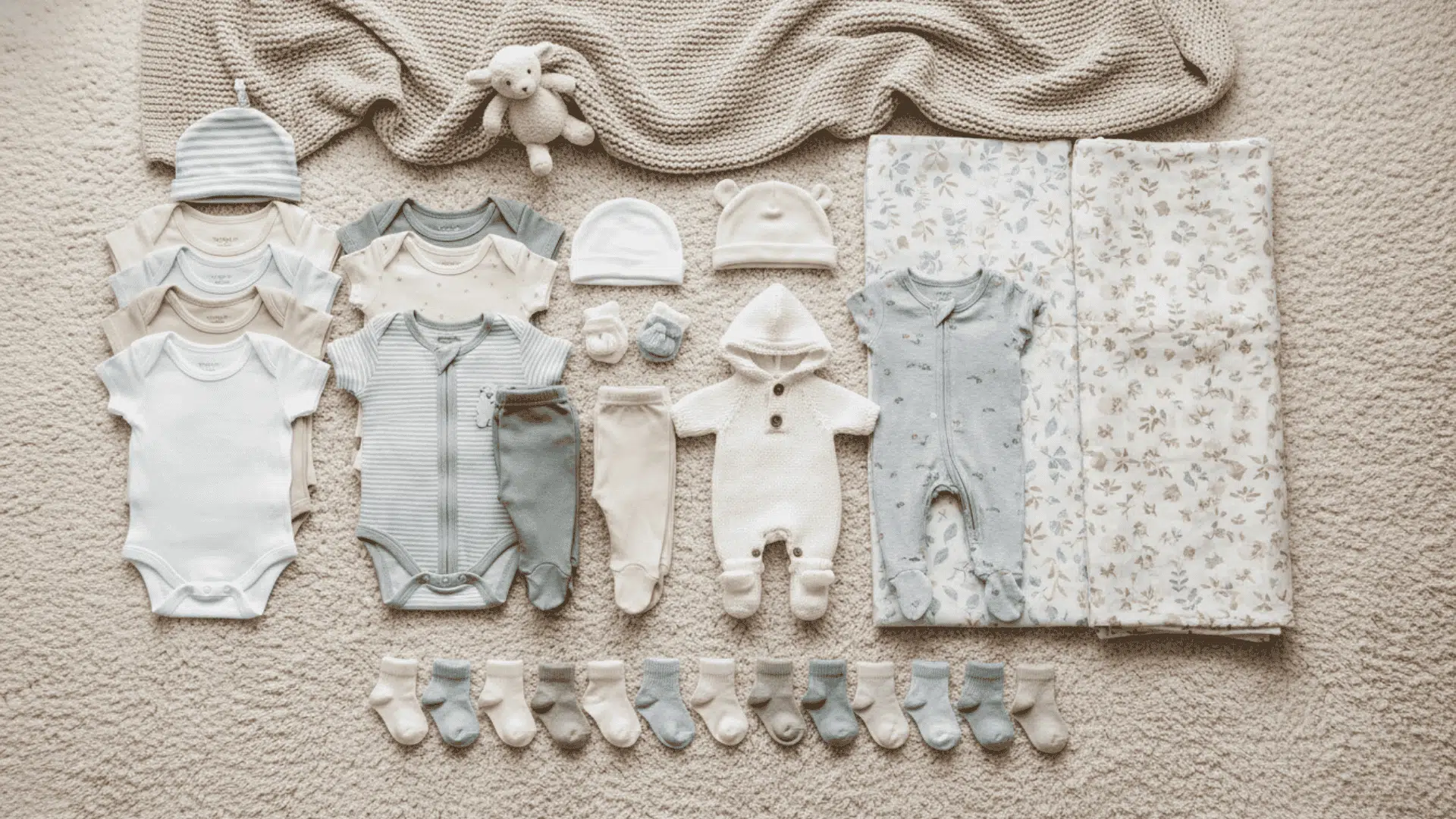
1. Bodysuits: 7-10
Bodysuits work as standalone outfits or layer under everything. Get 5 short-sleeve and 3-4 long-sleeve. For weeks 1-2, buy 2-3 side-snap or kimono styles that don’t touch the umbilical cord stump.
Pro tip: Envelope necklines pull down over shoulders during blowout cleanup instead of up over baby’s face.
2. Sleepers and Footies: 4-6
Babies live in these for naps, nighttime, and often all day during the first 8 weeks. Choose two-way zippers that open from the bottom for diaper access without full undressing. Footed styles eliminate lost socks.
Pro tip: Buy one sleeper per day plus 1-2 extras for unexpected spit-up emergencies.
3. Pants and Leggings: 3-5 Pairs
Optional but useful for quick changes when only the bottom half gets messy. Soft cotton or fleece leggings work best. Avoid jeans and stiff fabrics for the first 3 months.
Pro tip: Pants make bodysuit-only outfits look more dressed for quick errands.
4. Hats: 2
Newborns lose up to 25% of their body heat through their heads. Cotton beanies work for mild weather. Fleece hats handle winter outings.
According to the American Academy of Pediatrics safe sleep guidelines, babies should never wear hats during sleep. Hats can cause overheating and increase SIDS risk. Use hats only when the baby is awake and supervised.
Pro tip: Keep one in the diaper bag so you always have it when leaving the house.
5. Mittens: 2-3 Pairs or Skip
Newborn fingernails are sharp. Mittens prevent face scratches. About half of the parents skip these entirely and just trim nails every 3 days instead.
Pro tip: Stay-on styles with elastic cuffs work better than fold-over sleeve mittens that fall off instantly.
6. Socks: 7-10 Pairs
These disappear constantly. Buy more than seems reasonable. Regular socks work for 6 months. Switch to grippy-bottom socks once baby starts crawling.
Pro tip: Buy all socks in one color only – white or gray – to eliminate matching time completely.
7. Swaddles: 2-3
Muslin for April-September babies. Fleece-lined for October-March babies. Stop swaddling when the baby shows rolling signs around 8-12 weeks. Switch to sleep sacks immediately.
Pro tip: Can’t master traditional wrapping? Buy velcro or zipper swaddles instead-they work just as well.
8. Special Outfits: 1 Maximum
Buy one coming-home outfit in size 0-3 months. Grandparents and friends will gift more special occasion clothes than you’ll ever use.
Pro tip: Ask gift-givers for special outfits in 6-12 month sizes when you’ll actually attend events.
The Laundry Factor (This Changes Everything)
Your washing frequency determines how many clothes you actually need. Here’s exactly what to buy based on how often you plan to do laundry:
| Item | Wash 2x/Week | Wash 1x/Week | Daily Washing |
|---|---|---|---|
| Bodysuits | 7-10 | 14 | 4-5 |
| Sleepers | 4-6 | 7 | 3 |
| Pants | 3-5 | 7 | 2-3 |
| Socks | 7-10 pairs | 10-14 pairs | 5 pairs |
| Swaddles | 2-3 | 3-4 | 2 |
Most parents wash twice weekly. That’s the sweet spot between manageable laundry loads and having enough clean clothes.
Plan for 2-3 outfit changes daily during weeks 1-4. Spit-up and diaper blowouts peak during this time. By month 2, most babies drop to 1-2 changes daily.
Have twins, a preemie, or a baby with reflux? Jump to Special Situations for adjusted quantities.
How Much Does a Newborn Wardrobe Actually Cost?
A basic newborn wardrobe costs $150-400 through 0-3 months. Here’s what you’ll actually spend.
1. Budget Shopping (Target, Walmart, Used)
- Bodysuits (7-10): $21-50
- Sleepers (4-6): $20-48
- Pants (3-5 pairs): $12-30
- Socks (7-10 pairs): $7-20
- Hats (2): $6-10
- Swaddles (2-3): $16-36
Total: $82-194
Facebook Marketplace and consignment stores sell barely-worn basics for 50-70% off. Target’s Cat & Jack has a free replacement for worn items.
2. Mid-Range Shopping (Carter’s, H&M, Gap)
- Bodysuits (7-10): $42-100
- Sleepers (4-6): $40-90
- Pants (3-5 pairs): $24-60
- Socks (7-10 pairs): $14-40
- Hats (2): $12-20
- Swaddles (2-3): $30-75
Total: $162-385
Carter’s runs 50% off every 2-3 weeks. Gap offers 40% off monthly. Buy during sales only.
3. Premium Shopping (Organic, Designer)
- Bodysuits (7-10): $84-200
- Sleepers (4-6): $72-180
- Pants (3-5 pairs): $45-125
- Socks (7-10 pairs): $35-80
- Hats (2): $24-36
- Swaddles (2-3): $60-150
Total: $320-771
Organic brands cost 3-4x more. Your baby won’t notice. Register for these as gifts.
4. Quick Money Savers
Multi-packs save 40-50%: Five bodysuits cost $15-20 versus $40-60 buying singles.
Skip newborn size entirely: Start with 0-3 months and save $50-100.
Take hand-me-downs for basics: Bodysuits and sleepers work great, used. Skip stained items.
Shop off-season: February and August clearance means 60-70% off.
One special outfit maximum: Spend $10, not $40.
5. Hidden Costs to Budget
Add $30-45 for fragrance-free detergent over three months. Budget $25-40 for hangers and drawer organizers. Plan another $100-150 per size. Babies need new clothes every 6-10 weeks during months 1-6.
6. Spend More vs Spend Less
Worth the extra cost:
- Two-way zipper sleepers
- Quality swaddles
- Grippy-elastic socks
Buy the cheapest version:
- Bodysuits
- Pants
- Special outfits
Most parents spend $200-350 total. Set your budget before shopping. Baby stores make everything look essential.
Seasonal Considerations
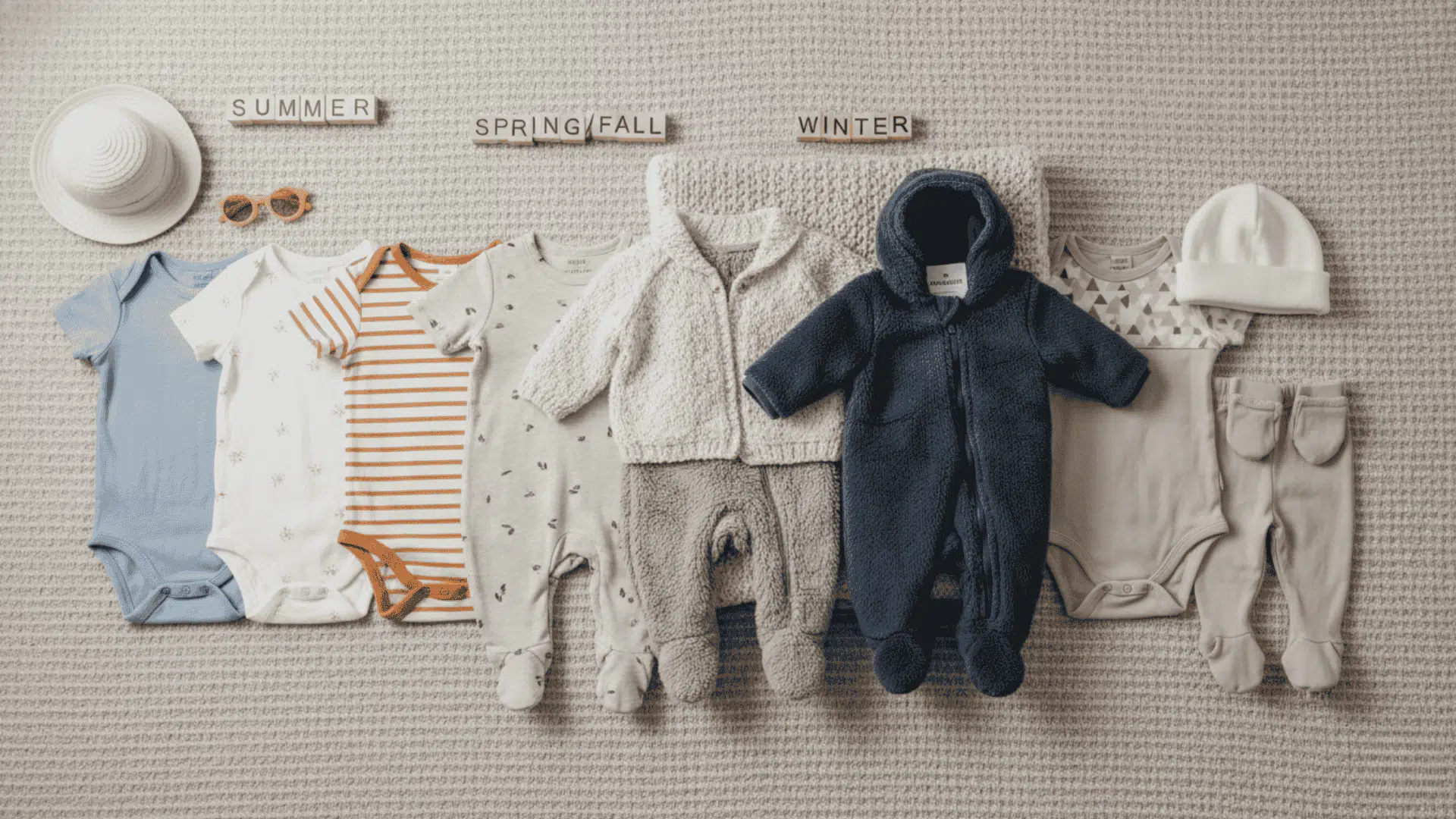
Your baby’s birth month changes what you need in their closet. A July baby needs completely different essentials than a December baby.
1. Summer Babies (April-September)
Light, breathable fabrics are essential. Cotton and bamboo keep babies cool without overheating. Stock up on short-sleeve bodysuits and lightweight sleepers. Skip heavy layers entirely for the first 2 months.
Buy a wide-brimmed sun hat for outdoor time. Keep one long-sleeve outfit on hand for overly air-conditioned restaurants and stores.
2. Winter Babies (October-March)
Layering is your best friend. Long-sleeve bodysuits go under everything. Add fleece or footed sleepers for warmth. Keep 2-3 cardigans or jackets on hand for outings in cold weather.
Buy a bunting or snowsuit in a 3-6 month size instead of newborn. This way baby actually uses it when you need it most.
Disclaimer: Never use bulky coats or snowsuits in car seats. The American Academy of Pediatrics warns that puffy layers compress during crashes and create dangerous harness slack. Dress the baby in thin layers and use blankets over the harness instead.
3. Temperature Transitions
Babies born in spring or fall need clothes for temperature swings. Buy equal amounts of short and long-sleeve options. Layer lightweight pieces instead of buying heavy single items.
Keep both lightweight and warm sleepers ready. Nurseries can go from too hot to too cold overnight, especially during season changes.
Special Situations That Change Your Shopping List
Most babies follow standard recommendations. Some don’t. Here’s what changes when your situation differs.
1. Twins (Smart Doubling Strategy)
Don’t multiply everything by two. That wastes money.
Double bodysuits (14-18 total) and sleepers (8-10 total). Share swaddles, hats, and outerwear between both. Skip matching outfits entirely.
Wash daily during weeks 1-4 since you’ll go through 4-6 outfit changes combined. Switch to every other day by month 2. Color-code clothes to track which twin wore what for skin sensitivity patterns.
2. Preemie Babies (Size Down First)
Babies under 5.5 pounds need preemie sizes. Regular newborn clothes hang loose and create safety risks.
Buy 5-7 bodysuits, 3-4 sleepers, and 4-5 pairs of socks in preemie size. Skip pants and special outfits. Preemies grow into newborns within 2-4 weeks and often jump to 0-3 months by week 6.
Ask your NICU what hospital clothes you can keep before buying anything. Many families never need preemie sizes.
3. High-Spit-Up and Reflux Babies
Reflux babies go through 5-8 changes daily during peak weeks.
Increase bodysuits to 12-15 and sleepers to 7-8. Add 20-24 burp cloths and 10-12 bibs. Choose dark colors and patterns over white. Avoid textured fabrics that trap smells.
Keep complete outfit changes in every room. Pack 3-4 changes in your diaper bag instead of 1-2. Wash daily or every other day, maximum. Most reflux improves by month 4-6, so don’t overbuy future sizes.
4. Large Babies (8+ Pounds at Birth)
Skip newborn size completely. Start with 0-3 months. Babies over 9 pounds often fit 3-6 months immediately.
Buy 3-6 month clothes within week 2. Stock fewer pieces per size since large babies outgrow them in 4-6 weeks. Focus your budget on sizes 6-12 months.
Large babies outgrow footies before the body fits. Buy sleep sacks or two-piece sleepers instead. Keep one outfit in the next size washed and ready between weeks 2-8 when growth spurts hit hardest.
Smart Shopping: What You Don’t Really Need
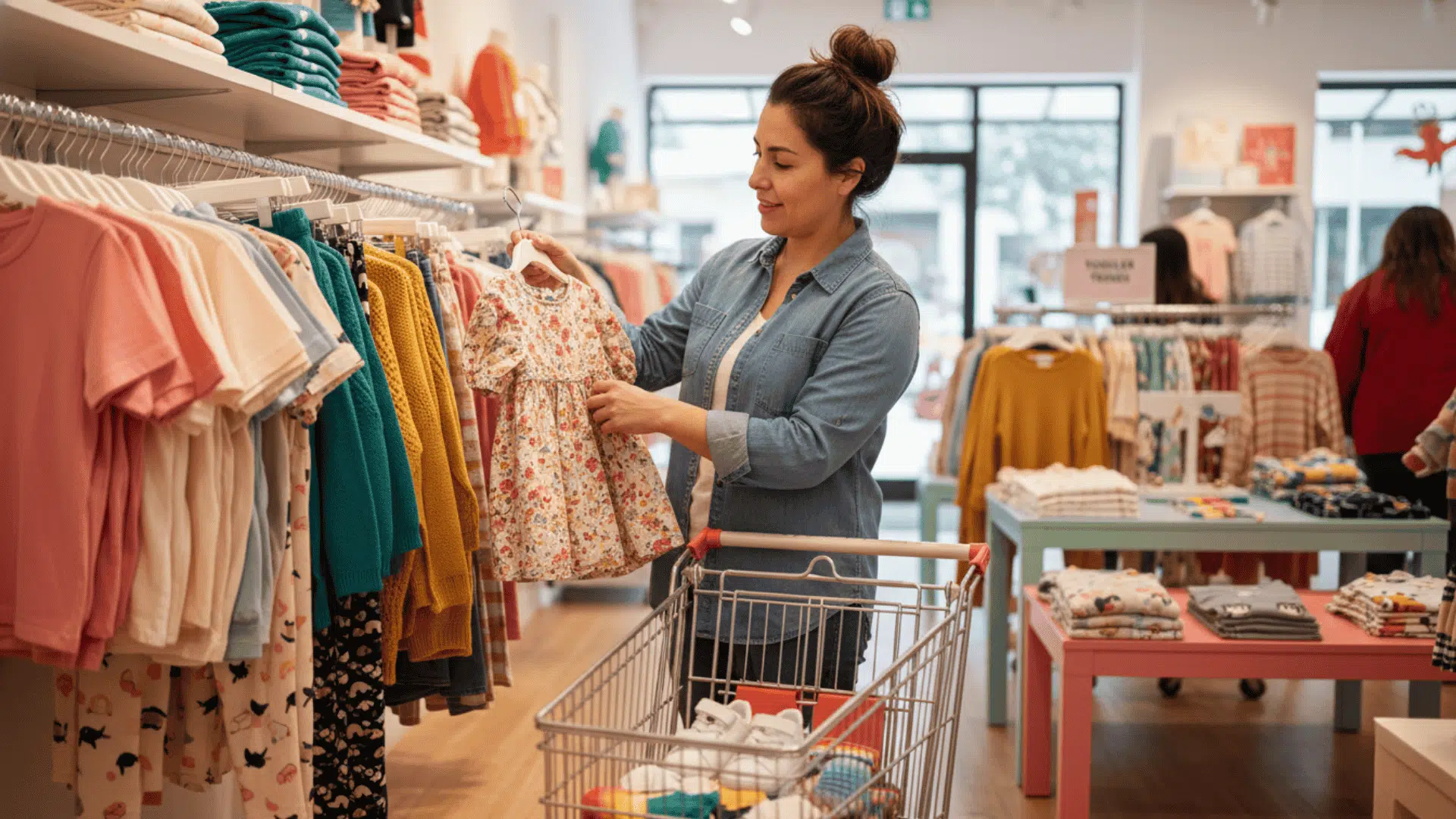
Baby stores make everything look essential. Most items end up collecting dust in closets.
Skip newborn shoes entirely. Babies don’t walk for 9-12 months. Socks or bare feet work perfectly until then. Avoid jeans, overalls with buttons, and anything with zippers up the back. These make diaper changes frustrating and time-consuming.
Don’t buy complete outfit sets that only work together. Separates give you more mix-and-match options and better value per piece. Skip rompers and dresses for the first 8 weeks. Bodysuits and sleepers are faster for constant diaper changes.
Scratch mittens aren’t necessary if you trim nails every few days. Most fall off anyway. Avoid buying more than 3-5 pieces in newborn size. Half of babies skip this size completely or outgrow it within 2 weeks.
Fancy occasion outfits rarely get worn. Grandparents and friends will gift these anyway. Save your money for practical 0-3 month basics instead. You’ll actually use those daily.
Conclusion
Building a newborn wardrobe doesn’t require buying everything in sight. You need 7-10 bodysuits, 4-6 sleepers, and a handful of basics per size. That’s enough for daily life without constant laundry stress.
Focus on sizes 0-3 months and 3-6 months instead of stockpiling newborn clothes. Babies grow fastest in the first three months and will actually wear those larger sizes longer.
Adjust quantities based on your laundry schedule. Washing twice weekly works for most parents. Skip the fancy outfits, shoes, and complete sets. Stick to practical pieces that survive spit-up and blowouts.
Buy smart, not more. Your baby needs comfortable, functional clothes that work for real life.
What’s your biggest question about building your baby’s wardrobe?
Drop it in the comments below, and let’s help each other avoid the newborn clothing trap.
Frequently Asked Questions
Can Newborns Wear 0-3 Months?
Yes. Most newborns fit 0-3-month clothes immediately, especially if born over 8 pounds. Sleeves may be long initially, but babies grow into them quickly.
Should I Wash Baby Clothes Before First Wear?
Yes. Washing removes chemicals, dyes, and factory residue. Use fragrance-free detergent and skip fabric softener to protect sensitive newborn skin.
Can I Buy Used Baby Clothes Safely?
Absolutely. Used clothes are often barely worn and budget-friendly. Check for stains, loose buttons, and broken zippers before buying.
Do Babies Need Different Clothes for Day vs Night?
No. Sleepers work 24/7 for the first 8 weeks. Daytime outfits become useful around month 2 when babies stay awake longer.