Your 18-month-old is full of energy and wants to explore everything. Keeping them engaged throughout the day can feel like a real challenge, especially when you’re juggling other tasks.
You need activities for 18-month-old toddlers that don’t require fancy toys or hours of setup. The good news is that simple, everyday items can create amazing learning moments for your little one.
This guide shares activity ideas you can start today. From sensory play to outdoor adventures, you’ll find options that fit your schedule and support your toddler’s development.
Each activity helps build important skills like motor coordination, language, and problem-solving.
Most activities use things you already have at home. No expensive supplies needed. Just grab a few items and watch your toddler’s face light up with excitement.
Let’s get started.
What Play Should Look Like at 18 Months?
At 18 months, your toddler is walking steadily and may start running. They climb furniture, stack blocks, and turn book pages. Fine motor control improves daily.
Most toddlers say a few words, such as “mama” or “no,” and understand simple directions. They learn through cause and effect by dropping things, pushing buttons, and opening containers.
Pretend play begins now. Your child might feed a doll or pretend to talk on a phone. They copy your actions, like sweeping or stirring.
Independence grows strong at this age. Your toddler wants to do things alone, leading to frustration and tantrums. This is normal development.
Attention spans are short, just a few minutes per activity. Toddlers learn through repetition, so they’ll want the same activity over and over.
Your child explores through their senses. They touch, taste, smell, and observe everything. This natural curiosity makes sensory play perfect for this age.
Now that you know what to expect, let’s explore activities that match your toddler’s developmental stage. Sensory play is ideal because it taps into their natural curiosity about how things feel, look, and work.
Sensory Play Activities for 18-month-olds
Sensory play helps your toddler learn about the world through touch, sight, sound, smell, and taste. These activities boost brain development and keep little hands busy for a good stretch of time.
Quick Tips for Sensory Play Success:
- Start with short sessions of 10 to 15 minutes
- Lay down towels or do activities outside for easy cleanup
- Join in the play to model new ways to explore
- Watch your child’s cues and stop if they lose interest
- Don’t worry about messes; they wash off
1. Water Play in the Kitchen Sink
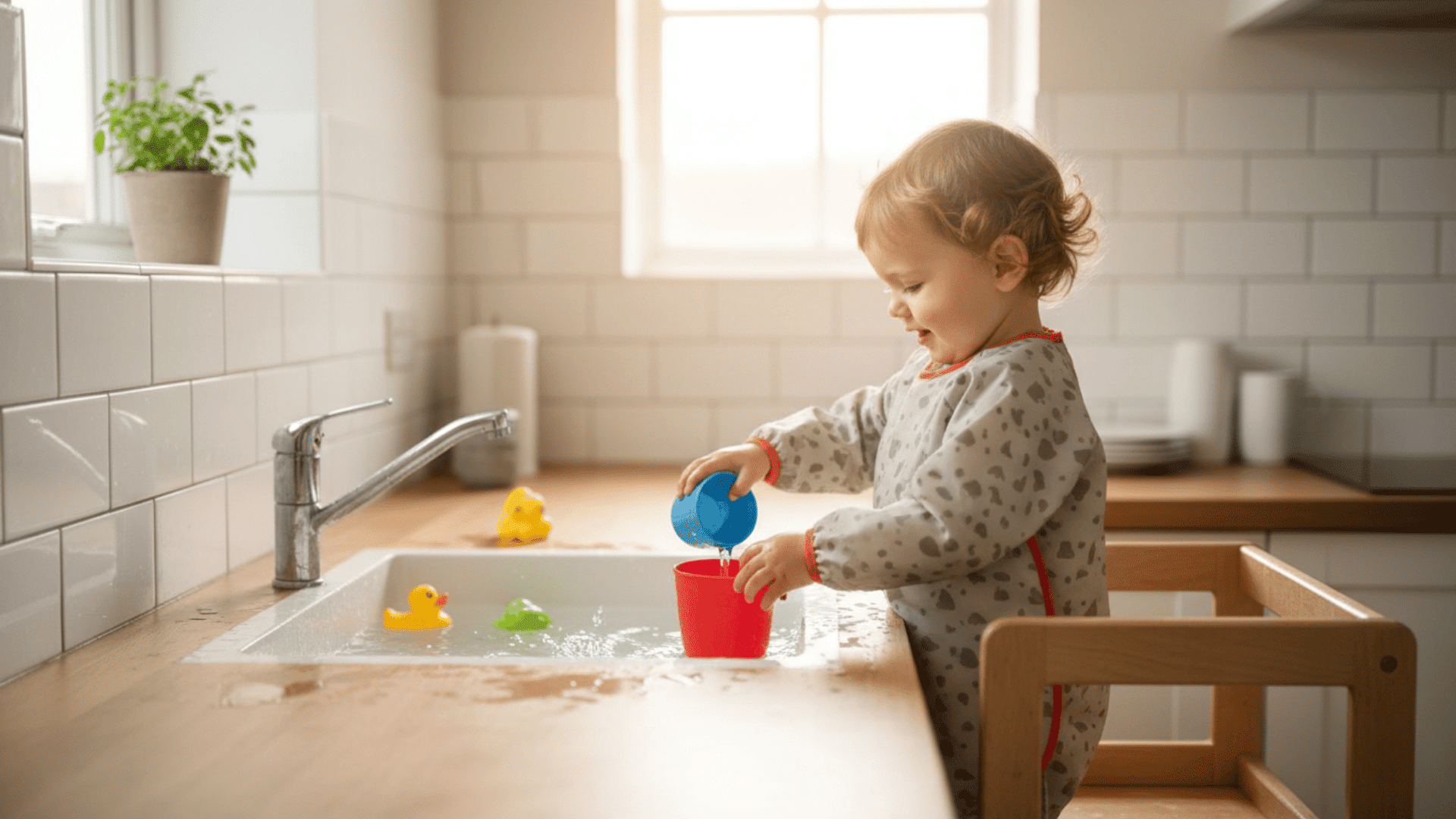
Fill your sink with a few inches of water and add plastic cups, spoons, or small toys. Your toddler will love pouring, splashing, and watching things float.
This simple activity teaches cause and effect while improving hand-eye coordination. The repetitive action of filling and dumping containers helps develop focus and problem-solving skills.
Always supervise water play closely to ensure safety.
What you need: Water, plastic containers, small toys
2. Homemade Playdough
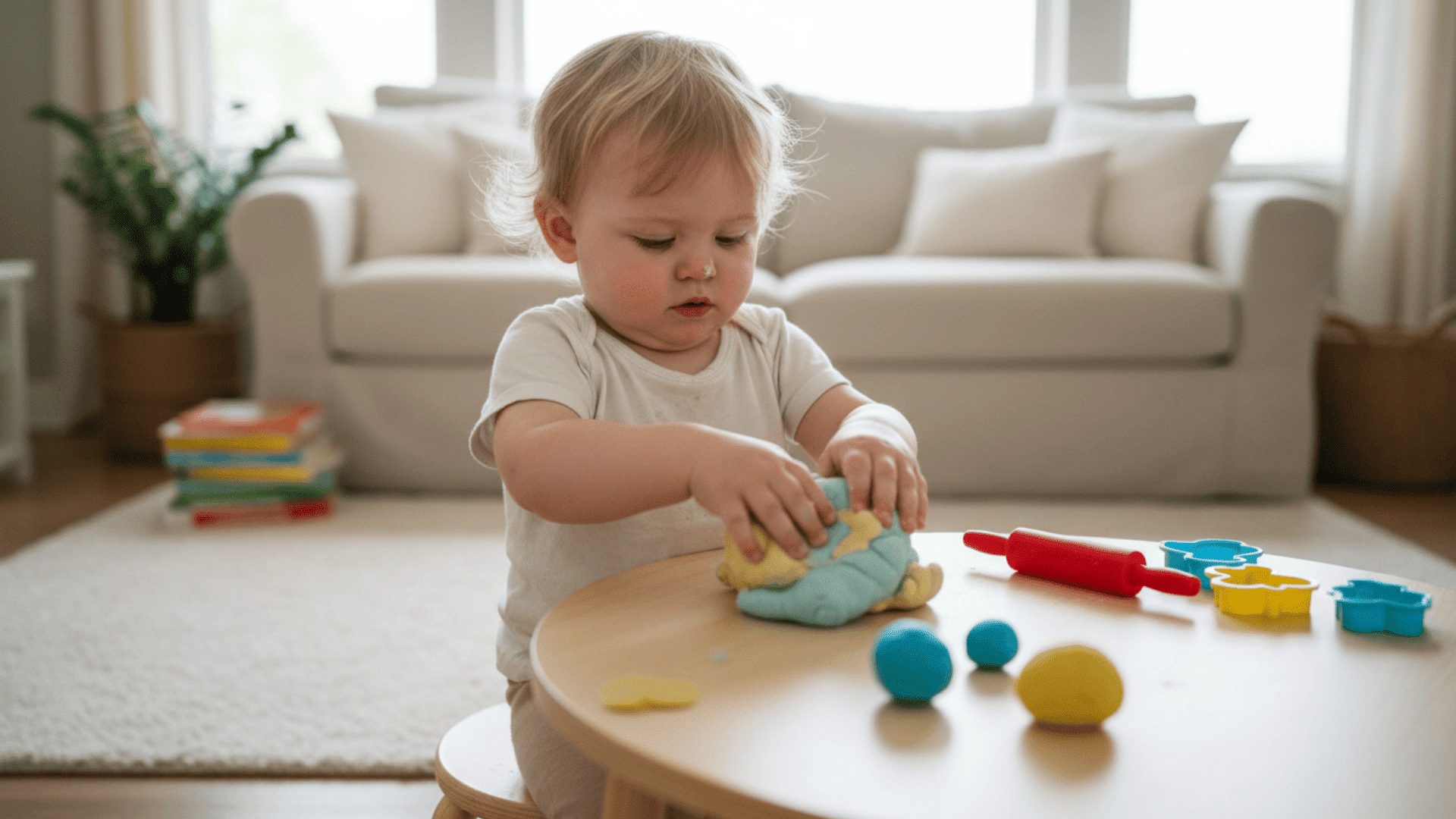
Mix flour, salt, water, and food coloring to make playdough at home. Let your toddler squish, roll, and poke it with their hands.
The soft texture feels great in little hands and builds the finger strength needed for future writing skills. Your child will enjoy exploring the squishy material and watching how it changes shape.
Store in an airtight container for up to a week, so you can reuse it multiple times.
What you need: 2 cups flour, 1 cup salt, water, food coloring (optional)
3. Ice Cube Fun
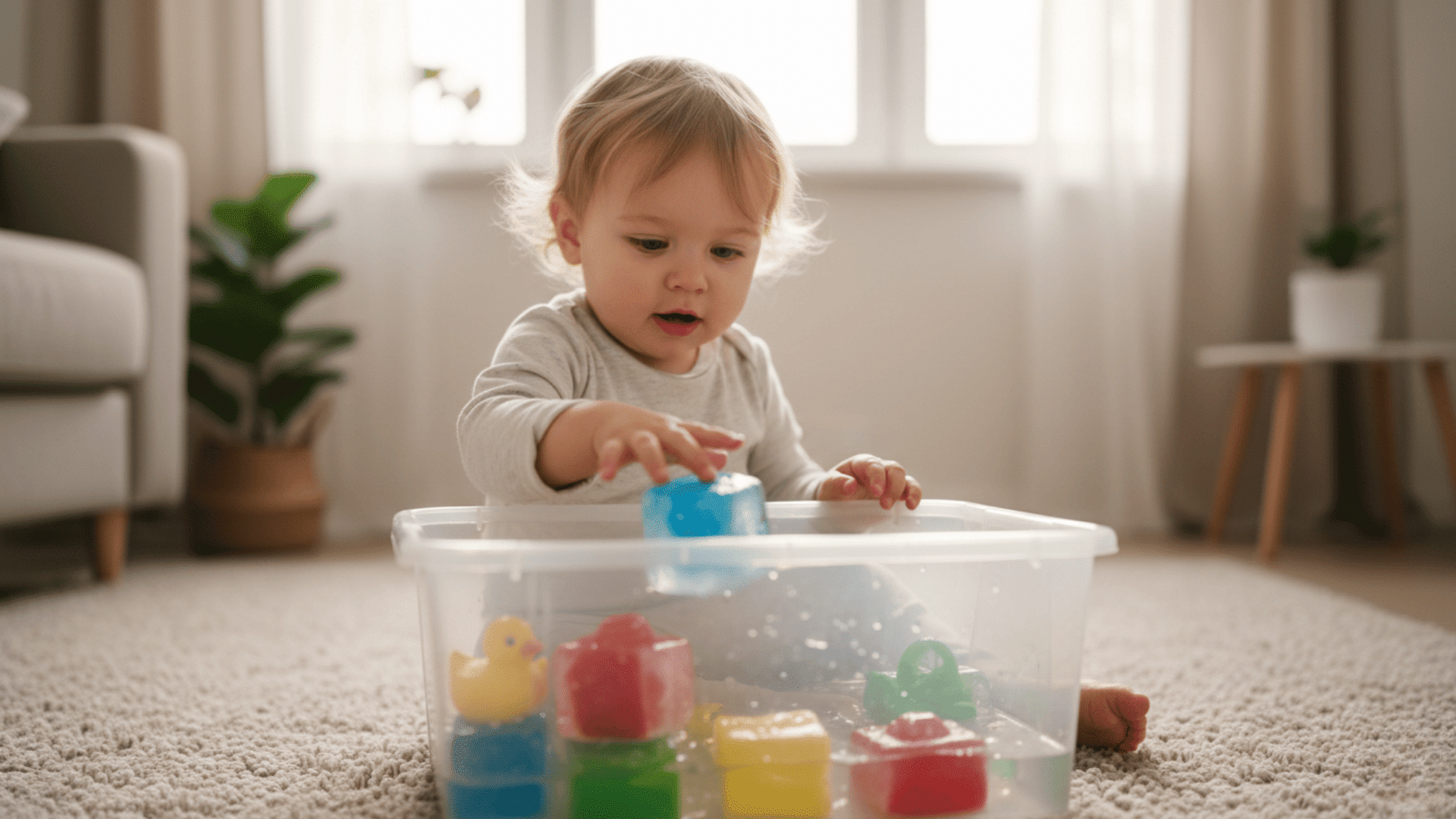
Place ice cubes in a shallow container and let your toddler touch them. Add small toys frozen inside the ice for extra excitement.
Kids love feeling the cold sensation and watching ice slowly melt into water. This teaches temperature concepts and introduces basic science ideas.
Add food coloring to the water before freezing for colorful ice cubes that make the activity even more visually interesting.
What you need: Ice cubes, plastic container, small toys (optional)
4. Texture Basket
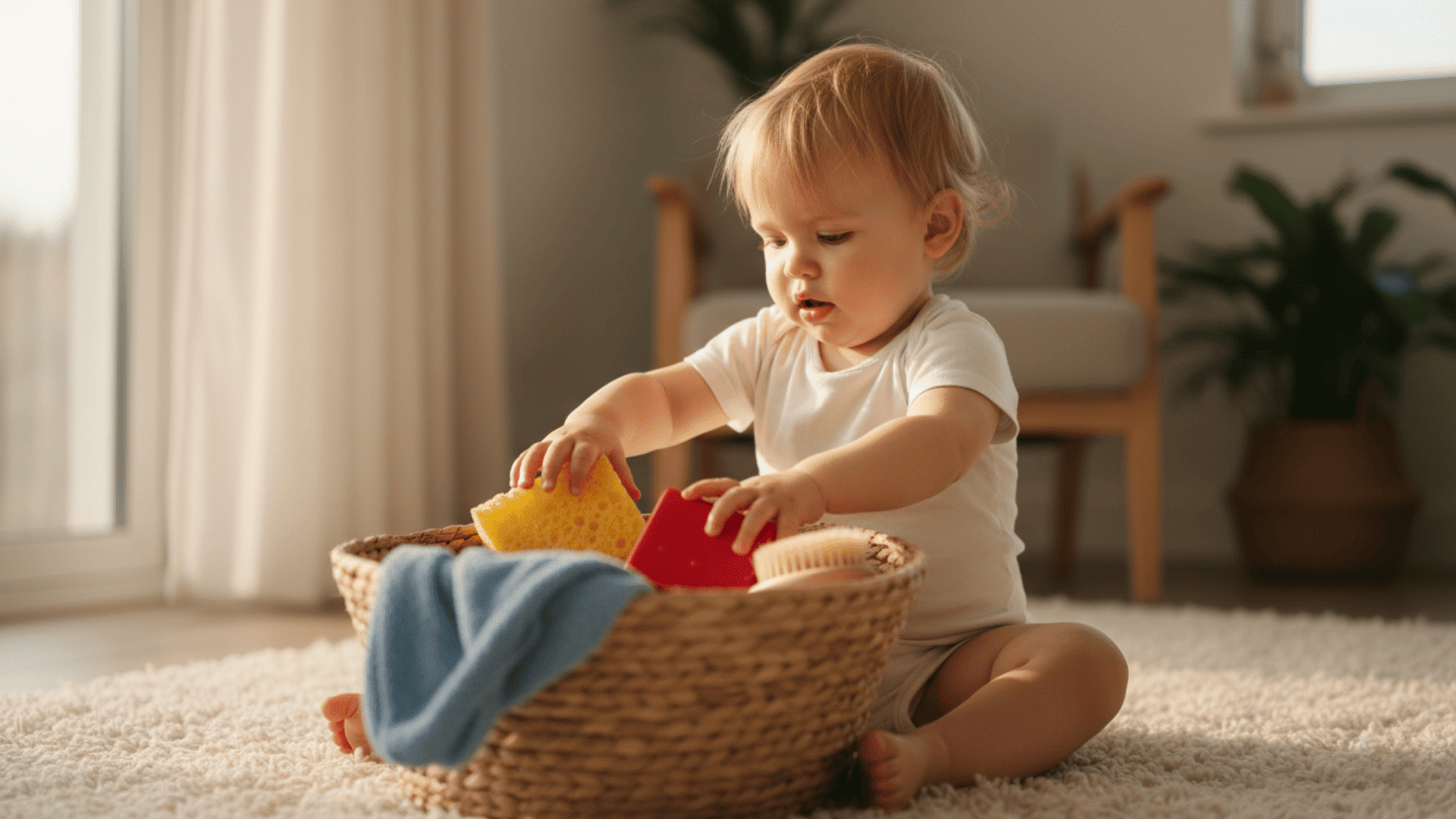
Gather items with different textures, like a soft sponge, rough sandpaper, smooth plastic, and fuzzy fabric. Put them in a basket and let your toddler feel each one.
Name the textures as they touch them by saying things like “This feels soft” or “That’s bumpy.” This simple activity builds vocabulary while developing sensory awareness.
Your toddler learns to identify and describe what they experience through touch.
What you need: Various textured items from around your home
5. Edible Finger Painting
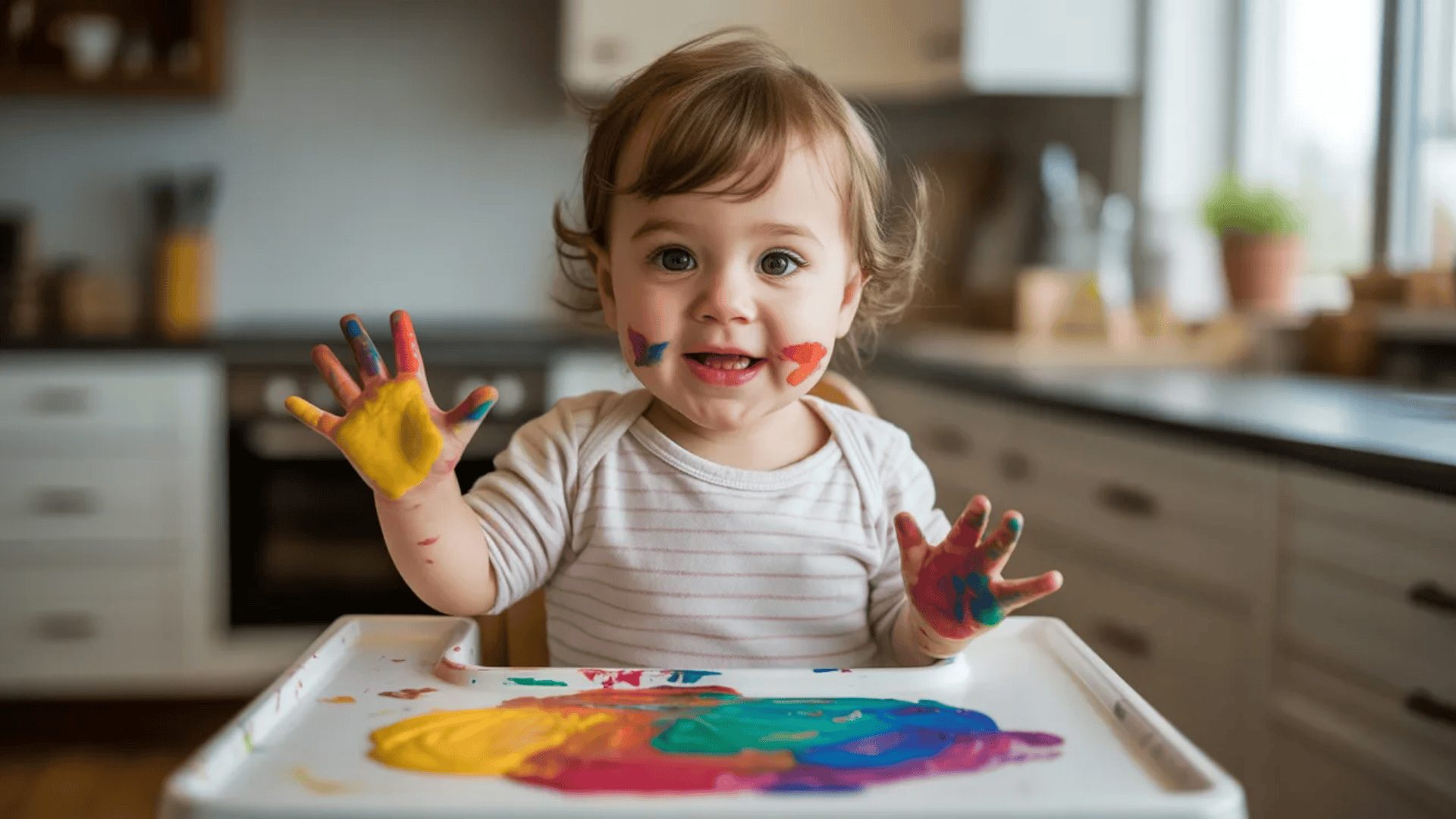
Mix vanilla yogurt or pudding with food coloring for safe, edible paint. Spread it on a high chair tray and let your toddler create with their fingers.
This works great for kids who still put everything in their mouths, since the paint is completely safe to eat. The smooth texture and bright colors make this a favorite activity.
Do this before bath time to make the cleanup of the inevitable mess easy.
What you need: Yogurt or pudding, food coloring
Motor Skills Activities for 18-month-olds
Motor skills help your toddler gain control over their body. Fine motor skills involve small movements like grasping and stacking, while gross motor skills involve bigger movements like running and climbing. Both are essential for your child’s physical development.
Quick Tips for Motor Skills Success:
- Give your toddler space to move safely
- Let them practice the same movements repeatedly
- Celebrate small wins to build confidence
- Mix active play with quiet activities
- Supervise climbing and jumping to prevent falls
6. Stacking Blocks or Cups
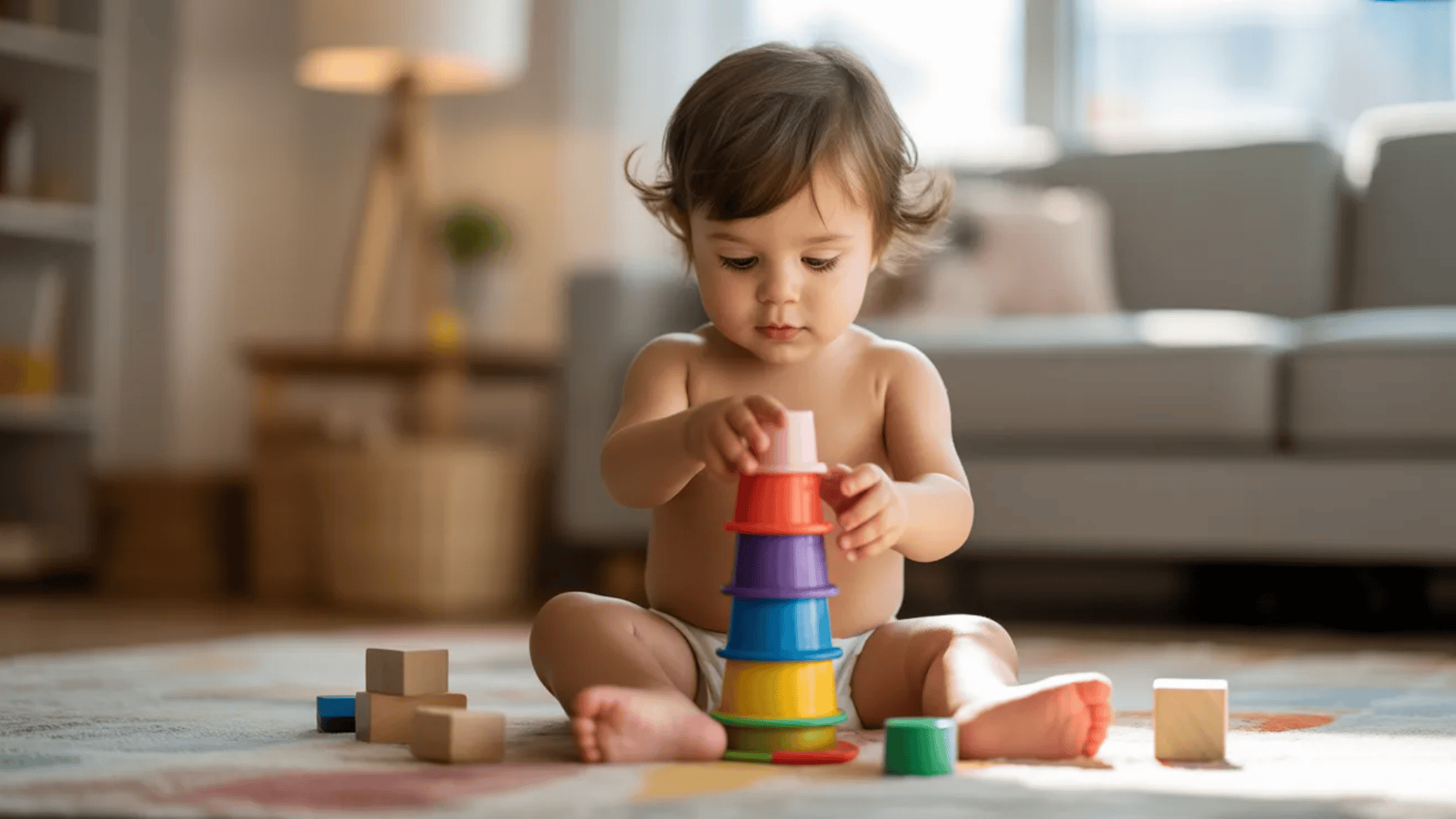
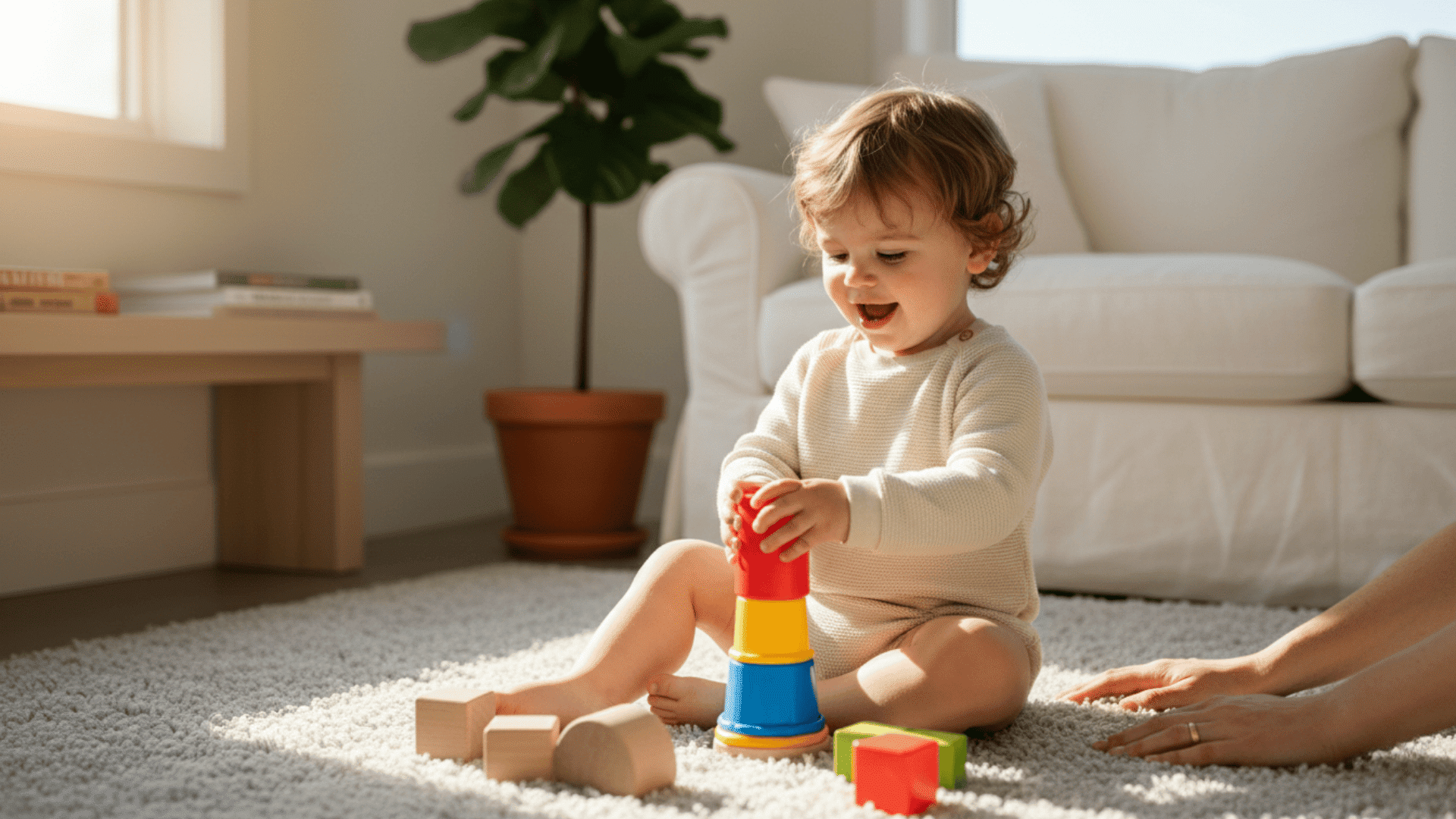
Give your toddler blocks, nesting cups, or even plastic containers to stack. They’ll work on building towers and knocking them down.
This activity strengthens hand-eye coordination and teaches balance. Your child learns about size, height, and how objects fit together through trial and error.
Start with larger blocks and progress to smaller ones as skills improve.
What you need: Blocks, nesting cups, or plastic containers
7. Ball Play
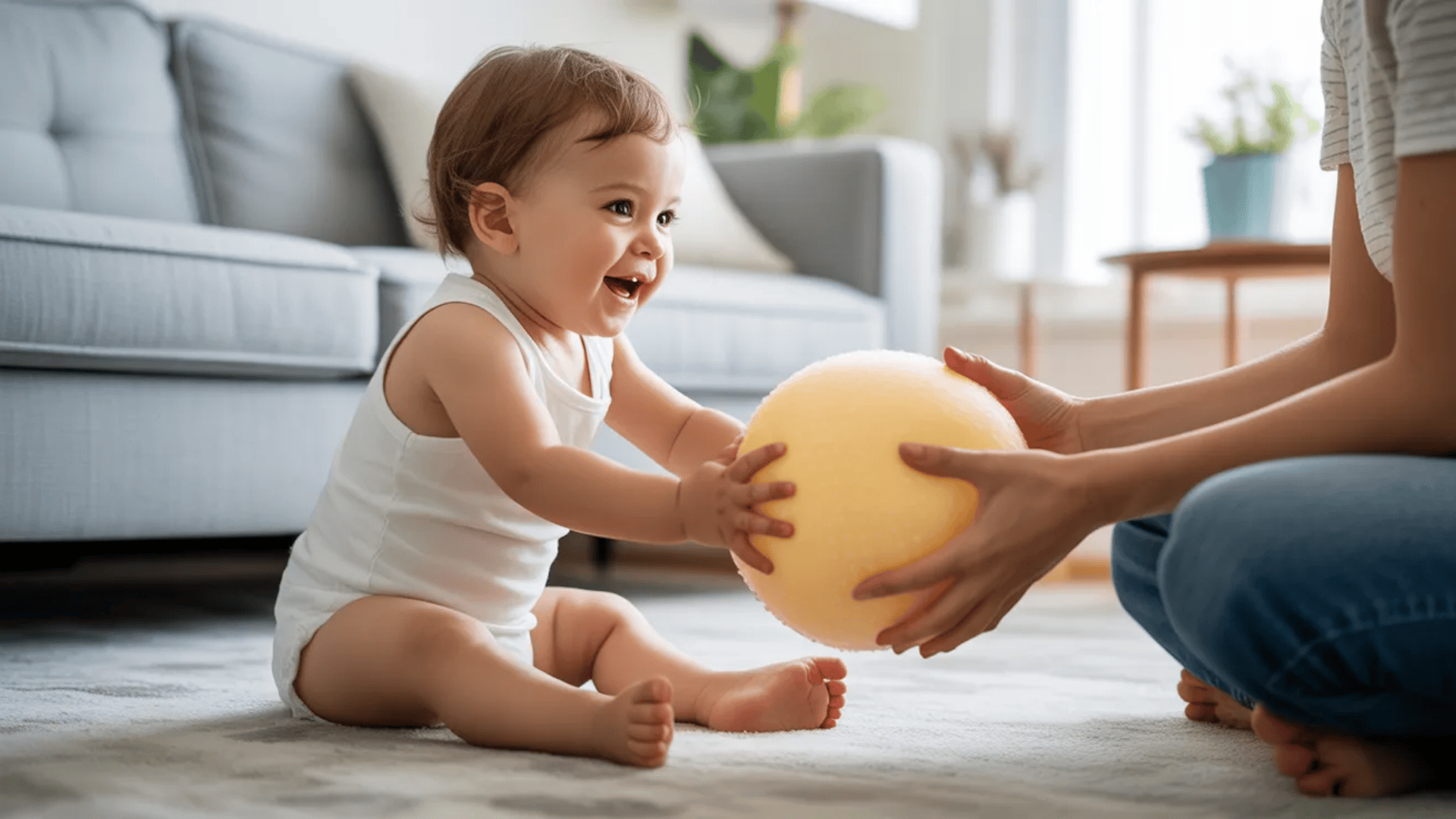
Roll a soft ball back and forth with your toddler. Encourage them to kick it, throw it, or chase after it.
Ball play improves coordination, balance, and timing. Your child practices tracking moving objects with their eyes while coordinating their body movements.
Use a larger, softer ball that’s easier for little hands to grip and won’t cause injury if it hits them.
What you need: Softball (soccer ball, beach ball, or foam ball)
8. Shape Sorter or Simple Puzzles
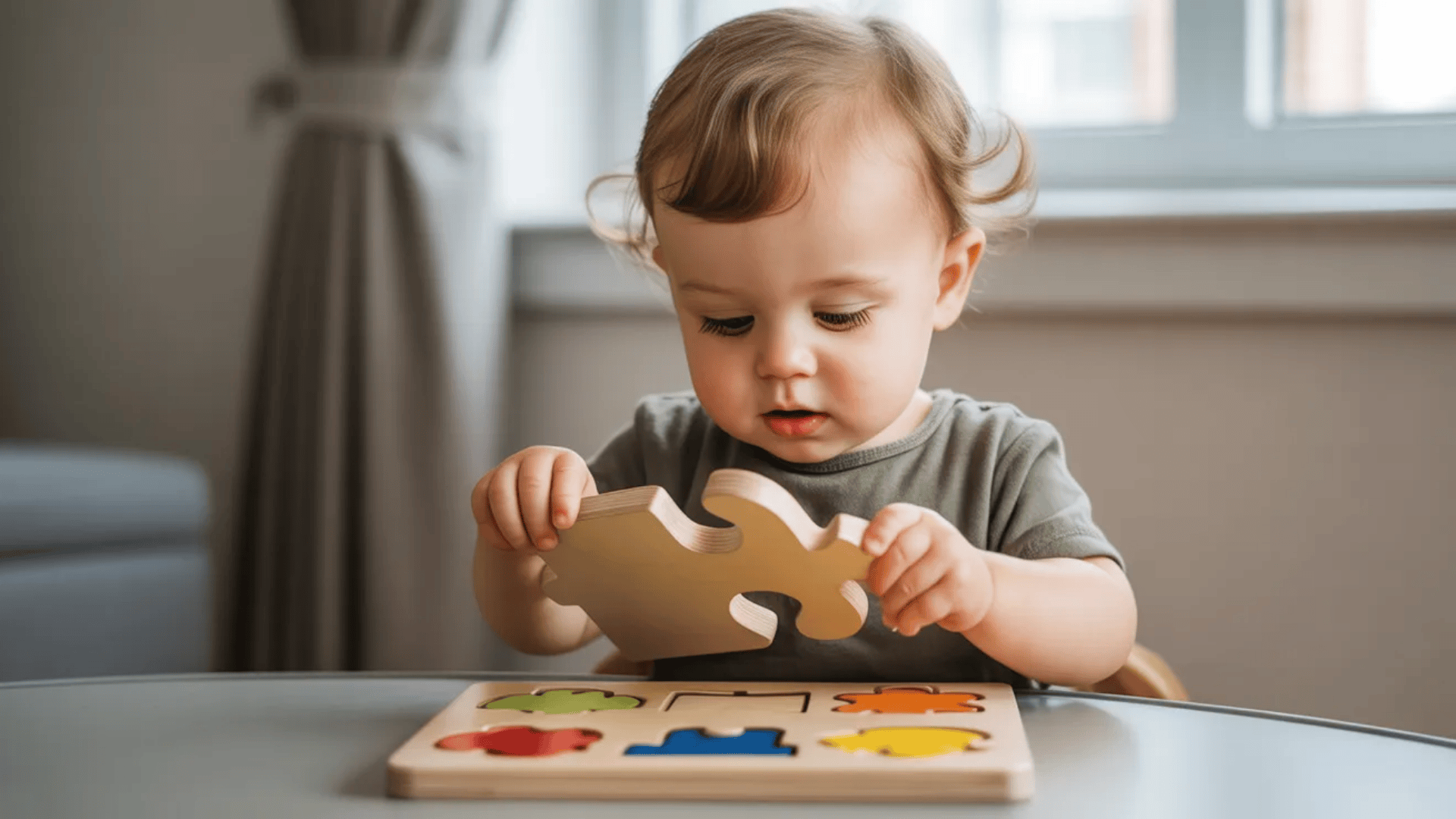
Provide a shape sorter toy or simple wooden puzzles with large pieces. Let your toddler figure out how pieces fit into the correct spots.
This builds problem-solving skills and fine motor control. Your child learns to rotate objects and match shapes while strengthening their grip.
Start with puzzles that have only 3 to 5 large pieces for this age group.
What you need: Shape sorter toy or simple wooden puzzle
9. Climbing and Obstacle Course

Set up a simple obstacle course using pillows, cushions, or a small step stool. Let your toddler climb over, crawl under, and walk around objects.
This builds strength, balance, and spatial awareness. Your child learns how their body moves through space and gains confidence in physical abilities.
Always supervise climbing activities and keep the course low to the ground for safety.
What you need: Pillows, cushions, a step stool, or furniture
10. Drop and Retrieve Games
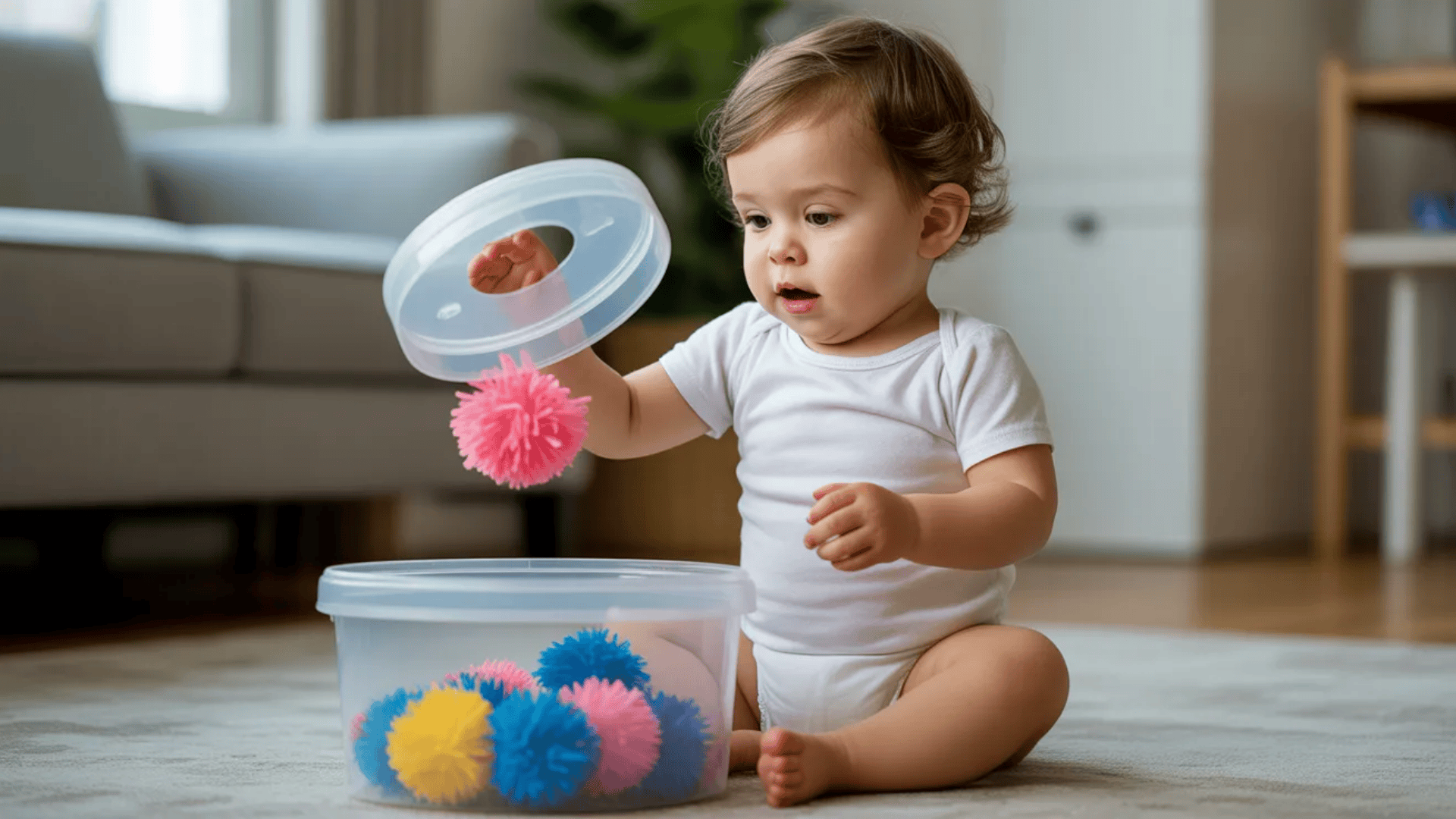
Cut a hole in the lid of an empty container. Give your toddler items like pom poms, large buttons, or blocks to drop through the hole.
This activity refines hand-eye coordination and teaches precision. Your child practices the pincer grasp, which is important for holding crayons and utensils later.
The dropping and retrieving motion keeps toddlers engaged for longer than you might expect.
What you need: Empty container with lid, pom poms or blocks
Indoor Activities for 18 Month Olds
Rainy days or hot weather can keep you stuck inside. These indoor activities keep your toddler entertained without needing a big space or special equipment. They work well when you need low-energy options that still engage your child’s mind and body.
Quick Tips for Indoor Play:
- Rotate activities to keep things fresh and interesting
- Create a safe play space free from hazards
- Keep supplies organized in bins for quick setup
- Accept that some mess is part of learning
- Join in when you can to make it more engaging
11. Sticker Play
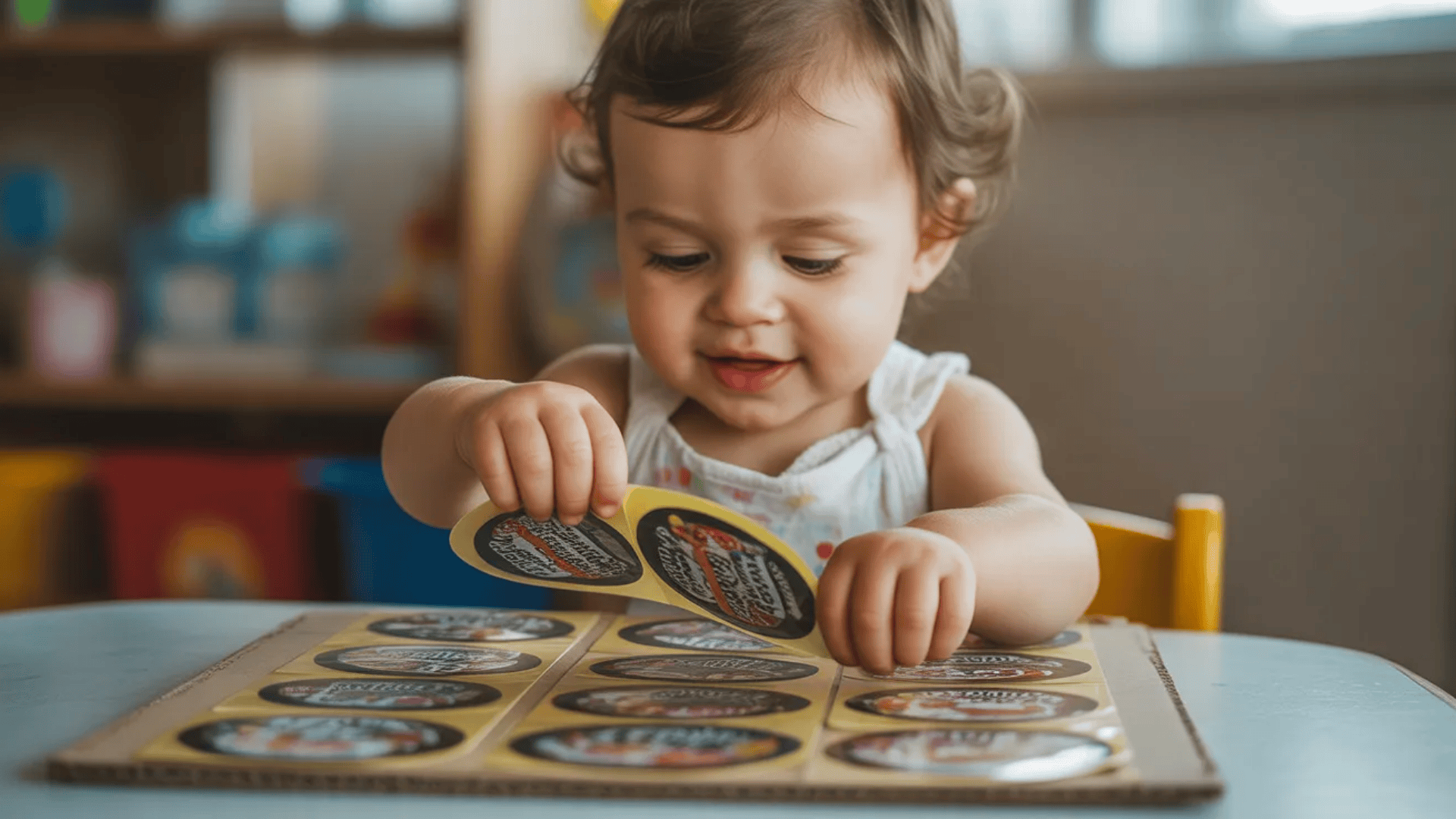
Give your toddler a sheet of large stickers and a piece of paper or cardboard. Let them peel and stick wherever they want.
This activity builds fine motor skills, especially the pincer grasp needed for peeling. Your child practices hand-eye coordination while enjoying the immediate visual reward of decorating.
You can also stick stickers on windows or plastic containers for easy removal and reuse.
What you need: Large stickers, paper, or cardboard
12. Cardboard Box Fun
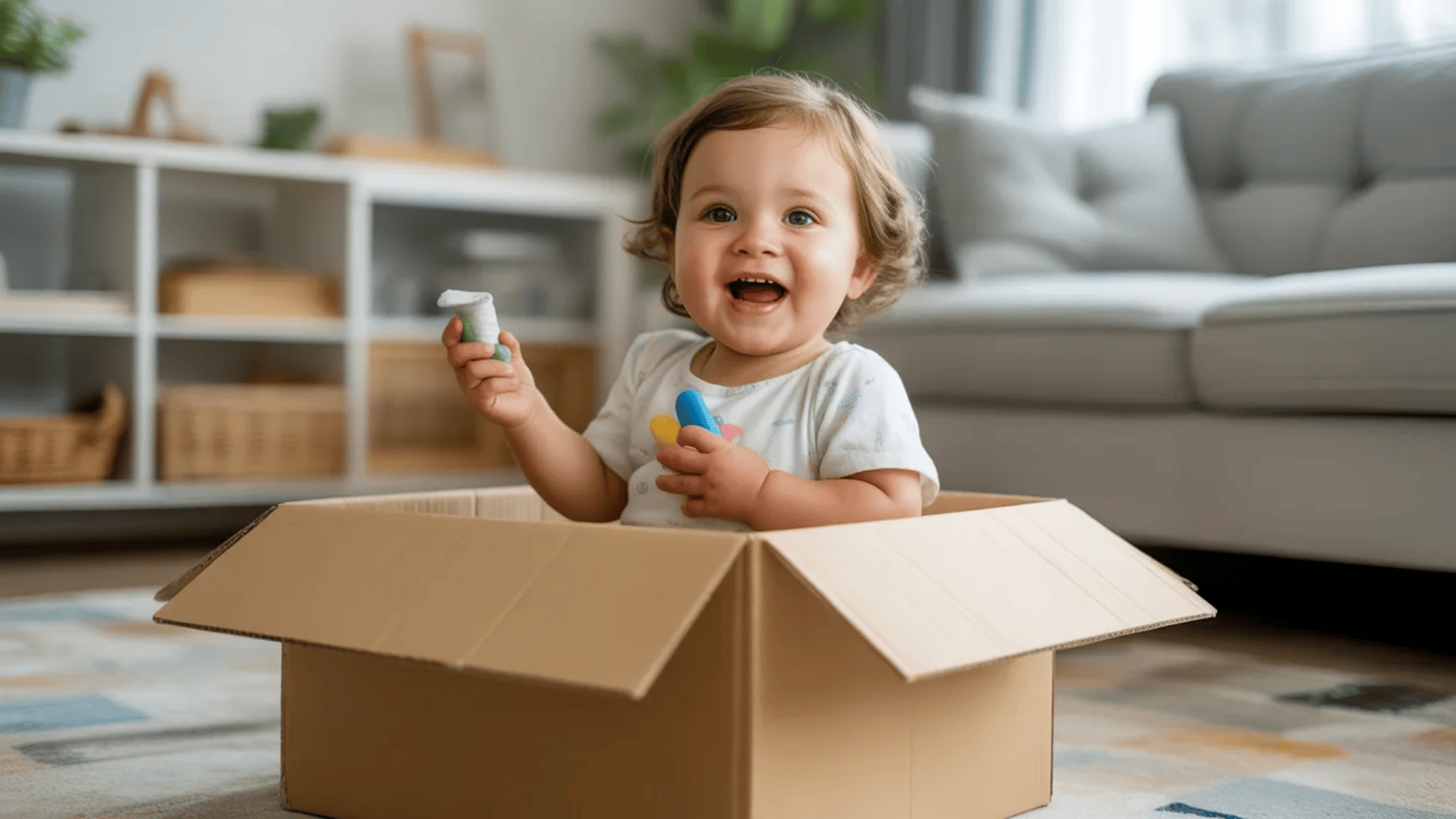
Save a large cardboard box and let your toddler climb in, push it around, or use it as a house or car.
Simple boxes spark imagination and encourage physical play. Your child can sit inside, fill it with toys, or even help you decorate it with crayons.
Boxes are free, recyclable, and provide hours of entertainment without any prep work needed.
What you need: Large cardboard box, crayons (optional)
13. Pots and Pans Band
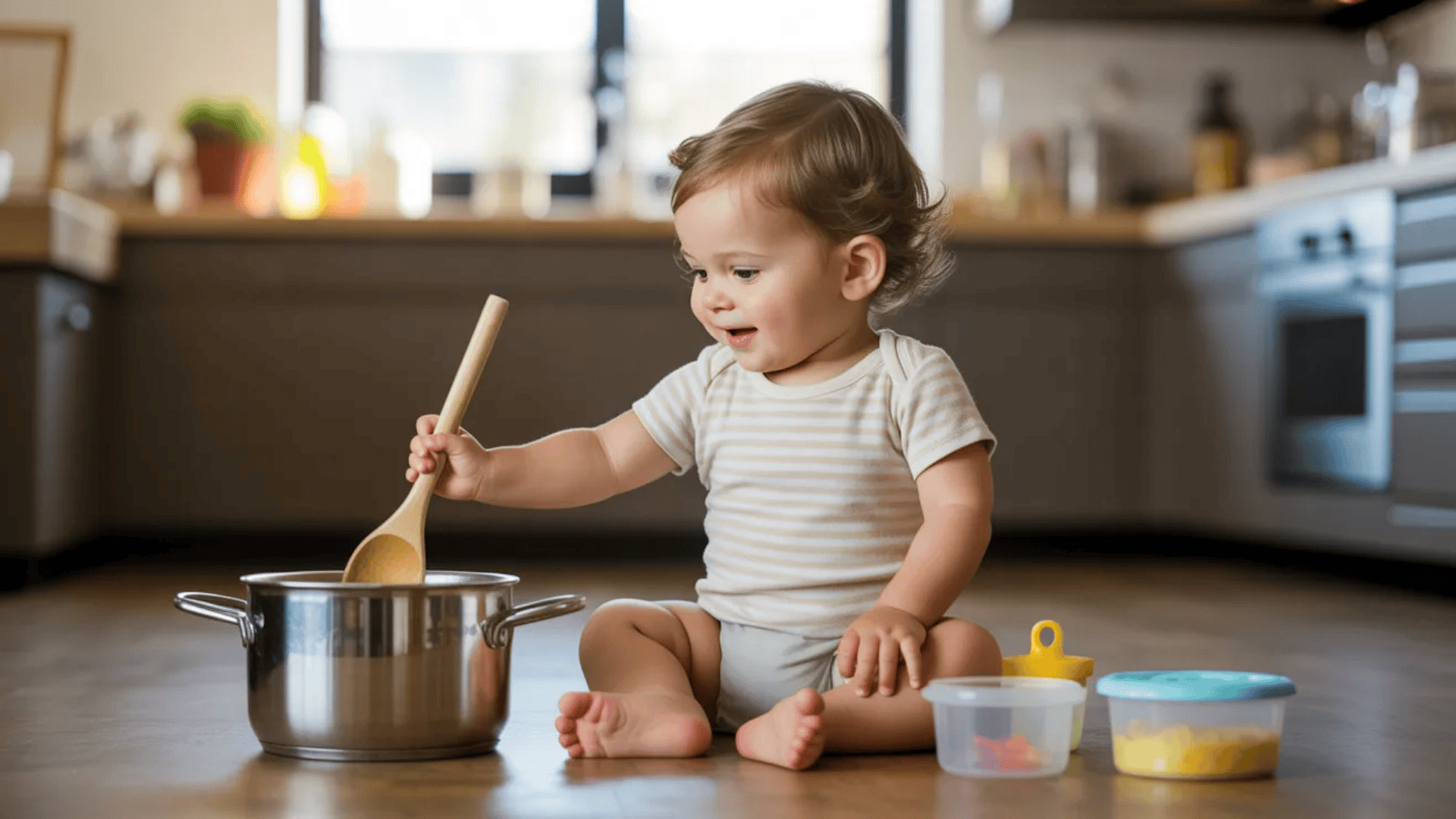
Pull out safe kitchen items like pots, pans, wooden spoons, and plastic containers. Let your toddler bang and create their own music.
This noisy activity develops rhythm, coordination, and cause-and-effect understanding. Your child learns that different sounds come from different materials and sizes.
Store these items in a low cabinet so your toddler can access them during supervised kitchen time.
What you need: Pots, pans, wooden spoons, plastic containers
14. Tape Rescue Game
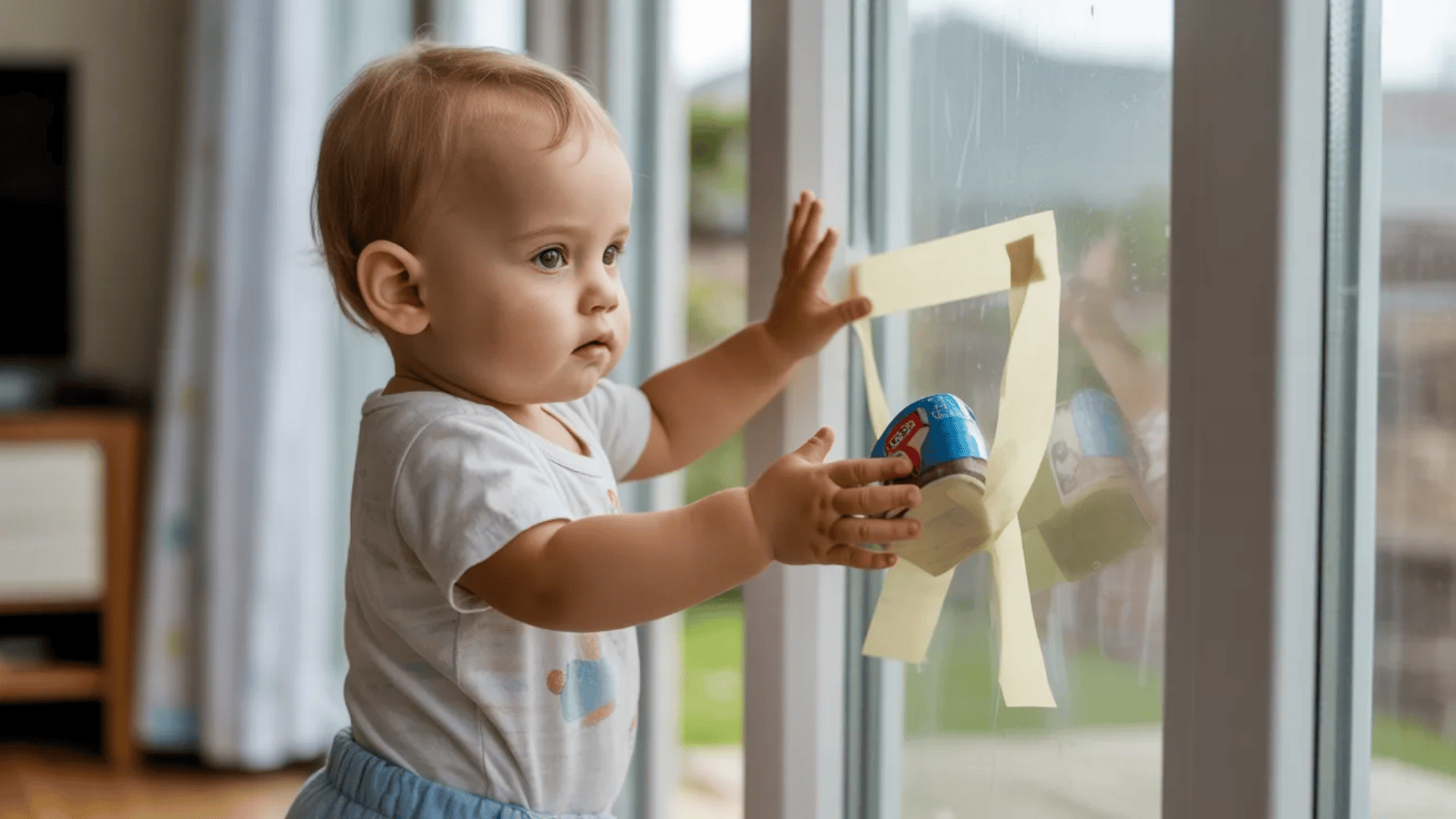
Tape your toddler’s favorite small toys to the wall or a sliding glass door using painter’s tape. Let them peel the tape off to rescue each toy.
This activity strengthens finger muscles and teaches persistence. Your child works on fine motor control while staying engaged with a fun challenge.
Use painter’s tape because it removes easily without leaving marks or residue on surfaces.
What you need: Painter’s tape, small toys
Outdoor Activities for 18-month-olds
Fresh air and outdoor play are great for your toddler’s physical and mental health. Outdoor activities let your child burn energy, explore nature, and experience different textures and sounds. Even a small backyard or nearby park offers plenty of opportunities for learning and fun.
Quick Tips for Outdoor Play:
- Apply sunscreen and dress for the weather
- Bring water to keep your toddler hydrated
- Stay close to supervise, but let them explore
- Look for shaded areas during hot days
- Keep outdoor time short if your child gets overwhelmed
15. Nature Walk and Collection

Take a walk around your neighborhood or park. Give your toddler a small bucket or bag to collect leaves, sticks, rocks, or flowers.
This activity connects your child with nature while building observation skills. They learn about different textures, colors, and shapes found in the outdoor world.
Talk about what you find together to boost language development and make the walk more interactive.
What you need: Small bucket or bag
16. Sidewalk Chalk Drawing
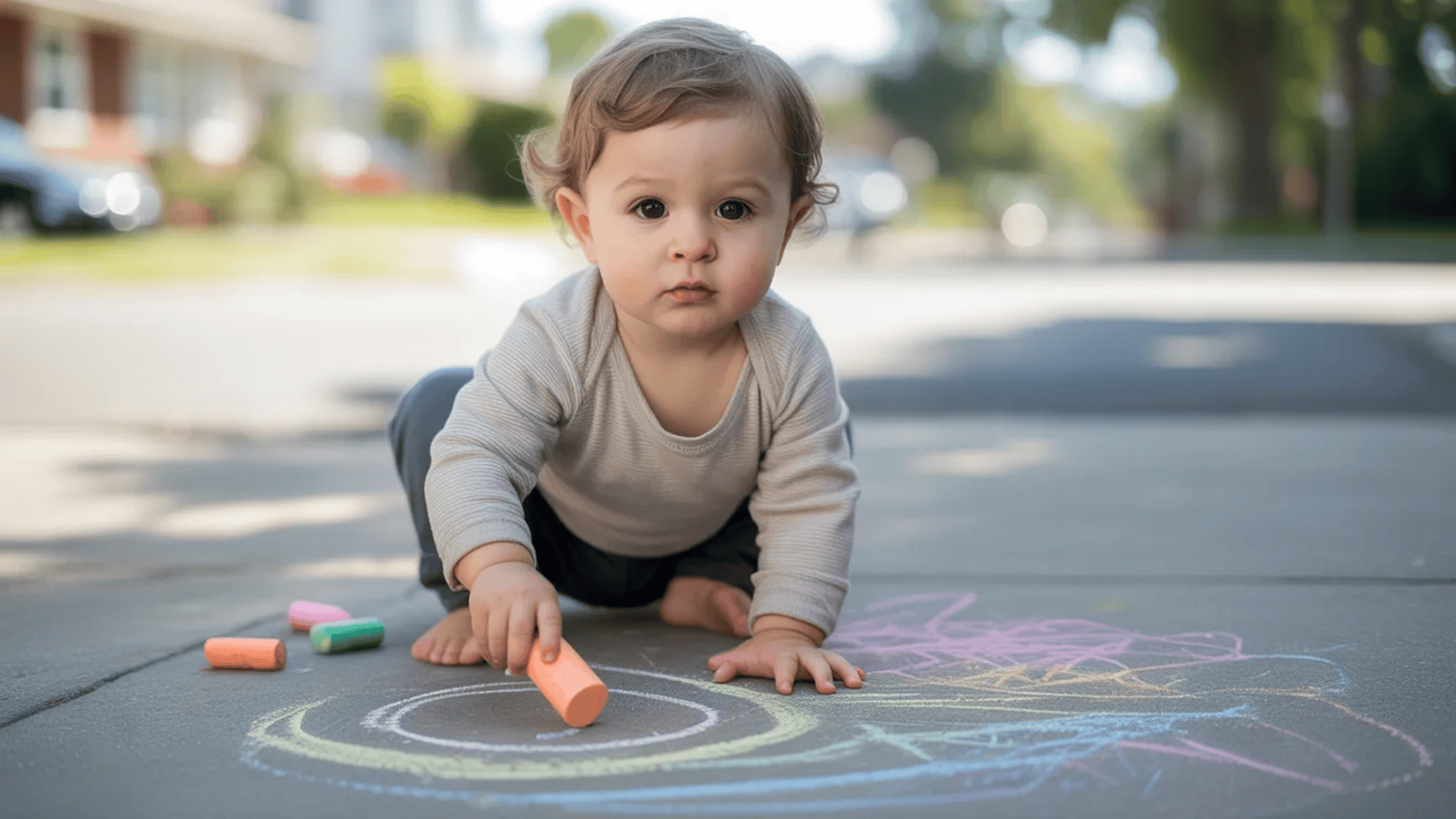
Hand your toddler chunky sidewalk chalk and let them scribble on the driveway or sidewalk. Show them how to make marks and encourage free expression.
Chalk drawing builds grip strength and creativity. Your child experiments with colors and enjoys seeing their marks appear on the ground beneath them.
Draw simple shapes or trace around their hands and feet for added fun and learning opportunities.
What you need: Chunky sidewalk chalk
17. Bubble Chasing

Blow bubbles and let your toddler chase and pop them. They’ll run, jump, and reach to catch the floating bubbles.
This simple activity improves coordination, tracking skills, and gross motor development. Your child practices following moving objects with their eyes while moving their body.
Bubble play works well in any outdoor space and provides active entertainment with minimal setup required.
What you need: Bubble solution and a wand
18. Water Table or Sprinkler Play
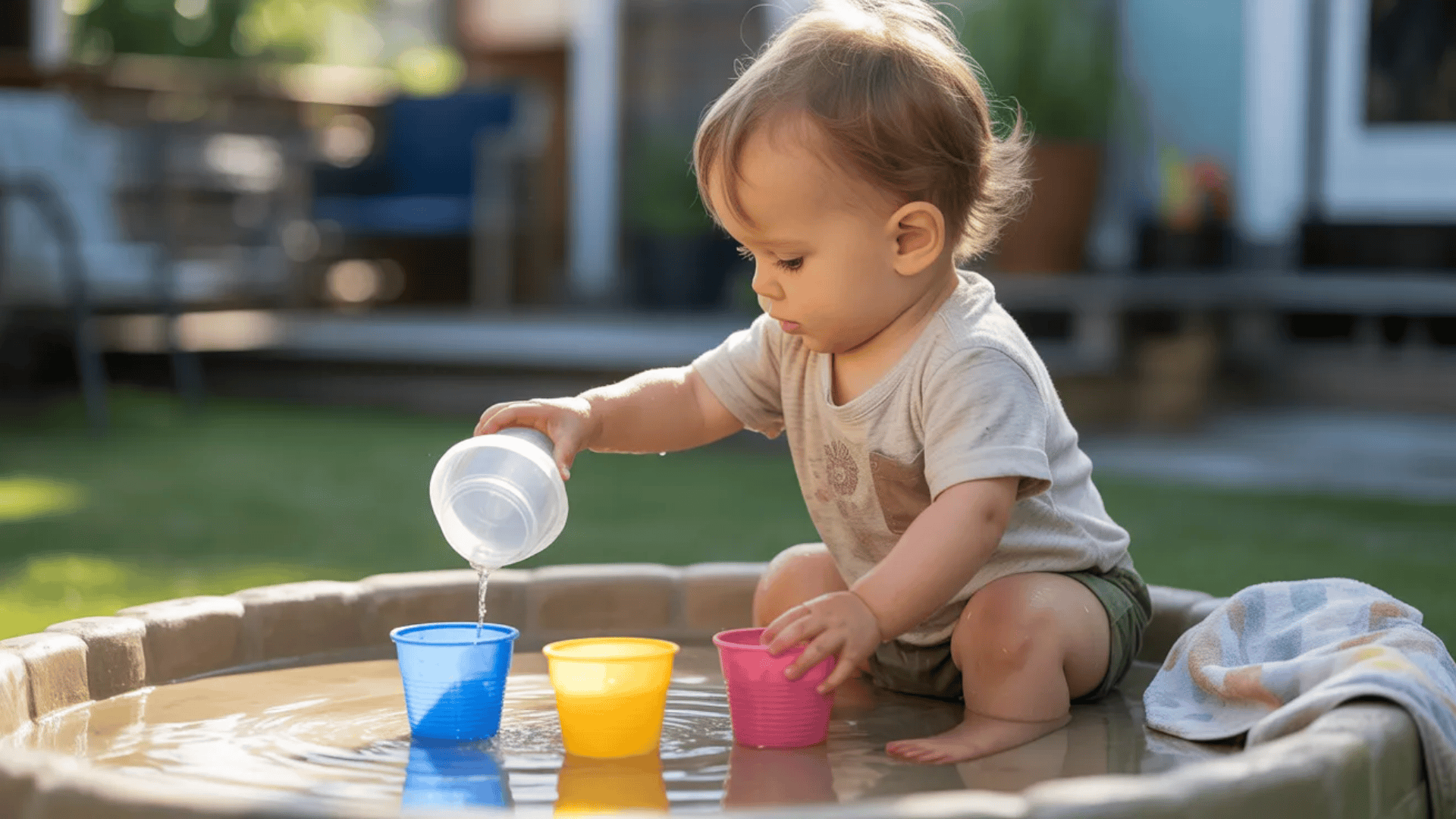
Set up a small water table or turn on a sprinkler for your toddler to run through. Let them splash, pour, and get wet.
Water play outdoors combines sensory experience with physical activity. Your child stays cool while exploring how water moves and feels on their skin.
This works best on warm days when getting wet is comfortable, and clothes dry quickly afterward.
What you need: Water table or sprinkler, towel
Learning & Creative Activities for 18 Month Olds
Learning happens naturally through play at this age. Creative activities help your toddler express themselves while building cognitive skills. These activities combine fun with education, teaching colors, shapes, and problem-solving without feeling like formal lessons.
Quick Tips for Learning Activities:
- Follow your child’s lead and interests
- Keep expectations realistic for this age
- Focus on the process, not the end result
- Repeat activities to reinforce learning
- Make it playful, not pressured
19. Reading Board Books Together

Sit with your toddler and read board books with bright pictures and simple words. Point to objects and animals, name them, and let your child turn the pages.
Reading builds vocabulary, listening skills, and attention span. Your child learns new words and concepts while bonding with you during quiet time together.
Choose books with textures, flaps, or simple stories that match your toddler’s current interests and developmental stage.
What you need: Board books with bright pictures
20. Color Sorting Game
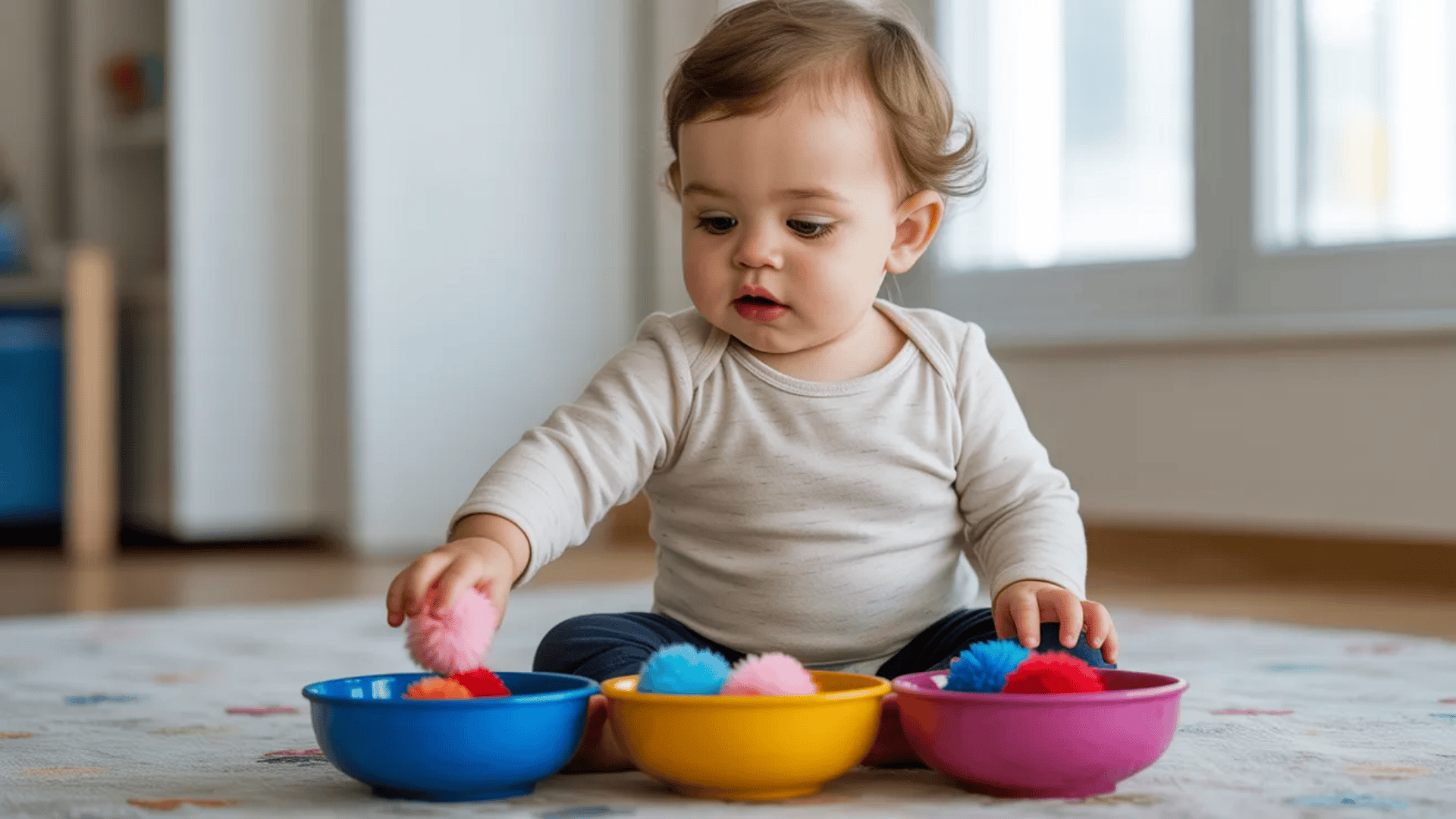
Put out bowls or containers in different colors. Give your toddler objects that match those colors, like blocks, pom poms, or toys, to sort into the matching bowl.
This activity teaches color recognition and categorization skills. Your child learns to identify similarities and differences while practicing hand-eye coordination and focus.
Start with just two colors and add more as your toddler gets better at the sorting task.
What you need: Colored bowls, matching colored objects
21. Simple Songs with Actions

Sing songs like “Head, Shoulders, Knees, and Toes” or “If You’re Happy and You Know It” with your toddler. Do the actions together as you sing.
Music with movements teaches body part names, rhythm, and following directions. Your child connects words with actions while having fun and burning energy.
Repetition helps toddlers learn the songs, so don’t worry about singing the same ones over and over daily.
What you need: Nothing, just your voice
Low-Prep and Budget-Friendly Activity Tips
You don’t need expensive toys or hours of setup to keep your 18-month-old engaged. Most activities work best with simple items you already have at home. The key is creativity, not spending money.
Use What You Already Have
Look around your kitchen and home. Empty containers, wooden spoons, plastic bottles, cardboard boxes, and old magazines all make great play materials. Your toddler sees these everyday items as new and exciting toys.
Free or Nearly Free Ideas
- Raid your recycling bin for boxes, paper tubes, and plastic containers
- Use flour and salt to make homemade playdough instead of buying it
- Fill containers with water instead of purchasing water tables
- Collect sticks, leaves, and rocks during walks for nature play
- Save old magazines for tearing and exploring textures
Quick Setup Strategies
Keep a bin with activity supplies like crayons, paper, tape, and containers. When you need something fast, grab the bin and set up an activity in under two minutes. Preparation today saves stress tomorrow.
Focus on activities that need minimal cleanup or can be done during bath time. This saves your energy for actual play time with your child.
Daily Activity Schedule Ideas
Planning your day helps you balance active play, quiet time, and meals. This sample schedule gives structure while staying flexible enough to follow your toddler’s mood and needs.
Sample Daily Schedule:
| Time | Activity Type | Example Activities |
|---|---|---|
| 7:00 AM – 8:00 AM | Morning Routine | Breakfast, getting dressed |
| 8:00 AM – 9:30 AM | Active Play | Ball play, climbing, outdoor walk |
| 9:30 AM – 10:00 AM | Snack & Quiet Time | Reading books, sticker play |
| 10:00 AM – 11:30 AM | Sensory or Creative | Water play, playdough, and finger painting |
| 11:30 AM – 12:30 PM | Lunch & Wind Down | Meal time, calm music |
| 12:30 PM – 2:30 PM | Nap Time | Rest period |
| 2:30 PM – 3:00 PM | Snack Time | Light snack, hydration |
| 3:00 PM – 4:30 PM | Indoor or Outdoor Play | Nature walk, bubbles, sorting games |
| 4:30 PM – 5:30 PM | Free Play | Independent play with toys |
| 5:30 PM – 6:30 PM | Dinner & Family Time | Meal, helping with simple tasks |
| 6:30 PM – 7:30 PM | Bedtime Routine | Bath, books, songs, sleep |
| Tips for Using This Schedule: Mix high-energy activities with calm ones throughout the day. Watch your child’s signals and adjust timing based on their sleep and hunger patterns. Some days will go smoothly, others won’t, and that’s completely normal. |
Now that you have a daily rhythm in place, let’s talk about keeping your toddler safe during all these activities while making cleanup manageable.
Safety Tips, Troubleshooting & Cleanup Hacks
Keeping your toddler safe during play is your top priority. Always supervise water play to prevent drowning risks, even in shallow containers. Keep small items away from toddlers who still mouth everything. Secure furniture that could tip over during climbing, and check toys for broken pieces before each use.
If your toddler refuses an activity, don’t force it. Try again on another day or modify the approach. Some kids need time to warm up to new textures. Shorten activity time if attention fades quickly, as five minutes of engaged play beats thirty minutes of struggle.
Pro Tip: Create a “yes space” in your home where your toddler can explore freely without hearing “no” constantly. Remove breakables and hazards from this area so you can relax while they play independently.
Lay towels or a plastic tablecloth under messy activities for easy cleanup. Do messy play right before bath time to wash off paint immediately. Store supplies in labeled bins so you can grab and pack up quickly.
Involve your toddler in cleanup by making it a game with songs or counting. Keep wet wipes handy for quick surface cleaning between activities.
Conclusion
Your 18-month-old doesn’t need fancy toys or complicated setups to learn and grow. Simple activities for 18-month-old toddlers using household items work just as well.
From sensory bins to outdoor walks, each activity helps build important skills while keeping your child engaged.
Remember that every toddler develops at their own pace. Some days your child will love an activity, other days they’ll refuse it. That’s normal. Follow their lead, stay patient, and enjoy these moments together.
Start with one or two activities from this guide today. See what your toddler enjoys most, then build from there.
Ready to get started? Pick an activity and watch your toddler’s face light up with excitement. Share your experiences in the comments below and let us know which ones became instant favorites.
Frequently Asked Questions
How Long Should My 18-Month-Old Play With Each Activity?
Most 18-month-olds focus on a single activity for only 5 to 10 minutes before moving on. This short attention span is completely normal for this age. Have several options ready and let them switch when interest fades.
How Many Activities Should I Do With My Toddler Each Day?
Aim for 3 to 5 different activities spread throughout the day. Mix active play with quiet activities, and include both structured and free play time. Quality matters more than quantity.
Can My 18-Month-Old Play Independently or Should I Always Join In?
Your toddler needs both. Start with 5 to 10 minutes of supervised independent play while you’re nearby. Balance this with activities where you actively participate, which strengthens your bond and models new skills.