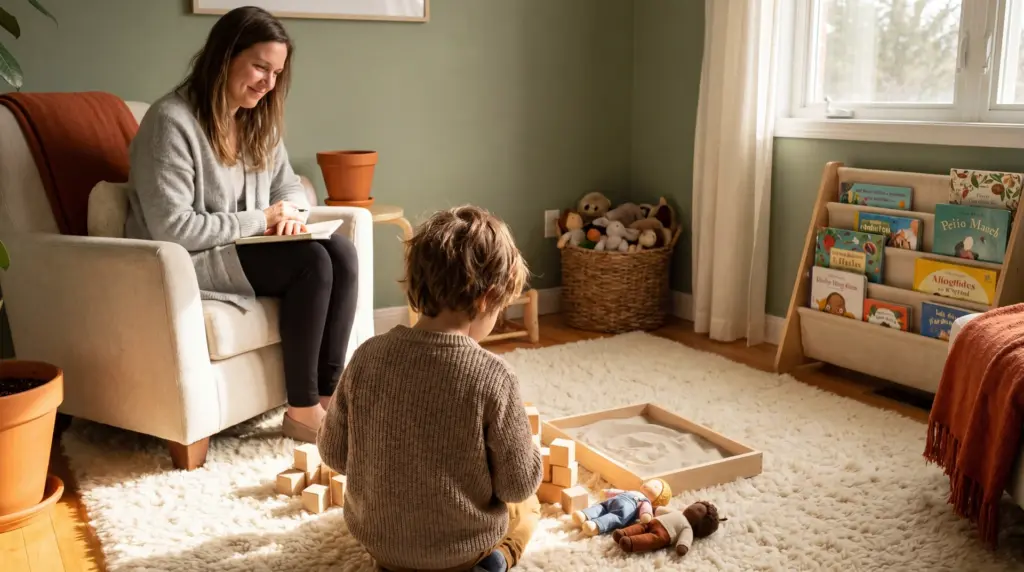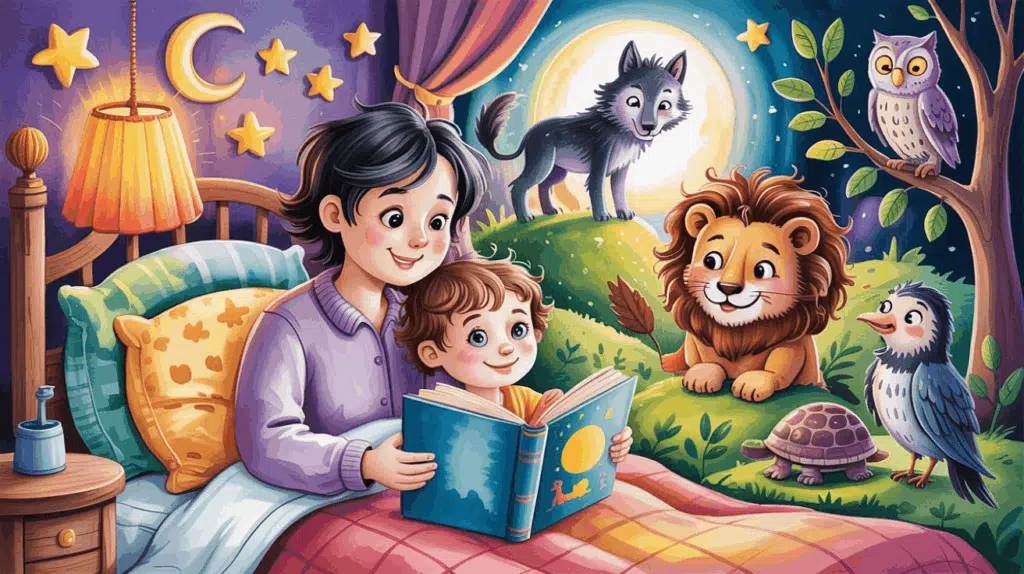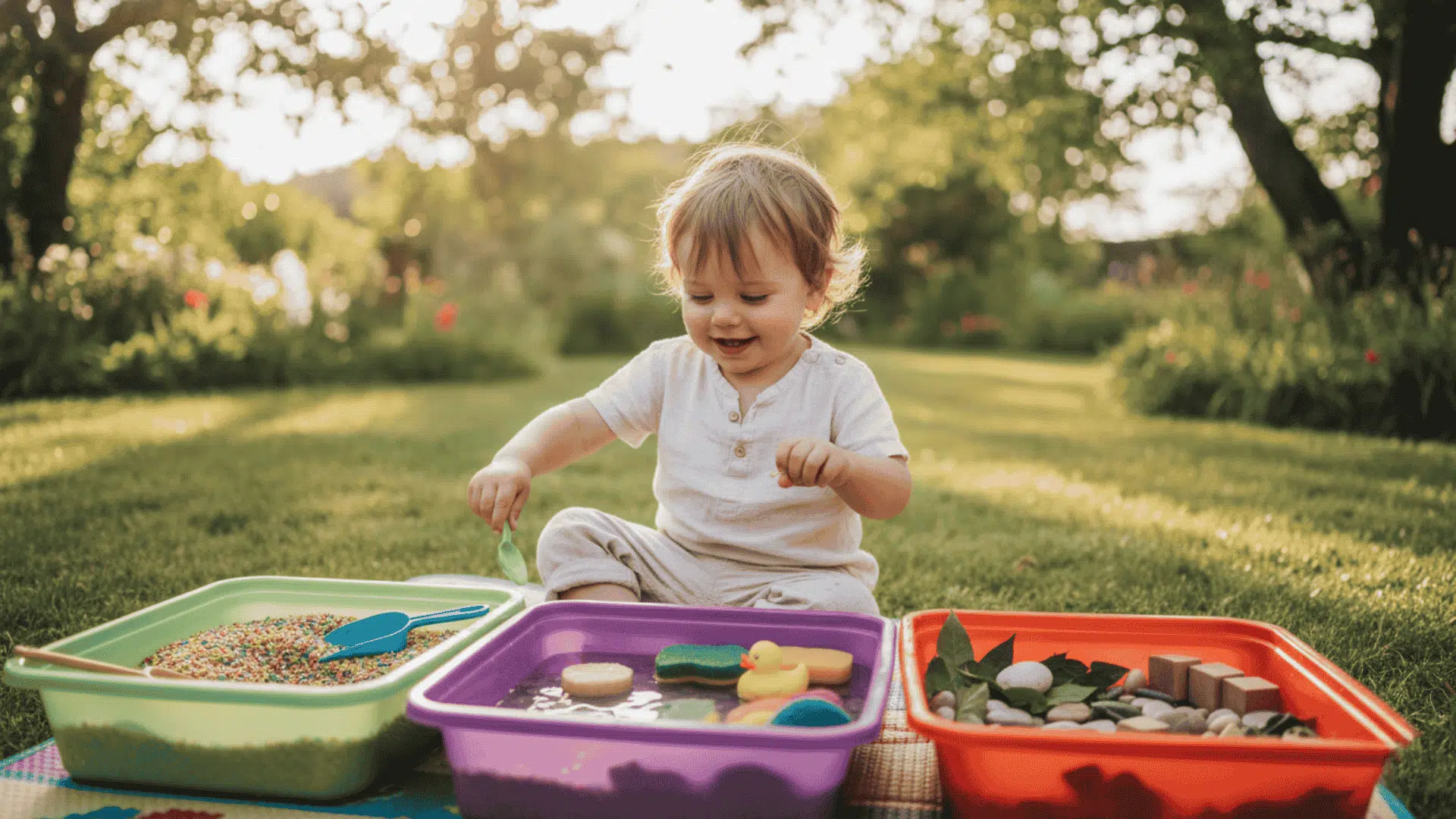
Your toddler is stacking blocks. Then, knocking them down. Then stacking again. You think it’s just a play. But their brain is building problem-solving skills right now.
Every mess and repetition is learning in action. These early years shape how your child thinks and speaks for life.
Toddler learning activities turn ordinary moments into growth opportunities. They build language through songs. They develop motor skills through movement.
You don’t need expensive toys or hours of prep. A cardboard box and rice work better than most kits.
This guide organizes activities by skill type. Each uses items you already own and takes minutes to set up.
Let’s turn your living room into a learning lab.
Fun & Educational Toddler Activities
These activities cover all areas of toddler development. Pick what fits your child’s interests and energy level today. You can repeat favorites as often as you want.
1. Sensory & Exploration Activities
Sensory play helps toddlers understand the world through touch, sight, and sound. These activities calm busy minds and build focus. They also strengthen the hand muscles needed for writing later.
1. Rice & Water Sensory Bin
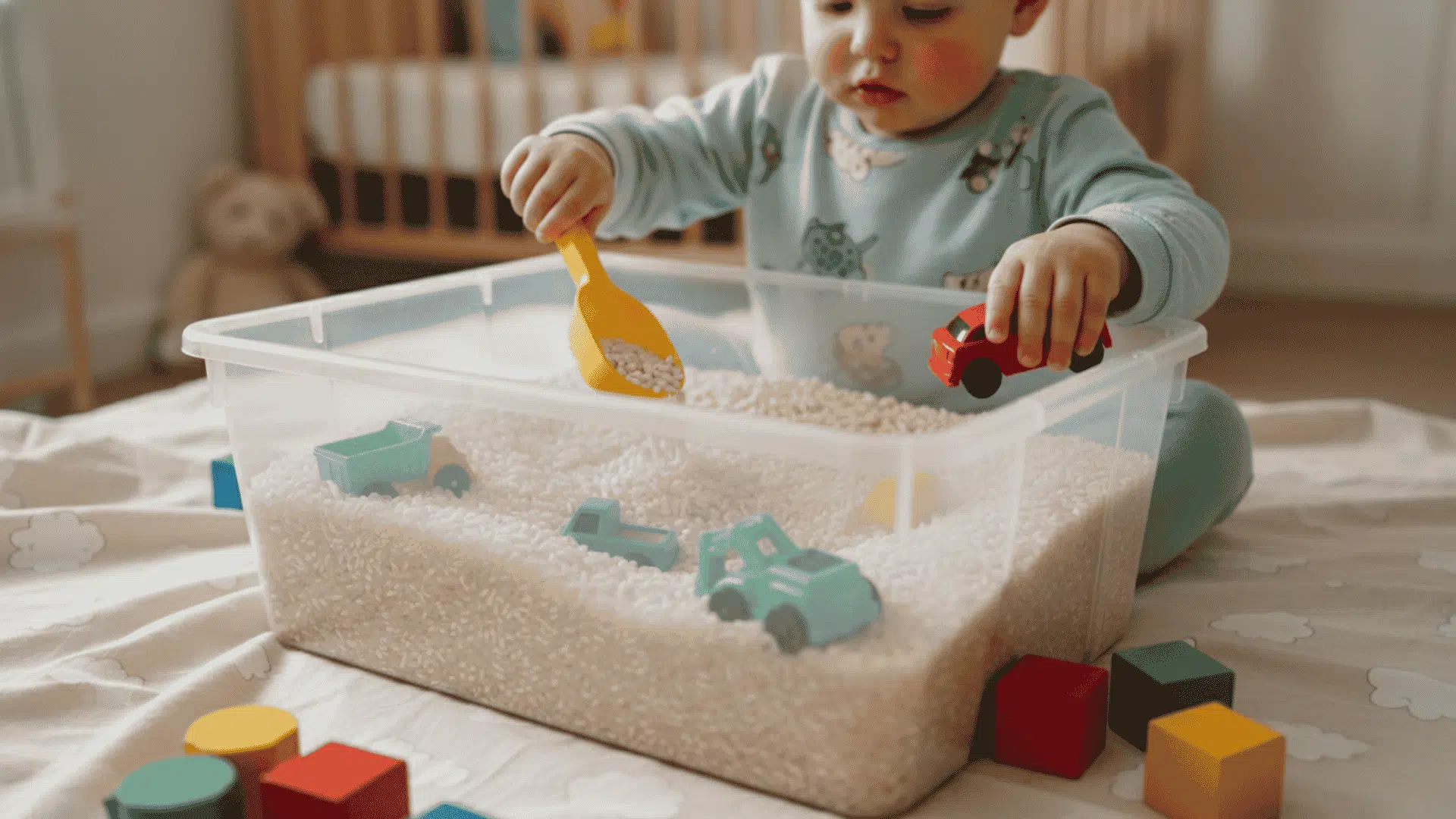
Fill a large plastic container halfway with uncooked rice. Add measuring cups, plastic spoons, small toy cars, or animal figures. Place the bin on a bedsheet for easy cleanup. Let your toddler scoop, pour, bury toys, and discover textures.
Watch how they problem-solve when trying to fill a small cup. Notice how they experiment with pouring speeds. This activity can keep them engaged for 30 minutes or more. The repetitive scooping motion builds the same hand muscles they’ll need for holding a pencil.
What they learn: Hand-eye coordination, cause and effect, measuring concepts, vocabulary (full, empty, more, less).
Parent Tip: Add a funnel and watch the learning double. Your toddler will figure out angles and pouring speed. Swap rice for dried beans or pasta next time for new textures.
2. Ice Toy Rescue
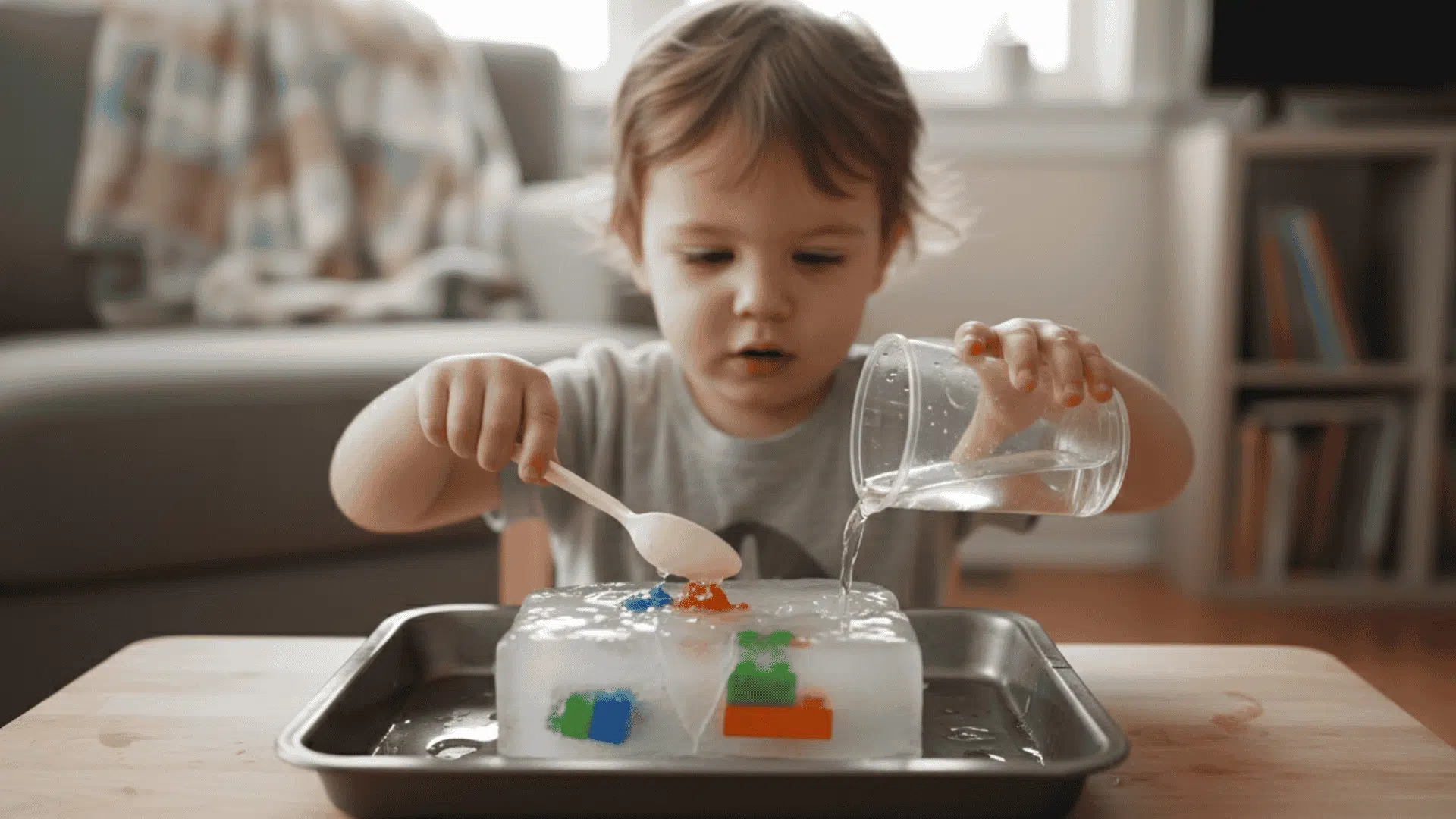
Freeze 4-5 small plastic toys in a shallow container filled with water. Freeze overnight until solid. In the morning, pop out the ice block and place it in a large tray or baking dish. Give your child a small cup of warm water and a plastic spoon.
They’ll pour warm water over the ice to melt it faster. They’ll tap with the spoon to crack the ice. Each rescued toy feels like a victory. This teaches patience because results don’t happen instantly. They learn that actions have consequences and some things take time.
What they learn: Problem-solving, scientific thinking, patience, temperature concepts (hot, cold, melting, solid, liquid).
Parent Tip: Use food coloring in the water before freezing for extra visual appeal. Add salt to the warm water and watch it melt ice even faster. This creates a bonus science lesson.
3. Texture Walk
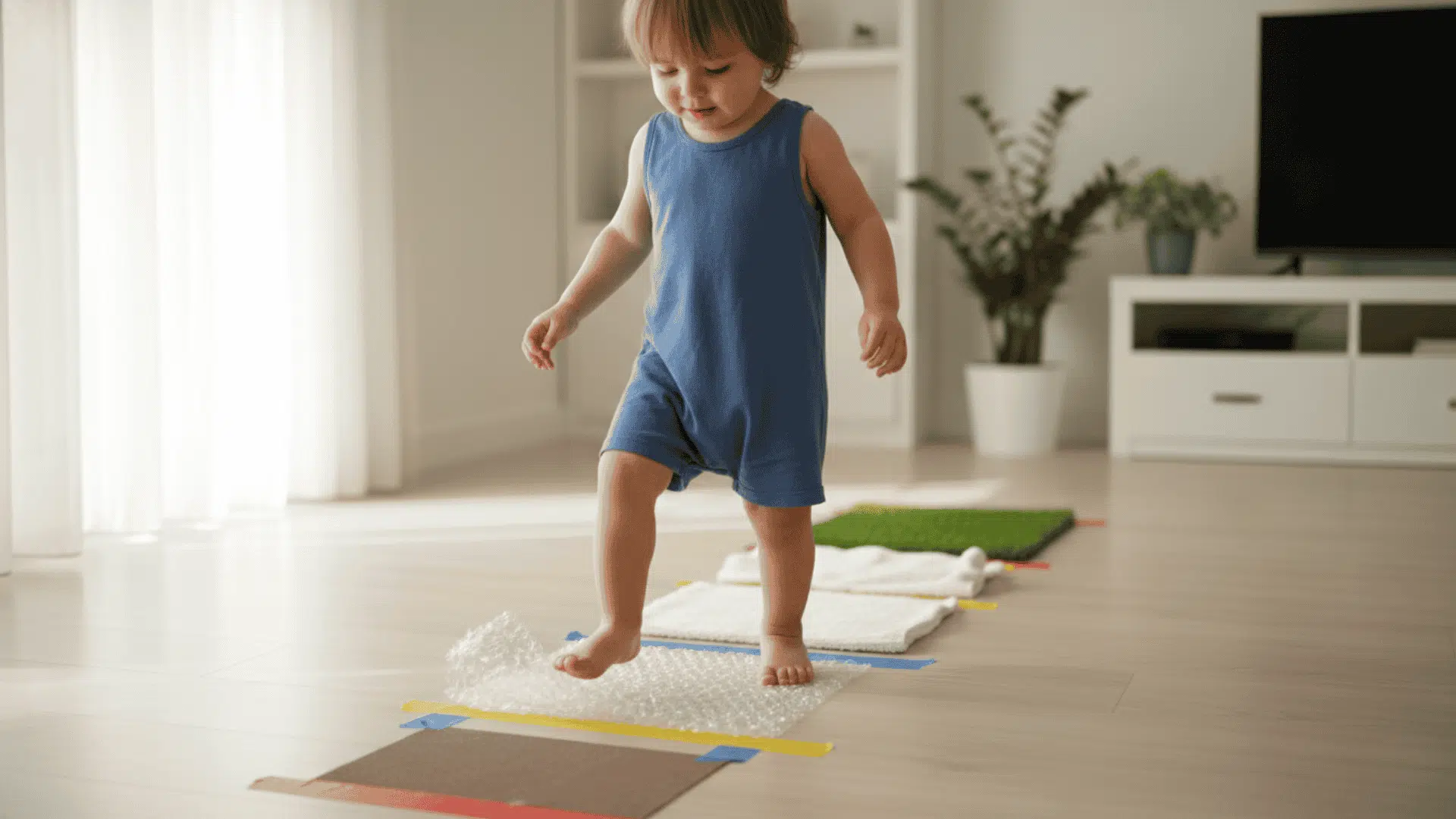
Gather 5-6 different textured items from around your home. Try bubble wrap, sandpaper, a soft towel, aluminum foil, a rubber mat, and corduroy fabric. Tape them in a line on the floor about two feet apart.
Let your child walk barefoot across each texture. Go slow. After each one, stop and talk about how it felt. Use descriptive words like bumpy, scratchy, smooth, cold, or soft. Walk the line multiple times. Your toddler will start predicting which texture comes next.
This builds body awareness and sensory processing. Some kids love all textures. Others avoid certain ones. Both responses are normal and help you understand your child’s sensory preferences.
What they learn: Sensory awareness, descriptive language, body control, vocabulary building, and prediction skills.
Parent Tip: Make it a game by asking them to hop, tiptoe, or crawl across the textures. This adds gross motor practice to sensory learning.
4. Nature Sensory Bag
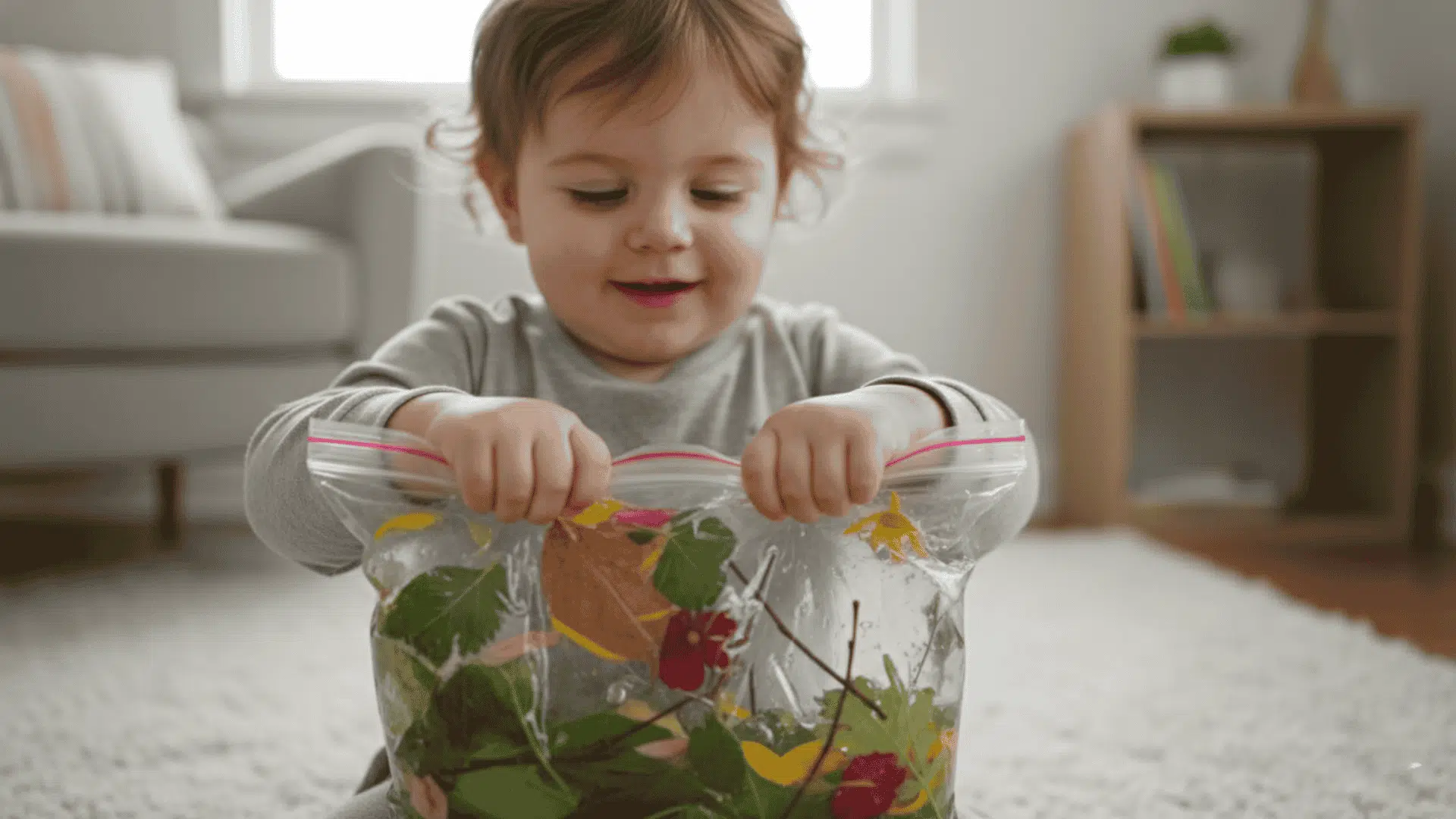
Collect small natural items during a walk. Grab leaves, flower petals, small twigs, or grass. Place them inside a gallon-size ziplock bag. Add two tablespoons of water or baby oil. Squeeze out excess air and seal the bag completely. Reinforce the seal with strong tape.
Your toddler can squish, press, and move items around without getting messy. They’ll watch colors mix and items float. The bag becomes a portable nature exploration tool. It’s perfect for quiet time or car rides.
The closed bag means no choking hazards and no cleanup. But they still get full sensory benefits.
What they learn: Nature exploration, visual tracking, cause and effect, color recognition, and scientific observation.
Parent Tip: Add glitter or food coloring to the liquid for extra visual interest. Store the bag in the fridge before play for a cool sensory experience.
5. Water Transfer Play
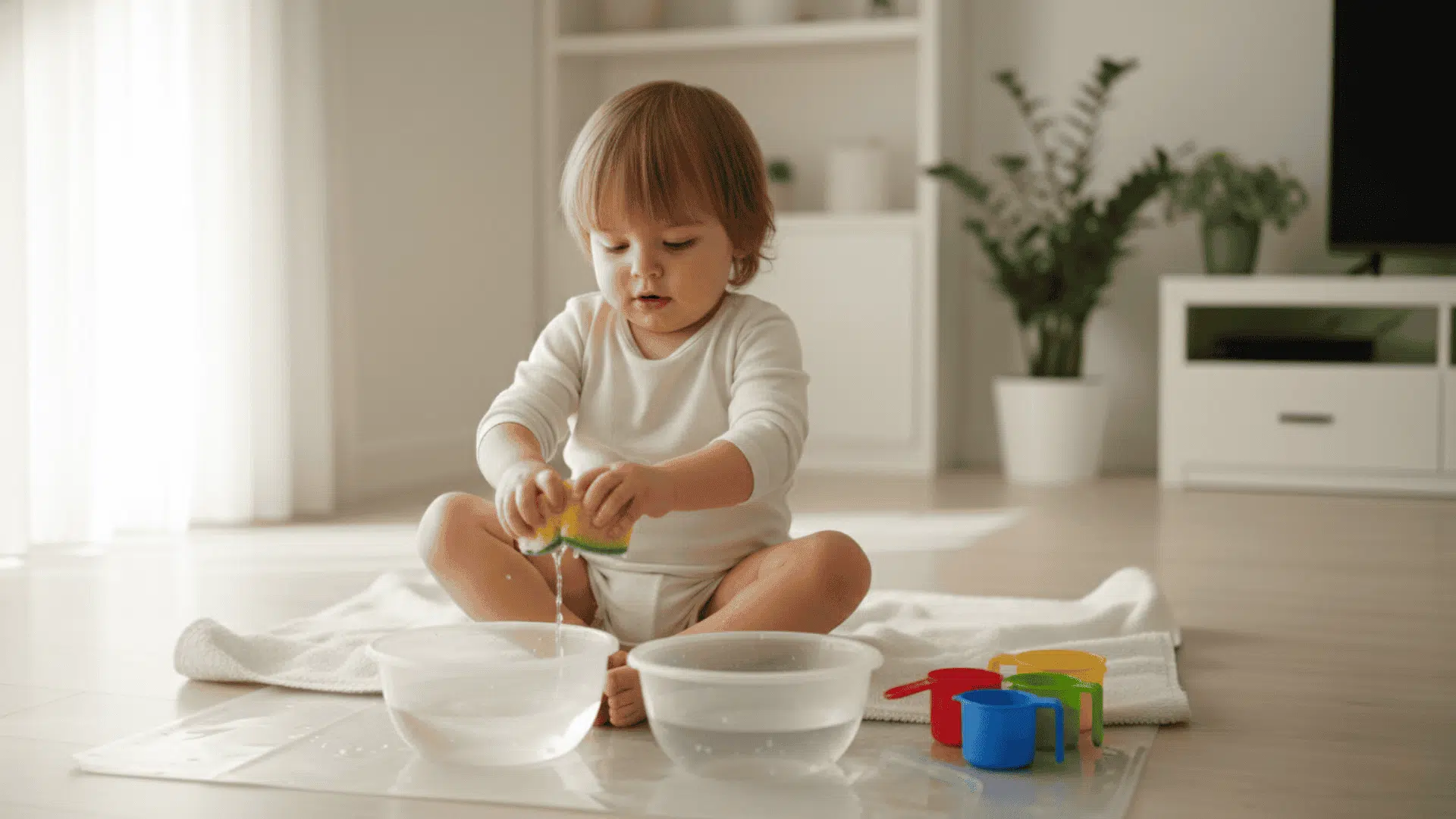
Set up two identical bowls on a towel. Fill one bowl three-quarters full with water. Leave the other empty. Give your child a small sponge, a medicine dropper, or a 1/4 cup measuring cup.
Show them once how to move water from the full bowl to the empty bowl. Then step back and watch. They’ll figure out their own method. Some squeeze the sponge hard. Others gently pour from the cup. The repetition is the learning.
This activity teaches precision and control. The hand muscles they use here are the same ones needed for buttoning shirts and holding crayons. After 10 minutes, they’ll have noticeably better control.
What they learn: Fine motor control, hand strength, problem-solving, concepts like empty, full, transfer, and squeeze.
Parent Tip: Add two drops of food coloring to make the water transfer visible. Or use warm and cold water in each bowl to teach temperature differences.
Language & Communication Builders
Language skills grow fastest during the toddler years. These activities build vocabulary, listening skills, and confidence in communication. They also teach turn-taking and social interaction through play.
6. Story Time with Props
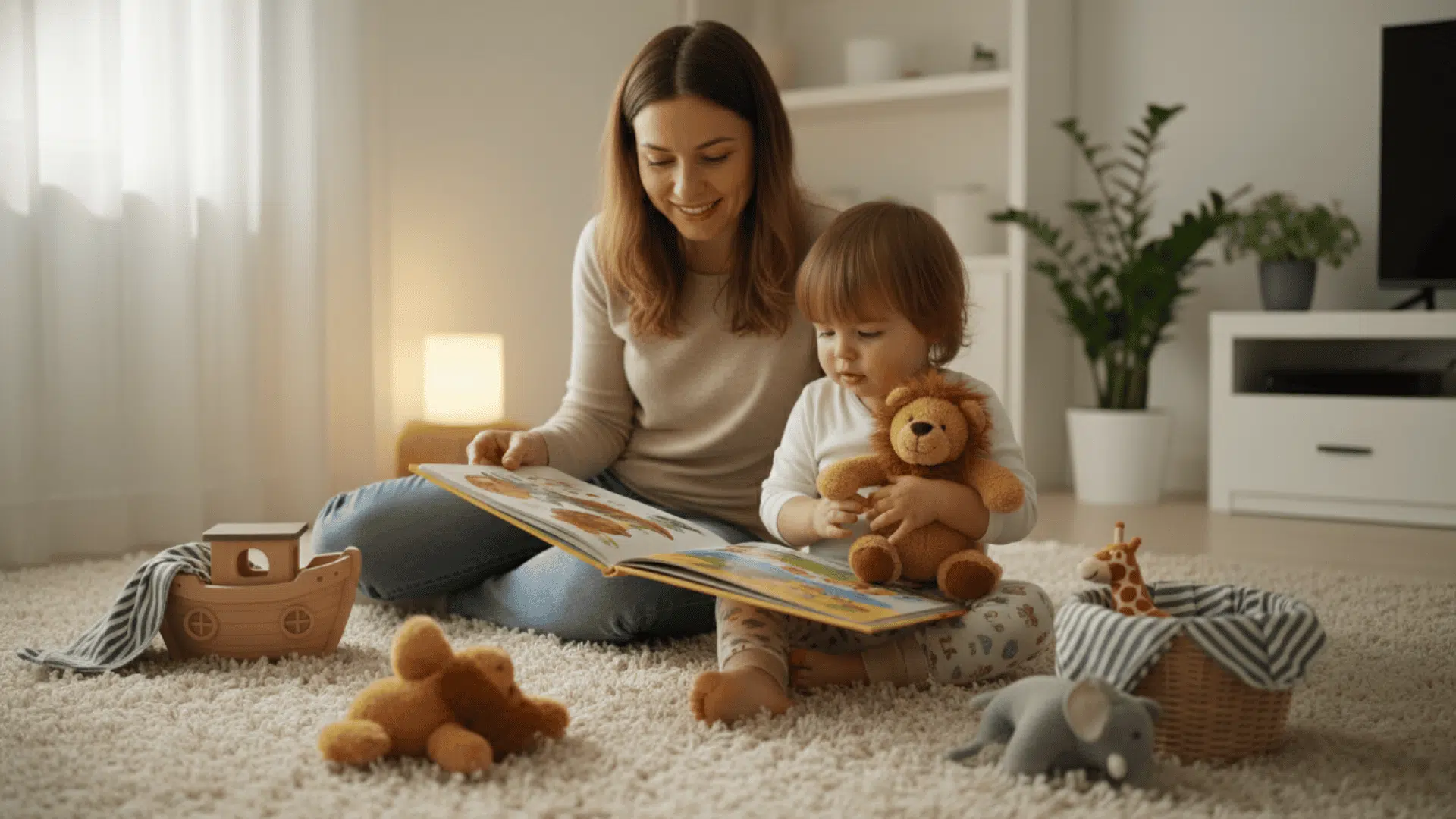
Choose a simple picture book your toddler loves. Gather small objects that match the story. If reading about animals, grab toy animals. For bedtime stories, use a blanket and a stuffed toy. As you read, let your child hold and move the props. They’ll connect words to objects and remember stories better.
What they learn: Vocabulary building, story comprehension, object recognition, listening skills, and imagination.
Parent Tip: Let your child tell you the story using just the props. Their version will be simple, but it shows what they understood.
7. Sing-Along Action Songs
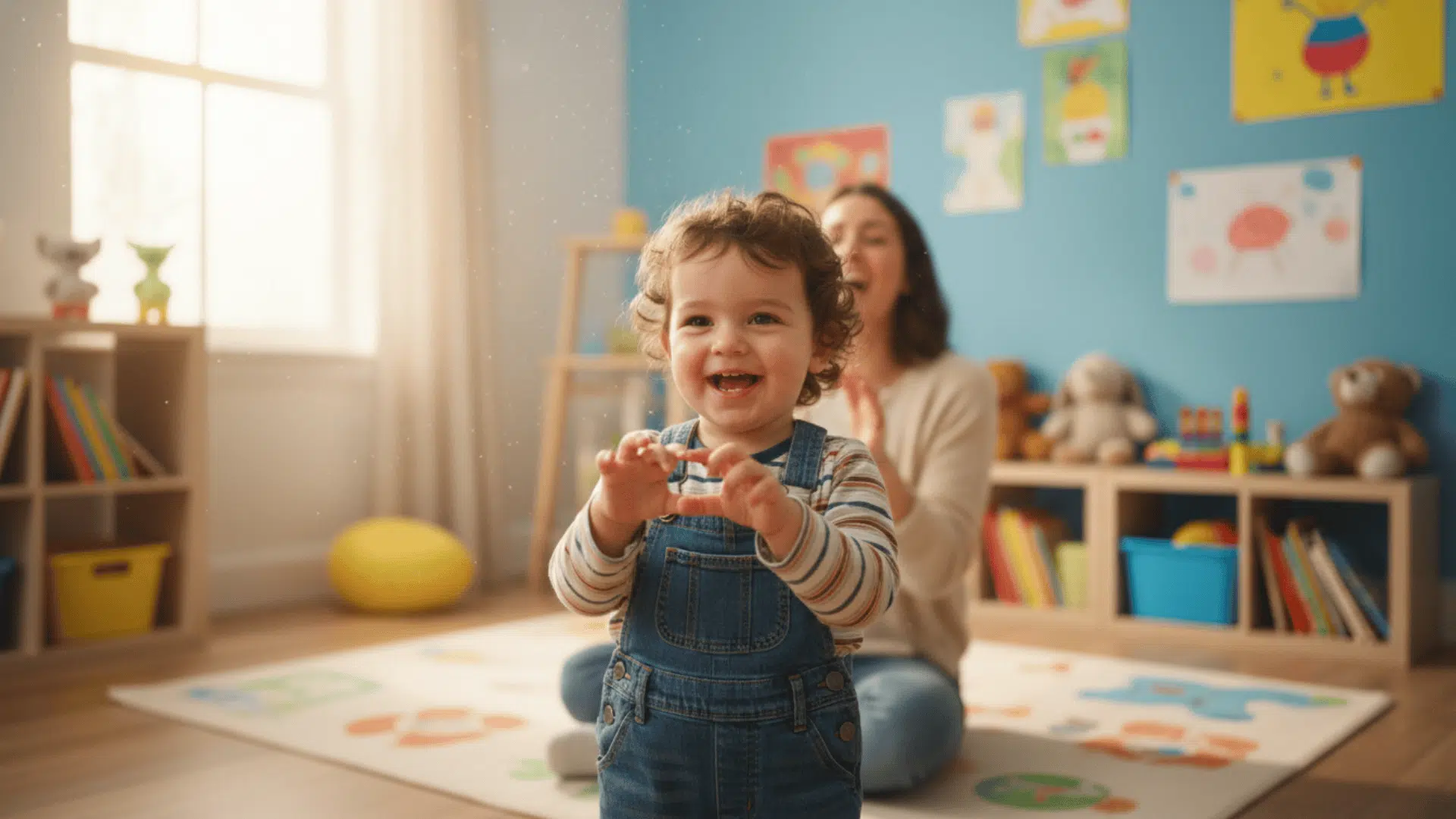
Pick songs with hand motions like “Itsy Bitsy Spider” or “Wheels on the Bus.” Sing slowly at first so your child can follow the movements. Repeat the same songs daily. They’ll start filling in words and doing motions before you do. Music makes language stick in memory.
What they learn: Vocabulary, rhythm and pattern recognition, memory skills, body awareness, sequencing.
Parent Tip: Make up silly verses using their name or favorite toys. Personalized songs boost engagement and word retention.
8. Label the House Scavenger Hunt
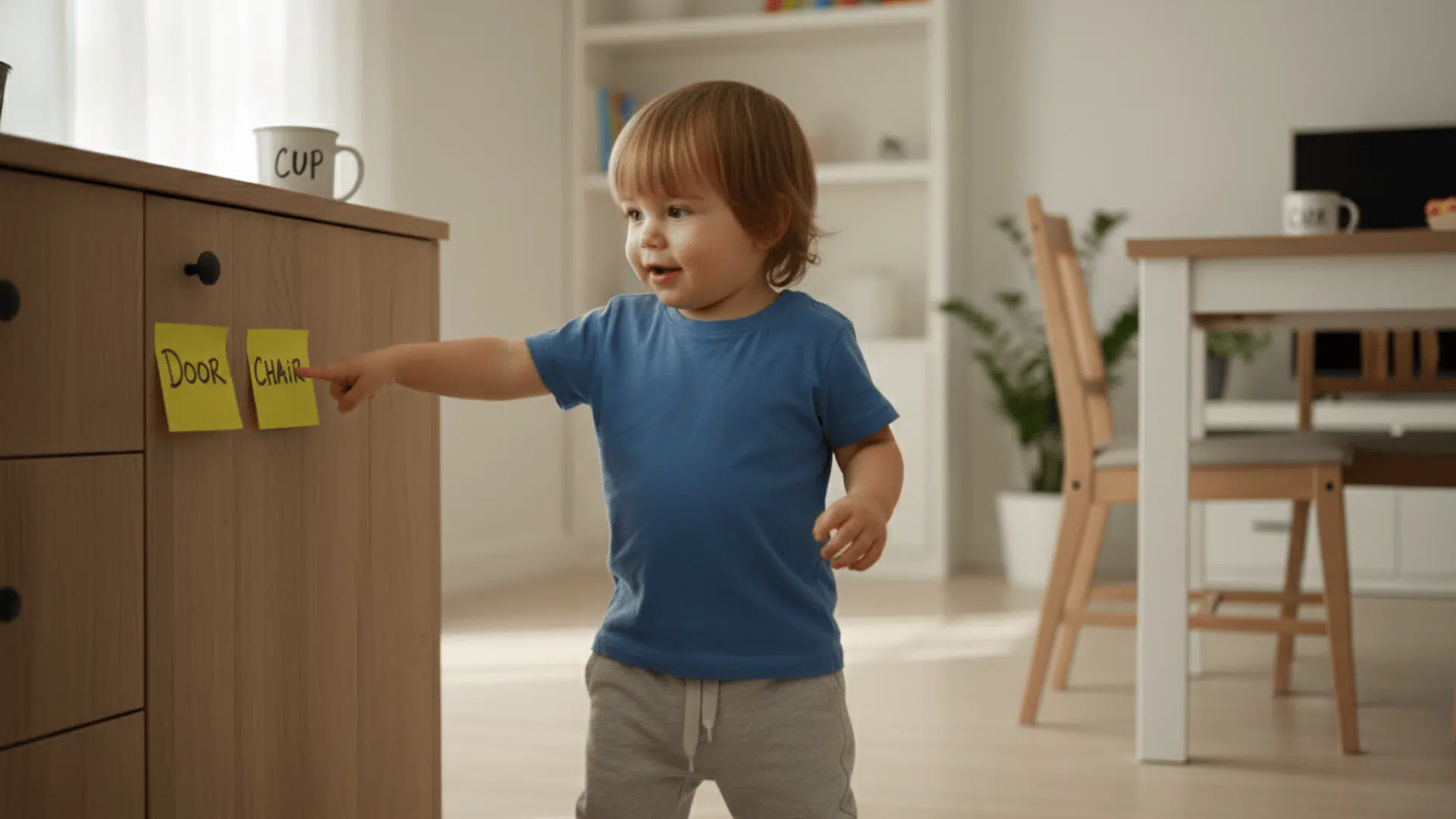
Write simple words on sticky notes like “door,” “chair,” or “cup.” Stick them on the matching objects around your house. Walk together and point to each label while saying the word. Your toddler will start recognizing word shapes. This plants early reading seeds.
What they learn: Print awareness, word recognition, vocabulary, matching skills, and letter familiarity.
Parent Tip: Use colored sticky notes for each room. This adds a color sorting element to language learning.
9. Emotion Faces Game
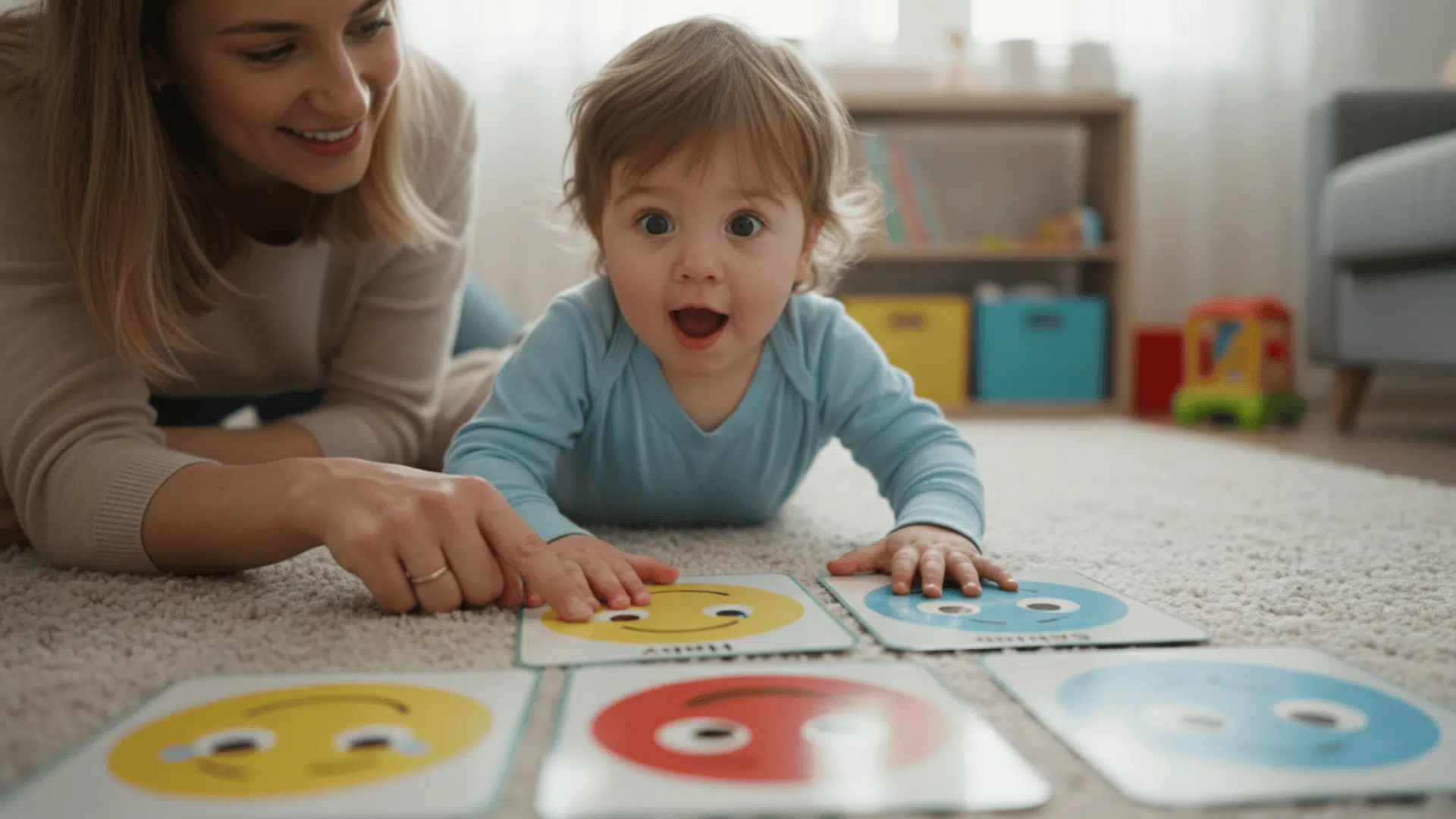
Draw or print simple faces showing happy, sad, angry, and surprised expressions. Show one face at a time and name the emotion. Make the face yourself and have your child copy you. Then ask them to show you each feeling. This builds emotional intelligence.
What they learn: Emotion recognition, facial expressions, empathy development, vocabulary, and self-awareness.
Parent Tip: Look at family photos together and identify emotions in pictures. This connects the game to real life.
10. Animal Sounds Sorting
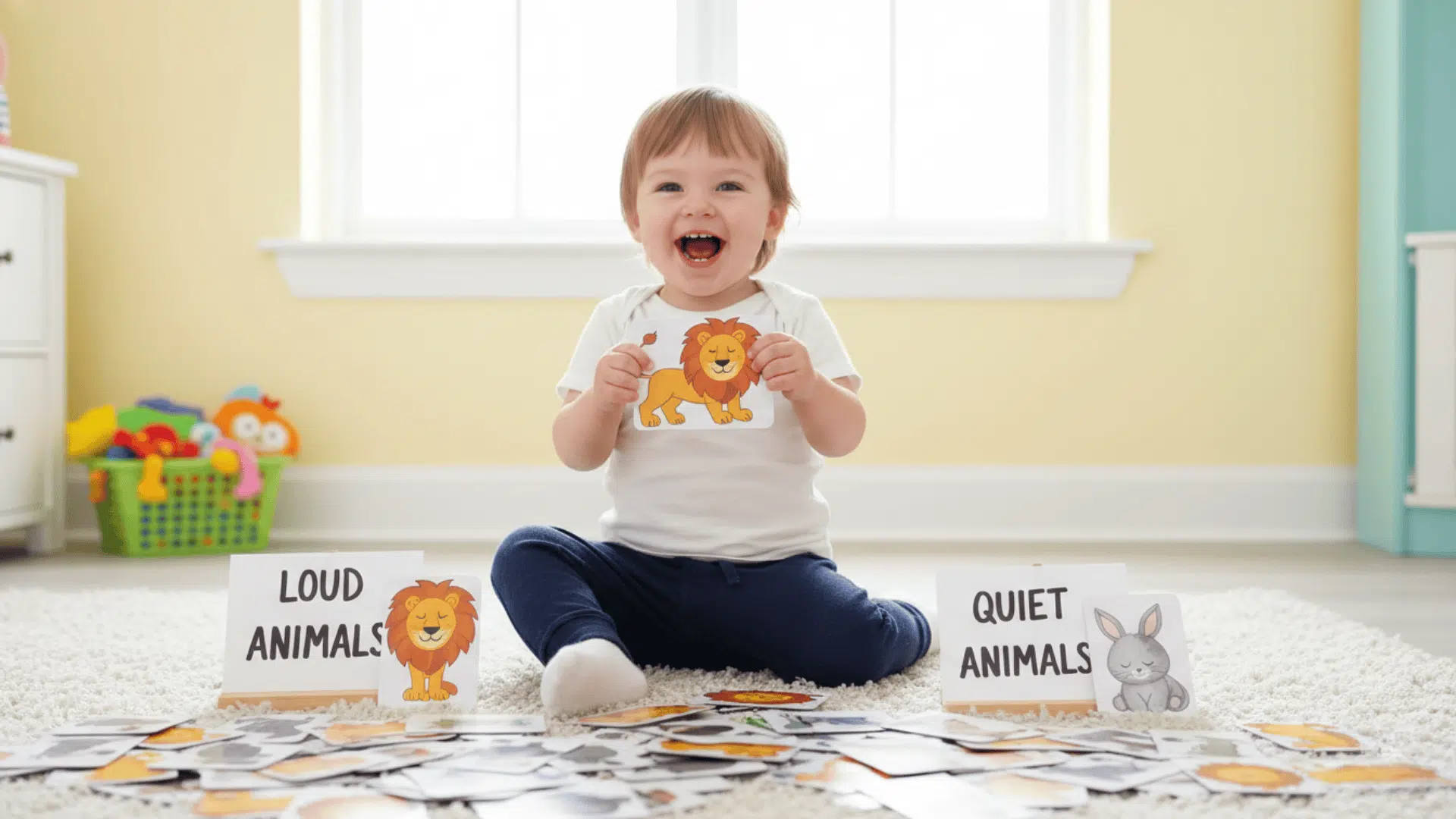
Print or draw pictures of common animals. Make two piles: loud animals and quiet animals. Or sort by pets versus farm animals. As you sort, make each animal’s sound together. Ask your child which pile each animal belongs in. This teaches categories and decision-making.
What they learn: Classification skills, animal recognition, sound association, vocabulary, and logical thinking.
Parent Tip: Act out how each animal moves while making its sound. This combines language with gross motor play.
Math & Early Logic Fun
Early math skills go beyond counting. These activities teach sorting, patterns, and problem-solving. They build logical thinking that helps with decision-making later. Math becomes fun when it’s hands-on.
11. Pom-Pom Sorting with Tongs
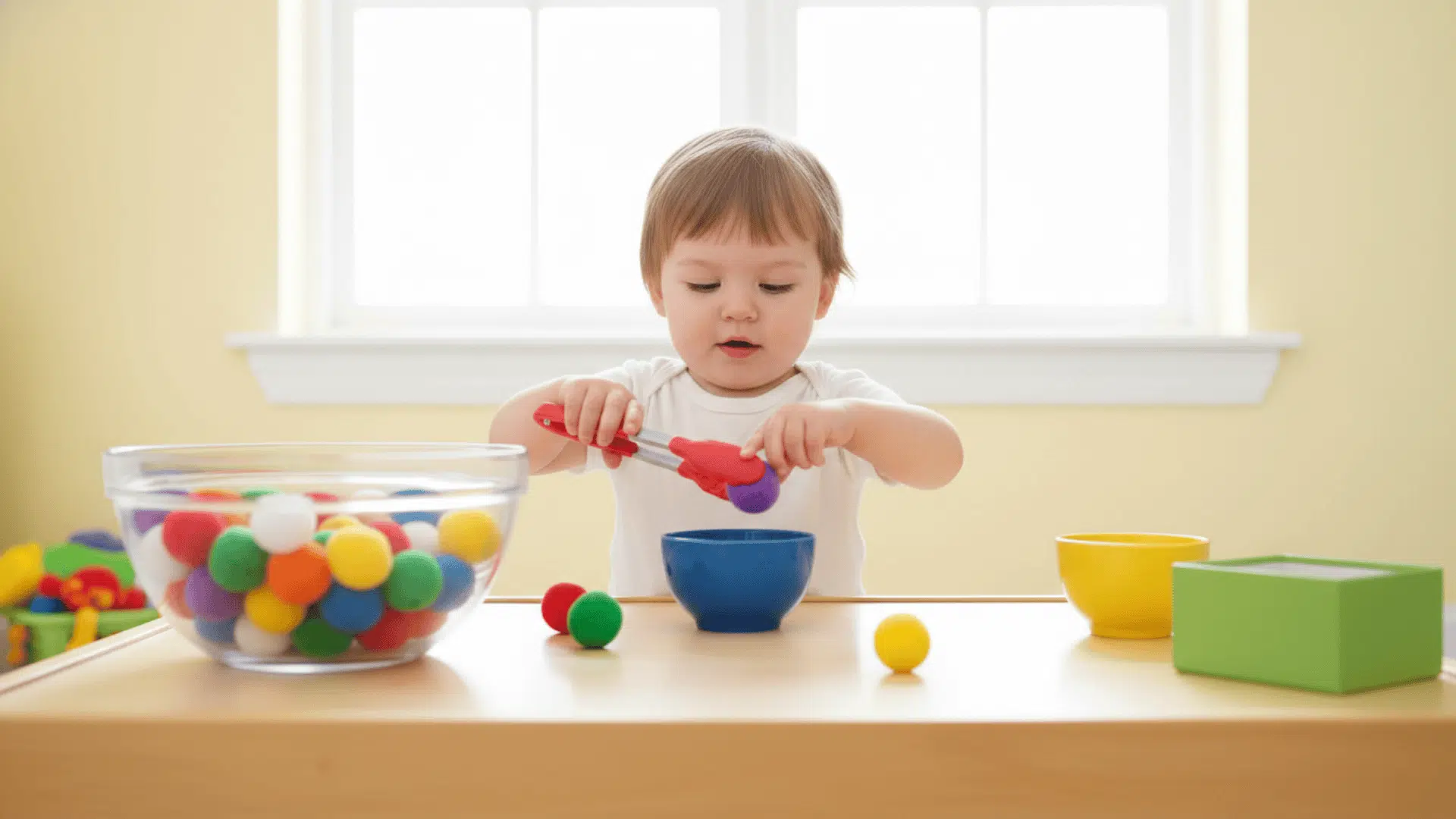
Place colorful pom-poms in a bowl. Set up smaller bowls or muffin tins nearby. Give your toddler kitchen tongs or large tweezers. Show them how to pick up one pom-pom and drop it in a bowl. They can sort by color or just practice gripping. The tongs make it challenging and engaging.
What they learn: Color recognition, sorting skills, fine motor control, hand strength, and concentration.
Parent Tip: Start with bigger pom-poms and upgrade to smaller ones as they improve. Count each pom-pom out loud together.
12. Shape Scavenger Hunt
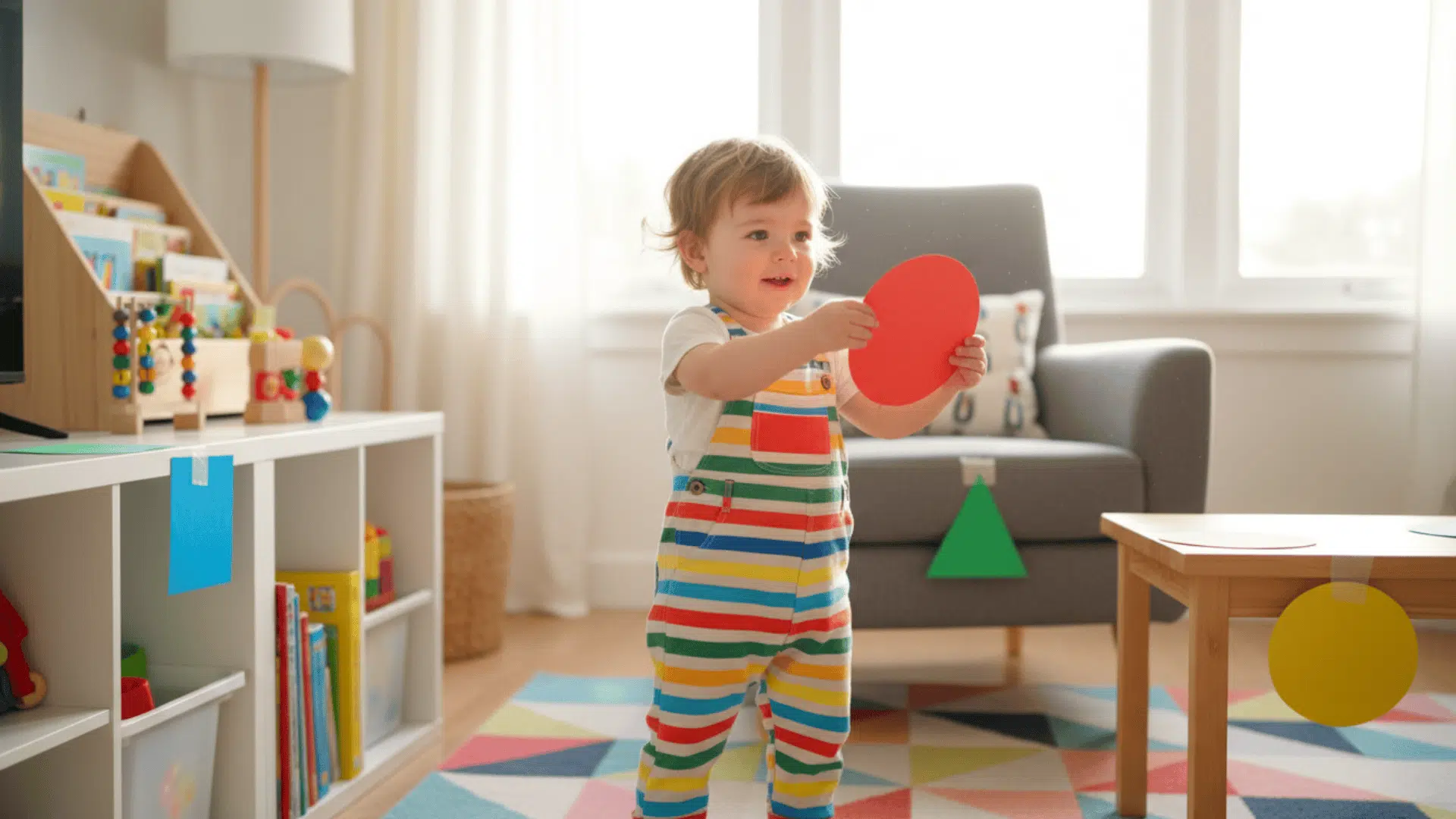
Cut out basic shapes from colored paper: circles, squares, triangles, and rectangles. Tape them around your house at toddler eye level. Give your child one shape to hold. Ask them to find all the matching shapes. Walk together and celebrate each discovery.
What they learn: Shape recognition, visual discrimination, matching skills, spatial awareness, vocabulary.
Parent Tip: Point out real objects that match each shape. A clock is a circle. A window is a rectangle. This connects the abstract to the concrete.
13. Count-and-Match Game
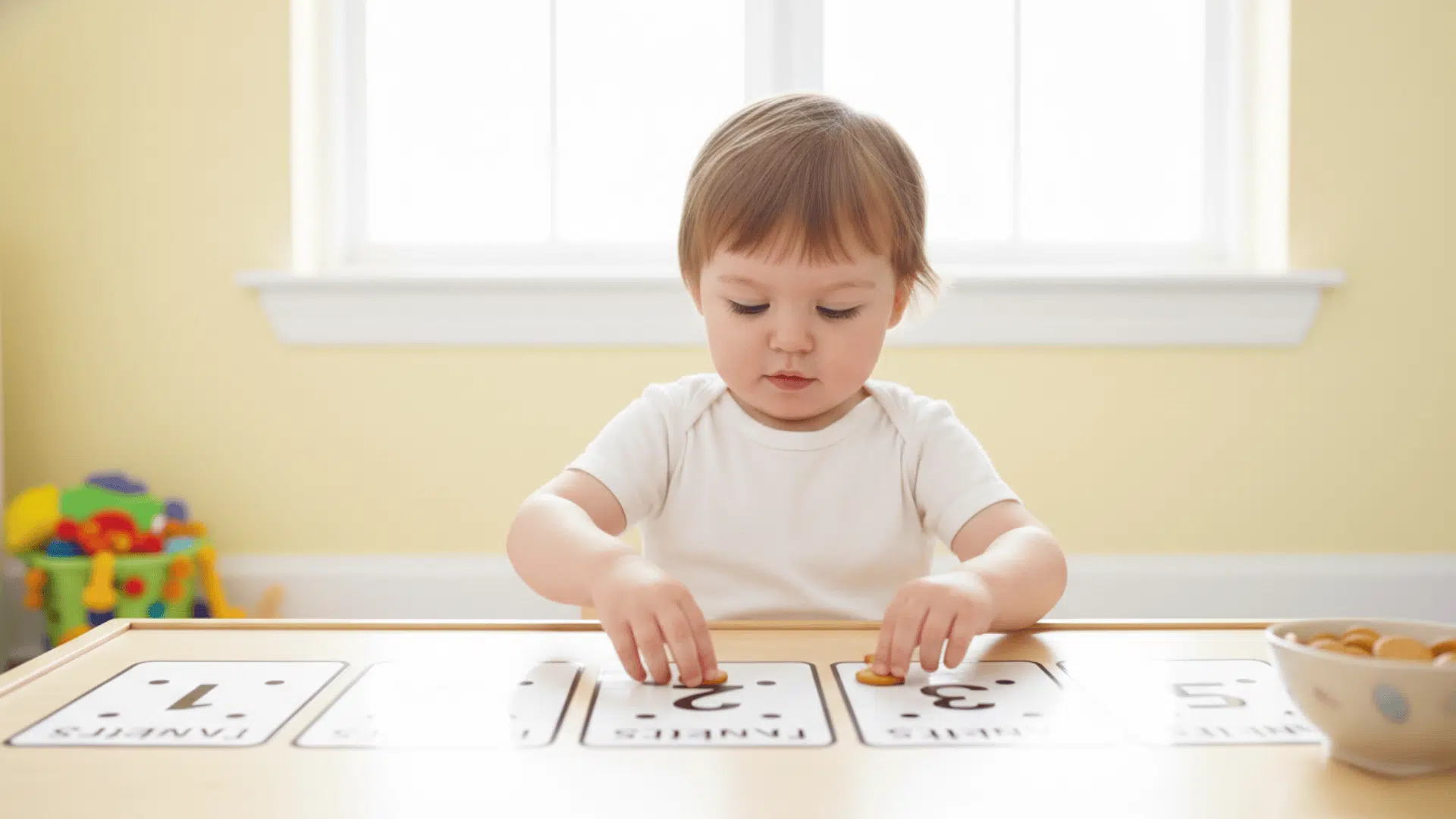
Draw numbers 1 through 5 on separate pieces of paper. Below each number, draw that many dots. Give your toddler small objects like buttons or crackers. They place the correct number of items on each paper. Start with just 1 and 2, then add more numbers as they master them.
What they learn: Number recognition, one-to-one correspondence, counting skills, hand-eye coordination, quantity concepts.
Parent Tip: Use their favorite snacks as counting objects. They can eat them after counting for a tasty reward.
14. Pattern Play with Blocks
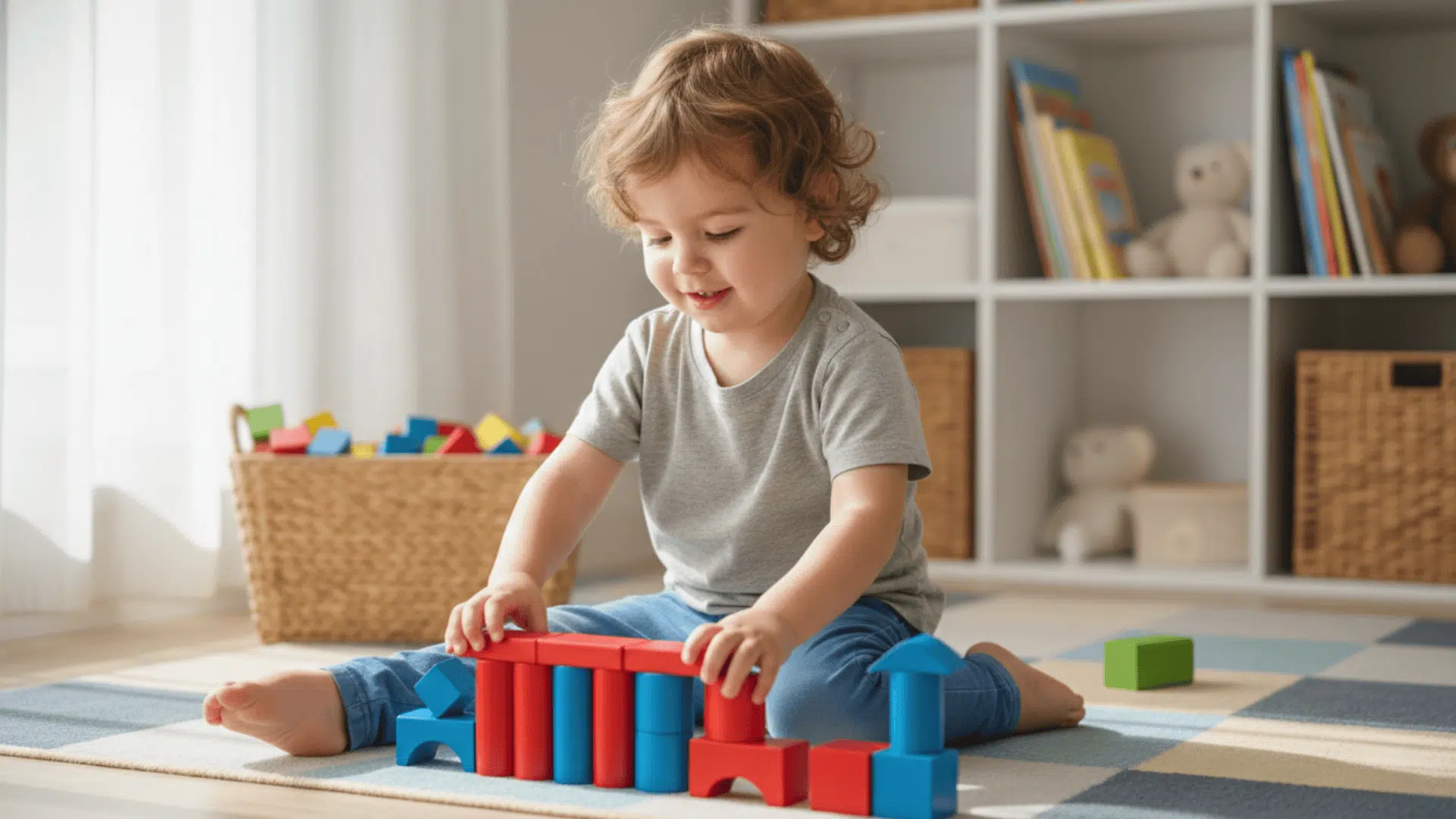
Use building blocks in two or three colors. Create a simple pattern like red-blue-red-blue. Ask your child what comes next. Let them place the next block. Start with AB patterns, then try ABC patterns. Patterns are the foundation of math and reading.
What they learn: Pattern recognition, sequencing, prediction skills, color recognition, and logical thinking.
Parent Tip: Make patterns with anything: toys, fruit, shoes. Finding patterns in daily life strengthens this skill everywhere.
15. Sink or Float Experiment
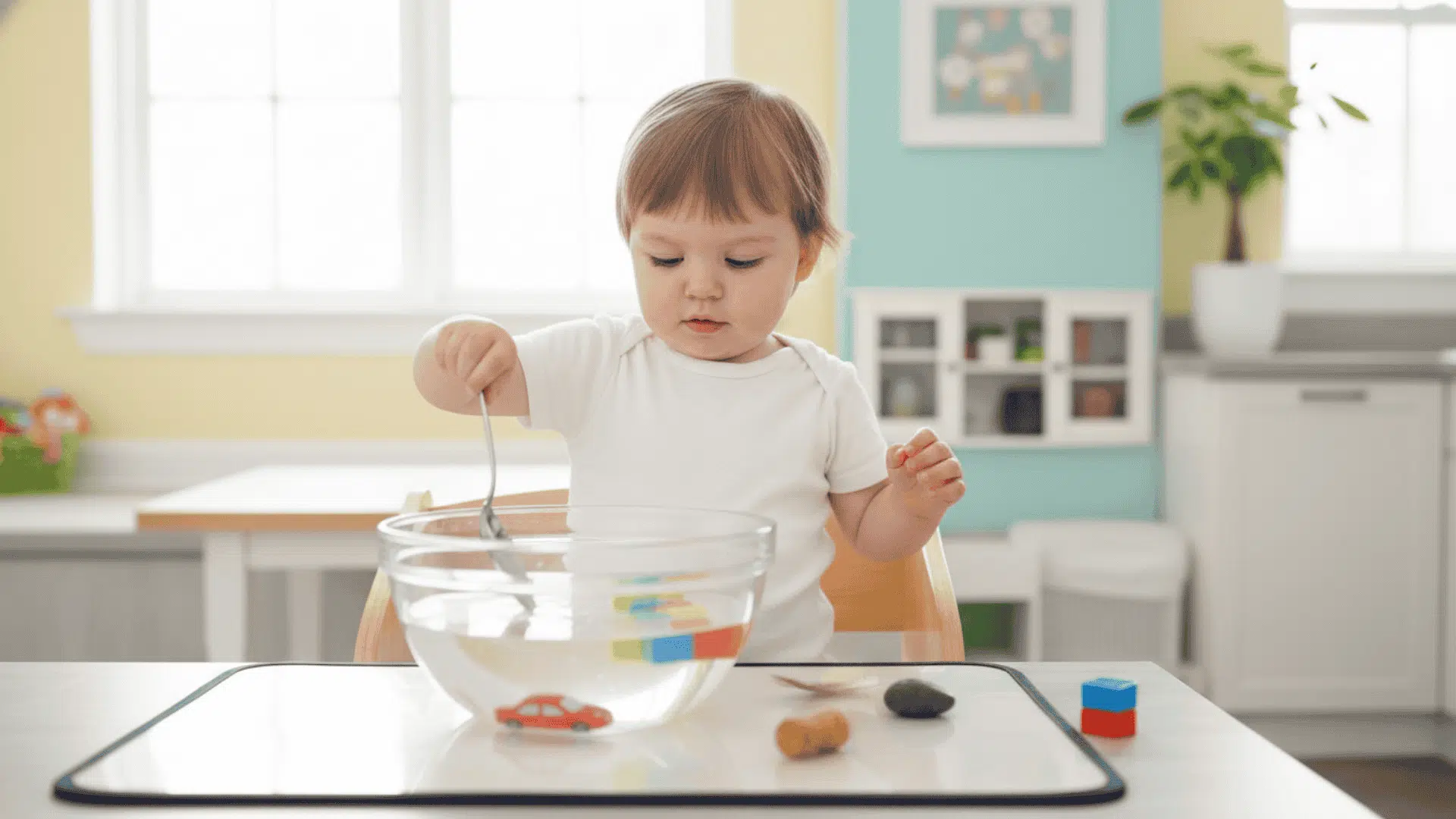
Fill a large bowl or bathtub with water. Gather safe items from around your house: a spoon, a toy car, a sponge, a plastic cup, a small rock, and a cork. Before dropping each item in, ask your child to guess. Will it sink or float? Test it together and talk about what happens.
What they learn: Scientific thinking, prediction skills, cause and effect, vocabulary (sink, float, heavy, light).
Parent Tip: Draw two columns on paper labeled “sink” and “float.” Let your toddler place each item in the correct column after testing.
Gross Motor & Movement Learning
Gross motor skills use large muscle groups for running, jumping, and balance. These activities burn energy while building coordination. Movement also helps toddlers focus better during quiet activities later. Physical play strengthens their growing bodies.
16. Obstacle Course at Home
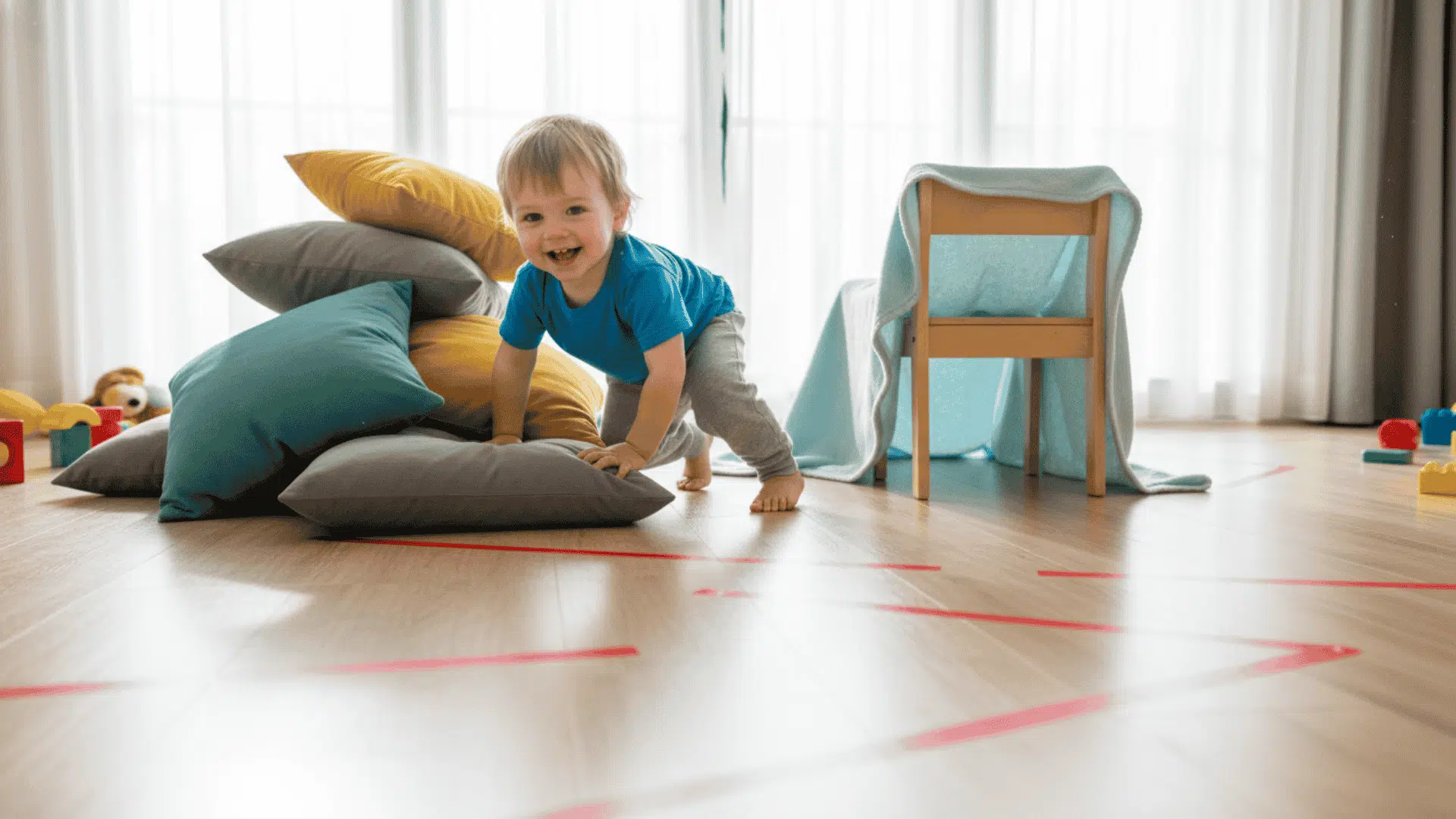
Use furniture, pillows, and toys to create stations. Set up a pillow to jump over. Add a chair to crawl under. Place tape on the floor to walk along like a balance beam. Make a tunnel from cardboard boxes. Show your toddler the path once, then let them repeat it. Change the course every few days to keep interest high.
What they learn: Balance, coordination, spatial awareness, following directions, body control, and problem-solving.
Parent Tip: Time them with a pretend stopwatch and cheer loudly. The excitement makes them want to go again. Add stuffed animals as obstacles to climb over.
17. Balloon Toss
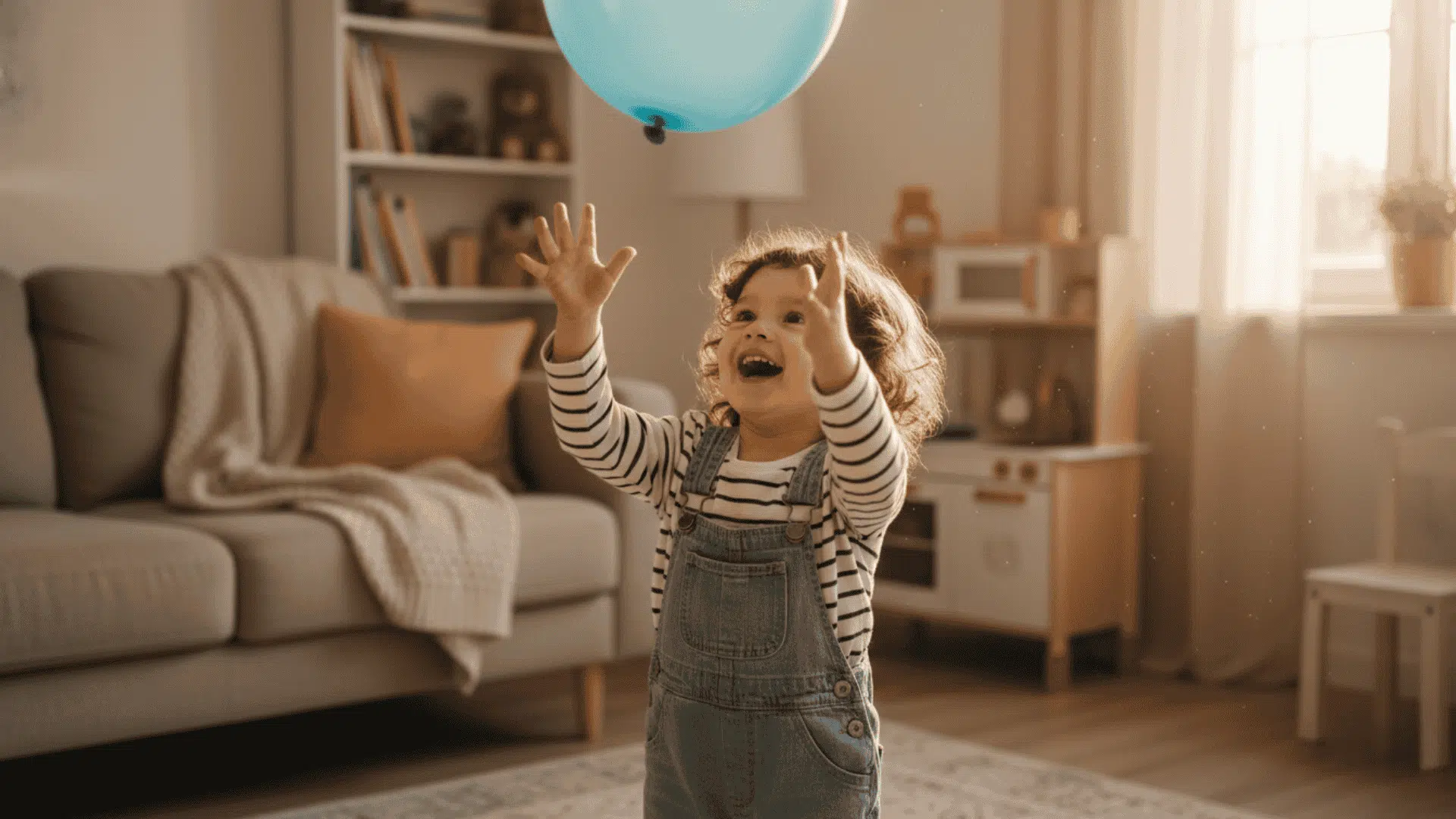
Blow up a balloon and tie it securely. Show your toddler how to tap it up in the air. The goal is to keep it from touching the ground. Balloons move slowly, giving toddlers time to react. This builds hand-eye coordination without frustration. Play together or let them practice solo.
What they learn: Hand-eye coordination, timing, tracking moving objects, cause and effect, and patience.
Parent Tip: Use a beach ball for younger toddlers who find balloons tricky. Draw a face on the balloon to make it more engaging.
18. Follow the Leader (Movement Clues)
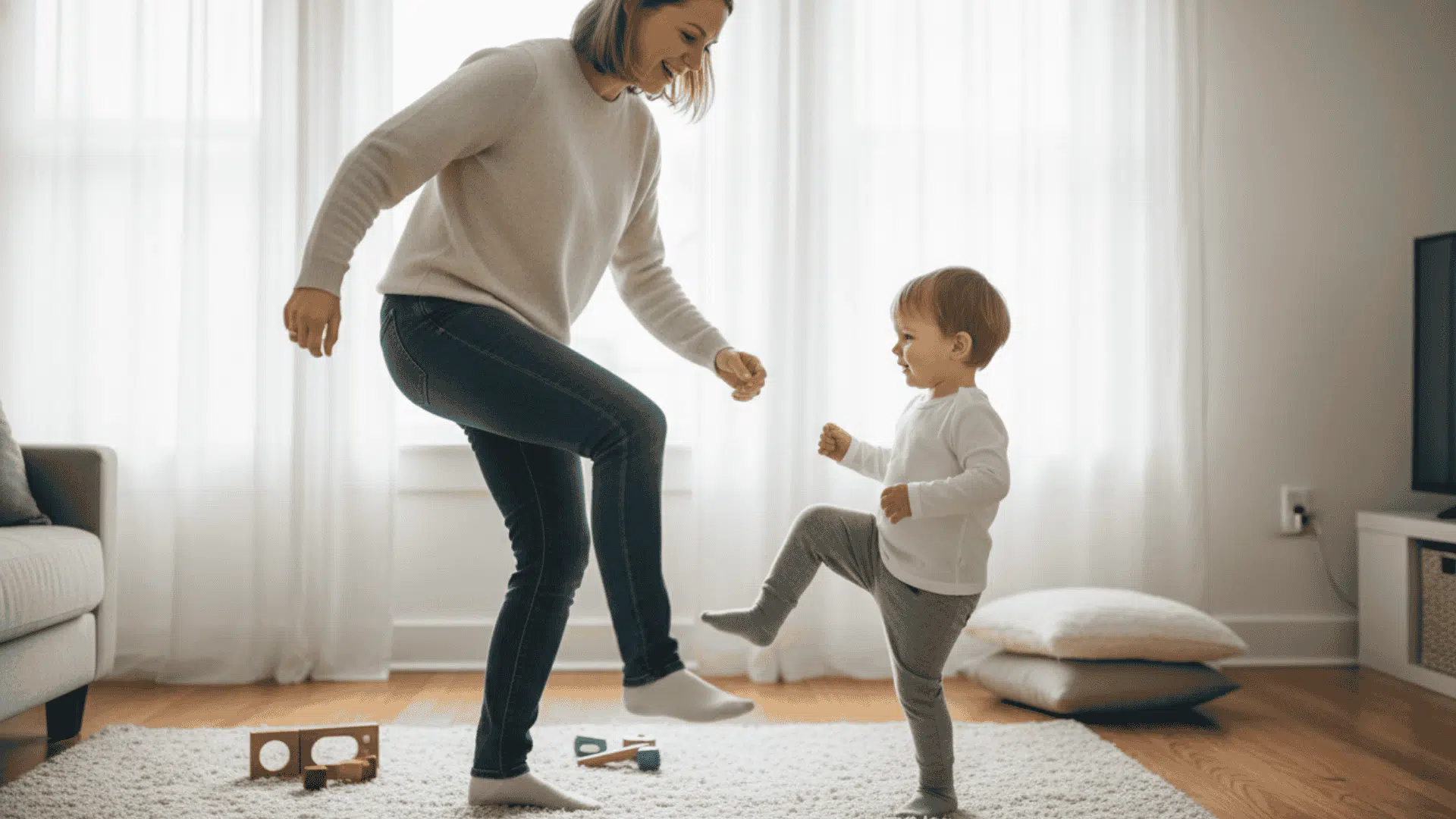
Be the leader first. Do simple movements like stomping feet, clapping hands, spinning around, or marching in place. Your toddler copies each action. After a few rounds, switch roles. Let them be the leader while you copy them. This boosts their confidence and creativity.
What they learn: Imitation skills, body awareness, listening skills, turn-taking, confidence building, and sequencing.
Parent Tip: Add animal movements like hopping like a bunny or waddling like a penguin. This combines movement with imagination.
19. Outdoor Nature Scavenger Hunt
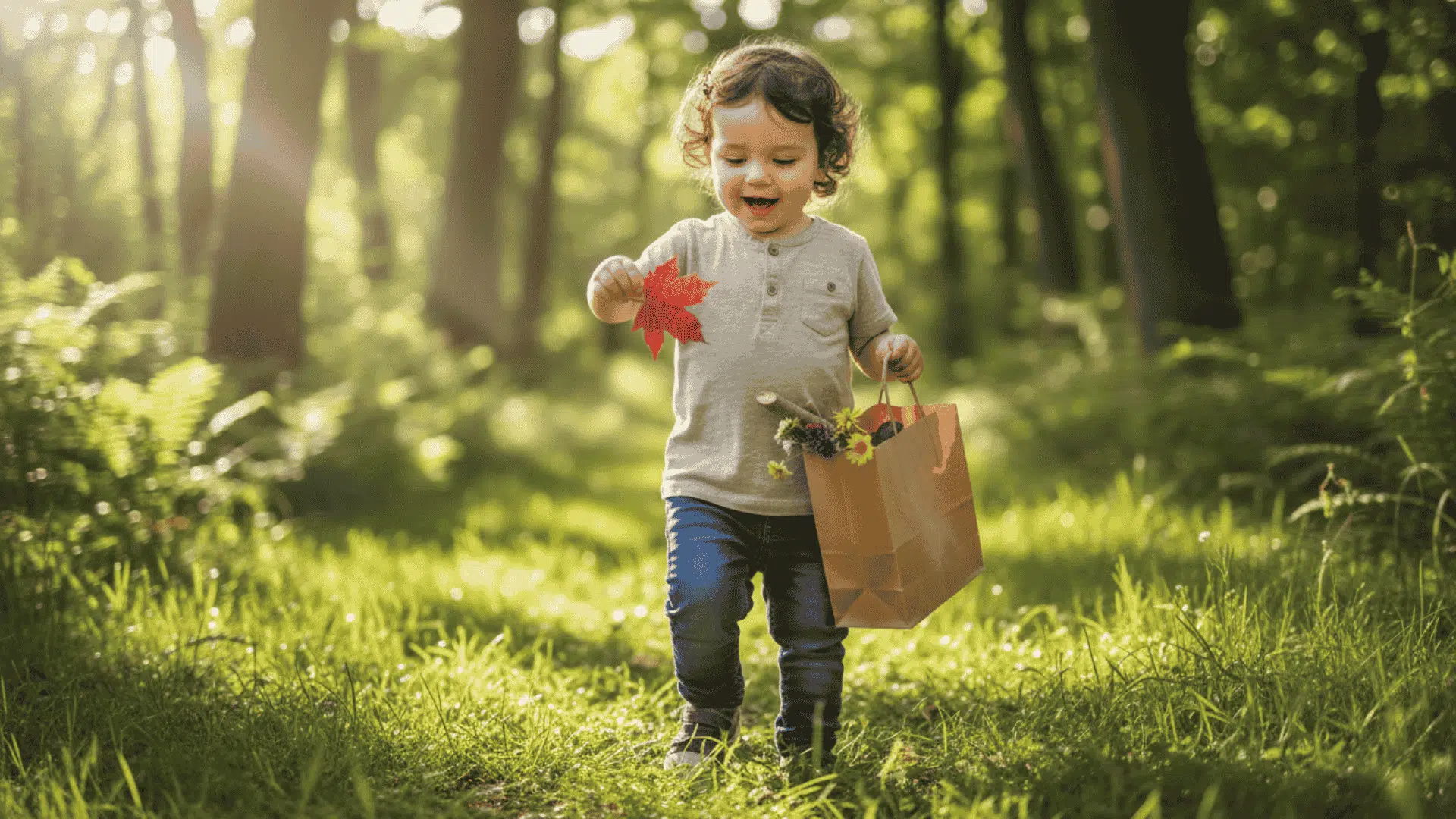
Make a simple list with pictures: a leaf, a rock, a flower, a stick. Walk outside together with a small bag. Point to each picture and help your child find that item. They collect it and put it in their bag. Celebrate each discovery. This makes walking purposeful and exciting.
What they learn: Observation skills, vocabulary, matching, nature awareness, walking endurance, and following instructions.
Parent Tip: Let them arrange their treasures on a paper plate when you get home. This extends the activity indoors with sorting and display.
20. Jump & Freeze Dance
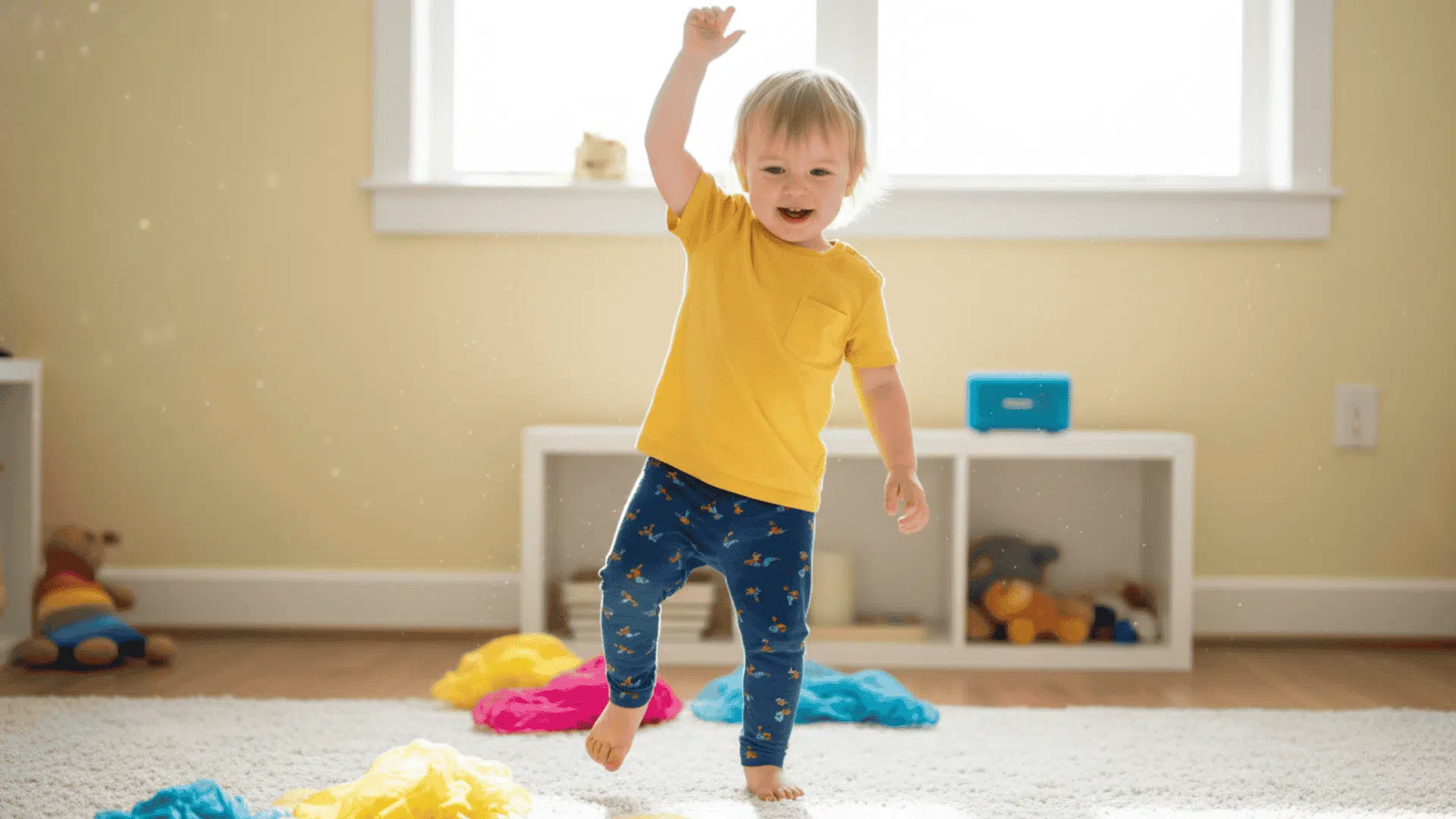
Play music and encourage your toddler to dance, jump, and move freely. After 20-30 seconds, pause the music suddenly. They must freeze in whatever position they’re in. Start the music again and repeat. The stop-and-go pattern teaches self-control and listening. It’s also hilarious and fun.
What they learn: Self-control, listening skills, rhythm, body awareness, following rules, gross motor coordination.
Parent Tip: Use different music speeds. Fast songs for wild dancing, slow songs for gentle movement. This teaches tempo and mood through movement.
Creative Arts & Imagination
Creative play builds imagination and self-expression. These activities have no right or wrong way to do them. That freedom builds confidence. Art also develops fine motor skills and teaches toddlers to make choices. Messy play is brain-building play.
21. Finger Painting
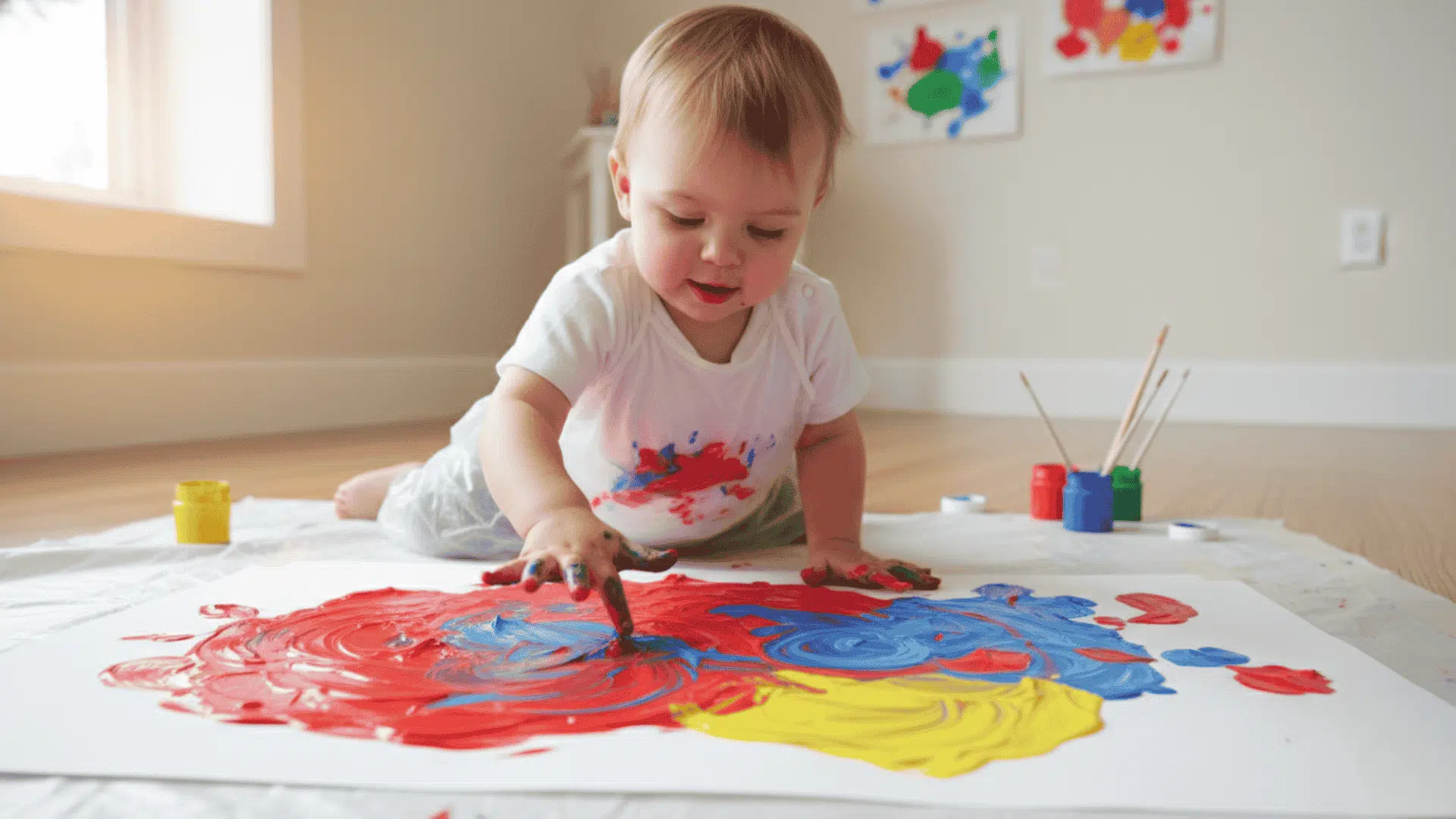
Tape large paper to a table or the floor. Squeeze out three colors of washable paint onto a plate. Let your toddler dip their fingers in and paint however they want. No brushes needed. The direct touch with paint creates strong sensory feedback. They’ll mix colors, make patterns, and experiment freely. This isn’t about making something pretty. It’s about the process and exploration.
What they learn: Color mixing, cause and effect, sensory exploration, self-expression, fine motor control, and creativity.
Parent Tip: Add a drop of dish soap to the paint for easier cleanup. Or skip paint and use pudding or yogurt for edible finger painting.
22. Nature Collage
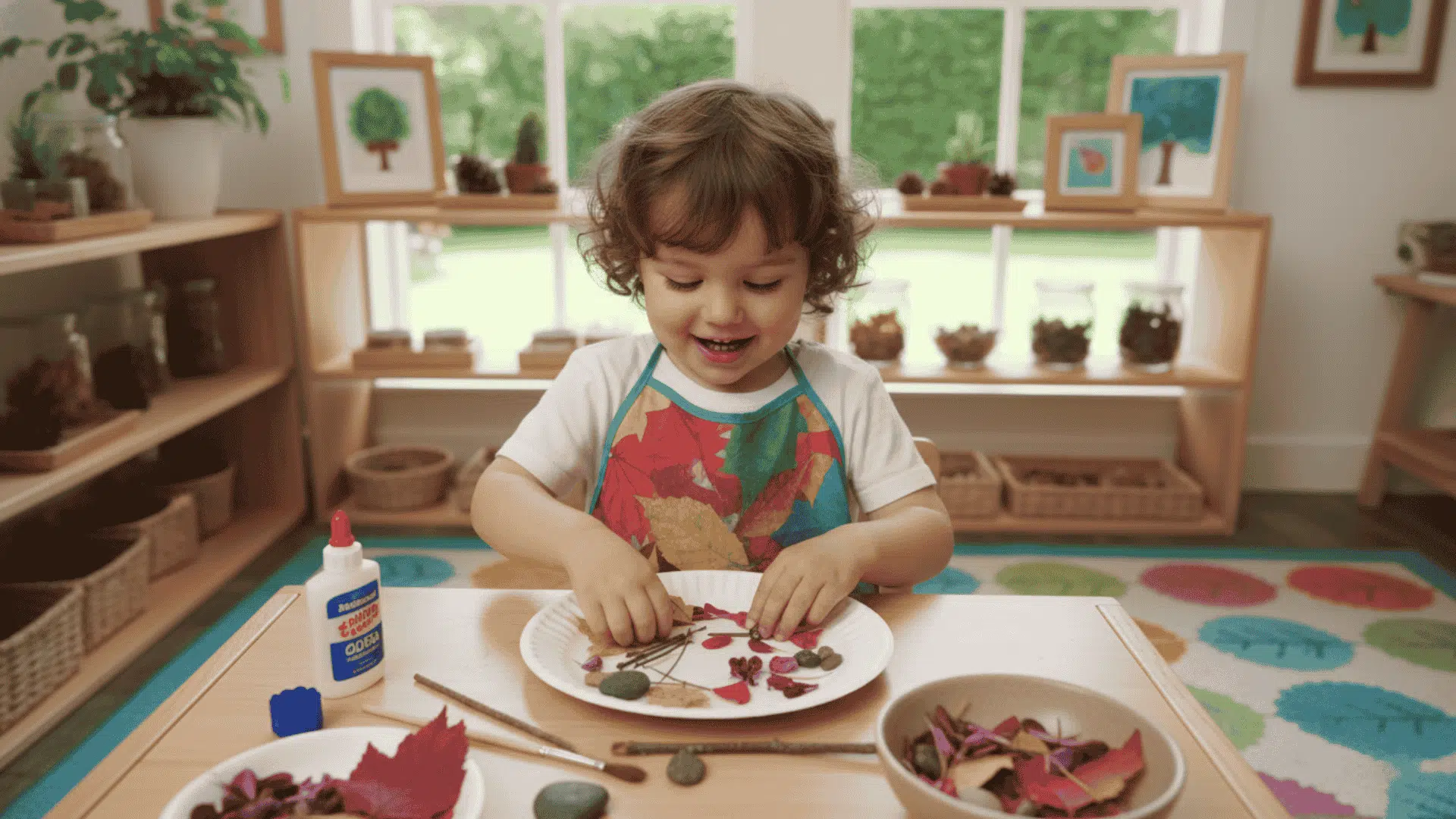
During your next outdoor walk, collect leaves, flower petals, small twigs, and interesting grass. Back home, give your toddler a paper plate and a non-toxic glue stick. Show them how to rub glue on the plate, then press nature items onto it. They’ll create their own nature art. Display it proudly when finished.
What they learn: Creativity, texture exploration, fine motor skills, nature appreciation, spatial planning, and decision-making.
Parent Tip: Take a photo of their collage before it dries and wilts. Create a nature art journal to track seasonal changes through their collections.
23. DIY Musical Instruments
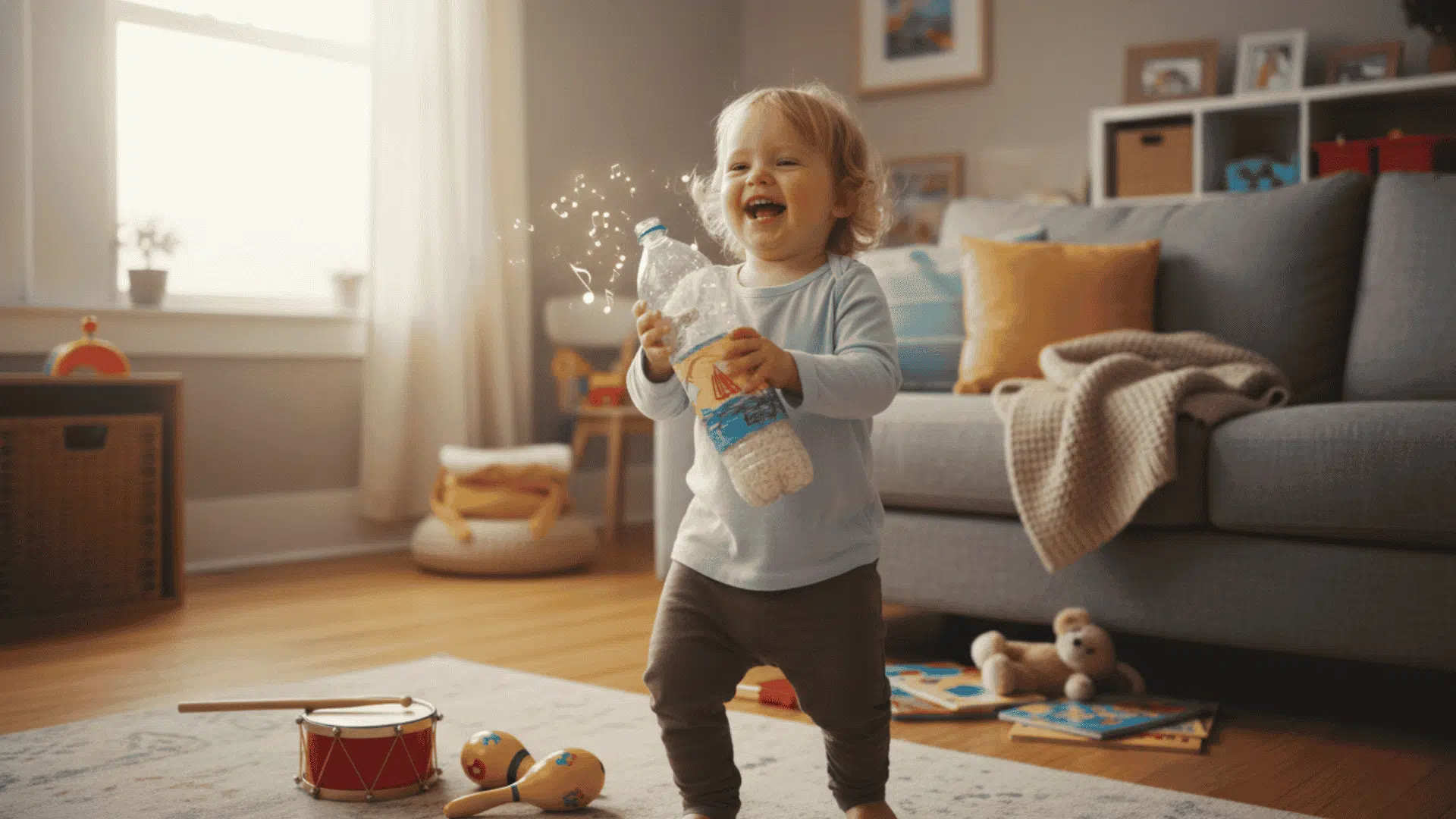
Make simple instruments from household items. Fill a plastic bottle with rice for a shaker. Stretch a balloon over a can for a drum. Put beans in a sealed container for maracas. Give your toddler their instrument collection and play music together. Let them explore different sounds and rhythms.
What they learn: Cause and effect, rhythm, auditory processing, creative expression, hand strength, and sound exploration.
Parent Tip: Record their music session on your phone. Play it back so they can hear their own creation. This builds pride and self-awareness.
24. Puppet Drama Play
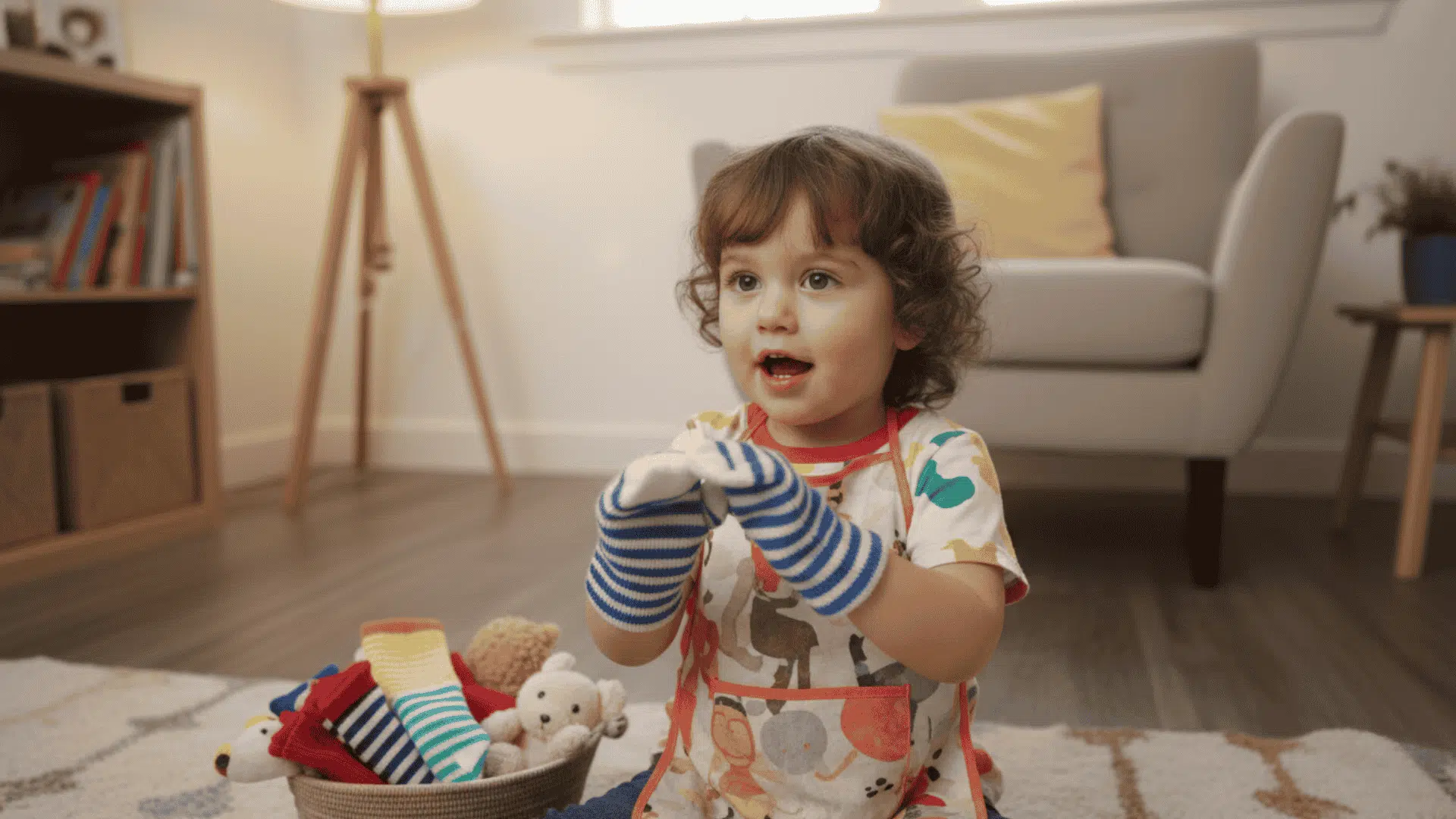
Make simple puppets from socks, paper bags, or even wooden spoons with faces drawn on. Start by acting out a familiar story like “The Three Little Pigs.” Use different voices for each puppet. Then let your toddler take over. They’ll create their own stories and dialogue. Their plots won’t make sense to you, but that’s perfectly normal.
What they learn: Language development, storytelling, imagination, emotional expression, social skills, and sequencing.
Parent Tip: Keep puppets in a special basket. Bring them out during sibling conflicts to help kids express feelings through the puppet instead of acting out.
25. Sidewalk Chalk Story Maps
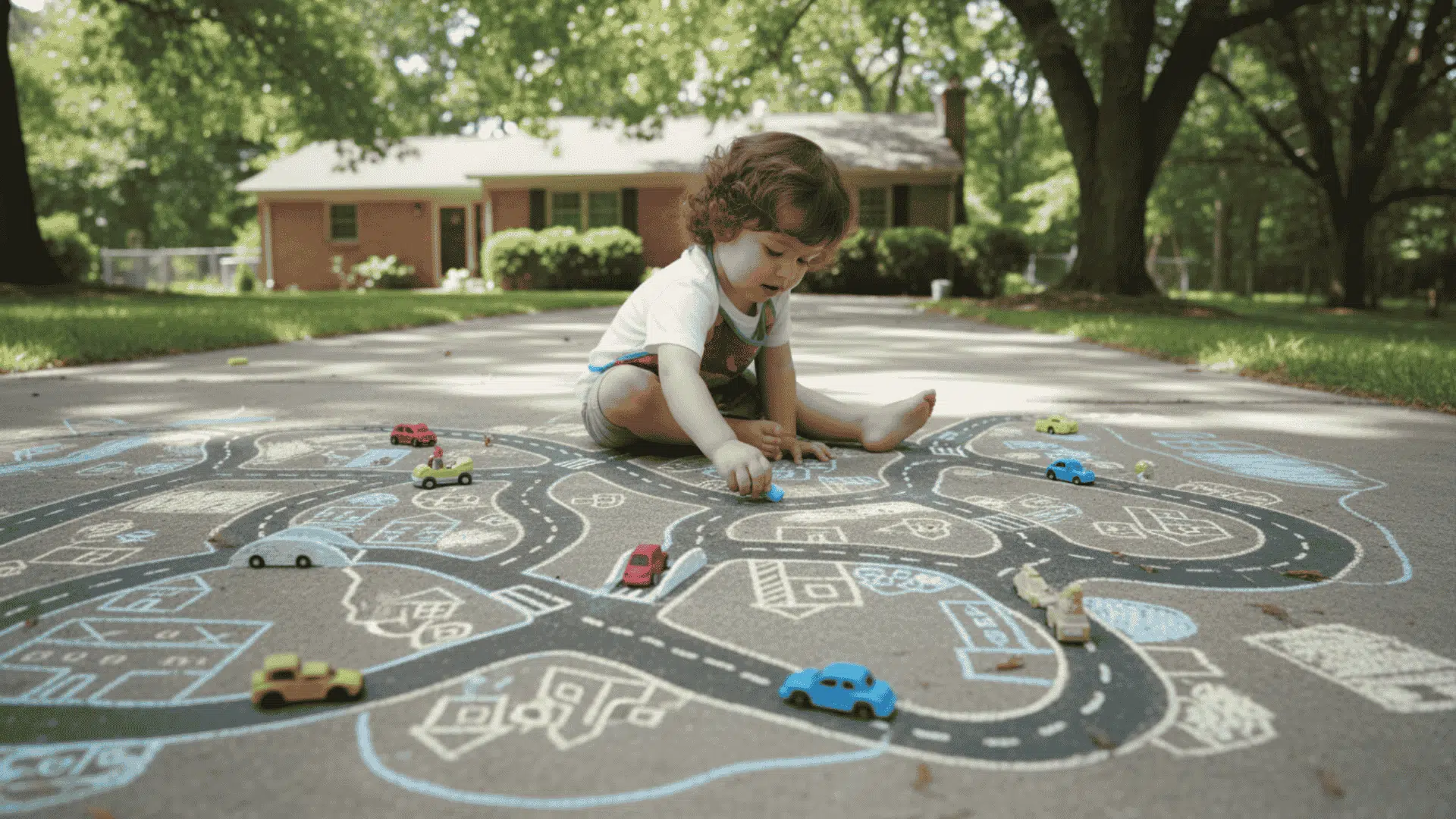
Give your toddler thick sidewalk chalk on a driveway or patio. Draw simple roads, houses, or paths together. Add their toy cars and action figures to the scene. They’ll drive cars along the roads and create stories. The combination of drawing and playing extends engagement time.
What they learn: Spatial planning, storytelling, fine and gross motor skills, creativity, cause and effect, and imagination.
Parent Tip: Draw shapes and letters for them to trace over with chalk. Or create a hopscotch grid to combine art with movement.
Quiet & Independent Play
Quiet activities help toddlers learn to focus and entertain themselves. These build concentration and patience. They’re perfect for when you need to make dinner or take a phone call. Independent play also boosts confidence and self-reliance.
26. Busy Bags (Quiet Skills)
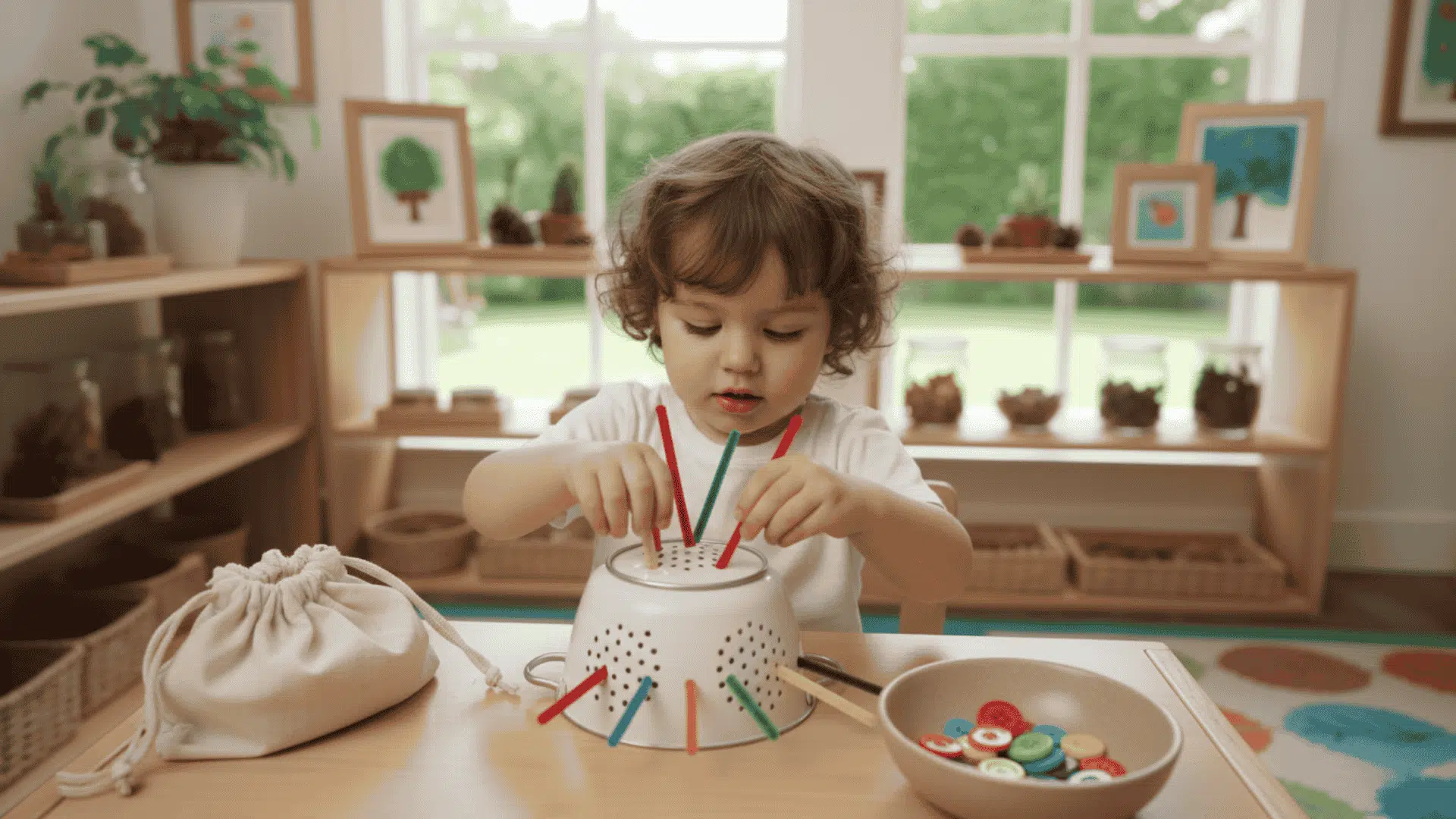
Fill gallon ziplock bags with different quiet activities. One bag gets pipe cleaners and a colander for threading. Another gets large buttons and felt. A third gets foam stickers and paper. Rotate bags daily. Your toddler can work through one bag independently while you supervise nearby. The contained mess makes cleanup simple.
What they learn: Fine motor skills, problem-solving, concentration, independence, hand-eye coordination, and patience.
Parent Tip: Make five bags and rotate them throughout the week. The novelty keeps them engaged longer. Store bags on a low shelf so toddlers can choose their own.
27. Puzzles & Shape Sorters
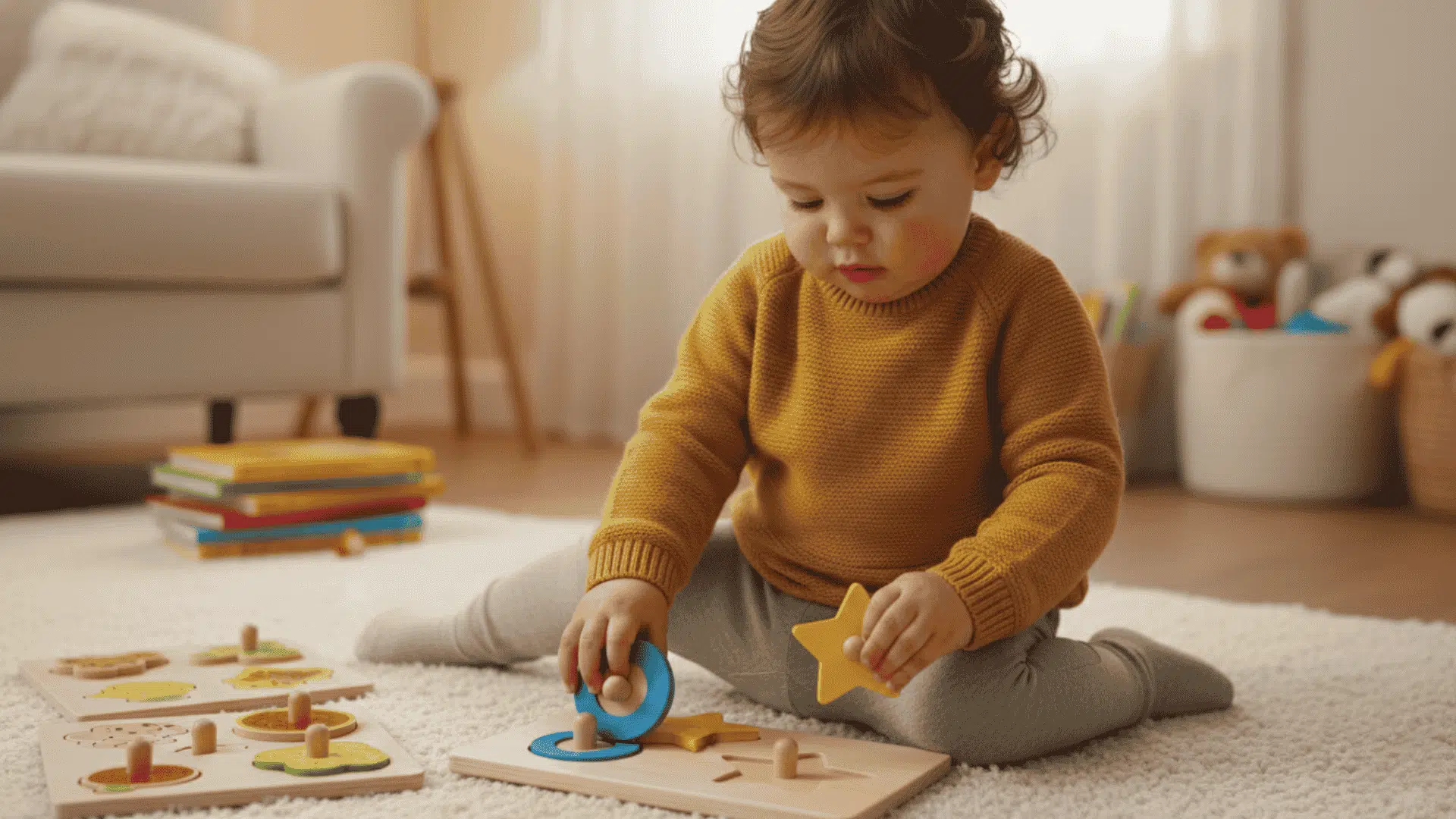
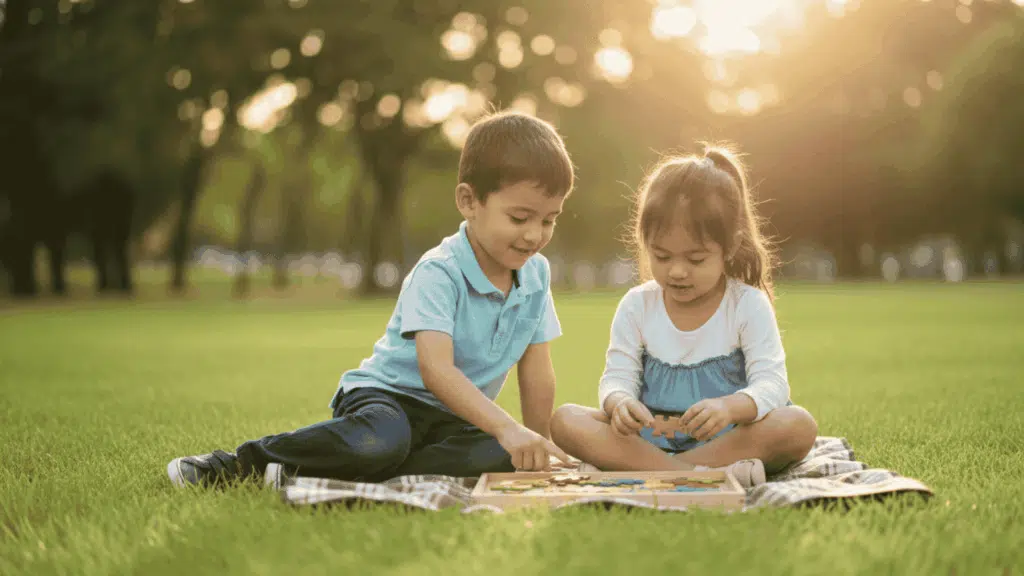
Start with simple 4-6 piece wooden puzzles with large knobs. Sit nearby while your toddler works on fitting pieces. Don’t jump in to help immediately. Let them struggle a bit and figure it out. That struggle builds problem-solving skills. Shape sorters work the same way. They’ll test different holes before finding the right match.
What they learn: Problem-solving, spatial reasoning, shape recognition, persistence, hand-eye coordination, and logical thinking.
Parent Tip: Rotate puzzles weekly so they don’t get bored. When a puzzle becomes too easy, donate it and get a slightly harder one to maintain the challenge.
28. Sensory Bottles
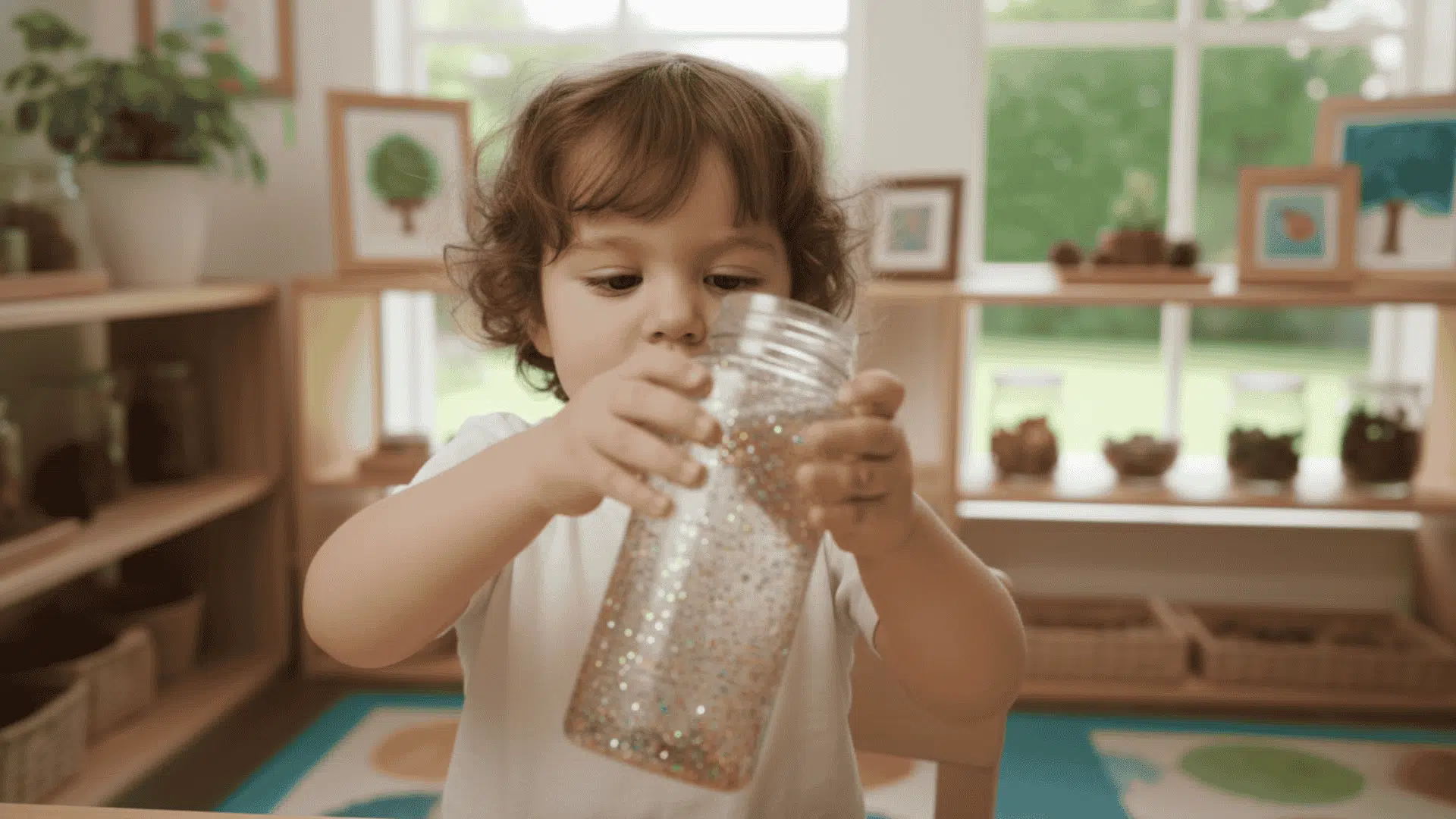
Fill clear plastic bottles with different materials. One bottle gets water and glitter. Another gets rice and small beads. A third gets water and oil with food coloring. Seal lids with hot glue so they can’t open them. Your toddler shakes, rolls, and watches items move inside. These work magic during fussy moments.
What they learn: Visual tracking, cause and effect, self-soothing, observation skills, patience, and focus.
Parent Tip: Make a calm-down bottle with glitter that falls slowly. Use it when your toddler needs to reset emotionally. Watching the glitter settle helps them breathe and refocus.
29. Toddler-Safe Water Painting
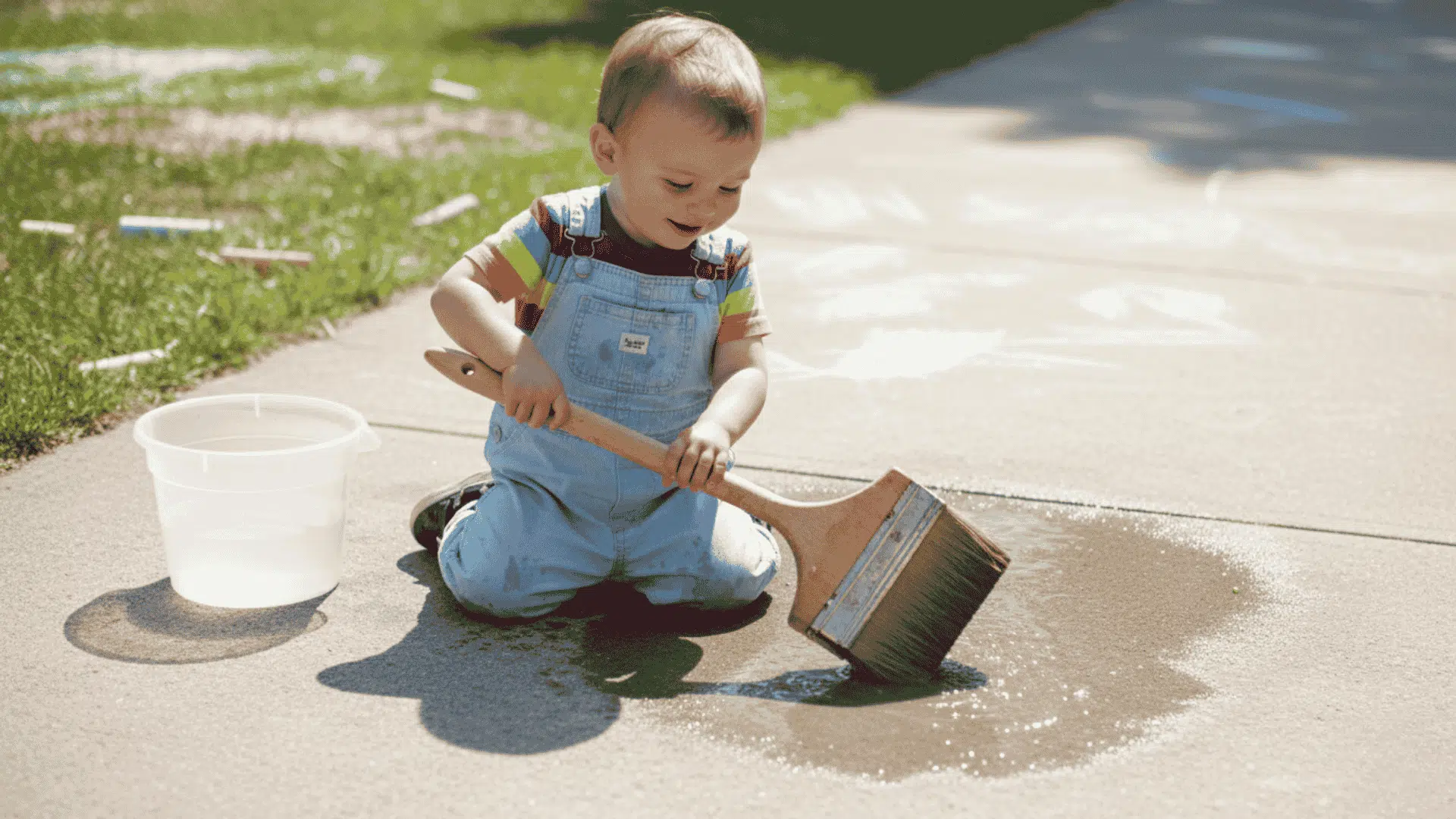
Give your toddler a small bowl of plain water and a large paintbrush. Let them “paint” water on the sidewalk, fence, or chalkboard. They’ll see the surface darken when wet, then watch it dry and disappear. This mess-free painting satisfies their creative urge without permanent marks or stains.
What they learn: Cause and effect, fine motor control, brush grip, patience, observation skills, temporary vs permanent concepts.
Parent Tip: Do this outside on hot days. They stay cool, you stay sane, and nothing gets ruined. Add a few drops of food coloring for actual colored painting.
30. Book Basket & Picture Discussion
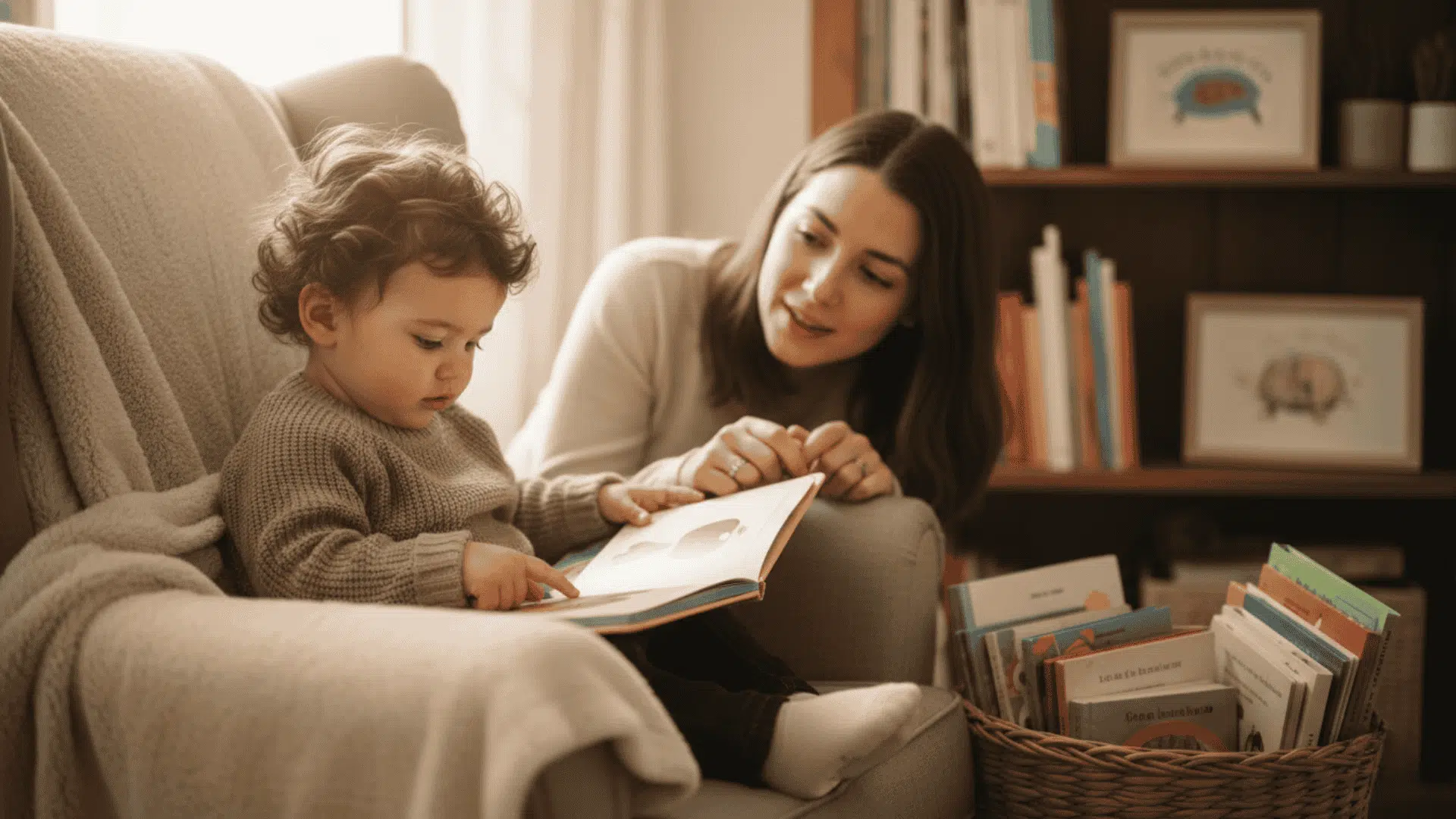
Create a low basket filled with 8-10 board books. Place it in a cozy corner with a pillow. Your toddler can pull out books and look at pictures independently. Join them occasionally to point out objects and ask simple questions. “Where’s the dog?” or “What color is that ball?” This builds reading habits early.
What they learn: Print awareness, vocabulary, independent play, story comprehension, focus, and language development.
Parent Tip: Rotate books every two weeks. Include books with textures, flaps, or mirrors for multi-sensory engagement. Visit the library together to let them choose new favorites.
31. Sticker Play
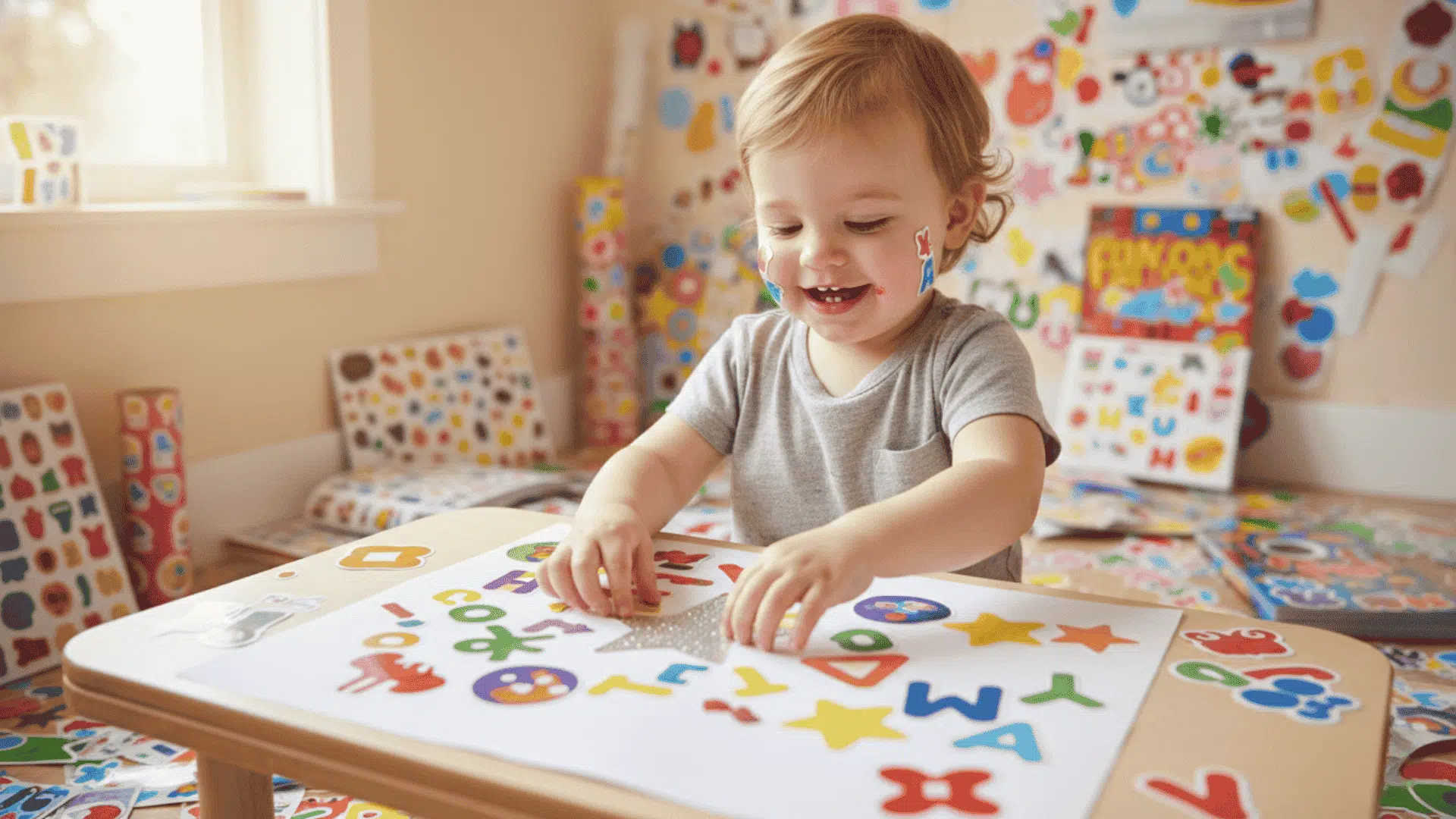
Give your toddler a sheet of large stickers and blank paper. Let them peel and stick wherever they want. No rules. No patterns to follow. Just pure creative sticking. The peeling motion strengthens the pincer grasp needed for holding pencils. The placement teaches decision-making and spatial awareness.
What they learn: Fine motor control, pincer grasp, decision-making, creativity, hand-eye coordination, independence.
Parent Tip: Use painter’s tape on a window instead of stickers. They can stick and restick endlessly without wasting stickers. It creates colorful window art that peels off easily.
Conclusion
You just gained simple ways to turn ordinary moments into learning opportunities. Each activity builds specific skills your toddler needs right now.
Sensory play calms busy minds. Language games expand vocabulary. Math activities teach logical thinking. Movement builds coordination. Creative play boosts confidence.
The best part? You already own everything needed. No expensive toys. No complicated setups. Just household items and a few minutes.
Your toddler won’t do every activity perfectly. They’ll make messes. That’s completely normal and actually good for brain development.
Pick activities based on your child’s mood and energy. Active games for morning bursts. Quiet play before naptime.
Ready to start? Choose one activity from this list today. Gather your materials and watch your toddler’s face light up with discovery.
What activity will you try first? Share in the comments below!