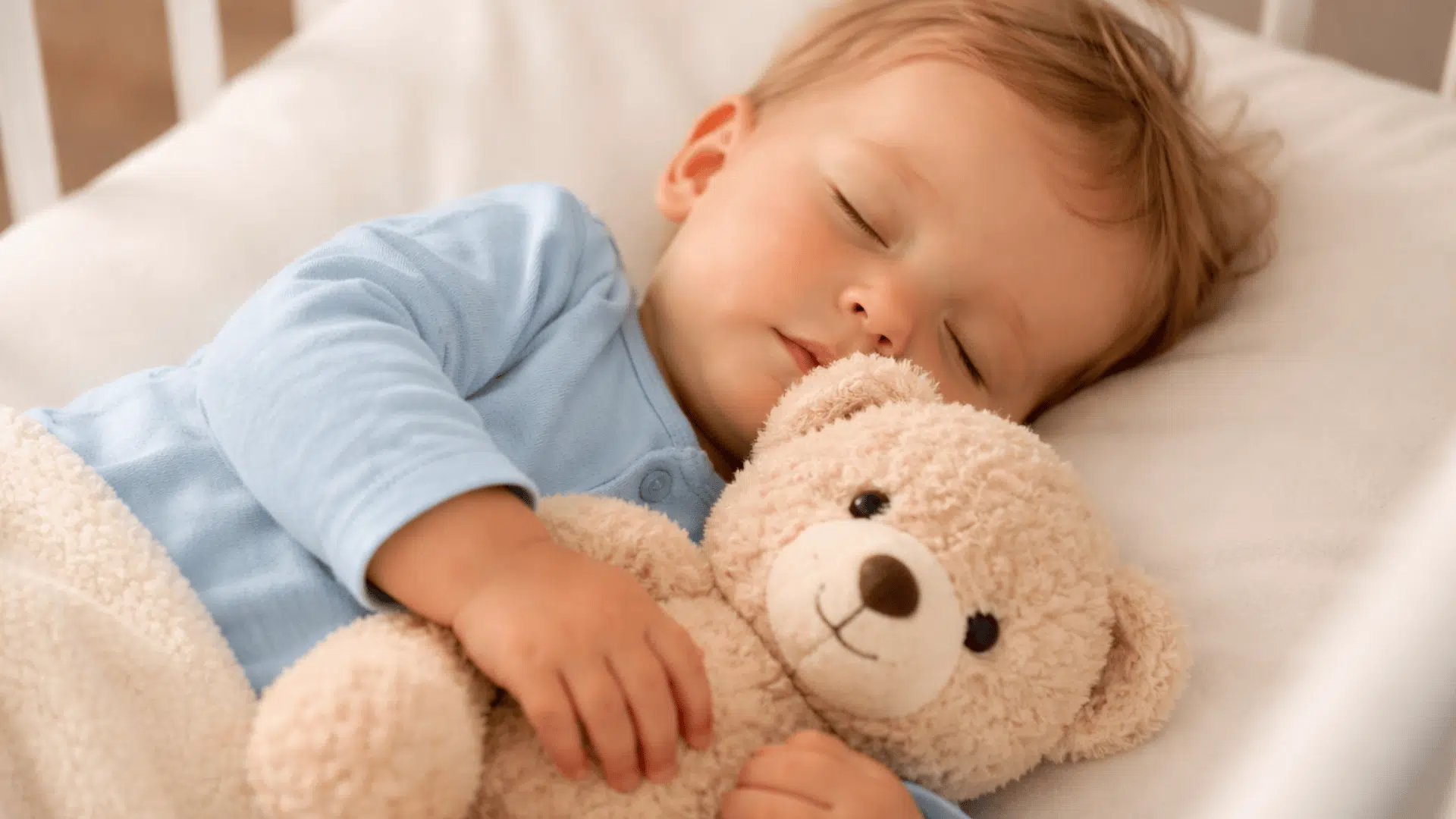
That adorable teddy bear sits on the nursery shelf, waiting. You’ve wondered a dozen times if tonight is the night to tuck it in with your baby. But then doubt creeps in.
Is it safe? When is it actually okay?
You’re not alone in this confusion. Parents receive conflicting advice from family, friends, and online sources.
One person says it’s fine at six months. Another insists you should wait until age two.
The truth is simpler than the noise suggests. Medical experts worldwide agree on clear guidelines for when babies can safely sleep with stuffed animals.
This guide gives you research-backed answers on the exact age, how to choose safely, and steps to make the transition smooth.
What Experts Say About Stuffed Animals in the Crib?
The American Academy of Pediatrics (AAP) has a clear rule: no soft objects in the crib until 12 months old. This includes stuffed animals, blankets, pillows, and bumpers.
This is a global medical consensus. The UK, Canada, and Australia follow the same 12-month guideline.
Why the 12-Month Rule Exists
About 3,500 babies die from Sudden Infant Death Syndrome (SIDS) each year in the US. The first year carries the highest risk. Peak danger occurs between 1 and 4 months old.
Here’s the critical fact: 27% of SIDS deaths are preventable suffocation cases. A 2021 CDC study found that 72% of sudden unexpected infant deaths involved soft bedding items.
What Makes Babies Vulnerable?
Young babies cannot push objects off their faces. Their neck muscles are weak. Their heads are heavy for their body size.
Soft toys cause “rebreathing.” When a stuffed animal blocks airflow, babies breathe their own exhaled air. Carbon dioxide builds up. Oxygen drops. Some babies’ brains fail to trigger the wake-up alarm.
The Safe Sleep Space
Your baby’s crib should contain only:
- A firm, flat mattress
- A fitted sheet
- Your baby
Nothing else. Not even “breathable” mesh bumpers.
Some Wait Until 18 Months
While 12 months is the minimum, some pediatricians suggest waiting until 18 months. This allows more time for motor skill development.
The right timing depends on your child’s abilities. We’ll cover those developmental signs next.
Understanding the rules is one thing. Knowing exactly what to do at each stage of your baby’s first year is another. Let’s break down the safety guidelines by age.
Age Breakdown: When is it Safe?
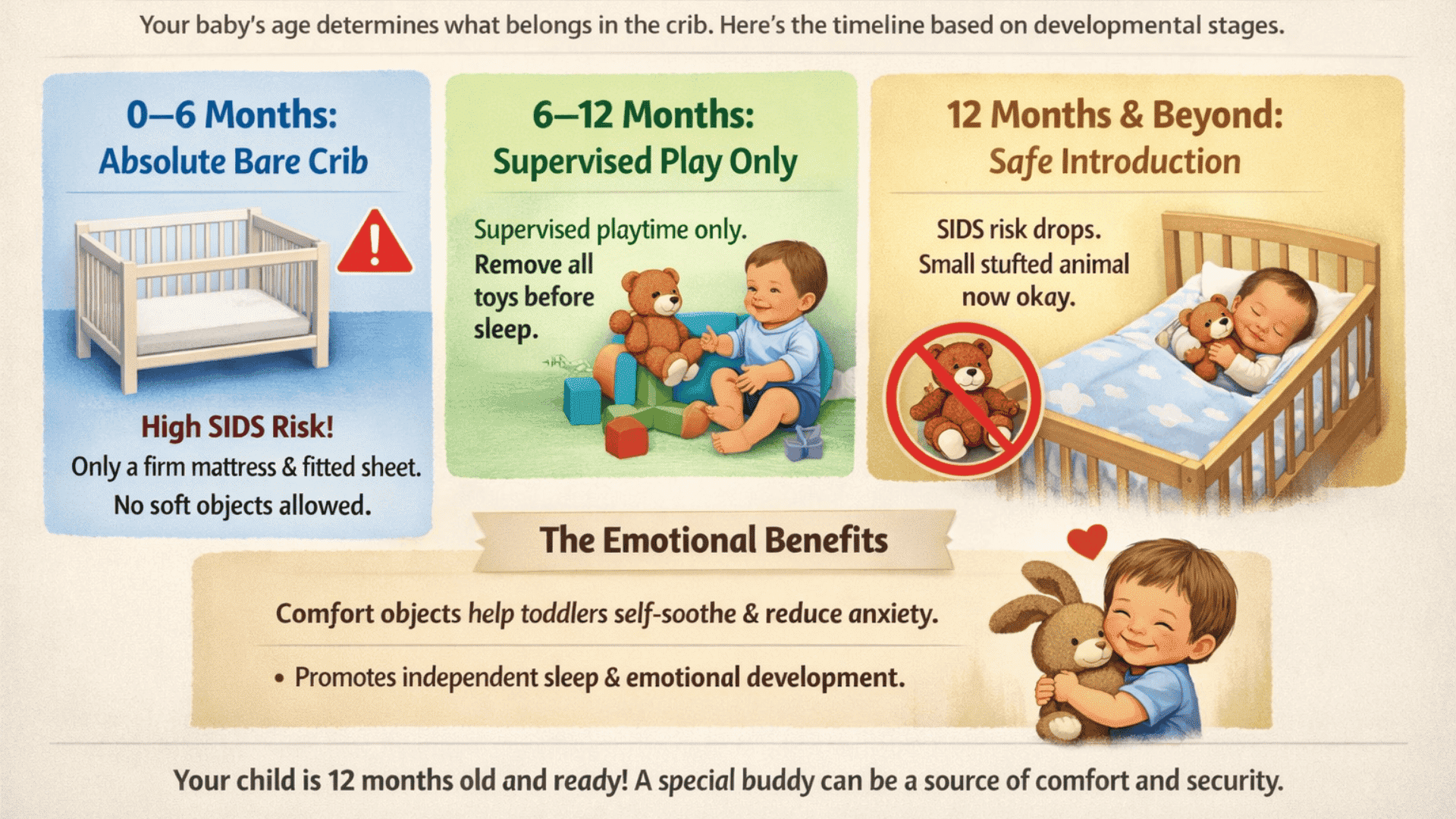
Your baby’s age determines what belongs in the crib. Here’s the timeline based on developmental stages.
0–6 Months: Absolute Bare Crib
This period accounts for 90% of all SIDS deaths. Peak risk occurs between 1 and 4 months.
The crib must contain only a firm mattress and a fitted sheet. No soft objects allowed.
6–12 Months: Supervised Play Only
Babies develop crucial motor skills during this phase. They learn to roll over, sit up, and push objects away.
Stuffed animals are fine for supervised playtime and bonding. Include them in tummy time or reading sessions. But remove them completely before sleep.
Babies aged 5–11 months face a particular risk. They can wiggle and move, but cannot untangle themselves from soft objects.
12 Months and Beyond: Safe Introduction
After 12 months, SIDS risk drops dramatically. Most babies now have the motor skills to sleep safely with a small stuffed animal.
Key developmental milestones at this age:
- Can roll in both directions independently
- Sit up without support
- Push objects off their face
- Turn their head freely when lying down
The Emotional Benefits
Stuffed animals become transitional objects that help toddlers self-soothe. These comfort items reduce nighttime anxiety and support independent sleep.
Many children form attachments to comfort objects between 8 and 12 months. This is normal, healthy emotional development.
Individual Readiness Matters: Some experts recommend waiting until 18 months for extra safety. Consult your pediatrician if your child was premature or has developmental delays.
Your baby has reached 12 months and passed the safety milestone. Now what? Here’s why that stuffed animal matters for your toddler’s development.
Benefits of Stuffed Animals for Toddlers
Once your baby reaches 12 months, a stuffed animal becomes more than just a toy. It serves real developmental purposes.
- Emotional Security and Self-Soothing: Toddlers use stuffed animals as transitional objects to calm themselves. When they wake at night, the familiar toy helps them settle back down without calling for you. This builds independence and teaches self-soothing skills.
- Managing Separation Anxiety: Between 12 and 18 months, separation anxiety often peaks. A stuffed sleep companion provides consistent comfort when you leave the room. The toy becomes a bridge between dependence and independence.
- Strengthening Sleep Routines: Having the same stuffed animal every night creates predictability. Toddlers thrive on routine. The toy signals that sleep time has arrived. Research shows that children with consistent bedtime objects fall asleep faster and wake less frequently.
Knowing the benefits is one thing. Actually introducing that first stuffed animal safely requires a thoughtful approach. Here’s your step-by-step guide.
How to Safely Introduce a Stuffed Animal?
Build familiarity weeks before 12 months. Include the stuffed animal in daytime play, stroller walks, and story time. Let your baby touch and explore it while awake.
Pro Tip: Buy two identical stuffed animals. When one is in the wash, the other is available. This prevents bedtime meltdowns.
On the first night after 12 months, place the stuffed animal near your baby’s feet, not by their head. Some babies grab it immediately. Others ignore it for weeks. Both are normal.
Monitor the first few nights with a video monitor. Watch for the toy covering your baby’s face or signs of distress. If problems occur, remove it and try again in a few weeks.
You’re ready to introduce a stuffed animal, but not all toys are safe for sleep. Here’s what to look for and what to avoid.
Choosing the Right Stuffed Animal
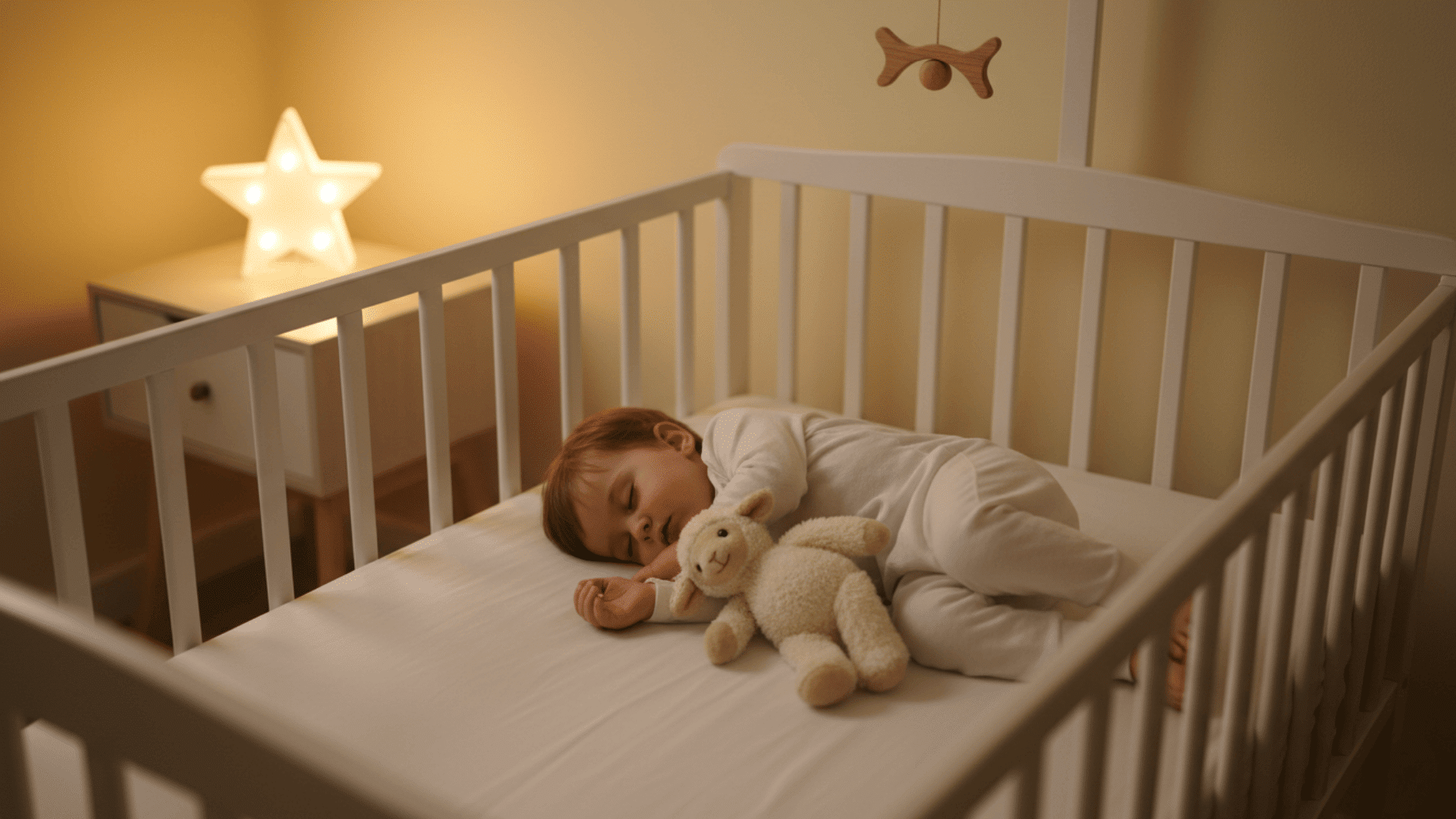
Not every cute plush toy belongs in your toddler’s crib. Safety features matter more than appearance. The wrong choice can still pose risks even after 12 months.
Size and Weight
Choose a stuffed animal smaller than 12 inches and lightweight. Your toddler should easily move it. Too large poses a suffocation risk. Too small creates choking hazards.
Material and Construction
Look for soft, breathable fabric like cotton or fleece. The toy must be machine washable and hypoallergenic. Avoid synthetic materials that trap heat or stuffing that clumps after washing.
Safety Features
The safest stuffed animals have embroidered eyes and a nose, not buttons. Check for no ribbons, bows, strings, or detachable parts. Avoid toys with batteries, sound boxes, or loose stitching.
Safety Checklist:
- Embroidered facial features
- No small, removable parts
- Tight stitching throughout
- Lightweight and breathable
- Simple design with no accessories
What to Avoid: Never use stuffed animals larger than your toddler’s torso. Skip toys with hard plastic features, long hair or fur, weighted filling, or bean bag stuffing.
Maintenance Matters Wash the toy weekly or after illness. Dust mites and drool build up quickly. Check regularly for wear and tear. Replace it if parts loosen or stitching breaks. |
Even with all this information, parents still hear conflicting advice. Let’s clear up the most common misconceptions about babies and stuffed animals.
Common Myths vs. Facts
Parents often receive confusing advice about stuffed animals and baby sleep. Here’s what the research actually shows.
| Myth | Fact |
|---|---|
| Stuffed animals help babies sleep faster. | Safety comes first. No soft objects before 12 months, regardless of sleep benefits. |
| Stuffed toys can help with sleep training. | Sleep training should never involve unsafe items. Wait until 12 months, then introduce gradually. |
| Breathable mesh toys are safe for young babies. | All soft objects pose a risk before 12 months. “Breathable” doesn’t eliminate suffocation danger. |
| Babies need something to cuddle for comfort. | Babies under 12 months find comfort from caregivers, consistent routines, and safe sleep environments. |
| If my baby can roll over, stuffed animals are fine. | Rolling is one milestone, but 12 months is the minimum safe age recommended by pediatricians. |
The evidence is clear. Wait until 12 months minimum. Then choose carefully and introduce slowly.
Conclusion
Knowing when babies can sleep with a stuffed animal comes down to one clear rule: wait until 12 months minimum.
The first year poses the highest SIDS risk, and soft objects in the crib are dangerous.
After 12 months, stuffed animals offer real benefits for self-soothing and emotional security. Choose a small, lightweight toy with embroidered features and no removable parts.
Introduce it gradually during daytime play first.
Your baby’s safety always comes before comfort. Following expert guidelines protects your child while allowing the emotional benefits of a sleep companion. Trust the timeline. Trust your pediatrician.
Your patience now ensures years of safe, comforting sleep ahead.