Sleep training was going perfectly. Then your baby’s first tooth started coming in. Now nothing works.
You’ve heard conflicting advice. Some parents say their babies slept more during teething. Others describe endless wakeful nights. What’s actually true?
Research shows that over 80% of teething babies experience sleep disruptions. Most babies sleep less during teething, not more. The pain keeps them awake, especially at night.
But growth spurts and minor illnesses often occur alongside teething. This makes it hard to pinpoint the real cause of sleep changes.
This guide explains how teething truly affects sleep, how to recognize symptoms, and proven methods to help your baby rest better during this phase.
Understanding Teething and Its Effects on Babies’ Sleep
Teething changes everything. Your peaceful sleeper suddenly wakes up crying. You’re exhausted. This is normal.
Your baby was born with 20 teeth under their gums. These teeth push through the gum tissue starting around 6 months. Some babies start at 3 months, others at 12 months. All 20 teeth usually appear by age 3.
What Happens During Teething?
Teeth move up through the gum. The tissue stretches and tears slightly. This causes inflammation and pain.
Bottom front teeth arrive first at 6-10 months. Upper front teeth follow at 8-10 months. Side teeth come next, then molars at 13-19 months.
Common symptoms:
- Excessive drooling
- Irritability
- Swollen, red gums
- Biting everything
- Sleep disruption
- Loss of appetite
Over 80% of babies have sleep problems when teething. Each tooth takes 1-8 days to break through.
How Teething Affects Sleep?
Pain peaks 24-72 hours before the tooth breaks through. Once through, pain disappears.
Night makes it worse. No distractions exist. Your baby feels tired and alone. Teething pain wakes babies from sleep.
| Fresh Insight: Around 6 months, babies lose immunity from their mothers. Growth spurts often happen simultaneously. Your baby manages immune changes, tooth eruption, and rapid growth at once. This explains extra fatigue. |
Pro Tip: Track fussy days. Patterns may relate to growth spurts, not just teeth.
Now that you understand how teething works, let’s answer the big question every parent asks.
Do Babies Sleep More or Less When Teething?
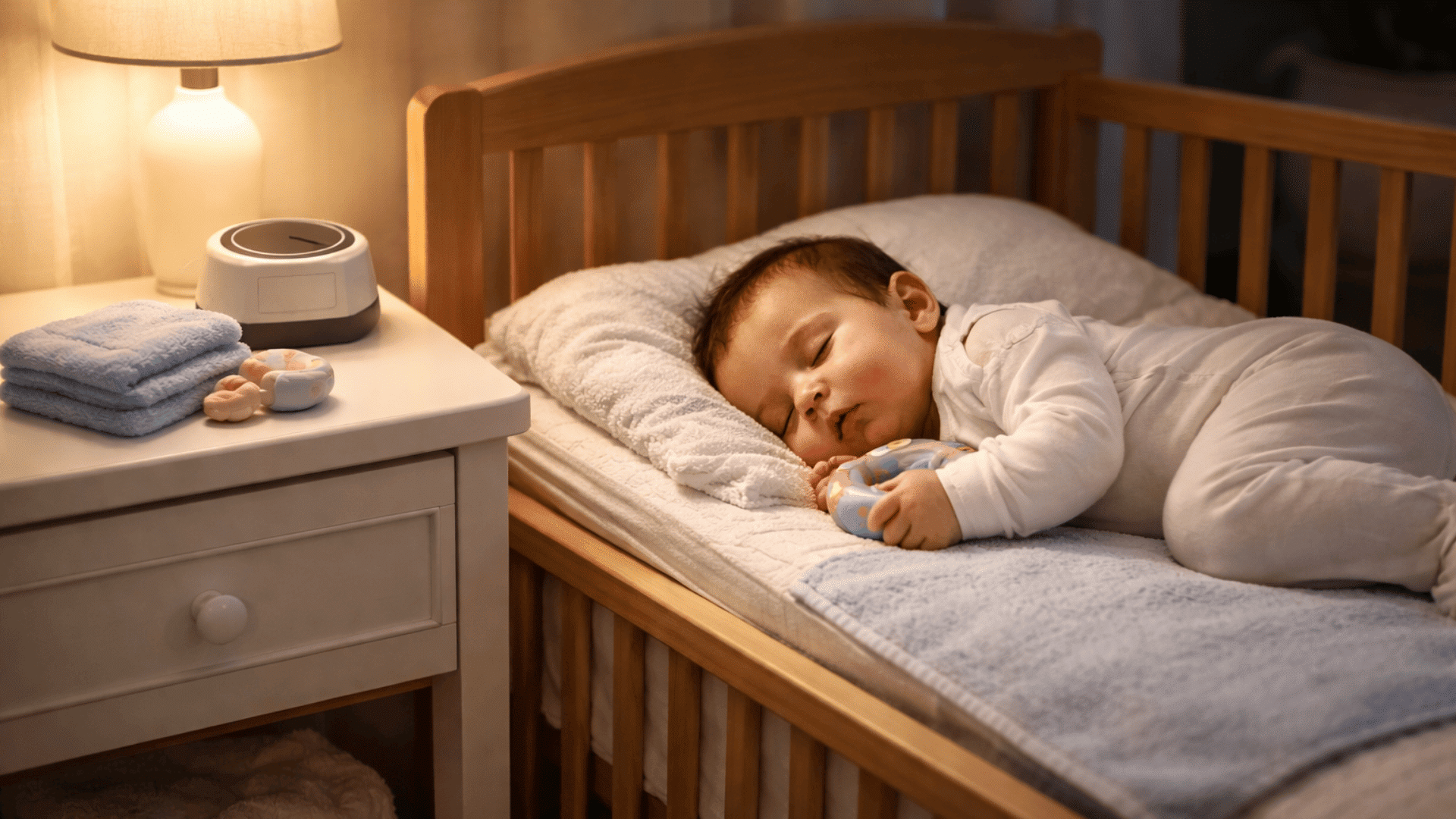
The short answer: No. Babies generally don’t sleep more when teething.
A study tracking 125 babies found parents reported less sleep during teething, not more. The American Academy of Pediatrics confirms that teething pain disrupts sleep rather than increasing it.
Why the myth exists:
Some parents report extra sleepiness during teething. The real culprits are usually:
- Growth spurts – Babies sleep up to 4.5 hours more during rapid growth periods
- Concurrent illness – Colds make babies tired, not teething itself
- Fever – Even mild temperatures increase sleepiness
- Routine changes – Extra rocking and night feedings create new wake patterns
Key point: If your baby sleeps more, look beyond teething.
How Pain Actually Affects Sleep?
Teething pain peaks 24-72 hours before the tooth breaks through. Nighttime amplifies discomfort because distractions disappear. Lying down increases blood flow to the head, making gums throb more.
Symptoms last about 8 days per tooth, at most, with the worst discomfort just before eruption.
Effective relief methods:
- Cold pressure combo: Freeze a wet washcloth for your baby to gnaw on. Cold plus pressure works better than cold alone.
- Daytime gum massage: Rub sore gums 3-4 times daily with a clean finger. This prevents nighttime pain buildup.
- White noise: Masks whimpering so babies don’t fully wake from mild discomfort.
- Slight crib elevation: A folded towel under the mattress head (15-20 degrees) reduces gum throbbing.
Pro Tip: Administer pain relief 30 minutes before bedtime for maximum effectiveness.
Knowing what to look for helps you tell teething apart from other sleep issues.
Recognizing When Teething Affects Sleep
Physical symptoms that disrupt sleep:
- Swollen, red gums – Puffy areas where teeth push through
- Excessive drooling – Can cause skin irritation
- Low-grade temperature – Under 100.4°F (not a true fever)
- Ear pulling and cheek rubbing – Pain radiates from the gums
- Constant chewing – Counter-pressure relieves pain temporarily
Behavioral red flags:
- Increased crankiness
- Won’t settle at bedtime
- Waking every 1-2 hours
- Extreme clinginess
The hidden problem: Teething fragments sleep cycles, not just total sleep time.
Normal baby sleep cycles last 50-60 minutes. Research shows pain interrupts transitions between cycles. Your baby wakes instead of smoothly moving to the next stage.
This means less deep, restorative sleep. Your baby seems groggier than sleep hours would suggest.
How to Manage Sleep During Teething: Practical Tips for Parents
Keep your baby’s room dark, cool (68-72°F), and quiet. Stick to your regular bedtime routine even when teething disrupts sleep. Consistency helps your baby know what to expect.
White noise masks grunts and whimpers that might wake your baby fully. Lullabies or ambient sounds also soothe teething discomfort. Studies show babies with strong sleep foundations handle teething nights better.
Don’t change routines to accommodate teething. Extra feedings or rocking create new wake patterns that outlast the pain.
Pain Relief that Works
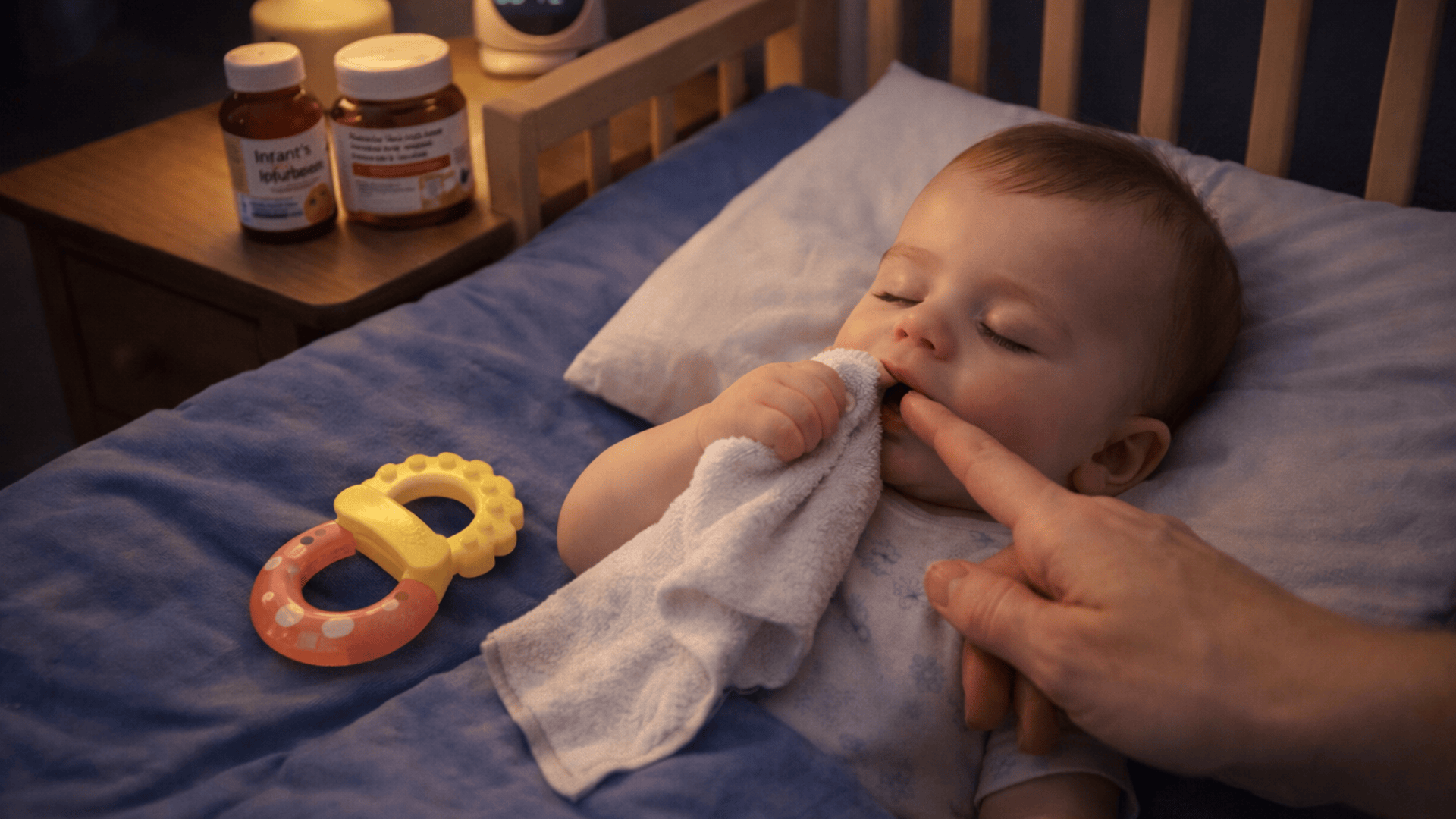
Refrigerate teethers (don’t freeze them). Offer cold washcloths to gnaw. Use a clean finger to massage sore gums gently.
Ibuprofen works best for teething pain in babies 6 months or older. Use acetaminophen for younger babies. Give medication 30 minutes before bedtime.
Avoid benzocaine gels and teething necklaces. The FDA warns that both pose serious safety risks.
When to use medication: Clear pain signs like inconsolable crying, refusing food, or can’t fall asleep after 30 minutes. Pain peaks 24-72 hours before tooth eruption. Reserve medication for these peak days.
When to encourage self-soothing: Mild whimpering without full crying means your baby is working through it. Give them 5-10 minutes before intervening.
You need to know when teething isn’t the real problem.
When to Seek Help?
Teething doesn’t cause high fever above 100.4°F, diarrhea, vomiting, or a runny nose. It doesn’t create severe pain lasting beyond 8 days per tooth.
Other conditions to consider: Ear infections make babies pull their ears and cry when lying down. Check for fever or drainage. Colic involves intense crying for 3+ hours daily at the same time. Sleep regressions happen at 4, 8, and 12 months due to developmental leaps, not teeth.
Call your pediatrician if: Fever exceeds 100.4°F. Symptoms worsen instead of improving. Your baby refuses all food and liquids for 24+ hours. Sleep problems last beyond 2 weeks. Nothing consoles your baby despite trying pain relief.
Trust your instincts. You know your baby best.
Conclusion
Teething disrupts sleep more than it increases it. Research confirms most babies sleep less during teething, not more. Pain peaks 24-72 hours before each tooth breaks through.
If your baby seems extra sleepy, look beyond teething. Growth spurts, illness, or routine changes often explain increased sleep better than tooth eruption.
Keep bedtime routines consistent. Use cold teethers, gentle gum massage, and appropriate pain relief to manage discomfort.
Remember, teething is temporary. Each tooth takes a maximum of 8 days from start to finish. Sleep patterns will return to normal.
Trust your instincts and contact your pediatrician if concerns arise.
Frequently Asked Questions
Can Teething Cause Sleep Regression?
Teething can temporarily disrupt sleep patterns, but true sleep regressions stem from developmental milestones at 4, 8, and 12 months. These may coincide with teething but aren’t caused by it.
Should I Let My Teething Baby Cry It Out?
Avoid cry-it-out methods during active teething pain. Your baby needs comfort during genuine discomfort. Resume sleep training once the tooth emerges and pain subsides.
Do All Babies Experience the Same Teething Symptoms?
No. Some babies show minimal symptoms while others experience significant discomfort. Genetics plays a role. Siblings often have similar teething experiences. First teeth typically cause the most trouble.
Can Teething Affect Naps Differently Than Nighttime Sleep?
Yes. Daytime distractions help babies cope better with mild teething pain. Naps may shorten slightly, but nighttime sleep usually suffers more from the lack of stimulation and increased awareness of discomfort.